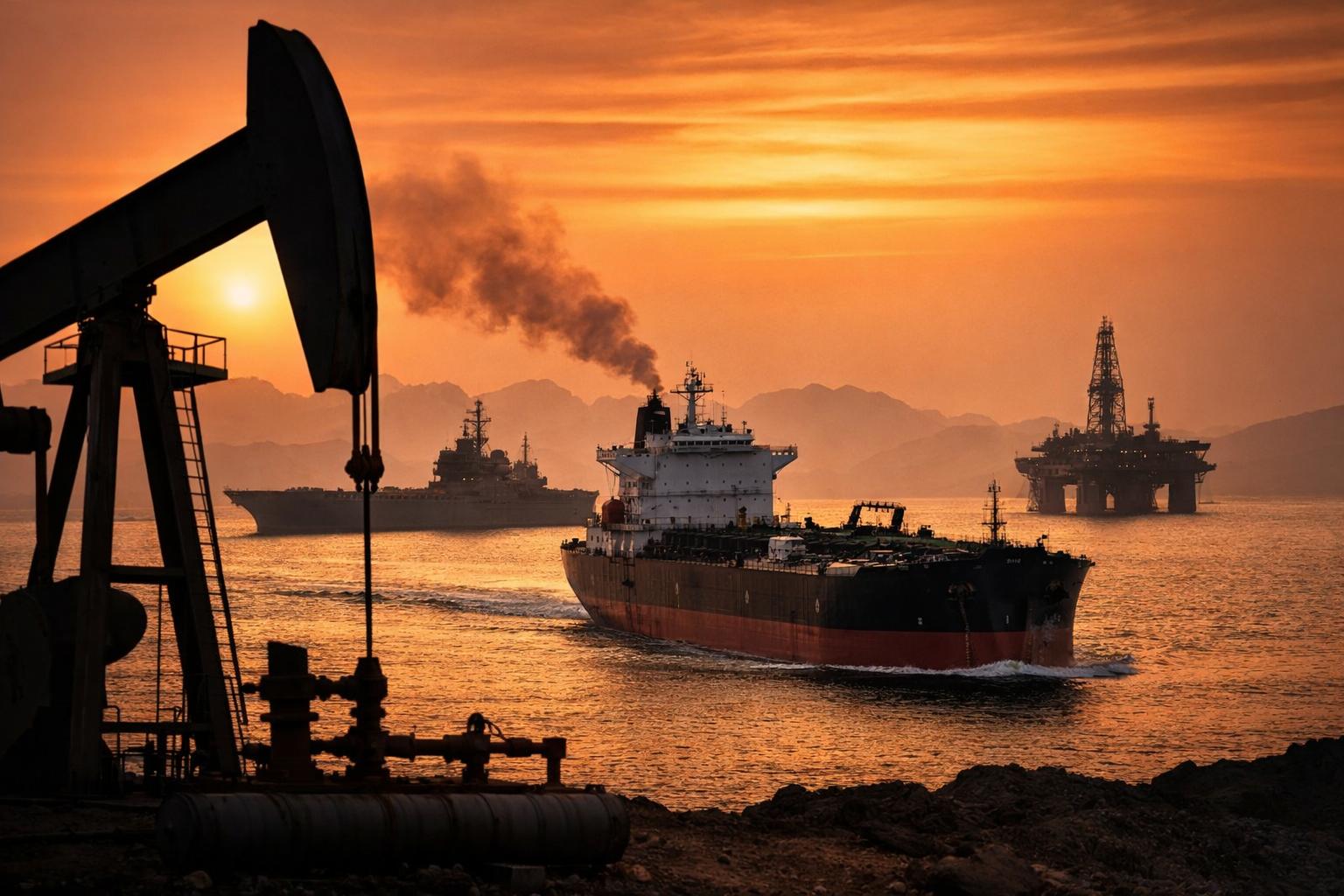
Oil prices climbed sharply on Wednesday, rising more than 4% as investors reacted to escalating tensions between the United States and Iran following the latest round of nuclear negotiations. Market sentiment shifted after U.S. Vice President JD Vance indicated that Tehran had failed to address key American demands and warned that military options remain under consideration.
U.S. West Texas Intermediate crude settled up $2.86, or 4.59%, at $65.19 per barrel, while global benchmark Brent crude gained $2.93, or 4.35%, to close at $70.35 per barrel. The rally reflected growing geopolitical risk premiums being priced into energy markets as traders assessed the possibility of supply disruptions in the Middle East.
The price surge followed comments from Vance, who said Iran had not acknowledged critical U.S. “red lines” during nuclear discussions held in Geneva earlier this week. Speaking in a television interview, the vice president noted that while both sides agreed to continue talks, major differences remain unresolved. He also emphasized that President Donald Trump retains the authority to use military force if diplomatic efforts fail.
Earlier optimism had briefly pressured oil prices lower after Iran’s foreign minister described the negotiations as constructive and said the sides had reached a general understanding on guiding principles. However, markets quickly reversed course once U.S. officials signaled dissatisfaction with Tehran’s position and reiterated a tougher stance.
Adding to market anxiety, Iran’s Revolutionary Guard conducted military exercises in the Strait of Hormuz, one of the world’s most critical energy shipping routes. The narrow waterway handles a significant share of global seaborne crude exports, making any potential disruption a major concern for traders and policymakers alike. Reports of temporary restrictions linked to the drills heightened fears that a broader conflict could threaten oil flows.
Energy analysts noted that the current rally reflects a growing “risk premium” tied to geopolitical uncertainty rather than immediate supply losses. Traders remain particularly sensitive to developments in the Gulf region, where even limited military escalation could quickly tighten global supply balances.
The United States has also increased its military presence in the region, deploying additional naval assets as a precaution. Officials indicated the move is intended to strengthen deterrence and provide flexibility should negotiations collapse. President Trump said the deployments were made in case diplomacy fails, underscoring Washington’s dual-track approach of pressure and negotiation.
Despite the sharp price move, some market observers caution that volatility could persist. Oil prices may retreat if diplomatic progress resumes or if military tensions ease. For now, however, investors remain focused on the trajectory of U.S.-Iran talks and the potential implications for global energy security.
The Iranian government had not immediately issued a formal response to the latest U.S. remarks. Market participants are expected to closely monitor upcoming diplomatic developments, as well as any signs of disruption in the Strait of Hormuz, which could further influence crude price direction in the coming weeks.