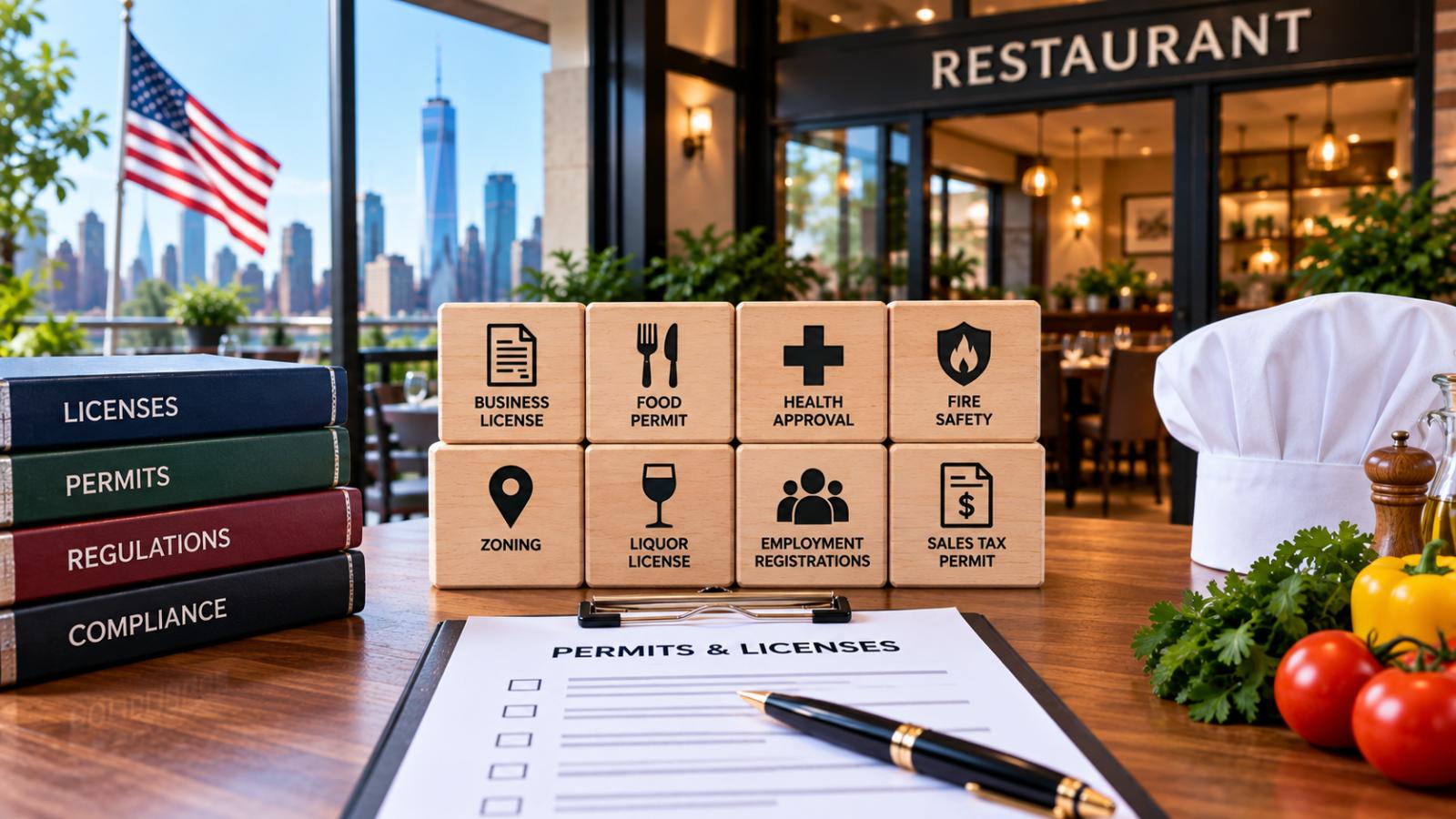
Restaurant licenses and permits USA are governed mainly by state and local authorities. NRI buyers should verify food establishment approvals, health permits, zoning, occupancy, fire requirements, tax registrations and any liquor licensing before taking over a restaurant.
Buying an operating restaurant does not guarantee that every license or permit will automatically continue under a new owner. NRI buyers should identify the authorities regulating the location and confirm which approvals must be transferred, renewed or obtained again.
Restaurant Licenses Depend on Location
The U.S. Small Business Administration says license and permit requirements vary according to business activity, location and government rules. Restaurants are among the businesses commonly regulated at the state and local level, meaning requirements can differ between states, counties and cities.
Common requirements may include a business license, food establishment permit, health department approval, zoning clearance and local operating permits.
Food Safety and Health Department Approval
The FDA Food Code provides a model for restaurant food-safety regulation, but it is not one identical nationwide restaurant code. State, local, tribal and territorial authorities use FDA guidance when developing their own rules.
Depending on the jurisdiction, a restaurant may need food establishment approval, inspections, food-manager certification or other health-related permits before operating.
Zoning, Occupancy and Fire Requirements
Buyers should verify whether the property is legally approved for restaurant use. Local requirements may involve zoning, a certificate of occupancy, building approvals, fire inspections, kitchen ventilation or other safety requirements.
The SBA specifically advises buyers of existing businesses to determine whether necessary licenses and permits can be obtained from the seller or whether they must apply independently.
Alcohol and Other Special Permits
Restaurants selling alcoholic beverages face additional regulation. Licensing can involve federal, state and local authorities, and requirements differ significantly by jurisdiction and type of alcohol activity.
A buyer should never assume the seller's liquor license automatically transfers with the restaurant.
Check Permits Before Closing
Some permits expire periodically and require renewal, while ownership changes can trigger new applications. The SBA notes that restaurants commonly need continuing health and safety certifications and that renewal rules vary locally.
Before closing, NRI buyers should obtain a written list of existing permits, expiration dates, issuing authorities and transfer requirements. Licensing should be verified with the relevant state, county and city agencies rather than relying only on the seller's representations.