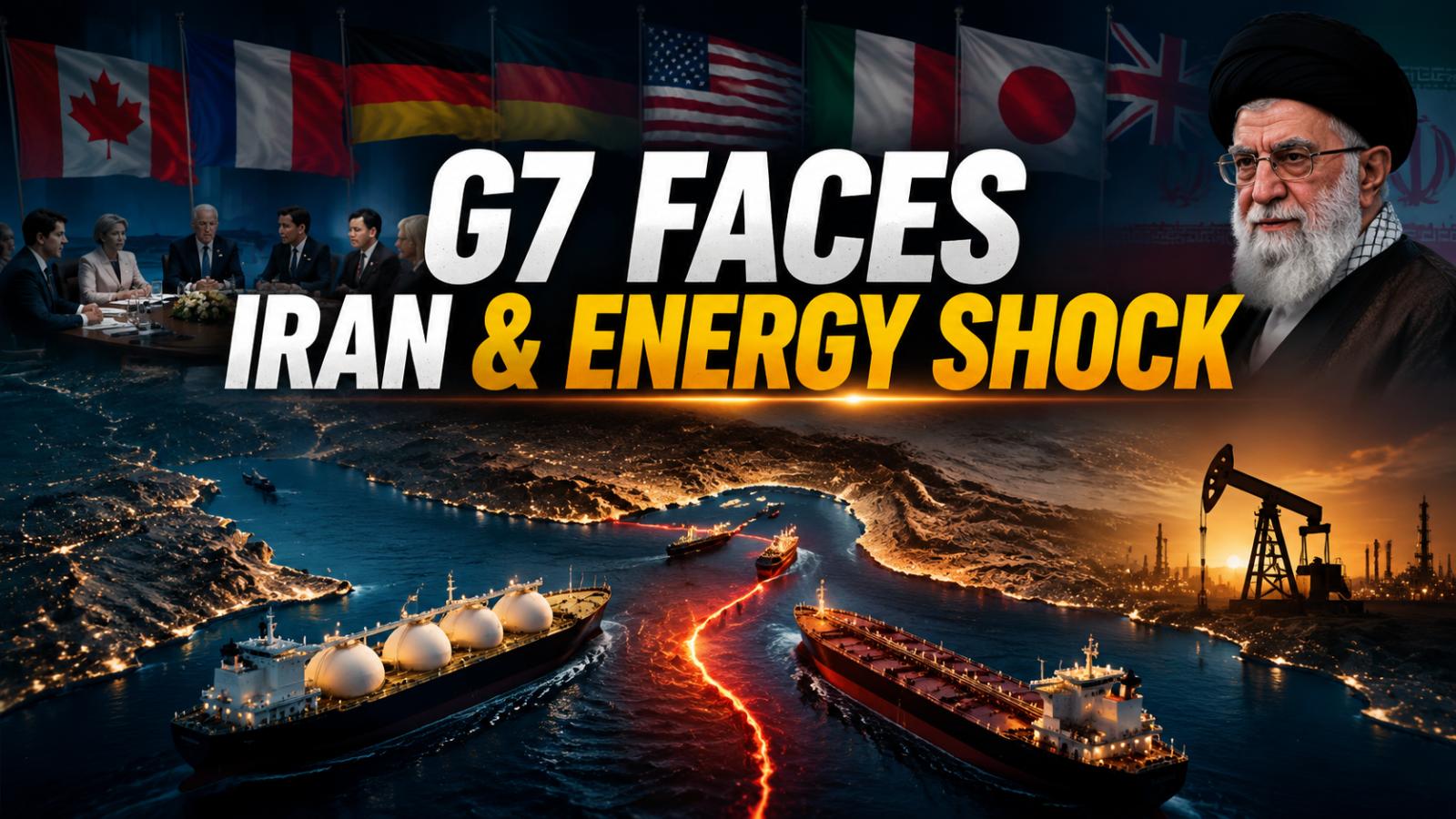
The G7 summit in France unfolded under the shadow of growing instability linked to tensions involving Iran and wider regional security concerns. While political disagreements remained in the background, the more immediate concern for leaders was the economic impact spreading across global energy markets. Rising uncertainty around shipping routes and oil supply quickly turned the discussions toward inflation, fuel pricing, and trade resilience.
Energy markets react as uncertainty spreads
One of the key pressure points discussed was the Strait of Hormuz, a critical route for global oil and liquefied natural gas shipments. Even limited disruption in this corridor has the potential to influence energy prices across Europe, Asia, and other import-dependent economies. Market volatility added urgency to the talks, as governments tried to balance economic stability with geopolitical caution.
Rather than focusing only on diplomatic messaging, leaders spent considerable time addressing the real-world consequences of supply chain risks. Energy security has now become a central pillar of G7 coordination, especially as inflation continues to affect households and industries across member nations.
Push for diplomatic de-escalation and policy coordination
Amid the tensions, discussions reportedly included efforts toward a structured diplomatic framework aimed at reducing escalation risks involving Iran and its regional interactions. The focus remained on preventing further disruption to global trade routes rather than expanding confrontation.
US-led diplomatic messaging, including renewed discussions around a possible peace-oriented approach, influenced the tone of the summit. However, there was no uniform agreement among member states on how far such initiatives should go, reflecting ongoing differences in foreign policy priorities.
India and other economies highlight maritime risks
Several non-European economies also raised concerns about maritime safety and shipping continuity. India emphasized the importance of secure sea routes for energy imports and the protection of seafarers operating in high-risk zones. Similar concerns were echoed by other import-dependent nations that rely heavily on uninterrupted fuel supply chains.
The discussions highlighted a broader reality: regional instability now has immediate global economic consequences, especially in energy and logistics sectors.
Economic stability becomes the core agenda
While geopolitical tensions formed the backdrop, the central focus of the G7 remained economic stability. Leaders acknowledged that prolonged uncertainty in the Middle East could intensify inflationary pressure and slow global growth. As a result, coordination on energy diversification, strategic reserves, and supply chain resilience gained importance in the final discussions.
Conclusion
The G7 summit underscored a shifting global priority—where energy security and economic stability now drive diplomatic responses as much as traditional security concerns. Although discussions around Iran remain unresolved and fragmented, the urgency to protect global trade flows is pushing major economies toward closer coordination.