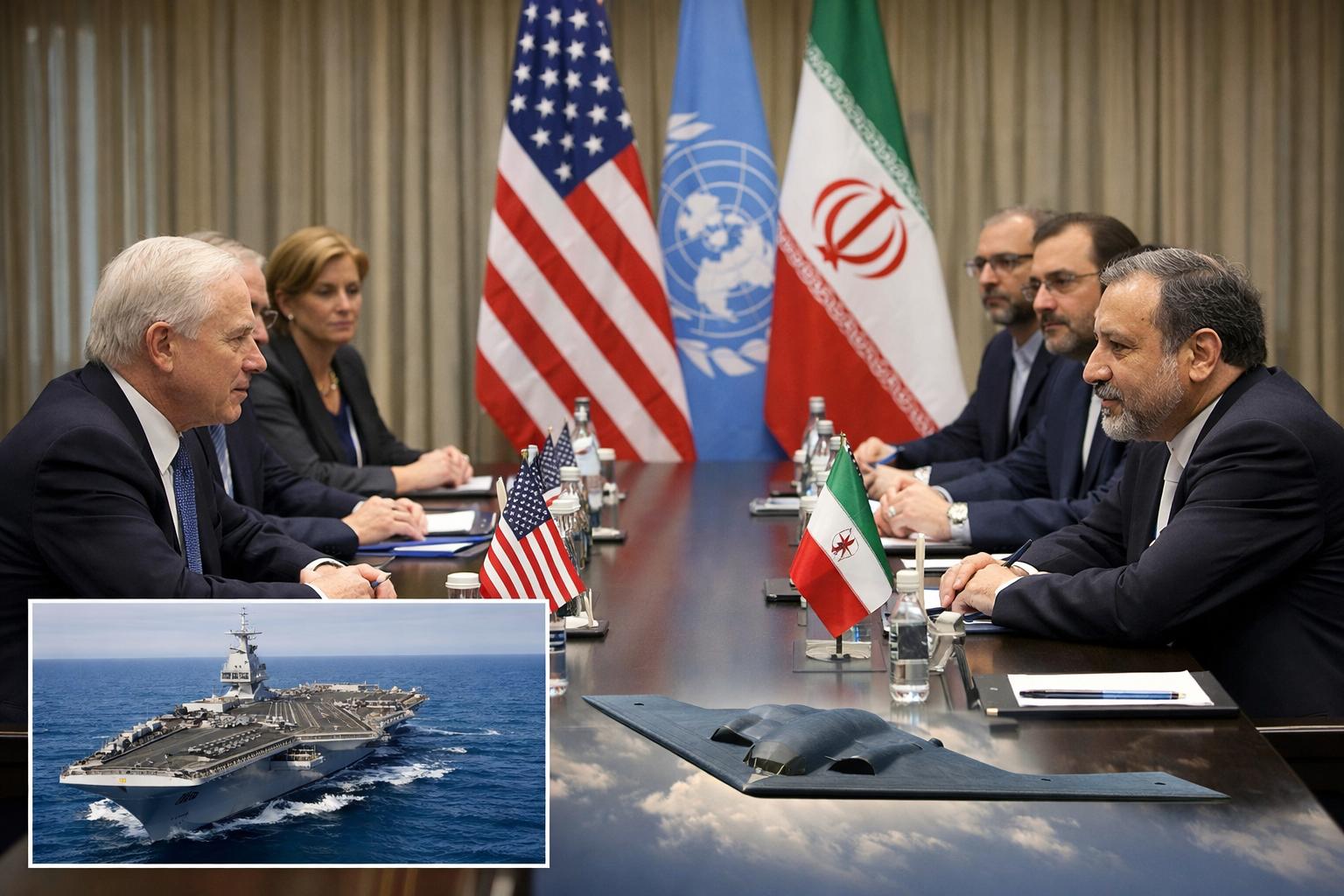
The second round of talks between the United States and Iran concluded in Geneva on Tuesday, with both sides signaling cautious optimism about the path forward. The Geneva meet, facilitated through Oman mediation, comes at a sensitive moment in US Iran relations, with diplomatic and military signals unfolding simultaneously across the Middle East.
Speaking at the Conference on Disarmament, Iran FM Abbas Araghchi described the latest engagement as a potential turning point. He said a “new window of opportunity” had opened following the discussions, expressing hope that continued dialogue could help resolve the long-standing nuclear dispute between the two countries. According to Araghchi, the negotiations were more constructive than the previous round held earlier this month.
The Iranian foreign minister indicated that both delegations reached broad agreement on guiding principles that will shape the next phase of the peace talks. He noted that technical teams will now begin drafting a possible framework, after which the two sides will exchange texts and set a date for the third round of diplomacy. However, Araghchi cautioned that narrowing the remaining gaps will take time, underscoring the complexity of the Iran US standoff.
While projecting optimism, Tehran also maintained a firm security posture. Araghchi emphasized that Iran remains fully prepared to defend itself against any threat or act of aggression, signaling that diplomatic engagement will proceed alongside continued military vigilance.
The talks unfolded against a backdrop of heightened regional movement by the United States. Ahead of the negotiations, Washington began repositioning major naval assets toward the Middle East, including the aircraft carriers G Ford and Lincoln. The deployment drew attention in diplomatic circles, even as both sides publicly emphasized dialogue.
Earlier, the US president had warned of consequences if negotiations failed, while also suggesting that Tehran was interested in reaching a nuclear deal. He described the regional situation as largely stable, though he acknowledged that isolated tensions could still emerge.
Despite the cautious tone from both capitals, analysts say the continuation of structured diplomacy in Geneva marks a meaningful step. If the current momentum holds, the Iran dialog could gradually ease tensions and contribute to broader ME peace efforts. For now, both Washington and Tehran appear willing to keep the diplomatic channel open, with the next round expected after draft proposals are exchanged.