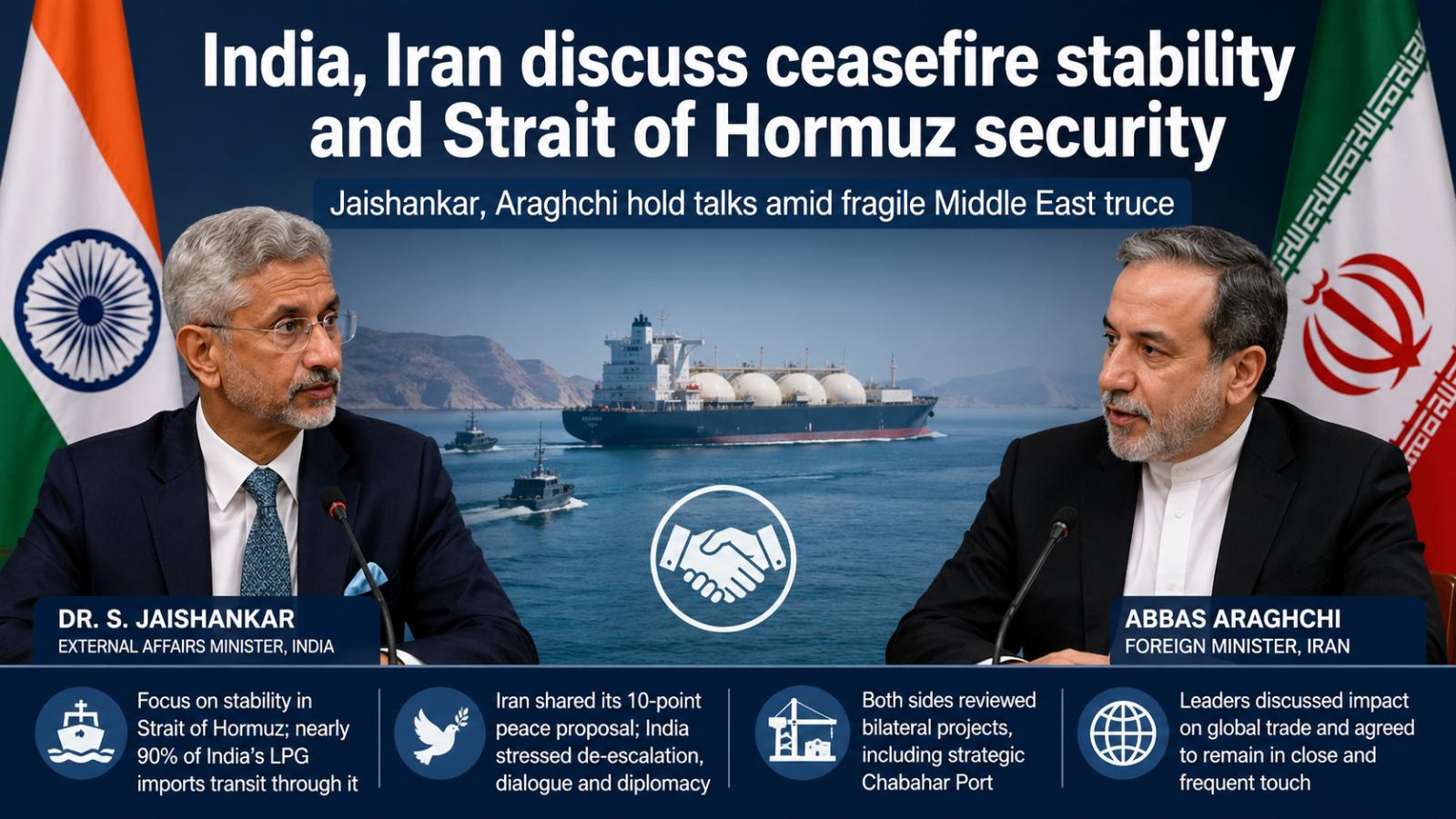
According to an official statement, both leaders exchanged views on recent developments related to the ceasefire while also reviewing bilateral relations and broader regional security concerns. A central issue in the dialogue was the stability of the Strait of Hormuz, a key global shipping route through which nearly 90% of India’s liquefied petroleum gas imports pass, underscoring its economic significance for New Delhi.
Officials familiar with the talks indicated that both sides emphasized the need to ensure uninterrupted freedom of navigation in the region. Iran reportedly shared updates on its proposed 10-point peace framework, while India reiterated its longstanding position that de-escalation, sustained dialogue, and diplomatic engagement remain essential to achieving lasting stability in West Asia.
Beyond immediate security concerns, the ministers also reviewed ongoing bilateral initiatives, including the development of Chabahar Port. The project remains strategically important for India as it provides access to Central Asian markets, even as regional tensions pose logistical and security challenges.
The conversation also addressed the broader impact of the conflict on global trade networks. Jaishankar highlighted concerns over prolonged instability, noting its disruptive effects on supply chains and economic activity. He emphasized that India continues to engage with multiple stakeholders in an effort to prevent escalation and support regional stability.
The diplomatic exchange follows a period of heightened pressure from the administration of Donald Trump, which had issued strong warnings to Tehran over maritime disruptions. Although a ceasefire was implemented on Tuesday, April 8, 2026, tensions persist, with continued rhetoric from various factions raising concerns about its durability.
As the ceasefire enters a sensitive phase, both ministers agreed to remain in close and frequent contact to monitor developments. For India, maintaining stability in the region is not only a strategic priority but also a critical economic necessity tied to energy security and trade continuity.