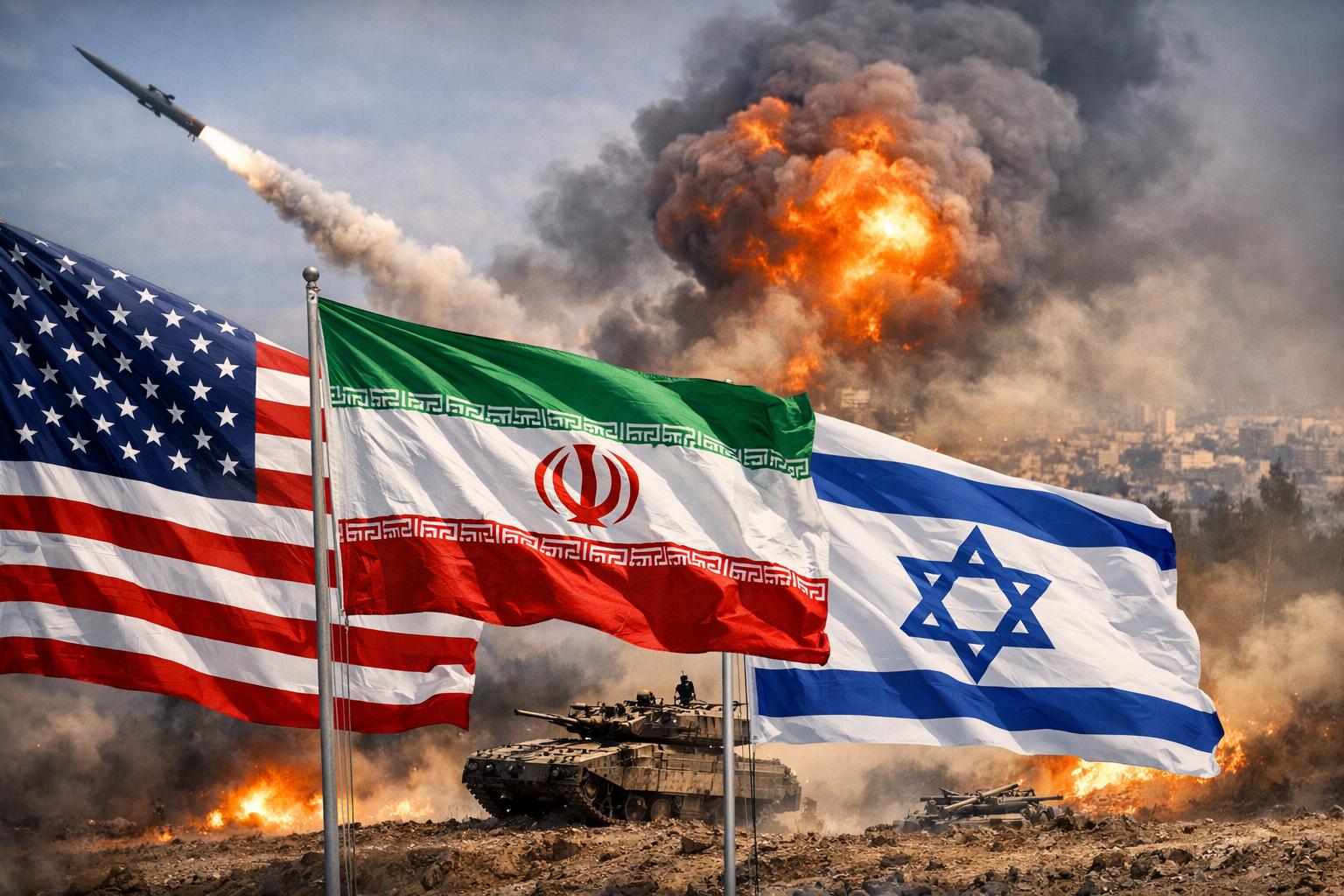
TEHRAN, Iran — Iran, the United States, and Israel agreed to a two-week ceasefire on Wednesday, April 8, 2026 (Iran Standard Time), in a last-minute effort to halt escalating hostilities that had raised fears of a broader regional war. The agreement, described by U.S. Vice President JD Vance as “fragile,” came just hours before the United States was expected to launch a major bombing campaign against Iran.
Despite the announcement, reports of renewed missile and drone attacks emerged within hours across parts of the Middle East, including Gulf nations and Israel, raising immediate concerns about whether the ceasefire would hold. Officials in multiple countries issued alerts about incoming threats, and clashes were also reported in Lebanon, where Israeli forces continue operations against Hezbollah.
Key terms of the ceasefire remain unclear, with all sides offering differing interpretations. Iran indicated the agreement could allow it to impose fees on vessels passing through the Strait of Hormuz, a critical global oil transit route. However, it remains uncertain whether other nations recognize such a provision or whether shipping companies will consider the passage safe.
The status of Iran’s nuclear and missile programs—central to U.S. and Israeli objectives—also remains unresolved. U.S. President Donald Trump stated that Washington would work with Tehran to remove enriched uranium buried after recent strikes, though Iranian officials have not confirmed this plan. Iran has long maintained its nuclear activities are peaceful, despite enriching uranium to levels close to weapons-grade.
Meanwhile, Israel clarified that the ceasefire does not extend to its military campaign against Hezbollah in Lebanon, signaling that regional tensions could persist even if direct conflict with Iran pauses. Hezbollah has not formally agreed to halt attacks, further complicating prospects for stability.
The deal, reportedly mediated in part by Pakistan, could lead to broader negotiations aimed at ending the conflict permanently. Talks may begin in Islamabad as early as Friday, April 10, 2026 (Pakistan Standard Time), according to officials familiar with the discussions.
The ceasefire announcement briefly eased global markets, with oil prices falling and stocks rising. However, uncertainty surrounding enforcement and compliance continues to weigh on international security and economic outlooks.