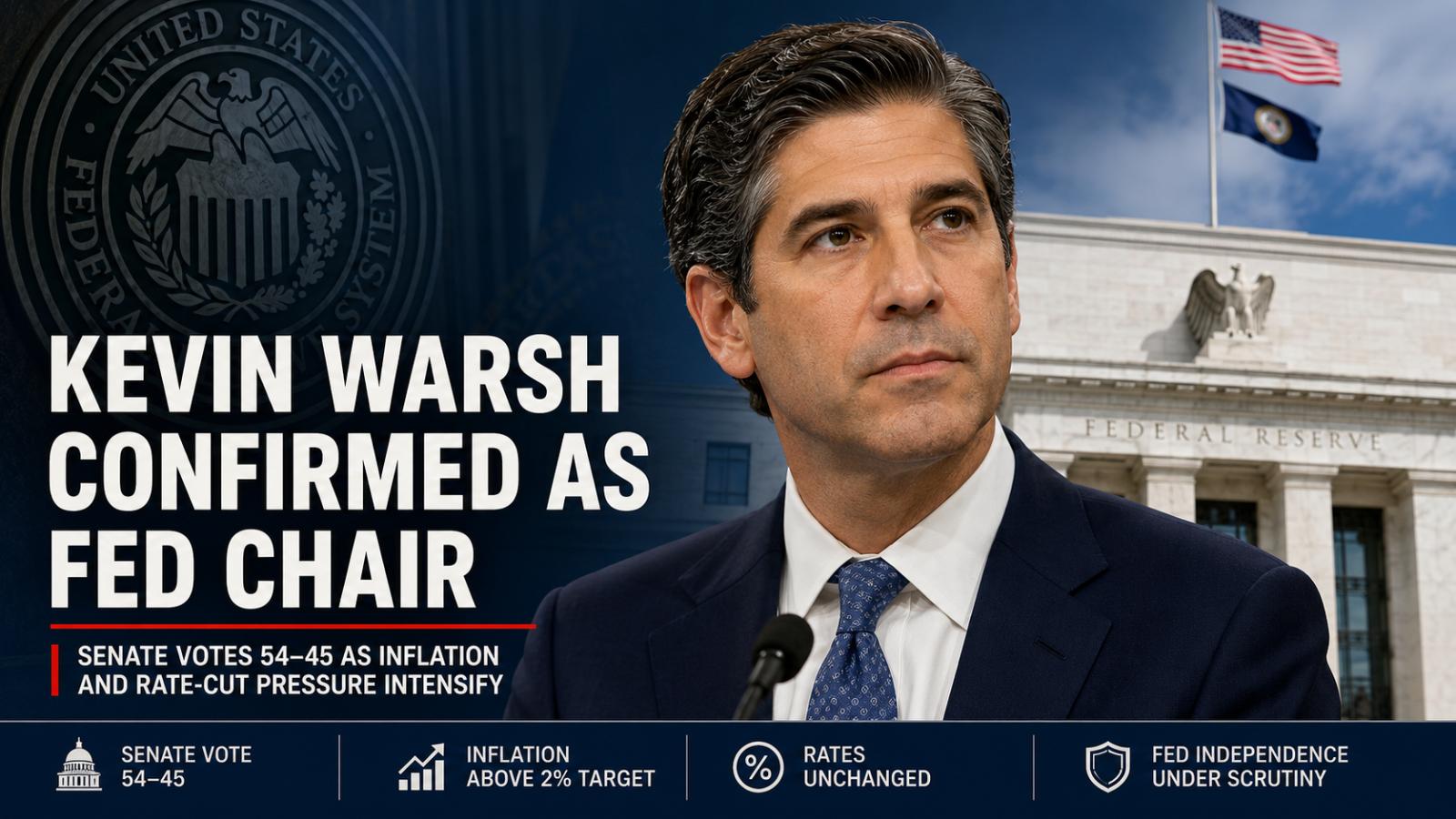
Kevin Warsh was confirmed as Federal Reserve chair on Wednesday, May 13, 2026, placing President Donald Trump’s nominee at the center of a high-stakes debate over inflation, interest rates and the independence of the U.S. central bank.
The Senate approved Warsh in a 54–45 largely party-line vote, clearing the way for the former Federal Reserve official to succeed Jerome Powell. The confirmation followed uncertainty tied to a Justice Department investigation involving Powell, which was dropped in April.
Warsh Takes Over as Inflation Pressure Builds
Warsh, 56, will lead the Federal Reserve as inflation remains above the central bank’s 2% target and higher gas prices continue to add pressure on US households. The Fed’s rate-setting committee has held rates steady for three consecutive meetings while officials assess whether inflation is temporary or requires a stronger policy response.
The policy debate has become more divided, with several Fed officials objecting to language suggesting the central bank’s next move could be a rate cut. That division could limit Warsh’s ability to quickly shift policy, even as Trump has repeatedly called for lower interest rates.
Fed Independence Faces Fresh Scrutiny
Trump’s criticism of Powell and broader pressure on the Federal Reserve have raised concerns among Democrats and some Fed watchers about whether Warsh will protect the central bank’s independence.
During his confirmation hearing, Warsh said Trump had not asked him to commit to any interest-rate decision and said he would act independently as Fed chair. He has also criticized the Fed’s handling of the 2021–2022 inflation surge and has called for changes in how the central bank communicates policy expectations.
Democrats have also questioned Warsh’s financial disclosures, citing assets worth at least $100 million and investments including Polymarket and SpaceX. Warsh has said he will sell such assets within 90 days of taking office.
Powell plans to remain on the Fed’s board after his chair term ends, with his governor term running until January 2028. That could leave Warsh leading the central bank while Powell remains inside the institution, adding another layer of uncertainty as the Fed confronts inflation, political pressure and a divided policy committee.