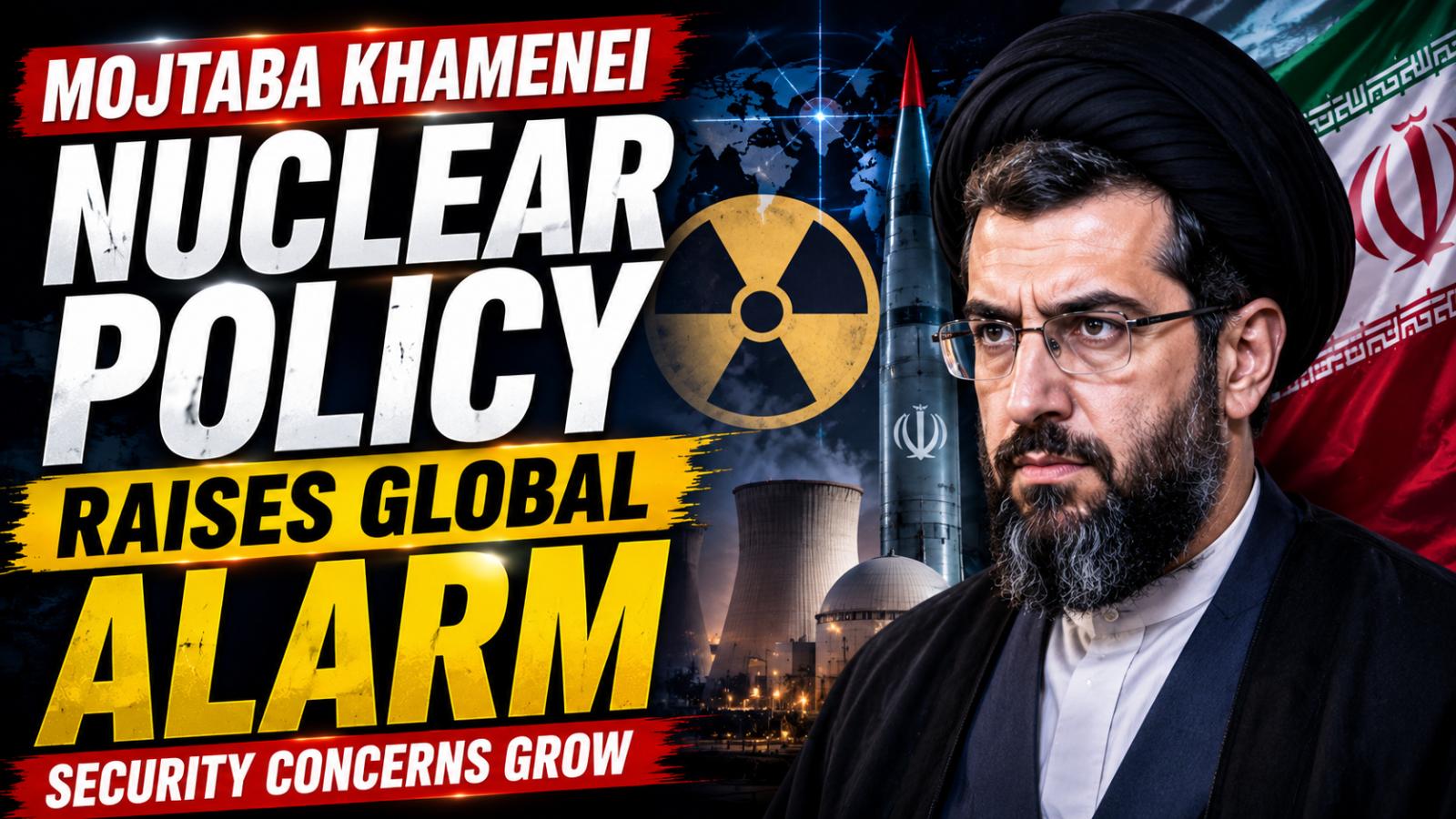
Mojtaba Khamenei's nuclear policy has come under renewed focus after a recent US intelligence assessment suggested Iran's new supreme leader may be more open to developing nuclear weapons than his father. While no official policy change has been announced, analysts say the assessment highlights growing concerns over Iran's nuclear threshold status, regional security and the future of diplomacy.
Mojtaba Khamenei nuclear policy draws global attention
A recent US intelligence assessment has renewed international debate over Iran's nuclear ambitions by suggesting that Supreme Leader Mojtaba Khamenei could be more willing than his father, Ali Khamenei, to consider the eventual development of nuclear weapons. The assessment has intensified discussion among security experts, although US officials stress that it reflects an analytical judgment rather than confirmed Iranian policy.
Iran continues to maintain that its nuclear program serves peaceful civilian purposes. Government officials have repeatedly stated that the country has not decided to build or deploy a nuclear weapon. No official announcement from Tehran indicates a change in that position.
Nevertheless, the intelligence assessment has attracted attention because it comes at a time of heightened regional tensions and ongoing concerns about Iran's expanding nuclear capabilities.
Iran nuclear threshold state remains under scrutiny
Most independent nuclear experts continue to describe Iran as a nuclear threshold state. That means the country possesses many of the technical capabilities required to produce a nuclear weapon, including significant quantities of enriched uranium, advanced centrifuge technology and experienced nuclear scientists. However, experts generally agree that Iran has not made the political decision to assemble and deploy a nuclear weapon.
Crossing from threshold status to becoming a nuclear weapons state would require several additional steps. These include enriching uranium to roughly 90 percent weapons-grade purity, converting nuclear material into weapon components, completing weaponisation activities such as designing and testing an explosive device, and integrating a warhead with a delivery system.
The International Atomic Energy Agency (IAEA) continues to seek greater cooperation from Iran regarding inspections, inventory clarification and monitoring of nuclear facilities. Reports suggesting that Iran is rebuilding parts of its nuclear infrastructure in hardened underground sites following recent military strikes have added to international concern.
Regional security concerns and IRGC influence
Analysts who believe Mojtaba Khamenei could adopt a more assertive nuclear posture point to several strategic factors. These include lessons learned from recent direct military confrontations involving Israel and the United States, his reported close relationships with senior Islamic Revolutionary Guard Corps (IRGC) commanders and the broader regional security environment.
Security experts also note that Israel is widely believed to possess nuclear weapons, although the Israeli government has neither officially confirmed nor denied that capability. Some analysts argue that this strategic balance could influence Iran's long-term security calculations.
At the same time, US officials caution that intelligence assessments evaluate possible future scenarios rather than predict confirmed government decisions. They emphasize that current evidence does not demonstrate that Iran has chosen to build a nuclear weapon.
Global implications if Iran changes course
If Iran were to move beyond its current threshold status, the consequences could extend well beyond the Middle East. A confirmed nuclear weapons program could significantly increase tensions with the United States and Israel, while also encouraging neighboring countries to reconsider their own security strategies.
Saudi Arabia has previously indicated that it would closely monitor Iran's nuclear progress when shaping its future defense policies. A regional nuclear competition could place additional strain on the Nuclear Non-Proliferation Treaty (NPT) and complicate international arms control efforts.
A broader escalation could also affect the global economy. Any disruption to shipping routes or energy exports from the region could drive oil prices higher, increase transportation costs and create uncertainty in financial markets. However, diplomacy, continued IAEA inspections, military deterrence and the shared interest in protecting global energy supplies remain important factors that could reduce the risk of conflict.
The current assessment highlights the importance of distinguishing between technical capability and political intent. While Iran's nuclear program continues to evolve, international attention remains focused on whether future developments will be shaped by diplomacy, strategic deterrence or a significant shift in government policy.