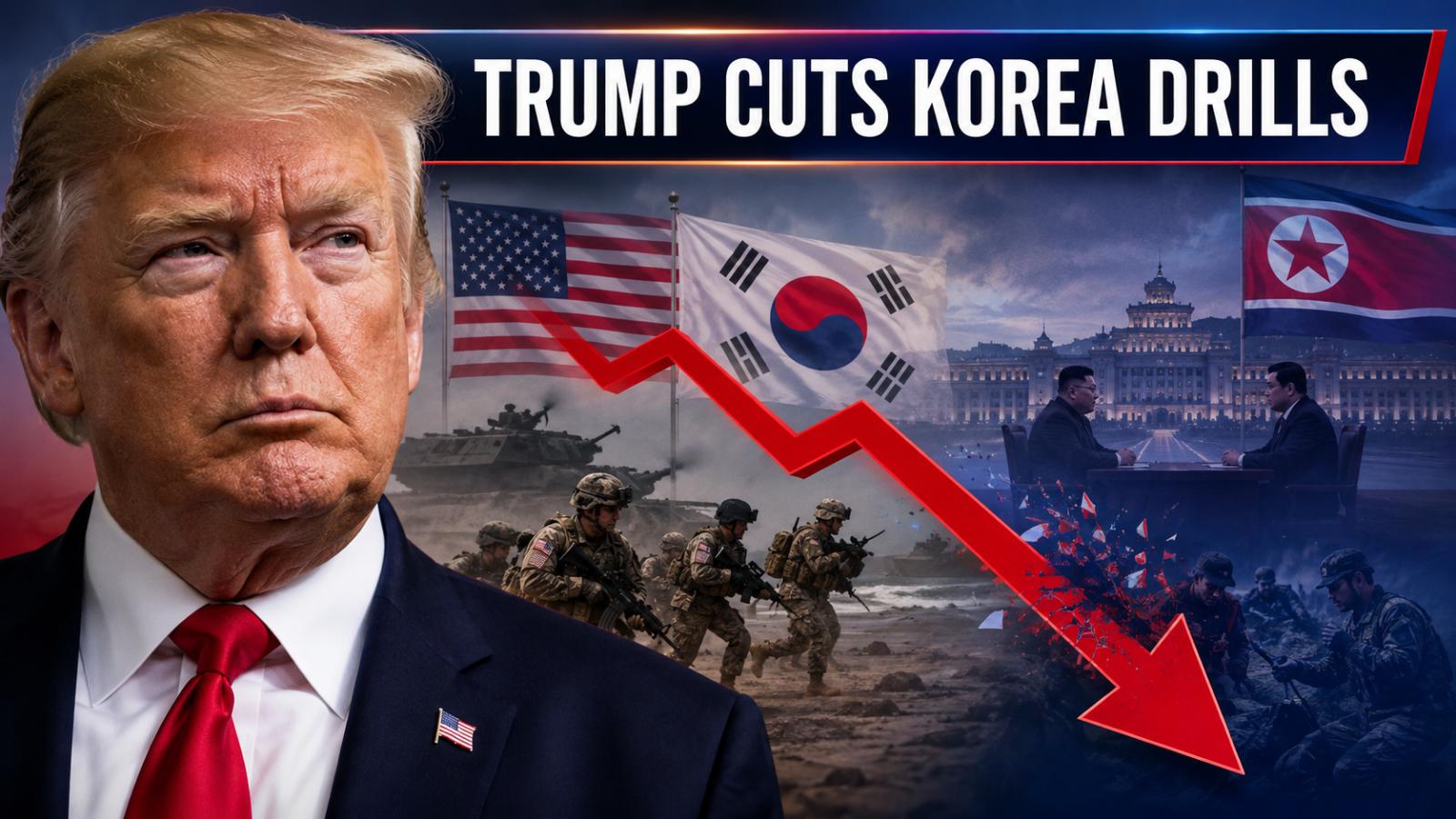
Trump Korea drill cuts have changed the scale of one of Washington’s most important military exercises in Asia. President Donald Trump ordered the Pentagon to sharply reduce US participation in drills with South Korea, citing their cost and his effort to reopen diplomacy with North Korean leader Kim Jong Un.
ROK drills reduced after Trump order
The United States and South Korea subsequently shortened their annual joint exercises from 11 days to five and reduced some field training. The move followed Trump’s instruction to Defense Secretary Pete Hegseth to “substantially reduce” American involvement.
Trump argued that Washington was spending too much on the exercises and said the drills sent an unnecessarily hostile message to Pyongyang. The president also described North Korea as relatively unthreatening and respectful toward his administration while stressing his personal relationship with Kim.
The drills, including Ulchi Freedom Shield, have long been a core part of US-South Korea military readiness. Seoul’s Defence Ministry has historically described combined exercises as necessary for maintaining a strong joint defence posture against potential threats from North Korea.
Kim talks return to Trump’s Korea strategy
Trump’s decision appears closely connected to his effort to restart direct diplomacy with Kim. He has said he wants another meeting with the North Korean leader, although Pyongyang has so far responded cautiously and continues to demand broader changes in US policy.
Kim’s sister, Kim Yo Jong, has criticised the continued exercises despite their reduced scale, arguing that Washington’s underlying policy toward North Korea has not changed. Pyongyang also launched more than 10 short-range ballistic missiles during the exercise period, prompting Seoul to order its military to maintain full readiness.
The developments show that reducing drills does not automatically translate into lower military tension.
Iran request adds pressure on Seoul
Trump also linked the decision to South Korea’s refusal to support US efforts involving Iran. South Korean Foreign Minister Cho Hyun later said the move appeared partly designed to pressure Seoul over Iran and other unresolved bilateral issues.
That adds another layer to the dispute. Military exercises traditionally focus on Korean Peninsula security, but Trump’s comments suggest broader burden-sharing and foreign-policy alignment are now becoming part of the alliance discussion.
Alliance strain emerges over lack of consultation
South Korean officials acknowledged that they were caught off guard by Trump’s directive. Foreign Minister Cho said neither side’s officials had prior knowledge of the order before it was announced, raising questions about coordination inside the alliance.
The US maintains tens of thousands of troops in South Korea, and joint exercises are designed to ensure both militaries can operate together during a crisis. Sudden changes therefore carry operational as well as political significance.
At the same time, Seoul has publicly welcomed efforts to reduce tensions and create space for diplomacy, even while insisting that military readiness must be preserved.
Asia shift raises questions over deterrence
The broader question is whether the Trump Korea drill cuts become a temporary diplomatic gesture or part of a lasting change in US strategy.
A sustained reduction could help Washington reopen talks with Kim, but it could also deepen concerns among allies about US reliability in the Indo-Pacific. Those concerns are especially important as North Korea expands its missile and nuclear capabilities and strengthens military cooperation with Russia.
For now, Trump has chosen to reduce the visible military pressure on Pyongyang while testing whether personal diplomacy with Kim can produce results. The success of that strategy will depend on whether North Korea responds with negotiations rather than further military escalation.