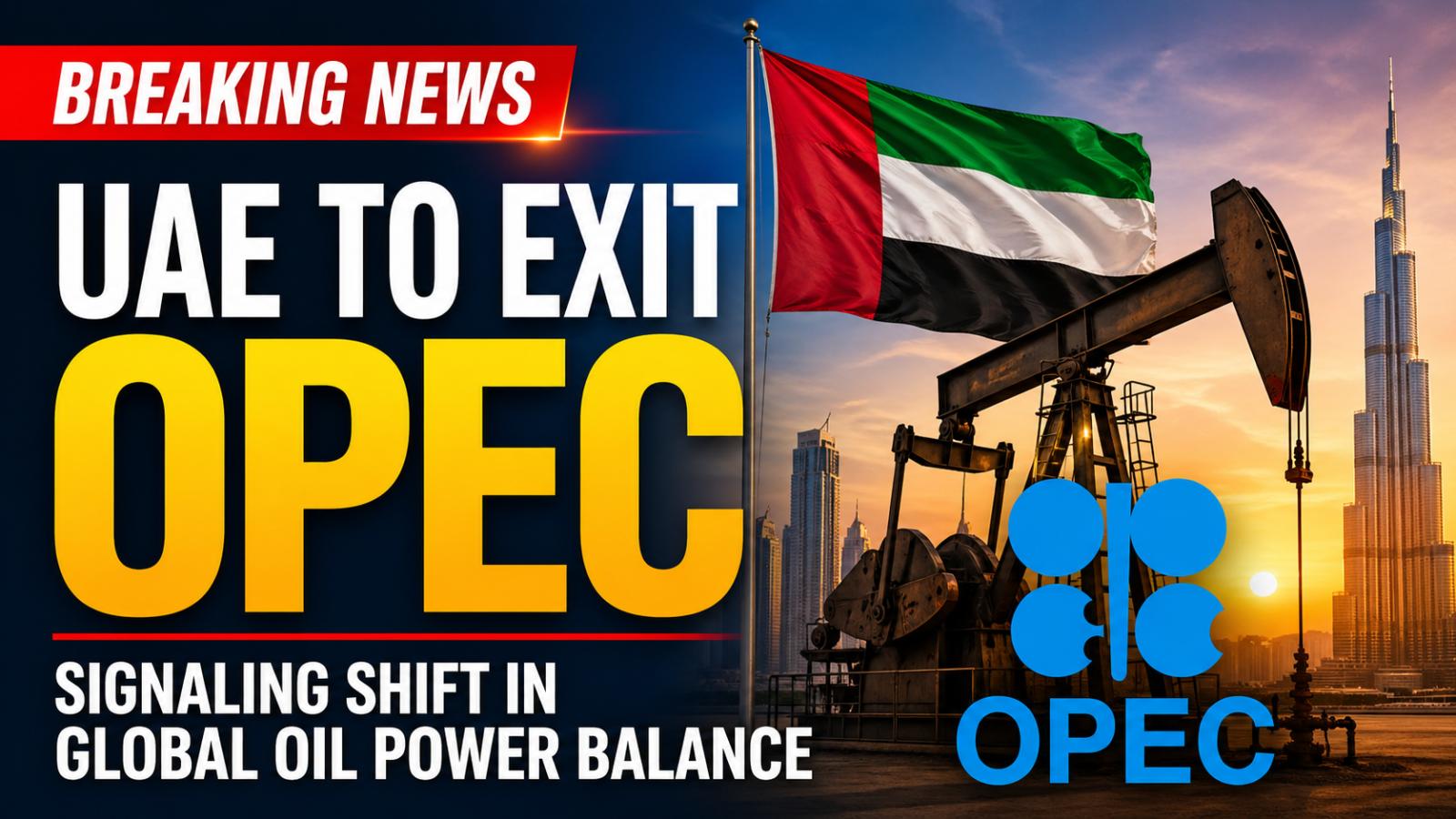
The UAE will exit OPEC on May 1 after nearly six decades, aiming for greater control over oil production and energy strategy. The move may weaken OPEC’s influence, raise concerns about supply coordination, and reshape global oil market dynamics.
UAE to exit OPEC, signaling shift in global oil power balance is set to take effect May 1, marking a major change in the structure of global energy coordination. The decision reflects Abu Dhabi’s broader strategy to gai
The UAE will exit OPEC on May 1 after nearly six decades, aiming for greater control over oil production and energy strategy. The move may weaken OPEC’s influence, raise concerns about supply coordination, and reshape global oil market dynamics.
UAE to exit OPEC, signaling shift in global oil power balance is set to take effect May 1, marking a major change in the structure of global energy coordination. The decision reflects Abu Dhabi’s broader strategy to gai
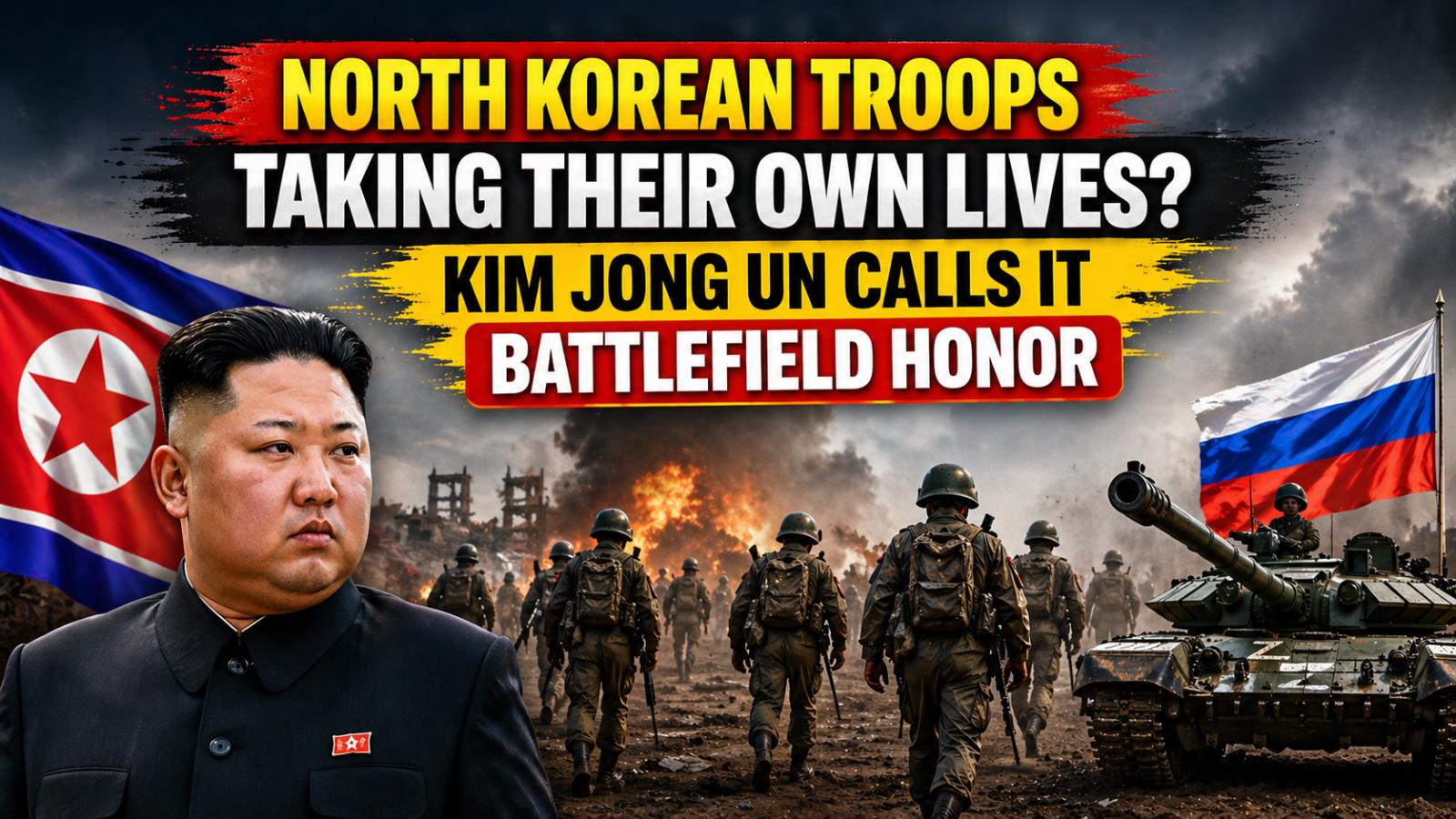
Why are North Korean troops reportedly taking their own lives? Kim Jong Un calls it battlefield honor has drawn international scrutiny after reports emerged that North Korean soldiers fighting alongside Russia in the war in Ukraine may be taking their own lives to avoid capture. The claims
Why are North Korean troops reportedly taking their own lives? Kim Jong Un calls it battlefield honor has drawn international scrutiny after reports emerged that North Korean soldiers fighting alongside Russia in the war in Ukraine may be taking their own lives to avoid capture. The claims
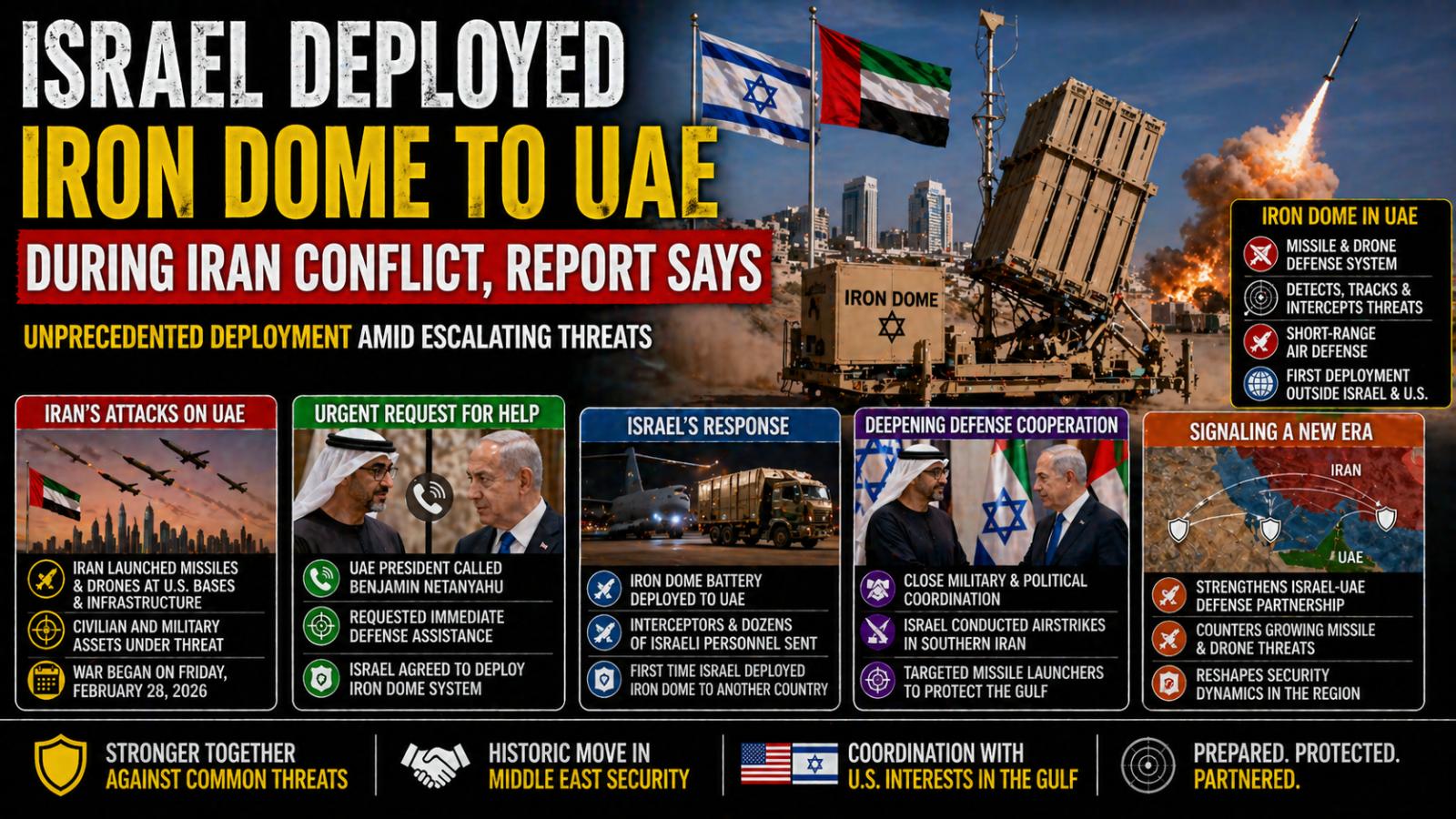
Israel deployed Iron Dome to UAE during Iran conflict, report says, underscoring a previously undisclosed military move that signals deepening defense cooperation between the two countries during heightened tensions in the Gulf. According to a report citing U.S. and Israeli officials, the deployment occurred in the early phase of the war that began on Friday, February 28, 2026, when the United Arab Emirate
Israel deployed Iron Dome to UAE during Iran conflict, report says, underscoring a previously undisclosed military move that signals deepening defense cooperation between the two countries during heightened tensions in the Gulf. According to a report citing U.S. and Israeli officials, the deployment occurred in the early phase of the war that began on Friday, February 28, 2026, when the United Arab Emirate
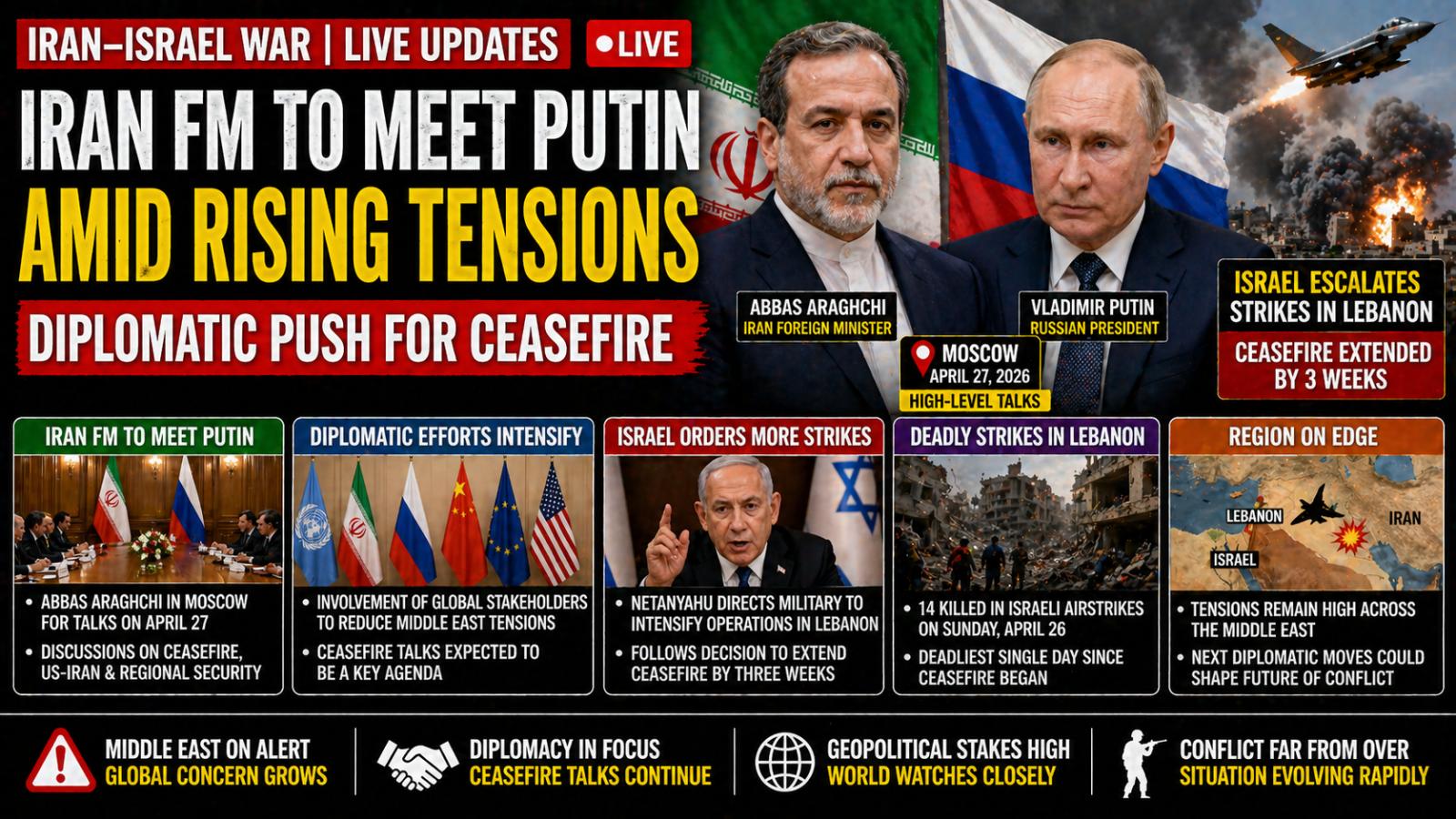
Iran’s foreign minister Abbas Araghchi meets Vladimir Putin in Moscow on Monday, April 27, for ceasefire talks as Israel intensifies strikes on Hezbollah in Lebanon, where 14 were killed Sunday, April 26, marking the deadliest day since the truce began.
Iran-Israel war live updates: Iran FM to meet Putin amid rising tensions as Abbas Araghchi prepares for high-level tal
Iran’s foreign minister Abbas Araghchi meets Vladimir Putin in Moscow on Monday, April 27, for ceasefire talks as Israel intensifies strikes on Hezbollah in Lebanon, where 14 were killed Sunday, April 26, marking the deadliest day since the truce began.
Iran-Israel war live updates: Iran FM to meet Putin amid rising tensions as Abbas Araghchi prepares for high-level tal
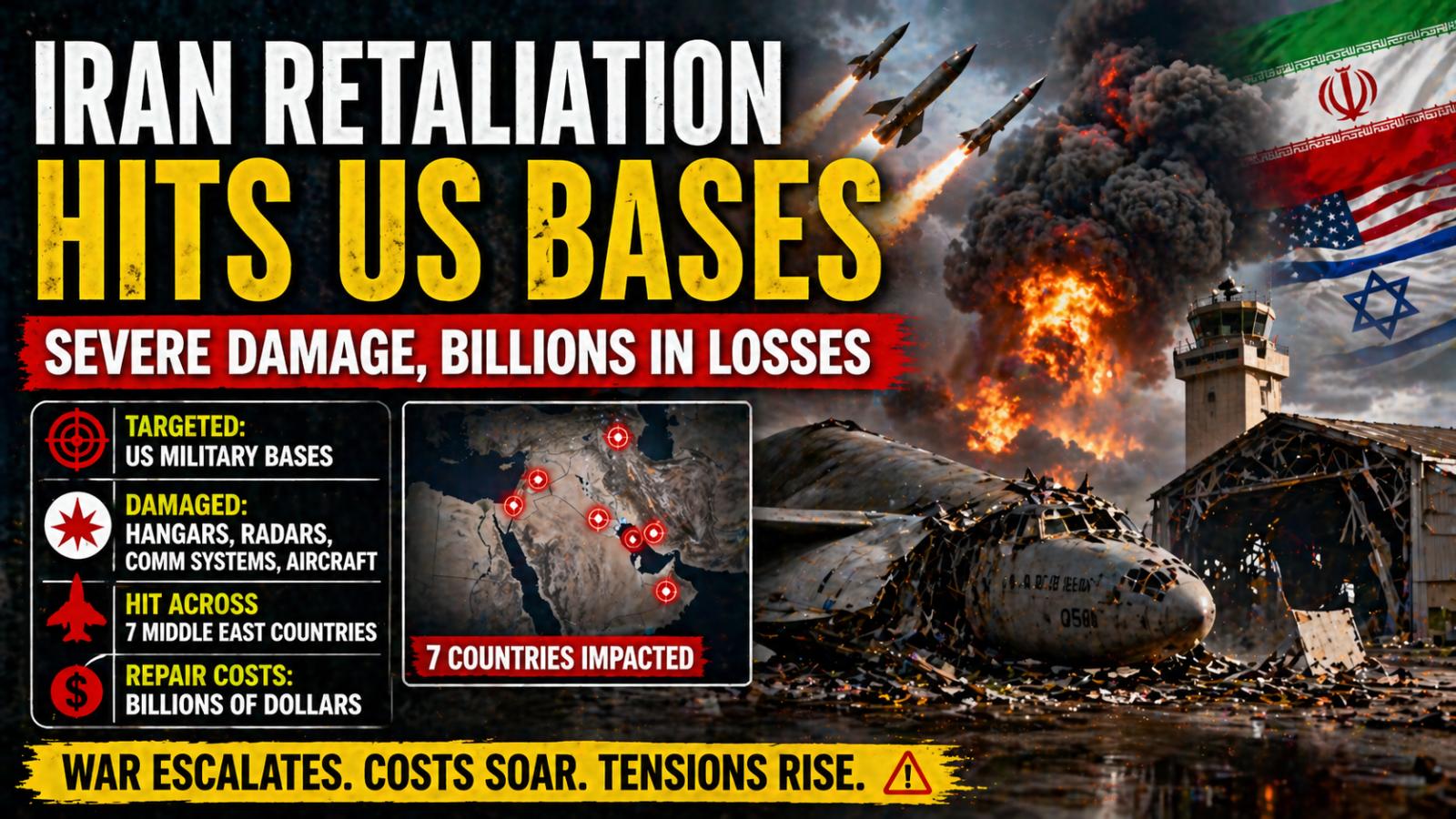
The Iran war, which began on Friday, February 28, 2026, following joint airstrikes by the United States and Israel, has led to widespread infrastructure destruction across Iran while also triggering significant retaliation. New reporting indicates that Iranian counterattacks have caused extensive damage to US military installations across the Middle East, raising concerns about escalating defense costs and regional instability.
Escalation after joint US-Israel airstrikes on
The Iran war, which began on Friday, February 28, 2026, following joint airstrikes by the United States and Israel, has led to widespread infrastructure destruction across Iran while also triggering significant retaliation. New reporting indicates that Iranian counterattacks have caused extensive damage to US military installations across the Middle East, raising concerns about escalating defense costs and regional instability.
Escalation after joint US-Israel airstrikes on
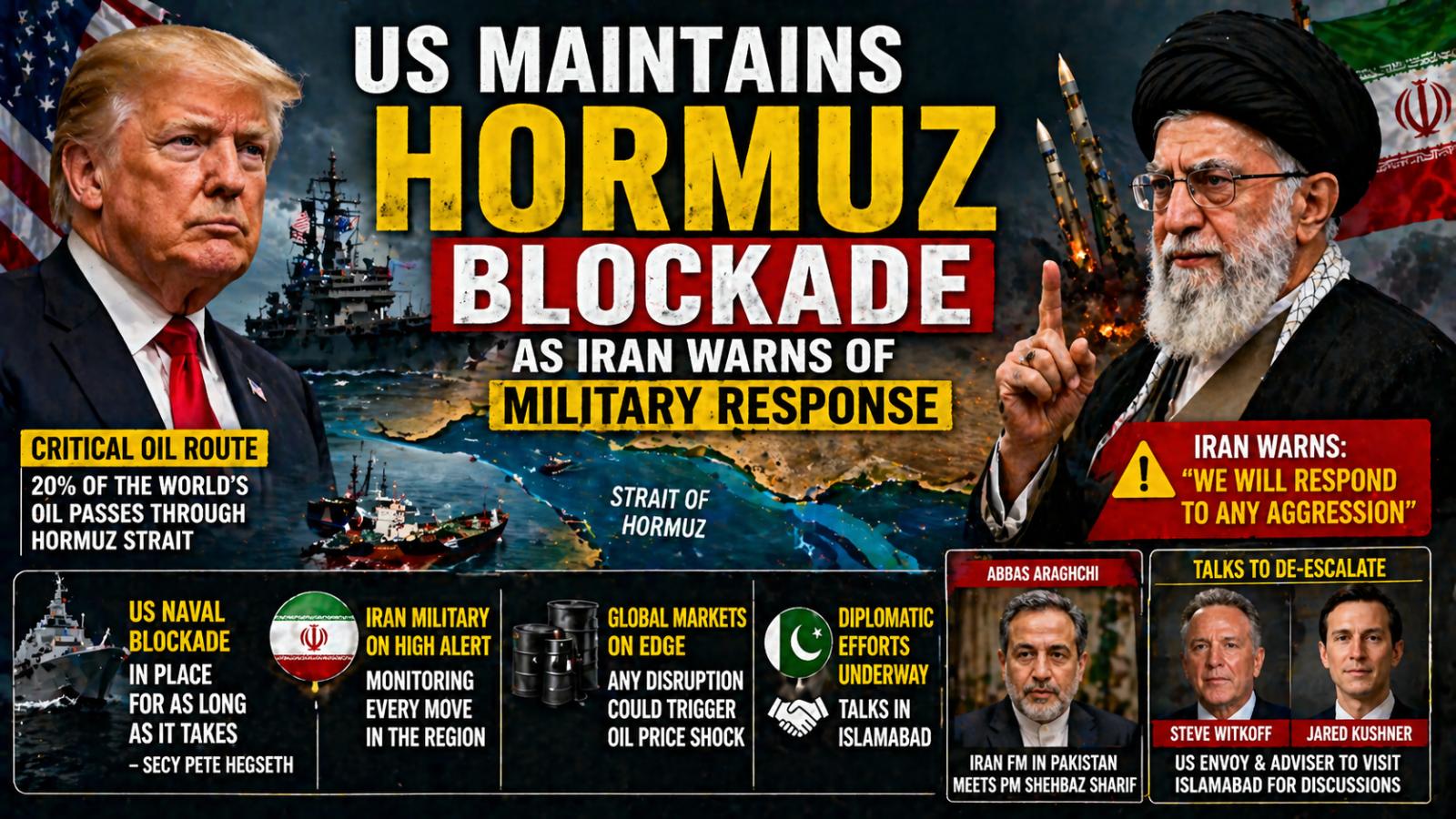
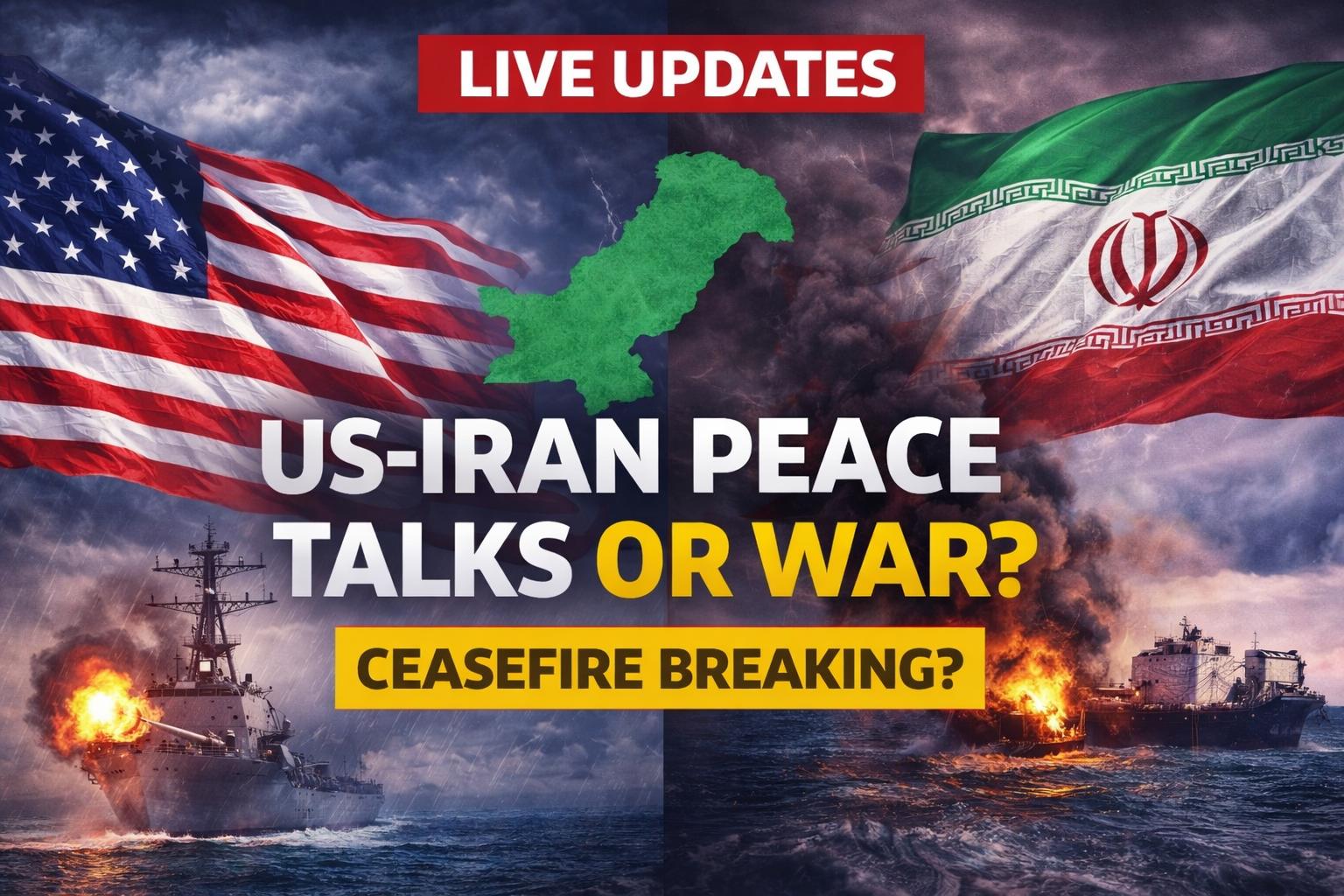
US maintains Hormuz blockade as Iran warns of retaliation, escalating tensions over a key global oil route while both sides pursue parallel diplomatic talks in Pakistan.
US maintains Hormuz blockade as Iran warns of military response as tensions escalated on Saturday, April 25, 2026, when Iranian officials warned they would respond if U.S. naval actions targeting Iranian ports continue. The statement, issued through state-run media, described the U.S. presence in t
US maintains Hormuz blockade as Iran warns of retaliation, escalating tensions over a key global oil route while both sides pursue parallel diplomatic talks in Pakistan.
US maintains Hormuz blockade as Iran warns of military response as tensions escalated on Saturday, April 25, 2026, when Iranian officials warned they would respond if U.S. naval actions targeting Iranian ports continue. The statement, issued through state-run media, described the U.S. presence in t
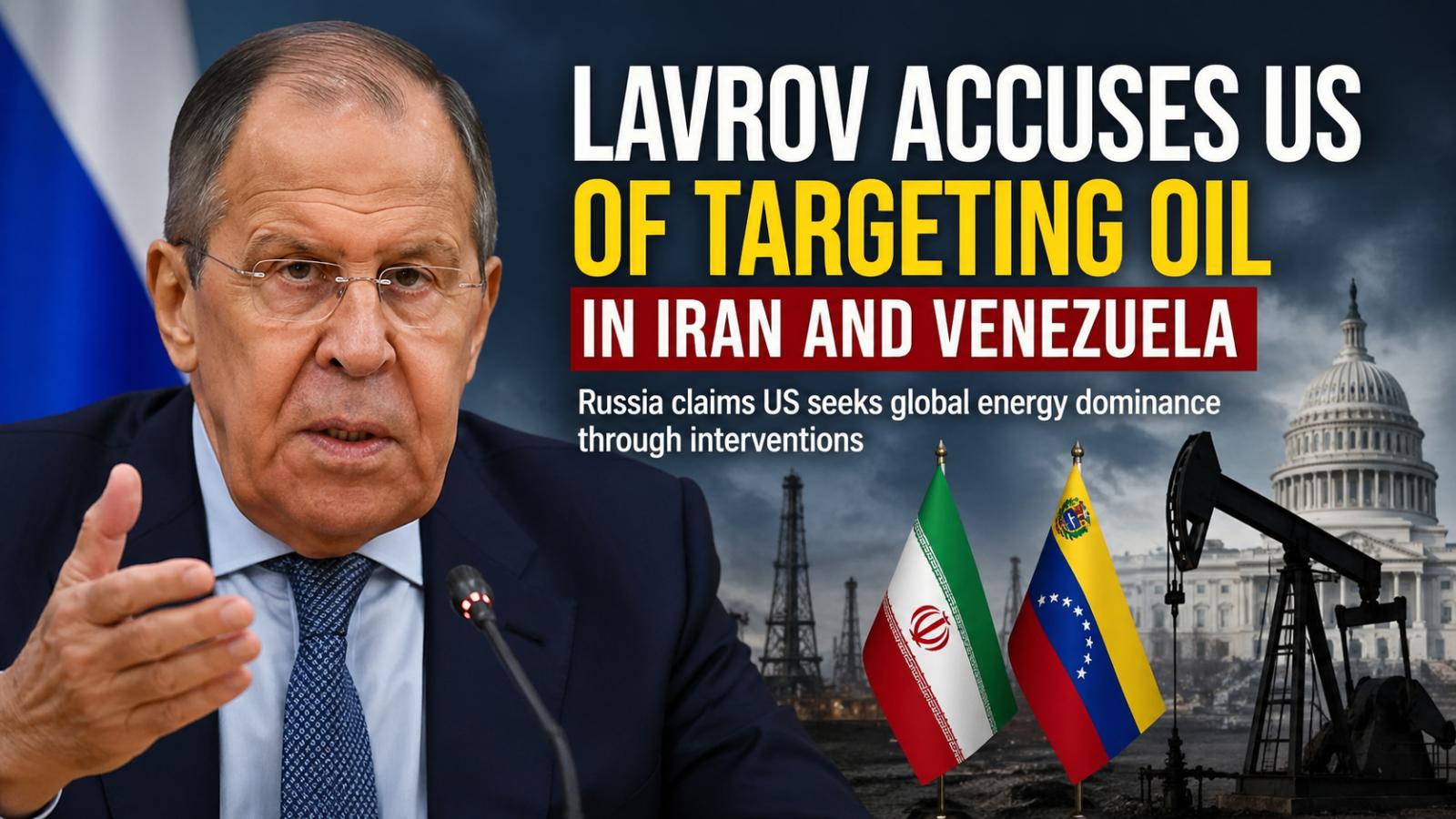
Russian Foreign Minister Sergei Lavrov has accused the United States of pursuing oil-driven policies in Iran and Venezuela, claiming that control over global energy resources is a central goal of Washington’s foreign strategy. Speaking in a televised interview, Lavrov said the US focuses primarily on its own interests and is willing to use extreme methods to secure access to oil and energy assets in resource-rich nations.
Lavrov alleged that US actions in countries such as Iran and Venezuela are not hidden, but openly tied to securing influence over energy markets. According to him, Washington’s approach reflects a broader ambition to dominate global energy supply chains. He argued that such policies show a shift away from international legal norms, suggesting that decisions are increasingly shaped by power rather than agreed rules.
The Russian minister also criticized the US for what he described as inconsistent diplomacy. He urged Washington to prioritize dialogue, stating that the US has a pattern of withdrawing from agreements instead of maintaining stable international commitments. His remarks come as American envoys prepare for discussions in Pakistan, signaling ongoing diplomatic engagement in the region.
The White House has indicated openness to negotiations with Iran, while maintaining that it will not act under pressure. Meanwhile, Iran’s Foreign Minister Abbas Araghchi has begun a regional visit, adding to the ongoing diplomatic activity surrounding the issue.
Lavrov further linked US foreign policy to developments in Europe, particularly in the context of the Ukraine conflict. He accused Washington of encouraging European nations to reduce dependence on Russian gas, framing this as part of a broader geopolitical strategy. According to Lavrov, such moves resemble attempts to reshape global energy dynamics in a way that benefits US interests, raising concerns about a return to power-based international relations.
Russian Foreign Minister Sergei Lavrov has accused the United States of pursuing oil-driven policies in Iran and Venezuela, claiming that control over global energy resources is a central goal of Washington’s foreign strategy. Speaking in a televised interview, Lavrov said the US focuses primarily on its own interests and is willing to use extreme methods to secure access to oil and energy assets in resource-rich nations.
Lavrov alleged that US actions in countries such as Iran and Venezuela are not hidden, but openly tied to securing influence over energy markets. According to him, Washington’s approach reflects a broader ambition to dominate global energy supply chains. He argued that such policies show a shift away from international legal norms, suggesting that decisions are increasingly shaped by power rather than agreed rules.
The Russian minister also criticized the US for what he described as inconsistent diplomacy. He urged Washington to prioritize dialogue, stating that the US has a pattern of withdrawing from agreements instead of maintaining stable international commitments. His remarks come as American envoys prepare for discussions in Pakistan, signaling ongoing diplomatic engagement in the region.
The White House has indicated openness to negotiations with Iran, while maintaining that it will not act under pressure. Meanwhile, Iran’s Foreign Minister Abbas Araghchi has begun a regional visit, adding to the ongoing diplomatic activity surrounding the issue.
Lavrov further linked US foreign policy to developments in Europe, particularly in the context of the Ukraine conflict. He accused Washington of encouraging European nations to reduce dependence on Russian gas, framing this as part of a broader geopolitical strategy. According to Lavrov, such moves resemble attempts to reshape global energy dynamics in a way that benefits US interests, raising concerns about a return to power-based international relations.
US deploys three aircraft carriers to the Middle East amid Iran tensions, expanding naval operations and reinforcing security in key maritime routes including the Strait of Hormuz.
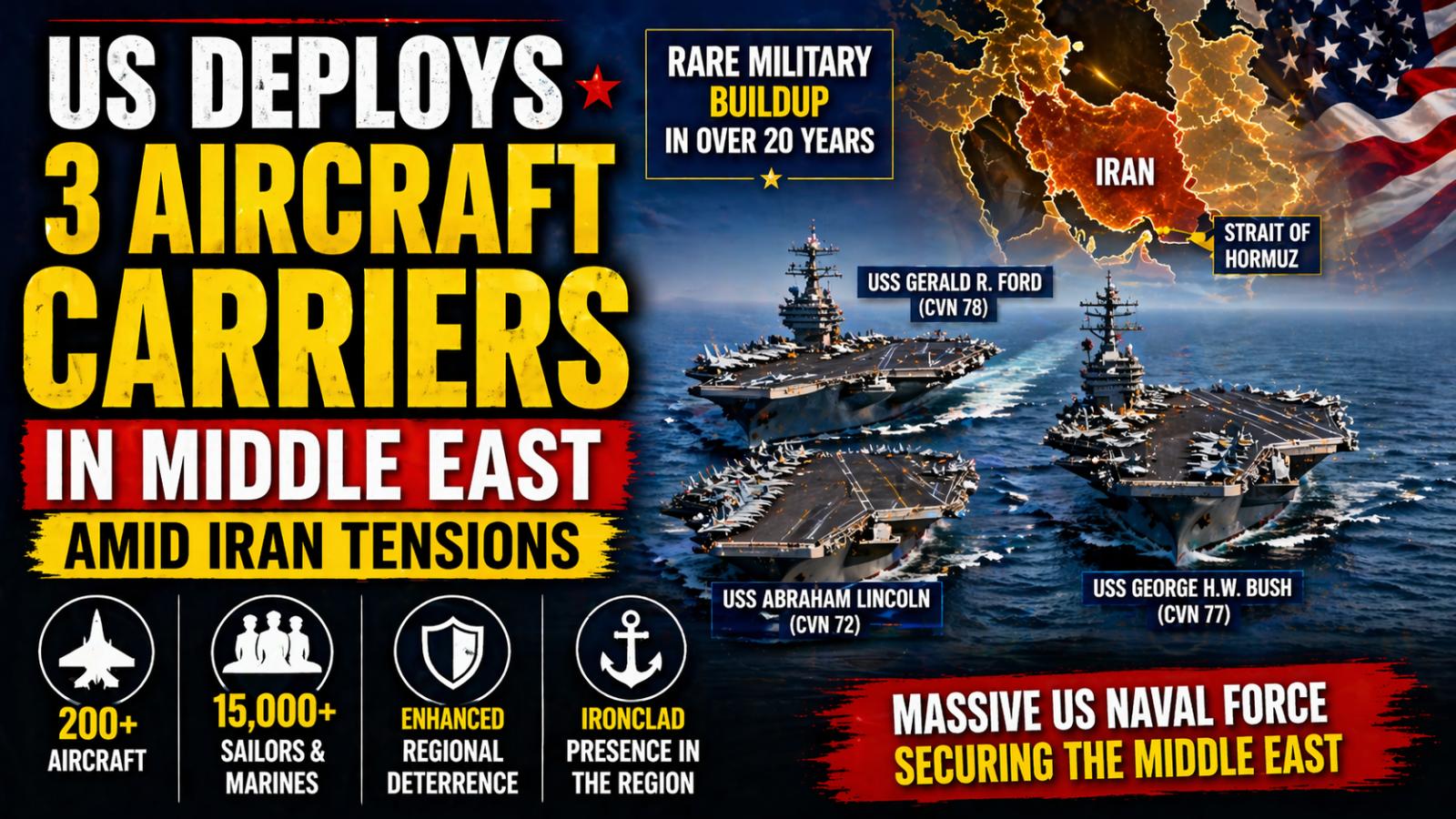
US deploys three aircraft carriers to Middle East amid Iran tensions as Washington significantly expands its military footprint across the region, marking one of the largest naval concentrations in more than two decades. Officials confirmed that three carrier strike groups—the USS Abraham Lincoln, USS Gerald R. Ford, and USS George H.W. Bush—are operating simultaneously, supported by more than 200 aircraft and approximately 15,000 sailors and Marines.
A statement from US Central Command on Thursday confirmed the rare deployment, describing it as a significant concentration of naval power aimed at maintaining operational readiness amid rising tensions involving Iran. The carrier groups and their air wings are conducting coordinated missions, underscoring the strategic importance of key maritime routes in the Middle East and reinforcing a broader posture of deterrence.
The announcement coincided with remarks from Donald Trump on Thursday, who declined to provide a timeline for a potential resolution to the Iran conflict. He indicated that any agreement would depend on conditions favorable to US interests, highlighting ongoing uncertainty surrounding diplomatic efforts. The absence of a clear timeline has aligned with increased military activity and messaging focused on regional stability.
Defense officials stated on Friday that the US blockade of Iranian vessels in the Strait of Hormuz remains “ironclad,” with additional naval assets expected to join the operation in the coming days. The expanding mission signals a broader enforcement effort in one of the world’s most critical shipping corridors. The USS George H.W. Bush, commissioned in 2009, is among the newest Nimitz-class carriers involved, measuring nearly 1,000 feet in length and powered by two nuclear reactors, with the capacity to carry more than 80 aircraft and support a crew exceeding 5,500 personnel.
US deploys three aircraft carriers to the Middle East amid Iran tensions, expanding naval operations and reinforcing security in key maritime routes including the Strait of Hormuz.
US deploys three aircraft carriers to Middle East amid Iran tensions as Washington significantly expands its military footprint across the region, marking one of the largest naval concentrations in more than two decades. Officials confirmed that three carrier strike groups—the USS Abraham Lincoln, USS Gerald R. Ford, and USS George H.W. Bush—are operating simultaneously, supported by more than 200 aircraft and approximately 15,000 sailors and Marines.
A statement from US Central Command on Thursday confirmed the rare deployment, describing it as a significant concentration of naval power aimed at maintaining operational readiness amid rising tensions involving Iran. The carrier groups and their air wings are conducting coordinated missions, underscoring the strategic importance of key maritime routes in the Middle East and reinforcing a broader posture of deterrence.
The announcement coincided with remarks from Donald Trump on Thursday, who declined to provide a timeline for a potential resolution to the Iran conflict. He indicated that any agreement would depend on conditions favorable to US interests, highlighting ongoing uncertainty surrounding diplomatic efforts. The absence of a clear timeline has aligned with increased military activity and messaging focused on regional stability.
Defense officials stated on Friday that the US blockade of Iranian vessels in the Strait of Hormuz remains “ironclad,” with additional naval assets expected to join the operation in the coming days. The expanding mission signals a broader enforcement effort in one of the world’s most critical shipping corridors. The USS George H.W. Bush, commissioned in 2009, is among the newest Nimitz-class carriers involved, measuring nearly 1,000 feet in length and powered by two nuclear reactors, with the capacity to carry more than 80 aircraft and support a crew exceeding 5,500 personnel.
Escalating diplomatic tensions after Tehran strike
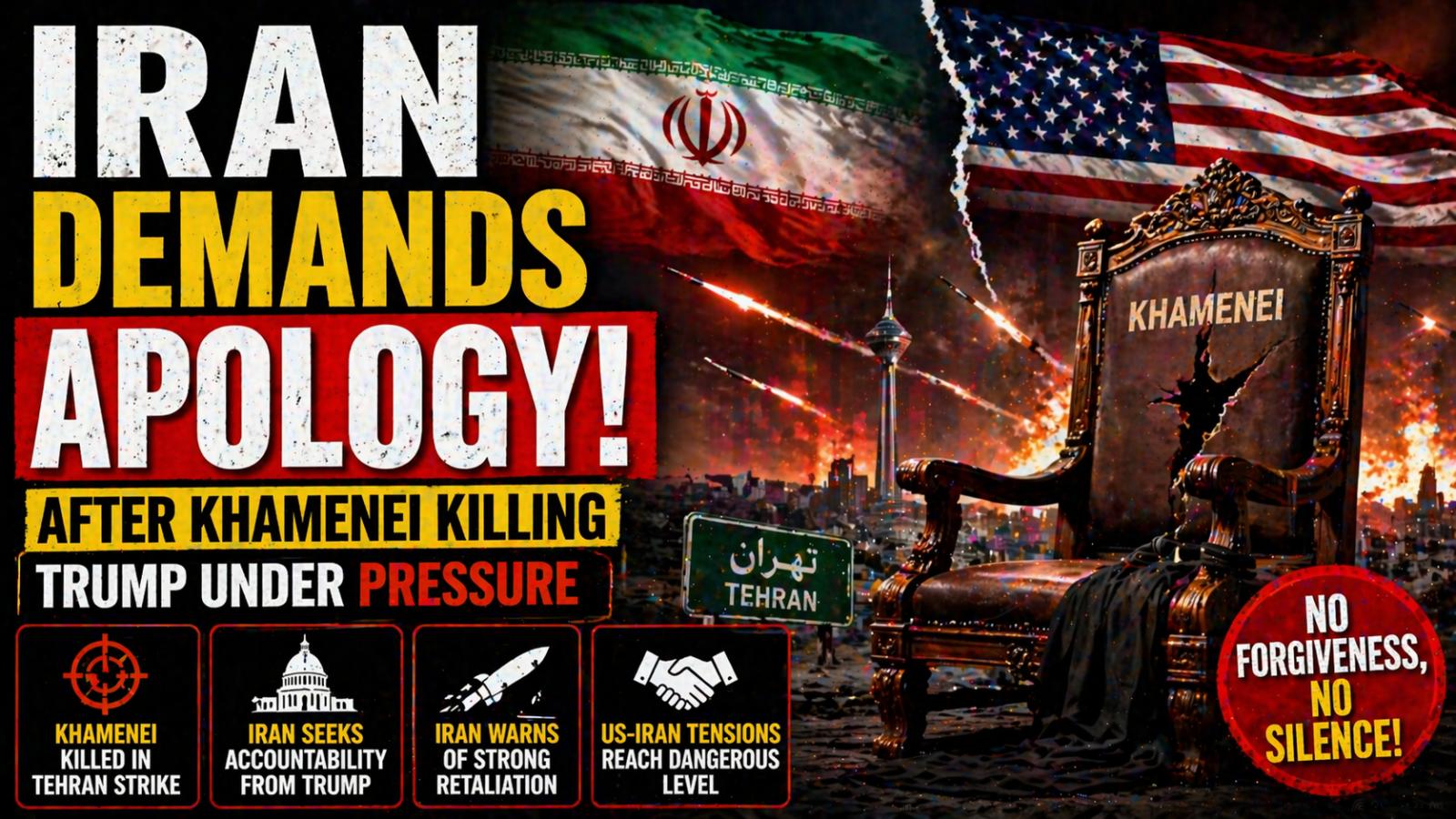
Why did Ali Shirazi demand an apology from Donald Trump? Iran seeks accountability after Khamenei killing, as senior Iranian cleric Ali Shirazi called on U.S. President Donald Trump to publicly acknowledge wrongdoing following t
Escalating diplomatic tensions after Tehran strike
Why did Ali Shirazi demand an apology from Donald Trump? Iran seeks accountability after Khamenei killing, as senior Iranian cleric Ali Shirazi called on U.S. President Donald Trump to publicly acknowledge wrongdoing following t
Sanctions pressure drives India’s planned exit from Chabahar port
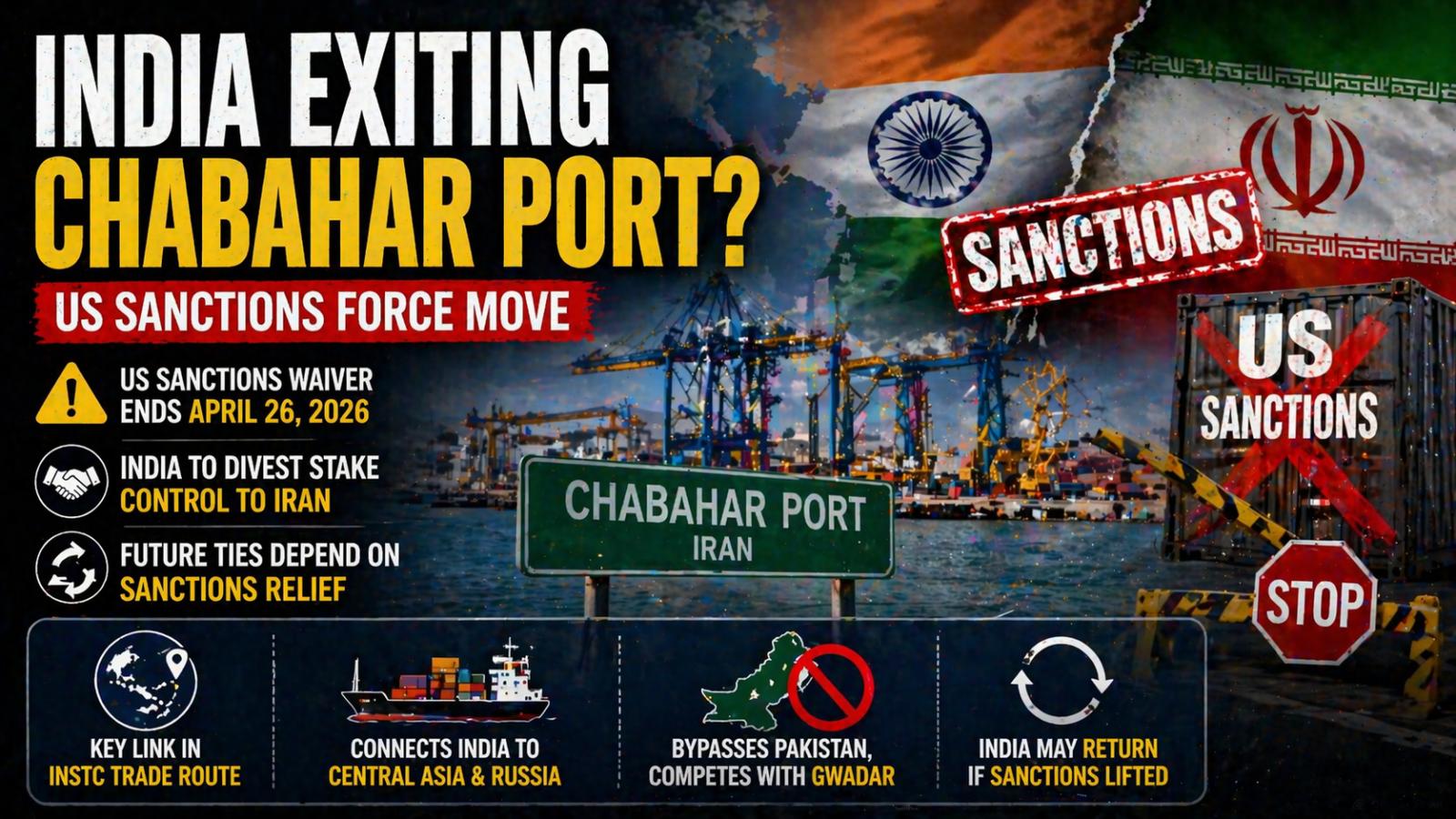
Why is India exiting Chabahar port? Government plans divestment amid US sanctions as New Delhi prepares to step back from the strategic Iranian port ahead of the expiration of a US sanctions waiver on Sunday, April 26, 2026. The move is expected to transfer operational control to a local Iranian entity while preserving the possibility of India’s return if sanctions are lifted or a new waiver is g
Sanctions pressure drives India’s planned exit from Chabahar port
Why is India exiting Chabahar port? Government plans divestment amid US sanctions as New Delhi prepares to step back from the strategic Iranian port ahead of the expiration of a US sanctions waiver on Sunday, April 26, 2026. The move is expected to transfer operational control to a local Iranian entity while preserving the possibility of India’s return if sanctions are lifted or a new waiver is g
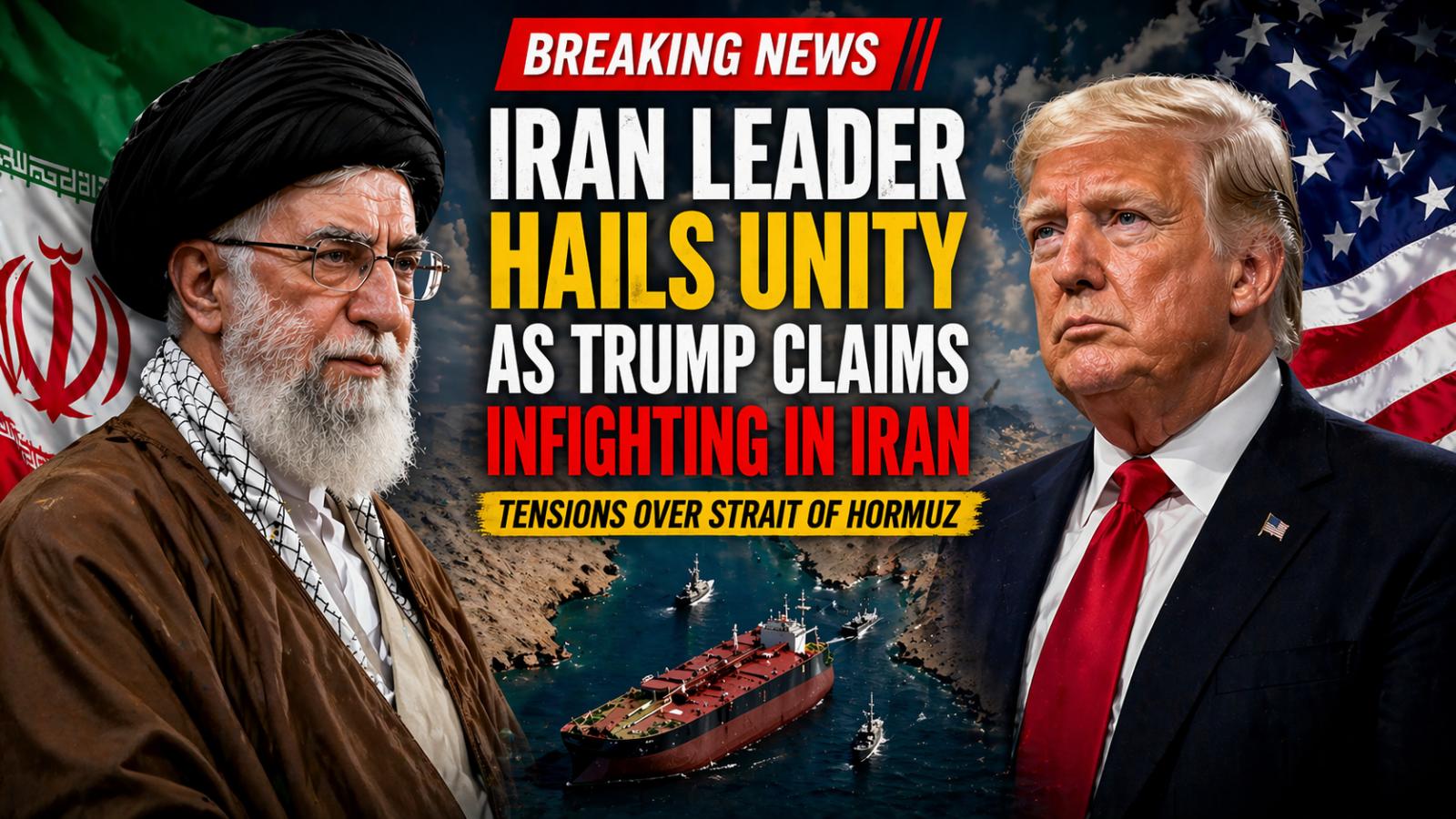
Mojtaba Khamenei has emphasized national unity in Iran, stating that collective cohesion among citizens has strengthened the country’s position amid ongoing tensions with the United States. In a public message, he described unity as a decisive factor in countering external pressure, urging continued commitment to national solidarity.
Khamenei’s remarks come as
Mojtaba Khamenei has emphasized national unity in Iran, stating that collective cohesion among citizens has strengthened the country’s position amid ongoing tensions with the United States. In a public message, he described unity as a decisive factor in countering external pressure, urging continued commitment to national solidarity.
Khamenei’s remarks come as
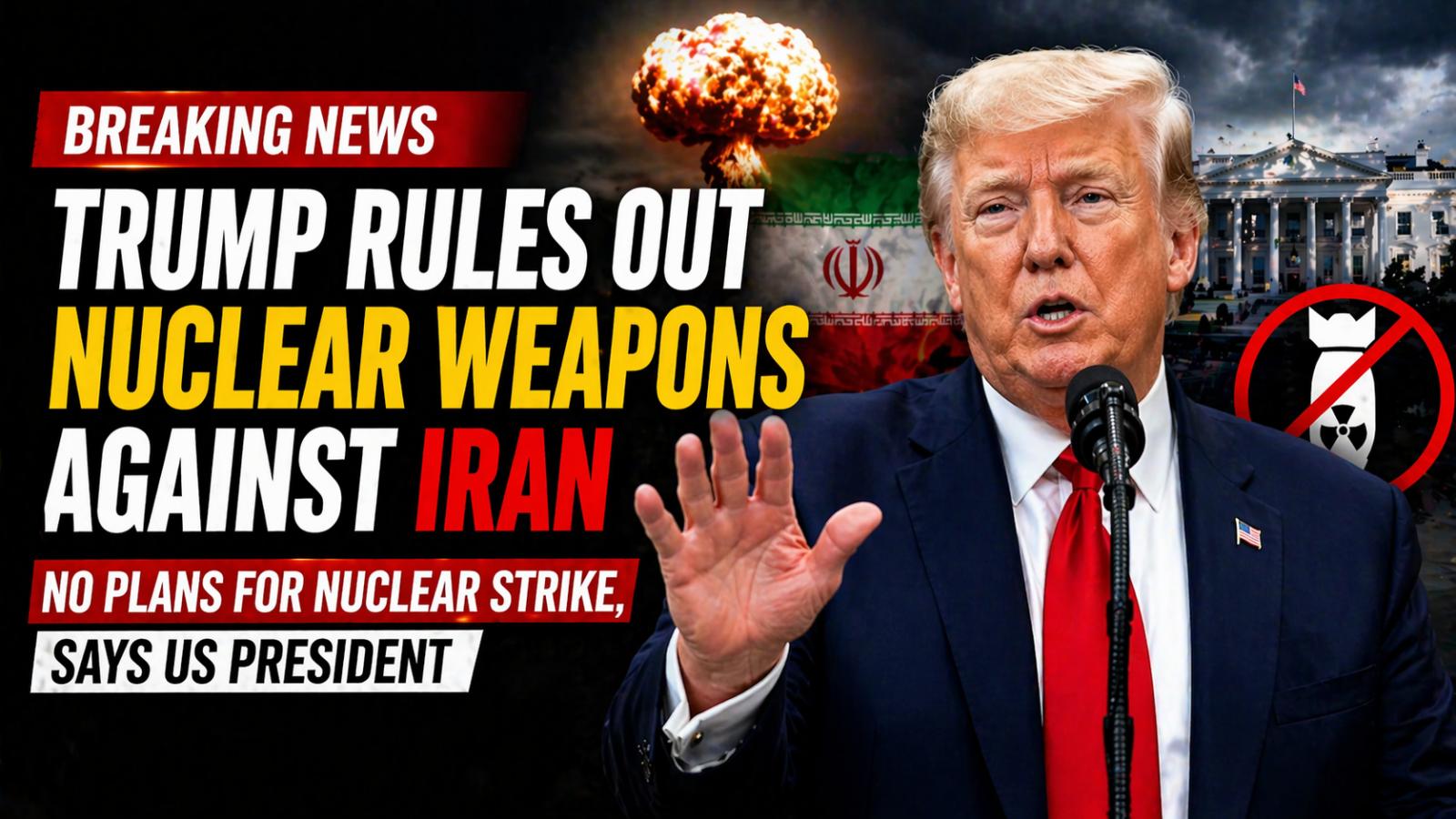
Donald Trump stated that the United States currently has no intention of using nuclear weapons against Iran, offering clarity on a key concern amid ongoing geopolitical tensions. Speaking to reporters at the White House, Trump emphasized that conventional military actions had already achieved significant results without the need for nuclear escalation.
Addressing recent speculation, Trump said there was no justification for deploying nuclear weapons, noting that existing strategies had been effective. His remarks come after earlier statements that had drawn international attention, where strong rhetoric raised concerns about the potential use of extreme measures during the conflict that began earlier this year.
The president reiterated that nuclear weapons should not be used by any nation, signaling a shift toward a more restrained public stance. At the same time, he underscored the administration’s objective of preventing Iran from developing nuclear capabilities that could pose a threat to regional and global security.
Comments from senior officials have also contributed to the broader discussion. JD Vance had previously indicated that the United States was prepared to escalate its response if necessary, though the White House clarified that such remarks did not imply nuclear action.
Trump’s latest statement appears to balance deterrence with reassurance, highlighting a focus on maintaining pressure through conventional means while avoiding the risks associated with nuclear engagement. As tensions persist, the administration continues to stress its commitment to preventing further escalation while safeguarding national interests and stability in the region.
Donald Trump stated that the United States currently has no intention of using nuclear weapons against Iran, offering clarity on a key concern amid ongoing geopolitical tensions. Speaking to reporters at the White House, Trump emphasized that conventional military actions had already achieved significant results without the need for nuclear escalation.
Addressing recent speculation, Trump said there was no justification for deploying nuclear weapons, noting that existing strategies had been effective. His remarks come after earlier statements that had drawn international attention, where strong rhetoric raised concerns about the potential use of extreme measures during the conflict that began earlier this year.
The president reiterated that nuclear weapons should not be used by any nation, signaling a shift toward a more restrained public stance. At the same time, he underscored the administration’s objective of preventing Iran from developing nuclear capabilities that could pose a threat to regional and global security.
Comments from senior officials have also contributed to the broader discussion. JD Vance had previously indicated that the United States was prepared to escalate its response if necessary, though the White House clarified that such remarks did not imply nuclear action.
Trump’s latest statement appears to balance deterrence with reassurance, highlighting a focus on maintaining pressure through conventional means while avoiding the risks associated with nuclear engagement. As tensions persist, the administration continues to stress its commitment to preventing further escalation while safeguarding national interests and stability in the region.
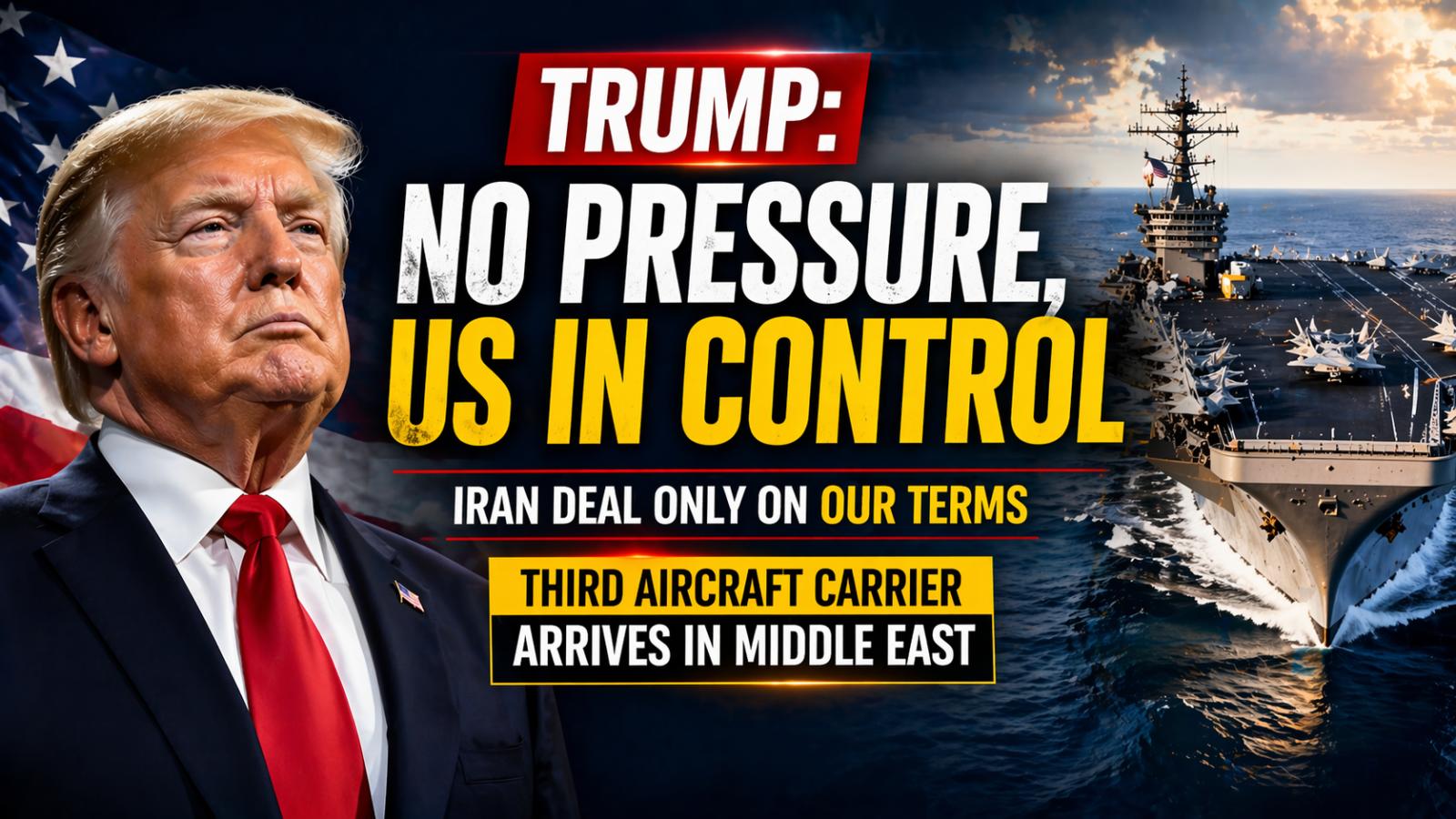
US President Donald Trump has dismissed speculation that Washington is under pressure to secure a deal with Iran, stating that the United States is in no rush to negotiate amid ongoing tensions. In a recent statement, Trump emphasized that while the US has the flexibility to wait, Iran faces increasing urgency as conditions evolve.
He asserted that recent developments have significantly weakened Iran’s military capabilities, pointing to setbacks across its naval and air forces as well as the degradation of its defense systems. Trump also highlighted what he described as a tightening blockade, suggesting that the strategic balance currently favors the United States and its allies. He reiterated that any agreement would only move forward if it aligns with American interests and broader global stability, rejecting claims that his administration is eager to conclude talks quickly.
At the same time, the US military has reinforced its presence in the region. United States Central Command confirmed the arrival of a third aircraft carrier, the USS George H.W. Bush, into its operational zone. The carrier is currently positioned in the Indian Ocean, joining the USS Abraham Lincoln in the Arabian Sea and the USS Gerald R. Ford in the Red Sea.
The deployment marks a notable expansion of US naval strength in the Middle East during a fragile ceasefire period. The USS George H.W. Bush followed an unusual route, traveling around the Horn of Africa before entering the region, underscoring the strategic importance of its positioning.
These developments reflect a continued emphasis on military readiness while diplomatic uncertainty persists, with Washington signaling that timing and terms of any agreement will remain firmly under its control.
US President Donald Trump has dismissed speculation that Washington is under pressure to secure a deal with Iran, stating that the United States is in no rush to negotiate amid ongoing tensions. In a recent statement, Trump emphasized that while the US has the flexibility to wait, Iran faces increasing urgency as conditions evolve.
He asserted that recent developments have significantly weakened Iran’s military capabilities, pointing to setbacks across its naval and air forces as well as the degradation of its defense systems. Trump also highlighted what he described as a tightening blockade, suggesting that the strategic balance currently favors the United States and its allies. He reiterated that any agreement would only move forward if it aligns with American interests and broader global stability, rejecting claims that his administration is eager to conclude talks quickly.
At the same time, the US military has reinforced its presence in the region. United States Central Command confirmed the arrival of a third aircraft carrier, the USS George H.W. Bush, into its operational zone. The carrier is currently positioned in the Indian Ocean, joining the USS Abraham Lincoln in the Arabian Sea and the USS Gerald R. Ford in the Red Sea.
The deployment marks a notable expansion of US naval strength in the Middle East during a fragile ceasefire period. The USS George H.W. Bush followed an unusual route, traveling around the Horn of Africa before entering the region, underscoring the strategic importance of its positioning.
These developments reflect a continued emphasis on military readiness while diplomatic uncertainty persists, with Washington signaling that timing and terms of any agreement will remain firmly under its control.
EU approves major Ukraine aid and new Russia sanctions after resolving internal disputes, strengthening Kyiv’s position and increasing pressure on Moscow amid ongoing war.
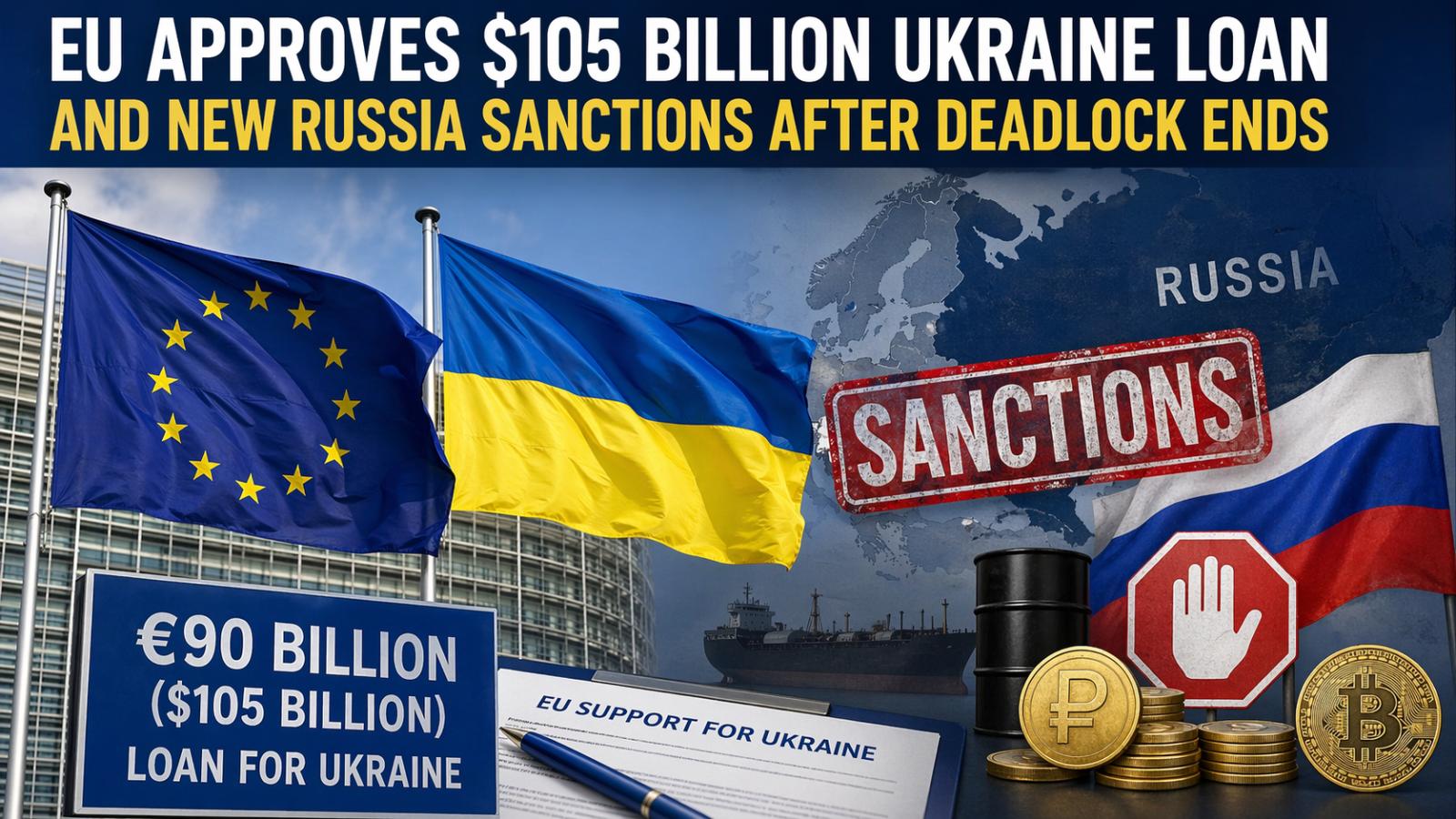
EU approves $105 billion Ukraine loan and new Russia sanctions after deadlock ends. The European Union on Thursday, April 23, 2026, granted final approval to a €90 billion ($105 billion) loan for Ukraine and endorsed a new round of sanctions against Russia, marking a significant shift
EU approves major Ukraine aid and new Russia sanctions after resolving internal disputes, strengthening Kyiv’s position and increasing pressure on Moscow amid ongoing war.
EU approves $105 billion Ukraine loan and new Russia sanctions after deadlock ends. The European Union on Thursday, April 23, 2026, granted final approval to a €90 billion ($105 billion) loan for Ukraine and endorsed a new round of sanctions against Russia, marking a significant shift
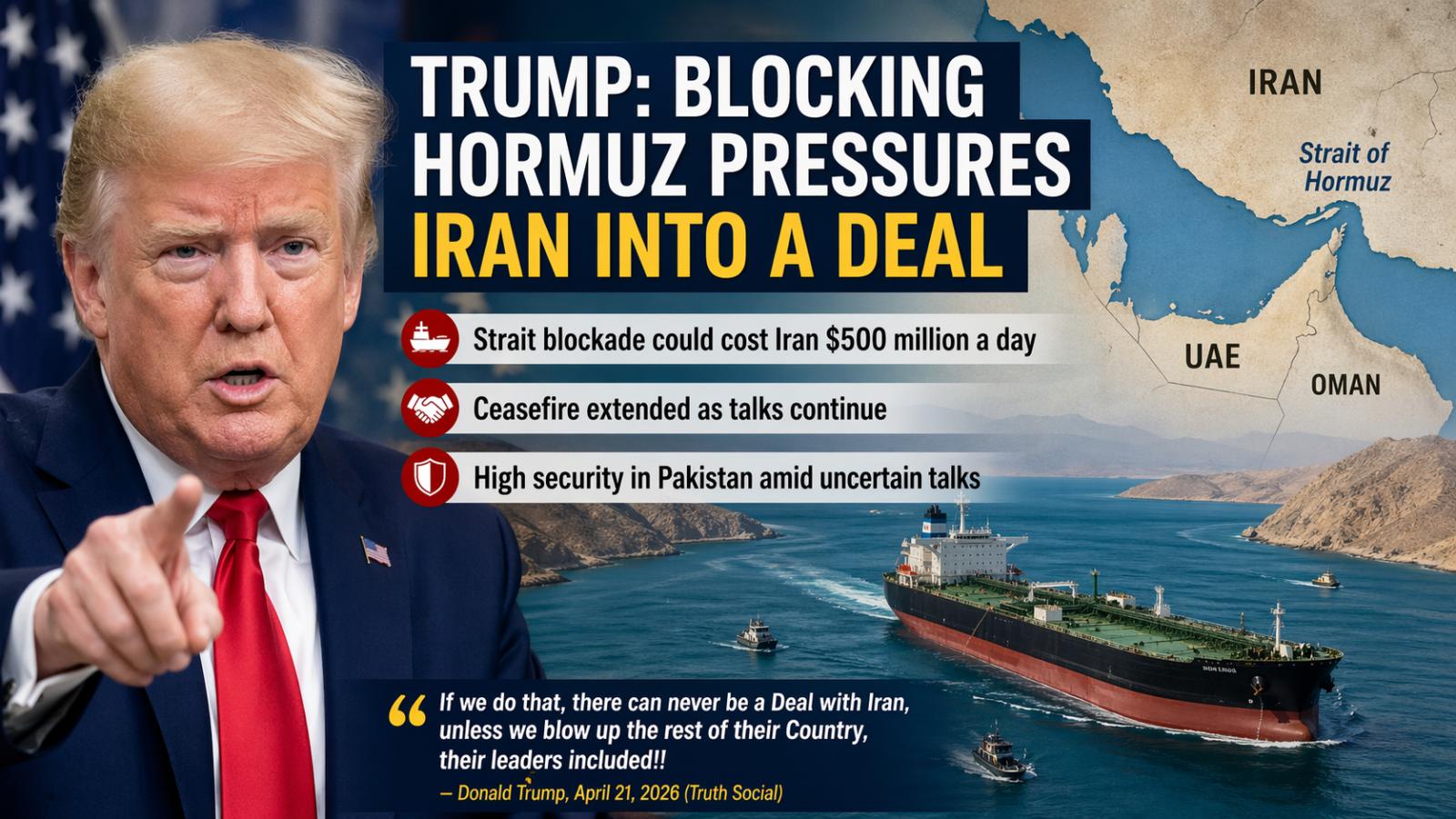
US President Donald Trump said on Tuesday, April 21, 2026, that Iran is seeking to reopen the Strait of Hormuz but argued that maintaining a blockade is key to forcing Tehran into a negotiated agreement. Writing on Truth Social, Trump claimed Iran could generate up to $500 million per day if the passage were reopened, adding that its closure has significantly constrained the country’s finances.
Trump stated that he has “totally blocked” the strait and suggested Iranian officials are publicly calling for closure only to “save face.” He further warned that reopening the waterway prematurely would weaken US leverage in ongoing negotiations, reiterating aggressive rhetoric about potential military escalation if talks fail. He also described Iran as facing severe economic strain, claiming it is “collapsing financially.”
Ceasefire extension linked to diplomatic efforts
The remarks came as Trump confirmed an extension of a 10-day ceasefire with Iran, originally set to expire on Wednesday, April 22, 2026. He said the extension followed requests from Asim Munir and Shehbaz Sharif, with the goal of allowing more time for diplomatic engagement.
While the US has not confirmed Iran’s participation in talks, Tehran’s envoy to the United Nations, Amir Saeid Iravani, indicated that lifting naval restrictions could create conditions for negotiations. However, the White House said Vice President JD Vance and the US delegation would not travel to Pakistan for discussions.
Security tightens around Pakistan negotiations
In Islamabad and nearby Rawalpindi, authorities deployed more than 20,000 security personnel amid uncertainty surrounding the talks. The heightened security underscores regional tensions as diplomatic channels remain unclear.
Trump’s ongoing messaging and additional demands
Trump has continued frequent postings on Iran, combining threats with appeals. He called for the release of eight women reportedly facing execution in Iran, framing it as a goodwill step ahead of potential negotiations. At the same time, he accused Iran of violating the ceasefire multiple times without providing details.
In separate comments, Trump praised what he described as a prior US military operation targeting Iranian nuclear sites and repeated claims about Iran’s economic and strategic vulnerabilities.
US President Donald Trump said on Tuesday, April 21, 2026, that Iran is seeking to reopen the Strait of Hormuz but argued that maintaining a blockade is key to forcing Tehran into a negotiated agreement. Writing on Truth Social, Trump claimed Iran could generate up to $500 million per day if the passage were reopened, adding that its closure has significantly constrained the country’s finances.
Trump stated that he has “totally blocked” the strait and suggested Iranian officials are publicly calling for closure only to “save face.” He further warned that reopening the waterway prematurely would weaken US leverage in ongoing negotiations, reiterating aggressive rhetoric about potential military escalation if talks fail. He also described Iran as facing severe economic strain, claiming it is “collapsing financially.”
Ceasefire extension linked to diplomatic efforts
The remarks came as Trump confirmed an extension of a 10-day ceasefire with Iran, originally set to expire on Wednesday, April 22, 2026. He said the extension followed requests from Asim Munir and Shehbaz Sharif, with the goal of allowing more time for diplomatic engagement.
While the US has not confirmed Iran’s participation in talks, Tehran’s envoy to the United Nations, Amir Saeid Iravani, indicated that lifting naval restrictions could create conditions for negotiations. However, the White House said Vice President JD Vance and the US delegation would not travel to Pakistan for discussions.
Security tightens around Pakistan negotiations
In Islamabad and nearby Rawalpindi, authorities deployed more than 20,000 security personnel amid uncertainty surrounding the talks. The heightened security underscores regional tensions as diplomatic channels remain unclear.
Trump’s ongoing messaging and additional demands
Trump has continued frequent postings on Iran, combining threats with appeals. He called for the release of eight women reportedly facing execution in Iran, framing it as a goodwill step ahead of potential negotiations. At the same time, he accused Iran of violating the ceasefire multiple times without providing details.
In separate comments, Trump praised what he described as a prior US military operation targeting Iranian nuclear sites and repeated claims about Iran’s economic and strategic vulnerabilities.
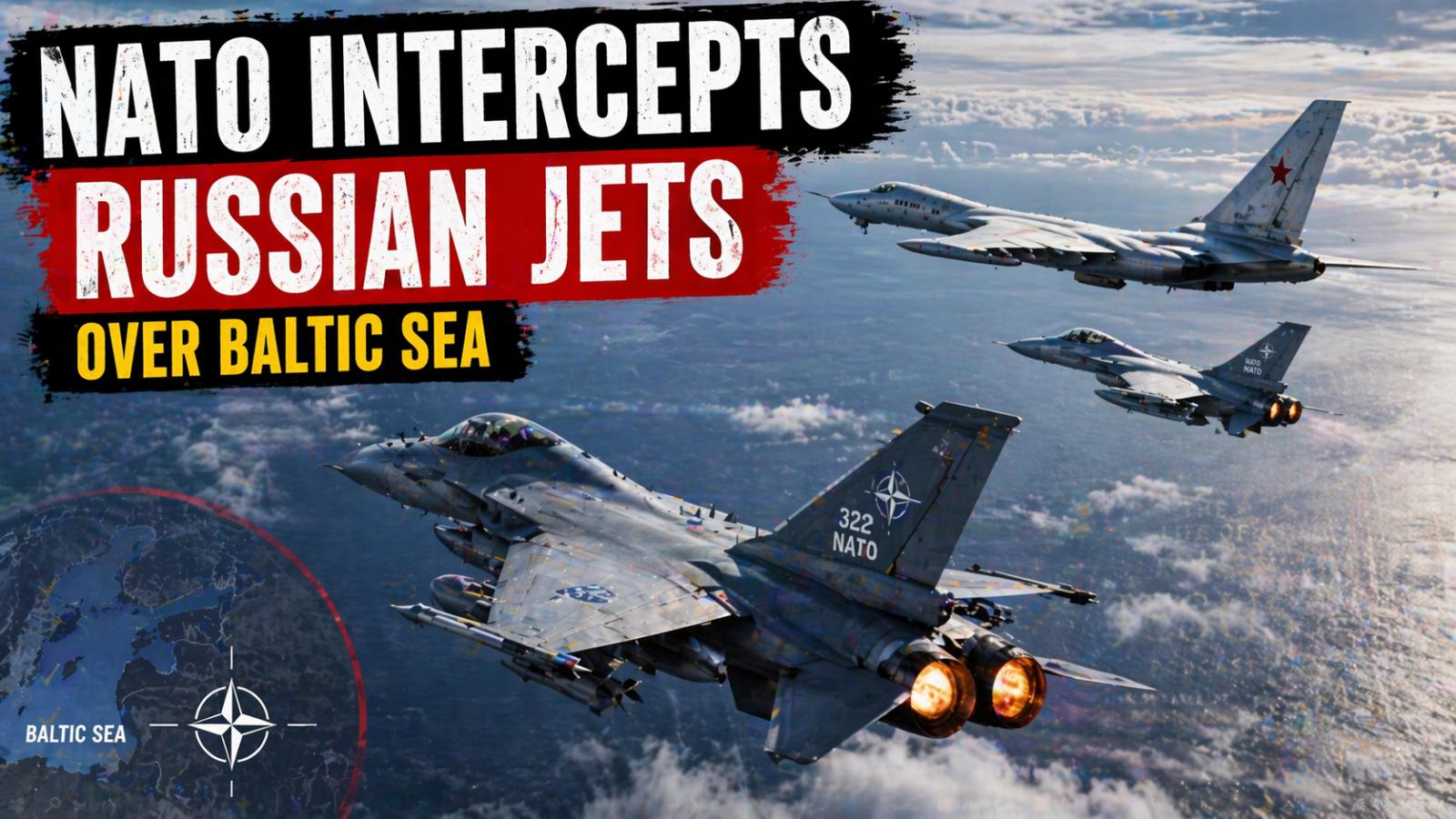
The NATO intercept Russian jets Baltic Sea incident has once again highlighted rising military tensions in Europe. Fighter jets from multiple NATO nations were scrambled to monitor Russian aircraft, signaling a strong show of force along the alliance’s eastern flank.
What happened and why it matters
On April 22, 2026, NATO forces launched a coordinated
The NATO intercept Russian jets Baltic Sea incident has once again highlighted rising military tensions in Europe. Fighter jets from multiple NATO nations were scrambled to monitor Russian aircraft, signaling a strong show of force along the alliance’s eastern flank.
What happened and why it matters
On April 22, 2026, NATO forces launched a coordinated
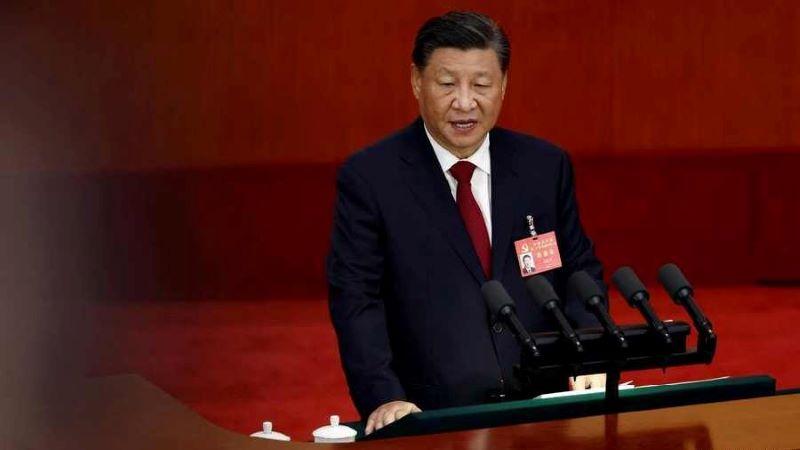
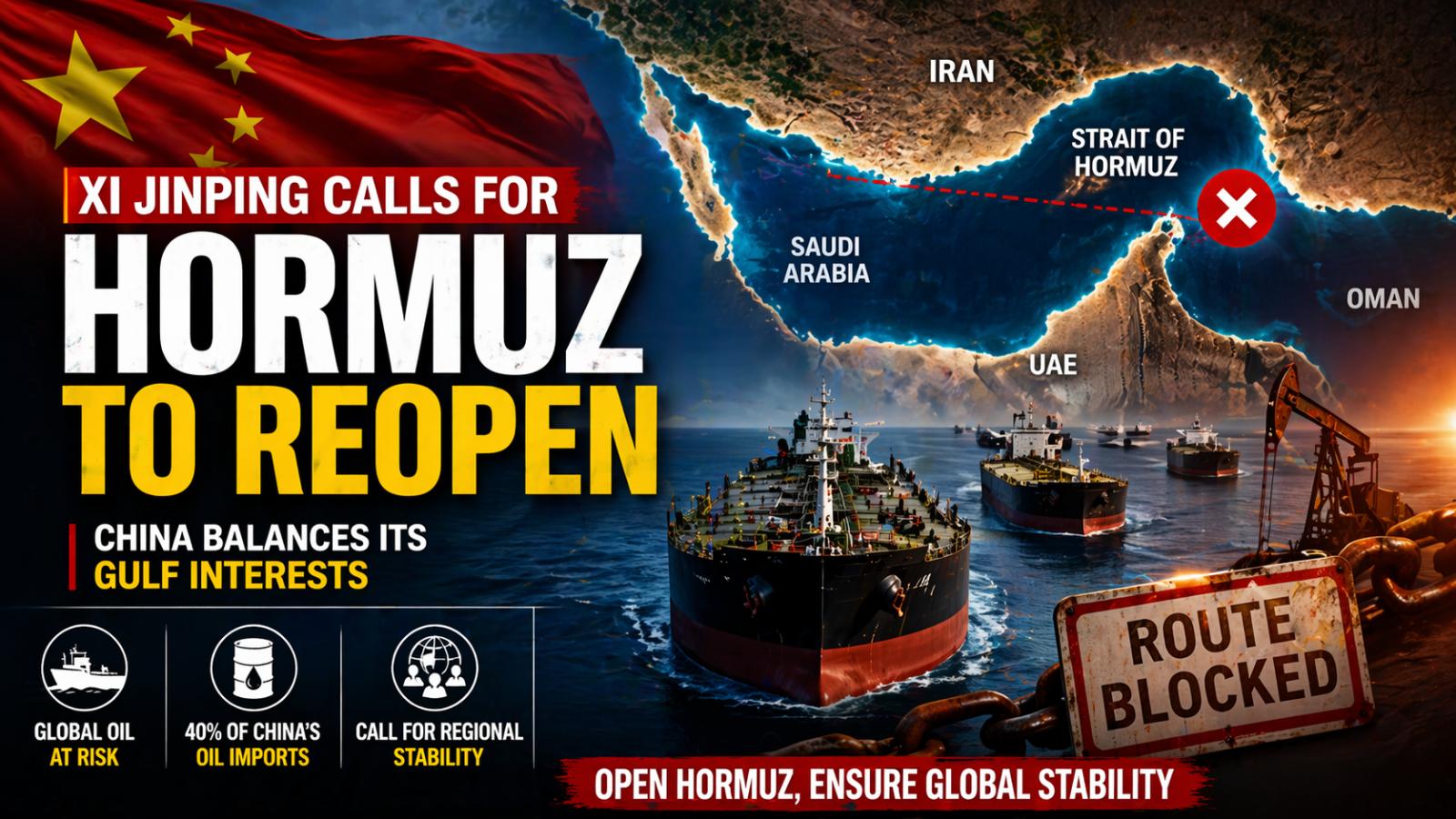
The Xi Jinping Hormuz statement has drawn global attention as China’s leader called for the reopening of the critical Strait of Hormuz. The move comes amid rising tensions in the Middle East and highlights China’s delicate balancing act between strategic alliances and economic interests.
What happened and why it matters
On Monday, April 20, 2026, Chin
The Xi Jinping Hormuz statement has drawn global attention as China’s leader called for the reopening of the critical Strait of Hormuz. The move comes amid rising tensions in the Middle East and highlights China’s delicate balancing act between strategic alliances and economic interests.
What happened and why it matters
On Monday, April 20, 2026, Chin
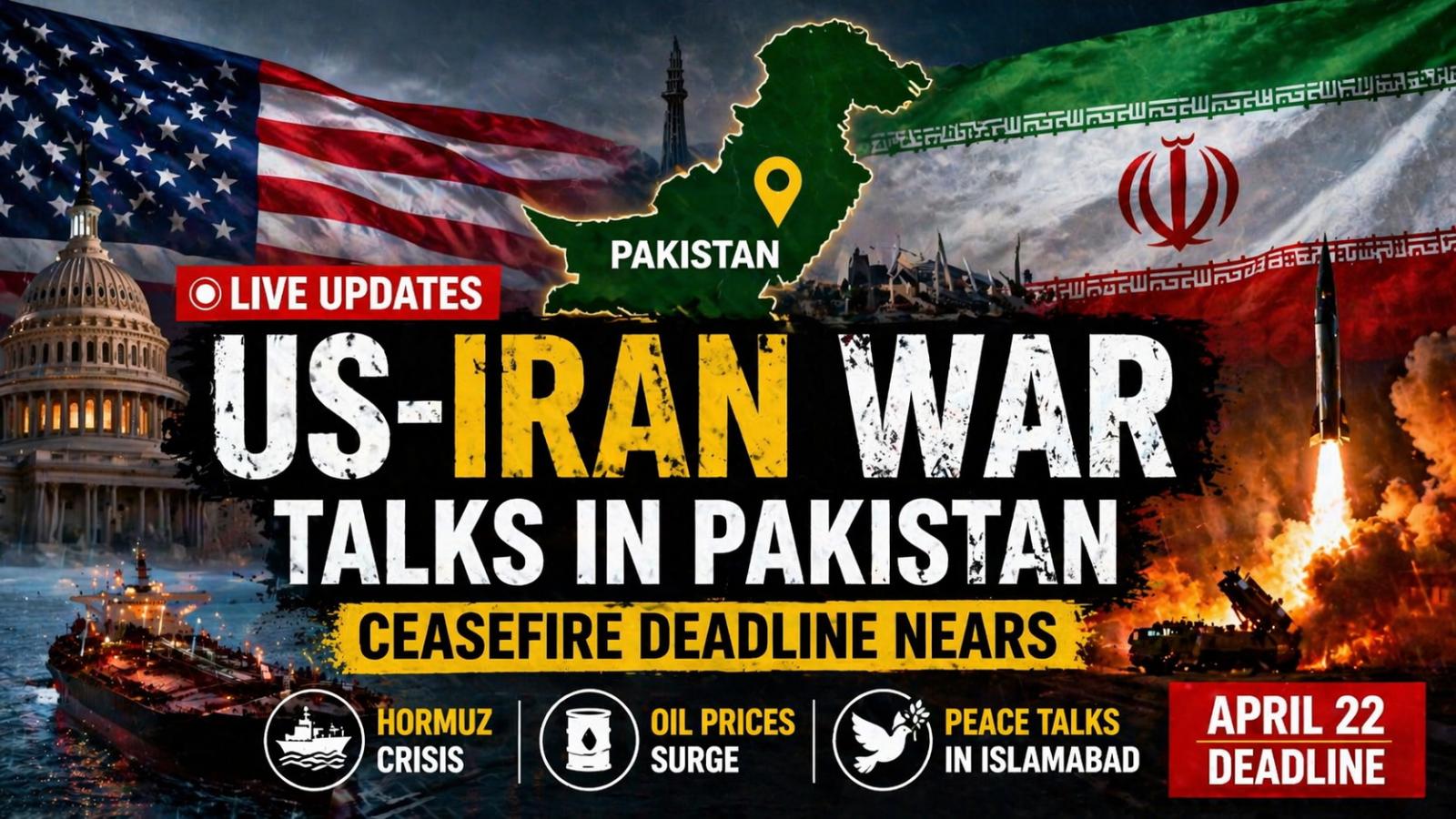
The US Iran war talks in Pakistan are drawing global attention as uncertainty continues over Tehran’s participation in upcoming peace negotiations. With the ceasefire deadline just days away, rising tensions are keeping the world on edge.
What happened and why it matters
On Monday, April 20, 2026, reports suggested that both the United States and Iran h
The US Iran war talks in Pakistan are drawing global attention as uncertainty continues over Tehran’s participation in upcoming peace negotiations. With the ceasefire deadline just days away, rising tensions are keeping the world on edge.
What happened and why it matters
On Monday, April 20, 2026, reports suggested that both the United States and Iran h
The US Iran peace talks Pakistan update is drawing global attention as Washington and Tehran prepare for a new round of negotiations. With the ceasefire nearing its deadline, the outcome of these talks could significantly impact global stability and energy markets.
What happened and why it matters
On Monday, April 20, 2026, both the United States and Iran signaled that they are preparing to send delegations to
The US Iran peace talks Pakistan update is drawing global attention as Washington and Tehran prepare for a new round of negotiations. With the ceasefire nearing its deadline, the outcome of these talks could significantly impact global stability and energy markets.
What happened and why it matters
On Monday, April 20, 2026, both the United States and Iran signaled that they are preparing to send delegations to
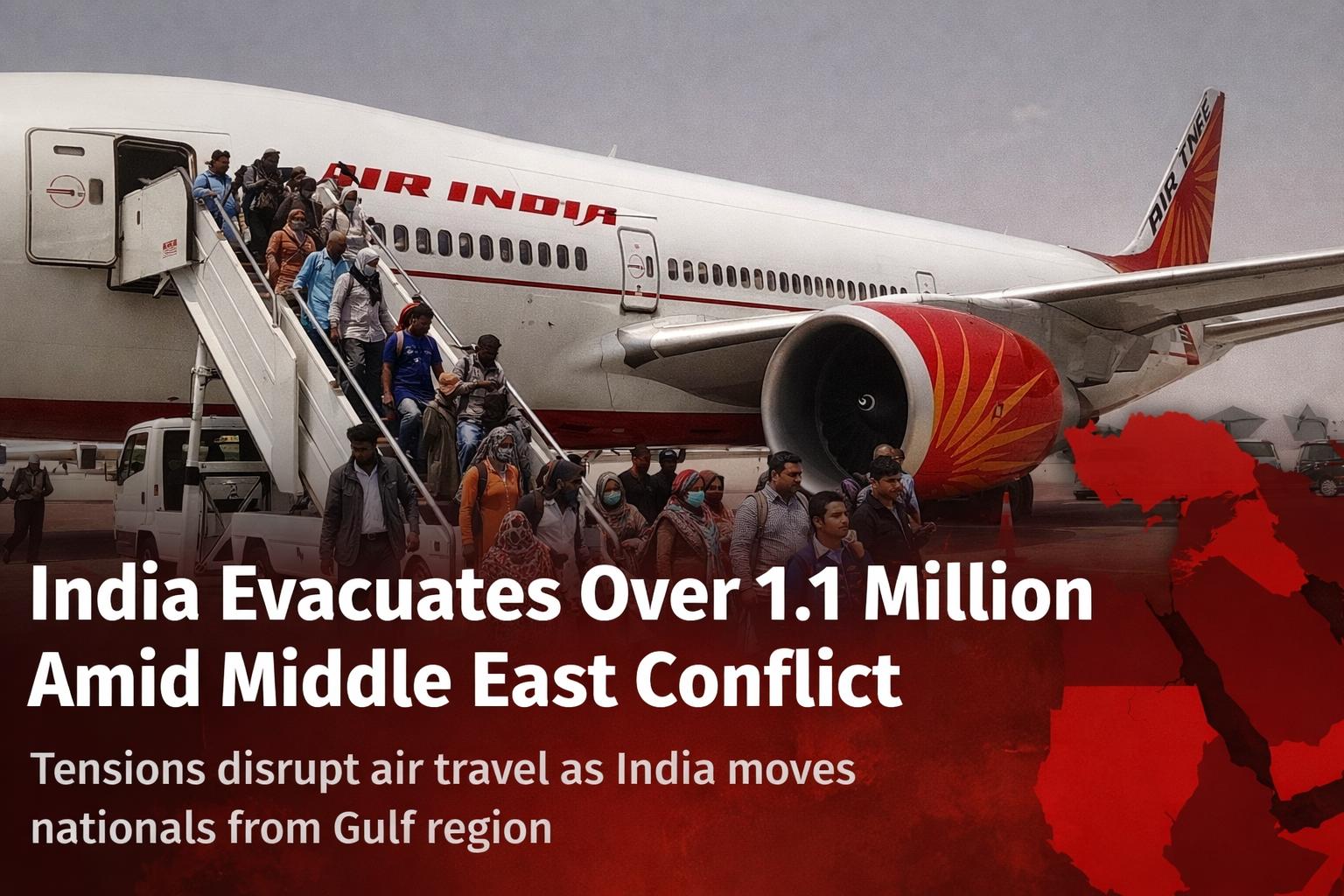
India has evacuated more than 1.1 million people from West Asia as regional tensions and airspace restrictions continue to disrupt commercial travel, officials said during a government briefing in New Delhi. The large-scale movement has been carried out through sustained flight operations from multiple countries, with authorities relying on alternate routes where airspace remains accessible.
Officials said that since February 28, approximately 1,130,000 passengers have traveled fro
India has evacuated more than 1.1 million people from West Asia as regional tensions and airspace restrictions continue to disrupt commercial travel, officials said during a government briefing in New Delhi. The large-scale movement has been carried out through sustained flight operations from multiple countries, with authorities relying on alternate routes where airspace remains accessible.
Officials said that since February 28, approximately 1,130,000 passengers have traveled fro