





Kavitha Secures TRS Name, Deals Major Blow to KCR and BRS Strategy
A major political development has unfolded in Telangana as K. Kavitha has successfully secured the TRS name for her new political party, creating fresh tensions within the state’s political landscape. This move is seen as a direct challenge to K. Chandrashekar Rao and his party, now known as
Kavitha Secures TRS Name, Deals Major Blow to KCR and BRS Strategy
A major political development has unfolded in Telangana as K. Kavitha has successfully secured the TRS name for her new political party, creating fresh tensions within the state’s political landscape. This move is seen as a direct challenge to K. Chandrashekar Rao and his party, now known as
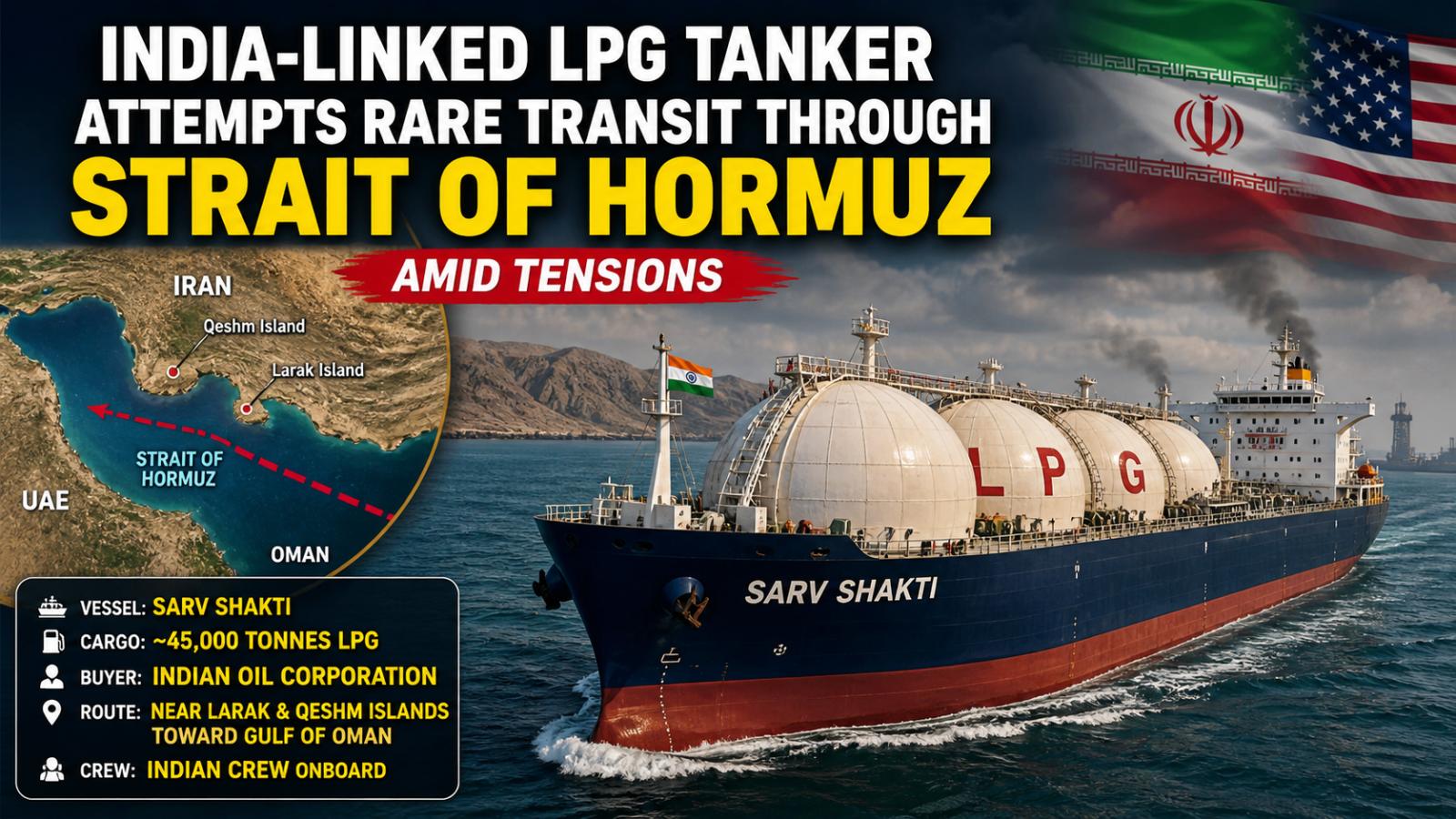
India’s High-Risk Energy Move: LPG Tanker Braces for Dangerous Strait of Hormuz Crossing
In a moment that could quietly shape global energy markets, an India-linked LPG tanker is attempting something most ships are now avoiding. The vessel, Sarv Shakti, loaded with nearly 45,000 tonnes of liquefied petroleum gas, is moving toward the tense waters of the Strait of Hormuz — a route that has suddenly become one of the world’s most dangerous maritime
India’s High-Risk Energy Move: LPG Tanker Braces for Dangerous Strait of Hormuz Crossing
In a moment that could quietly shape global energy markets, an India-linked LPG tanker is attempting something most ships are now avoiding. The vessel, Sarv Shakti, loaded with nearly 45,000 tonnes of liquefied petroleum gas, is moving toward the tense waters of the Strait of Hormuz — a route that has suddenly become one of the world’s most dangerous maritime
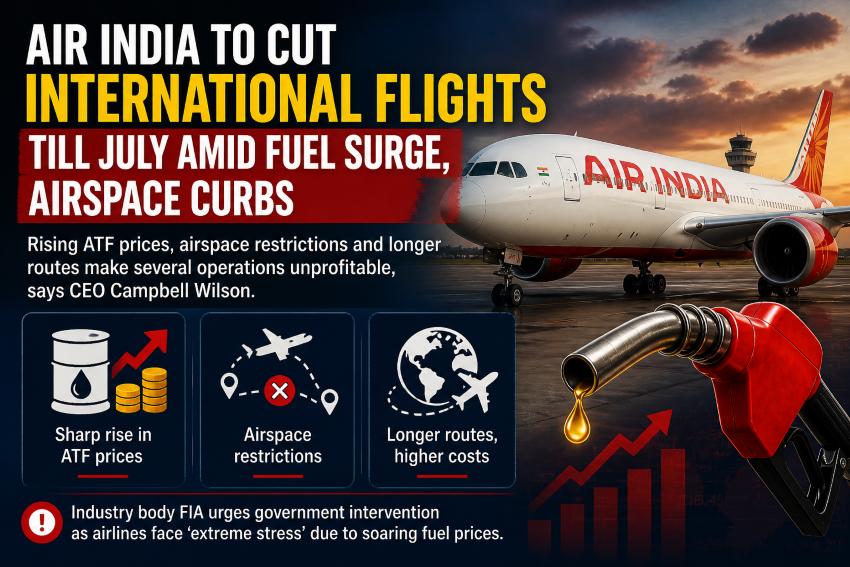
Air India Cuts International Schedules As Aviation Costs Soar
Air India’s decision to scale back its international flight operations reflects the growing pressure on the aviation sector as fuel prices continue to rise sharply. According to internal communication, CEO and Managing Director Campbell Wilson informed employees that the airline has little choice but to reduce schedules during June and July. The move follows earlier cuts in April and May, indicating a prolonged period of operational challenges driven by external factors beyond the airline’s control. The primary concern remains the steep increase in aviation turbine fuel prices, which constitute a major portion of airline operating costs. As fuel prices surge, airlines are finding it increasingly difficult to maintain profitability on long-haul international routes. Adding to the challenge are airspace restrictions in certain regions, forcing aircraft to take longer alternative paths. These extended routes not only increase fuel consumption but also lead to higher operational expenses and longer travel times for passengers. Industry Impact and Government Concerns The situation is not limited to a single airline, as the broader aviation industry in India is also feeling the strain. The Federation of Indian Airlines, representing major carriers like IndiGo and SpiceJet, has raised concerns with the government regarding the unsustainable rise in fuel costs. In a recent communication to the Civil Aviation Ministry, the industry body highlighted the extreme financial stress being faced by airlines, urging immediate intervention to stabilize operations and prevent further disruptions. Passenger Impact and Future Outlook For passengers, the reduction in international flights may lead to limited availability of seats, higher ticket prices, and potential changes in travel schedules. Travelers planning trips during the peak summer months may need to book tickets in advance or consider flexible travel plans. Despite these challenges, airlines are expected to closely monitor fuel price trends and regulatory developments before making further operational decisions. As the aviation sector navigates these turbulent conditions, the coming months will be crucial in determining how airlines adapt to rising costs and evolving geopolitical factors. The balance between maintaining connectivity and ensuring financial sustainability will remain a key focus for Air India and the wider airline industry.
Air India Cuts International Schedules As Aviation Costs Soar
Air India’s decision to scale back its international flight operations reflects the growing pressure on the aviation sector as fuel prices continue to rise sharply. According to internal communication, CEO and Managing Director Campbell Wilson informed employees that the airline has little choice but to reduce schedules during June and July. The move follows earlier cuts in April and May, indicating a prolonged period of operational challenges driven by external factors beyond the airline’s control. The primary concern remains the steep increase in aviation turbine fuel prices, which constitute a major portion of airline operating costs. As fuel prices surge, airlines are finding it increasingly difficult to maintain profitability on long-haul international routes. Adding to the challenge are airspace restrictions in certain regions, forcing aircraft to take longer alternative paths. These extended routes not only increase fuel consumption but also lead to higher operational expenses and longer travel times for passengers. Industry Impact and Government Concerns The situation is not limited to a single airline, as the broader aviation industry in India is also feeling the strain. The Federation of Indian Airlines, representing major carriers like IndiGo and SpiceJet, has raised concerns with the government regarding the unsustainable rise in fuel costs. In a recent communication to the Civil Aviation Ministry, the industry body highlighted the extreme financial stress being faced by airlines, urging immediate intervention to stabilize operations and prevent further disruptions. Passenger Impact and Future Outlook For passengers, the reduction in international flights may lead to limited availability of seats, higher ticket prices, and potential changes in travel schedules. Travelers planning trips during the peak summer months may need to book tickets in advance or consider flexible travel plans. Despite these challenges, airlines are expected to closely monitor fuel price trends and regulatory developments before making further operational decisions. As the aviation sector navigates these turbulent conditions, the coming months will be crucial in determining how airlines adapt to rising costs and evolving geopolitical factors. The balance between maintaining connectivity and ensuring financial sustainability will remain a key focus for Air India and the wider airline industry.
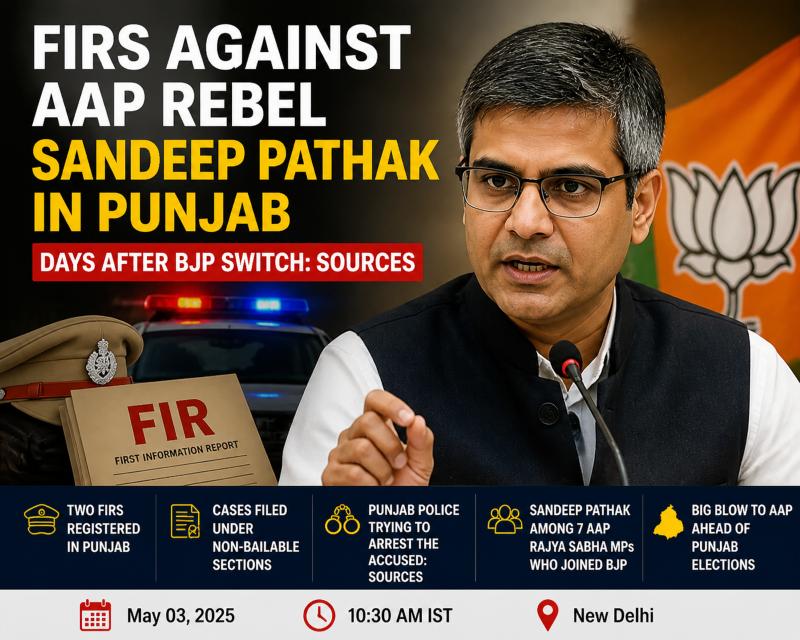
FIRs Filed Against AAP Rebel Sandeep Pathak in Punjab After BJP Switch
Date: May 2, 2026 | Time: 11:49AM IST | Place: Punjab, India Two FIRs have been filed against Rajya Sabha MP Sandeep Pathak in Punjab days after he switched allegiance from the Aam Aadmi Party (AAP) to the BJP, according to government sources. While the exact reasons behind the cases remain unclear, sources mentioned that the FIRs have been filed under non-bailable sections, making the situation more serious for Pathak. The news comes amid a growing political storm following the
FIRs Filed Against AAP Rebel Sandeep Pathak in Punjab After BJP Switch
Date: May 2, 2026 | Time: 11:49AM IST | Place: Punjab, India Two FIRs have been filed against Rajya Sabha MP Sandeep Pathak in Punjab days after he switched allegiance from the Aam Aadmi Party (AAP) to the BJP, according to government sources. While the exact reasons behind the cases remain unclear, sources mentioned that the FIRs have been filed under non-bailable sections, making the situation more serious for Pathak. The news comes amid a growing political storm following the

Supreme Court Disposes Of Trinamool Congress Petition As Bengal Repolls Continue With Healthy Voter Turnout
Date: May 02, 2026 | Time: 11:06 AM IST | Place: West Bengal, India
Supreme Court Disposes Of Trinamool Congress Petition As Bengal Repolls Continue With Healthy Voter Turnout
Date: May 02, 2026 | Time: 11:06 AM IST | Place: West Bengal, India

India Tests Emergency Cell Broadcast Alert System With Loud Phone Sirens
In a major step toward enhancing disaster preparedness, the Indian government is carrying out a nationwide simulation of its Cell Broadcast Alert System. Managed by the National Disaster Management Authority, the system is designed to send instant emergency notifications directly to mobile phones, even if they are on silent mode or set to do not disturb. This ensures that critical alerts can reach people without delay, potentially saving lives during natural or man-made disasters. C
India Tests Emergency Cell Broadcast Alert System With Loud Phone Sirens
In a major step toward enhancing disaster preparedness, the Indian government is carrying out a nationwide simulation of its Cell Broadcast Alert System. Managed by the National Disaster Management Authority, the system is designed to send instant emergency notifications directly to mobile phones, even if they are on silent mode or set to do not disturb. This ensures that critical alerts can reach people without delay, potentially saving lives during natural or man-made disasters. C
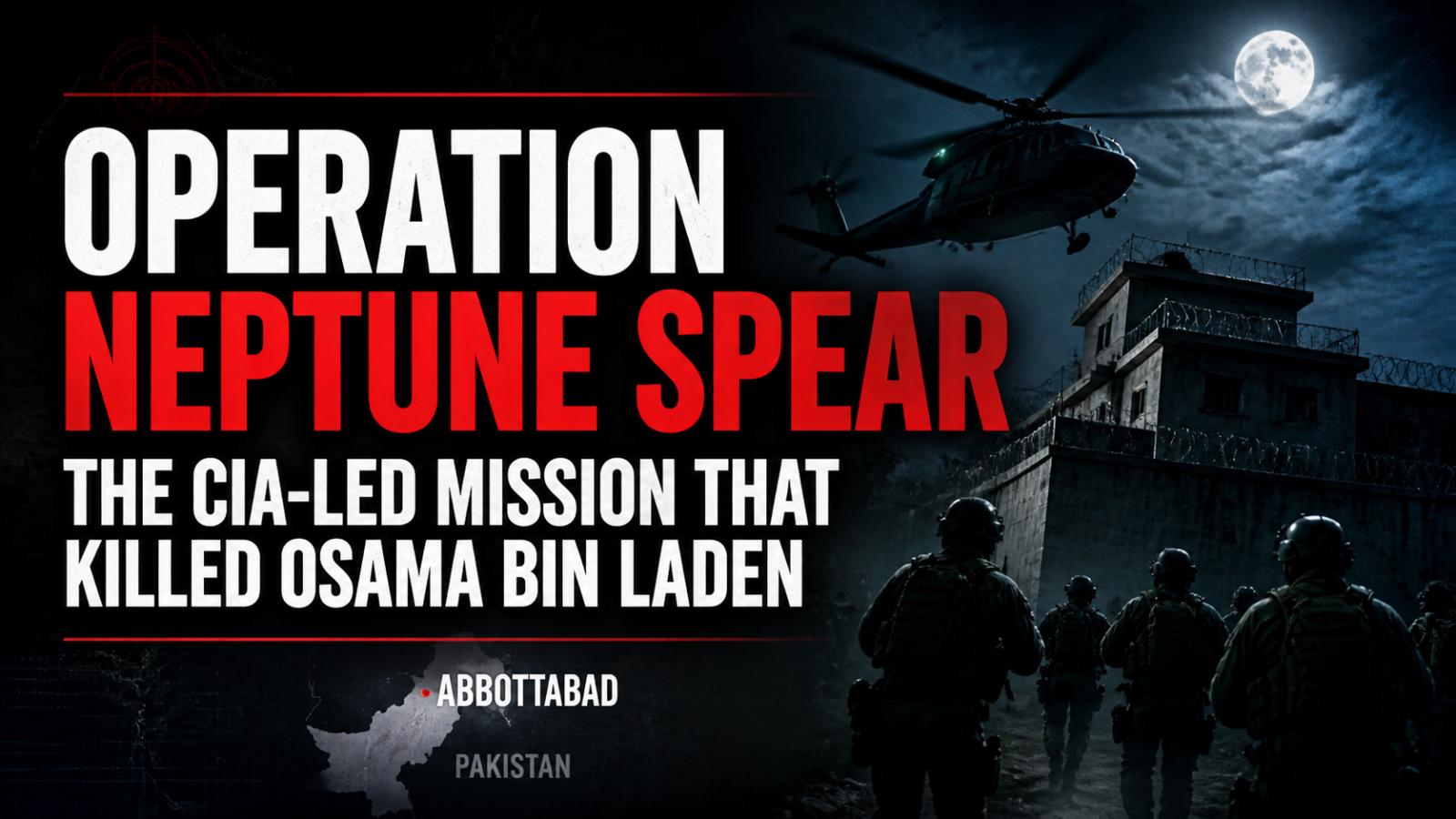
Operation Neptune Spear: Inside the raid that killed Osama bin Laden
The world’s most wanted man: Osama bin Laden On May 2, 2011, Osama bin Laden, the world’s most wanted terrorist, was killed in a CIA-led operation called Operation Neptune Spear. After nearly a decade of intensive intelligence work, Bin Laden’s hideout in Abbottabad, Pakistan, was pinpointed, marking a major victory in the war on terror. The mission, involving a covert night
Operation Neptune Spear: Inside the raid that killed Osama bin Laden
The world’s most wanted man: Osama bin Laden On May 2, 2011, Osama bin Laden, the world’s most wanted terrorist, was killed in a CIA-led operation called Operation Neptune Spear. After nearly a decade of intensive intelligence work, Bin Laden’s hideout in Abbottabad, Pakistan, was pinpointed, marking a major victory in the war on terror. The mission, involving a covert night
US-Iran conflict: Trump speaks on war, rejects Iran’s ceasefire deal
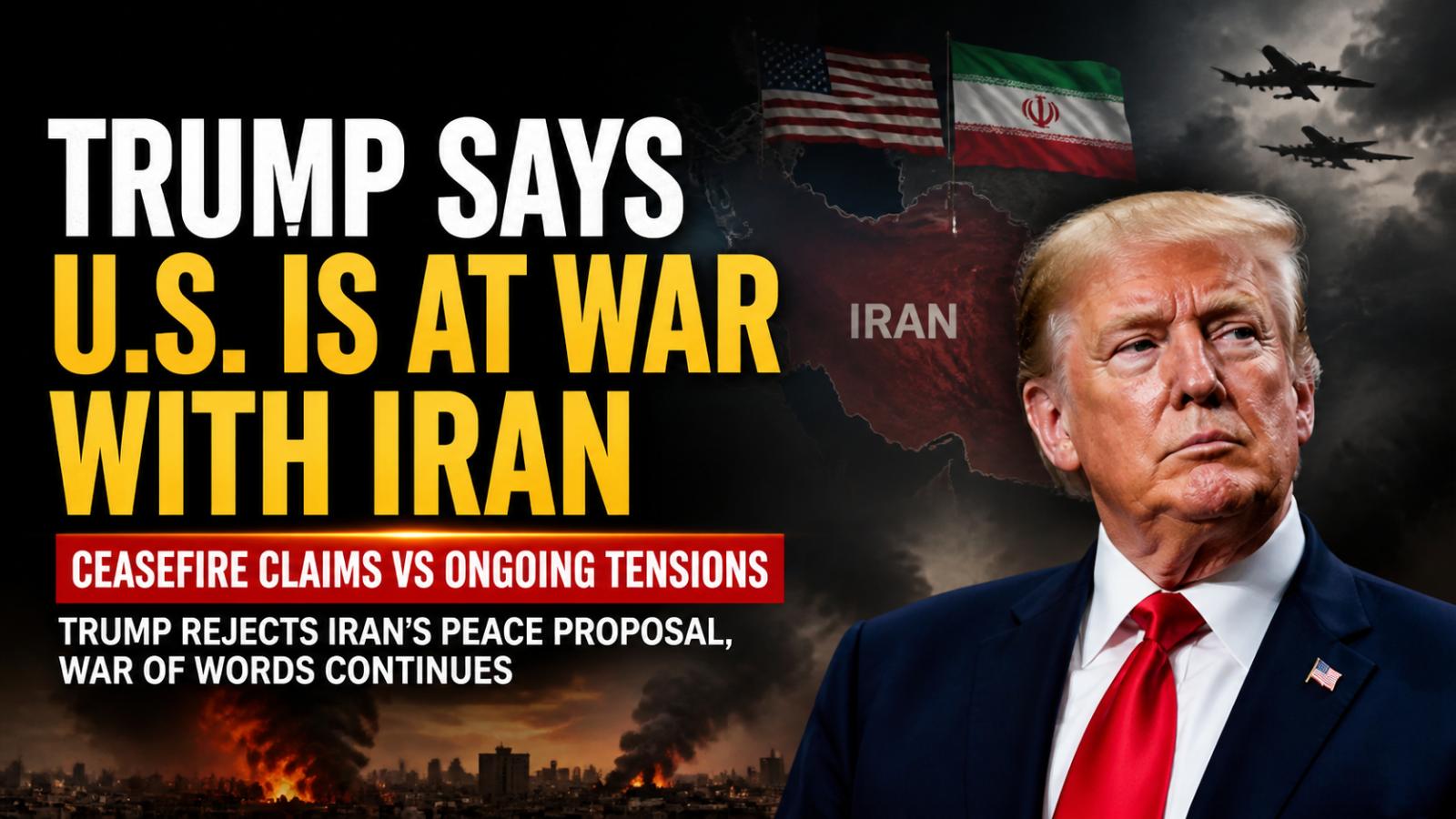
Trump declares war with Iran over nuclear threat President Donald Trump has reaffirmed his stance on the ongoing US-Iran conflict, declaring that the US is at war with Iran to prevent the country from acquiring nuclear weapons. In a statement made during a Florida event, Trump expressed his belief that Iran’s leadership poses a significant threat to global security, stating that "lunatics can't have a nuclear weapon." His comments come at a time when his administration has informed the US Congress that the war has reached its conclusion, though the situation remains tense. Trump emphasizes the importance of military action against Iran Trump explained that the US military action against Iran was crucial in preventing a nuclear-armed nation from destabilizing the Middle East. He credited US airstrikes with B2 bombers for preventing Iran from obtaining a nuclear weapon, which could have led to catastrophic consequences for Israel, the Middle East, and Europe. “If we didn’t do that, they would have had a nuclear weapon,” Trump added, emphasizing the urgency of the situation. He claimed that Iran's military capabilities have been severely diminished, stating that the country no longer has a navy, air force, anti-aircraft systems, or effective radar defenses. Trump rejects Iran's ceasefire proposal In a direct response to Iran’s proposal for a ceasefire, Trump made it clear that the US would not end the conflict prematurely. “We’re not going to leave early and have this kind of problem arise in three more years,” he said, reinforcing his position on the need for a strong and comprehensive resolution. Trump blamed Iran's leadership for the ongoing conflict, criticizing their fractured decision-making. “It’s a very disjointed leadership,” he remarked, indicating that despite their willingness to negotiate, Iran’s leaders are unable to reach a viable agreement. The ceasefire proposal is dismissed The ceasefire proposal, delivered by Pakistan on behalf of Iran, was quickly dismissed by the US. Despite this, a fragile ceasefire between the two nations has held, albeit with mutual accusations of violations. Tensions remain high, especially in the Strait of Hormuz, where a significant portion of the world’s oil and gas passes through. Trump outlined two potential paths forward: either continuing the conflict to decisively end Iran’s nuclear ambitions, or attempting to secure a deal. “Do we want to go and just blast the hell out of them and finish them forever? Or do we want to try and make a deal?” he questioned. Iran’s diplomatic efforts and continued tension Iran’s Foreign Minister, Abbas Araghchi, has been actively engaged in diplomatic efforts to resolve the war. He held discussions with several regional counterparts, including Turkey, Saudi Arabia, and Qatar, to brief them on Iran’s latest peace initiatives. However, the rounds of talks held in Pakistan have yielded no substantial progress. Trump expressed frustration over the lack of direct communication, stating, “No more 18-hour flights” for US envoys. What lies ahead for US-Iran relations? As the situation evolves, it remains uncertain whether further diplomatic efforts will lead to a resolution or whether military action will continue to dominate the US-Iran relationship. With both sides unwilling to compromise, the world watches closely, particularly in regard to the ongoing instability in the Strait of Hormuz. Will Iran’s diplomatic efforts succeed, or will the US pursue a more aggressive approach? The answer remains unclear as the two nations continue to grapple with the possibility of conflict or peace.
US-Iran conflict: Trump speaks on war, rejects Iran’s ceasefire deal
Trump declares war with Iran over nuclear threat President Donald Trump has reaffirmed his stance on the ongoing US-Iran conflict, declaring that the US is at war with Iran to prevent the country from acquiring nuclear weapons. In a statement made during a Florida event, Trump expressed his belief that Iran’s leadership poses a significant threat to global security, stating that "lunatics can't have a nuclear weapon." His comments come at a time when his administration has informed the US Congress that the war has reached its conclusion, though the situation remains tense. Trump emphasizes the importance of military action against Iran Trump explained that the US military action against Iran was crucial in preventing a nuclear-armed nation from destabilizing the Middle East. He credited US airstrikes with B2 bombers for preventing Iran from obtaining a nuclear weapon, which could have led to catastrophic consequences for Israel, the Middle East, and Europe. “If we didn’t do that, they would have had a nuclear weapon,” Trump added, emphasizing the urgency of the situation. He claimed that Iran's military capabilities have been severely diminished, stating that the country no longer has a navy, air force, anti-aircraft systems, or effective radar defenses. Trump rejects Iran's ceasefire proposal In a direct response to Iran’s proposal for a ceasefire, Trump made it clear that the US would not end the conflict prematurely. “We’re not going to leave early and have this kind of problem arise in three more years,” he said, reinforcing his position on the need for a strong and comprehensive resolution. Trump blamed Iran's leadership for the ongoing conflict, criticizing their fractured decision-making. “It’s a very disjointed leadership,” he remarked, indicating that despite their willingness to negotiate, Iran’s leaders are unable to reach a viable agreement. The ceasefire proposal is dismissed The ceasefire proposal, delivered by Pakistan on behalf of Iran, was quickly dismissed by the US. Despite this, a fragile ceasefire between the two nations has held, albeit with mutual accusations of violations. Tensions remain high, especially in the Strait of Hormuz, where a significant portion of the world’s oil and gas passes through. Trump outlined two potential paths forward: either continuing the conflict to decisively end Iran’s nuclear ambitions, or attempting to secure a deal. “Do we want to go and just blast the hell out of them and finish them forever? Or do we want to try and make a deal?” he questioned. Iran’s diplomatic efforts and continued tension Iran’s Foreign Minister, Abbas Araghchi, has been actively engaged in diplomatic efforts to resolve the war. He held discussions with several regional counterparts, including Turkey, Saudi Arabia, and Qatar, to brief them on Iran’s latest peace initiatives. However, the rounds of talks held in Pakistan have yielded no substantial progress. Trump expressed frustration over the lack of direct communication, stating, “No more 18-hour flights” for US envoys. What lies ahead for US-Iran relations? As the situation evolves, it remains uncertain whether further diplomatic efforts will lead to a resolution or whether military action will continue to dominate the US-Iran relationship. With both sides unwilling to compromise, the world watches closely, particularly in regard to the ongoing instability in the Strait of Hormuz. Will Iran’s diplomatic efforts succeed, or will the US pursue a more aggressive approach? The answer remains unclear as the two nations continue to grapple with the possibility of conflict or peace.
Narmada River boat accident kills mother and child near Bargi Dam
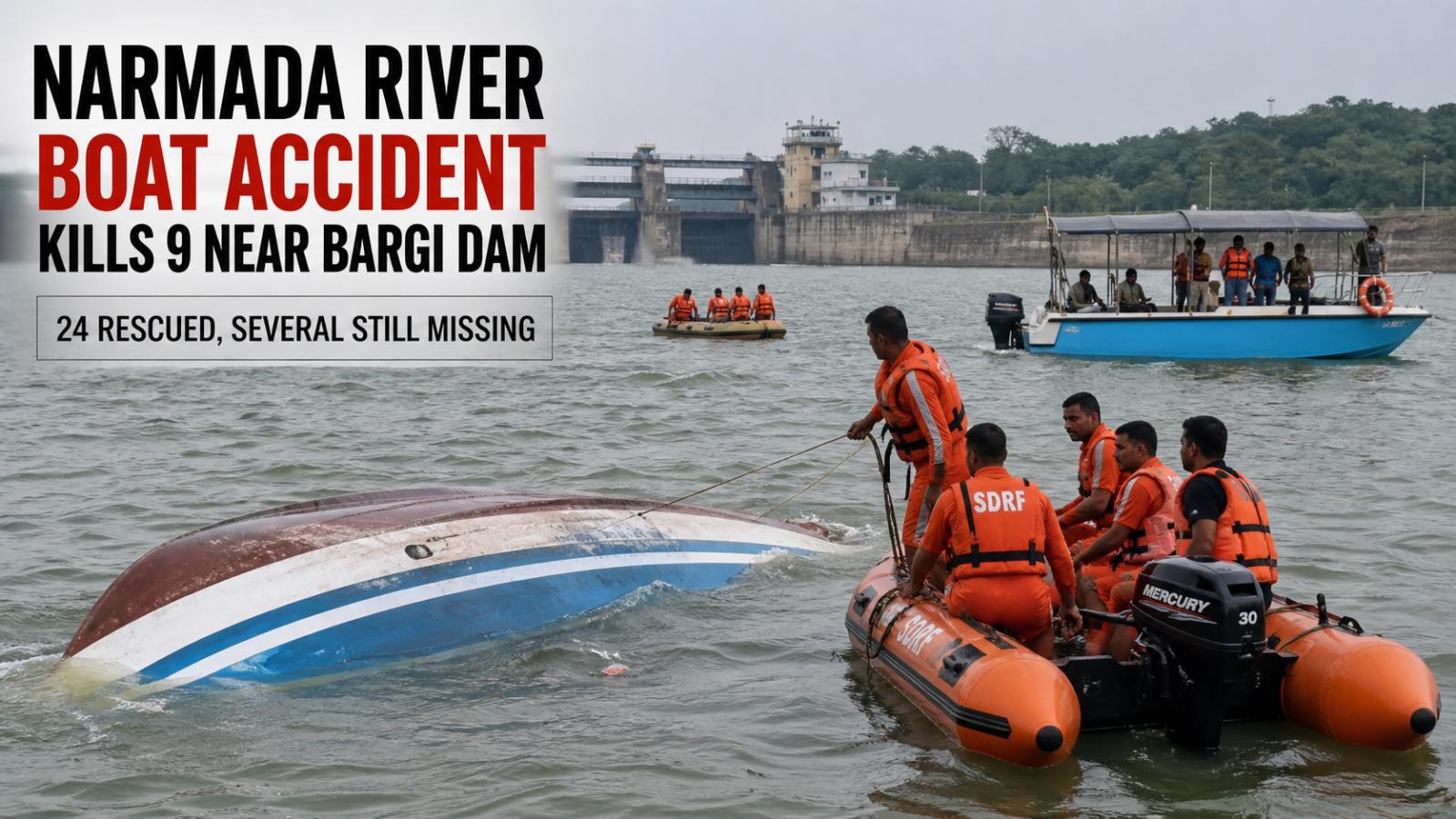
A boat accident in the Narmada River near Bargi Dam in Madhya Pradesh killed nine people, including a mother and child. Sudden bad weather caused the vessel to capsize. Rescue teams saved 24 people, while search operations continue for several missing passengers. A deadly boat accident in the Narmada River near Bargi Dam in the central Indian state of Madhya Pradesh has claimed the lives of a mother and her four-year-old son, highlighting the human toll of the tragedy that has left multiple families devastated. The incident occurred when a tourist vessel overturned in turbulent waters, reportedly after sudden adverse weather conditions disrupted the journey. Rescue teams recovered the bodies of the woman and her child on Friday morning, a day after the accident. Officials said the mother was found holding her son tightly, underscoring a final attempt to protect him as the boat sank. The victims were part of a family of four visiting from Delhi; the father and daughter survived the incident. Authorities confirmed that the death toll has risen to nine, while several individuals remain unaccounted for. According to officials, 24 people have been rescued so far, with 17 hospitalized for injuries and trauma. Nine others, including five children, are still missing as search operations continue. Survivors described moments of panic as the situation escalated rapidly. One passenger recounted that the weather worsened without warning, causing the boat to lose balance and take on water within minutes. Passengers were unable to comprehend the unfolding emergency as screams filled the air and people struggled to stay afloat. Another survivor, Syed Riyaz Hussain, described a prolonged fight for survival after being trapped in the water for nearly two hours. He said he managed to keep his head above water while surrounded by debris and victims drifting past, until rescue teams eventually located him. Members of his family are still missing. Local police, district authorities, and personnel from the State Disaster Response Force have been deployed to the site, conducting coordinated search efforts in challenging river conditions. Officials confirmed that the boat’s captain, Mahesh Patel, survived the incident as he was wearing a life jacket. The cause of the accident remains under investigation as authorities focus on rescue and recovery operations in the region.
Narmada River boat accident kills mother and child near Bargi Dam
A boat accident in the Narmada River near Bargi Dam in Madhya Pradesh killed nine people, including a mother and child. Sudden bad weather caused the vessel to capsize. Rescue teams saved 24 people, while search operations continue for several missing passengers. A deadly boat accident in the Narmada River near Bargi Dam in the central Indian state of Madhya Pradesh has claimed the lives of a mother and her four-year-old son, highlighting the human toll of the tragedy that has left multiple families devastated. The incident occurred when a tourist vessel overturned in turbulent waters, reportedly after sudden adverse weather conditions disrupted the journey. Rescue teams recovered the bodies of the woman and her child on Friday morning, a day after the accident. Officials said the mother was found holding her son tightly, underscoring a final attempt to protect him as the boat sank. The victims were part of a family of four visiting from Delhi; the father and daughter survived the incident. Authorities confirmed that the death toll has risen to nine, while several individuals remain unaccounted for. According to officials, 24 people have been rescued so far, with 17 hospitalized for injuries and trauma. Nine others, including five children, are still missing as search operations continue. Survivors described moments of panic as the situation escalated rapidly. One passenger recounted that the weather worsened without warning, causing the boat to lose balance and take on water within minutes. Passengers were unable to comprehend the unfolding emergency as screams filled the air and people struggled to stay afloat. Another survivor, Syed Riyaz Hussain, described a prolonged fight for survival after being trapped in the water for nearly two hours. He said he managed to keep his head above water while surrounded by debris and victims drifting past, until rescue teams eventually located him. Members of his family are still missing. Local police, district authorities, and personnel from the State Disaster Response Force have been deployed to the site, conducting coordinated search efforts in challenging river conditions. Officials confirmed that the boat’s captain, Mahesh Patel, survived the incident as he was wearing a life jacket. The cause of the accident remains under investigation as authorities focus on rescue and recovery operations in the region.

Iran condemns Israeli flotilla raid as piracy amid global protests
Israel flotilla attack triggers global outrage The Israel flotilla attack has sparked widespread international condemnation after Israeli naval forces intercepted vessels from the Global Sumud flotilla in international waters nearly 1,000 km from Israel near Crete. The operation led to the detention of hundreds of activists and seizure of aid ships, raising serious concerns about legality, human rights, and humanita
Iran condemns Israeli flotilla raid as piracy amid global protests
Israel flotilla attack triggers global outrage The Israel flotilla attack has sparked widespread international condemnation after Israeli naval forces intercepted vessels from the Global Sumud flotilla in international waters nearly 1,000 km from Israel near Crete. The operation led to the detention of hundreds of activists and seizure of aid ships, raising serious concerns about legality, human rights, and humanita
US pushes global coalition for Strait of Hormuz as Iran conflict disrupts oil trade
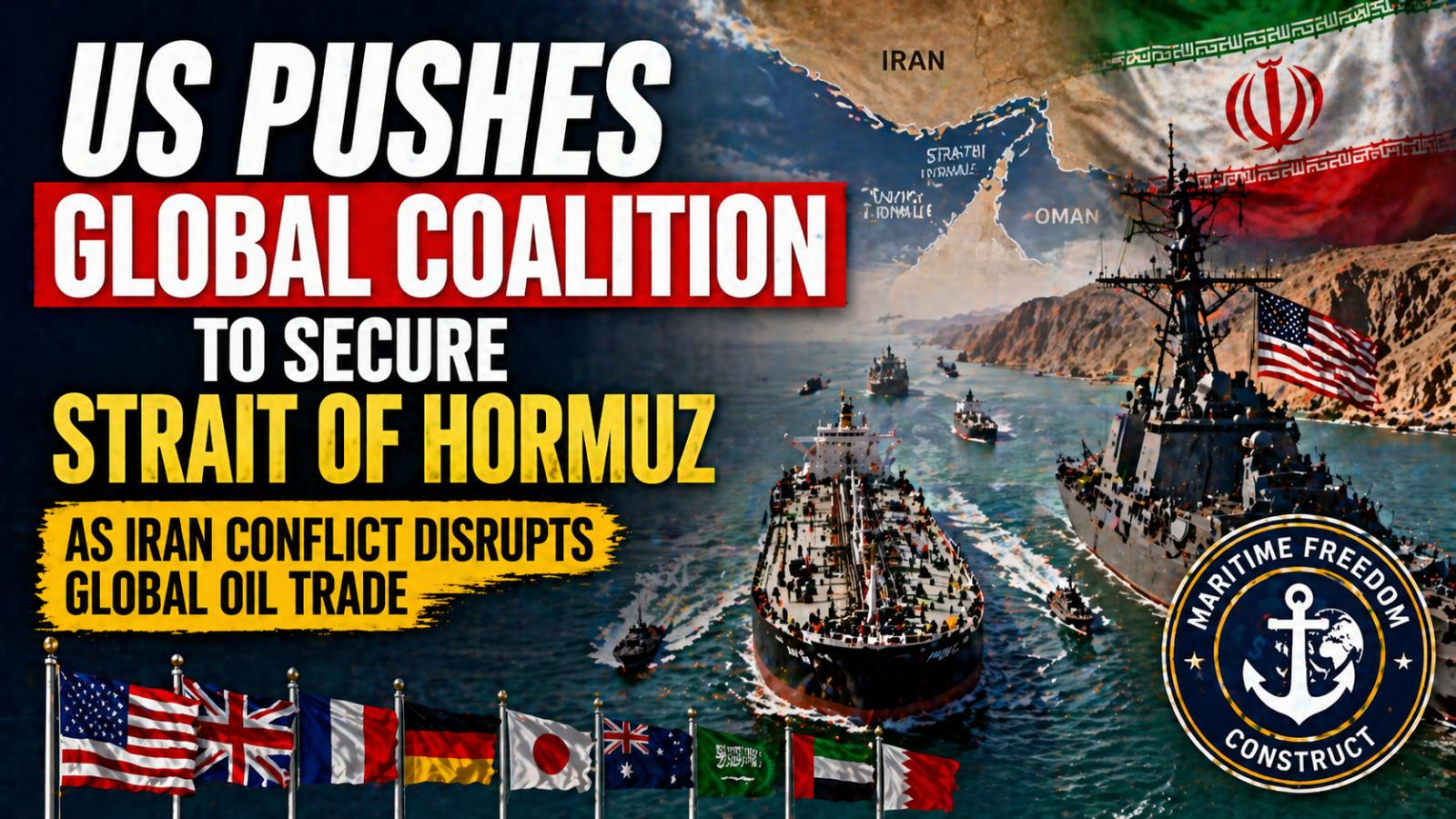
The United States is accelerating efforts to form a global coalition to secure the Strait of Hormuz, as the ongoing US-Iran conflict continues to disrupt critical shipping routes and drive volatility in global oil trade. The initiative, known as the Maritime Freedom Construct, aims to coordinate international maritime security, sanctions policy, and intelligence sharing to ensure safe navigation through one of the world’s most strategic waterways. The Strait of Hormuz, a narrow pa
US pushes global coalition for Strait of Hormuz as Iran conflict disrupts oil trade
The United States is accelerating efforts to form a global coalition to secure the Strait of Hormuz, as the ongoing US-Iran conflict continues to disrupt critical shipping routes and drive volatility in global oil trade. The initiative, known as the Maritime Freedom Construct, aims to coordinate international maritime security, sanctions policy, and intelligence sharing to ensure safe navigation through one of the world’s most strategic waterways. The Strait of Hormuz, a narrow pa

India Meets Record Power Demand Solar Delivers 21 Percent Boost In Historic Energy Shift
At 3:38 pm on April 25, India recorded its highest-ever electricity demand of 256.1 GW and successfully met it without disruption. According to GRID India, solar energy contributed around 57 GW during peak demand, accounting for nearly 21 percent of the total supply. Earlier in the day, solar output had peaked even higher, reaching about 81 GW at 12:30 pm, which was nearly one-third of the
India Meets Record Power Demand Solar Delivers 21 Percent Boost In Historic Energy Shift
At 3:38 pm on April 25, India recorded its highest-ever electricity demand of 256.1 GW and successfully met it without disruption. According to GRID India, solar energy contributed around 57 GW during peak demand, accounting for nearly 21 percent of the total supply. Earlier in the day, solar output had peaked even higher, reaching about 81 GW at 12:30 pm, which was nearly one-third of the
Ganga Expressway Opens Bringing Faster Travel From Delhi Noida And Haryana
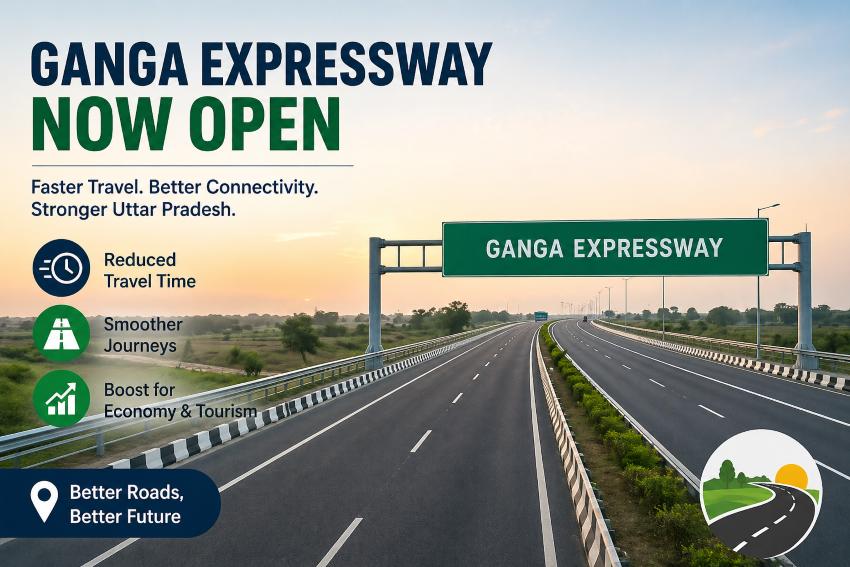
Date: April 30, 2026 | Time: Morning Update | Place: Uttar Pradesh, India Prime Minister Narendra Modi on Wednesday inaugurated the 594-km-long Ganga Expressway from Hardoi in Uttar Pradesh, officially opening one of the state’s most important infrastructure projects. The expressway connects eastern and western parts of Uttar Pradesh, creating a faster and more efficient travel corridor. A large public gathering was held near the Sadarpur interchange in Hapur district to mark the occasion, with around 5,000 attendees including ministers, MPs, MLAs and senior officials. With the inauguration complete, the expressway is now open for traffic, offering a new route that is expected to cut down travel time significantly across the state. The Ganga Expressway, stretching nearly 594 kilometres, is set to improve connectivity between western Uttar Pradesh and Prayagraj. It will make travel easier and faster for both pilgrims and regular commuters. People traveling from Delhi, Noida, Ghaziabad, Baghpat and nearby regions in Haryana are expected to benefit the most from this new route. Officials say the improved road network could make same-day trips to Prayagraj more convenient, allowing devotees to visit the Triveni Sangam and return on the same day, which was earlier difficult due to long travel hours New Travel Times and Better Routes: The biggest advantage of the Ganga Expressway is the reduction in travel time. Journeys that earlier took up to 10 or 12 hours can now be completed in much less time depending on traffic flow. The expressway offers a more direct and less crowded route, helping drivers avoid busy city roads and delays.This new route also benefits travelers coming from Haryana and western Uttar Pradesh, giving them easier access to eastern regions without multiple diversions. The expressway is built to support high-speed travel, which helps improve efficiency for both personal and business trips. Transport companies will especially benefit from quicker delivery times and reduced fuel consumption. Impact On Economy and Daily Life: The opening of the Ganga Expressway is expected to boost economic growth in Uttar Pradesh. Improved connectivity attracts industries, logistics hubs and commercial activities along the route. This creates new job opportunities and supports development in nearby towns and cities.The expressway also makes it easier for people to travel for tourism and religious purposes. Prayagraj, known for its cultural and spiritual importance, will now be more accessible for visitors from Delhi and surrounding areas. Overall, the Ganga Expressway is a major step towards modern infrastructure, offering faster travel, better connectivity and new growth opportunities across the region.
Ganga Expressway Opens Bringing Faster Travel From Delhi Noida And Haryana
Date: April 30, 2026 | Time: Morning Update | Place: Uttar Pradesh, India Prime Minister Narendra Modi on Wednesday inaugurated the 594-km-long Ganga Expressway from Hardoi in Uttar Pradesh, officially opening one of the state’s most important infrastructure projects. The expressway connects eastern and western parts of Uttar Pradesh, creating a faster and more efficient travel corridor. A large public gathering was held near the Sadarpur interchange in Hapur district to mark the occasion, with around 5,000 attendees including ministers, MPs, MLAs and senior officials. With the inauguration complete, the expressway is now open for traffic, offering a new route that is expected to cut down travel time significantly across the state. The Ganga Expressway, stretching nearly 594 kilometres, is set to improve connectivity between western Uttar Pradesh and Prayagraj. It will make travel easier and faster for both pilgrims and regular commuters. People traveling from Delhi, Noida, Ghaziabad, Baghpat and nearby regions in Haryana are expected to benefit the most from this new route. Officials say the improved road network could make same-day trips to Prayagraj more convenient, allowing devotees to visit the Triveni Sangam and return on the same day, which was earlier difficult due to long travel hours New Travel Times and Better Routes: The biggest advantage of the Ganga Expressway is the reduction in travel time. Journeys that earlier took up to 10 or 12 hours can now be completed in much less time depending on traffic flow. The expressway offers a more direct and less crowded route, helping drivers avoid busy city roads and delays.This new route also benefits travelers coming from Haryana and western Uttar Pradesh, giving them easier access to eastern regions without multiple diversions. The expressway is built to support high-speed travel, which helps improve efficiency for both personal and business trips. Transport companies will especially benefit from quicker delivery times and reduced fuel consumption. Impact On Economy and Daily Life: The opening of the Ganga Expressway is expected to boost economic growth in Uttar Pradesh. Improved connectivity attracts industries, logistics hubs and commercial activities along the route. This creates new job opportunities and supports development in nearby towns and cities.The expressway also makes it easier for people to travel for tourism and religious purposes. Prayagraj, known for its cultural and spiritual importance, will now be more accessible for visitors from Delhi and surrounding areas. Overall, the Ganga Expressway is a major step towards modern infrastructure, offering faster travel, better connectivity and new growth opportunities across the region.

Milma Approves ₹4 Per Litre Milk Price Hike In Kerala From May 20
The Kerala Cooperative Milk Marketing Federation (Milma) has approved a ₹4 per litre increase in milk prices across Kerala, a move that is expected to come into effect from May 20, 2026. The decision was taken during a high-level meeting of the cooperative’s governing body on April 30, 2026, amid growi
Milma Approves ₹4 Per Litre Milk Price Hike In Kerala From May 20
The Kerala Cooperative Milk Marketing Federation (Milma) has approved a ₹4 per litre increase in milk prices across Kerala, a move that is expected to come into effect from May 20, 2026. The decision was taken during a high-level meeting of the cooperative’s governing body on April 30, 2026, amid growi
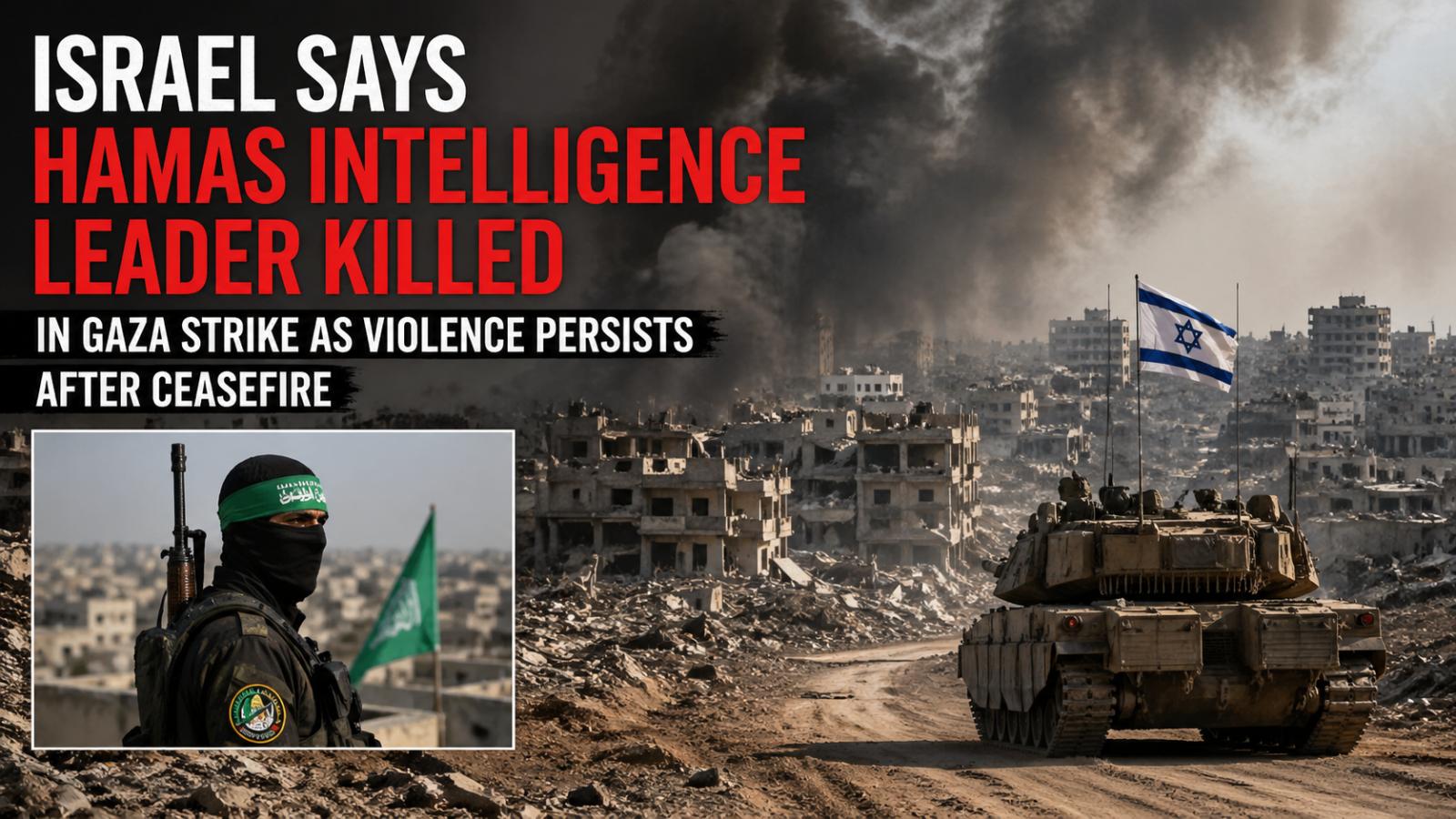
Israel says Hamas intelligence leader killed in Gaza strike
Israel says it killed a senior Hamas intelligence leader involved in planning the October 7 attack, as violence continues in Gaza despite a ceasefire, with reports of additional casualties from a separate drone strike. The Israel Defense Forces said on Wednesday, April 29, 2026, that Iyad Ahmed Abd al Rahman Shambari, a senior figure in Hamas’s military intelligence wing, was killed in the Gaza Strip. According to the IDF, Shambari led the operations department within Hamas military intelligence and played a key role in planning the October 7, 2023, attack on Israel that triggered the ongoing war. The IDF statement did not specify the exact time of the strike or provide additional operational details. The Israeli military has repeatedly targeted senior Hamas figures as part of its broader campaign in Gaza following the large-scale assault that prompted Israel’s ground offensive in the enclave. A ceasefire announced on Friday, October 10, 2025, has largely reduced large-scale combat, but violence has continued across Gaza. The Gaza health ministry, which operates under Hamas authority, reported that at least 818 Palestinians have been killed since the truce began. The United Nations has previously considered such figures broadly reliable, though independent verification remains limited. Separately, Gaza’s civil defense agency said four people were killed and six others injured in a drone strike targeting a vehicle in the western Al Rimal neighborhood of Gaza City. A Gaza security official identified two of the victims as Hamas commander Iyad al Shanbari and his son Salah. The identities of the other two individuals were not disclosed. There was no immediate independent confirmation of the identities of those killed in that strike. The IDF has not publicly commented on the specific incident described by local authorities. The developments underscore ongoing instability in Gaza despite the ceasefire, with sporadic strikes and casualties continuing to be reported.
Israel says Hamas intelligence leader killed in Gaza strike
Israel says it killed a senior Hamas intelligence leader involved in planning the October 7 attack, as violence continues in Gaza despite a ceasefire, with reports of additional casualties from a separate drone strike. The Israel Defense Forces said on Wednesday, April 29, 2026, that Iyad Ahmed Abd al Rahman Shambari, a senior figure in Hamas’s military intelligence wing, was killed in the Gaza Strip. According to the IDF, Shambari led the operations department within Hamas military intelligence and played a key role in planning the October 7, 2023, attack on Israel that triggered the ongoing war. The IDF statement did not specify the exact time of the strike or provide additional operational details. The Israeli military has repeatedly targeted senior Hamas figures as part of its broader campaign in Gaza following the large-scale assault that prompted Israel’s ground offensive in the enclave. A ceasefire announced on Friday, October 10, 2025, has largely reduced large-scale combat, but violence has continued across Gaza. The Gaza health ministry, which operates under Hamas authority, reported that at least 818 Palestinians have been killed since the truce began. The United Nations has previously considered such figures broadly reliable, though independent verification remains limited. Separately, Gaza’s civil defense agency said four people were killed and six others injured in a drone strike targeting a vehicle in the western Al Rimal neighborhood of Gaza City. A Gaza security official identified two of the victims as Hamas commander Iyad al Shanbari and his son Salah. The identities of the other two individuals were not disclosed. There was no immediate independent confirmation of the identities of those killed in that strike. The IDF has not publicly commented on the specific incident described by local authorities. The developments underscore ongoing instability in Gaza despite the ceasefire, with sporadic strikes and casualties continuing to be reported.

PM Modi Inaugurates Ganga Expressway, India’s Mega Infrastructure Push
Prime Minister Narendra Modi inaugurated the 594-km-long Ganga Expressway on April 29, 2026, marking a major milestone in India’s infrastructure development. Uttar Pradesh Chief Minister Yogi Adityanath was also present at the event, which highlighted the state’s push toward becoming an infrastructure-driven economic hub. Built at an estimated cost of ₹36,230 crore, the Ganga Expressway is the longest expressway in Uttar Pradesh and one of the country’s largest greenfield ro
PM Modi Inaugurates Ganga Expressway, India’s Mega Infrastructure Push
Prime Minister Narendra Modi inaugurated the 594-km-long Ganga Expressway on April 29, 2026, marking a major milestone in India’s infrastructure development. Uttar Pradesh Chief Minister Yogi Adityanath was also present at the event, which highlighted the state’s push toward becoming an infrastructure-driven economic hub. Built at an estimated cost of ₹36,230 crore, the Ganga Expressway is the longest expressway in Uttar Pradesh and one of the country’s largest greenfield ro

Massive Fire Breaks Out at Gaur Green Avenue in Ghaziabad, Residents Evacuated
A major fire broke out at Gaur Green Avenue, a residential society in Indirapuram, Ghaziabad, on Tuesday morning. The incident caused panic among residents, but timely evacuation helped prevent casualties.According to reports, the fire started around 9:00 AM in a locked apartment on the ninth floor of one of the towers. Thick smoke quickly spread to nearby floors, forcing residents to rush out of their homes. Fire department teams arrived at the spot soon after receiving the alert.
Massive Fire Breaks Out at Gaur Green Avenue in Ghaziabad, Residents Evacuated
A major fire broke out at Gaur Green Avenue, a residential society in Indirapuram, Ghaziabad, on Tuesday morning. The incident caused panic among residents, but timely evacuation helped prevent casualties.According to reports, the fire started around 9:00 AM in a locked apartment on the ninth floor of one of the towers. Thick smoke quickly spread to nearby floors, forcing residents to rush out of their homes. Fire department teams arrived at the spot soon after receiving the alert.

Direct Trains From UP To Mumbai And Pune Flagged Off By PM Modi
PM Narendra Modi launches new Amrit Bharat Express trains, providing direct rail connectivity between Varanasi–Pune and Ayodhya–Mumbai to boost travel and tourism. Marking a major boost to India’s rail infrastructure, Prime Minister Narendra Modi on Tuesday, April 28, 2026, flagged off two new Amrit Bharat Express trains from Varanasi, Uttar Pradesh, strengthening d
Direct Trains From UP To Mumbai And Pune Flagged Off By PM Modi
PM Narendra Modi launches new Amrit Bharat Express trains, providing direct rail connectivity between Varanasi–Pune and Ayodhya–Mumbai to boost travel and tourism. Marking a major boost to India’s rail infrastructure, Prime Minister Narendra Modi on Tuesday, April 28, 2026, flagged off two new Amrit Bharat Express trains from Varanasi, Uttar Pradesh, strengthening d
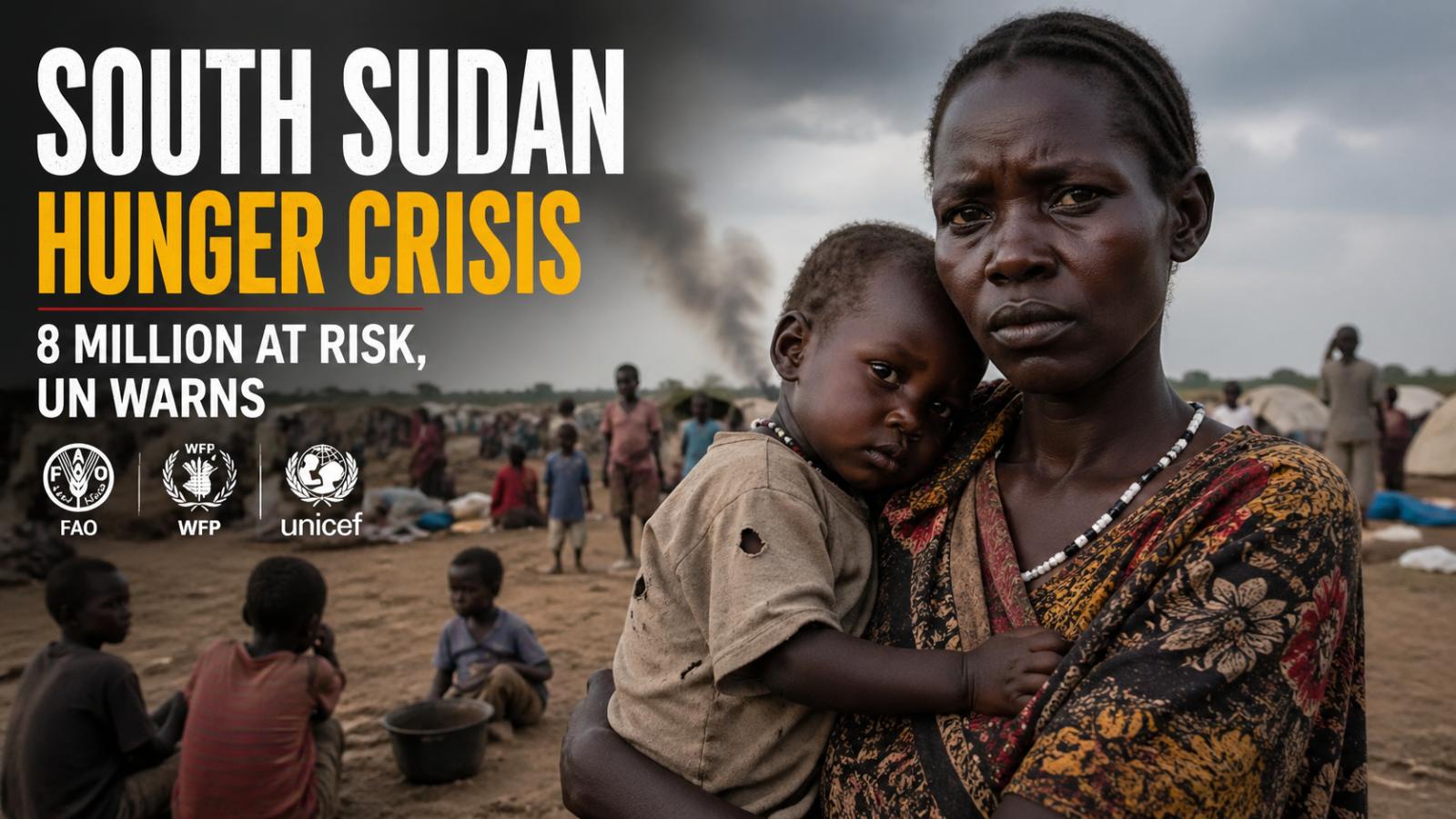
What does the UN report say about South Sudan hunger risk? Nearly 8 million face crisis
Nearly 8 million face crisis A new report released by the United Nations on Tuesday warns that nearly eight million people in South Sudan are at risk of acute hunger, underscoring a rapidly worsening humanitarian emergency fueled by conflict, displacement, and economic instability. The assessment estimates that 7.8 million people—about 56 percent of the population—are likely to experience severe food insecurity in the coming months, prompting urgent calls for international intervention. Escalating child malnutrition raises alarm among aid agencies The report highlights a sharp increase in child malnutrition, with an additional 100,000 children affected over the past six months. Approximately 2.2 million children between six months and five years are now suffering from acute malnutrition, and an estimated 700,000 face a high risk of death. Agencies including the Food and Agriculture Organization, World Food Programme, and UNICEF warned that damaged health infrastructure, limited supplies, and insufficient funding are restricting access to life-saving nutrition services. Conflict, climate pressures, and economic strain deepen crisis South Sudan’s humanitarian conditions remain closely tied to ongoing ethnic conflict, climate-related disruptions, and spillover effects from violence in neighboring Sudan. The country, which gained independence in 2011, continues to face severe economic challenges and ranks among the poorest nations globally. These overlapping pressures have intensified food shortages and weakened already fragile systems. Rising tensions spark fears of renewed civil war Concerns are growing that South Sudan could return to full-scale civil war, despite a 2018 peace agreement that ended a devastating conflict responsible for nearly 400,000 deaths. Recent clashes between government forces, the South Sudan People’s Defence Forces, and opposition groups have heightened instability. The tensions are linked to a prolonged political rivalry between President Salva Kiir Mayardit and suspended Vice President Riek Machar, who is currently on trial in Juba facing charges including murder and treason, which he denies. Aid agencies warn of irreversible humanitarian consequences Humanitarian organizations stress that without immediate global support, the crisis could reach irreversible levels. Limited funding and supply chain disruptions continue to hamper relief efforts, leaving millions vulnerable. Aid groups are urging swift international action to prevent further deterioration and avert a large-scale humanitarian catastrophe.
What does the UN report say about South Sudan hunger risk? Nearly 8 million face crisis
Nearly 8 million face crisis A new report released by the United Nations on Tuesday warns that nearly eight million people in South Sudan are at risk of acute hunger, underscoring a rapidly worsening humanitarian emergency fueled by conflict, displacement, and economic instability. The assessment estimates that 7.8 million people—about 56 percent of the population—are likely to experience severe food insecurity in the coming months, prompting urgent calls for international intervention. Escalating child malnutrition raises alarm among aid agencies The report highlights a sharp increase in child malnutrition, with an additional 100,000 children affected over the past six months. Approximately 2.2 million children between six months and five years are now suffering from acute malnutrition, and an estimated 700,000 face a high risk of death. Agencies including the Food and Agriculture Organization, World Food Programme, and UNICEF warned that damaged health infrastructure, limited supplies, and insufficient funding are restricting access to life-saving nutrition services. Conflict, climate pressures, and economic strain deepen crisis South Sudan’s humanitarian conditions remain closely tied to ongoing ethnic conflict, climate-related disruptions, and spillover effects from violence in neighboring Sudan. The country, which gained independence in 2011, continues to face severe economic challenges and ranks among the poorest nations globally. These overlapping pressures have intensified food shortages and weakened already fragile systems. Rising tensions spark fears of renewed civil war Concerns are growing that South Sudan could return to full-scale civil war, despite a 2018 peace agreement that ended a devastating conflict responsible for nearly 400,000 deaths. Recent clashes between government forces, the South Sudan People’s Defence Forces, and opposition groups have heightened instability. The tensions are linked to a prolonged political rivalry between President Salva Kiir Mayardit and suspended Vice President Riek Machar, who is currently on trial in Juba facing charges including murder and treason, which he denies. Aid agencies warn of irreversible humanitarian consequences Humanitarian organizations stress that without immediate global support, the crisis could reach irreversible levels. Limited funding and supply chain disruptions continue to hamper relief efforts, leaving millions vulnerable. Aid groups are urging swift international action to prevent further deterioration and avert a large-scale humanitarian catastrophe.

Is UAE leaving OPEC to counter Saudi influence? Yes, it signals strategic independence
Is UAE leaving OPEC to counter Saudi influence? Yes, it signals strategic independence. The United Arab Emirates’ decision to exit the Organization of the Petroleum Exporting Countries marks a pivotal shift in Gulf geopolitics, reflecting rising tensions with Saudi Arabia and broader regional realignments. Escalating tensions following Iran strikes on UAE infrastructure As of Tuesday, April 8, 2026, the UAE reported intercepting 537 ballistic missiles,
Is UAE leaving OPEC to counter Saudi influence? Yes, it signals strategic independence
Is UAE leaving OPEC to counter Saudi influence? Yes, it signals strategic independence. The United Arab Emirates’ decision to exit the Organization of the Petroleum Exporting Countries marks a pivotal shift in Gulf geopolitics, reflecting rising tensions with Saudi Arabia and broader regional realignments. Escalating tensions following Iran strikes on UAE infrastructure As of Tuesday, April 8, 2026, the UAE reported intercepting 537 ballistic missiles,