US Delegation Led by JD Vance Arrives in Islamabad for Critical Iran Ceasefire Talks
Vice President JD Vance has arrived in Islamabad with a US delegation to engage in critical ceasefire talks with Iran. The high-level discussions, described as "make-or-break," are aimed at negotiating a ceasefire agreement to ease tensions in the region. The outcome of these talks could significantly impact the broader US-Iran relations and regional stability.
US Delegation Led by JD Vance Arrives in Islamabad for Critical Iran Ceasefire Talks
Vice President JD Vance has arrived in Islamabad with a US delegation to engage in critical ceasefire talks with Iran. The high-level discussions, described as "make-or-break," are aimed at negotiating a ceasefire agreement to ease tensions in the region. The outcome of these talks could significantly impact the broader US-Iran relations and regional stability.
Iran's Negotiating Team Arrives in Islamabad for Critical Talks with US on Key Pre-Conditions
In a crucial development, an Iranian delegation led by Parliament Speaker Mohammad Baqer Qalibaf arrived in Islamabad on Friday, signaling the start of high-stakes negotiations with the United States. Iran has set clear preconditions for any progress in the talks, demanding that the US meet certain security and economic requirements, particularly addressing regional issues and lifting sanctions. The delegation includes a wide range of senior political, military, and economic officia
Iran's Negotiating Team Arrives in Islamabad for Critical Talks with US on Key Pre-Conditions
In a crucial development, an Iranian delegation led by Parliament Speaker Mohammad Baqer Qalibaf arrived in Islamabad on Friday, signaling the start of high-stakes negotiations with the United States. Iran has set clear preconditions for any progress in the talks, demanding that the US meet certain security and economic requirements, particularly addressing regional issues and lifting sanctions. The delegation includes a wide range of senior political, military, and economic officia
US Navy MQ-4C Triton drone disappears over Strait of Hormuz after emergency
A U.S. Navy MQ-4C Triton surveillance drone disappeared over the Strait of Hormuz after declaring an in-flight emergency on Thursday, April 9, raising uncertainty about its fate amid ongoing regional tensions involving Iran and key maritime routes. Flight tracking data from Flightradar24 indicates the unmanned aircraft had been conducting surveillance operations over the Persian Gulf for nearly three hours before beginning its return to Naval Air Station Sigonella in Italy. During its
US Navy MQ-4C Triton drone disappears over Strait of Hormuz after emergency
A U.S. Navy MQ-4C Triton surveillance drone disappeared over the Strait of Hormuz after declaring an in-flight emergency on Thursday, April 9, raising uncertainty about its fate amid ongoing regional tensions involving Iran and key maritime routes. Flight tracking data from Flightradar24 indicates the unmanned aircraft had been conducting surveillance operations over the Persian Gulf for nearly three hours before beginning its return to Naval Air Station Sigonella in Italy. During its
Israel-Lebanon conflict threatens fragile US-Iran ceasefire deal
A fragile two-week ceasefire between the United States and Iran is facing renewed uncertainty after Israel launched military strikes targeting Lebanon, a key regional ally of Tehran. The escalation has raised concerns about the stability of the agreement, which was brokered with diplomatic involvement from Pakistan and was expected to ease tensions across parts of the Middle East. Iranian officials have maintained that the ceasefire framework extended beyond bilateral commitments and
Israel-Lebanon conflict threatens fragile US-Iran ceasefire deal
A fragile two-week ceasefire between the United States and Iran is facing renewed uncertainty after Israel launched military strikes targeting Lebanon, a key regional ally of Tehran. The escalation has raised concerns about the stability of the agreement, which was brokered with diplomatic involvement from Pakistan and was expected to ease tensions across parts of the Middle East. Iranian officials have maintained that the ceasefire framework extended beyond bilateral commitments and
US-Iran talks face uncertainty as Tehran sets strict preconditions
Delegations from the United States and Iran are scheduled to meet in Islamabad on Saturday, though the planned talks face significant uncertainty amid escalating regional tensions and unresolved preconditions set by Tehran. The negotiations come at a time when a fragile two-week ceasefire is already under strain, particularly due to renewed violence in Lebanon. On Friday, April 10, 2026, Iran’s parliament speaker
US-Iran talks face uncertainty as Tehran sets strict preconditions
Delegations from the United States and Iran are scheduled to meet in Islamabad on Saturday, though the planned talks face significant uncertainty amid escalating regional tensions and unresolved preconditions set by Tehran. The negotiations come at a time when a fragile two-week ceasefire is already under strain, particularly due to renewed violence in Lebanon. On Friday, April 10, 2026, Iran’s parliament speaker
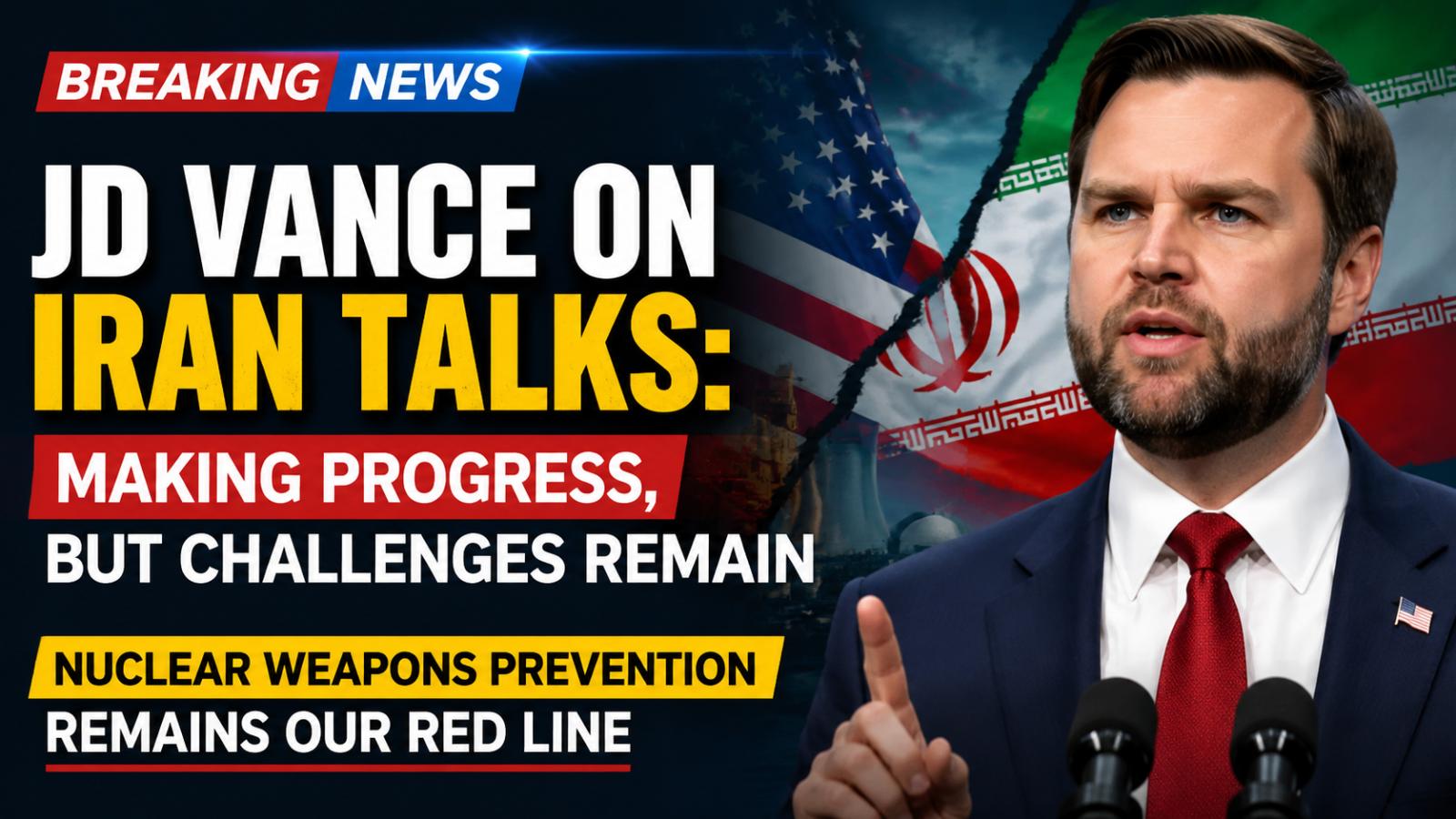
JD Vance departs for Iran talks, signals cautious optimism
US Vice President JD Vance said Friday he is aiming for a constructive outcome as he departed Washington, D.C., for upcoming peace negotiations with Iran, scheduled to take place in Pakistan. Speaking to reporters before boarding at Joint Base Andrews, Vance emphasized a willingness to engage diplomatically while maintaining a firm stance on accountability. He stated that the United States is prepared to pursue meaningful dialogue if Iranian representatives approach the talks in good faith. At the same time, he warned that attempts to undermine the process would be met with a less accommodating response from the US negotiating team. The visit comes amid heightened global attention on Middle East tensions, with policymakers closely watching whether diplomatic engagement can reduce friction and advance stability.
JD Vance departs for Iran talks, signals cautious optimism
US Vice President JD Vance said Friday he is aiming for a constructive outcome as he departed Washington, D.C., for upcoming peace negotiations with Iran, scheduled to take place in Pakistan. Speaking to reporters before boarding at Joint Base Andrews, Vance emphasized a willingness to engage diplomatically while maintaining a firm stance on accountability. He stated that the United States is prepared to pursue meaningful dialogue if Iranian representatives approach the talks in good faith. At the same time, he warned that attempts to undermine the process would be met with a less accommodating response from the US negotiating team. The visit comes amid heightened global attention on Middle East tensions, with policymakers closely watching whether diplomatic engagement can reduce friction and advance stability.
Mojtaba Khamenei threatens retaliation, calls for regional support
Iran’s leadership signaled a hardening stance on
Mojtaba Khamenei threatens retaliation, calls for regional support
Iran’s leadership signaled a hardening stance on
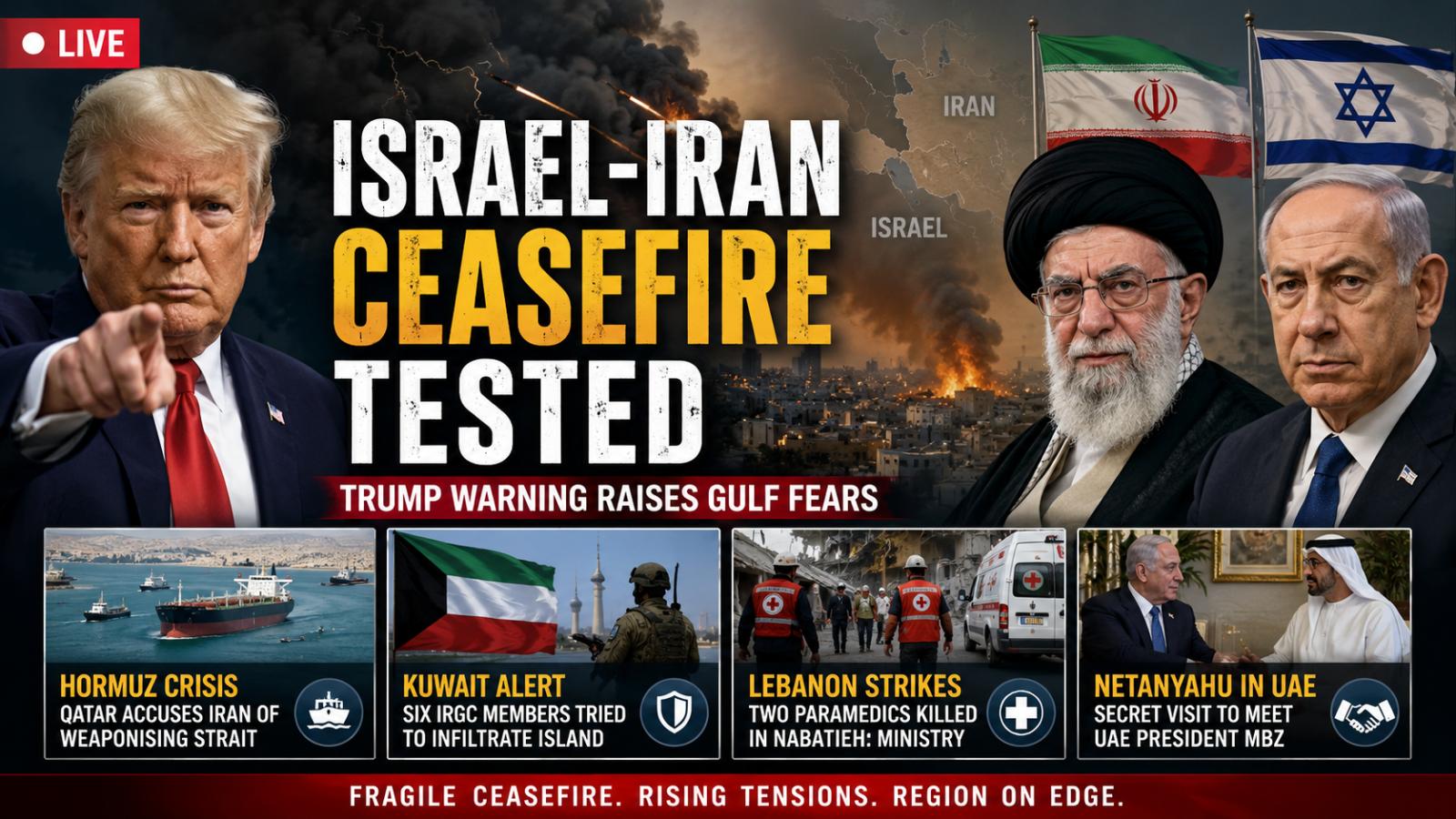
Trump warns Iran amid fragile ceasefire and renewed Middle East strikes
A fragile ceasefire between the United States and Iran is facing renewed uncertainty after escalating regional tensions and conflicting interpretations of the agreement. President Donald Trump issued a warning to Tehran, signaling that U.S. military assets remain on standby if the terms of what he describe
Trump warns Iran amid fragile ceasefire and renewed Middle East strikes
A fragile ceasefire between the United States and Iran is facing renewed uncertainty after escalating regional tensions and conflicting interpretations of the agreement. President Donald Trump issued a warning to Tehran, signaling that U.S. military assets remain on standby if the terms of what he describe
Pakistan's Role in US-Iran Ceasefire Deal Faces Scrutiny Amid Lebanon Confusion
On April 8, 2026, Pakistan secured a major diplomatic win by mediating the US-Iran ceasefire, but within hours, the deal was under strain as Israel launched large airstrikes on Lebanon, an Iranian ally, killing hundreds. The confusion centered around Lebanon’s inclusion in the ceasefire agreement, with Pakistan's interpretation putting it in the heart of the storm. While Pakistani Prime Minister Shehbaz Sharif's announcement claimed that the ceasefire applied to "everywhere, including Leban
Pakistan's Role in US-Iran Ceasefire Deal Faces Scrutiny Amid Lebanon Confusion
On April 8, 2026, Pakistan secured a major diplomatic win by mediating the US-Iran ceasefire, but within hours, the deal was under strain as Israel launched large airstrikes on Lebanon, an Iranian ally, killing hundreds. The confusion centered around Lebanon’s inclusion in the ceasefire agreement, with Pakistan's interpretation putting it in the heart of the storm. While Pakistani Prime Minister Shehbaz Sharif's announcement claimed that the ceasefire applied to "everywhere, including Leban
1,500 Killed in Lebanon as Israel Rejects Ceasefire, Hezbollah on the Defensive
Israel has continued its relentless air strikes on Lebanon despite a two-week truce between the United States and Iran. The truce, which covered various issues like sanctions and aerial attacks, did not include Lebanon, where Israel's military has intensified operations. On 8th April 2026, Israel launched the heaviest strikes on Lebanon in recent weeks, targeting over 100 Hezbollah command centers and military sites in Beirut. The attacks caused widespread panic in the capital, reminding many

1,500 Killed in Lebanon as Israel Rejects Ceasefire, Hezbollah on the Defensive
Israel has continued its relentless air strikes on Lebanon despite a two-week truce between the United States and Iran. The truce, which covered various issues like sanctions and aerial attacks, did not include Lebanon, where Israel's military has intensified operations. On 8th April 2026, Israel launched the heaviest strikes on Lebanon in recent weeks, targeting over 100 Hezbollah command centers and military sites in Beirut. The attacks caused widespread panic in the capital, reminding many

Iran accepts two-week ceasefire amid US pressure on Hormuz Strait
Iran has agreed to a proposed two-week ceasefire amid escalating tensions in the Middle East, following a statement by Donald Trump indicating that the United States would suspend further military action if Tehran fully reopens the strategically critical Strait of Hormuz. The announcement signals a potential pause in hostilities linked to ongoing Iran-Israel tensions, while also highlighting the broader geopolitical stakes tied to global energy security and maritime access. The Strait of Hormuz, a vital passage for a significant portion of the world’s oil supply, has remained at the center of international concern. US officials have made it clear that maintaining open navigation through the waterway is a key condition for de-escalation. The ceasefire agreement is being viewed as a temporary but important step toward reducing immediate risks in the region, particularly for global oil markets and allied economies. At the same time, Washington has underscored that any long-term easing of economic sanctions on Iran will depend on a complete halt to its uranium enrichment activities. The proposed framework reflects a broader US foreign policy approach that links economic relief directly to nuclear compliance, requiring Iran to scale back its nuclear program in exchange for reduced tariffs and sanctions. This conditional strategy is expected to shape the next phase of diplomatic negotiations. The development follows diplomatic outreach from Shehbaz Sharif, who urged an extension of the negotiation timeline and called on Iran to ensure uninterrupted access through the Strait of Hormuz. Pakistan’s involvement underscores the wider regional implications of the crisis and the importance of multilateral engagement. Meanwhile, Iran’s Islamic Revolutionary Guard Corps has issued a strong warning, stating that any US strikes on civilian infrastructure would provoke a response extending beyond the immediate region. The group cautioned that such actions could disrupt oil and gas supplies to the United States and its allies for an extended period, further raising concerns about global energy stability. While the ceasefire offers a temporary reprieve, the situation remains fluid, with key issues surrounding nuclear policy, sanctions, and regional security still unresolved.


Iran accepts two-week ceasefire amid US pressure on Hormuz Strait
Iran has agreed to a proposed two-week ceasefire amid escalating tensions in the Middle East, following a statement by Donald Trump indicating that the United States would suspend further military action if Tehran fully reopens the strategically critical Strait of Hormuz. The announcement signals a potential pause in hostilities linked to ongoing Iran-Israel tensions, while also highlighting the broader geopolitical stakes tied to global energy security and maritime access. The Strait of Hormuz, a vital passage for a significant portion of the world’s oil supply, has remained at the center of international concern. US officials have made it clear that maintaining open navigation through the waterway is a key condition for de-escalation. The ceasefire agreement is being viewed as a temporary but important step toward reducing immediate risks in the region, particularly for global oil markets and allied economies. At the same time, Washington has underscored that any long-term easing of economic sanctions on Iran will depend on a complete halt to its uranium enrichment activities. The proposed framework reflects a broader US foreign policy approach that links economic relief directly to nuclear compliance, requiring Iran to scale back its nuclear program in exchange for reduced tariffs and sanctions. This conditional strategy is expected to shape the next phase of diplomatic negotiations. The development follows diplomatic outreach from Shehbaz Sharif, who urged an extension of the negotiation timeline and called on Iran to ensure uninterrupted access through the Strait of Hormuz. Pakistan’s involvement underscores the wider regional implications of the crisis and the importance of multilateral engagement. Meanwhile, Iran’s Islamic Revolutionary Guard Corps has issued a strong warning, stating that any US strikes on civilian infrastructure would provoke a response extending beyond the immediate region. The group cautioned that such actions could disrupt oil and gas supplies to the United States and its allies for an extended period, further raising concerns about global energy stability. While the ceasefire offers a temporary reprieve, the situation remains fluid, with key issues surrounding nuclear policy, sanctions, and regional security still unresolved.



Saudi oil pipeline hit in Iranian attack, raising global energy concerns
Saudi Arabia’s critical East-West oil pipeline, a key route for crude exports, was struck in an Iranian attack, according to an industry source on Wednesday. The pipeline, currently serving as the kingdom’s primary export outlet after disruptions in the Strait of Hormuz, was among several oil-related facilities targeted across the country. The East-West pipeline plays a central role in maintaining Saudi Arabia’s oil supply chain, transporting approximately 7 million barrels per
Saudi oil pipeline hit in Iranian attack, raising global energy concerns
Saudi Arabia’s critical East-West oil pipeline, a key route for crude exports, was struck in an Iranian attack, according to an industry source on Wednesday. The pipeline, currently serving as the kingdom’s primary export outlet after disruptions in the Strait of Hormuz, was among several oil-related facilities targeted across the country. The East-West pipeline plays a central role in maintaining Saudi Arabia’s oil supply chain, transporting approximately 7 million barrels per
US, Iran, Israel agree to fragile two-week ceasefire amid new strikes
TEHRAN, Iran — Iran, the United States, and Israel agreed to a two-week ceasefire on Wednesday, April 8, 2026 (Iran Standard Time), in a last-minute effort to halt escalating hostilities that had raised fears of a broader regional war. The agreement, described by U.S. Vice President JD Vance as “fragile,” came just hours before the United States was expected to launch a major bombing campaign against Iran. Despite the announcement, reports of renewed missile and drone attacks
US, Iran, Israel agree to fragile two-week ceasefire amid new strikes
TEHRAN, Iran — Iran, the United States, and Israel agreed to a two-week ceasefire on Wednesday, April 8, 2026 (Iran Standard Time), in a last-minute effort to halt escalating hostilities that had raised fears of a broader regional war. The agreement, described by U.S. Vice President JD Vance as “fragile,” came just hours before the United States was expected to launch a major bombing campaign against Iran. Despite the announcement, reports of renewed missile and drone attacks
Trump says US may retrieve Iran uranium, Tehran silent on cooperation
U.S. President Donald Trump said on Wednesday, April 8, 2026, that the United States is prepared to work with Iran to recover enriched uranium believed to be buried beneath sites targeted during joint U.S.-Israeli strikes in June 2025. The comments signal a potential shift in U.S.-Iran engagement, though Iranian officials have not confirmed any such cooperation. In a social media post, Trump stated that “there will be no enrichment of uranium” moving forward and asserted that the
Trump says US may retrieve Iran uranium, Tehran silent on cooperation
U.S. President Donald Trump said on Wednesday, April 8, 2026, that the United States is prepared to work with Iran to recover enriched uranium believed to be buried beneath sites targeted during joint U.S.-Israeli strikes in June 2025. The comments signal a potential shift in U.S.-Iran engagement, though Iranian officials have not confirmed any such cooperation. In a social media post, Trump stated that “there will be no enrichment of uranium” moving forward and asserted that the
US and Iran Agree to Two-Week Ceasefire, Tehran to Reopen Strait of Hormuz
In a dramatic turn of events, US President Donald Trump has agreed to a two-week ceasefire with Iran, pulling back from the brink of escalating military conflict. The decision was made just hours before a self-imposed deadline for Tehran to reopen the vital Strait of Hormuz, a strategic waterway for global oil shipments, or face devastating US military strikes on Iranian civilian infrastructure. The truce, which is aimed at providing a diplomatic window to de-escalate the ongoing 40
US and Iran Agree to Two-Week Ceasefire, Tehran to Reopen Strait of Hormuz
In a dramatic turn of events, US President Donald Trump has agreed to a two-week ceasefire with Iran, pulling back from the brink of escalating military conflict. The decision was made just hours before a self-imposed deadline for Tehran to reopen the vital Strait of Hormuz, a strategic waterway for global oil shipments, or face devastating US military strikes on Iranian civilian infrastructure. The truce, which is aimed at providing a diplomatic window to de-escalate the ongoing 40
Iranians form human chains to protect infrastructure amid US threats
Thousands of Iranians gathered across the country on Tuesday, April 7, 2026, forming human chains around bridges and power generation facilities in what state media described as a coordinated effort to safeguard critical infrastructure. The demonstrations followed warnings from Donald Trump, who threatened potential strikes on Iranian bridges and power plants if Tehran fails to comply with US demands related to the ongoing conflict. Video footage broadcast by Iran’s state-run Press TV showed extensive lines of civilians holding national flags while standing outside key infrastructure sites. Large crowds appeared to position themselves as protective barriers, effectively acting as human shields around locations reportedly identified as potential targets. The Iranian government had earlier encouraged broad public participation, calling on young people, artists, and athletes to join the initiative. Officials framed the effort as a grassroots movement driven largely by youth organizations. Alireza Rahimi, Secretary of the Supreme Council of Youth and Adolescents, stated that the idea originated among university students and young activists who proposed forming human chains around strategic facilities. Rahimi described the campaign, titled “Human Chain of Iran’s Youth for a Bright Future,” as a demonstration of national unity and resilience. He emphasized that the initiative reflects a collective determination to defend the country’s infrastructure amid escalating external threats. Meanwhile, President Trump reiterated his warnings, suggesting that failure to meet US conditions—including reopening the Strait of Hormuz—could lead to severe consequences. In a post on Truth Social, he warned of potentially catastrophic outcomes while also referencing the possibility of significant political change in Iran. The developments highlight intensifying geopolitical tensions between the United States and Iran, with civilian mobilization underscoring the broader societal response within Iran as the situation continues to evolve.
Iranians form human chains to protect infrastructure amid US threats
Thousands of Iranians gathered across the country on Tuesday, April 7, 2026, forming human chains around bridges and power generation facilities in what state media described as a coordinated effort to safeguard critical infrastructure. The demonstrations followed warnings from Donald Trump, who threatened potential strikes on Iranian bridges and power plants if Tehran fails to comply with US demands related to the ongoing conflict. Video footage broadcast by Iran’s state-run Press TV showed extensive lines of civilians holding national flags while standing outside key infrastructure sites. Large crowds appeared to position themselves as protective barriers, effectively acting as human shields around locations reportedly identified as potential targets. The Iranian government had earlier encouraged broad public participation, calling on young people, artists, and athletes to join the initiative. Officials framed the effort as a grassroots movement driven largely by youth organizations. Alireza Rahimi, Secretary of the Supreme Council of Youth and Adolescents, stated that the idea originated among university students and young activists who proposed forming human chains around strategic facilities. Rahimi described the campaign, titled “Human Chain of Iran’s Youth for a Bright Future,” as a demonstration of national unity and resilience. He emphasized that the initiative reflects a collective determination to defend the country’s infrastructure amid escalating external threats. Meanwhile, President Trump reiterated his warnings, suggesting that failure to meet US conditions—including reopening the Strait of Hormuz—could lead to severe consequences. In a post on Truth Social, he warned of potentially catastrophic outcomes while also referencing the possibility of significant political change in Iran. The developments highlight intensifying geopolitical tensions between the United States and Iran, with civilian mobilization underscoring the broader societal response within Iran as the situation continues to evolve.
Trump faces backlash over threat against Iran amid rising tensions
President Donald Trump faced widespread criticism after issuing a stark warning toward Iran, threatening the destruction of the country’s civilization if it failed to meet U.S. demands by 8:00 PM on Tuesday, though the exact date was not specified. The remarks, posted on social media, intensified already heightened tensions between the United States and Iran. Iran responded by suspending direct communications with Washington, while continuing indirect discussions through cease-fir
Trump faces backlash over threat against Iran amid rising tensions
President Donald Trump faced widespread criticism after issuing a stark warning toward Iran, threatening the destruction of the country’s civilization if it failed to meet U.S. demands by 8:00 PM on Tuesday, though the exact date was not specified. The remarks, posted on social media, intensified already heightened tensions between the United States and Iran. Iran responded by suspending direct communications with Washington, while continuing indirect discussions through cease-fir
Over 10,000 flights canceled as West Asia war disrupts Indian carriers
More than 10,000 flights operated by Indian carrie
Over 10,000 flights canceled as West Asia war disrupts Indian carriers
More than 10,000 flights operated by Indian carrie
Two killed in strike on railway bridge in Iran’s Kashan, officials say
Two people were killed and three others injured in a strike on a railway bridge in the central Iranian city of Kashan, according to regional authorities. The incident occurred at approximately 4:52 PM IST on Tuesday, April 7, 2026 (which was early morning, Tuesday, April 7, 2026, in the United States), based on available live updates. Akbar Salehi, a senior security official in Isfahan province, said the Yahya Abad railway bridge in Kashan was targeted in what he described as an attack involving U.S. and Israeli forces. He stated that the strike resulted in civilian casualties, confirming two fatalities and three injuries. Authorities reported disruptions to transportation infrastructure following the incident. A key highway in northern Iran was closed after the strike, though officials did not immediately provide details on the extent of the damage or how long the closure would remain in effect. No independent confirmation of the attack or its attribution has been released. The situation remains fluid as officials continue to assess the damage and broader security implications in the region.
Two killed in strike on railway bridge in Iran’s Kashan, officials say
Two people were killed and three others injured in a strike on a railway bridge in the central Iranian city of Kashan, according to regional authorities. The incident occurred at approximately 4:52 PM IST on Tuesday, April 7, 2026 (which was early morning, Tuesday, April 7, 2026, in the United States), based on available live updates. Akbar Salehi, a senior security official in Isfahan province, said the Yahya Abad railway bridge in Kashan was targeted in what he described as an attack involving U.S. and Israeli forces. He stated that the strike resulted in civilian casualties, confirming two fatalities and three injuries. Authorities reported disruptions to transportation infrastructure following the incident. A key highway in northern Iran was closed after the strike, though officials did not immediately provide details on the extent of the damage or how long the closure would remain in effect. No independent confirmation of the attack or its attribution has been released. The situation remains fluid as officials continue to assess the damage and broader security implications in the region.
US-Israel strikes hit Iran’s Kharg Island, raising global oil concerns
Missile strikes by United States and Israeli forces have reportedly targeted Iran’s strategically vital Kharg Island, significantly escalating tensions in West Asia. According to Iran’s Mehr News, the strikes were reported on Tuesday, April 7, 2026, marking a critical development in the ongoing military campaign known as Operation Epic Fury. Kharg Island, often described as Tehran’s economic lifeline, handles nearly 90% of Iran’s crude oil exports, making it central to globa
US-Israel strikes hit Iran’s Kharg Island, raising global oil concerns
Missile strikes by United States and Israeli forces have reportedly targeted Iran’s strategically vital Kharg Island, significantly escalating tensions in West Asia. According to Iran’s Mehr News, the strikes were reported on Tuesday, April 7, 2026, marking a critical development in the ongoing military campaign known as Operation Epic Fury. Kharg Island, often described as Tehran’s economic lifeline, handles nearly 90% of Iran’s crude oil exports, making it central to globa