







Hegseth says Iran ceasefire pauses war powers clock amid congressional concerns
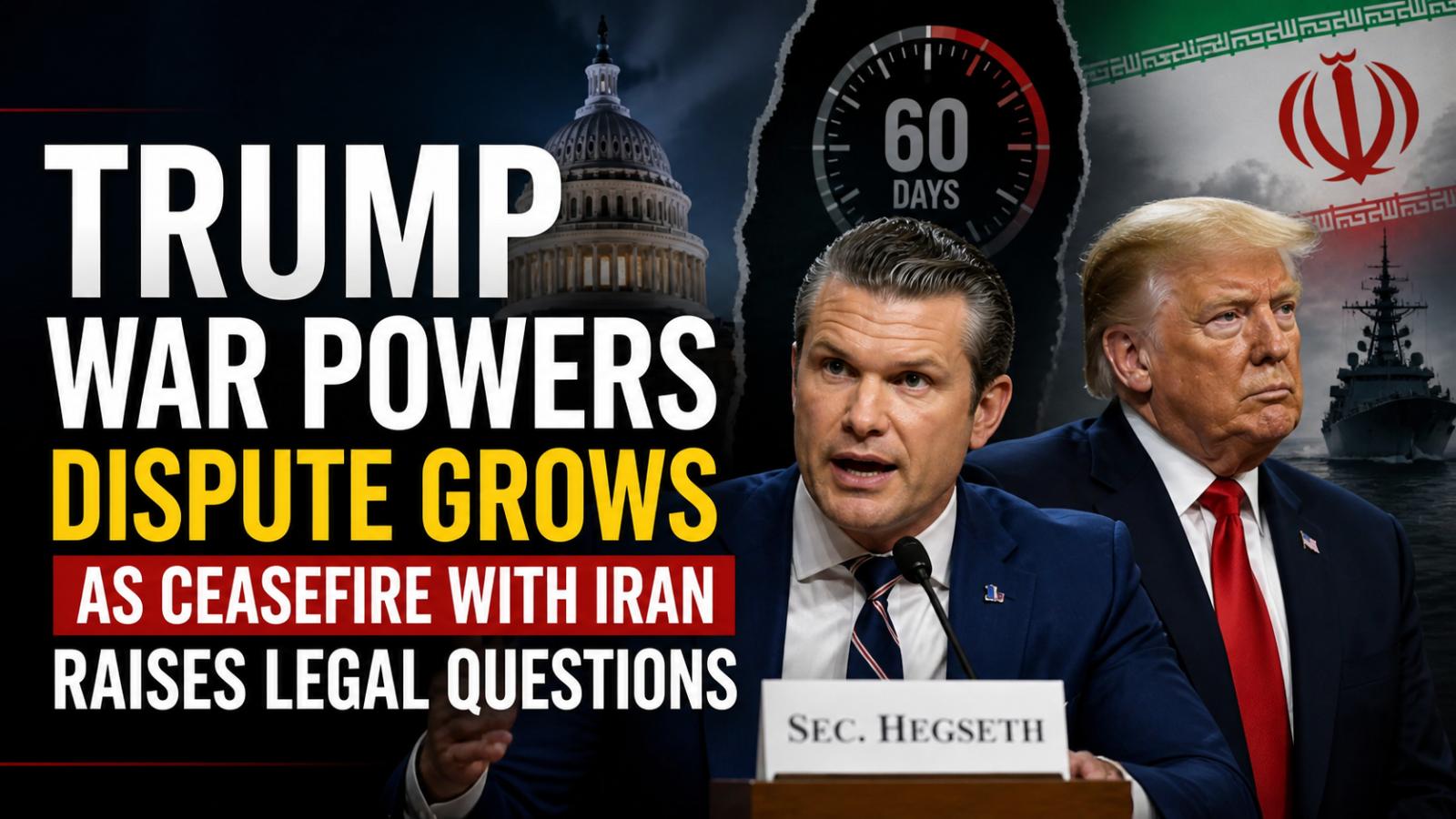
The Trump war powers debate took center stage in Washington as Defense Secretary Pete Hegseth told lawmakers that a ceasefire with Iran pauses the legal clock under the War Powers Resolution, a claim that has triggered strong political and legal reactions. The dispute comes just before the 60-day deadline that typically requires the president to seek approval from Congress to continue military action, raising questions about how the law should be applied during a ceasefire. Speaking before the Senate Armed Services Committee, Hegseth argued that ongoing ceasefire conditions mean the countdown does not apply in the usual way. Under the War Powers Resolution, introduced in 1973, presidents must inform Congress within 48 hours of military action and must withdraw troops within 60 days unless lawmakers approve continued engagement. Lawmakers had expected this deadline to expire on May 1, but Hegseth’s interpretation suggests otherwise. Hegseth avoided giving a clear answer when asked if the administration of Donald Trump would seek formal authorization. Instead, he defended the administration’s actions and criticized opponents, saying that internal political disagreements weaken the country’s position. His remarks came during discussions on the Pentagon’s proposed $1.45 trillion budget, though much of the focus shifted to the Iran conflict and its legal implications. Several lawmakers from both parties expressed concern. Senator Tim Kaine warned that the situation raises serious constitutional questions, while some Republicans also indicated they may oppose continuing military operations without approval. Others supported a more flexible interpretation, especially during active negotiations or ceasefire periods. Legal experts, however, strongly rejected the argument that a ceasefire pauses the law. Analysts pointed out that US naval forces remain active in the region, including operations in the Strait of Hormuz, suggesting that hostilities have not fully stopped. Scholars emphasized that the law does not include any provision for pausing the timeline. The conflict has already had wider consequences, including rising energy prices and increased tensions in the region. Critics have also accused the administration of starting the conflict without a clear immediate threat. During the hearing, Senator Elissa Slotkin questioned whether the administration could truly claim progress while key trade routes remain unstable. The exchange grew tense at times, reflecting deep divisions over the handling of the situation. While military officials maintained a more measured tone, political leaders continued to clash over strategy, legality, and communication with the public. As the deadline passes, the debate over war powers, presidential authority, and congressional oversight is expected to intensify further.
Hegseth says Iran ceasefire pauses war powers clock amid congressional concerns
The Trump war powers debate took center stage in Washington as Defense Secretary Pete Hegseth told lawmakers that a ceasefire with Iran pauses the legal clock under the War Powers Resolution, a claim that has triggered strong political and legal reactions. The dispute comes just before the 60-day deadline that typically requires the president to seek approval from Congress to continue military action, raising questions about how the law should be applied during a ceasefire. Speaking before the Senate Armed Services Committee, Hegseth argued that ongoing ceasefire conditions mean the countdown does not apply in the usual way. Under the War Powers Resolution, introduced in 1973, presidents must inform Congress within 48 hours of military action and must withdraw troops within 60 days unless lawmakers approve continued engagement. Lawmakers had expected this deadline to expire on May 1, but Hegseth’s interpretation suggests otherwise. Hegseth avoided giving a clear answer when asked if the administration of Donald Trump would seek formal authorization. Instead, he defended the administration’s actions and criticized opponents, saying that internal political disagreements weaken the country’s position. His remarks came during discussions on the Pentagon’s proposed $1.45 trillion budget, though much of the focus shifted to the Iran conflict and its legal implications. Several lawmakers from both parties expressed concern. Senator Tim Kaine warned that the situation raises serious constitutional questions, while some Republicans also indicated they may oppose continuing military operations without approval. Others supported a more flexible interpretation, especially during active negotiations or ceasefire periods. Legal experts, however, strongly rejected the argument that a ceasefire pauses the law. Analysts pointed out that US naval forces remain active in the region, including operations in the Strait of Hormuz, suggesting that hostilities have not fully stopped. Scholars emphasized that the law does not include any provision for pausing the timeline. The conflict has already had wider consequences, including rising energy prices and increased tensions in the region. Critics have also accused the administration of starting the conflict without a clear immediate threat. During the hearing, Senator Elissa Slotkin questioned whether the administration could truly claim progress while key trade routes remain unstable. The exchange grew tense at times, reflecting deep divisions over the handling of the situation. While military officials maintained a more measured tone, political leaders continued to clash over strategy, legality, and communication with the public. As the deadline passes, the debate over war powers, presidential authority, and congressional oversight is expected to intensify further.
Why is the Pentagon’s $25 billion war cost estimate questioned? Experts say it may be incomplete
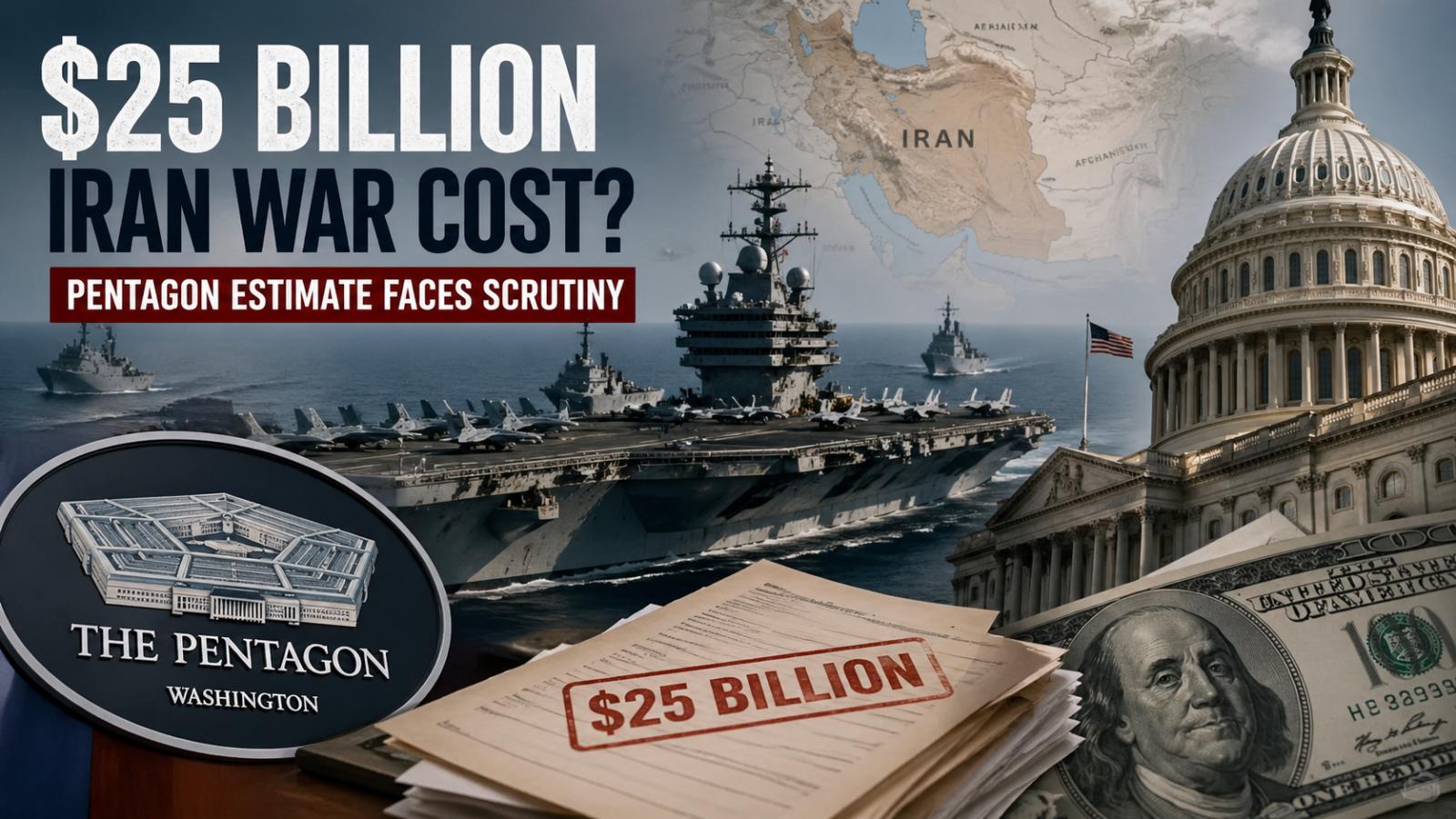
The United States Department of Defense has estimated that its ongoing military conflict with Iran has cost approximately $25 billion, but analysts and lawmakers are raising concerns that the figure may significantly understate the true financial burden. The estimate was presented during a congressional hearing on Tuesday, April 29, 2026, where Pentagon officials outlined current war-related expenditures without offering a detailed breakdown. Congressional hearing reveals l
Why is the Pentagon’s $25 billion war cost estimate questioned? Experts say it may be incomplete
The United States Department of Defense has estimated that its ongoing military conflict with Iran has cost approximately $25 billion, but analysts and lawmakers are raising concerns that the figure may significantly understate the true financial burden. The estimate was presented during a congressional hearing on Tuesday, April 29, 2026, where Pentagon officials outlined current war-related expenditures without offering a detailed breakdown. Congressional hearing reveals l
USS Gerald R. Ford Set to Leave Middle East After Record Deployment
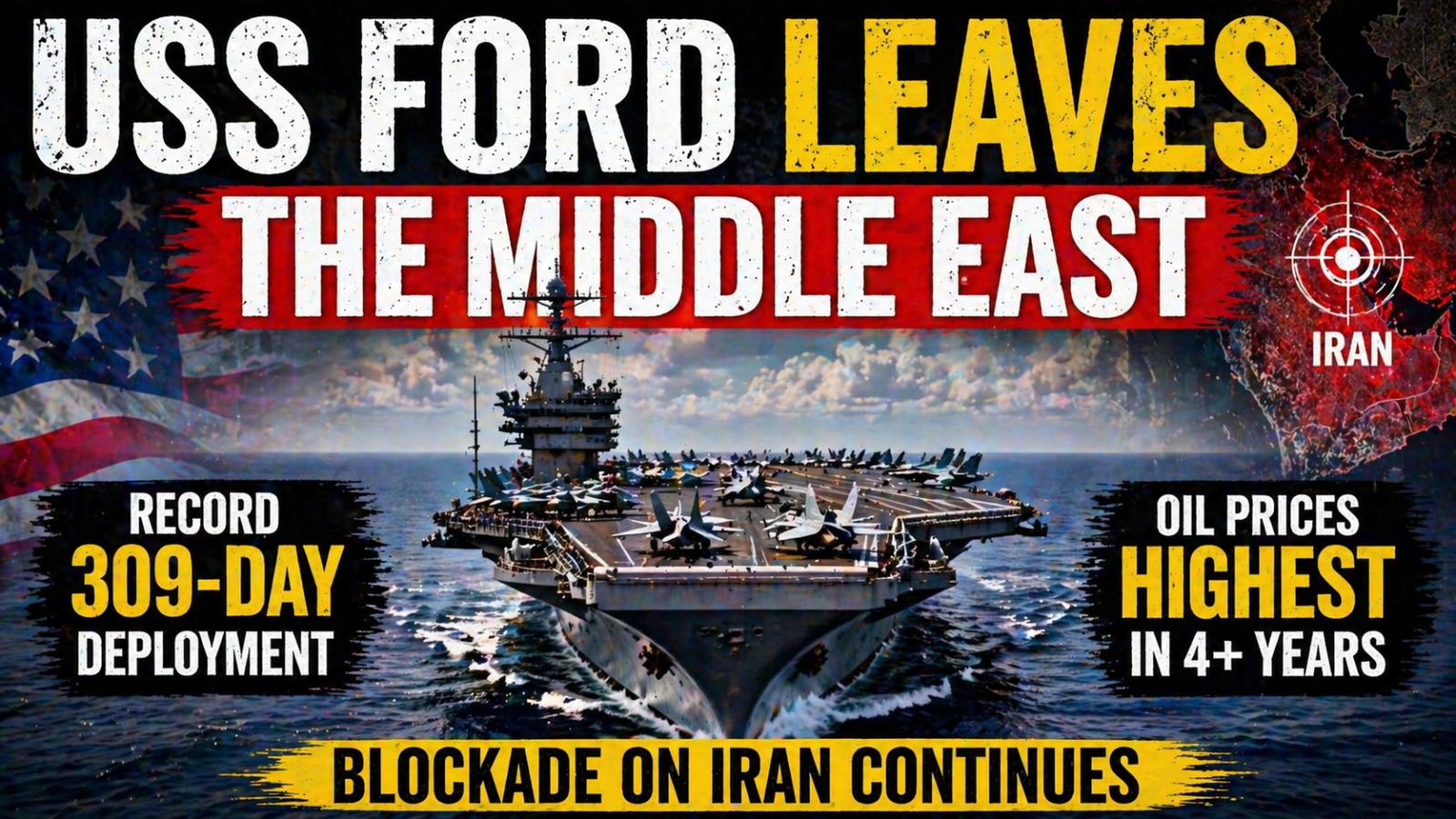
The USS Gerald R. Ford, the US Navy’s newest aircraft carrier, is preparing to leave the Middle East after completing a record 309-day deployment, marking the longest continuous mission for a modern American carrier. The vessel is expected to return to its home port at Naval Station Norfolk, Virginia, around mid-May, concluding an extended operational period that has drawn attention from lawmakers and defense officials. The decision to bring the USS Ford back follows a demanding d
USS Gerald R. Ford Set to Leave Middle East After Record Deployment
The USS Gerald R. Ford, the US Navy’s newest aircraft carrier, is preparing to leave the Middle East after completing a record 309-day deployment, marking the longest continuous mission for a modern American carrier. The vessel is expected to return to its home port at Naval Station Norfolk, Virginia, around mid-May, concluding an extended operational period that has drawn attention from lawmakers and defense officials. The decision to bring the USS Ford back follows a demanding d
What happened in the US Marines data breach? Hackers claim to leak thousands of records
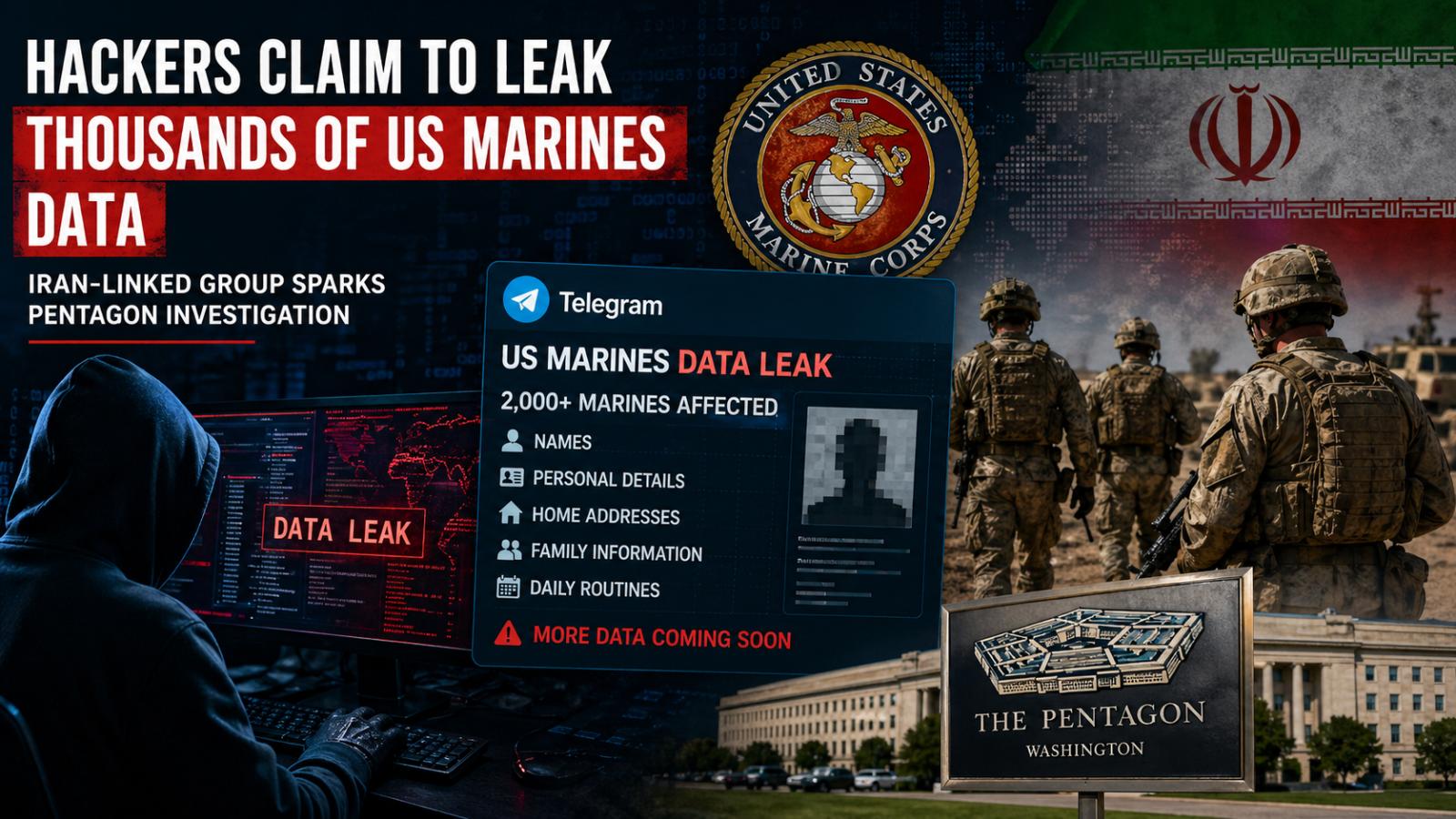
Hackers claim to leak thousands of records A hacker group reportedly linked to Iran has claimed responsibility for leaking sensitive personal data of thousands of US Marines deployed in West Asia, triggering an investigation by the US Department of Defense. Reports indicate that the breach involved the release of names and personal details belonging to more than 2,000 Marines, raising serious concerns about military cybersecurity and operational safety. According to The Wall Street Journal, the leaked dataset included records of over 2,000 personnel, while another report suggested the number could be as high as 2,379. The group claiming responsibility has been identified as Handala, also known as Hanzala, which has previously been associated with cyber activities targeting Western interests. Details of leaked information and surveillance claims The hackers reportedly published the data on a channel on Telegram, presenting it as proof of their surveillance capabilities. The exposed information allegedly includes names and potentially other identifying details of US Marines stationed in the region. Reports also indicate that US troops received warning messages via WhatsApp, claiming they were being monitored and could be targeted. The group further asserted that it possesses additional sensitive data, including home addresses, family details, and daily routines of American personnel. It warned that more information could be released in the future, escalating concerns about the safety of military members and their families. Rising geopolitical tensions amplify cybersecurity risks The reported breach comes amid heightened tensions between the United States and Iran. The incident underscores growing cybersecurity threats tied to geopolitical rivalries, particularly in regions where US forces are actively deployed. Analysts say such cyber operations can serve both as intelligence-gathering efforts and psychological pressure tactics. Trump comments add to diplomatic strain Amid these developments, Donald Trump commented on relations with Iran, stating that the country had reached out to the United States regarding reopening the Strait of Hormuz. In posts on his social media platform, Trump described Iran as being in a “state of collapse” and criticized its handling of negotiations over a non-nuclear agreement. The convergence of cyber threats and diplomatic friction highlights the evolving nature of modern conflict, where digital attacks increasingly accompany traditional geopolitical disputes.
What happened in the US Marines data breach? Hackers claim to leak thousands of records
Hackers claim to leak thousands of records A hacker group reportedly linked to Iran has claimed responsibility for leaking sensitive personal data of thousands of US Marines deployed in West Asia, triggering an investigation by the US Department of Defense. Reports indicate that the breach involved the release of names and personal details belonging to more than 2,000 Marines, raising serious concerns about military cybersecurity and operational safety. According to The Wall Street Journal, the leaked dataset included records of over 2,000 personnel, while another report suggested the number could be as high as 2,379. The group claiming responsibility has been identified as Handala, also known as Hanzala, which has previously been associated with cyber activities targeting Western interests. Details of leaked information and surveillance claims The hackers reportedly published the data on a channel on Telegram, presenting it as proof of their surveillance capabilities. The exposed information allegedly includes names and potentially other identifying details of US Marines stationed in the region. Reports also indicate that US troops received warning messages via WhatsApp, claiming they were being monitored and could be targeted. The group further asserted that it possesses additional sensitive data, including home addresses, family details, and daily routines of American personnel. It warned that more information could be released in the future, escalating concerns about the safety of military members and their families. Rising geopolitical tensions amplify cybersecurity risks The reported breach comes amid heightened tensions between the United States and Iran. The incident underscores growing cybersecurity threats tied to geopolitical rivalries, particularly in regions where US forces are actively deployed. Analysts say such cyber operations can serve both as intelligence-gathering efforts and psychological pressure tactics. Trump comments add to diplomatic strain Amid these developments, Donald Trump commented on relations with Iran, stating that the country had reached out to the United States regarding reopening the Strait of Hormuz. In posts on his social media platform, Trump described Iran as being in a “state of collapse” and criticized its handling of negotiations over a non-nuclear agreement. The convergence of cyber threats and diplomatic friction highlights the evolving nature of modern conflict, where digital attacks increasingly accompany traditional geopolitical disputes.
US missile stockpile concerns grow amid iran conflict scrutiny
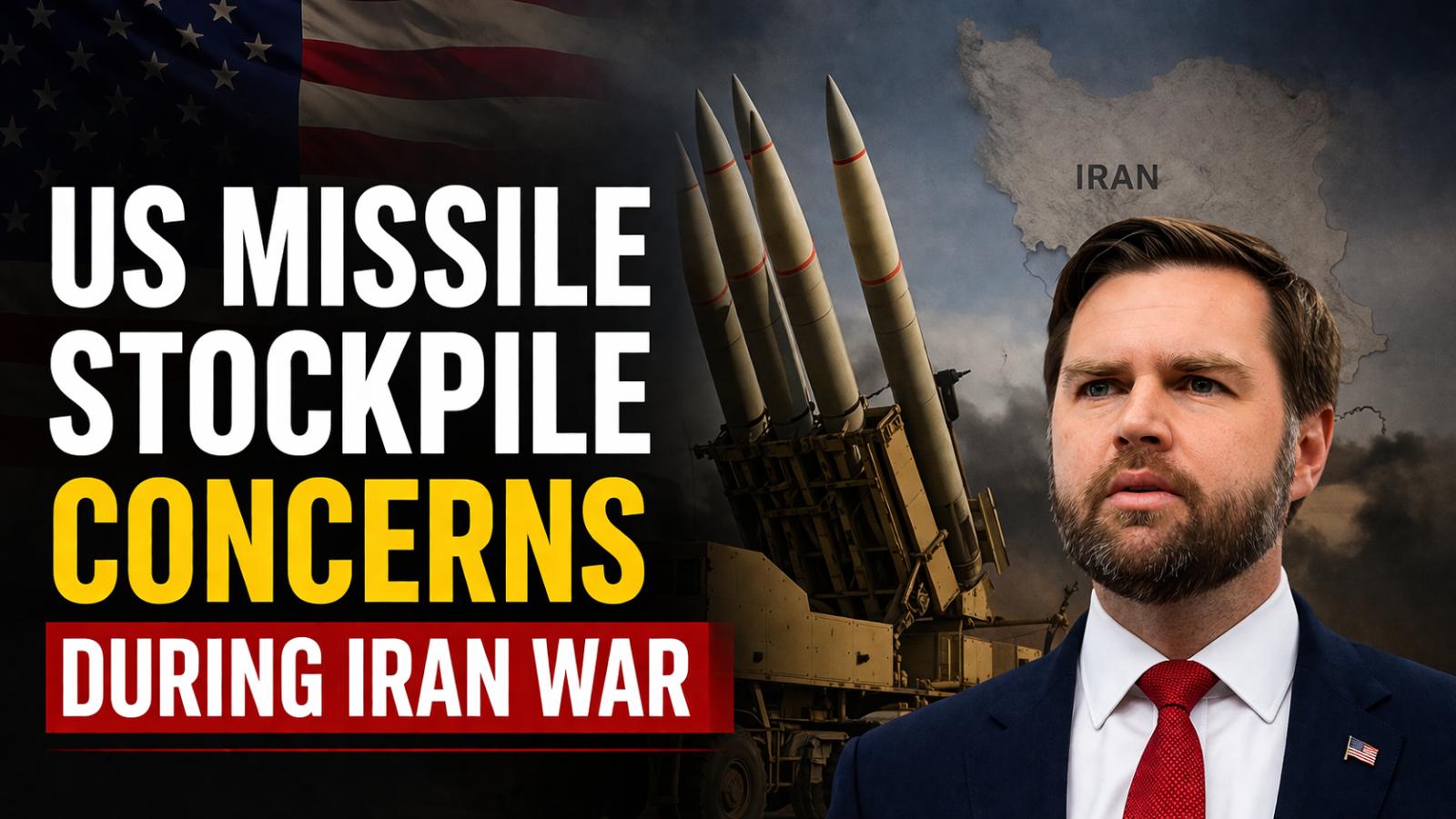
US missile stockpile concerns during Iran war
US missile stockpile concerns grow amid iran conflict scrutiny
US missile stockpile concerns during Iran war
Trump criticizes NATO support amid tensions over Iran conflict
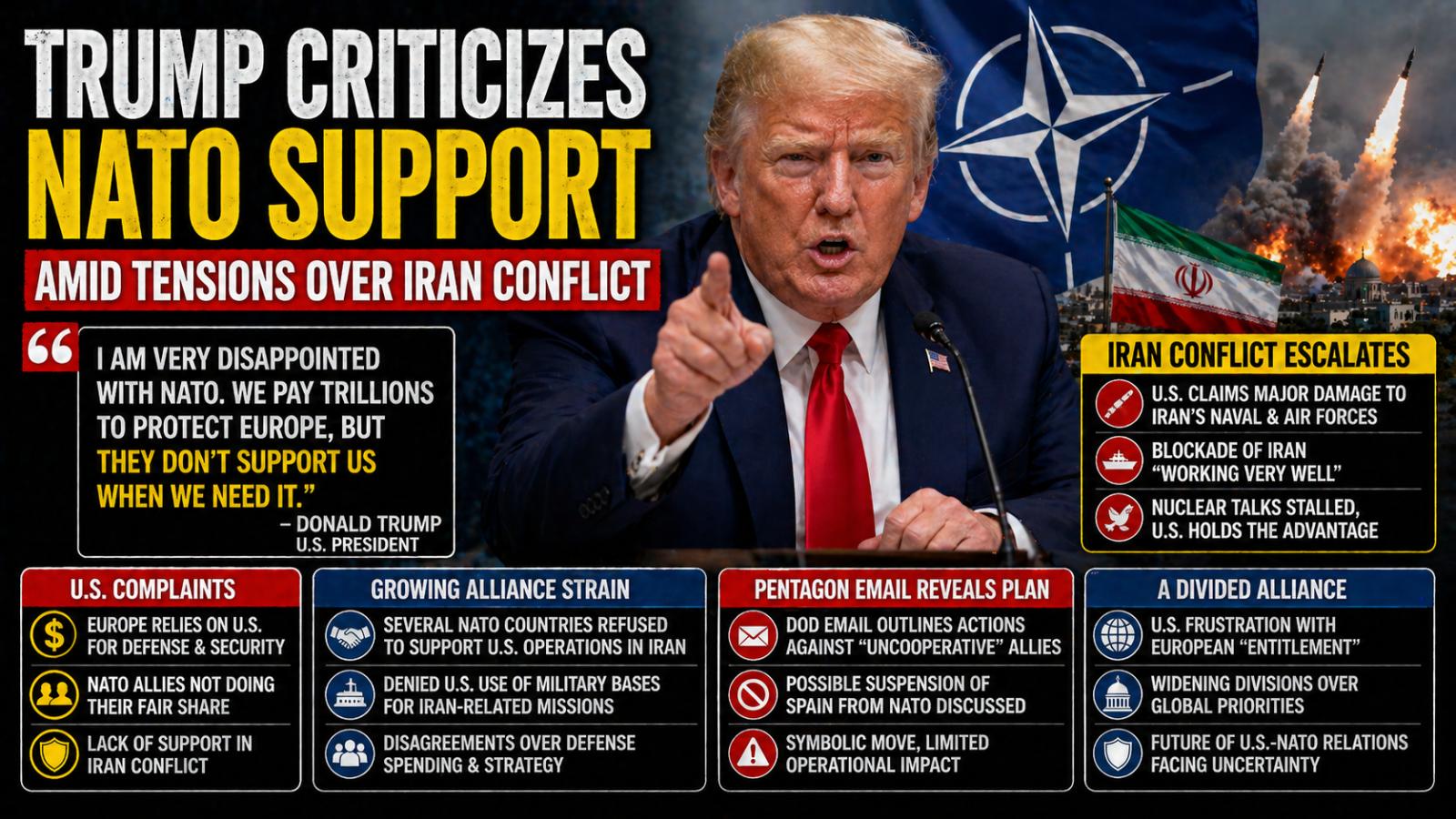
Trump criticized NATO for lack of support during the Iran conflict, highlighting growing US-alliance tensions and potential policy consequences for member states. A growing rift between the United States and NATO allies intensified after President Donald Trump voiced disappointment over support during the Iran conflict and broader security concerns. Amid escalating tensions between the United States and its allies, Donald Trump said on Sunday April 26, 2026 that he was “very disappointed” with NATO, accusing the alliance of failing to support Washington during a critical period. His remarks followed heightened security concerns earlier that day at the White House Correspondents’ Dinner. In an interview with Fox News, Trump emphasized the scale of US financial contributions to NATO, arguing that the alliance depends heavily on American resources. He said the United States has invested trillions of dollars to protect Europe from threats such as Russia and suggested that NATO members have not reciprocated adequately. The comments come as the Trump administration faces frustration with Western allies over their reluctance to back US actions in the ongoing Iran conflict. During the same interview, Trump shifted focus to Iran, asserting that the United States holds a strategic advantage despite stalled negotiations. He claimed US forces had significantly weakened Iran’s naval and air capabilities and described a blockade as highly effective. Tensions with NATO have been building since Trump returned to office, particularly as he has pushed member nations to increase defense spending. Disagreements intensified after several NATO countries declined to support US military operations in Iran or allow the use of their bases. The strain deepened further after a controversial email from the United States Department of Defense outlined potential actions against NATO allies perceived as unsupportive. Among the measures discussed was the possible suspension of Spain from NATO, a move officials indicated would carry symbolic significance but limited operational impact. Officials said the communication reflected growing frustration within the US government, describing what it characterized as a sense of entitlement among European partners. The developments underscore widening divisions within the alliance as geopolitical and military priorities diverge.
Trump criticizes NATO support amid tensions over Iran conflict
Trump criticized NATO for lack of support during the Iran conflict, highlighting growing US-alliance tensions and potential policy consequences for member states. A growing rift between the United States and NATO allies intensified after President Donald Trump voiced disappointment over support during the Iran conflict and broader security concerns. Amid escalating tensions between the United States and its allies, Donald Trump said on Sunday April 26, 2026 that he was “very disappointed” with NATO, accusing the alliance of failing to support Washington during a critical period. His remarks followed heightened security concerns earlier that day at the White House Correspondents’ Dinner. In an interview with Fox News, Trump emphasized the scale of US financial contributions to NATO, arguing that the alliance depends heavily on American resources. He said the United States has invested trillions of dollars to protect Europe from threats such as Russia and suggested that NATO members have not reciprocated adequately. The comments come as the Trump administration faces frustration with Western allies over their reluctance to back US actions in the ongoing Iran conflict. During the same interview, Trump shifted focus to Iran, asserting that the United States holds a strategic advantage despite stalled negotiations. He claimed US forces had significantly weakened Iran’s naval and air capabilities and described a blockade as highly effective. Tensions with NATO have been building since Trump returned to office, particularly as he has pushed member nations to increase defense spending. Disagreements intensified after several NATO countries declined to support US military operations in Iran or allow the use of their bases. The strain deepened further after a controversial email from the United States Department of Defense outlined potential actions against NATO allies perceived as unsupportive. Among the measures discussed was the possible suspension of Spain from NATO, a move officials indicated would carry symbolic significance but limited operational impact. Officials said the communication reflected growing frustration within the US government, describing what it characterized as a sense of entitlement among European partners. The developments underscore widening divisions within the alliance as geopolitical and military priorities diverge.

Bus crash near Pentagon leaves 23 injured including defense personnel
Bus collision near Pentagon on April 24, 2026 injures 23 people, including defense personnel, triggering emergency response, hospital treatment, and an ongoing investigation. Bus crash near Pentagon leaves 23 injured, including Department of War personnel after a collision involving two commuter buses during the morning rush hour on Friday. Officials said the incident involved a Fairfax County Connector bus and a Prince William County OmniRide bus that collided near the Pentagon complex shortly before 7:30 a.m. local time. According to authorities, the crash occurred at approximately 7:20 a.m. on the Metro Access Road near the Pentagon South parking area. The collision resulted in 23 passengers being injured, including 10 individuals identified as Department of War personnel. Emergency teams were immediately dispatched to the location following reports of the crash. Officials confirmed that 18 injured passengers were transported to nearby hospitals for further medical evaluation and treatment. Five additional passengers received first aid at the scene and were released after on-site assessment by emergency responders. The extent of injuries has not been fully disclosed, but authorities stated that all injured individuals are receiving appropriate care. Multiple law enforcement and fire department units from surrounding areas assisted in managing the emergency response and supported the initial investigation into the cause of the collision. The crash led to temporary disruptions in transit operations near the Pentagon, with emergency crews working to clear the scene and assess the damage. For a short period after the incident, the Pentagon Metro station and adjacent transit center were closed to allow for investigation and emergency operations. Authorities continue to examine the circumstances surrounding the collision, with further details expected as the investigation moves forward.
Bus crash near Pentagon leaves 23 injured including defense personnel
Bus collision near Pentagon on April 24, 2026 injures 23 people, including defense personnel, triggering emergency response, hospital treatment, and an ongoing investigation. Bus crash near Pentagon leaves 23 injured, including Department of War personnel after a collision involving two commuter buses during the morning rush hour on Friday. Officials said the incident involved a Fairfax County Connector bus and a Prince William County OmniRide bus that collided near the Pentagon complex shortly before 7:30 a.m. local time. According to authorities, the crash occurred at approximately 7:20 a.m. on the Metro Access Road near the Pentagon South parking area. The collision resulted in 23 passengers being injured, including 10 individuals identified as Department of War personnel. Emergency teams were immediately dispatched to the location following reports of the crash. Officials confirmed that 18 injured passengers were transported to nearby hospitals for further medical evaluation and treatment. Five additional passengers received first aid at the scene and were released after on-site assessment by emergency responders. The extent of injuries has not been fully disclosed, but authorities stated that all injured individuals are receiving appropriate care. Multiple law enforcement and fire department units from surrounding areas assisted in managing the emergency response and supported the initial investigation into the cause of the collision. The crash led to temporary disruptions in transit operations near the Pentagon, with emergency crews working to clear the scene and assess the damage. For a short period after the incident, the Pentagon Metro station and adjacent transit center were closed to allow for investigation and emergency operations. Authorities continue to examine the circumstances surrounding the collision, with further details expected as the investigation moves forward.
US deploys three aircraft carriers to Middle East amid Iran tensions
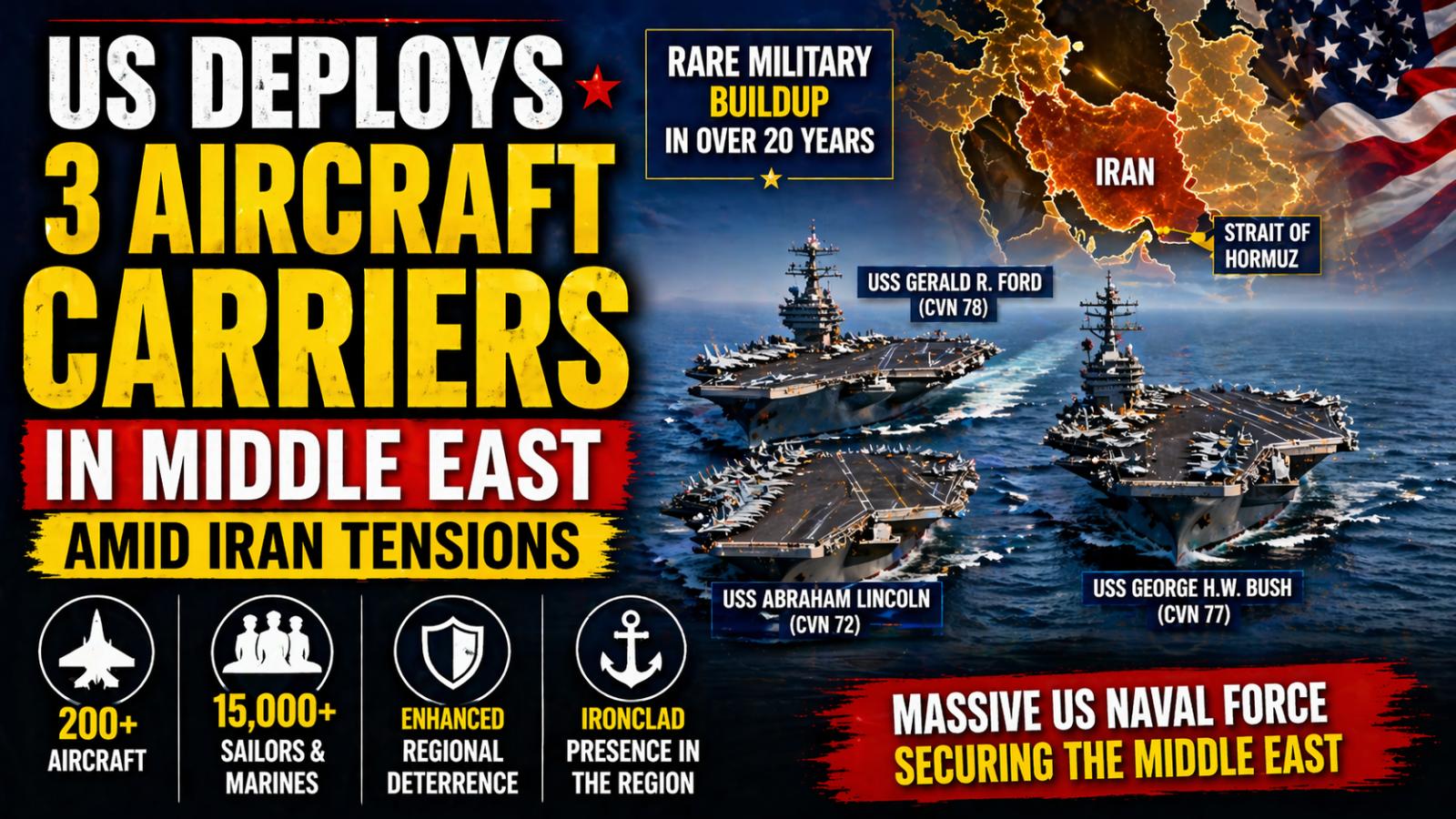
US deploys three aircraft carriers to the Middle East amid Iran tensions, expanding naval operations and reinforcing security in key maritime routes including the Strait of Hormuz. US deploys three aircraft carriers to Middle East amid Iran tensions as Washington significantly expands its military footprint across the region, marking one of the largest naval concentrations in more than two decades. Officials confirmed that three carrier strike groups—the USS Abraham Lincoln, USS Gerald R. Ford, and USS George H.W. Bush—are operating simultaneously, supported by more than 200 aircraft and approximately 15,000 sailors and Marines. A statement from US Central Command on Thursday confirmed the rare deployment, describing it as a significant concentration of naval power aimed at maintaining operational readiness amid rising tensions involving Iran. The carrier groups and their air wings are conducting coordinated missions, underscoring the strategic importance of key maritime routes in the Middle East and reinforcing a broader posture of deterrence. The announcement coincided with remarks from Donald Trump on Thursday, who declined to provide a timeline for a potential resolution to the Iran conflict. He indicated that any agreement would depend on conditions favorable to US interests, highlighting ongoing uncertainty surrounding diplomatic efforts. The absence of a clear timeline has aligned with increased military activity and messaging focused on regional stability. Defense officials stated on Friday that the US blockade of Iranian vessels in the Strait of Hormuz remains “ironclad,” with additional naval assets expected to join the operation in the coming days. The expanding mission signals a broader enforcement effort in one of the world’s most critical shipping corridors. The USS George H.W. Bush, commissioned in 2009, is among the newest Nimitz-class carriers involved, measuring nearly 1,000 feet in length and powered by two nuclear reactors, with the capacity to carry more than 80 aircraft and support a crew exceeding 5,500 personnel.
US deploys three aircraft carriers to Middle East amid Iran tensions
US deploys three aircraft carriers to the Middle East amid Iran tensions, expanding naval operations and reinforcing security in key maritime routes including the Strait of Hormuz. US deploys three aircraft carriers to Middle East amid Iran tensions as Washington significantly expands its military footprint across the region, marking one of the largest naval concentrations in more than two decades. Officials confirmed that three carrier strike groups—the USS Abraham Lincoln, USS Gerald R. Ford, and USS George H.W. Bush—are operating simultaneously, supported by more than 200 aircraft and approximately 15,000 sailors and Marines. A statement from US Central Command on Thursday confirmed the rare deployment, describing it as a significant concentration of naval power aimed at maintaining operational readiness amid rising tensions involving Iran. The carrier groups and their air wings are conducting coordinated missions, underscoring the strategic importance of key maritime routes in the Middle East and reinforcing a broader posture of deterrence. The announcement coincided with remarks from Donald Trump on Thursday, who declined to provide a timeline for a potential resolution to the Iran conflict. He indicated that any agreement would depend on conditions favorable to US interests, highlighting ongoing uncertainty surrounding diplomatic efforts. The absence of a clear timeline has aligned with increased military activity and messaging focused on regional stability. Defense officials stated on Friday that the US blockade of Iranian vessels in the Strait of Hormuz remains “ironclad,” with additional naval assets expected to join the operation in the coming days. The expanding mission signals a broader enforcement effort in one of the world’s most critical shipping corridors. The USS George H.W. Bush, commissioned in 2009, is among the newest Nimitz-class carriers involved, measuring nearly 1,000 feet in length and powered by two nuclear reactors, with the capacity to carry more than 80 aircraft and support a crew exceeding 5,500 personnel.
Pentagon announces sudden departure of Navy Secretary John Phelan
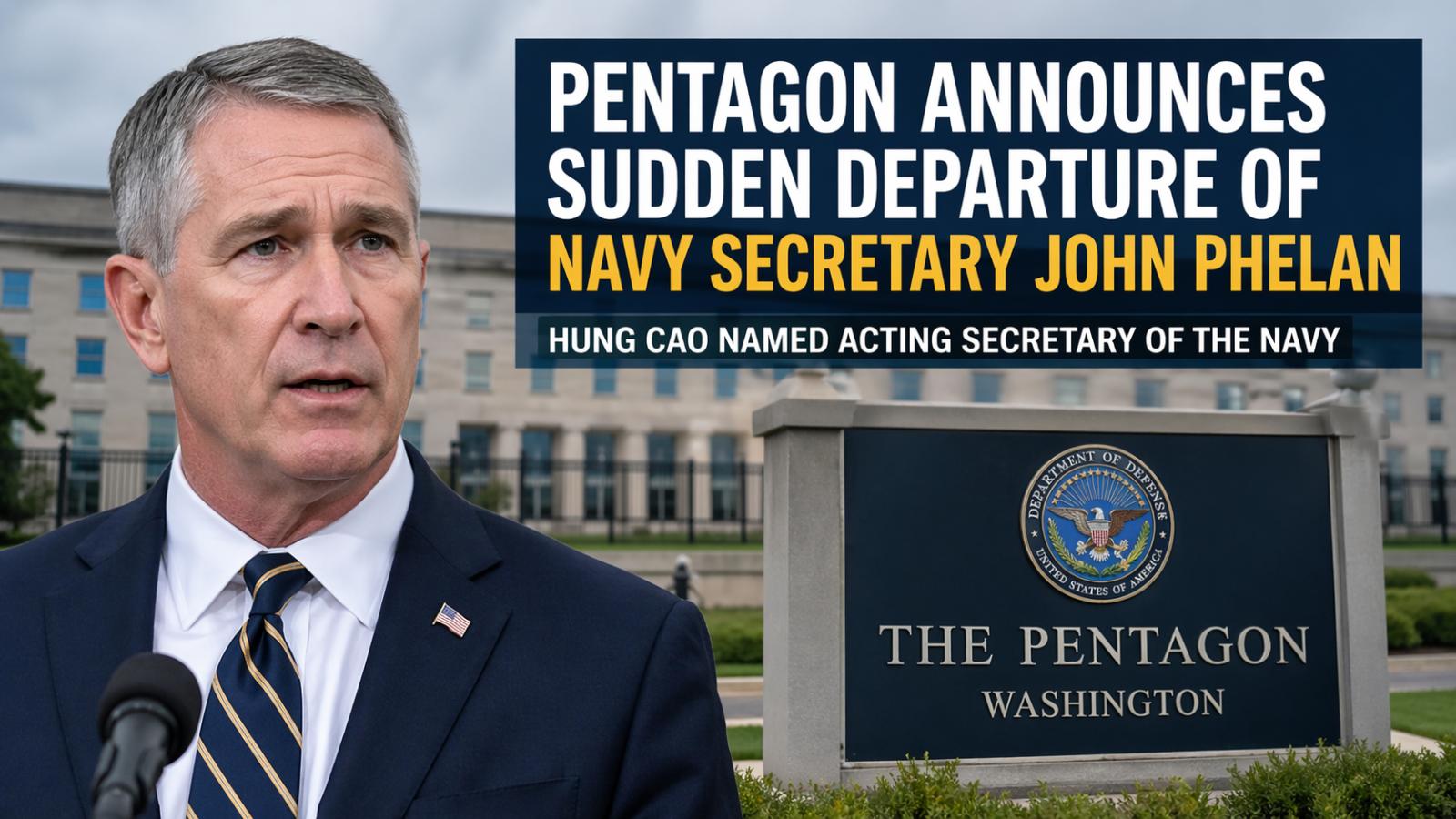
Pentagon confirms Navy Secretary John Phelan's sudden exit as Hung Cao becomes acting leader, signaling a major US defense leadership shift in Washington, DC. Pentagon announces sudden departure of Navy Secretary John Phelan as the Defense Department confirmed on Wednesday, April 23, 2026, that John Phelan is leaving his position effective immediately, marking a su
Pentagon announces sudden departure of Navy Secretary John Phelan
Pentagon confirms Navy Secretary John Phelan's sudden exit as Hung Cao becomes acting leader, signaling a major US defense leadership shift in Washington, DC. Pentagon announces sudden departure of Navy Secretary John Phelan as the Defense Department confirmed on Wednesday, April 23, 2026, that John Phelan is leaving his position effective immediately, marking a su
How Iran’s affordable drones are challenging America’s expensive interceptors
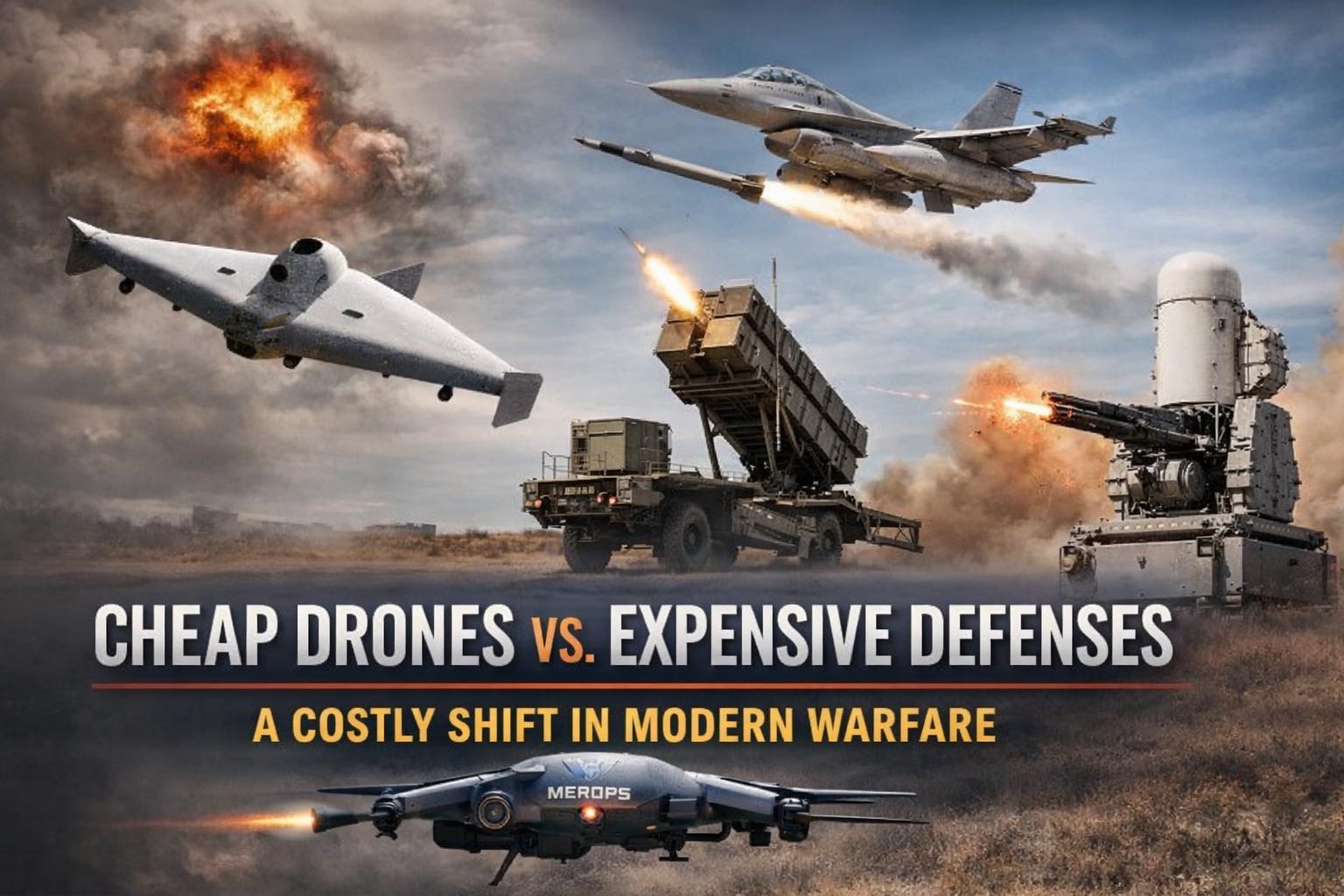
One of the most striking lessons from the war with Iran is how a relatively low-cost adversary has exposed vulnerabilities in U.S. defense strategy. Iran has demonstrated both a willingness to go on the offensive and an ability to leverage inexpensive drone technology at scale. These drones, often built with commercial-grade components, cost roughly $35,000 each—far less than the high-end interceptors used to destroy them. This imbalance has forced the United States and its allies to confront a new reality: modern warfare is no longer dominated solely by precision and sophistication, but also by affordability and volume. Cheap drones had already reshaped the battlefield in Ukraine, and Iran has now applied similar tactics in the Middle East, exploiting a long-standing gap in U.S. defense investments that favored fewer, more expensive systems over scalable solutions. Why are U.S. defenses struggling with cost efficiency? Because interceptors far exceed drone prices The financial mismatch is stark. In just the first six days of the conflict, the U.S. spent $11.3 billion, with estimates later rising to between $25 billion and $35 billion. A significant portion of that cost comes from interceptor missiles used to shoot down relatively inexpensive drones. Despite years of Pentagon focus on counter-drone capabilities, experts like Michael C. Horowitz note that there has been little urgency to scale affordable solutions. The result is a defense strategy where each engagement can cost far more than the threat itself—an unsustainable model in prolonged conflicts. How do air-based defenses work against drones? By using early detection and precision strikes—when available In an ideal scenario, airborne early warning systems detect drones hundreds of miles away. Fighter jets such as the F-16 Fighting Falcon are then deployed to intercept them using relatively cheaper rocket systems like APKWS II. This method is among the most cost-efficient, but it depends heavily on maintaining constant air patrols and intact detection systems. Iran has targeted these early warning assets, limiting their effectiveness and reducing the availability of this optimal defense approach. What role do ground and naval systems play? They offer range and reliability but at a steep price When air defenses are unavailable, the U.S. relies on ground- and sea-based systems. These include: Short-range systems like the Coyote, designed specifically for drones and relatively cost-effective—but in short supply. Naval destroyers using radar and SM-2 interceptors, which are powerful but expensive and designed for larger threats. The Patriot missile system, capable of intercepting drones from long distances using costly PAC-3 missiles. These systems were originally built to counter high-end threats like ballistic missiles, not swarms of cheap drones. As a result, they are often overkill—both technologically and financially—for the task at hand. Still, their use can be justified when defending high-value assets, such as billion-dollar radar installations or critical military infrastructure. What are the emerging solutions to counter drones? AI interceptors and lasers show promise but remain unproven New approaches aim to fix the cost imbalance. AI-powered interceptor drones, such as the Merops system developed by a company founded by Eric Schmidt, represent a potential shift toward cheaper, scalable defenses. These systems have been tested in collaboration with Ukrainian forces experienced in countering Iranian drones. The U.S. has already sent thousands of these units to the Middle East and begun training troops, though it remains unclear whether they have been deployed in combat. Meanwhile, the Pentagon has invested heavily in directed energy weapons—lasers that could cost as little as $3 per shot and reach targets up to 12 miles away. However, these systems have yet to be fielded in real-world combat. Why is ammunition depletion a growing concern? Because stockpiles may run out faster than they can be replaced Beyond cost, a more immediate concern is supply. Experts warn that interceptor stockpiles are being depleted at an alarming rate. As Tom Karako explains, the issue is not just affordability but availability: the U.S. risks running out of munitions before it can replenish them. This highlights a deeper strategic challenge. Modern conflicts—defined by mass-produced, low-cost threats—require not just advanced technology, but also sustainable production and scalable defense systems.
How Iran’s affordable drones are challenging America’s expensive interceptors
One of the most striking lessons from the war with Iran is how a relatively low-cost adversary has exposed vulnerabilities in U.S. defense strategy. Iran has demonstrated both a willingness to go on the offensive and an ability to leverage inexpensive drone technology at scale. These drones, often built with commercial-grade components, cost roughly $35,000 each—far less than the high-end interceptors used to destroy them. This imbalance has forced the United States and its allies to confront a new reality: modern warfare is no longer dominated solely by precision and sophistication, but also by affordability and volume. Cheap drones had already reshaped the battlefield in Ukraine, and Iran has now applied similar tactics in the Middle East, exploiting a long-standing gap in U.S. defense investments that favored fewer, more expensive systems over scalable solutions. Why are U.S. defenses struggling with cost efficiency? Because interceptors far exceed drone prices The financial mismatch is stark. In just the first six days of the conflict, the U.S. spent $11.3 billion, with estimates later rising to between $25 billion and $35 billion. A significant portion of that cost comes from interceptor missiles used to shoot down relatively inexpensive drones. Despite years of Pentagon focus on counter-drone capabilities, experts like Michael C. Horowitz note that there has been little urgency to scale affordable solutions. The result is a defense strategy where each engagement can cost far more than the threat itself—an unsustainable model in prolonged conflicts. How do air-based defenses work against drones? By using early detection and precision strikes—when available In an ideal scenario, airborne early warning systems detect drones hundreds of miles away. Fighter jets such as the F-16 Fighting Falcon are then deployed to intercept them using relatively cheaper rocket systems like APKWS II. This method is among the most cost-efficient, but it depends heavily on maintaining constant air patrols and intact detection systems. Iran has targeted these early warning assets, limiting their effectiveness and reducing the availability of this optimal defense approach. What role do ground and naval systems play? They offer range and reliability but at a steep price When air defenses are unavailable, the U.S. relies on ground- and sea-based systems. These include: Short-range systems like the Coyote, designed specifically for drones and relatively cost-effective—but in short supply. Naval destroyers using radar and SM-2 interceptors, which are powerful but expensive and designed for larger threats. The Patriot missile system, capable of intercepting drones from long distances using costly PAC-3 missiles. These systems were originally built to counter high-end threats like ballistic missiles, not swarms of cheap drones. As a result, they are often overkill—both technologically and financially—for the task at hand. Still, their use can be justified when defending high-value assets, such as billion-dollar radar installations or critical military infrastructure. What are the emerging solutions to counter drones? AI interceptors and lasers show promise but remain unproven New approaches aim to fix the cost imbalance. AI-powered interceptor drones, such as the Merops system developed by a company founded by Eric Schmidt, represent a potential shift toward cheaper, scalable defenses. These systems have been tested in collaboration with Ukrainian forces experienced in countering Iranian drones. The U.S. has already sent thousands of these units to the Middle East and begun training troops, though it remains unclear whether they have been deployed in combat. Meanwhile, the Pentagon has invested heavily in directed energy weapons—lasers that could cost as little as $3 per shot and reach targets up to 12 miles away. However, these systems have yet to be fielded in real-world combat. Why is ammunition depletion a growing concern? Because stockpiles may run out faster than they can be replaced Beyond cost, a more immediate concern is supply. Experts warn that interceptor stockpiles are being depleted at an alarming rate. As Tom Karako explains, the issue is not just affordability but availability: the U.S. risks running out of munitions before it can replenish them. This highlights a deeper strategic challenge. Modern conflicts—defined by mass-produced, low-cost threats—require not just advanced technology, but also sustainable production and scalable defense systems.
US signals readiness to strike Iran energy sector amid ceasefire tensions
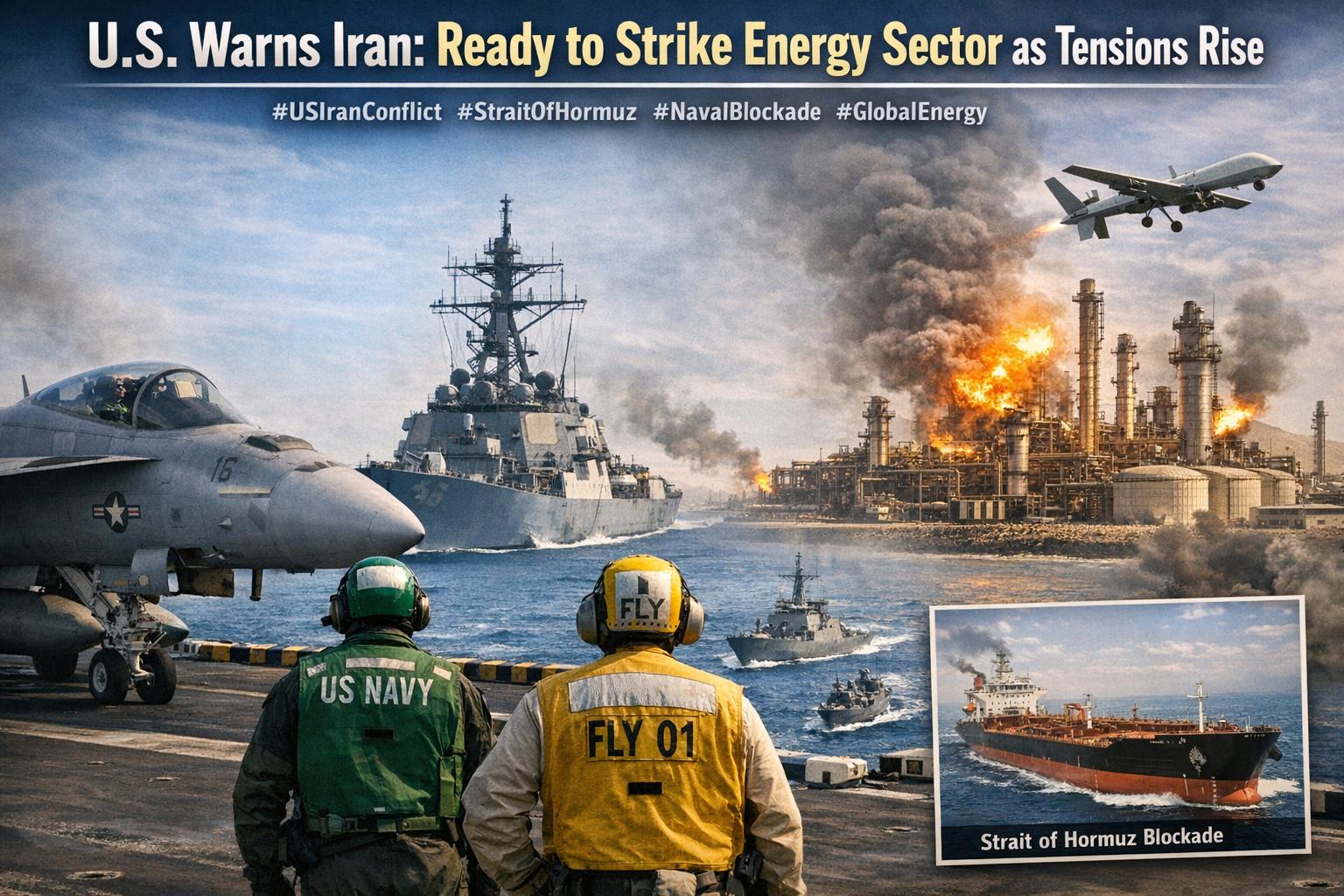
WASHINGTON — The United States signaled a heightened military posture toward Iran on Thursday, April 16, 2026, as senior defense officials warned that U.S. forces are prepared to strike Iran’s energy infrastructure if directed by the president. Speaking in Washington, Defense Secretary Pete Hegseth said current U.S. actions, including a naval blockade, reflect what he described as restrained measures during an ongoing ceasefire period. He emphasized that Iran faces critical decisi
US signals readiness to strike Iran energy sector amid ceasefire tensions
WASHINGTON — The United States signaled a heightened military posture toward Iran on Thursday, April 16, 2026, as senior defense officials warned that U.S. forces are prepared to strike Iran’s energy infrastructure if directed by the president. Speaking in Washington, Defense Secretary Pete Hegseth said current U.S. actions, including a naval blockade, reflect what he described as restrained measures during an ongoing ceasefire period. He emphasized that Iran faces critical decisi
US warns Iran of strikes on energy infrastructure ahead of cease-fire deadline
Defense Secretary Pete Hegseth issued a stark warning on Thursday, April 16, 2026, from the Pentagon, stating that the United States could target Iran’s energy infrastructure if its leadership does not agree to a peace deal before a temporary cease-fire expires in the coming days. The remarks underscore escalating tensions as Washington intensifies pressure on
US warns Iran of strikes on energy infrastructure ahead of cease-fire deadline
Defense Secretary Pete Hegseth issued a stark warning on Thursday, April 16, 2026, from the Pentagon, stating that the United States could target Iran’s energy infrastructure if its leadership does not agree to a peace deal before a temporary cease-fire expires in the coming days. The remarks underscore escalating tensions as Washington intensifies pressure on

Pentagon and Vatican clash over disputed meeting amid Iran war tensions
A meeting between officials from the U.S. Department of Defense and the Vatican has drawn scrutiny after sharply conflicting accounts emerged, raising questions about diplomatic tensions between Washington and the Holy See during an escalating global crisis. According to a source close to Pope Leo XIV, the meeting involving Cardinal Christophe Pierre was described as confrontational. Separate reports characterized the exchange as a stern warning emphasizing U.S. military strength and urging alignment with American policy. However, Pentagon officials strongly disputed that portrayal, stating the discussion was respectful and constructive, underscoring a commitment to continued dialogue with the Vatican. Adding to the conflicting narratives, Vatican ambassador Brian Burch stated on Thursday that Cardinal Pierre rejected media reports describing the meeting as hostile, calling them fabricated. He said the meeting, which occurred two months earlier, was “frank and cordial,” suggesting that accounts of tension may have been overstated. The dispute comes amid increasingly pointed remarks from Pope Leo XIV, the first U.S.-born pontiff from Chicago, who has taken an unusually direct stance on the ongoing conflict involving Iran. On Tuesday, the pope criticized U.S. President Donald Trump’s warning of severe consequences for Iran, calling such rhetoric “truly unacceptable” and warning that attacks on civilian infrastructure violate international law. In recent appeals, Leo has urged global leaders and citizens to pursue peace and avoid further escalation, particularly in a conflict he described as unjust and destabilizing. He also encouraged individuals to contact political leaders and advocate against actions targeting civilians, emphasizing the moral and legal implications of such strategies. The Vatican’s concerns extend beyond Iran, particularly to Lebanon, where renewed fighting involving Israeli forces and Hezbollah has intensified instability. Church officials have expressed alarm over the impact on Christian communities in southern Lebanon, which hold significant importance for the region’s religious presence. The broader geopolitical situation remains fragile. A ceasefire related to the Iran conflict appeared uncertain after Iran moved to close the Strait of Hormuz following Israeli strikes in Lebanon, prompting renewed calls from the White House to maintain open waterways and continue peace negotiations. While both the Pentagon and Vatican have emphasized the importance of ongoing dialogue, the divergence in accounts surrounding their recent meeting highlights the complexity of diplomatic relations during a period of heightened global tension.
Pentagon and Vatican clash over disputed meeting amid Iran war tensions
A meeting between officials from the U.S. Department of Defense and the Vatican has drawn scrutiny after sharply conflicting accounts emerged, raising questions about diplomatic tensions between Washington and the Holy See during an escalating global crisis. According to a source close to Pope Leo XIV, the meeting involving Cardinal Christophe Pierre was described as confrontational. Separate reports characterized the exchange as a stern warning emphasizing U.S. military strength and urging alignment with American policy. However, Pentagon officials strongly disputed that portrayal, stating the discussion was respectful and constructive, underscoring a commitment to continued dialogue with the Vatican. Adding to the conflicting narratives, Vatican ambassador Brian Burch stated on Thursday that Cardinal Pierre rejected media reports describing the meeting as hostile, calling them fabricated. He said the meeting, which occurred two months earlier, was “frank and cordial,” suggesting that accounts of tension may have been overstated. The dispute comes amid increasingly pointed remarks from Pope Leo XIV, the first U.S.-born pontiff from Chicago, who has taken an unusually direct stance on the ongoing conflict involving Iran. On Tuesday, the pope criticized U.S. President Donald Trump’s warning of severe consequences for Iran, calling such rhetoric “truly unacceptable” and warning that attacks on civilian infrastructure violate international law. In recent appeals, Leo has urged global leaders and citizens to pursue peace and avoid further escalation, particularly in a conflict he described as unjust and destabilizing. He also encouraged individuals to contact political leaders and advocate against actions targeting civilians, emphasizing the moral and legal implications of such strategies. The Vatican’s concerns extend beyond Iran, particularly to Lebanon, where renewed fighting involving Israeli forces and Hezbollah has intensified instability. Church officials have expressed alarm over the impact on Christian communities in southern Lebanon, which hold significant importance for the region’s religious presence. The broader geopolitical situation remains fragile. A ceasefire related to the Iran conflict appeared uncertain after Iran moved to close the Strait of Hormuz following Israeli strikes in Lebanon, prompting renewed calls from the White House to maintain open waterways and continue peace negotiations. While both the Pentagon and Vatican have emphasized the importance of ongoing dialogue, the divergence in accounts surrounding their recent meeting highlights the complexity of diplomatic relations during a period of heightened global tension.

Hegseth claims major US victory as Iran’s military capabilities weakened
U.S. Secretary of Defense Pete Hegseth stated on Wednesday, April 8, 2026, that Iran had sought a ceasefire following what he described as a decisive U.S. military campaign known as Operation Epic Fury. Speaking during a Pentagon briefing, Hegseth characterized the operation as a “historic and overwhelming victory,” attributing its outcome to leadership under President Donald Trump. Hegseth said Iran’s leadership had “begged for a ceasefire,” asserting that the scale of the military impact left Tehran with limited options. He emphasized that the operation significantly degraded Iran’s conventional military capabilities, particularly across its naval, air, and missile forces. According to the defense secretary, Iran’s navy suffered extensive losses, claiming it had effectively been neutralized. He further stated that Iran’s air force had been rendered inoperable and that its broader air defense infrastructure no longer functioned as a cohesive system. Hegseth also asserted that Iran’s missile program had been “functionally destroyed,” suggesting a substantial setback to the country’s strategic deterrence capabilities. The remarks were delivered as part of an official Pentagon briefing outlining the outcomes of recent military actions. While Hegseth presented the operation as a clear U.S. victory, his statements reflect the administration’s assessment of the situation and have not been independently verified within the briefing. The comments signal a significant escalation in rhetoric surrounding U.S.-Iran tensions and underscore the broader geopolitical implications of Operation Epic Fury. Further developments are expected as international observers and regional stakeholders assess the long-term consequences of the reported military actions.
Hegseth claims major US victory as Iran’s military capabilities weakened
U.S. Secretary of Defense Pete Hegseth stated on Wednesday, April 8, 2026, that Iran had sought a ceasefire following what he described as a decisive U.S. military campaign known as Operation Epic Fury. Speaking during a Pentagon briefing, Hegseth characterized the operation as a “historic and overwhelming victory,” attributing its outcome to leadership under President Donald Trump. Hegseth said Iran’s leadership had “begged for a ceasefire,” asserting that the scale of the military impact left Tehran with limited options. He emphasized that the operation significantly degraded Iran’s conventional military capabilities, particularly across its naval, air, and missile forces. According to the defense secretary, Iran’s navy suffered extensive losses, claiming it had effectively been neutralized. He further stated that Iran’s air force had been rendered inoperable and that its broader air defense infrastructure no longer functioned as a cohesive system. Hegseth also asserted that Iran’s missile program had been “functionally destroyed,” suggesting a substantial setback to the country’s strategic deterrence capabilities. The remarks were delivered as part of an official Pentagon briefing outlining the outcomes of recent military actions. While Hegseth presented the operation as a clear U.S. victory, his statements reflect the administration’s assessment of the situation and have not been independently verified within the briefing. The comments signal a significant escalation in rhetoric surrounding U.S.-Iran tensions and underscore the broader geopolitical implications of Operation Epic Fury. Further developments are expected as international observers and regional stakeholders assess the long-term consequences of the reported military actions.
Trump vows action against media after Iran rescue leak controversy
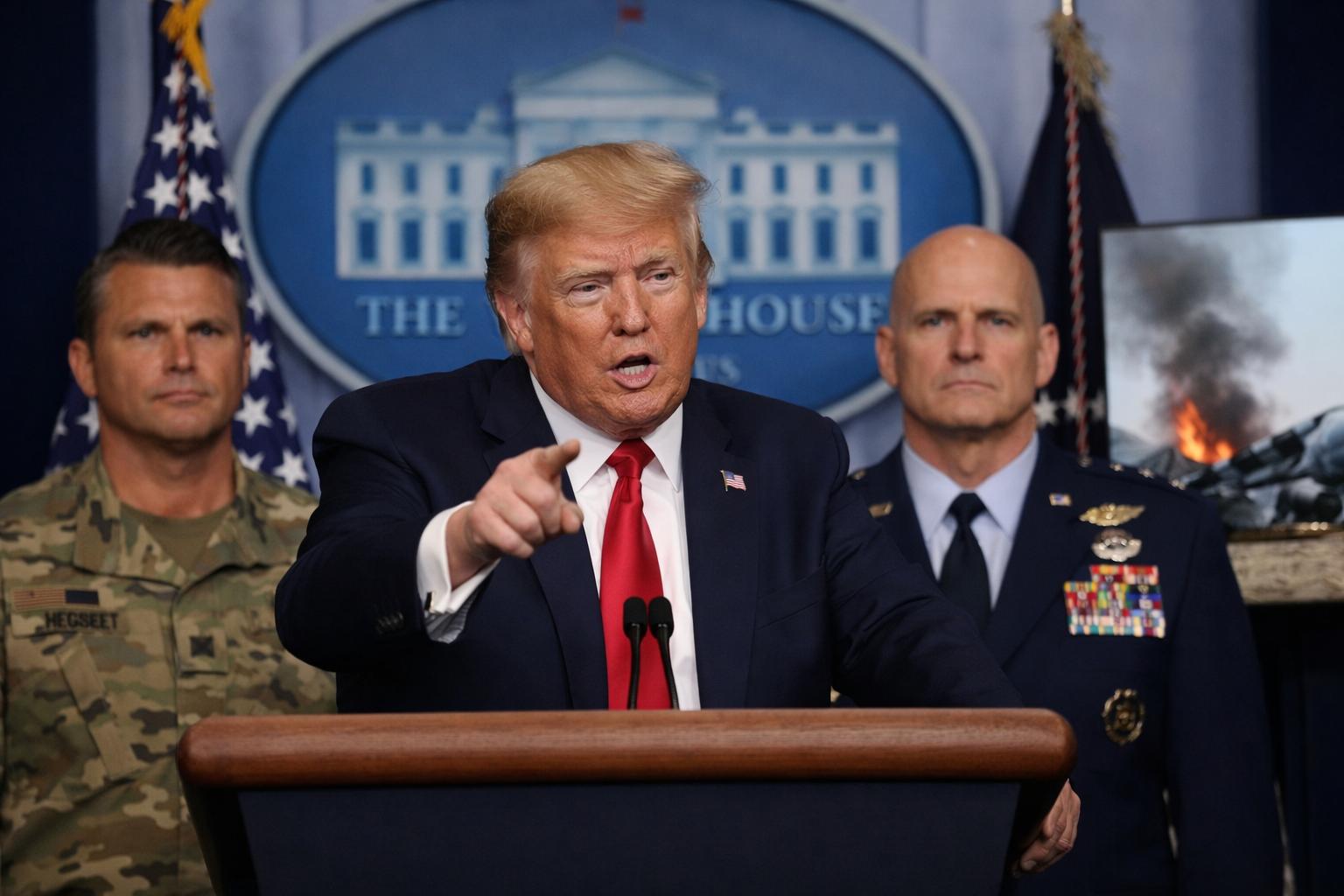
President Donald Trump said he would pursue legal action against journalists and media organizations involved in reporting that a second U.S. airman was missing following the downing of an American fighter jet in Iran last week, calling the leak a threat to national security. Speaking during a White House press conference held on Monday, April 6, 2026, alongside Defense Secretary Pete Hegseth and Joint Chiefs Chairman Dan Caine, Trump confirmed that both crew members had been successfully recovered in separate operations conducted by U.S. forces. The pilot was rescued within hours of the incident, while the second airman remained stranded inside Iranian territory until early Sunday, April 5, 2026, when a rescue team secured his extraction. Trump strongly criticized the disclosure of the second airman’s status, stating that the information had been intentionally withheld by the U.S. government to protect the individual from capture or harm. He warned that his administration would attempt to identify the source of the leak and could compel cooperation from the media outlet that first reported the information. “We are going to find out who leaked it,” Trump said during the briefing. “We will go to the media company and say, ‘This is national security. Provide the information or face legal consequences.’” Officials emphasized that operational secrecy was critical during the mission, as public knowledge of the stranded airman could have increased the risk of interception by Iranian forces. Trump claimed that Iranian authorities had issued a reward for information leading to the capture of the missing servicemember, further complicating rescue efforts. The White House did not specify which media organization initially reported the second airman’s status. The incident has raised renewed concerns about the balance between press freedom and national security, particularly in situations involving active military operations in hostile territory.
Trump vows action against media after Iran rescue leak controversy
President Donald Trump said he would pursue legal action against journalists and media organizations involved in reporting that a second U.S. airman was missing following the downing of an American fighter jet in Iran last week, calling the leak a threat to national security. Speaking during a White House press conference held on Monday, April 6, 2026, alongside Defense Secretary Pete Hegseth and Joint Chiefs Chairman Dan Caine, Trump confirmed that both crew members had been successfully recovered in separate operations conducted by U.S. forces. The pilot was rescued within hours of the incident, while the second airman remained stranded inside Iranian territory until early Sunday, April 5, 2026, when a rescue team secured his extraction. Trump strongly criticized the disclosure of the second airman’s status, stating that the information had been intentionally withheld by the U.S. government to protect the individual from capture or harm. He warned that his administration would attempt to identify the source of the leak and could compel cooperation from the media outlet that first reported the information. “We are going to find out who leaked it,” Trump said during the briefing. “We will go to the media company and say, ‘This is national security. Provide the information or face legal consequences.’” Officials emphasized that operational secrecy was critical during the mission, as public knowledge of the stranded airman could have increased the risk of interception by Iranian forces. Trump claimed that Iranian authorities had issued a reward for information leading to the capture of the missing servicemember, further complicating rescue efforts. The White House did not specify which media organization initially reported the second airman’s status. The incident has raised renewed concerns about the balance between press freedom and national security, particularly in situations involving active military operations in hostile territory.
American fighter jet lost in Iran as US intensifies military operations
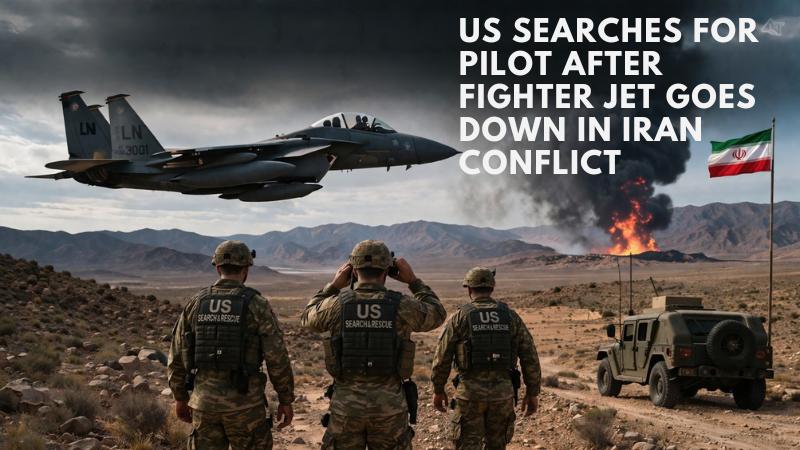
The United States is searching for the crew of an American fighter jet that went down in Iran during ongoing military operations, according to a U.S. official. The exact date and time of the incident have not been publicly confirmed by U.S. authorities, and officials have not released additional operational details. Authorities have not clarified whether the aircraft was shot down or experienced a technical failure, leaving the cause of the incident under investigation. The Pentagon and U.S. Central Command have not issued formal statements, and no independent confirmation has been provided regarding claims surrounding the circumstances of the crash. If confirmed, the loss would mark the first known downing of a U.S. fighter jet inside Iran since the current conflict began in late February. The war has now extended beyond a month, with continued air operations and heightened military engagement across the region. The development comes at a sensitive moment, as the conflict continues to disrupt activity in the Strait of Hormuz, one of the world’s most critical maritime routes for energy shipments. Reduced tanker movement through the strait has raised global concerns about the supply of crude oil, fertilizer, and other key commodities, potentially impacting international markets. Amid escalating tensions, U.S. President Donald Trump has indicated a willingness to intensify military action. In recent public remarks, he suggested that the United States could reopen the strategic waterway and secure access to oil resources. He also warned of possible expanded strikes targeting Iranian infrastructure, including bridges and electrical facilities. In earlier statements, Trump signaled a more aggressive posture, stating that the United States could significantly escalate its response if necessary. These remarks highlight the growing volatility of the situation and the potential for further military escalation as the conflict continues.
American fighter jet lost in Iran as US intensifies military operations
The United States is searching for the crew of an American fighter jet that went down in Iran during ongoing military operations, according to a U.S. official. The exact date and time of the incident have not been publicly confirmed by U.S. authorities, and officials have not released additional operational details. Authorities have not clarified whether the aircraft was shot down or experienced a technical failure, leaving the cause of the incident under investigation. The Pentagon and U.S. Central Command have not issued formal statements, and no independent confirmation has been provided regarding claims surrounding the circumstances of the crash. If confirmed, the loss would mark the first known downing of a U.S. fighter jet inside Iran since the current conflict began in late February. The war has now extended beyond a month, with continued air operations and heightened military engagement across the region. The development comes at a sensitive moment, as the conflict continues to disrupt activity in the Strait of Hormuz, one of the world’s most critical maritime routes for energy shipments. Reduced tanker movement through the strait has raised global concerns about the supply of crude oil, fertilizer, and other key commodities, potentially impacting international markets. Amid escalating tensions, U.S. President Donald Trump has indicated a willingness to intensify military action. In recent public remarks, he suggested that the United States could reopen the strategic waterway and secure access to oil resources. He also warned of possible expanded strikes targeting Iranian infrastructure, including bridges and electrical facilities. In earlier statements, Trump signaled a more aggressive posture, stating that the United States could significantly escalate its response if necessary. These remarks highlight the growing volatility of the situation and the potential for further military escalation as the conflict continues.
Trump floats Hormuz strategy as Pentagon seeks record war funding
US President Donald Trump said on Friday, April 3, 2026, that the United States could potentially “open” the Strait of Hormuz and seize oil resources if given additional time, as tensions continue to escalate in the ongoing Iran war. The remarks, posted on his Truth Social platform, come amid growing concerns over global energy security and disruptions to one of the world’s most critical shipping routes. Trump’s statement suggested a more aggressive approach to the strategic
Trump floats Hormuz strategy as Pentagon seeks record war funding
US President Donald Trump said on Friday, April 3, 2026, that the United States could potentially “open” the Strait of Hormuz and seize oil resources if given additional time, as tensions continue to escalate in the ongoing Iran war. The remarks, posted on his Truth Social platform, come amid growing concerns over global energy security and disruptions to one of the world’s most critical shipping routes. Trump’s statement suggested a more aggressive approach to the strategic
Pentagon plans 82nd Airborne deployment amid rising Iran tensions
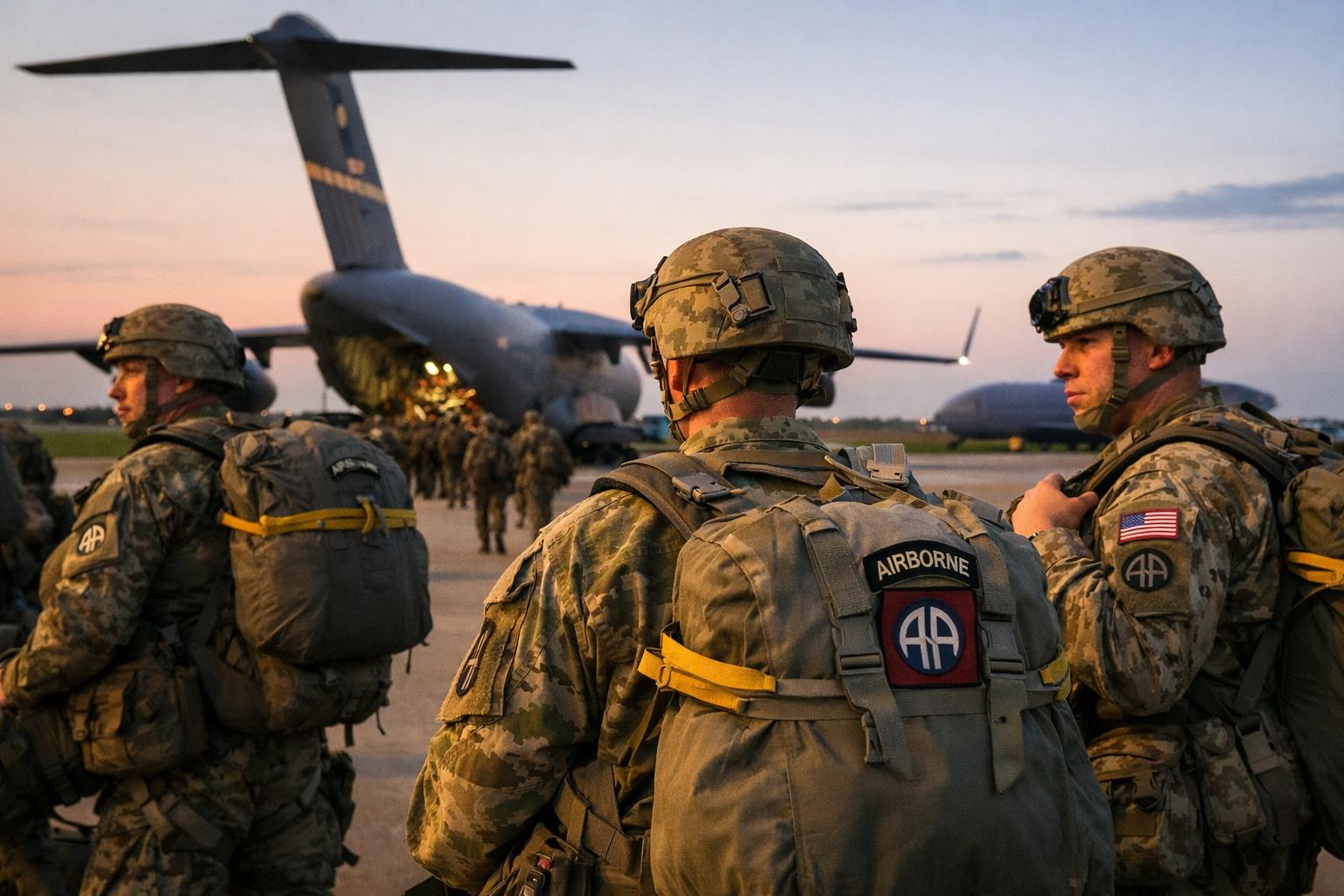
The Pentagon is preparing to deploy approximately 3,000 troops from the 82nd Airborne Division as part of Operation Epic Fury, according to officials familiar with the matter. A formal deployment order is expected to be issued shortly, outlining potential military options without confirming any immediate decision to send ground forces into Iran. The move reflects heightened vigilance within the United States military as tensions in the Middle East continue to evolve. Officials indicated that the planned deployment would include a combat brigade along with its headquarters unit, both of which are integral to rapid-response operations. The 82nd Airborne Division, based at Fort Bragg, is recognized for its ability to mobilize forces quickly, with a capability to deploy thousands of troops globally within 18 hours. The division has previously demonstrated even faster mobilization timelines, underscoring its strategic importance in crisis situations. The development follows the recent cancellation of a major training exercise involving the unit, a decision that had already sparked speculation about a possible redeployment to the Middle East. While authorities have emphasized that diplomatic channels with Tehran remain open, the preparation of troops signals growing concern in Washington over the trajectory of regional tensions. If executed, the deployment would mark a notable shift in US military posture, strengthening both deterrence and operational readiness in the region. The 82nd Airborne Division is trained to handle a wide range of missions, including securing critical infrastructure such as airfields, reinforcing US diplomatic facilities, and supporting emergency evacuations when necessary. Its headquarters unit plays a central role in planning and coordinating these complex operations. The potential move highlights the balance the administration is attempting to maintain between diplomatic engagement and military preparedness. While no final decision on ground operations has been announced, the readiness of rapid response forces suggests that the United States is positioning itself to respond swiftly to any escalation.
Pentagon plans 82nd Airborne deployment amid rising Iran tensions
The Pentagon is preparing to deploy approximately 3,000 troops from the 82nd Airborne Division as part of Operation Epic Fury, according to officials familiar with the matter. A formal deployment order is expected to be issued shortly, outlining potential military options without confirming any immediate decision to send ground forces into Iran. The move reflects heightened vigilance within the United States military as tensions in the Middle East continue to evolve. Officials indicated that the planned deployment would include a combat brigade along with its headquarters unit, both of which are integral to rapid-response operations. The 82nd Airborne Division, based at Fort Bragg, is recognized for its ability to mobilize forces quickly, with a capability to deploy thousands of troops globally within 18 hours. The division has previously demonstrated even faster mobilization timelines, underscoring its strategic importance in crisis situations. The development follows the recent cancellation of a major training exercise involving the unit, a decision that had already sparked speculation about a possible redeployment to the Middle East. While authorities have emphasized that diplomatic channels with Tehran remain open, the preparation of troops signals growing concern in Washington over the trajectory of regional tensions. If executed, the deployment would mark a notable shift in US military posture, strengthening both deterrence and operational readiness in the region. The 82nd Airborne Division is trained to handle a wide range of missions, including securing critical infrastructure such as airfields, reinforcing US diplomatic facilities, and supporting emergency evacuations when necessary. Its headquarters unit plays a central role in planning and coordinating these complex operations. The potential move highlights the balance the administration is attempting to maintain between diplomatic engagement and military preparedness. While no final decision on ground operations has been announced, the readiness of rapid response forces suggests that the United States is positioning itself to respond swiftly to any escalation.
US–Israel–Iran War | US sends 2,200 marines and amphibious ships to Middle East as Hormuz tensions grow
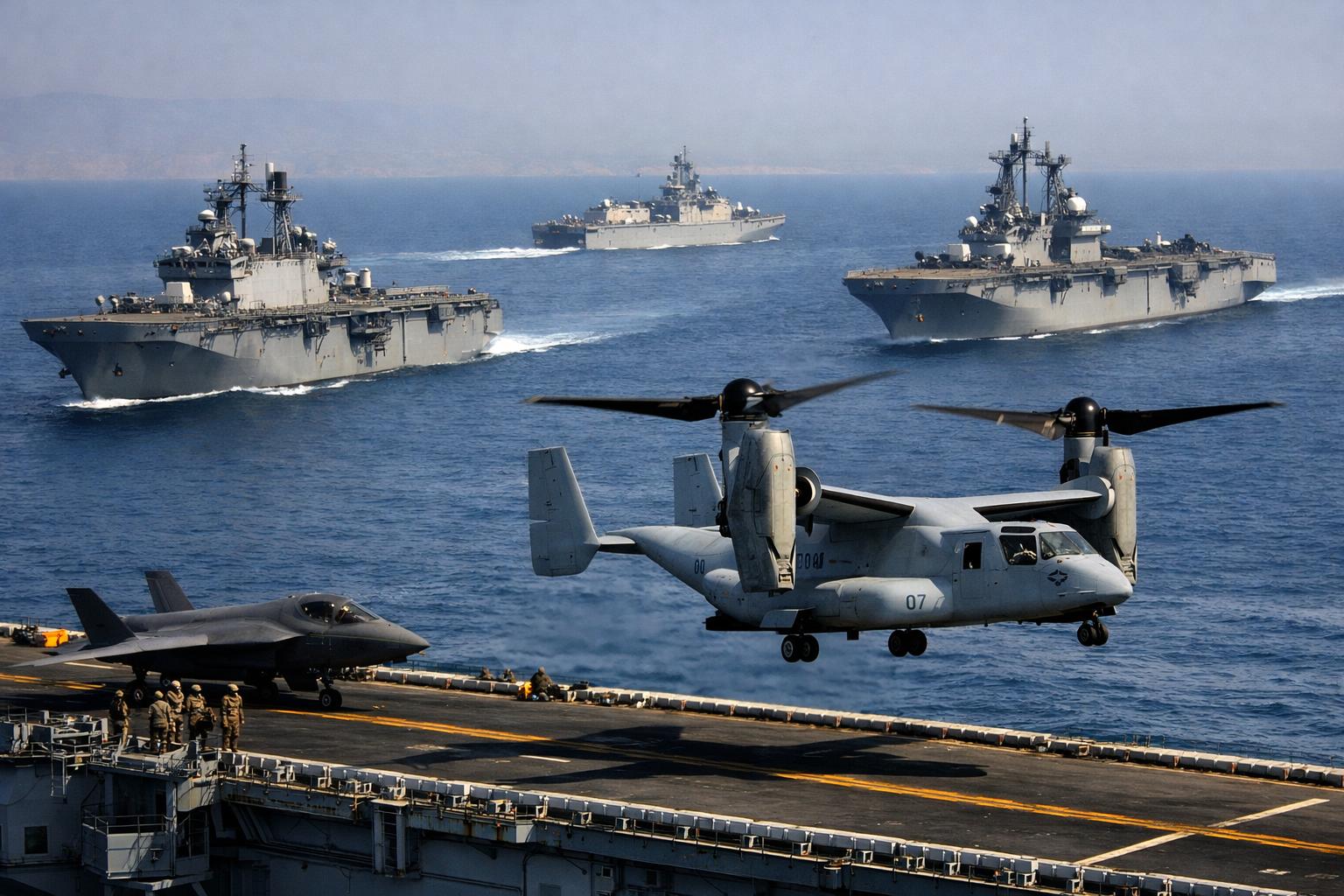
The United States Marine Corps has ordered the deployment of a Marine Expeditionary Unit to the Middle East as tensions in the region continue to escalate. Around 2,200 Marines traveling aboard three US Navy amphibious ships are being redirected toward the area, signaling a reinforcement of American military readiness amid growing concerns over maritime security and regional stability. The unit involved in the deployment is the 31st Marine Expeditionary Unit, which is normally based in Japan
US–Israel–Iran War | US sends 2,200 marines and amphibious ships to Middle East as Hormuz tensions grow
The United States Marine Corps has ordered the deployment of a Marine Expeditionary Unit to the Middle East as tensions in the region continue to escalate. Around 2,200 Marines traveling aboard three US Navy amphibious ships are being redirected toward the area, signaling a reinforcement of American military readiness amid growing concerns over maritime security and regional stability. The unit involved in the deployment is the 31st Marine Expeditionary Unit, which is normally based in Japan
Preliminary probe says US missile strike mistakenly hit Iranian elementary school
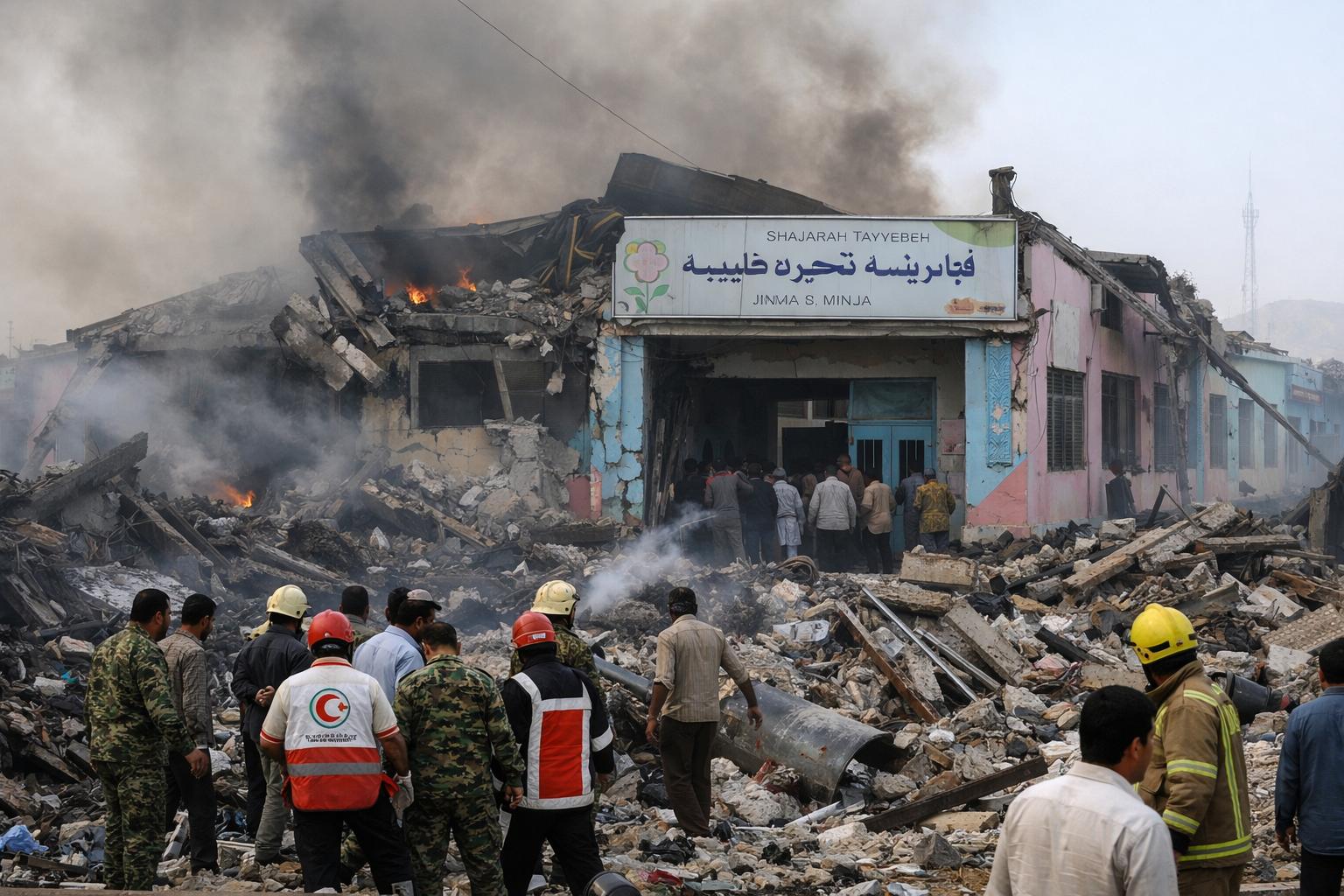
A preliminary investigation by the United States military has concluded that a deadly missile strike that hit an elementary school in Iran was likely caused by a targeting error, according to officials familiar with the inquiry. The strike occurred on February 28 in the town of Minab, where a Tomahawk missile struck the Shajarah Tayyebeh elementary school building during a series of attacks aimed at nearby Iranian naval facilities. Investigators say the incident appears to have resulted from
Preliminary probe says US missile strike mistakenly hit Iranian elementary school
A preliminary investigation by the United States military has concluded that a deadly missile strike that hit an elementary school in Iran was likely caused by a targeting error, according to officials familiar with the inquiry. The strike occurred on February 28 in the town of Minab, where a Tomahawk missile struck the Shajarah Tayyebeh elementary school building during a series of attacks aimed at nearby Iranian naval facilities. Investigators say the incident appears to have resulted from