US Restores Pacific Command Name in Symbolic Military Rebranding
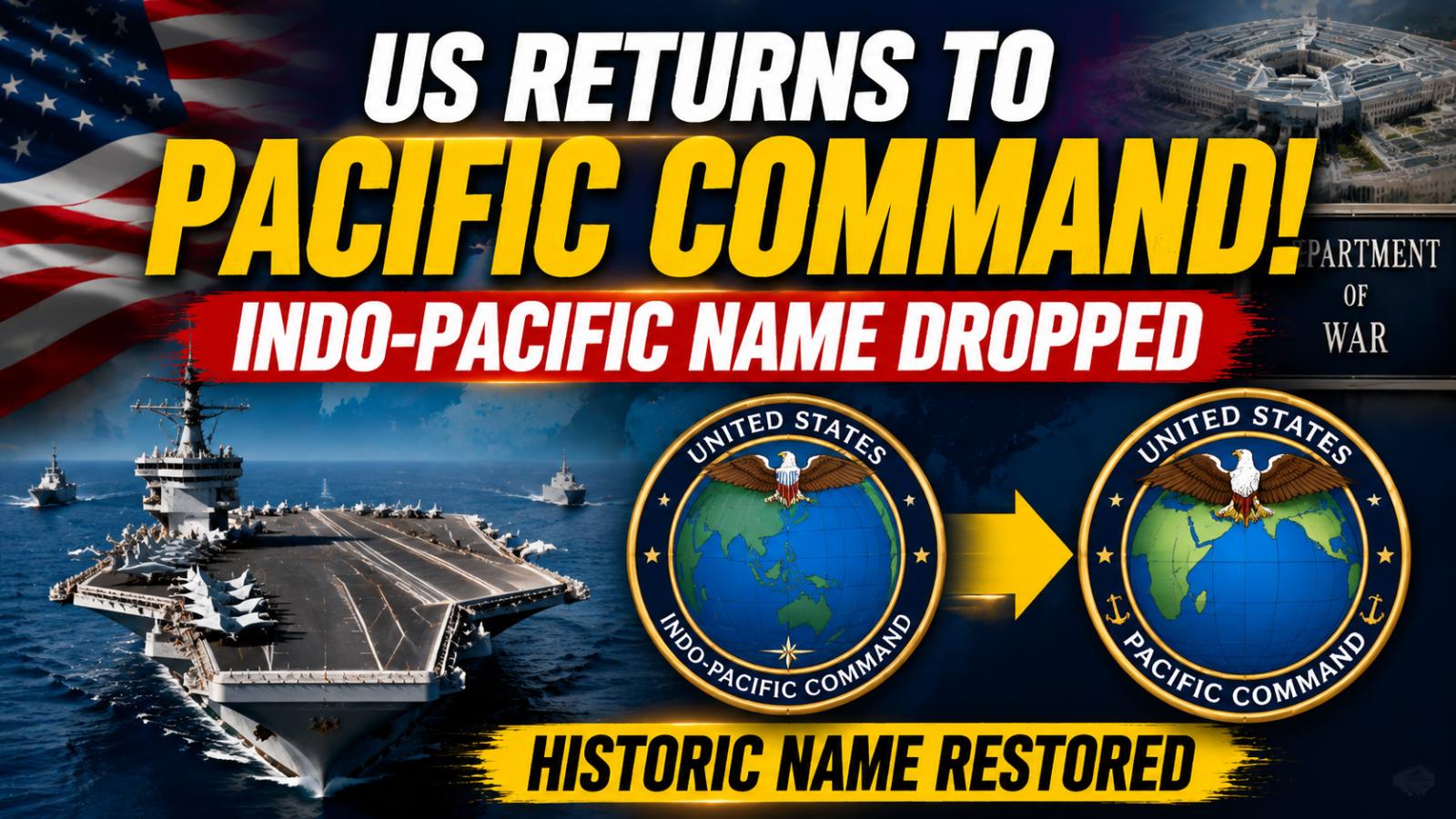
The United States Department of War has officially renamed its largest military command, reverting the Indo-Pacific Command back to its original designation, US Pacific Command. The announcement was made on Tuesday, June 16,2026 with officials confirming that the change is symbolic and will not alter operational responsibilities, deployment structure, or regional coverage.
No Operational Changes Expected
According to the Pentagon, the renaming does not affect the command’s missions or geographic scope. The command will continue to oversee US military operations across a vast region stretching from the western coast of the United States to the western border of India. Officials emphasized that the decision is intended to restore historical identity rather than shift strategic focus.
US Secretary of War Pete Hegseth welcomed the change, describing it as a return to tradition. He stated publicly that the “US Pacific Command is back,” highlighting the symbolic importance of reinstating the historic name.
Historical Background of the Command
The command was first established on January 1, 1947, under President Harry S. Truman and has since operated as the US Pacific Command for more than seven decades. It remains the oldest and largest unified combatant command in the US military system, overseeing approximately 375,000 military and civilian personnel.
In 2018, the Trump administration renamed it Indo-Pacific Command to reflect the growing strategic importance of the Indian Ocean region and India’s expanding role in regional security frameworks. The rebranding at that time was meant to signal a broader geographic and strategic focus across both the Indian and Pacific Oceans.
Strategic Continuity Maintained
Despite the latest change, the Department of War clarified that the command’s fundamental mission remains unchanged. It will continue to maintain a “free and open Indo-Pacific theatre” in coordination with regional allies and partners. Officials reiterated that relationships across both the Pacific and Indian Ocean regions remain central to US strategic planning.
The Pentagon also stressed that the renaming does not impact ongoing operations, alliances, or military posture in Asia and beyond.
Symbolic Shift Amid Evolving Geopolitics
The decision reflects a broader emphasis on institutional heritage within the US military structure. While analysts view the move as largely symbolic, it comes at a time of heightened geopolitical competition in the Indo-Pacific region, where maritime security and strategic influence remain key priorities.
Officials indicated that the command will continue its long-standing role in regional stability without any interruption, reinforcing continuity despite the name change.