US President Says No Plans for Nuclear Strike on Iran
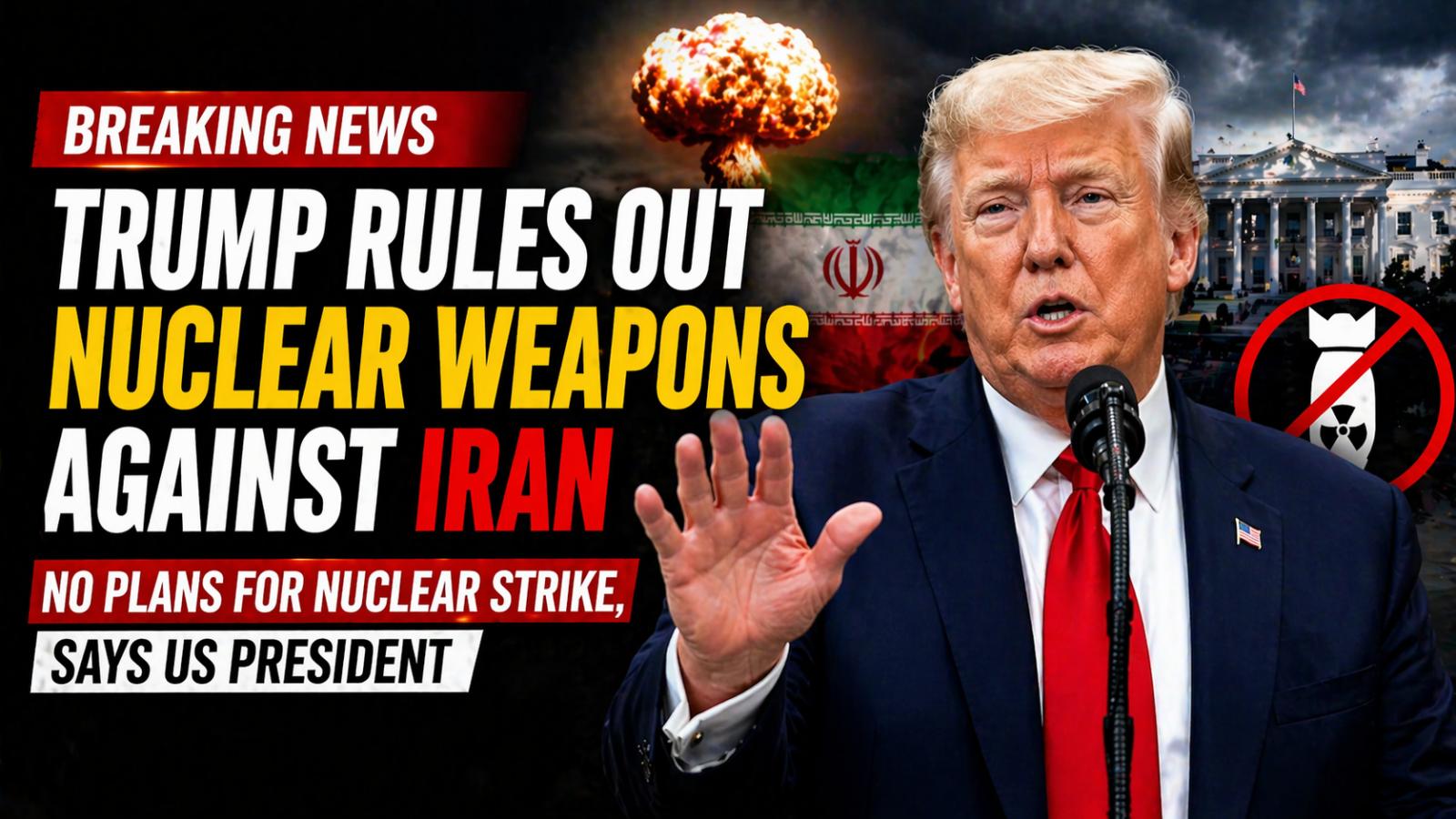
Donald Trump stated that the United States currently has no intention of using nuclear weapons against Iran, offering clarity on a key concern amid ongoing geopolitical tensions. Speaking to reporters at the White House, Trump emphasized that conventional military actions had already achieved significant results without the need for nuclear escalation. Addressing recent speculation, Trump said there was no justification for deploying nuclear weapons, noting that existing strategies had been effective. His remarks come after earlier statements that had drawn international attention, where strong rhetoric raised concerns about the potential use of extreme measures during the conflict that began earlier this year. The president reiterated that nuclear weapons should not be used by any nation, signaling a shift toward a more restrained public stance. At the same time, he underscored the administration’s objective of preventing Iran from developing nuclear capabilities that could pose a threat to regional and global security. Comments from senior officials have also contributed to the broader discussion. JD Vance had previously indicated that the United States was prepared to escalate its response if necessary, though the White House clarified that such remarks did not imply nuclear action. Trump’s latest statement appears to balance deterrence with reassurance, highlighting a focus on maintaining pressure through conventional means while avoiding the risks associated with nuclear engagement. As tensions persist, the administration continues to stress its commitment to preventing further escalation while safeguarding national interests and stability in the region.
US President Says No Plans for Nuclear Strike on Iran
Donald Trump stated that the United States currently has no intention of using nuclear weapons against Iran, offering clarity on a key concern amid ongoing geopolitical tensions. Speaking to reporters at the White House, Trump emphasized that conventional military actions had already achieved significant results without the need for nuclear escalation. Addressing recent speculation, Trump said there was no justification for deploying nuclear weapons, noting that existing strategies had been effective. His remarks come after earlier statements that had drawn international attention, where strong rhetoric raised concerns about the potential use of extreme measures during the conflict that began earlier this year. The president reiterated that nuclear weapons should not be used by any nation, signaling a shift toward a more restrained public stance. At the same time, he underscored the administration’s objective of preventing Iran from developing nuclear capabilities that could pose a threat to regional and global security. Comments from senior officials have also contributed to the broader discussion. JD Vance had previously indicated that the United States was prepared to escalate its response if necessary, though the White House clarified that such remarks did not imply nuclear action. Trump’s latest statement appears to balance deterrence with reassurance, highlighting a focus on maintaining pressure through conventional means while avoiding the risks associated with nuclear engagement. As tensions persist, the administration continues to stress its commitment to preventing further escalation while safeguarding national interests and stability in the region.
US Deploys Third Aircraft Carrier as Trump Signals No Urgency for Iran Deal
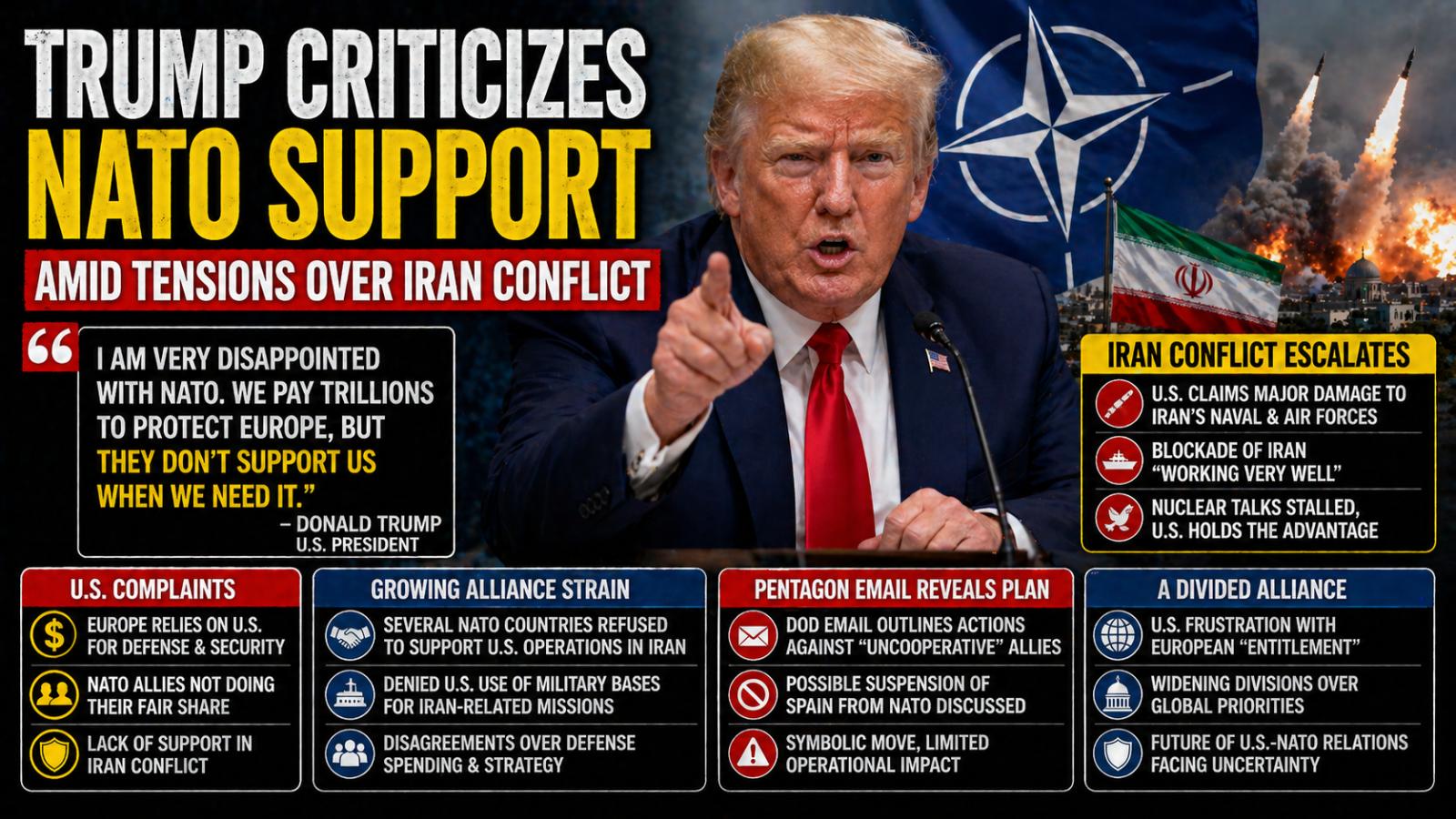
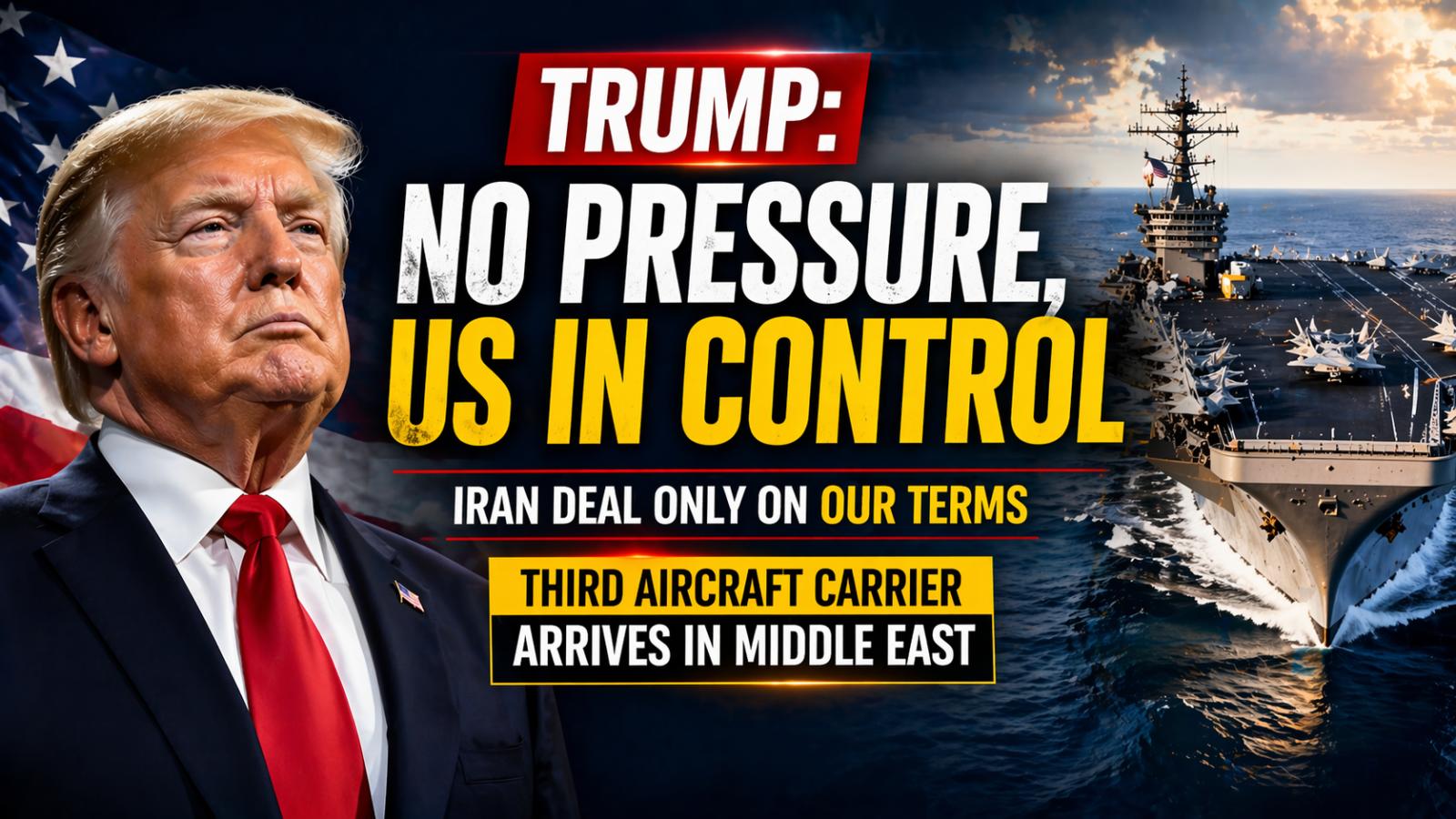
US President Donald Trump has dismissed speculation that Washington is under pressure to secure a deal with Iran, stating that the United States is in no rush to negotiate amid ongoing tensions. In a recent statement, Trump emphasized that while the US has the flexibility to wait, Iran faces increasing urgency as conditions evolve. He asserted that recent developments have significantly weakened Iran’s military capabilities, pointing to setbacks across its naval and air forces as well as the degradation of its defense systems. Trump also highlighted what he described as a tightening blockade, suggesting that the strategic balance currently favors the United States and its allies. He reiterated that any agreement would only move forward if it aligns with American interests and broader global stability, rejecting claims that his administration is eager to conclude talks quickly. At the same time, the US military has reinforced its presence in the region. United States Central Command confirmed the arrival of a third aircraft carrier, the USS George H.W. Bush, into its operational zone. The carrier is currently positioned in the Indian Ocean, joining the USS Abraham Lincoln in the Arabian Sea and the USS Gerald R. Ford in the Red Sea. The deployment marks a notable expansion of US naval strength in the Middle East during a fragile ceasefire period. The USS George H.W. Bush followed an unusual route, traveling around the Horn of Africa before entering the region, underscoring the strategic importance of its positioning. These developments reflect a continued emphasis on military readiness while diplomatic uncertainty persists, with Washington signaling that timing and terms of any agreement will remain firmly under its control.
US Deploys Third Aircraft Carrier as Trump Signals No Urgency for Iran Deal
US President Donald Trump has dismissed speculation that Washington is under pressure to secure a deal with Iran, stating that the United States is in no rush to negotiate amid ongoing tensions. In a recent statement, Trump emphasized that while the US has the flexibility to wait, Iran faces increasing urgency as conditions evolve. He asserted that recent developments have significantly weakened Iran’s military capabilities, pointing to setbacks across its naval and air forces as well as the degradation of its defense systems. Trump also highlighted what he described as a tightening blockade, suggesting that the strategic balance currently favors the United States and its allies. He reiterated that any agreement would only move forward if it aligns with American interests and broader global stability, rejecting claims that his administration is eager to conclude talks quickly. At the same time, the US military has reinforced its presence in the region. United States Central Command confirmed the arrival of a third aircraft carrier, the USS George H.W. Bush, into its operational zone. The carrier is currently positioned in the Indian Ocean, joining the USS Abraham Lincoln in the Arabian Sea and the USS Gerald R. Ford in the Red Sea. The deployment marks a notable expansion of US naval strength in the Middle East during a fragile ceasefire period. The USS George H.W. Bush followed an unusual route, traveling around the Horn of Africa before entering the region, underscoring the strategic importance of its positioning. These developments reflect a continued emphasis on military readiness while diplomatic uncertainty persists, with Washington signaling that timing and terms of any agreement will remain firmly under its control.
How Iran’s affordable drones are challenging America’s expensive interceptors
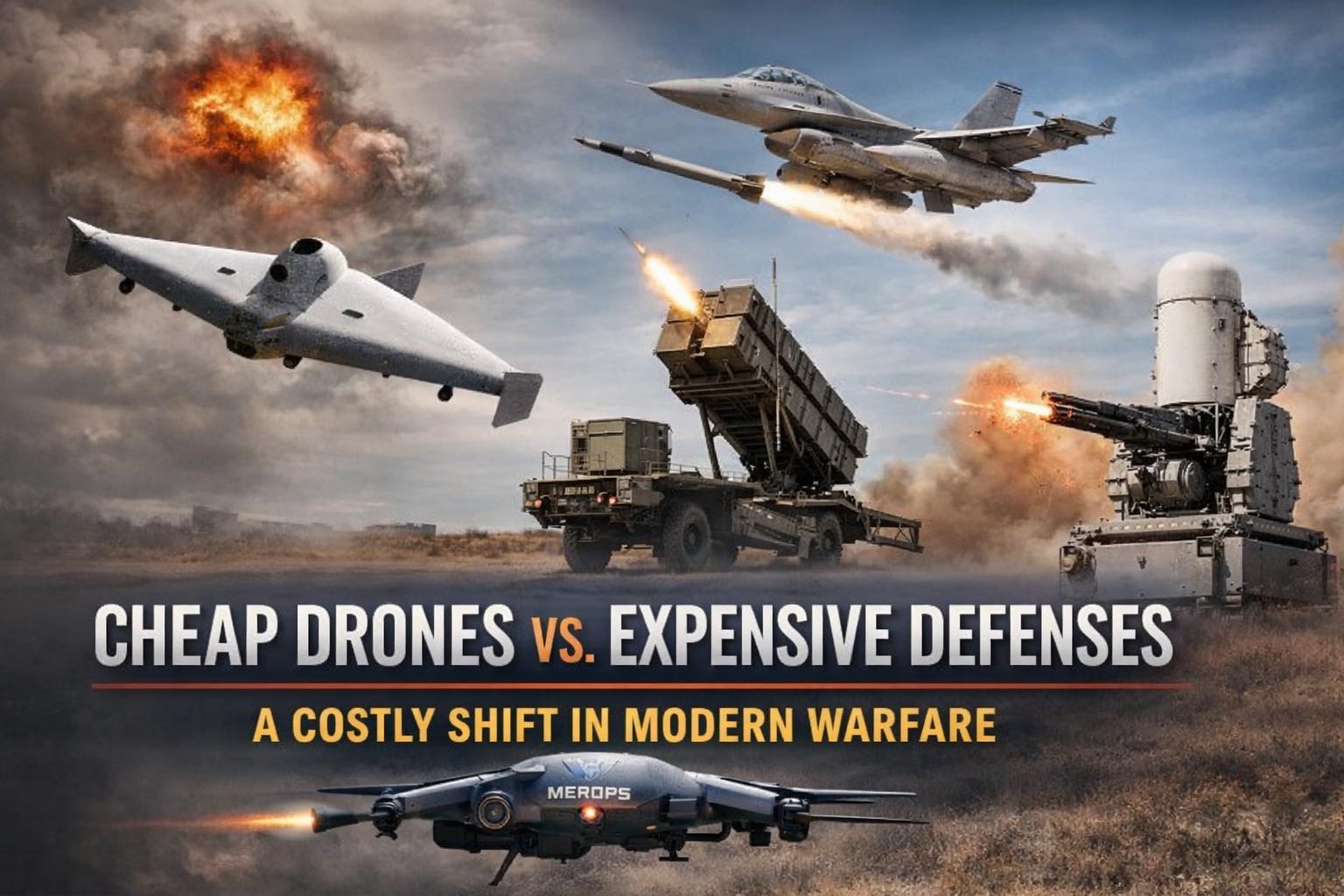
One of the most striking lessons from the war with Iran is how a relatively low-cost adversary has exposed vulnerabilities in U.S. defense strategy. Iran has demonstrated both a willingness to go on the offensive and an ability to leverage inexpensive drone technology at scale. These drones, often built with commercial-grade components, cost roughly $35,000 each—far less than the high-end interceptors used to destroy them. This imbalance has forced the United States and its allies to confront a new reality: modern warfare is no longer dominated solely by precision and sophistication, but also by affordability and volume. Cheap drones had already reshaped the battlefield in Ukraine, and Iran has now applied similar tactics in the Middle East, exploiting a long-standing gap in U.S. defense investments that favored fewer, more expensive systems over scalable solutions. Why are U.S. defenses struggling with cost efficiency? Because interceptors far exceed drone prices The financial mismatch is stark. In just the first six days of the conflict, the U.S. spent $11.3 billion, with estimates later rising to between $25 billion and $35 billion. A significant portion of that cost comes from interceptor missiles used to shoot down relatively inexpensive drones. Despite years of Pentagon focus on counter-drone capabilities, experts like Michael C. Horowitz note that there has been little urgency to scale affordable solutions. The result is a defense strategy where each engagement can cost far more than the threat itself—an unsustainable model in prolonged conflicts. How do air-based defenses work against drones? By using early detection and precision strikes—when available In an ideal scenario, airborne early warning systems detect drones hundreds of miles away. Fighter jets such as the F-16 Fighting Falcon are then deployed to intercept them using relatively cheaper rocket systems like APKWS II. This method is among the most cost-efficient, but it depends heavily on maintaining constant air patrols and intact detection systems. Iran has targeted these early warning assets, limiting their effectiveness and reducing the availability of this optimal defense approach. What role do ground and naval systems play? They offer range and reliability but at a steep price When air defenses are unavailable, the U.S. relies on ground- and sea-based systems. These include: Short-range systems like the Coyote, designed specifically for drones and relatively cost-effective—but in short supply. Naval destroyers using radar and SM-2 interceptors, which are powerful but expensive and designed for larger threats. The Patriot missile system, capable of intercepting drones from long distances using costly PAC-3 missiles. These systems were originally built to counter high-end threats like ballistic missiles, not swarms of cheap drones. As a result, they are often overkill—both technologically and financially—for the task at hand. Still, their use can be justified when defending high-value assets, such as billion-dollar radar installations or critical military infrastructure. What are the emerging solutions to counter drones? AI interceptors and lasers show promise but remain unproven New approaches aim to fix the cost imbalance. AI-powered interceptor drones, such as the Merops system developed by a company founded by Eric Schmidt, represent a potential shift toward cheaper, scalable defenses. These systems have been tested in collaboration with Ukrainian forces experienced in countering Iranian drones. The U.S. has already sent thousands of these units to the Middle East and begun training troops, though it remains unclear whether they have been deployed in combat. Meanwhile, the Pentagon has invested heavily in directed energy weapons—lasers that could cost as little as $3 per shot and reach targets up to 12 miles away. However, these systems have yet to be fielded in real-world combat. Why is ammunition depletion a growing concern? Because stockpiles may run out faster than they can be replaced Beyond cost, a more immediate concern is supply. Experts warn that interceptor stockpiles are being depleted at an alarming rate. As Tom Karako explains, the issue is not just affordability but availability: the U.S. risks running out of munitions before it can replenish them. This highlights a deeper strategic challenge. Modern conflicts—defined by mass-produced, low-cost threats—require not just advanced technology, but also sustainable production and scalable defense systems.
How Iran’s affordable drones are challenging America’s expensive interceptors
One of the most striking lessons from the war with Iran is how a relatively low-cost adversary has exposed vulnerabilities in U.S. defense strategy. Iran has demonstrated both a willingness to go on the offensive and an ability to leverage inexpensive drone technology at scale. These drones, often built with commercial-grade components, cost roughly $35,000 each—far less than the high-end interceptors used to destroy them. This imbalance has forced the United States and its allies to confront a new reality: modern warfare is no longer dominated solely by precision and sophistication, but also by affordability and volume. Cheap drones had already reshaped the battlefield in Ukraine, and Iran has now applied similar tactics in the Middle East, exploiting a long-standing gap in U.S. defense investments that favored fewer, more expensive systems over scalable solutions. Why are U.S. defenses struggling with cost efficiency? Because interceptors far exceed drone prices The financial mismatch is stark. In just the first six days of the conflict, the U.S. spent $11.3 billion, with estimates later rising to between $25 billion and $35 billion. A significant portion of that cost comes from interceptor missiles used to shoot down relatively inexpensive drones. Despite years of Pentagon focus on counter-drone capabilities, experts like Michael C. Horowitz note that there has been little urgency to scale affordable solutions. The result is a defense strategy where each engagement can cost far more than the threat itself—an unsustainable model in prolonged conflicts. How do air-based defenses work against drones? By using early detection and precision strikes—when available In an ideal scenario, airborne early warning systems detect drones hundreds of miles away. Fighter jets such as the F-16 Fighting Falcon are then deployed to intercept them using relatively cheaper rocket systems like APKWS II. This method is among the most cost-efficient, but it depends heavily on maintaining constant air patrols and intact detection systems. Iran has targeted these early warning assets, limiting their effectiveness and reducing the availability of this optimal defense approach. What role do ground and naval systems play? They offer range and reliability but at a steep price When air defenses are unavailable, the U.S. relies on ground- and sea-based systems. These include: Short-range systems like the Coyote, designed specifically for drones and relatively cost-effective—but in short supply. Naval destroyers using radar and SM-2 interceptors, which are powerful but expensive and designed for larger threats. The Patriot missile system, capable of intercepting drones from long distances using costly PAC-3 missiles. These systems were originally built to counter high-end threats like ballistic missiles, not swarms of cheap drones. As a result, they are often overkill—both technologically and financially—for the task at hand. Still, their use can be justified when defending high-value assets, such as billion-dollar radar installations or critical military infrastructure. What are the emerging solutions to counter drones? AI interceptors and lasers show promise but remain unproven New approaches aim to fix the cost imbalance. AI-powered interceptor drones, such as the Merops system developed by a company founded by Eric Schmidt, represent a potential shift toward cheaper, scalable defenses. These systems have been tested in collaboration with Ukrainian forces experienced in countering Iranian drones. The U.S. has already sent thousands of these units to the Middle East and begun training troops, though it remains unclear whether they have been deployed in combat. Meanwhile, the Pentagon has invested heavily in directed energy weapons—lasers that could cost as little as $3 per shot and reach targets up to 12 miles away. However, these systems have yet to be fielded in real-world combat. Why is ammunition depletion a growing concern? Because stockpiles may run out faster than they can be replaced Beyond cost, a more immediate concern is supply. Experts warn that interceptor stockpiles are being depleted at an alarming rate. As Tom Karako explains, the issue is not just affordability but availability: the U.S. risks running out of munitions before it can replenish them. This highlights a deeper strategic challenge. Modern conflicts—defined by mass-produced, low-cost threats—require not just advanced technology, but also sustainable production and scalable defense systems.
CDC warns of rising extensively drug-resistant shigella cases in US
WASHINGTON — Health officials are warning of a rising number of extensively drug-resistant shigella infections in the United States, describing the trend as a growing public health threat linked to increasing antibiotic resistance. In a report released on Wednesday, April 9, 2026, federal health authorities said drug-resistant cases of shigella have steadily increased over the past decade. According to surveillance data, such cases accounted for 0% of reported infections between 201
CDC warns of rising extensively drug-resistant shigella cases in US
WASHINGTON — Health officials are warning of a rising number of extensively drug-resistant shigella infections in the United States, describing the trend as a growing public health threat linked to increasing antibiotic resistance. In a report released on Wednesday, April 9, 2026, federal health authorities said drug-resistant cases of shigella have steadily increased over the past decade. According to surveillance data, such cases accounted for 0% of reported infections between 201
India’s nuclear posture: balancing deterrence with global stability
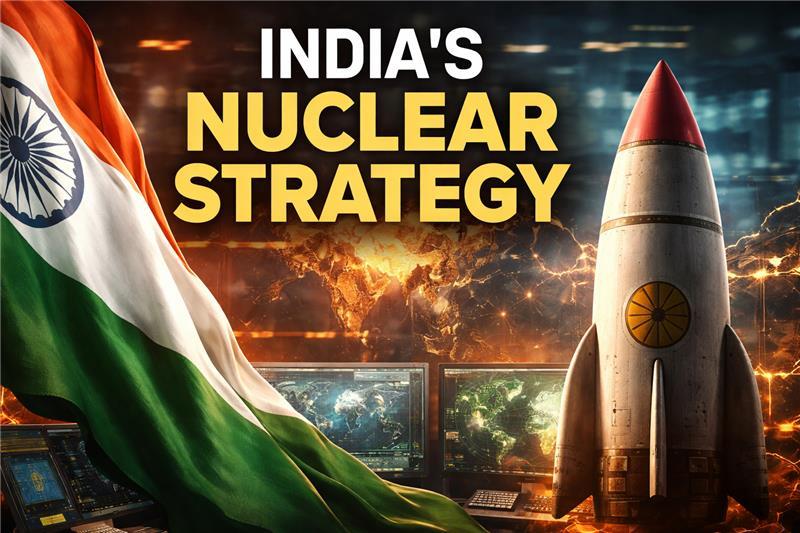
India’s nuclear strategy has consistently evolved, reflecting the country’s changing security landscape and its response to emerging global challenges. With a doctrine centered on credible minimum deterrence, India ensures that its nuclear capabilities are sufficient to deter adversaries without striving for nuclear superiority. This strategic posture maintains a delicate balance, ensuring national security while preventing the escalation of conflicts into nuclear war.


India’s nuclear posture: balancing deterrence with global stability
India’s nuclear strategy has consistently evolved, reflecting the country’s changing security landscape and its response to emerging global challenges. With a doctrine centered on credible minimum deterrence, India ensures that its nuclear capabilities are sufficient to deter adversaries without striving for nuclear superiority. This strategic posture maintains a delicate balance, ensuring national security while preventing the escalation of conflicts into nuclear war.
PM Modi Promises Fair Delimitation, Says All States Will Be Treated Equally
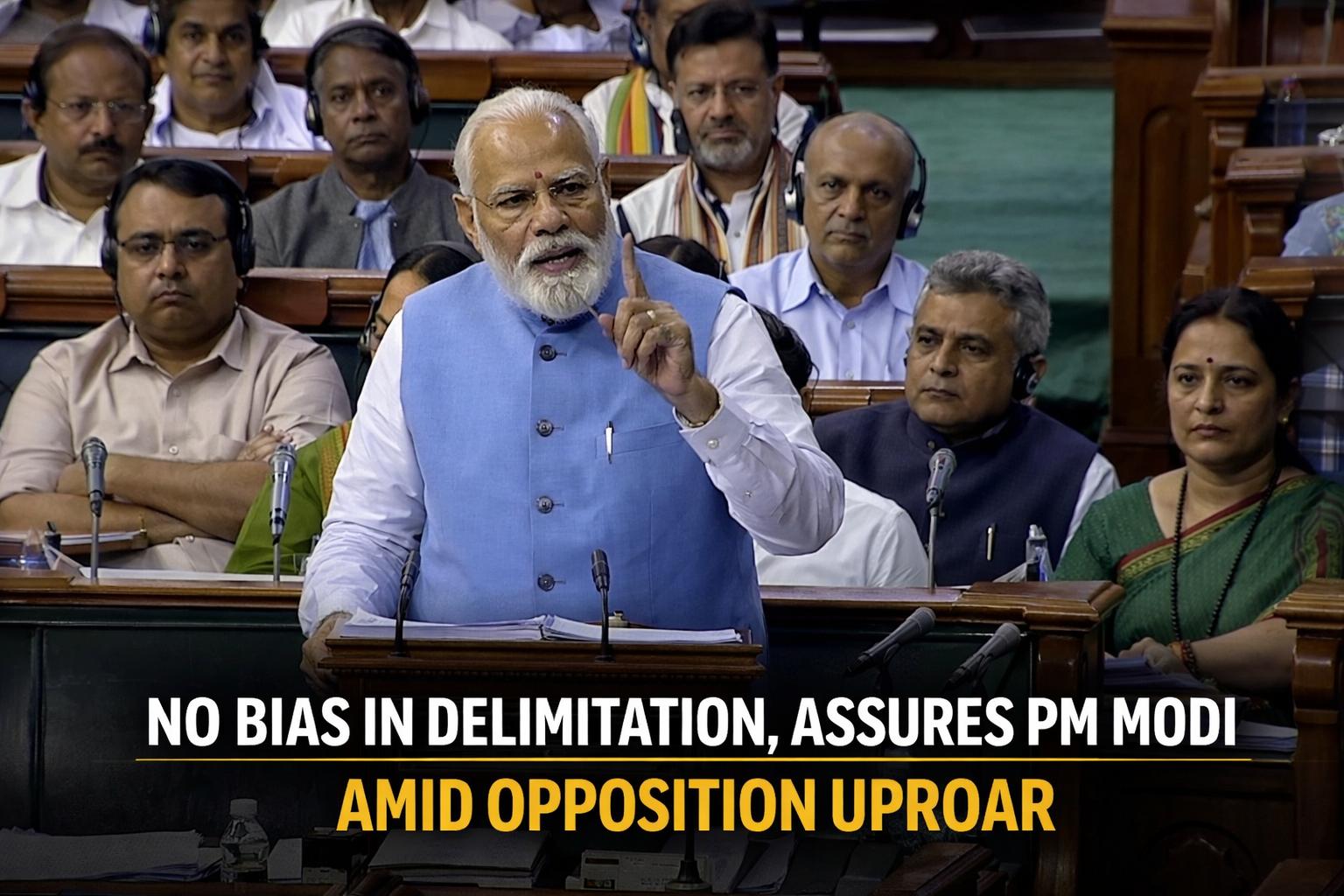
Prime Minister Narendra Modi addressed the Lok Sabha during the ongoing special Parliament session, offering a strong assurance that the proposed delimitation process will be conducted without bias toward any region. His statement comes at a time when the issue has triggered a major political confrontation between the ruling NDA and Opposition parties, especially leaders from southern states who fea
PM Modi Promises Fair Delimitation, Says All States Will Be Treated Equally
Prime Minister Narendra Modi addressed the Lok Sabha during the ongoing special Parliament session, offering a strong assurance that the proposed delimitation process will be conducted without bias toward any region. His statement comes at a time when the issue has triggered a major political confrontation between the ruling NDA and Opposition parties, especially leaders from southern states who fea
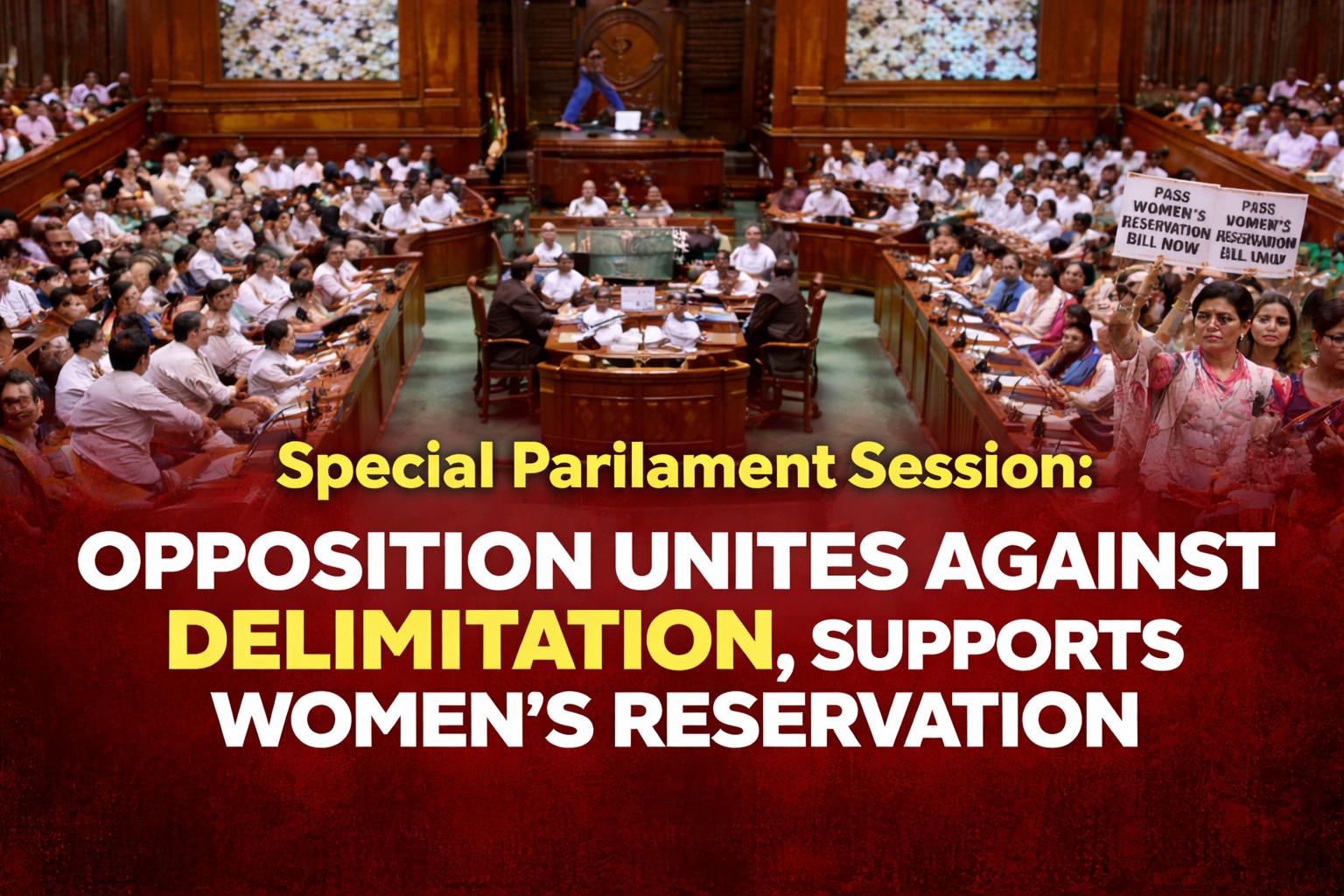
Special Parliament Session Live: Opposition Unites Against Delimitation, Supports Women’s Reservation
The Special Parliament Session, set to run from April 16 to 18, has kicked off with significant debates surrounding the government’s proposed amendments. One of the most anticipated legislative pieces is the operationalization of the Women’s Reservation Act, which aims to ensure 33% representation for women in both the Lok Sabha and state assemblies by 2029. Alongside this, a Constitution amendment bill will be presented on the first day of the session, marking the beginning of what promi
Special Parliament Session Live: Opposition Unites Against Delimitation, Supports Women’s Reservation
The Special Parliament Session, set to run from April 16 to 18, has kicked off with significant debates surrounding the government’s proposed amendments. One of the most anticipated legislative pieces is the operationalization of the Women’s Reservation Act, which aims to ensure 33% representation for women in both the Lok Sabha and state assemblies by 2029. Alongside this, a Constitution amendment bill will be presented on the first day of the session, marking the beginning of what promi
Discover Malola Narasimha Temple in Ahobilam: A divine and scenic trek
The Malola Narasimha Swamy Temple, located in Ahobilam, Andhra Pradesh, holds immense spiritual significance for devotees of Lord Vishnu. It is one of the nine Narasimha temples in Ahobilam and is dedicated to Lord Malola Narasimha, a unique and graceful form of the deity. Lord Malola Narasimha is believed to rule the planet Venus (Sukran) and is revered for his benevolent presence. This temple is considered larger and more majestic than the Jwala Narasimha Temple, which is also located
Discover Malola Narasimha Temple in Ahobilam: A divine and scenic trek
The Malola Narasimha Swamy Temple, located in Ahobilam, Andhra Pradesh, holds immense spiritual significance for devotees of Lord Vishnu. It is one of the nine Narasimha temples in Ahobilam and is dedicated to Lord Malola Narasimha, a unique and graceful form of the deity. Lord Malola Narasimha is believed to rule the planet Venus (Sukran) and is revered for his benevolent presence. This temple is considered larger and more majestic than the Jwala Narasimha Temple, which is also located
PM Modi Urges Early Rollout of Women's Reservation Act Before 2029 Elections
Prime Minister Narendra Modi has called for the early implementation of the Women’s Reservation Act, urging political parties to work together to ensure it is in place before the 2029 general elections. In a letter dated April 11 to leaders of all political parties in both Houses of Parliament, the Prime Minister emphasized the need to implement the law, officially known as the Nari Shakti Vandan Adhiniyam, 2023, in its true spirit. A special three-day session of Parliam
PM Modi Urges Early Rollout of Women's Reservation Act Before 2029 Elections
Prime Minister Narendra Modi has called for the early implementation of the Women’s Reservation Act, urging political parties to work together to ensure it is in place before the 2029 general elections. In a letter dated April 11 to leaders of all political parties in both Houses of Parliament, the Prime Minister emphasized the need to implement the law, officially known as the Nari Shakti Vandan Adhiniyam, 2023, in its true spirit. A special three-day session of Parliam
PM Announces 6 Key Guarantees for West Bengal: 7th Pay, Safety and Border Security
Prime Minister Narendra Modi, addressing a rally in Haldia, outlined six key guarantees for the people of West Bengal ahead of the April 23 elections. During his speech, he criticised the ruling
PM Announces 6 Key Guarantees for West Bengal: 7th Pay, Safety and Border Security
Prime Minister Narendra Modi, addressing a rally in Haldia, outlined six key guarantees for the people of West Bengal ahead of the April 23 elections. During his speech, he criticised the ruling
7TH YEAR Album: TXT’s Bold, Introspective Chapter in K-pop Ahead of Release
K-pop sensation TOMORROW X TOGETHER (TXT) is set to embark on a new, introspective chapter with the release of their eighth mini-album, 7TH YEAR: A Moment of Stillness in the Thorns, slated for April 13. The group has unveiled the album’s full tracklist and a set of captivating concept photos, generating excitement for what promises to be one of their most emotionally charged projects yet. At the core of the album lies a "thorn" motif, symbolizing emotional conflict, resilience, a
7TH YEAR Album: TXT’s Bold, Introspective Chapter in K-pop Ahead of Release
K-pop sensation TOMORROW X TOGETHER (TXT) is set to embark on a new, introspective chapter with the release of their eighth mini-album, 7TH YEAR: A Moment of Stillness in the Thorns, slated for April 13. The group has unveiled the album’s full tracklist and a set of captivating concept photos, generating excitement for what promises to be one of their most emotionally charged projects yet. At the core of the album lies a "thorn" motif, symbolizing emotional conflict, resilience, a
Assam Election 2026: BJP vs Congress manifesto promises decoded for voters
The political landscape in Assam is heating up as the 2026 assembly elections approach, with major parties unveiling their manifestos to attract voters across the state. Both Bharatiya Janata Party and Indian National C
Assam Election 2026: BJP vs Congress manifesto promises decoded for voters
The political landscape in Assam is heating up as the 2026 assembly elections approach, with major parties unveiling their manifestos to attract voters across the state. Both Bharatiya Janata Party and Indian National C
Santa Clara shopping center tenants sue amid redevelopment dispute
A once-thriving retail hub in Santa Clara, California, is rapidly emptying as redevelopment plans move forward, prompting legal action from displaced business owners who allege unfair treatment by the property’s former landlord. Two tenants from the Homestead Shopping Center — Tous les Jours bakery and Fuheng Herbs — have filed separate lawsuits against former property owner David Bider and Cypress Investments, claiming they were misled and pressured into leaving prior to the si
Santa Clara shopping center tenants sue amid redevelopment dispute
A once-thriving retail hub in Santa Clara, California, is rapidly emptying as redevelopment plans move forward, prompting legal action from displaced business owners who allege unfair treatment by the property’s former landlord. Two tenants from the Homestead Shopping Center — Tous les Jours bakery and Fuheng Herbs — have filed separate lawsuits against former property owner David Bider and Cypress Investments, claiming they were misled and pressured into leaving prior to the si
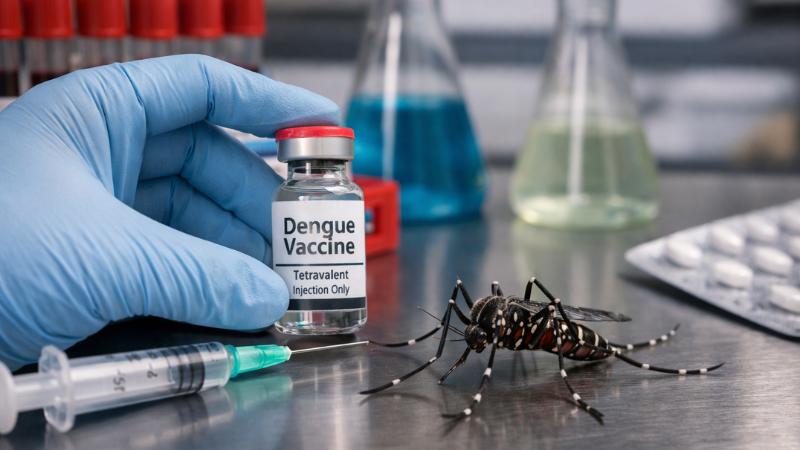
India Approaches Approval for First Widely Accessible Dengue Vaccine
India is on the verge of introducing its first widely accessible dengue vaccine, marking a critical step in the fight against a disease that continues to spread rapidly across the country. After a key expert panel under the Central Drugs Standard Control Organisation (CDSCO) recommended the importation of Takeda’s tetravalent dengue vaccine, the country could soon see the vaccine rolled out for individuals aged 4 to 60 years. This recommendation comes at a time when dengue cases in India ar
India Approaches Approval for First Widely Accessible Dengue Vaccine
India is on the verge of introducing its first widely accessible dengue vaccine, marking a critical step in the fight against a disease that continues to spread rapidly across the country. After a key expert panel under the Central Drugs Standard Control Organisation (CDSCO) recommended the importation of Takeda’s tetravalent dengue vaccine, the country could soon see the vaccine rolled out for individuals aged 4 to 60 years. This recommendation comes at a time when dengue cases in India ar
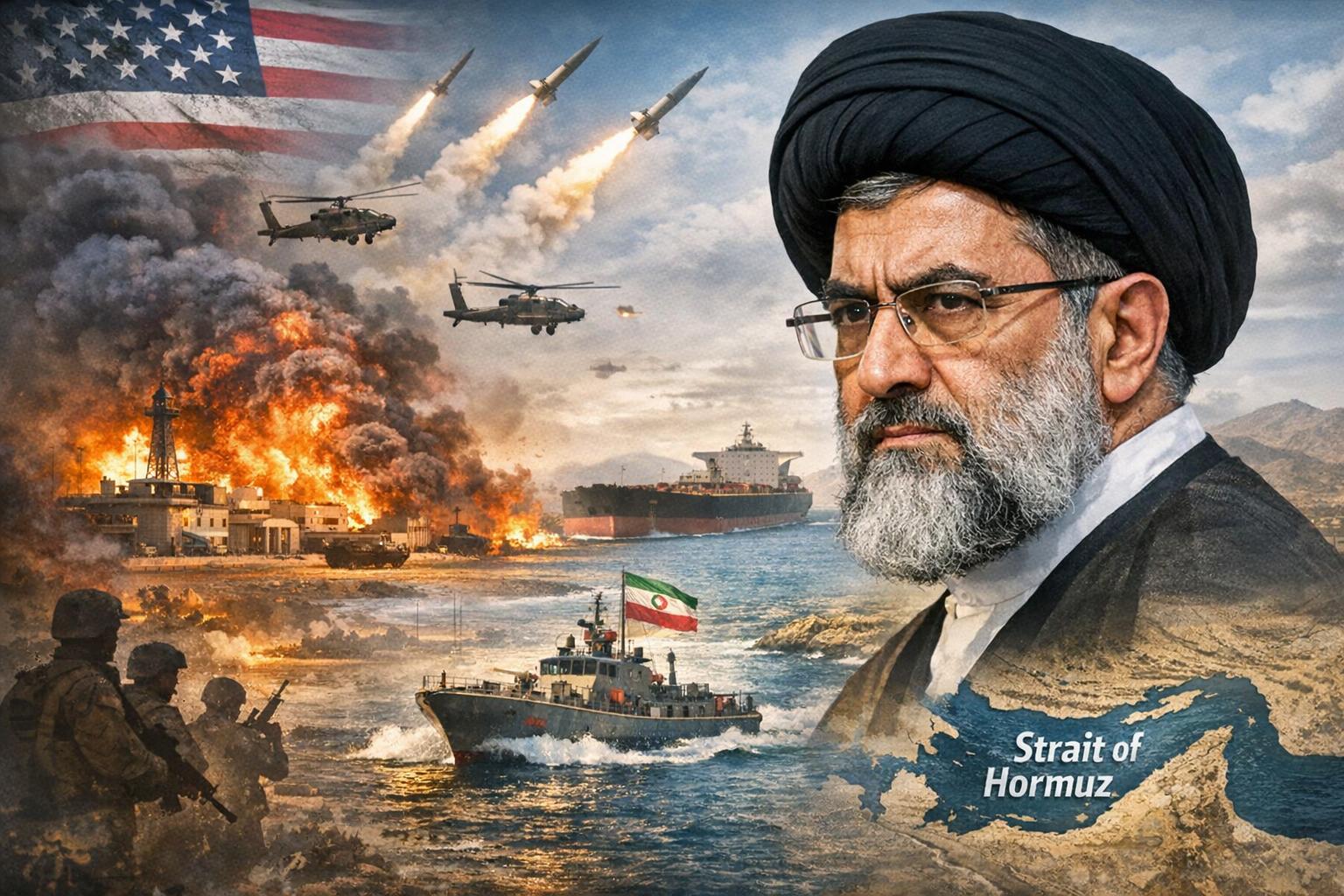
US–Israel–Iran War | Mojtaba Khamenei warns of more attacks on US bases after becoming Iran’s Supreme Leader
Iran’s newly appointed Supreme Leader Mojtaba Khamenei delivered a strong and defiant message in his first public statement since assuming the country’s highest leadership position, warning that Iran will continue responding to what it describes as hostile actions by the United States and its allies. In the message broadcast on state television on Thursday, March 12, Khamenei vowed revenge for what he called crimes committed against Iran and signaled that attacks linked to ongoing regional t
US–Israel–Iran War | Mojtaba Khamenei warns of more attacks on US bases after becoming Iran’s Supreme Leader
Iran’s newly appointed Supreme Leader Mojtaba Khamenei delivered a strong and defiant message in his first public statement since assuming the country’s highest leadership position, warning that Iran will continue responding to what it describes as hostile actions by the United States and its allies. In the message broadcast on state television on Thursday, March 12, Khamenei vowed revenge for what he called crimes committed against Iran and signaled that attacks linked to ongoing regional t
US–Israel–Iran War | Missile strike damages civilian satellite site near Beit Shemesh, two hurt
A missile fired by Hezbollah struck a satellite communications facility near the Israeli city of Beit Shemesh on Tuesday, damaging infrastructure at the site and injuring two people, according to emergency and military officials. The impact was captured in a dashcam video circulating online, showing the moment the missile hit the satellite station and caused visible damage to parts of the facility. Rescue services reported that two individuals sustained injuries in the blast. Both were tr
US–Israel–Iran War | Missile strike damages civilian satellite site near Beit Shemesh, two hurt
A missile fired by Hezbollah struck a satellite communications facility near the Israeli city of Beit Shemesh on Tuesday, damaging infrastructure at the site and injuring two people, according to emergency and military officials. The impact was captured in a dashcam video circulating online, showing the moment the missile hit the satellite station and caused visible damage to parts of the facility. Rescue services reported that two individuals sustained injuries in the blast. Both were tr
Vijay’s Political Strategy Sparks Debate Ahead of Tamil Nadu Elections
Actor turned politician Thalapathy Vijay has once again become the center of political discussions after announcing several welfare schemes during a recent gathering of women cadres of Tamilaga Vettri Kazhagam in Mahabalipuram. His speech focused on women’s welfare and included a series of promises that he said would be implemented if his party comes to power in Tamil Nadu. However, the scale of these announcements has sparked a debate in political circles and among the public about their p
Vijay’s Political Strategy Sparks Debate Ahead of Tamil Nadu Elections
Actor turned politician Thalapathy Vijay has once again become the center of political discussions after announcing several welfare schemes during a recent gathering of women cadres of Tamilaga Vettri Kazhagam in Mahabalipuram. His speech focused on women’s welfare and included a series of promises that he said would be implemented if his party comes to power in Tamil Nadu. However, the scale of these announcements has sparked a debate in political circles and among the public about their p
US–Israel–Iran War | Costly interceptors challenge US defenses against Iran’s mass drone strategy
The skies over West Asia have become the center of a rapidly intensifying aerial confrontation as waves of Iranian drones and missiles streak across the region. Air defense systems operated by the United States and Israel are working almost continuously to intercept incoming threats, creating a dramatic display of explosions, interceptor launches, and fire trails across the night sky. The escalating conflict has transformed the region’s airspace into a high-stakes battlefield, where defensive
US–Israel–Iran War | Costly interceptors challenge US defenses against Iran’s mass drone strategy
The skies over West Asia have become the center of a rapidly intensifying aerial confrontation as waves of Iranian drones and missiles streak across the region. Air defense systems operated by the United States and Israel are working almost continuously to intercept incoming threats, creating a dramatic display of explosions, interceptor launches, and fire trails across the night sky. The escalating conflict has transformed the region’s airspace into a high-stakes battlefield, where defensive
Spain PM rejects war, responds to trade threat over air base dispute
Spanish Prime Minister Pedro Sánchez has strongly criticized the ongoing military strikes against Iran, describing the escalation in the Middle East as a “disaster” and warning that the world cannot risk repeating the mistakes of history. His remarks come shortly after a trade threat was issued to Spain in response to Madrid’s refusal to allow two jointly operated military bases on Spanish territory to be used in the strikes. In a televised address, Sánchez emphasized the dang
Spain PM rejects war, responds to trade threat over air base dispute
Spanish Prime Minister Pedro Sánchez has strongly criticized the ongoing military strikes against Iran, describing the escalation in the Middle East as a “disaster” and warning that the world cannot risk repeating the mistakes of history. His remarks come shortly after a trade threat was issued to Spain in response to Madrid’s refusal to allow two jointly operated military bases on Spanish territory to be used in the strikes. In a televised address, Sánchez emphasized the dang
US–Israel–Iran War | US military losses near $2 billion after Iranian strikes in early days of conflict
The United States has reportedly suffered nearly $2 billion in military equipment losses during the first four days of escalating hostilities with Iran following a joint US–Israel military campaign. Data compiled from defence assessments and open-source intelligence indicates that multiple American installations across the Middle East were damaged in retaliatory strikes launched by Tehran after the operation that resulted in the death of Iran’s Supreme Leader, Ali Khamenei. One
US–Israel–Iran War | US military losses near $2 billion after Iranian strikes in early days of conflict
The United States has reportedly suffered nearly $2 billion in military equipment losses during the first four days of escalating hostilities with Iran following a joint US–Israel military campaign. Data compiled from defence assessments and open-source intelligence indicates that multiple American installations across the Middle East were damaged in retaliatory strikes launched by Tehran after the operation that resulted in the death of Iran’s Supreme Leader, Ali Khamenei. One