Iran released footage of naval forces seizing two merchant ships in the Strait of Hormuz, including an India-bound vessel, intensifying regional tensions and raising global shipping concerns.
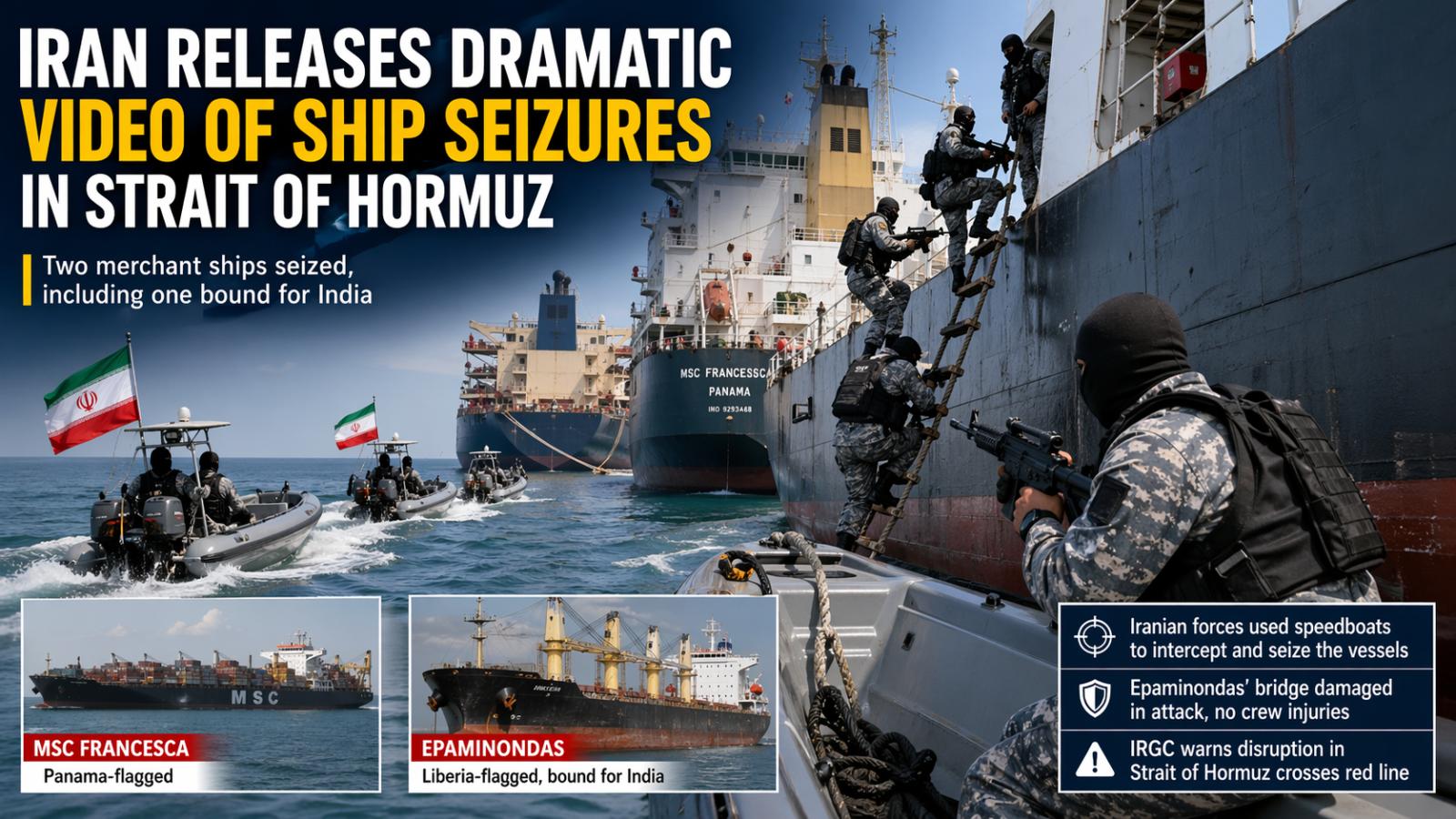
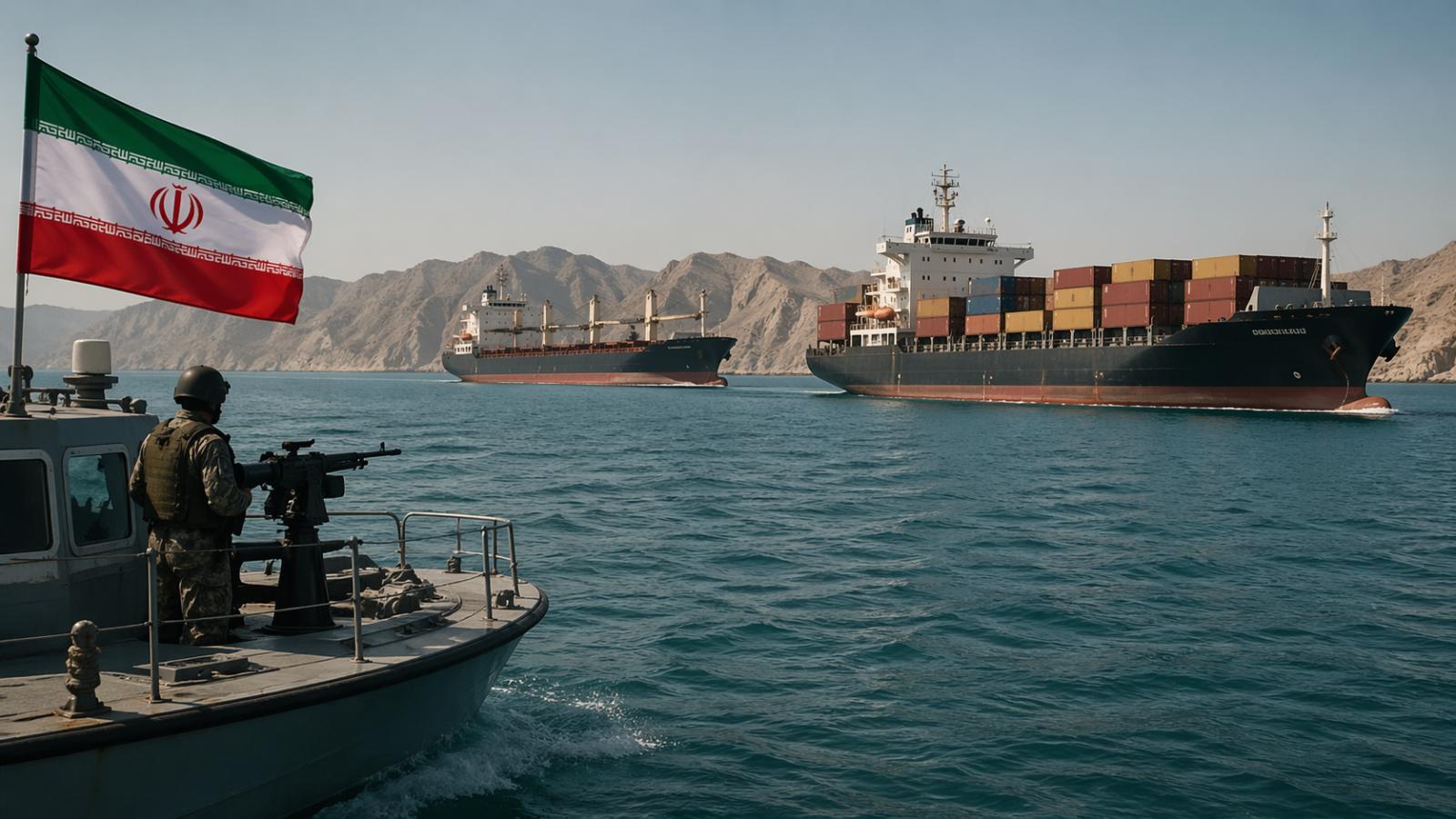
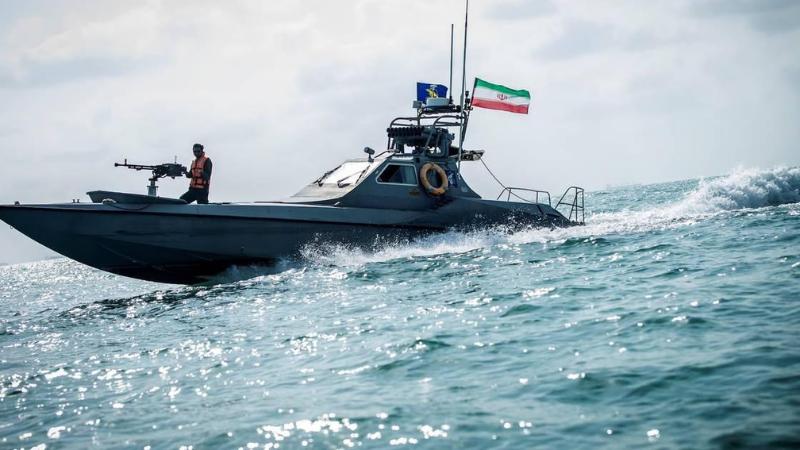
Iranian authorities released a dramatic video on Thursday, April 23, 2026, a day after naval forces seized two merchant vessels in the strategically critical Strait of Hormuz, including one ship bound for India. The footage shows masked commandos in speedboats pursuing the vessels, boarding them, and taking control in an operation that underscores escalating tensions in the region.
The seizures occurred on Wednesday, April 22, 2026, shortly after U.S. President Donald Trump announced an extension of a ceasefire. Iranian naval units intercepted the Panama-flagged MSC Francesca and the Liberia-flagged Epaminondas, the latter traveling from Dubai to Mundra Port in Gujarat, India. Both ships were escorted to Iranian waters, marking Tehran’s first such action since the latest conflict began.
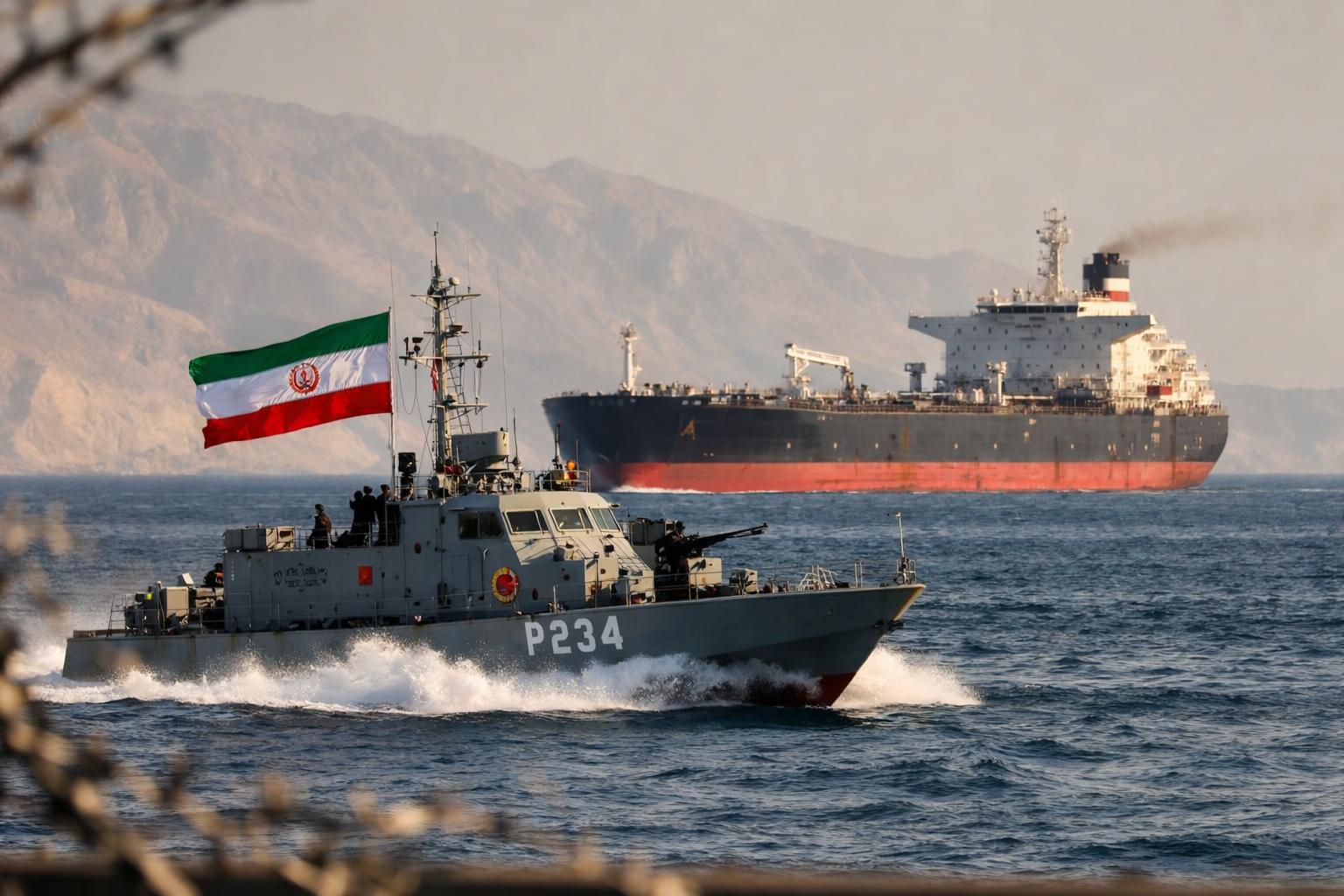
The released footage shows fast-moving boats approaching the vessels, with armed personnel boarding and conducting searches. U.S. officials attributed the operation to Iran’s “mosquito fleet,” small, agile craft associated with the Islamic Revolutionary Guard Corps. Commandos are seen climbing ladders, sweeping through decks, and entering critical areas such as engine rooms to secure control.
The Epaminondas sustained damage to its bridge after Iranian forces reportedly opened fire and used grenades during the boarding. Despite the intensity of the operation, no crew injuries were reported. The MSC Francesca, located about six miles off Iran’s coast, also came under heavy fire during the seizure.
Iranian officials stated the vessels lacked proper authorization and had interfered with navigation systems, posing a threat to maritime safety in the Strait of Hormuz. Authorities warned that disruptions in the waterway would be treated as a serious violation.The incident follows a recent U.S. operation targeting an Iranian-linked vessel accused of breaching a maritime blockade. Analysts view the seizures as a potential retaliatory move, raising concerns about further escalation in one of the world’s most vital shipping corridors. The involvement of an India-bound vessel may also complicate diplomatic relations between Tehran and New Delhi as tensions continue to rise.
Iran released footage of naval forces seizing two merchant ships in the Strait of Hormuz, including an India-bound vessel, intensifying regional tensions and raising global shipping concerns.
Iranian authorities released a dramatic video on Thursday, April 23, 2026, a day after naval forces seized two merchant vessels in the strategically critical Strait of Hormuz, including one ship bound for India. The footage shows masked commandos in speedboats pursuing the vessels, boarding them, and taking control in an operation that underscores escalating tensions in the region.
The seizures occurred on Wednesday, April 22, 2026, shortly after U.S. President Donald Trump announced an extension of a ceasefire. Iranian naval units intercepted the Panama-flagged MSC Francesca and the Liberia-flagged Epaminondas, the latter traveling from Dubai to Mundra Port in Gujarat, India. Both ships were escorted to Iranian waters, marking Tehran’s first such action since the latest conflict began.
The released footage shows fast-moving boats approaching the vessels, with armed personnel boarding and conducting searches. U.S. officials attributed the operation to Iran’s “mosquito fleet,” small, agile craft associated with the Islamic Revolutionary Guard Corps. Commandos are seen climbing ladders, sweeping through decks, and entering critical areas such as engine rooms to secure control.
The Epaminondas sustained damage to its bridge after Iranian forces reportedly opened fire and used grenades during the boarding. Despite the intensity of the operation, no crew injuries were reported. The MSC Francesca, located about six miles off Iran’s coast, also came under heavy fire during the seizure.
Iranian officials stated the vessels lacked proper authorization and had interfered with navigation systems, posing a threat to maritime safety in the Strait of Hormuz. Authorities warned that disruptions in the waterway would be treated as a serious violation.The incident follows a recent U.S. operation targeting an Iranian-linked vessel accused of breaching a maritime blockade. Analysts view the seizures as a potential retaliatory move, raising concerns about further escalation in one of the world’s most vital shipping corridors. The involvement of an India-bound vessel may also complicate diplomatic relations between Tehran and New Delhi as tensions continue to rise.
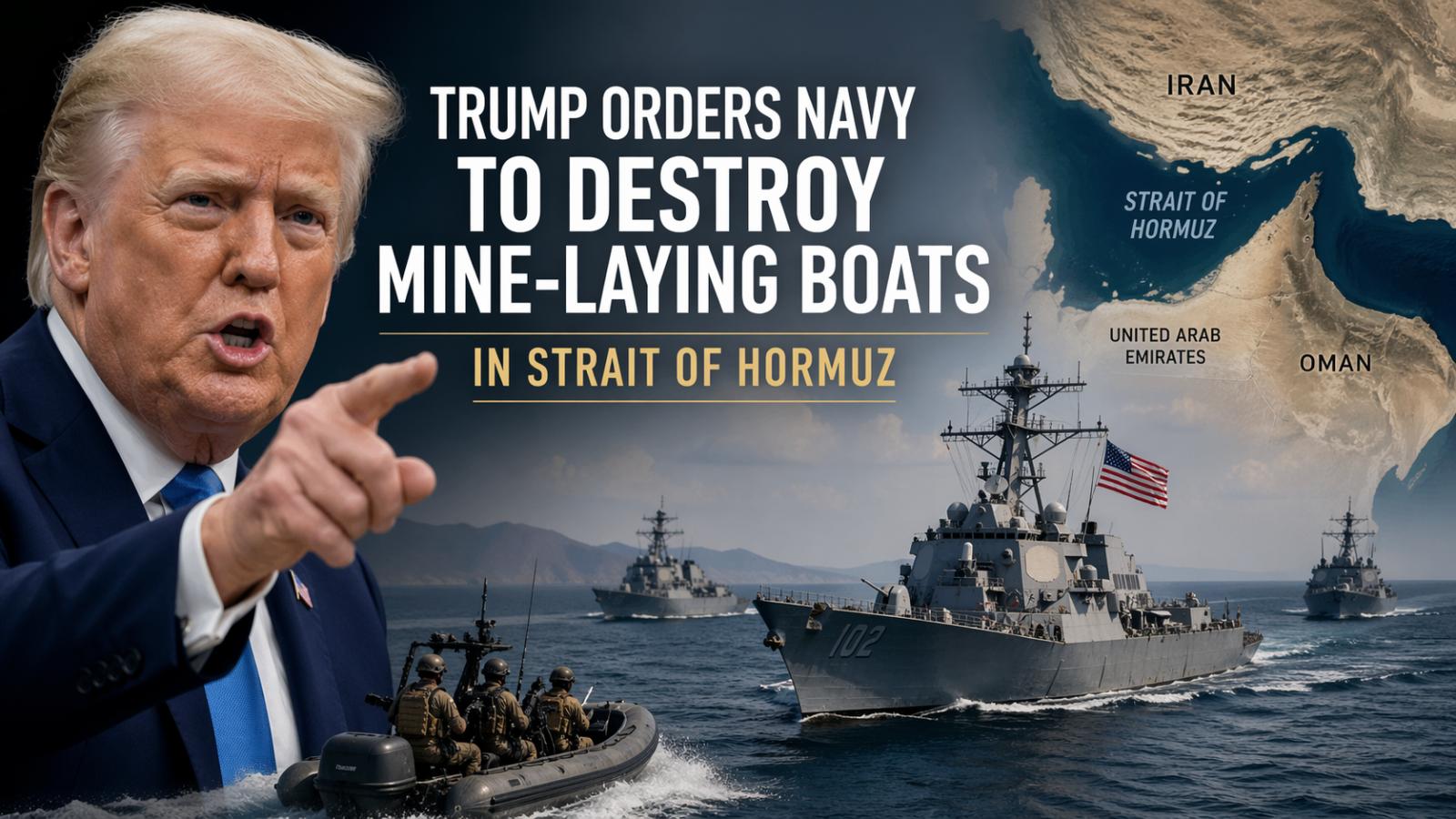
President Trump orders US Navy to target mine-laying boats in Strait of Hormuz, escalating Gulf tensions and raising concerns over maritime security and global oil shipping stability.
President Trump orders US Navy to target mine-laying boats in Strait of Hormuz, escalating Gulf tensions and raising concerns over maritime security and global oil shipping stability.
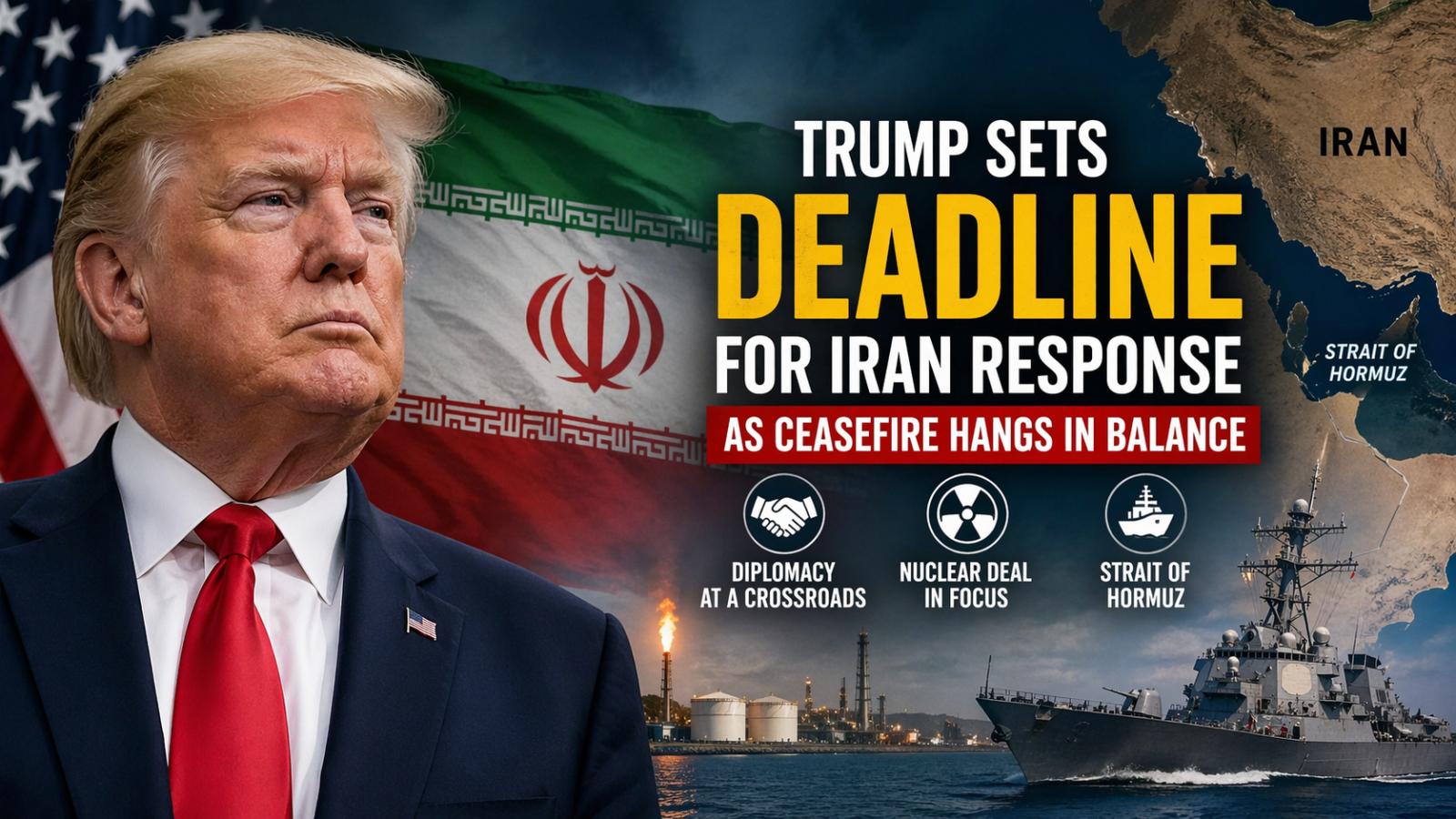
The Trump administration has set a narrow window for Iran to respond to a proposed agreement aimed at sustaining a ceasefire and addressing Tehran’s nuclear program, signaling that the pause in hostilities may soon expire without progress. According to U.S. officials, President Donald Trump is willing to allow only a few additional days for Iranian leadership to present a unified position, underscoring growing impatience in Washington over stalled diplomacy.
Officials familiar with internal discussions said the administration still views a negotiated resolution as achievable but is increasingly concerned about what it sees as divisions within Iran’s leadership. Reports indicate tensions between military figures tied to the Islamic Revolutionary Guard Corps and civilian negotiators, complicating Tehran’s ability to respond decisively to U.S. proposals. Disagreements reportedly surfaced after initial talks in Islamabad, where military leaders rejected elements discussed by diplomatic representatives.
Iran has yet to formally commit to a second round of negotiations, and a planned U.S. delegation visit—expected to include Vice President JD Vance—was ultimately canceled. The delay has fueled frustration within the White House, where senior officials have debated whether to extend diplomatic efforts or consider renewed military action. Following consultations with top advisers, including Marco Rubio and Pete Hegseth, Trump opted to allow more time for negotiations.
Despite U.S. claims of internal fractures in Tehran, some analysts dispute that assessment. Mehran Kamrava of Georgetown University Qatar has argued that Iran’s leadership remains broadly cohesive, even amid leadership transitions and limited public visibility from senior figures.
Trump has also emphasized economic pressure as a key lever, pointing to restrictions affecting Iran’s oil exports through the Strait of Hormuz. While he has signaled reluctance to escalate militarily, officials caution that force remains an option if diplomatic efforts fail within the current timeframe.
The Trump administration has set a narrow window for Iran to respond to a proposed agreement aimed at sustaining a ceasefire and addressing Tehran’s nuclear program, signaling that the pause in hostilities may soon expire without progress. According to U.S. officials, President Donald Trump is willing to allow only a few additional days for Iranian leadership to present a unified position, underscoring growing impatience in Washington over stalled diplomacy.
Officials familiar with internal discussions said the administration still views a negotiated resolution as achievable but is increasingly concerned about what it sees as divisions within Iran’s leadership. Reports indicate tensions between military figures tied to the Islamic Revolutionary Guard Corps and civilian negotiators, complicating Tehran’s ability to respond decisively to U.S. proposals. Disagreements reportedly surfaced after initial talks in Islamabad, where military leaders rejected elements discussed by diplomatic representatives.
Iran has yet to formally commit to a second round of negotiations, and a planned U.S. delegation visit—expected to include Vice President JD Vance—was ultimately canceled. The delay has fueled frustration within the White House, where senior officials have debated whether to extend diplomatic efforts or consider renewed military action. Following consultations with top advisers, including Marco Rubio and Pete Hegseth, Trump opted to allow more time for negotiations.
Despite U.S. claims of internal fractures in Tehran, some analysts dispute that assessment. Mehran Kamrava of Georgetown University Qatar has argued that Iran’s leadership remains broadly cohesive, even amid leadership transitions and limited public visibility from senior figures.
Trump has also emphasized economic pressure as a key lever, pointing to restrictions affecting Iran’s oil exports through the Strait of Hormuz. While he has signaled reluctance to escalate militarily, officials caution that force remains an option if diplomatic efforts fail within the current timeframe.
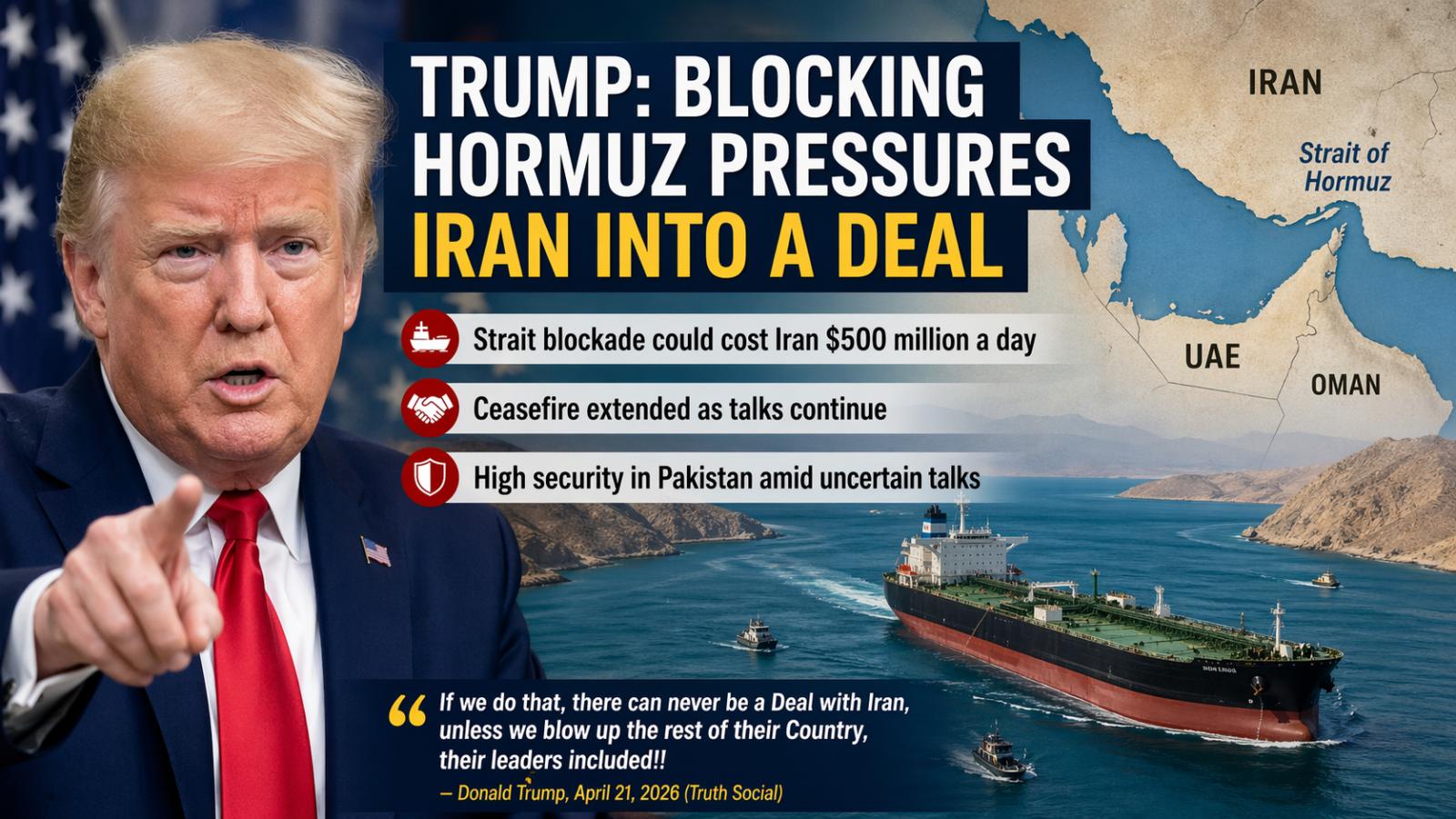
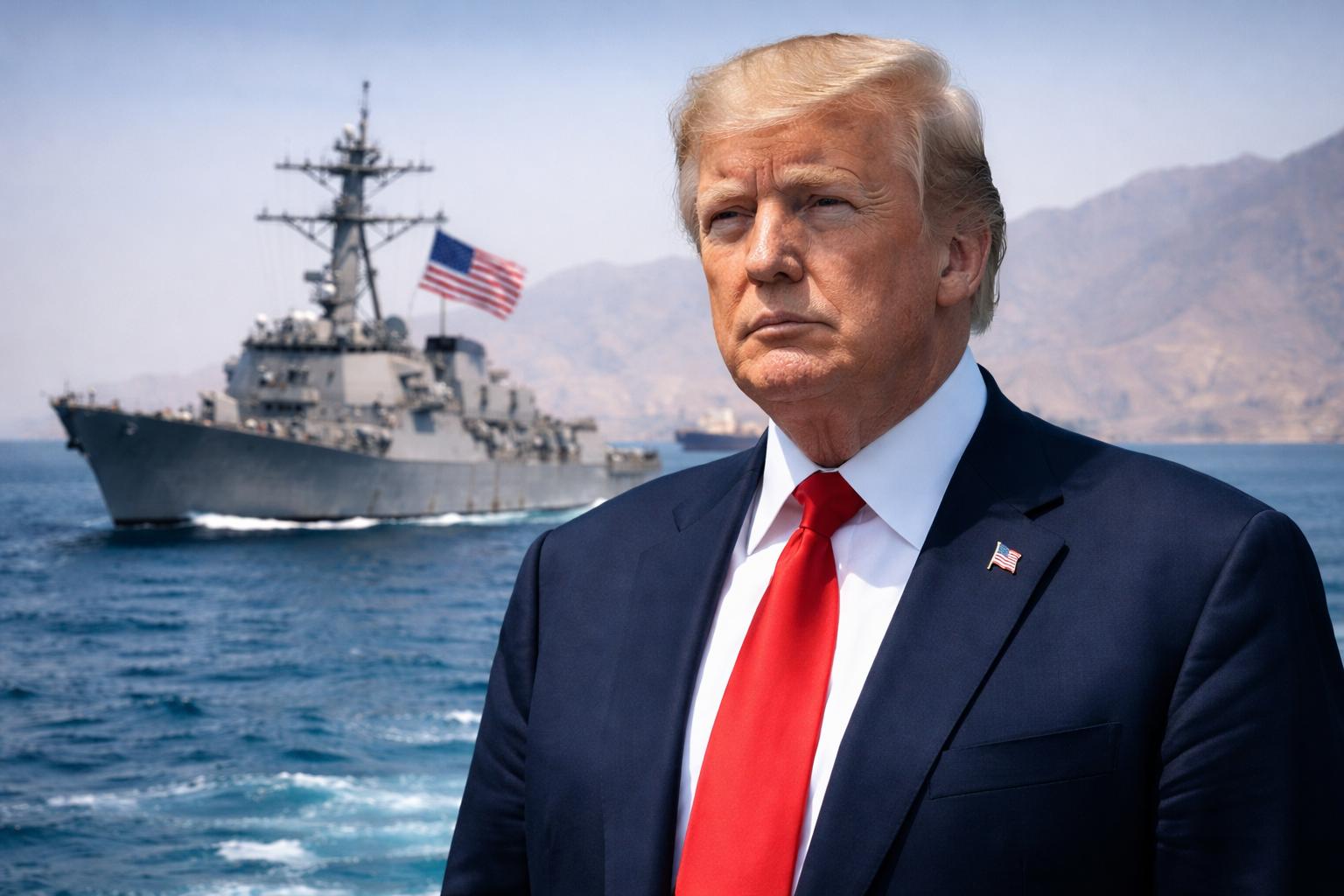
US President Donald Trump said on Tuesday, April 21, 2026, that Iran is seeking to reopen the Strait of Hormuz but argued that maintaining a blockade is key to forcing Tehran into a negotiated agreement. Writing on Truth Social, Trump claimed Iran could generate up to $500 million per day if the passage were reopened, adding that its closure has significantly constrained the country’s finances.
Trump stated that he has “totally blocked” the strait and suggested Iranian officials are publicly calling for closure only to “save face.” He further warned that reopening the waterway prematurely would weaken US leverage in ongoing negotiations, reiterating aggressive rhetoric about potential military escalation if talks fail. He also described Iran as facing severe economic strain, claiming it is “collapsing financially.”
Ceasefire extension linked to diplomatic efforts
The remarks came as Trump confirmed an extension of a 10-day ceasefire with Iran, originally set to expire on Wednesday, April 22, 2026. He said the extension followed requests from Asim Munir and Shehbaz Sharif, with the goal of allowing more time for diplomatic engagement.
While the US has not confirmed Iran’s participation in talks, Tehran’s envoy to the United Nations, Amir Saeid Iravani, indicated that lifting naval restrictions could create conditions for negotiations. However, the White House said Vice President JD Vance and the US delegation would not travel to Pakistan for discussions.
Security tightens around Pakistan negotiations
In Islamabad and nearby Rawalpindi, authorities deployed more than 20,000 security personnel amid uncertainty surrounding the talks. The heightened security underscores regional tensions as diplomatic channels remain unclear.
Trump’s ongoing messaging and additional demands
Trump has continued frequent postings on Iran, combining threats with appeals. He called for the release of eight women reportedly facing execution in Iran, framing it as a goodwill step ahead of potential negotiations. At the same time, he accused Iran of violating the ceasefire multiple times without providing details.
In separate comments, Trump praised what he described as a prior US military operation targeting Iranian nuclear sites and repeated claims about Iran’s economic and strategic vulnerabilities.
US President Donald Trump said on Tuesday, April 21, 2026, that Iran is seeking to reopen the Strait of Hormuz but argued that maintaining a blockade is key to forcing Tehran into a negotiated agreement. Writing on Truth Social, Trump claimed Iran could generate up to $500 million per day if the passage were reopened, adding that its closure has significantly constrained the country’s finances.
Trump stated that he has “totally blocked” the strait and suggested Iranian officials are publicly calling for closure only to “save face.” He further warned that reopening the waterway prematurely would weaken US leverage in ongoing negotiations, reiterating aggressive rhetoric about potential military escalation if talks fail. He also described Iran as facing severe economic strain, claiming it is “collapsing financially.”
Ceasefire extension linked to diplomatic efforts
The remarks came as Trump confirmed an extension of a 10-day ceasefire with Iran, originally set to expire on Wednesday, April 22, 2026. He said the extension followed requests from Asim Munir and Shehbaz Sharif, with the goal of allowing more time for diplomatic engagement.
While the US has not confirmed Iran’s participation in talks, Tehran’s envoy to the United Nations, Amir Saeid Iravani, indicated that lifting naval restrictions could create conditions for negotiations. However, the White House said Vice President JD Vance and the US delegation would not travel to Pakistan for discussions.
Security tightens around Pakistan negotiations
In Islamabad and nearby Rawalpindi, authorities deployed more than 20,000 security personnel amid uncertainty surrounding the talks. The heightened security underscores regional tensions as diplomatic channels remain unclear.
Trump’s ongoing messaging and additional demands
Trump has continued frequent postings on Iran, combining threats with appeals. He called for the release of eight women reportedly facing execution in Iran, framing it as a goodwill step ahead of potential negotiations. At the same time, he accused Iran of violating the ceasefire multiple times without providing details.
In separate comments, Trump praised what he described as a prior US military operation targeting Iranian nuclear sites and repeated claims about Iran’s economic and strategic vulnerabilities.
Iran’s Islamic Revolutionary Guards Corps (IRGC) said it seized two cargo ships near the Strait of Hormuz on Wednesday, according to Iranian state media, in a move that underscores rising tensions in one of the world’s most critical maritime corridors. The incident occurred hours after Donald Trump announced an extension of a cease-fire between the United States and Iran.
The British Nav
Iran’s Islamic Revolutionary Guards Corps (IRGC) said it seized two cargo ships near the Strait of Hormuz on Wednesday, according to Iranian state media, in a move that underscores rising tensions in one of the world’s most critical maritime corridors. The incident occurred hours after Donald Trump announced an extension of a cease-fire between the United States and Iran.
The British Nav
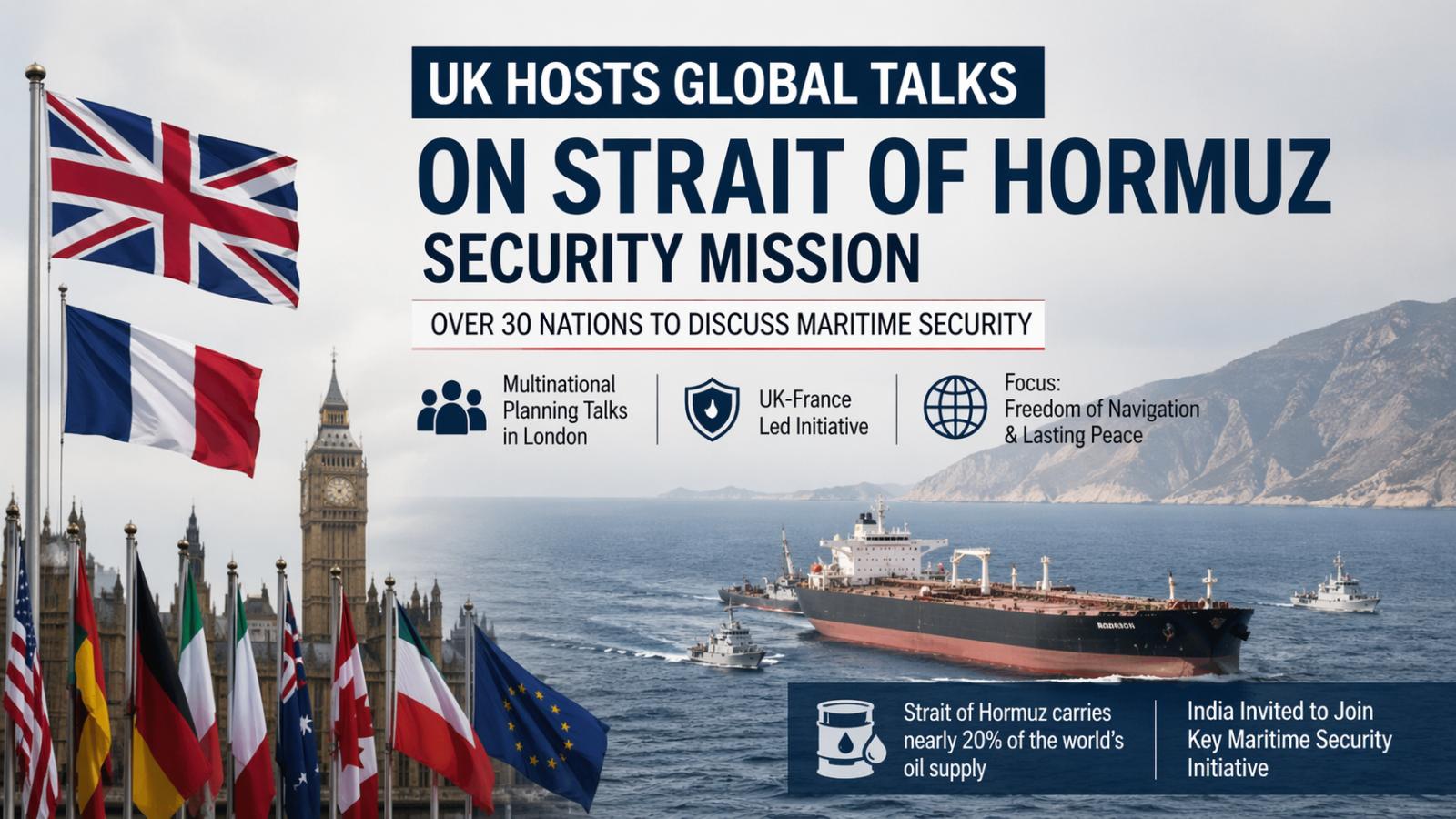
Britain is hosting senior military planners from more than 30 countries at the UK Permanent Joint Headquarters for high-level discussions on securing the Strait of Hormuz, a critical global oil transit route. The two-day meeting in northwest London, being held from April 22 to April 23, 2026, aims to advance a multinational maritime security initiative jointly led by the United Kingdom and France, following earlier consultations involving over 40 nations chaired by Keir Starmer and Emmanuel M
Britain is hosting senior military planners from more than 30 countries at the UK Permanent Joint Headquarters for high-level discussions on securing the Strait of Hormuz, a critical global oil transit route. The two-day meeting in northwest London, being held from April 22 to April 23, 2026, aims to advance a multinational maritime security initiative jointly led by the United Kingdom and France, following earlier consultations involving over 40 nations chaired by Keir Starmer and Emmanuel M
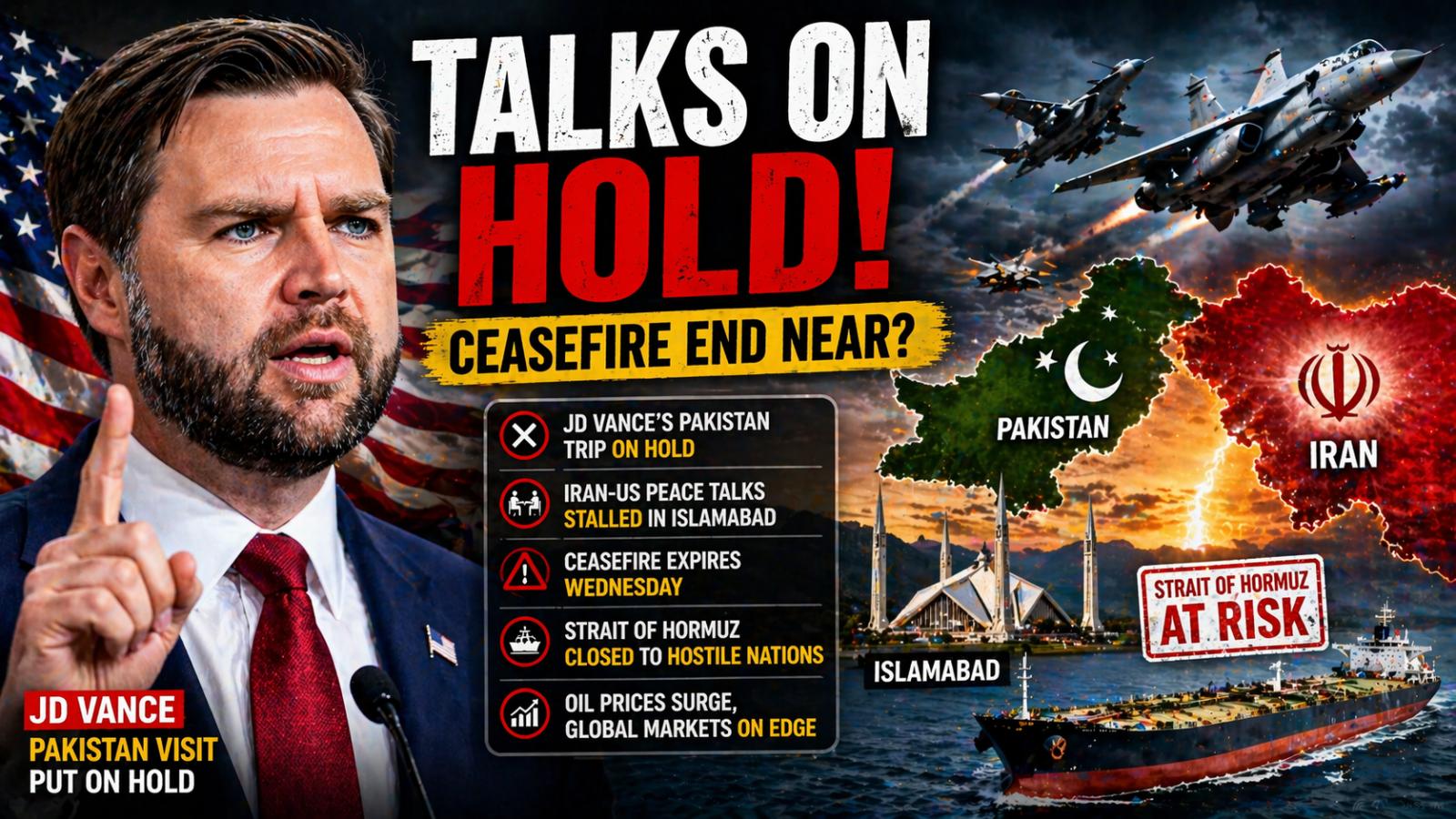
The US Iran war talks delay has added fresh uncertainty to an already volatile situation, as US Vice President JD Vance’s planned visit to Pakistan for peace negotiations has been put on hold. With the ceasefire deadline fast approaching, tensions are rising across the region.
What happened and why it matters
A planned diplomatic trip by JD Vance to Isl
The US Iran war talks delay has added fresh uncertainty to an already volatile situation, as US Vice President JD Vance’s planned visit to Pakistan for peace negotiations has been put on hold. With the ceasefire deadline fast approaching, tensions are rising across the region.
What happened and why it matters
A planned diplomatic trip by JD Vance to Isl
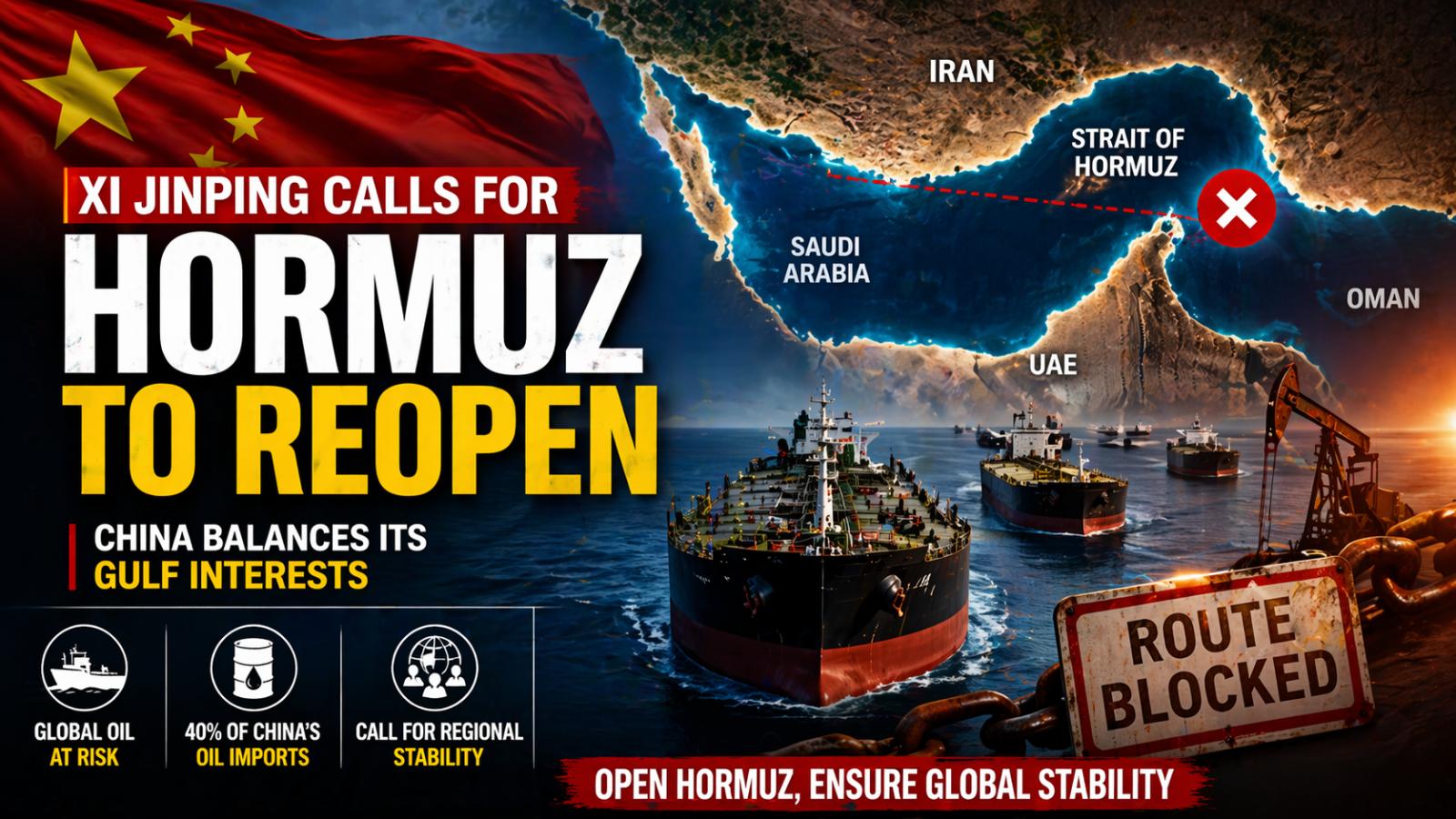
The Xi Jinping Hormuz statement has drawn global attention as China’s leader called for the reopening of the critical Strait of Hormuz. The move comes amid rising tensions in the Middle East and highlights China’s delicate balancing act between strategic alliances and economic interests.
What happened and why it matters
On Monday, April 20, 2026, Chin
The Xi Jinping Hormuz statement has drawn global attention as China’s leader called for the reopening of the critical Strait of Hormuz. The move comes amid rising tensions in the Middle East and highlights China’s delicate balancing act between strategic alliances and economic interests.
What happened and why it matters
On Monday, April 20, 2026, Chin
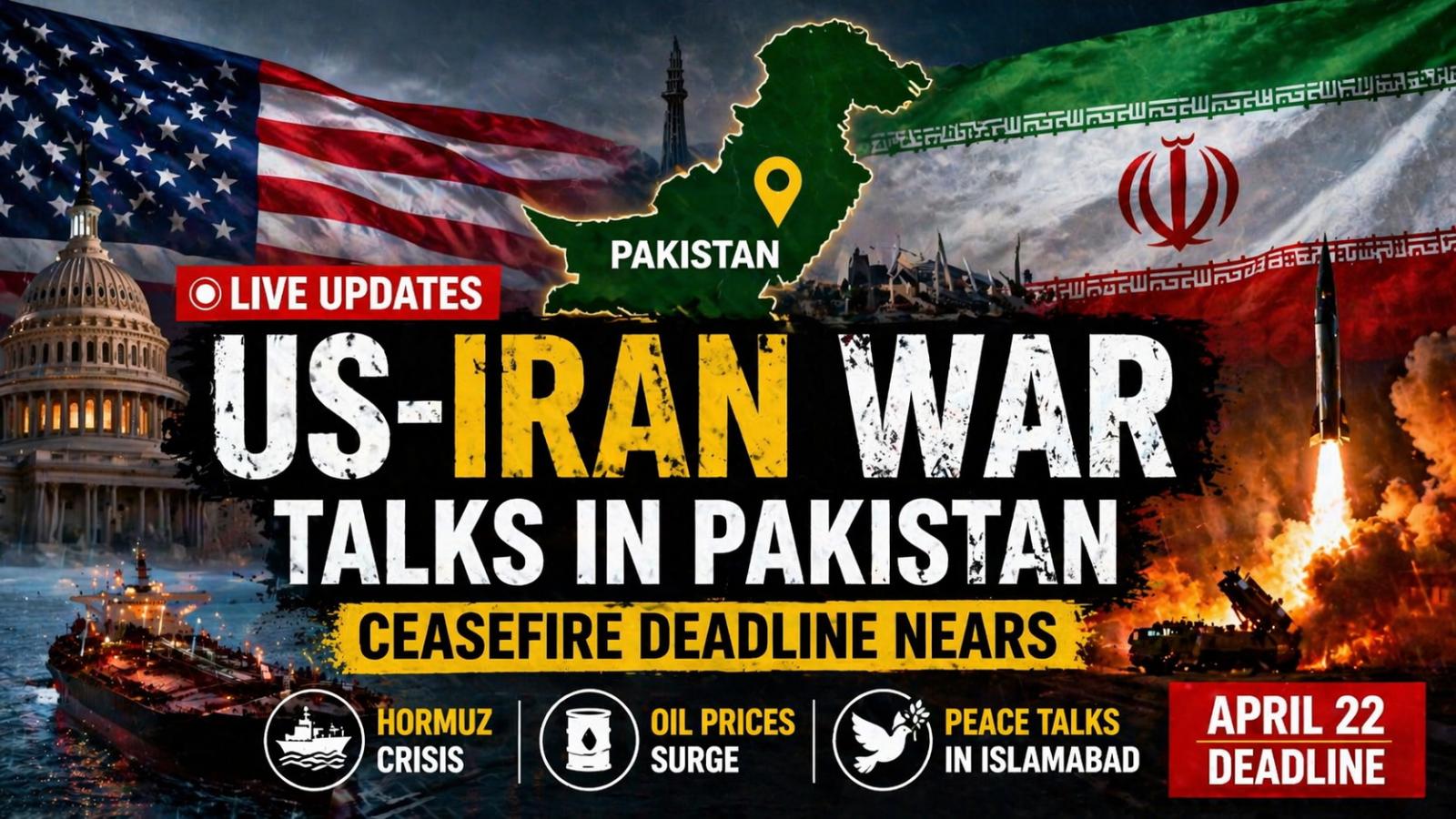
The US Iran war talks in Pakistan are drawing global attention as uncertainty continues over Tehran’s participation in upcoming peace negotiations. With the ceasefire deadline just days away, rising tensions are keeping the world on edge.
What happened and why it matters
On Monday, April 20, 2026, reports suggested that both the United States and Iran h
The US Iran war talks in Pakistan are drawing global attention as uncertainty continues over Tehran’s participation in upcoming peace negotiations. With the ceasefire deadline just days away, rising tensions are keeping the world on edge.
What happened and why it matters
On Monday, April 20, 2026, reports suggested that both the United States and Iran h
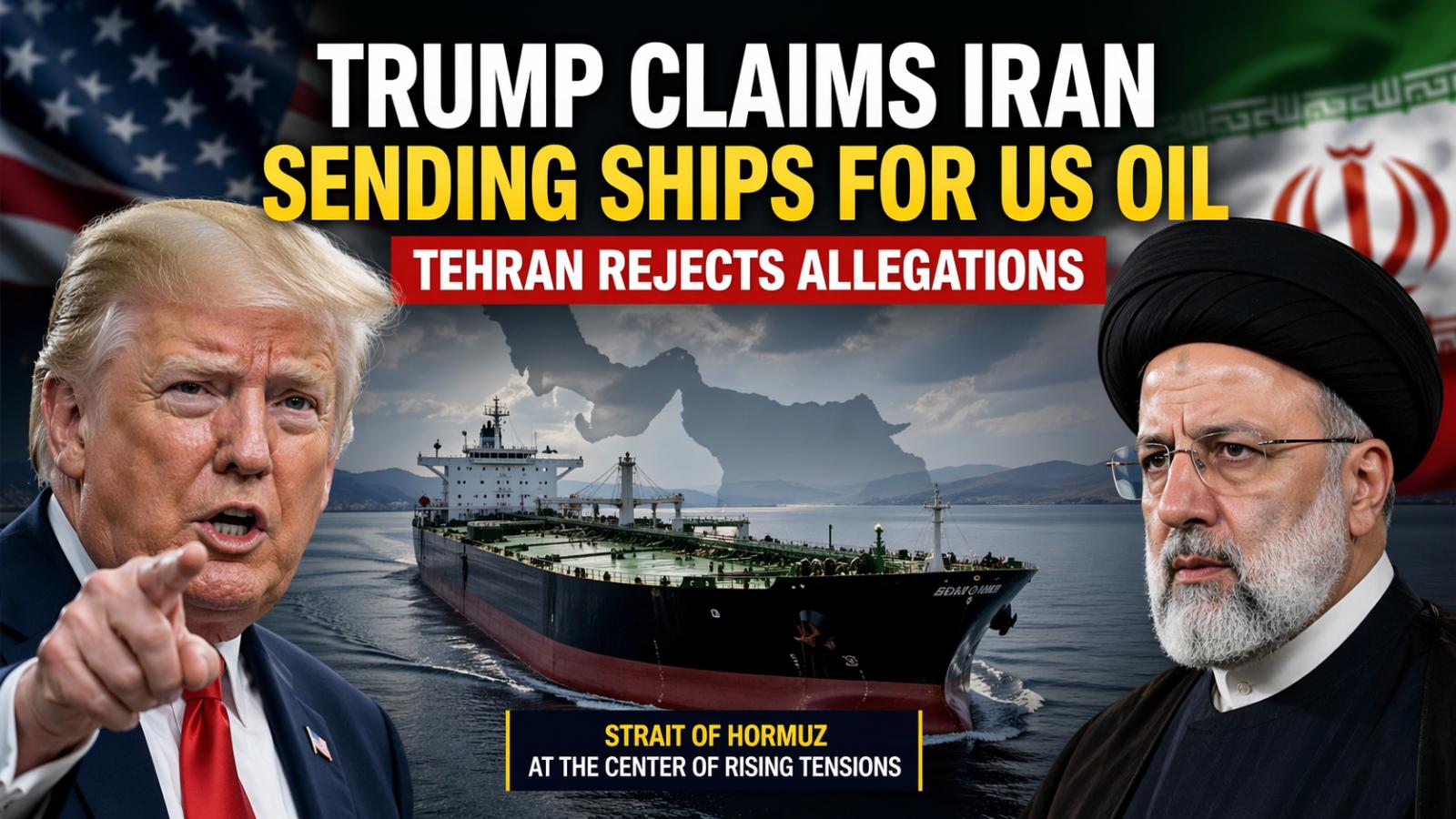
US President Donald Trump has claimed that Iran is sending ships to the United States to access its oil reserves, a statement that has drawn swift rejection from Tehran amid already heightened tensions in the Strait of Hormuz. Posting on Truth Social, Trump alleged that Iranian leadership was directing vessels toward states such as Texas, Louisiana, and Alaska to secure oil, though he did not provid
US President Donald Trump has claimed that Iran is sending ships to the United States to access its oil reserves, a statement that has drawn swift rejection from Tehran amid already heightened tensions in the Strait of Hormuz. Posting on Truth Social, Trump alleged that Iranian leadership was directing vessels toward states such as Texas, Louisiana, and Alaska to secure oil, though he did not provid
The US Iran peace talks Pakistan update is drawing global attention as Washington and Tehran prepare for a new round of negotiations. With the ceasefire nearing its deadline, the outcome of these talks could significantly impact global stability and energy markets.
What happened and why it matters
On Monday, April 20, 2026, both the United States and Iran signaled that they are preparing to send delegations to
The US Iran peace talks Pakistan update is drawing global attention as Washington and Tehran prepare for a new round of negotiations. With the ceasefire nearing its deadline, the outcome of these talks could significantly impact global stability and energy markets.
What happened and why it matters
On Monday, April 20, 2026, both the United States and Iran signaled that they are preparing to send delegations to
US Iran war ceasefire warning Trump signals rising tensions
The US Iran war ceasefire warning Trump has intensified global concerns as the fragile truce between Washington and Tehran nears its expiration. With tensions already high, US President Donald Trump has warned that military action could resume if a deal is not reached in time. The situation is being closely watched worldwide, as the outcome could significantly imp
US Iran war ceasefire warning Trump signals rising tensions
The US Iran war ceasefire warning Trump has intensified global concerns as the fragile truce between Washington and Tehran nears its expiration. With tensions already high, US President Donald Trump has warned that military action could resume if a deal is not reached in time. The situation is being closely watched worldwide, as the outcome could significantly imp
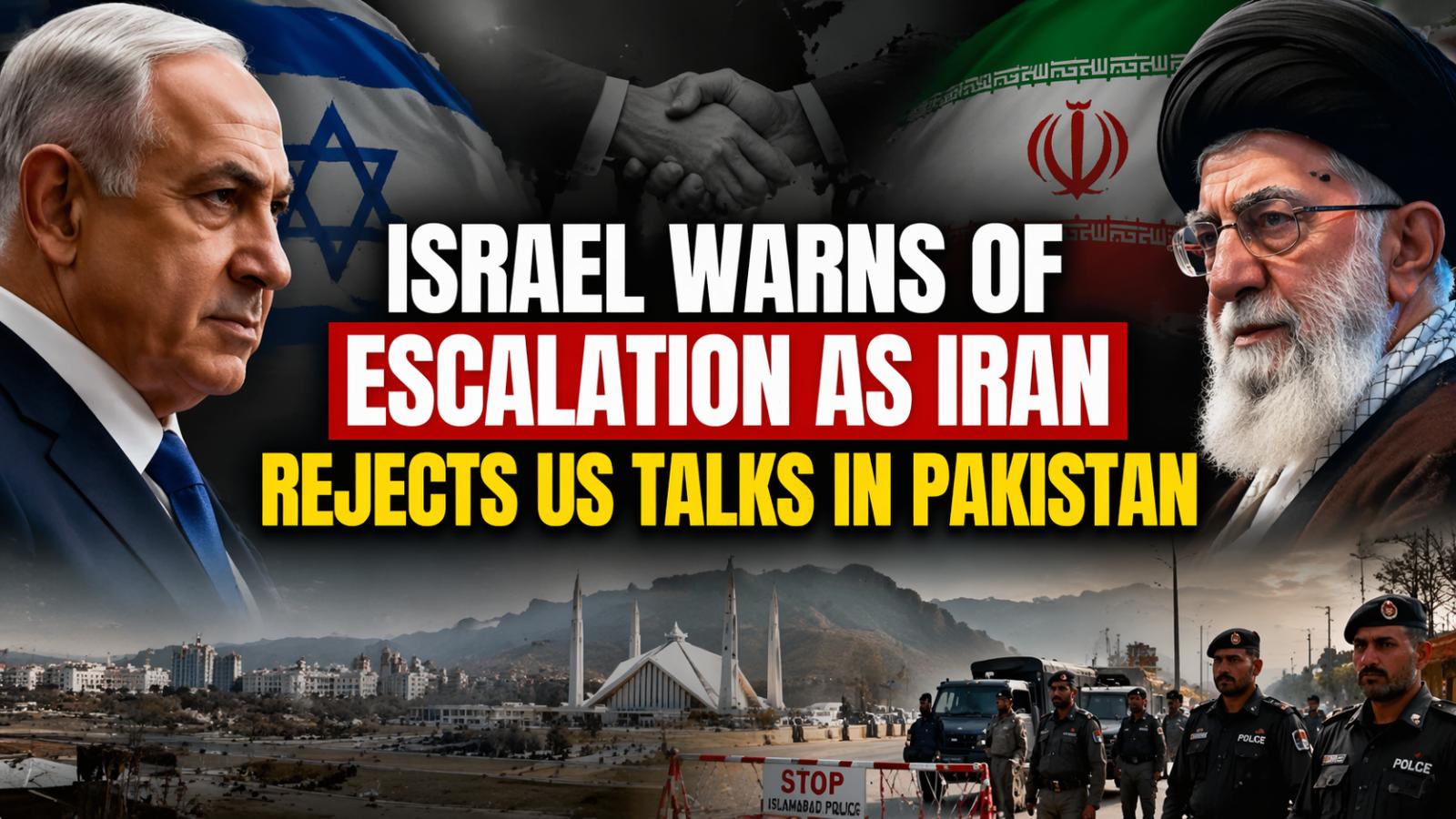
Israeli Prime Minister Benjamin Netanyahu has warned that tensions with Iran could escalate rapidly, underscoring the fragile state of the ongoing geopolitical situation. Speaking alongside Javier Milei, Netanyahu said the conflict remains unpredictable and developments could unfold at any moment. He empha
Israeli Prime Minister Benjamin Netanyahu has warned that tensions with Iran could escalate rapidly, underscoring the fragile state of the ongoing geopolitical situation. Speaking alongside Javier Milei, Netanyahu said the conflict remains unpredictable and developments could unfold at any moment. He empha
Strait of Hormuz crisis intensifies amid shipping threats and stalled diplomacy
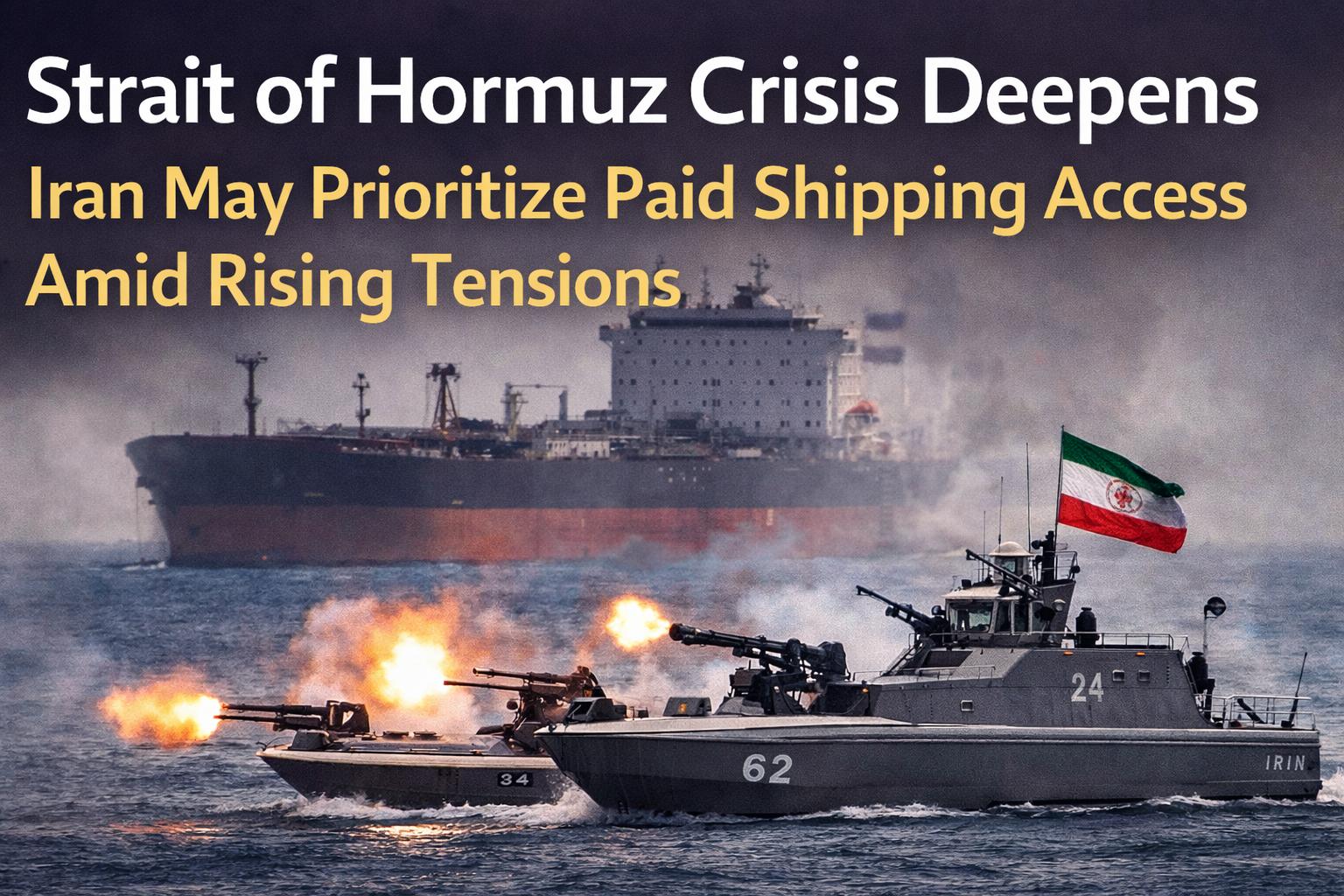
The Strait of Hormuz crisis has escalated sharply as Iran appears to tighten its control over the strategic waterway, raising concerns about global oil supply and maritime security. Reports suggest Tehran may prioritize passage for select vessels, while tensions with the United States continue to grow.The
Strait of Hormuz crisis intensifies amid shipping threats and stalled diplomacy
The Strait of Hormuz crisis has escalated sharply as Iran appears to tighten its control over the strategic waterway, raising concerns about global oil supply and maritime security. Reports suggest Tehran may prioritize passage for select vessels, while tensions with the United States continue to grow.The
Iran tanker attack Strait of Hormuz signals renewed crisis in global shipping
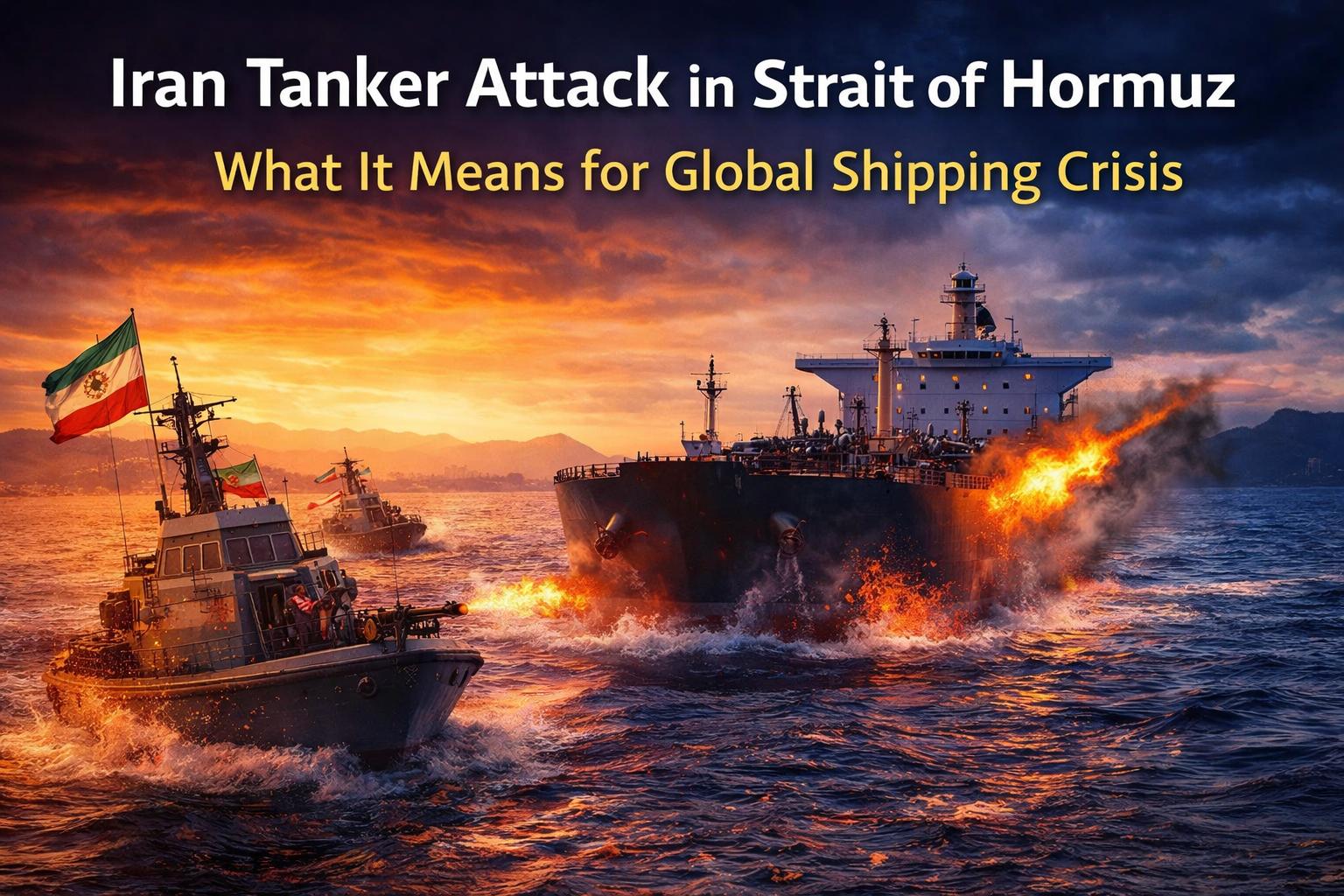
Tensions in the Middle East escalated sharply after an Iran tanker attack in the Strait of Hormuz, raising fresh concerns about global oil supply and maritime safety. The incident comes as Iran reimposed restrictions on one of the world’s most critical shipping routes, just a day after signals of reope
Iran tanker attack Strait of Hormuz signals renewed crisis in global shipping
Tensions in the Middle East escalated sharply after an Iran tanker attack in the Strait of Hormuz, raising fresh concerns about global oil supply and maritime safety. The incident comes as Iran reimposed restrictions on one of the world’s most critical shipping routes, just a day after signals of reope
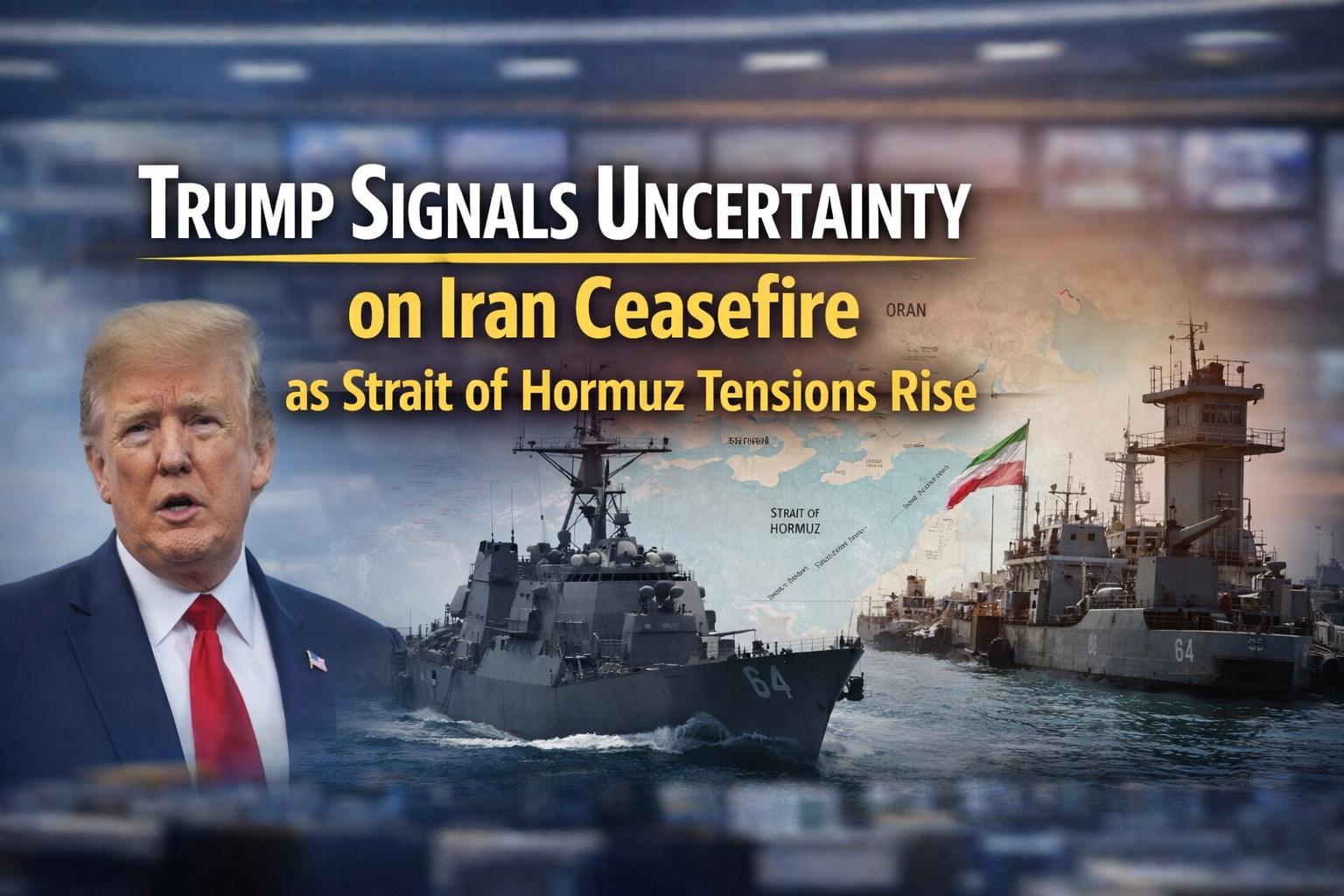
Donald Trump indicated that the United States may not extend its ceasefire with Iran, as tensions continue to rise over maritime security and regional control. Speaking to reporters, he said the naval blockade of Iranian ports would remain in place regardless of whether the ceasefire expires, signaling a f
Donald Trump indicated that the United States may not extend its ceasefire with Iran, as tensions continue to rise over maritime security and regional control. Speaking to reporters, he said the naval blockade of Iranian ports would remain in place regardless of whether the ceasefire expires, signaling a f
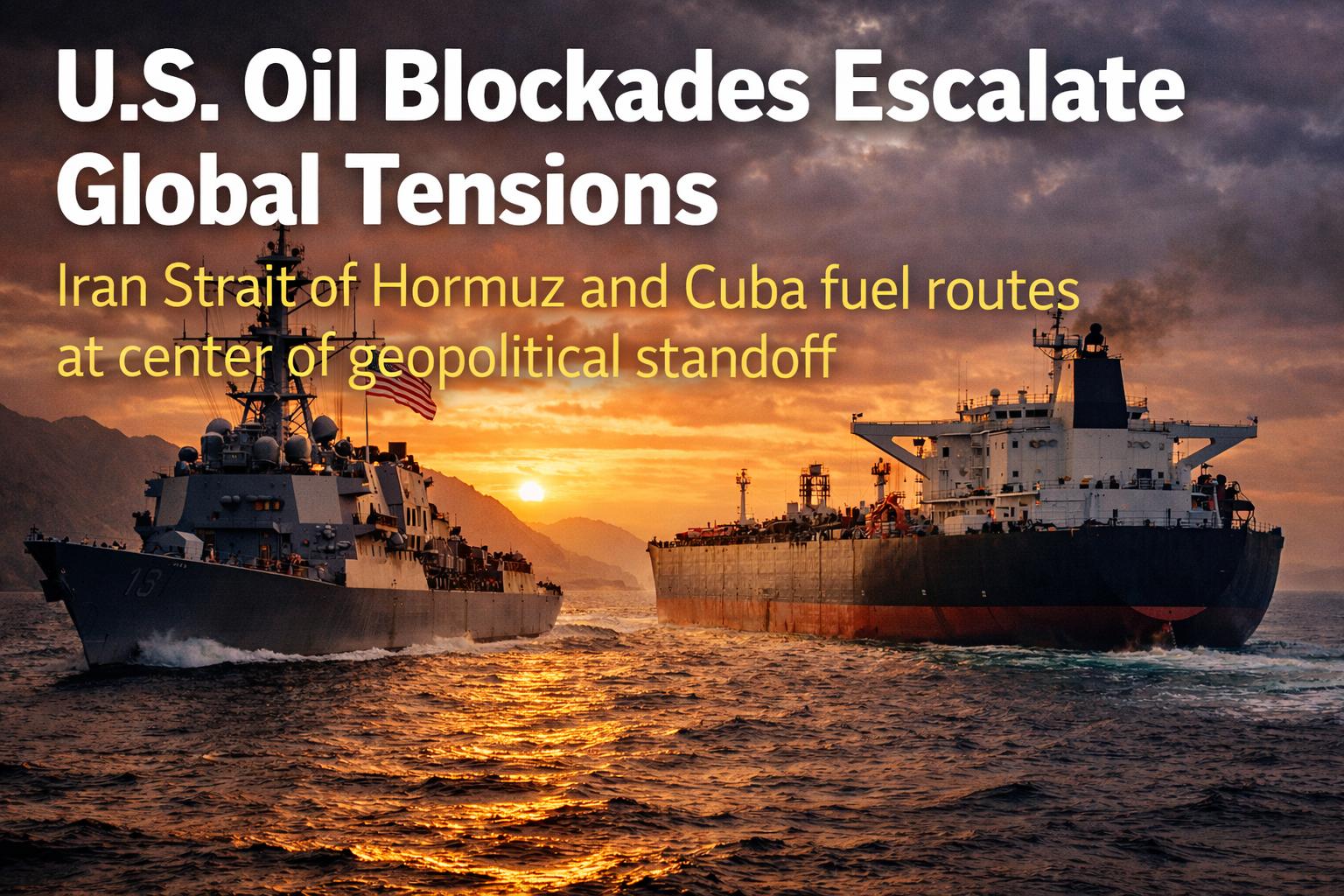
The United States has intensified its use of energy shipments as a foreign policy tool, launching parallel efforts aimed at Iran in the Middle East and Cuba in the Caribbean. Under President Donald Trump, a naval blockade targeting Iranian vessels in and around the Strait of Hormuz began on Monday, marking a significant escalation despite a ceasefire agreement reached on April 7 between regional actors.
At the same time, Washington has imposed a de facto fuel blockade on Cuba, warn
The United States has intensified its use of energy shipments as a foreign policy tool, launching parallel efforts aimed at Iran in the Middle East and Cuba in the Caribbean. Under President Donald Trump, a naval blockade targeting Iranian vessels in and around the Strait of Hormuz began on Monday, marking a significant escalation despite a ceasefire agreement reached on April 7 between regional actors.
At the same time, Washington has imposed a de facto fuel blockade on Cuba, warn
U.S. President Donald Trump said the United States will continue its naval blockade targeting Iran, even after the Strait of Hormuz was reopened for commercial passage. The statement underscores that the broader conflict involving the United States, Iran, and Israel remains unresolved.
In a public message, Trump acknowledged Iran’s move to reopen the strategic waterway, a critical route
U.S. President Donald Trump said the United States will continue its naval blockade targeting Iran, even after the Strait of Hormuz was reopened for commercial passage. The statement underscores that the broader conflict involving the United States, Iran, and Israel remains unresolved.
In a public message, Trump acknowledged Iran’s move to reopen the strategic waterway, a critical route
The Strait of Hormuz has reopened to commercial maritime traffic following a cease-fire agreement in Lebanon, according to Seyed Abbas Araghchi, who spoke on Friday. The senior Iranian official stated that the strategically critical waterway is now “completely open” for all commercial vessels, signaling a potential easing of tensions that had disrupted global shipping flows.
Despite the
The Strait of Hormuz has reopened to commercial maritime traffic following a cease-fire agreement in Lebanon, according to Seyed Abbas Araghchi, who spoke on Friday. The senior Iranian official stated that the strategically critical waterway is now “completely open” for all commercial vessels, signaling a potential easing of tensions that had disrupted global shipping flows.
Despite the