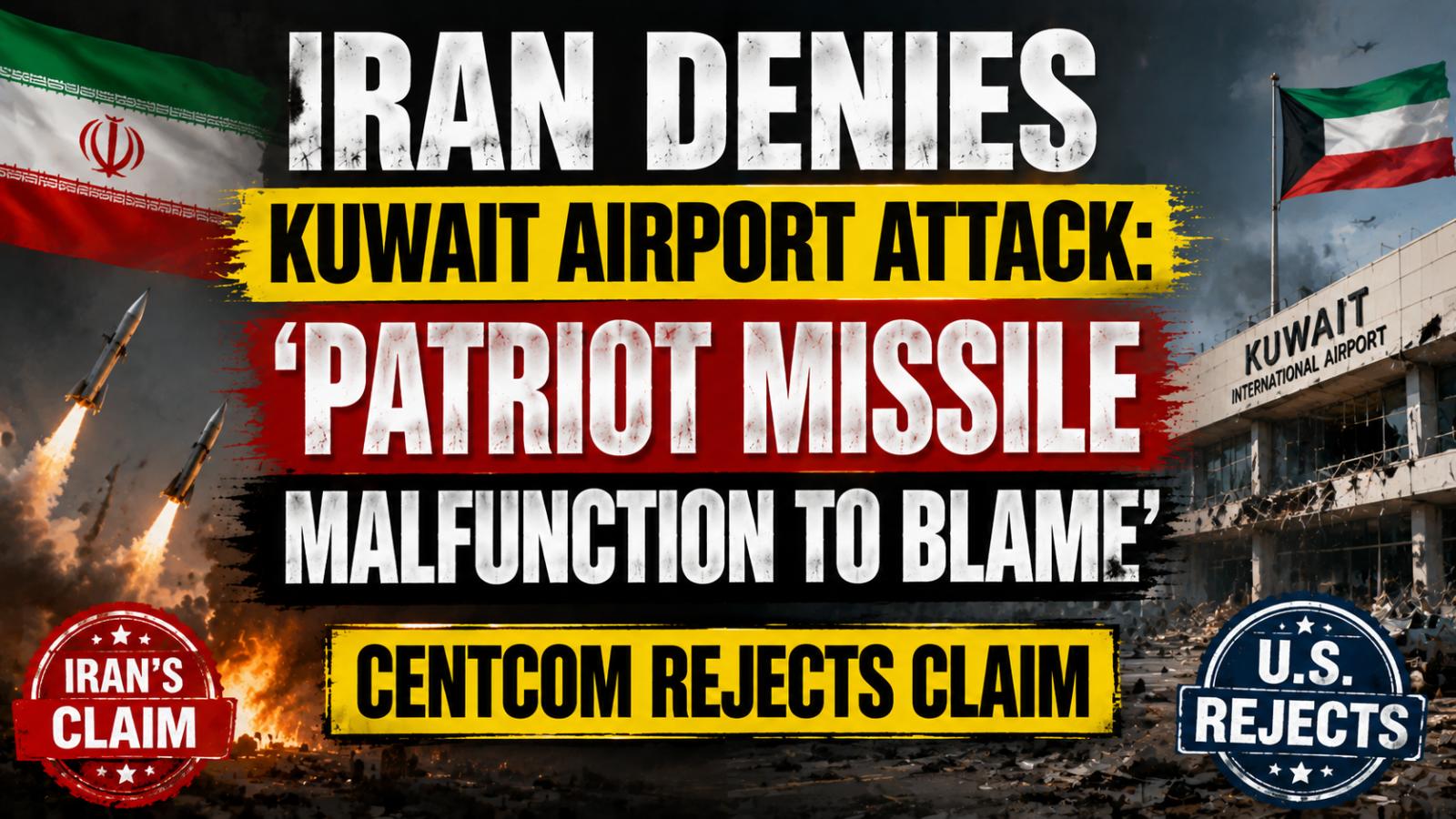
Iran’s Islamic Revolutionary Guard Corps (IRGC) has categorically denied involvement in the recent attack on Kuwait International Airport. The IRGC stated that the damage resulted from a malfunction in the US-made Patriot missile defence system, which failed to intercept incoming projectiles. According to a spokesperson, the Aerospace Force did not target the civilian airport, and the terminal was struck accidentally by malfunctioning defensive systems. The incident caused extensive damage to Passenger Terminal 1 (T1), killed one individual—a citizen of India—and injured 63 others. Kuwaiti authorities immediately closed national airspace, suspended commercial operations, and diverted incoming flights.
Regional Criticism and Concerns
Former Qatari Prime Minister Sheikh Hamad bin Jassim bin Jaber Al Thani strongly criticized Iran’s military activities against Gulf countries, labeling them as "astonishing" and "unjustifiable." While emphasizing Qatar’s intent to maintain constructive relations with Tehran, he stressed that Gulf states should adopt a coordinated stance to ensure regional stability. Al Thani questioned the rationale behind recent attacks on Bahrain and Kuwait and highlighted the importance of unified diplomatic and security measures in the face of escalating threats.
US Response and CENTCOM Statement
The United States Central Command (CENTCOM) rejected Iran’s claim, asserting that Tehran deliberately targeted Kuwait’s civilian airport. Officials described the attack as “unjustified” and stressed the potential threat to civilian safety in the region. CENTCOM continues to monitor developments and coordinate with Gulf partners to prevent further escalation. The conflicting accounts between Tehran and Washington underline growing tensions in the Middle East, highlighting the need for diplomatic engagement to avoid a wider regional conflict.
Strategic and Political Implications
The dispute underscores the fragility of security in the Gulf amid Iran’s military expansion and the broader geopolitical rivalries in the region. The use of defensive missile systems such as the Patriot has drawn scrutiny for its reliability and effectiveness in high-tension scenarios. Analysts note that the incident may influence future negotiations between Gulf countries and Iran and could prompt stronger regional defense cooperation. Both civilian safety and military escalation remain pressing concerns as authorities assess the implications of the incident.
International Repercussions
The attack has drawn global attention to the volatility of the Gulf region, with multiple countries urging restraint. International observers have called for transparent investigations into the incident and emphasized the importance of maintaining airspace security to prevent further civilian casualties. The events highlight the intersection of military technology, regional politics, and civilian safety, reinforcing the need for carefully coordinated responses to avoid unintended consequences in densely populated areas.