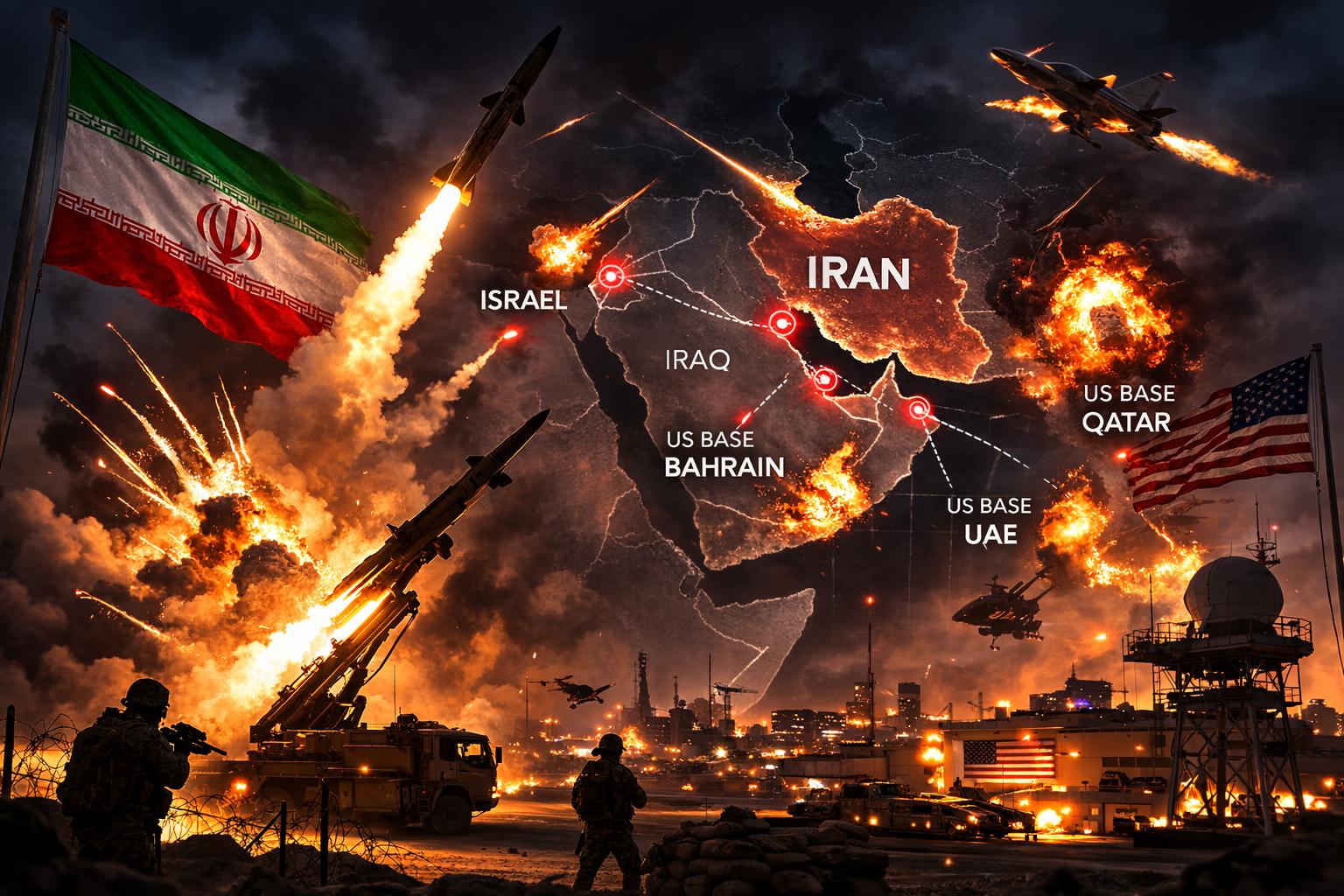
In response, Iran’s Islamic Revolutionary Guard Corps announced the start of Operation True Promise 4, targeting Israeli positions and several US military installations across West Asia. Iranian state media said the strikes included attacks directed at American bases in Bahrain, Qatar, the United Arab Emirates, Kuwait and Iraq, as well as strategic targets linked to Israel. Officials described the operation as a direct response intended to demonstrate that attacks on Iranian soil would not go unanswered.
The Revolutionary Guard stated that the operation followed a long-standing naming pattern used to signal that Iranian warnings of retaliation are meant to be carried out. According to the statement, the term “True Promise” reflects the ideological position of the Islamic Republic that it will respond militarily when its territory or interests are targeted, while the number attached to the operation indicates the sequence in an ongoing cycle of escalation.
Iran previously used the same designation in earlier confrontations. The first operation in April 2024 involved hundreds of drones and missiles launched toward Israel after the strike on Iran’s diplomatic compound in Damascus. A second operation later that year included a large number of ballistic missiles following the deaths of senior leaders allied with Tehran. A third phase in 2025 involved the use of electronic warfare during a short but intense conflict after joint US-Israeli strikes.
The latest operation marks the broadest regional response so far, with attacks extending beyond Israel to US military positions across the Gulf. Analysts say the move signals a shift toward direct deterrence, with Iran increasingly choosing open retaliation rather than relying only on allied groups in the region. The escalation has raised concerns of a wider conflict as tensions continue to rise across the Middle East.