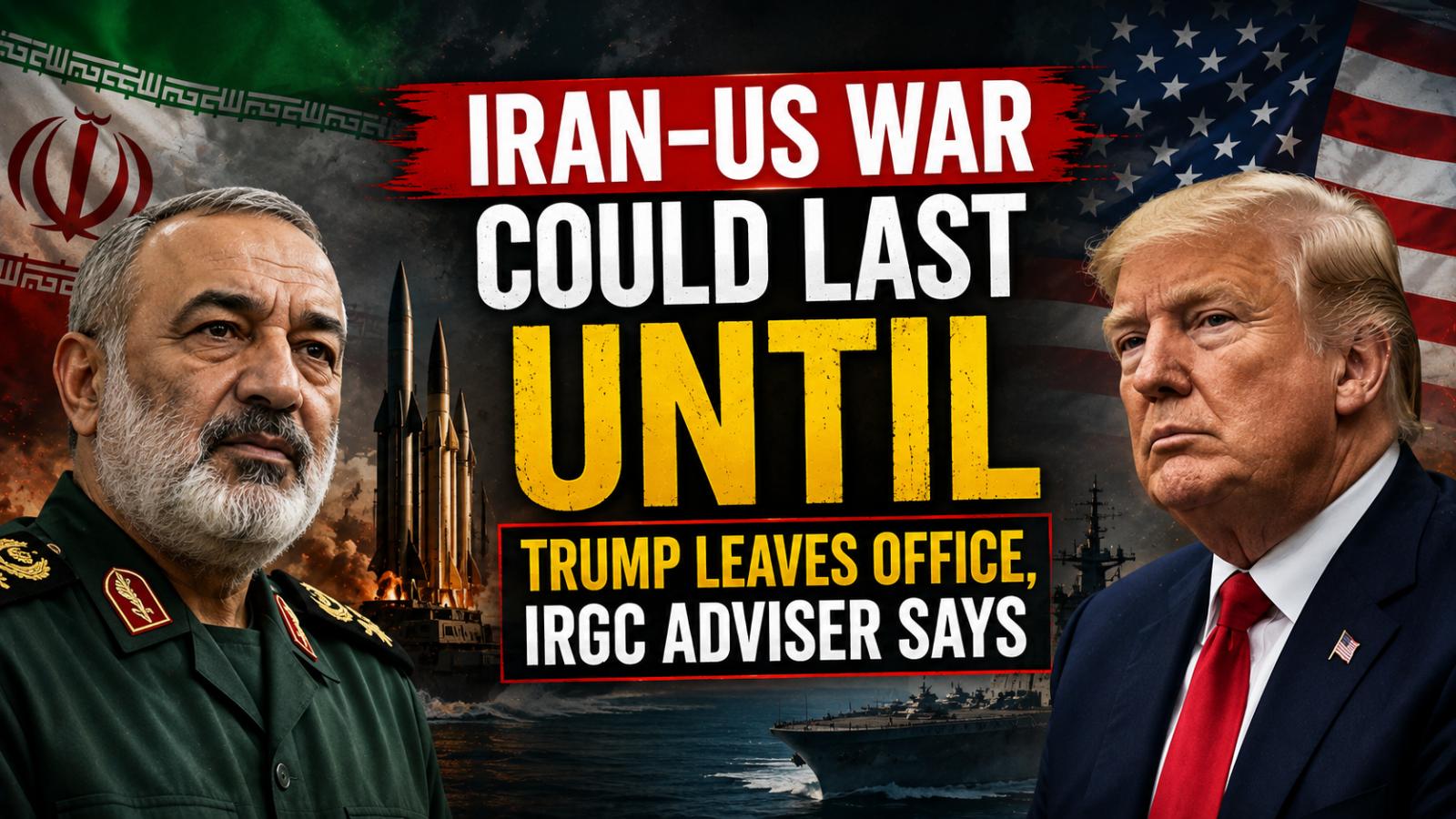
A senior adviser to Iran's Islamic Revolutionary Guard Corps has suggested Tehran could prolong the Iran-US war until President Donald Trump leaves office, framing a lengthy conflict as a strategy to impose costs on Washington and strengthen Iranian deterrence. Mohammad Reza Naqdi made the remarks during an interview with PBS.
IRGC adviser outlines war attrition strategy
Naqdi, a senior adviser to the IRGC commander, said Iran's central objective should be establishing enough deterrence to prevent its adversaries from launching future attacks. One option, he argued, would be to extend the conflict until the next US presidential term and demonstrate the long-term cost of fighting Iran.
Naqdi previously served as the IRGC's coordinating deputy between 2019 and 2025. Although his current advisory position carries less direct command authority, his comments provide insight into arguments circulating among senior figures within Iran's military establishment.
Asked whether Tehran believed it was winning, Naqdi expressed confidence in Iran's position. He accused Washington of conducting what he described as a war without a consistent strategy, pointing to shifting US objectives involving Kharg Island and the Strait of Hormuz.
His comments represent the position of a senior IRGC adviser, however, and should not automatically be interpreted as an officially announced Iranian government strategy.
Iran deterrence shaped by months of conflict
Naqdi argued that a prolonged confrontation has allowed Iranian forces to gain practical experience fighting the United States. He claimed Iran had learned important military lessons during five months of conflict and said American forces appeared weaker than Tehran had previously believed.
The comments indicate that Iranian officials may view time itself as part of their strategy. Rather than relying solely on battlefield victories, an attrition approach would seek to increase the military, political and economic costs of continuing the conflict.
Such a strategy also carries enormous risks for Iran. A longer war could deepen economic damage, increase infrastructure losses and expose the country to sustained US military pressure. Naqdi's remarks therefore describe a possible strategic calculation rather than proof that Iran can indefinitely sustain the conflict.
Iran missiles and Strait of Hormuz remain central
The IRGC adviser also addressed Iranian military operations around the Strait of Hormuz. He suggested vessels travelling through areas outside Tehran's control could be suspected of carrying supplies for Iran's adversaries.
On Iran's missile inventory, Naqdi claimed domestic production exceeds the number of missiles being used each day. That assertion could not be independently verified from the information publicly available.
He also warned that Iran would remain capable of targeting US economic interests even if its conventional missile stocks were eventually depleted. His statements underline the broader risks surrounding the Strait of Hormuz, a strategically important route for global energy shipments.
Trump Iran pressure focuses on economic strain
Naqdi's comments followed Trump's claims that Iran is facing severe economic pressure. The US president argued that high inflation, currency weakness and difficulties funding military personnel had made Tehran's position unsustainable.
Trump presented continued economic pressure as one possible route toward ending the conflict, suggesting Washington could maintain its current approach and allow Iran's economic difficulties to intensify.
Naqdi's emphasis on prolonging the war appears to directly challenge that argument. While Washington is betting that sustained pressure will weaken Tehran's ability to continue fighting, the Iranian adviser's comments suggest at least some senior figures believe Iran can instead outlast the political timetable of the Trump administration.
Neither side's claims about the other's ability to sustain a prolonged conflict should be treated as independently established fact. The competing statements are also part of a wider information battle designed to project endurance and undermine the opponent's confidence.
The bigger question is therefore not simply which side can continue military operations, but how long each government can absorb the economic, political and strategic costs of an extended conflict.