




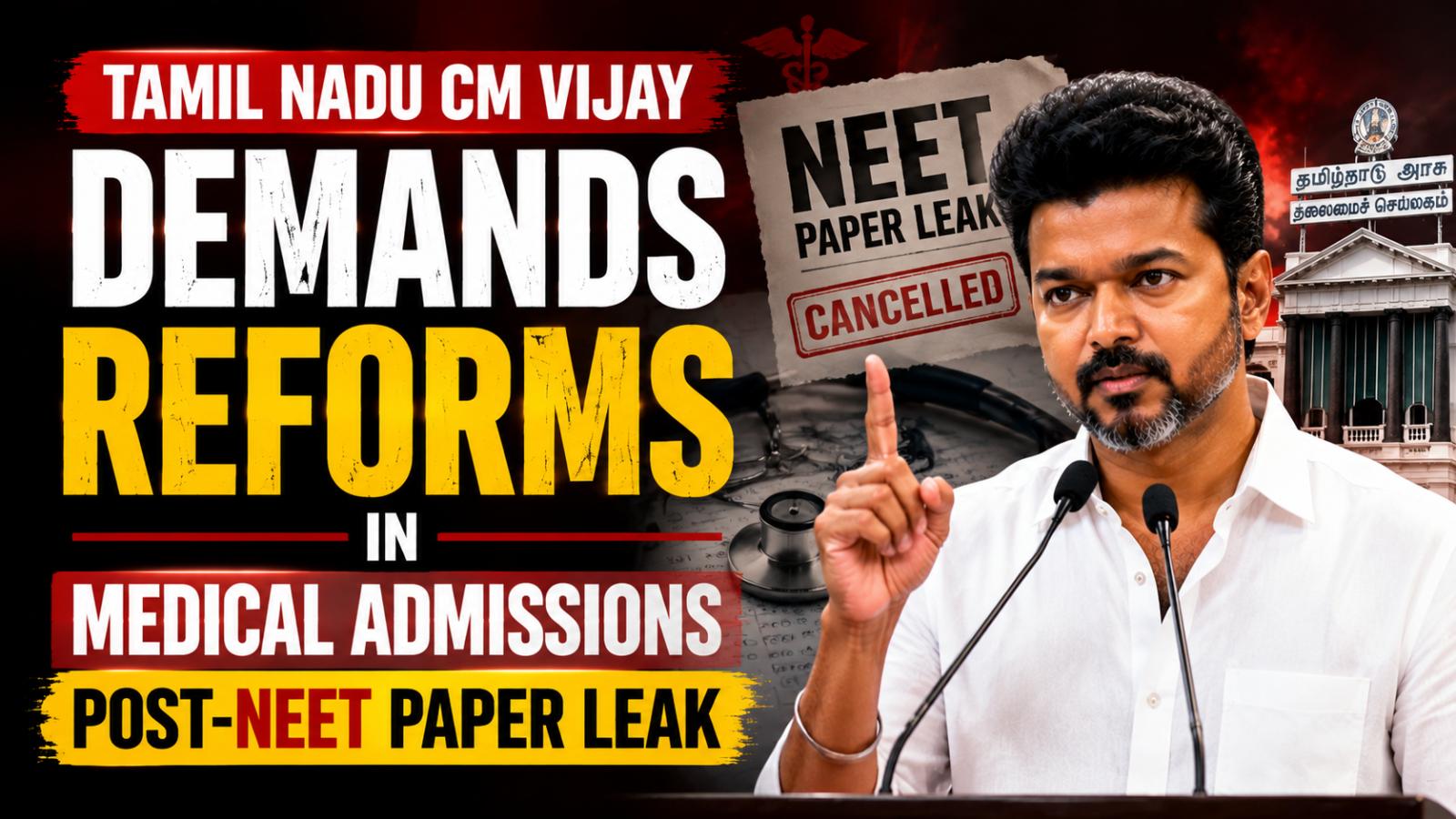
Tamil Nadu CM Vijay Demands Reforms in Medical Admissions Post-NEET Paper Leak
Tamil Nadu Chief Minister C Joseph Vijay has once again demanded the abolition of NEET-based medical admissions, following the controversy surrounding the NEET-UG 2026 paper leak. In a statement posted on X, CM Vijay called for a shift to admissions based on Class 12 marks, emphasizing that the recent paper leak incident exposed NEET’s “structural flaws.” He urged the Union government to allow states to handle medical seat allocations under the state quota using Class 12 scores, an appr
Tamil Nadu CM Vijay Demands Reforms in Medical Admissions Post-NEET Paper Leak
Tamil Nadu Chief Minister C Joseph Vijay has once again demanded the abolition of NEET-based medical admissions, following the controversy surrounding the NEET-UG 2026 paper leak. In a statement posted on X, CM Vijay called for a shift to admissions based on Class 12 marks, emphasizing that the recent paper leak incident exposed NEET’s “structural flaws.” He urged the Union government to allow states to handle medical seat allocations under the state quota using Class 12 scores, an appr
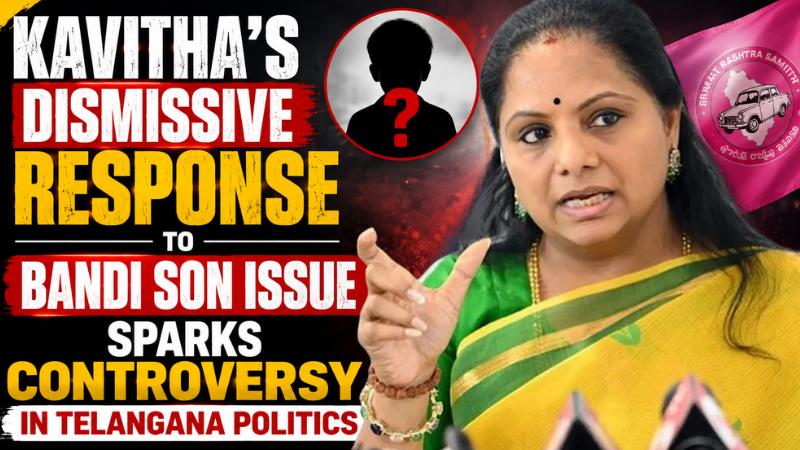
Kavitha's Dismissive Response to Bandi Son Issue Sparks Controversy in Telangana Politics
Kalvakuntla Kavitha, a prominent figure in Telangana politics, has been working to solidify her political identity, recently launching the Telangana Rakshana Sena. However, her recent response to a sensitive issue involving Bandi Bhageerath, who has been named in a POCSO case and is reportedly absconding, has sparked controversy. When asked to comment on the matter, Kavitha's reaction was unexpected. She smiled and laughed at the question, suggesting that more focus should be placed
Kavitha's Dismissive Response to Bandi Son Issue Sparks Controversy in Telangana Politics
Kalvakuntla Kavitha, a prominent figure in Telangana politics, has been working to solidify her political identity, recently launching the Telangana Rakshana Sena. However, her recent response to a sensitive issue involving Bandi Bhageerath, who has been named in a POCSO case and is reportedly absconding, has sparked controversy. When asked to comment on the matter, Kavitha's reaction was unexpected. She smiled and laughed at the question, suggesting that more focus should be placed
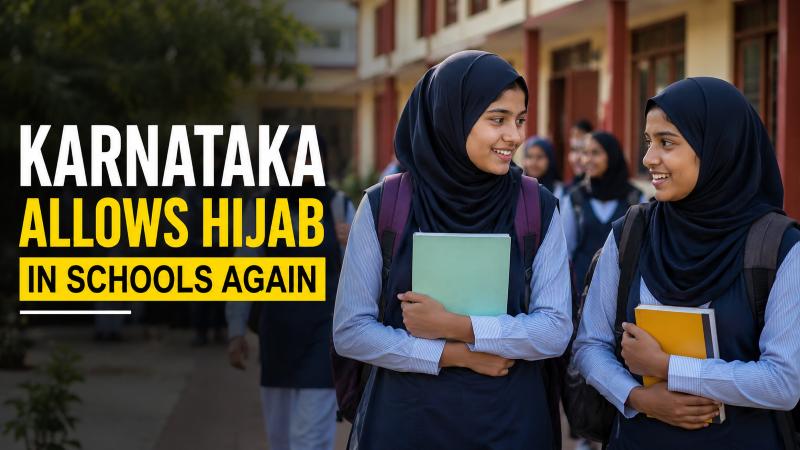
Karnataka Removes Hijab Ban In Schools, Colleges
On Thursday, May 14, 2026, The Karnataka government has officially withdrawn the controversial 2022 order linked to restrictions on wearing hijab in educational institutions, allowing students to wear headscarves again in schools and colleges across the state. The latest decision has reopened nationwide discussions around religious freedom, dress code policies, student rights, and education politics in India. The hijab issue first became a major national controversy in early 2022 af
Karnataka Removes Hijab Ban In Schools, Colleges
On Thursday, May 14, 2026, The Karnataka government has officially withdrawn the controversial 2022 order linked to restrictions on wearing hijab in educational institutions, allowing students to wear headscarves again in schools and colleges across the state. The latest decision has reopened nationwide discussions around religious freedom, dress code policies, student rights, and education politics in India. The hijab issue first became a major national controversy in early 2022 af
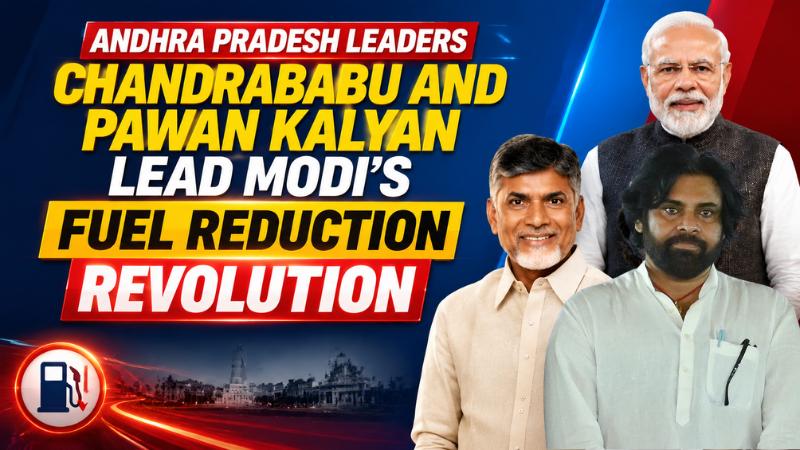
Andhra Pradesh Leaders Chandrababu and Pawan Kalyan Lead Modi's Fuel Reduction Revolution
The government of Andhra Pradesh is aligning itself closely with the National Democratic Alliance (NDA) government at the centre, primarily driven by the strong support of leaders like Chandrababu Naidu and Pawan Kalyan for Prime Minister Narendra Modi. Recent political developments suggest that Andhra Pradesh is actively embracing Modi’s initiative aimed at reducing fuel consumption and promoting eco-friendly practices. In a significant move that echoes the Prime Minister's earli
Andhra Pradesh Leaders Chandrababu and Pawan Kalyan Lead Modi's Fuel Reduction Revolution
The government of Andhra Pradesh is aligning itself closely with the National Democratic Alliance (NDA) government at the centre, primarily driven by the strong support of leaders like Chandrababu Naidu and Pawan Kalyan for Prime Minister Narendra Modi. Recent political developments suggest that Andhra Pradesh is actively embracing Modi’s initiative aimed at reducing fuel consumption and promoting eco-friendly practices. In a significant move that echoes the Prime Minister's earli
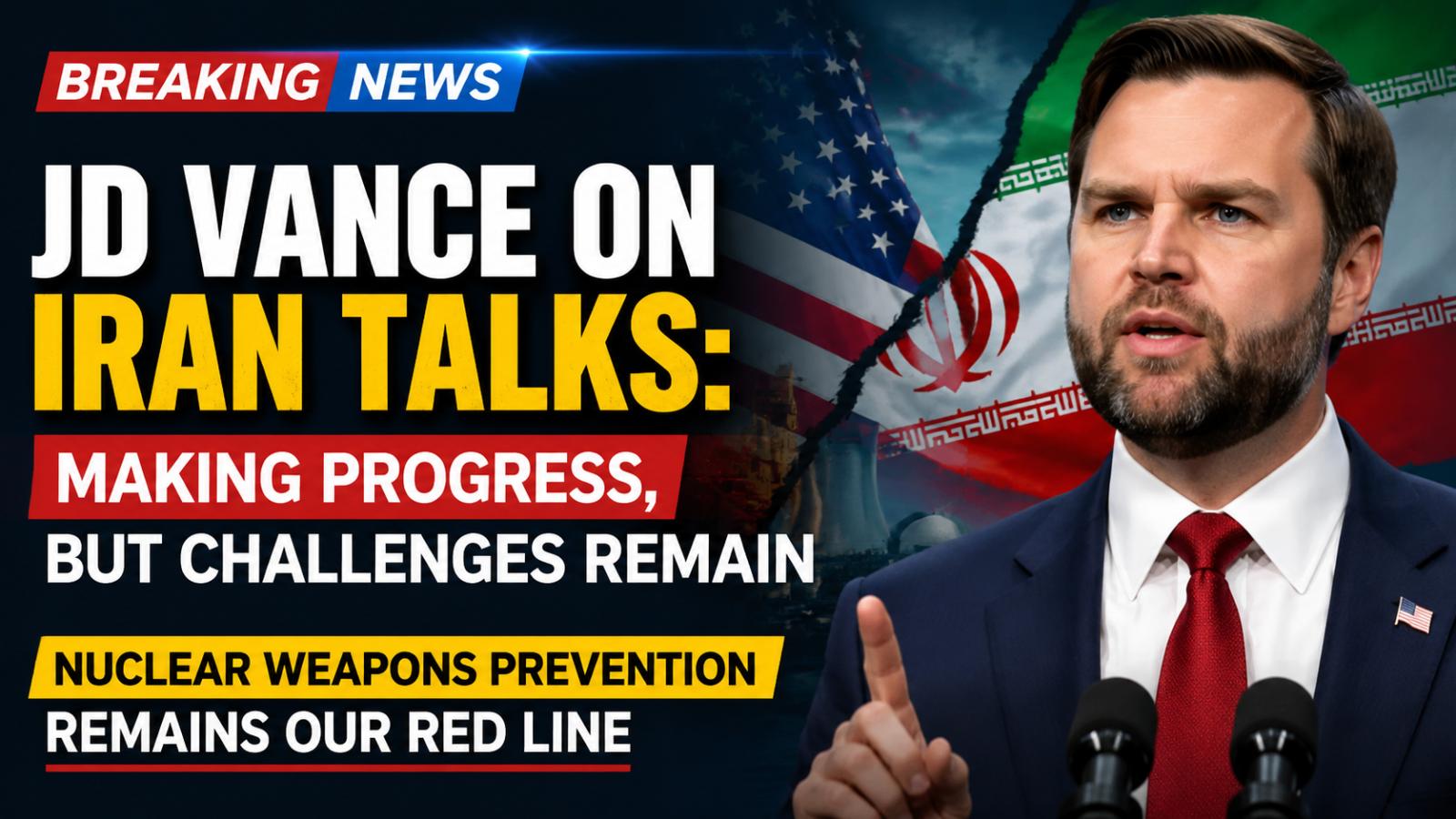
US Vice President JD Vance updates on Iran negotiations and challenges
On May 13, US Vice President JD Vance opened up about the ongoing negotiations with Iran and the hurdles the US has faced as these talks progress. While the US continues its diplomatic outreach to Tehran, Vance acknowledged the growing frustration due to unsatisfactory responses from the Iranian side. This has raised questions about whether a comprehensive deal is truly within reach. Diplomacy Amid Rising Tensions In a recent press briefing, Vance shed l
US Vice President JD Vance updates on Iran negotiations and challenges
On May 13, US Vice President JD Vance opened up about the ongoing negotiations with Iran and the hurdles the US has faced as these talks progress. While the US continues its diplomatic outreach to Tehran, Vance acknowledged the growing frustration due to unsatisfactory responses from the Iranian side. This has raised questions about whether a comprehensive deal is truly within reach. Diplomacy Amid Rising Tensions In a recent press briefing, Vance shed l
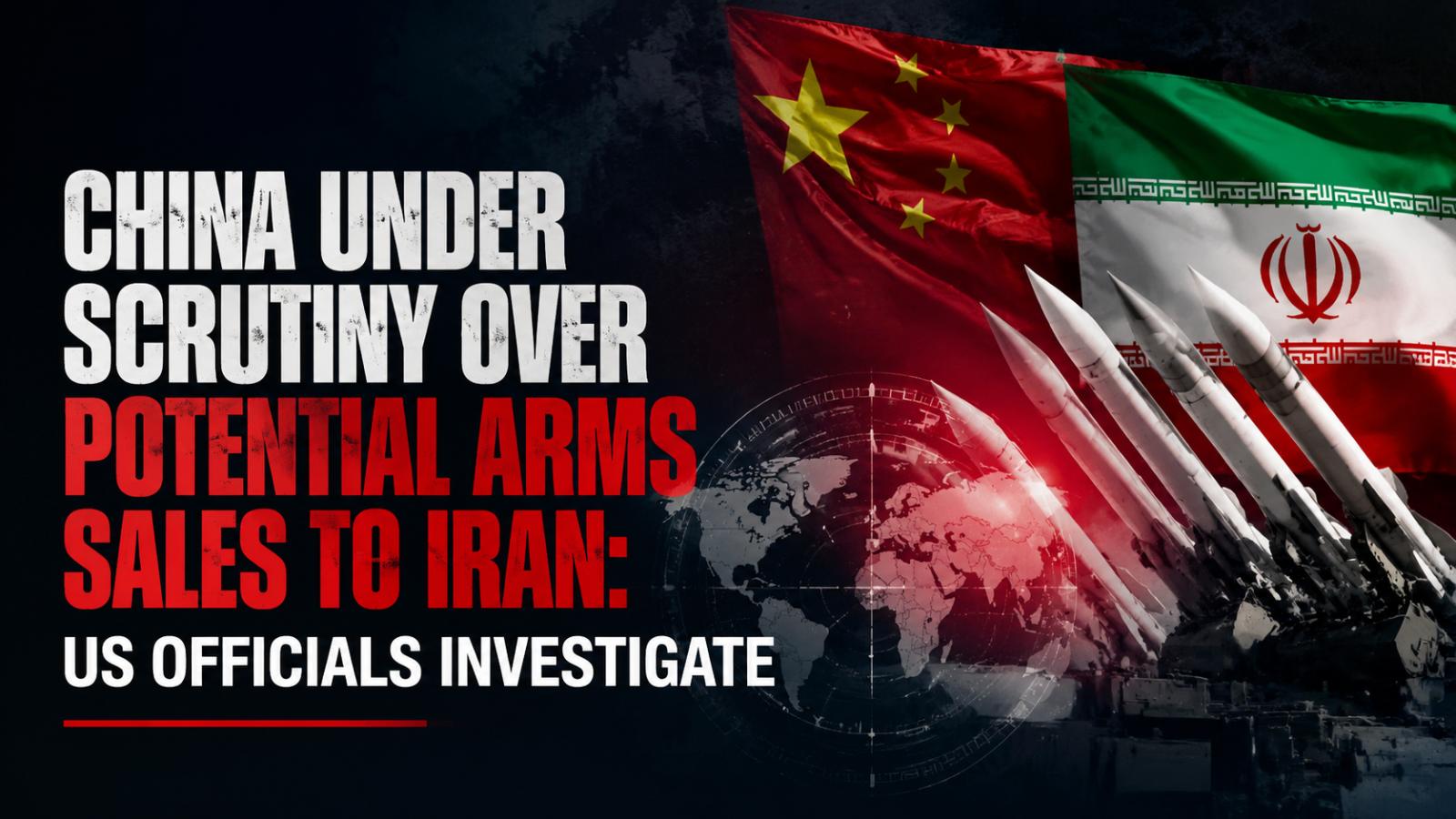
US Investigates Possible Chinese Arms Sales to Iran Amid Middle East Tensions
Amid rising tensions in the Middle East, US intelligence agencies are investigating whether China has been supplying military support to Iran. Sources familiar with the ongoing probe suggest that Chinese companies may have been negotiating arms transfers with Iranian officials. These weapons, believed to be funneled through third-party nations, are reportedly being used to mask their origin. However, it remains uncertain if any shipments have been completed or whether China’s government has given its official approval. This investigation unfolds as President Donald Trump is scheduled to meet with Chinese President Xi Jinping in Beijing, where the topic of military cooperation is expected to be high on the agenda. US officials are pushing for a strong stance, as reports suggest that China might have provided Iran with sophisticated military equipment, including shoulder-fired anti-aircraft missile systems known as MANPADS. These missiles could target low-flying aircraft, which would be a major security threat in the region. How is the US responding? The United States has called on China to end any military support to Iran, stressing that such actions are unacceptable, especially with ongoing diplomatic efforts to stabilize relations. Despite attempts to smooth over tensions with China, the US administration has been vocal about its concerns, citing intelligence reports that point to a potential arms shipment route passing through an African nation. So far, there is no clear evidence that any weapons have been successfully transferred. Has China already provided military aid to Iran? While the situation remains ambiguous, reports indicate that China has been providing Iran with other forms of assistance, such as intelligence support and satellite surveillance technology. These resources have significantly boosted Iran’s ability to monitor US military positions in the region. Furthermore, China is believed to have supplied dual-use technology, including semiconductors and sensors, which have both civilian and military applications. These components are often harder to trace, raising concerns that China may be covertly aiding Iran’s military capabilities. What does China gain from supporting Iran? China has strategic interests in maintaining a strong partnership with Iran. As one of Iran's top economic allies, China imports a significant portion of Iran's oil, with estimates suggesting that 80% of Iranian oil exports are bound for China. Beijing’s involvement in the region is also driven by its need to safeguard energy shipments that pass through the Strait of Hormuz, a critical maritime trade route. With the ongoing conflict affecting global shipping, China’s role in ensuring the stability of this region has become more crucial. However, the uncertainty surrounding the Middle East conflict is putting pressure on China, as well as on the broader global market. As the investigation into possible Chinese arms sales to Iran continues, the US is maintaining its vigilance, closely monitoring China’s actions in the Middle East. The growing influence of these geopolitical dynamics on the region’s stability suggests that the US will keep up its scrutiny of China’s role in Iran’s military affairs, especially as tensions continue to rise in this strategic part of the world.
US Investigates Possible Chinese Arms Sales to Iran Amid Middle East Tensions
Amid rising tensions in the Middle East, US intelligence agencies are investigating whether China has been supplying military support to Iran. Sources familiar with the ongoing probe suggest that Chinese companies may have been negotiating arms transfers with Iranian officials. These weapons, believed to be funneled through third-party nations, are reportedly being used to mask their origin. However, it remains uncertain if any shipments have been completed or whether China’s government has given its official approval. This investigation unfolds as President Donald Trump is scheduled to meet with Chinese President Xi Jinping in Beijing, where the topic of military cooperation is expected to be high on the agenda. US officials are pushing for a strong stance, as reports suggest that China might have provided Iran with sophisticated military equipment, including shoulder-fired anti-aircraft missile systems known as MANPADS. These missiles could target low-flying aircraft, which would be a major security threat in the region. How is the US responding? The United States has called on China to end any military support to Iran, stressing that such actions are unacceptable, especially with ongoing diplomatic efforts to stabilize relations. Despite attempts to smooth over tensions with China, the US administration has been vocal about its concerns, citing intelligence reports that point to a potential arms shipment route passing through an African nation. So far, there is no clear evidence that any weapons have been successfully transferred. Has China already provided military aid to Iran? While the situation remains ambiguous, reports indicate that China has been providing Iran with other forms of assistance, such as intelligence support and satellite surveillance technology. These resources have significantly boosted Iran’s ability to monitor US military positions in the region. Furthermore, China is believed to have supplied dual-use technology, including semiconductors and sensors, which have both civilian and military applications. These components are often harder to trace, raising concerns that China may be covertly aiding Iran’s military capabilities. What does China gain from supporting Iran? China has strategic interests in maintaining a strong partnership with Iran. As one of Iran's top economic allies, China imports a significant portion of Iran's oil, with estimates suggesting that 80% of Iranian oil exports are bound for China. Beijing’s involvement in the region is also driven by its need to safeguard energy shipments that pass through the Strait of Hormuz, a critical maritime trade route. With the ongoing conflict affecting global shipping, China’s role in ensuring the stability of this region has become more crucial. However, the uncertainty surrounding the Middle East conflict is putting pressure on China, as well as on the broader global market. As the investigation into possible Chinese arms sales to Iran continues, the US is maintaining its vigilance, closely monitoring China’s actions in the Middle East. The growing influence of these geopolitical dynamics on the region’s stability suggests that the US will keep up its scrutiny of China’s role in Iran’s military affairs, especially as tensions continue to rise in this strategic part of the world.
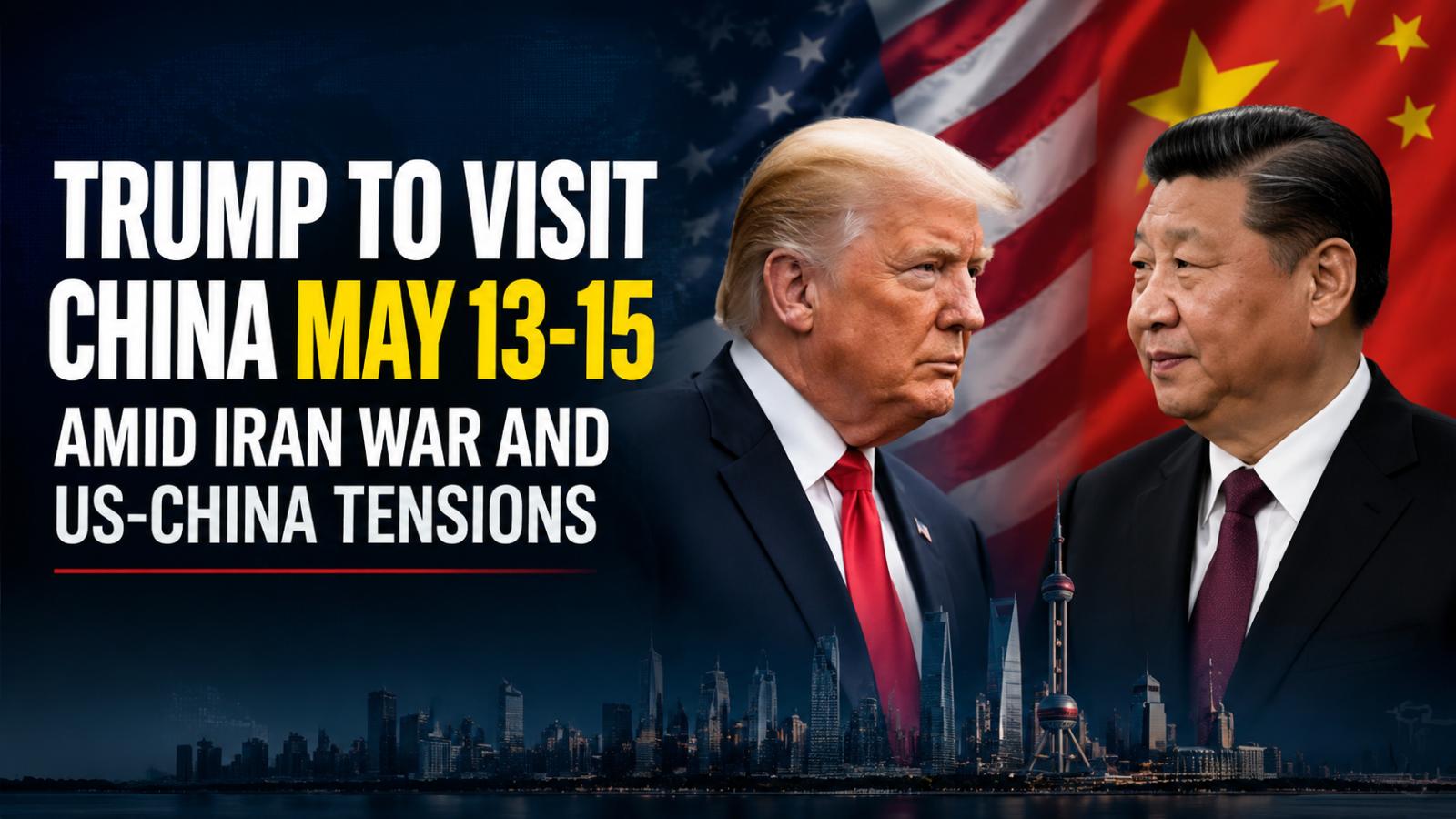
Trump-Xi summit: Key issues, trade talks, and Iran conflict to be addressed
US President Donald Trump is set to visit China from May 13 to 15, marking the first visit to the country by an American president in nearly nine years. The invitation comes from Chinese President Xi Jinping amid growing tensions between the two nations over issues such as trade, technology, and defense. This visit comes at a critical time for global politics, with the ongoing Iran conflict impacting both economic stability and energy prices. The timing of Trump’s visit coincides with a volatile situation in the Strait of Hormuz, where a dual blockade has significantly disrupted global oil trade, driving up energy prices. These disruptions have the potential to harm global economic growth, as the Strait is a vital shipping route for the world’s oil supply. Trump’s administration has placed significant pressure on Iran over its nuclear program, and in recent remarks, he stated that the US would “finish the job” if Iran did not agree to the terms aimed at halting the conflict. While tensions remain high, the US continues to press for a diplomatic resolution to the situation, with President Trump asserting that Iran must meet specific demands regarding its nuclear ambitions. Despite these pressures, Trump maintains that the US does not need China’s assistance to resolve the issue, suggesting that the conflict could be settled with or without China’s involvement. Iran, for its part, has signaled its intention to pursue peace, with chief negotiator Mohammad Bagher Ghalibaf issuing an ultimatum to the US. According to Ghalibaf, Washington must accept Iran’s recent peace proposal or face further failure in negotiations. He emphasized that there was no alternative but to acknowledge the rights of the Iranian people as outlined in Tehran’s 14-point proposal. Beyond the Iran conflict, the upcoming Trump-Xi summit is expected to address several key issues affecting US-China relations. Trade discussions will likely focus on extending a temporary truce in the ongoing trade dispute, particularly concerning rare earth minerals. Both leaders are expected to explore agreements related to Boeing aircraft purchases, as well as expanding trade and investment ties. Additionally, China is anticipated to announce purchases in the US agricultural and energy sectors. Another significant topic of discussion will be Taiwan, with Xi expressing frustration over the US’s continued support for the island nation, which China claims as part of its territory. Trump’s administration has reiterated its commitment to Taiwan, despite escalating military activities in the region by China. The summit will also cover the rapid development of artificial intelligence (AI) in both countries, with US officials highlighting concerns about the potential military and economic implications of AI advancements. With both nations at the forefront of technological innovation, there is a growing need for open communication to avoid misunderstandings or potential conflicts arising from the use of AI. This high-stakes summit between the US and China is poised to shape the future of global trade, energy security, and technological development, with both sides seeking to manage their differences while addressing urgent geopolitical challenges. As the world watches, the outcome of these talks could have far-reaching implications for international relations.
Trump-Xi summit: Key issues, trade talks, and Iran conflict to be addressed
US President Donald Trump is set to visit China from May 13 to 15, marking the first visit to the country by an American president in nearly nine years. The invitation comes from Chinese President Xi Jinping amid growing tensions between the two nations over issues such as trade, technology, and defense. This visit comes at a critical time for global politics, with the ongoing Iran conflict impacting both economic stability and energy prices. The timing of Trump’s visit coincides with a volatile situation in the Strait of Hormuz, where a dual blockade has significantly disrupted global oil trade, driving up energy prices. These disruptions have the potential to harm global economic growth, as the Strait is a vital shipping route for the world’s oil supply. Trump’s administration has placed significant pressure on Iran over its nuclear program, and in recent remarks, he stated that the US would “finish the job” if Iran did not agree to the terms aimed at halting the conflict. While tensions remain high, the US continues to press for a diplomatic resolution to the situation, with President Trump asserting that Iran must meet specific demands regarding its nuclear ambitions. Despite these pressures, Trump maintains that the US does not need China’s assistance to resolve the issue, suggesting that the conflict could be settled with or without China’s involvement. Iran, for its part, has signaled its intention to pursue peace, with chief negotiator Mohammad Bagher Ghalibaf issuing an ultimatum to the US. According to Ghalibaf, Washington must accept Iran’s recent peace proposal or face further failure in negotiations. He emphasized that there was no alternative but to acknowledge the rights of the Iranian people as outlined in Tehran’s 14-point proposal. Beyond the Iran conflict, the upcoming Trump-Xi summit is expected to address several key issues affecting US-China relations. Trade discussions will likely focus on extending a temporary truce in the ongoing trade dispute, particularly concerning rare earth minerals. Both leaders are expected to explore agreements related to Boeing aircraft purchases, as well as expanding trade and investment ties. Additionally, China is anticipated to announce purchases in the US agricultural and energy sectors. Another significant topic of discussion will be Taiwan, with Xi expressing frustration over the US’s continued support for the island nation, which China claims as part of its territory. Trump’s administration has reiterated its commitment to Taiwan, despite escalating military activities in the region by China. The summit will also cover the rapid development of artificial intelligence (AI) in both countries, with US officials highlighting concerns about the potential military and economic implications of AI advancements. With both nations at the forefront of technological innovation, there is a growing need for open communication to avoid misunderstandings or potential conflicts arising from the use of AI. This high-stakes summit between the US and China is poised to shape the future of global trade, energy security, and technological development, with both sides seeking to manage their differences while addressing urgent geopolitical challenges. As the world watches, the outcome of these talks could have far-reaching implications for international relations.
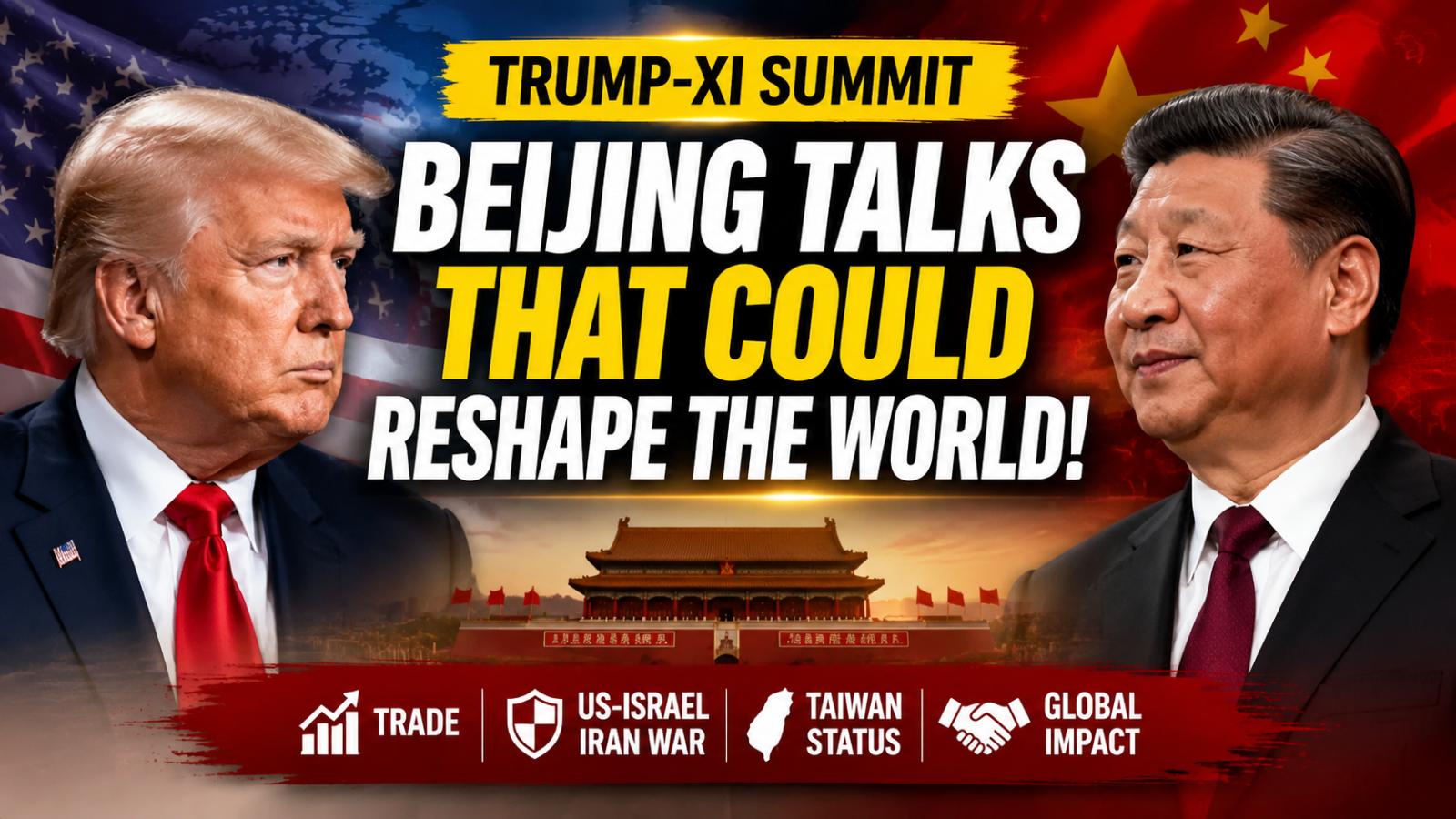
Historic US-China Summit: Trump and Xi Discuss Iran, Trade, and Taiwan in Beijing
Trump and Xi Jinping Meet in Beijing for Key Summit US President Donald Trump and Chinese President Xi Jinping are set to meet in Beijing for a highly anticipated three-day summit. This is Trump’s first visit to China in nearly a decade, making the meeting particularly significant. The summit is expected to focus on critical global issues, including the ongoing US-Israel war on Iran, trade relations between the two nations, and the status of Taiw
Historic US-China Summit: Trump and Xi Discuss Iran, Trade, and Taiwan in Beijing
Trump and Xi Jinping Meet in Beijing for Key Summit US President Donald Trump and Chinese President Xi Jinping are set to meet in Beijing for a highly anticipated three-day summit. This is Trump’s first visit to China in nearly a decade, making the meeting particularly significant. The summit is expected to focus on critical global issues, including the ongoing US-Israel war on Iran, trade relations between the two nations, and the status of Taiw

Chef Vikas Khanna Becomes First Indian To Receive Special Citation In New York
Celebrity chef and filmmaker Vikas Khanna has created history by becoming the first Indian to receive a special citation honour from New York State during AAPI Heritage Month celebrations. The recognition was presented in appreciation of his remarkable contribution to the culinary world and his efforts in promoting Indian cuisine internationally. The achievement has been widely celebrated by fans, celebrities and members of the Indian community across the globe. Originally from Amritsar in Punjab, Vikas Khanna has earned worldwide recognition through his restaurants, cookbooks, television appearances and humanitarian activities. His New York-based restaurant has become popular among food lovers for offering authentic Indian flavours with a modern global touch. Apart from his culinary success, Khanna is also admired for his charity initiatives and food relief efforts during difficult times, which further strengthened his reputation internationally. After receiving the honour, Khanna expressed gratitude and described the moment as a proud achievement for India. He emphasized the importance of cultural connection through food and said Indian cuisine continues to unite people from different backgrounds around the world. The recognition during AAPI Heritage Month highlights the growing influence of Indian talent globally and further establishes Vikas Khanna as one of the most respected Indian chefs on the international stage.
Chef Vikas Khanna Becomes First Indian To Receive Special Citation In New York
Celebrity chef and filmmaker Vikas Khanna has created history by becoming the first Indian to receive a special citation honour from New York State during AAPI Heritage Month celebrations. The recognition was presented in appreciation of his remarkable contribution to the culinary world and his efforts in promoting Indian cuisine internationally. The achievement has been widely celebrated by fans, celebrities and members of the Indian community across the globe. Originally from Amritsar in Punjab, Vikas Khanna has earned worldwide recognition through his restaurants, cookbooks, television appearances and humanitarian activities. His New York-based restaurant has become popular among food lovers for offering authentic Indian flavours with a modern global touch. Apart from his culinary success, Khanna is also admired for his charity initiatives and food relief efforts during difficult times, which further strengthened his reputation internationally. After receiving the honour, Khanna expressed gratitude and described the moment as a proud achievement for India. He emphasized the importance of cultural connection through food and said Indian cuisine continues to unite people from different backgrounds around the world. The recognition during AAPI Heritage Month highlights the growing influence of Indian talent globally and further establishes Vikas Khanna as one of the most respected Indian chefs on the international stage.

Chief Minister Vijay’s ‘Leo’ Cafe Spot In Kashmir Draws Huge Tamil Nadu Tourist Rush
Chief Minister Vijay’s connection with the blockbuster film ‘Leo’ is now creating a tourism wave in Kashmir. The popular Sifar Cafe located in Anantnag has reportedly become a major attraction for tourists arriving from Tamil Nadu after scenes from the film were shot there. Employees at the cafe revealed that visitors frequently ask about Vijay’s shooting experience and the food he enjoyed during the filming schedule. According to staff members, one of the most common questions asked by fans is about the dish Vijay ate while filming at the cafe. Employees say the actor enjoyed trout, a famous Kashmiri delicacy that has now become one of the most requested dishes among tourists visiting the location. Fans are excited to sit at the same place where scenes from ‘Leo’ were filmed and many are reportedly recreating moments from the movie by taking photographs and videos inside the cafe. The growing popularity of the cafe has also boosted local tourism in the region. Visitors from Tamil Nadu are increasingly adding Anantnag and Sifar Cafe to their Kashmir travel plans due to Vijay’s association with the location. Cafe workers say several tourists specifically mention ‘Leo’ while placing food orders and asking about the actor’s time there. Some visitors even request the exact seating spot used during the shoot. The trend reflects Vijay’s massive fan following and the strong cultural impact of Tamil cinema across India. Even after the film’s release, locations associated with the actor continue to attract huge public attention. Social media has also played a major role in making the cafe viral among fans, with travel bloggers and movie lovers sharing reels and photos from the shooting spot. Kashmir has become a preferred destination for filmmakers in recent years because of its scenic beauty and cinematic landscapes. After the success of ‘Leo’, several tourists are now exploring filming locations connected to the movie, helping local businesses gain national visibility. Employees at Sifar Cafe say the influx of tourists from Tamil Nadu has significantly increased after the film became a hit.
Chief Minister Vijay’s ‘Leo’ Cafe Spot In Kashmir Draws Huge Tamil Nadu Tourist Rush
Chief Minister Vijay’s connection with the blockbuster film ‘Leo’ is now creating a tourism wave in Kashmir. The popular Sifar Cafe located in Anantnag has reportedly become a major attraction for tourists arriving from Tamil Nadu after scenes from the film were shot there. Employees at the cafe revealed that visitors frequently ask about Vijay’s shooting experience and the food he enjoyed during the filming schedule. According to staff members, one of the most common questions asked by fans is about the dish Vijay ate while filming at the cafe. Employees say the actor enjoyed trout, a famous Kashmiri delicacy that has now become one of the most requested dishes among tourists visiting the location. Fans are excited to sit at the same place where scenes from ‘Leo’ were filmed and many are reportedly recreating moments from the movie by taking photographs and videos inside the cafe. The growing popularity of the cafe has also boosted local tourism in the region. Visitors from Tamil Nadu are increasingly adding Anantnag and Sifar Cafe to their Kashmir travel plans due to Vijay’s association with the location. Cafe workers say several tourists specifically mention ‘Leo’ while placing food orders and asking about the actor’s time there. Some visitors even request the exact seating spot used during the shoot. The trend reflects Vijay’s massive fan following and the strong cultural impact of Tamil cinema across India. Even after the film’s release, locations associated with the actor continue to attract huge public attention. Social media has also played a major role in making the cafe viral among fans, with travel bloggers and movie lovers sharing reels and photos from the shooting spot. Kashmir has become a preferred destination for filmmakers in recent years because of its scenic beauty and cinematic landscapes. After the success of ‘Leo’, several tourists are now exploring filming locations connected to the movie, helping local businesses gain national visibility. Employees at Sifar Cafe say the influx of tourists from Tamil Nadu has significantly increased after the film became a hit.
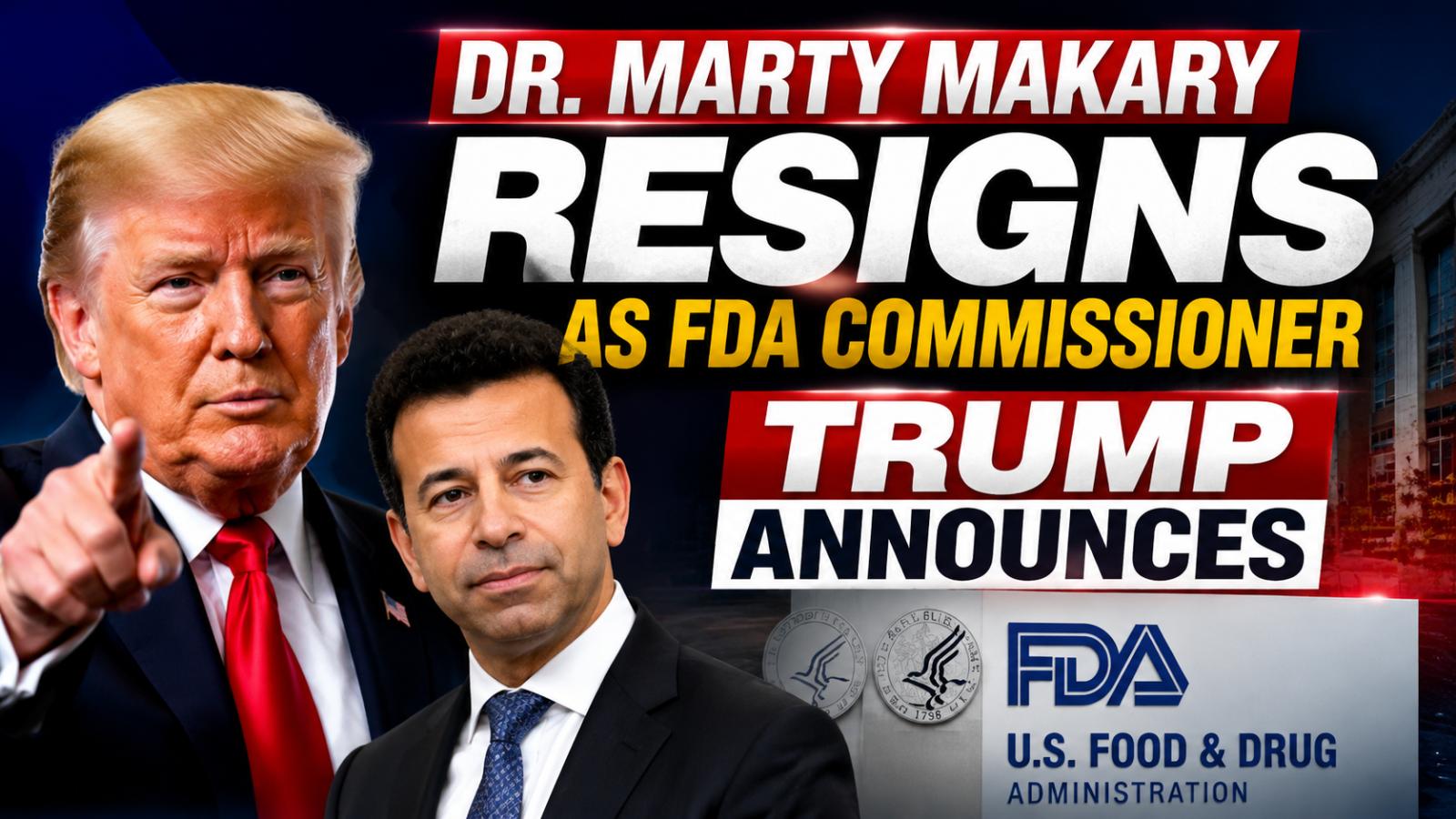
Dr. Marty Makary Resigns as FDA Commissioner, Trump Announces
Dr. Marty Makary Resigns as FDA Commissioner Dr. Marty Makary has resigned from his position as the commissioner of the U.S. Food and Drug Administration (FDA), as confirmed by President Donald Trump on May 12. In a social media post, Trump revealed that Makary had informed him of his decision to step down, effective Tuesday. While Makary did not offer an explicit reason for his resignation, Trump praised his leadership, calling him a “hard worke
Dr. Marty Makary Resigns as FDA Commissioner, Trump Announces
Dr. Marty Makary Resigns as FDA Commissioner Dr. Marty Makary has resigned from his position as the commissioner of the U.S. Food and Drug Administration (FDA), as confirmed by President Donald Trump on May 12. In a social media post, Trump revealed that Makary had informed him of his decision to step down, effective Tuesday. While Makary did not offer an explicit reason for his resignation, Trump praised his leadership, calling him a “hard worke
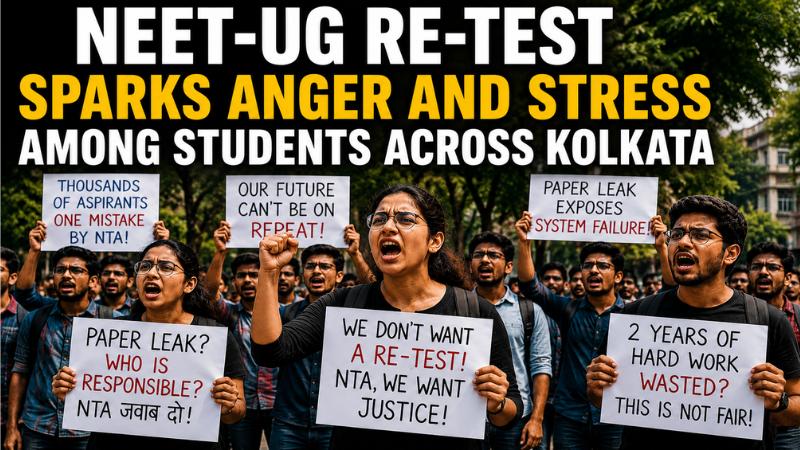
Neet Ug Re-Test Sparks Anger And Stress Among Students Across Kolkata
Students Furious After NEET-UG Re-Test Announcement The sudden decision to conduct a re-test for NEET-UG 2026 after an alleged paper leak in Rajasthan has triggered massive outrage among students and parents across Kolkata. Thousands of candidates who appeared for the highly competitive medical entrance examination on May 3 were left shocked after the National Testing Agency (NTA) announced that the examination would be cancelled and conducted again. Students said
Neet Ug Re-Test Sparks Anger And Stress Among Students Across Kolkata
Students Furious After NEET-UG Re-Test Announcement The sudden decision to conduct a re-test for NEET-UG 2026 after an alleged paper leak in Rajasthan has triggered massive outrage among students and parents across Kolkata. Thousands of candidates who appeared for the highly competitive medical entrance examination on May 3 were left shocked after the National Testing Agency (NTA) announced that the examination would be cancelled and conducted again. Students said
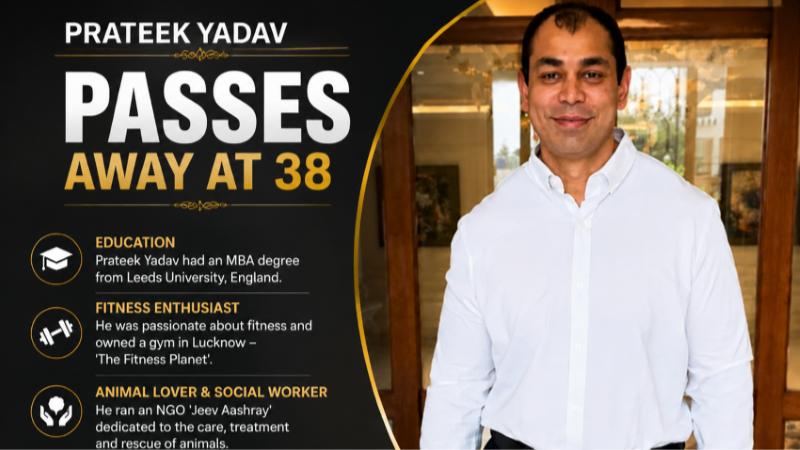
Prateek Yadav, Mulayam Singh Yadav’s Son, Dies at 38 – Apolitical Legacy and Tributes
Prateek Yadav, the 38-year-old son of late Samajwadi Party founder Mulayam Singh Yadav, passed away in Lucknow on May 13, 2026. Prateek, who had been struggling with lung-related issues for a long time, was undergoing treatment for a blood clot in his lungs. He was rushed to the hospital early in the morning but was unfortunately declared dead. The cause of death is yet to be confirmed, and a post-mortem is underway to determine the exact reason. Despite being born into one of India
Prateek Yadav, Mulayam Singh Yadav’s Son, Dies at 38 – Apolitical Legacy and Tributes
Prateek Yadav, the 38-year-old son of late Samajwadi Party founder Mulayam Singh Yadav, passed away in Lucknow on May 13, 2026. Prateek, who had been struggling with lung-related issues for a long time, was undergoing treatment for a blood clot in his lungs. He was rushed to the hospital early in the morning but was unfortunately declared dead. The cause of death is yet to be confirmed, and a post-mortem is underway to determine the exact reason. Despite being born into one of India
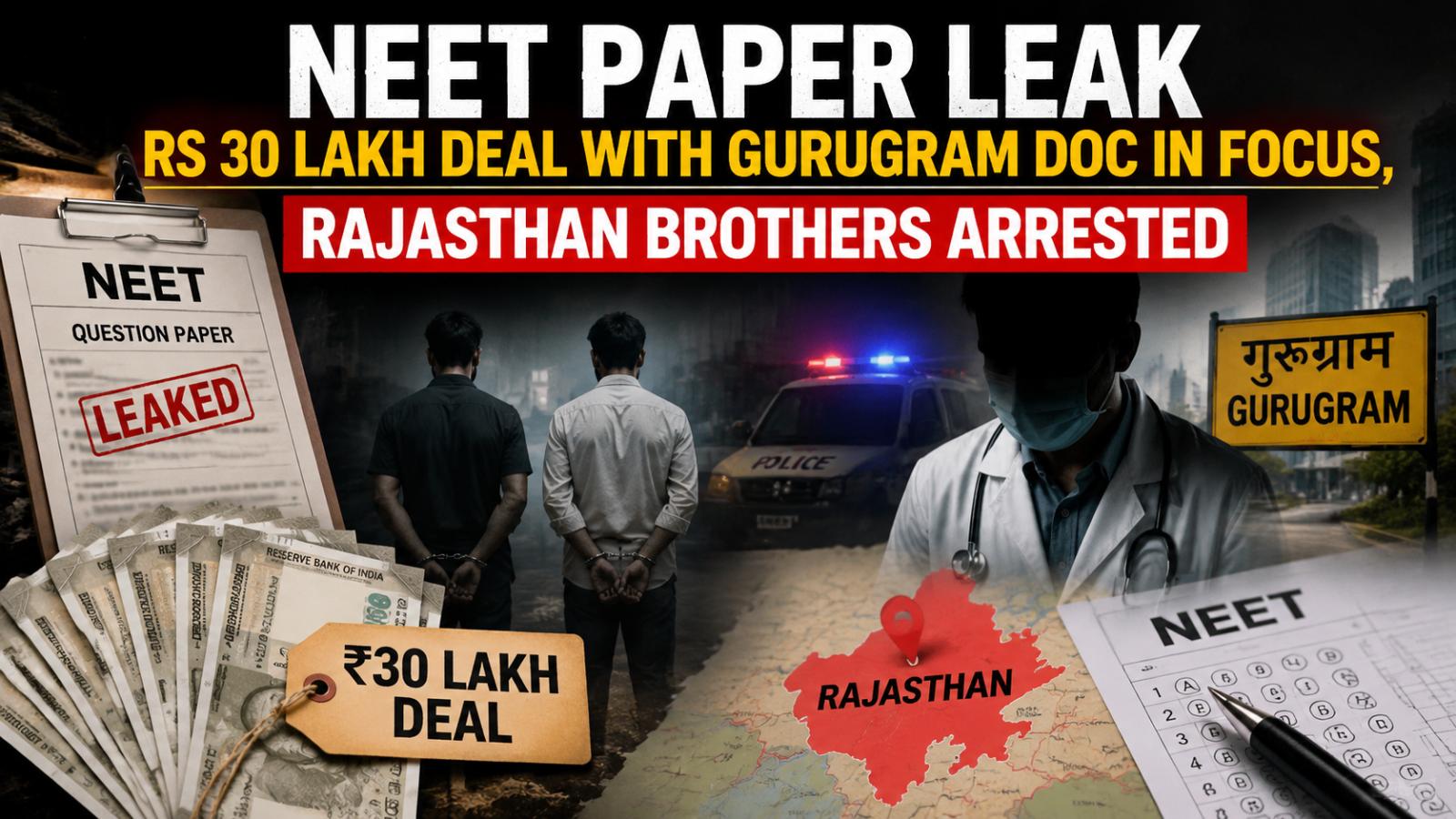
NEET 2026 Paper Leak: Gurugram Doctor, Rajasthan Brothers in Rs 30 Lakh Scandal
The NEET 2026 paper leak case has taken a dramatic turn with investigators now focusing on the involvement of two brothers from Rajasthan and a doctor in Gurugram. The two brothers, Mangilal and Dinesh Biwal, are alleged to have purchased the NEET UG exam paper from a Gurugram doctor for a whopping Rs 30 lakh on April 26, a week before the examination. The paper was initially passed to one of the brother's sons in Sikar, a city in Rajasthan, who then reportedly sold it to various aspirants.
NEET 2026 Paper Leak: Gurugram Doctor, Rajasthan Brothers in Rs 30 Lakh Scandal
The NEET 2026 paper leak case has taken a dramatic turn with investigators now focusing on the involvement of two brothers from Rajasthan and a doctor in Gurugram. The two brothers, Mangilal and Dinesh Biwal, are alleged to have purchased the NEET UG exam paper from a Gurugram doctor for a whopping Rs 30 lakh on April 26, a week before the examination. The paper was initially passed to one of the brother's sons in Sikar, a city in Rajasthan, who then reportedly sold it to various aspirants.
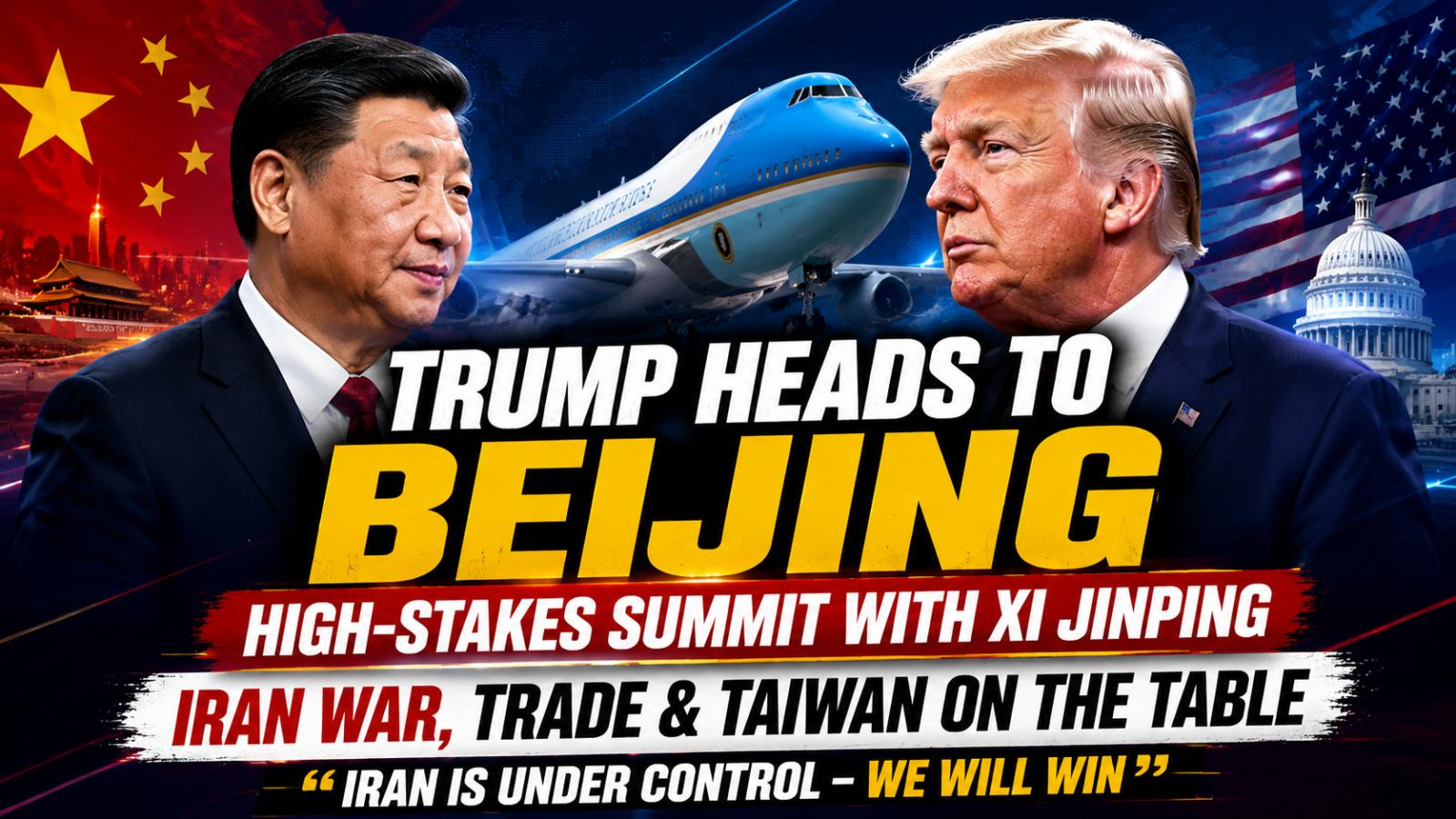
Trump’s Bold Iran Strategy: "We’ll Win Peacefully or Otherwise"
Trump’s Departure for Beijing President Donald Trump left Washington on May 12th for a high-stakes summit with Chinese President Xi Jinping in Beijing. As he boarded Air Force One for the trip, Trump addressed reporters, emphasizing that Iran is "under control" and that the United States either intends to make a deal or "decimate" Iran’s military capabilities. This rhetoric comes amid the ongoing conflict with Iran, with Trump reiterating his u
Trump’s Bold Iran Strategy: "We’ll Win Peacefully or Otherwise"
Trump’s Departure for Beijing President Donald Trump left Washington on May 12th for a high-stakes summit with Chinese President Xi Jinping in Beijing. As he boarded Air Force One for the trip, Trump addressed reporters, emphasizing that Iran is "under control" and that the United States either intends to make a deal or "decimate" Iran’s military capabilities. This rhetoric comes amid the ongoing conflict with Iran, with Trump reiterating his u

NJ Transit App Update Brings GPS Tracking and Bus Upgrades
NJ Transit riders in New Jersey are getting an updated mobile app, real-time tracking upgrades and new fleet investments under a Rapid Action Plan announced by Gov. Mikie Sherrill. The updated NJ Transit app is designed to work around a rider’s location, helping commuters find nearby service details faster and reduce dependence on outdated schedule information. Real-Time GPS Tracking Planned for Riders Officials said NJ Transit will expand re
NJ Transit App Update Brings GPS Tracking and Bus Upgrades
NJ Transit riders in New Jersey are getting an updated mobile app, real-time tracking upgrades and new fleet investments under a Rapid Action Plan announced by Gov. Mikie Sherrill. The updated NJ Transit app is designed to work around a rider’s location, helping commuters find nearby service details faster and reduce dependence on outdated schedule information. Real-Time GPS Tracking Planned for Riders Officials said NJ Transit will expand re
Cab Safety Warning: Check Number Plate Before Entering Ride
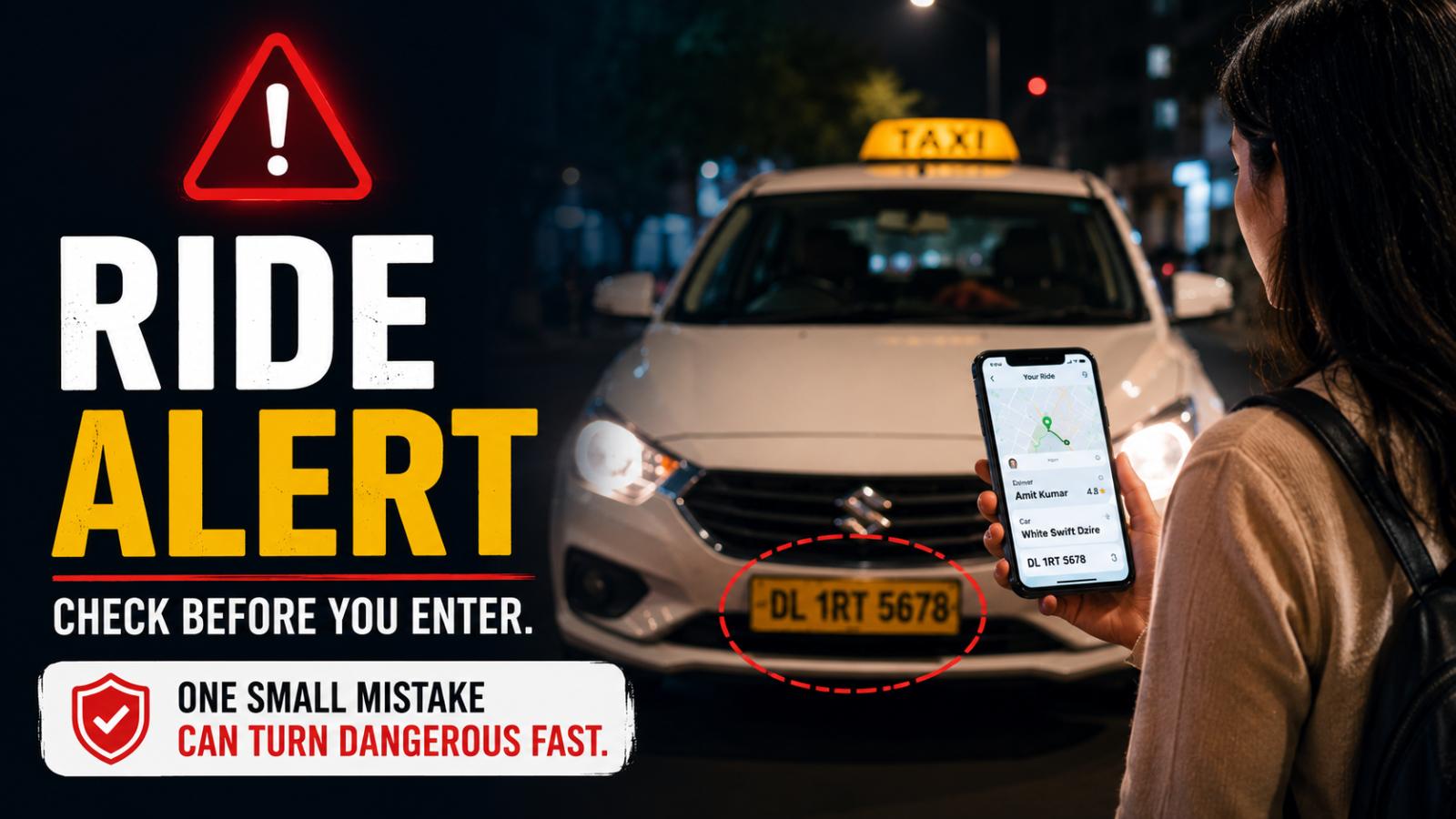
A growing cab safety warning is urging passengers to check the number plate, driver identity and vehicle details before entering any app-booked ride. Safety advocates say a mismatch between the vehicle that arrives and the details shown in the ride-hailing app can create serious risks for passengers, especially during solo or late-night travel. What Happens If Cab Details Do Not Match? If the cab number, model or driver profile does not match the app, the ride may not be properly linked to the original booking. That can affect GPS tracking, route monitoring, driver verification and emergency support. Passenger safety experts warn that entering an unverified vehicle can also make it harder for platforms to investigate complaints or confirm trip records if something goes wrong. Insurance And Tracking Concerns Transportation analysts say insurance complications may arise when a passenger travels in a vehicle that is not officially connected to the booking. In such cases, the ride may not be fully traceable through the platform’s records. The warning is not meant to create fear, but to encourage simple checks before boarding. What Passengers Should Do Before Boarding Passengers should confirm the registration number, driver name, vehicle model and live trip status inside the app. They should also share live location with a trusted contact and cancel the ride if any detail appears suspicious. Watch: One Small Cab Mistake Can Turn Dangerous Fast This safety-awareness reel explains why passengers should verify cab number plates, driver details and ride information before entering any app-booked vehicle. Safety campaigners say one quick number plate check can prevent passengers from entering the wrong cab and reduce risks linked to fake taxi pickups, route mismatch and unverified drivers.
Cab Safety Warning: Check Number Plate Before Entering Ride
A growing cab safety warning is urging passengers to check the number plate, driver identity and vehicle details before entering any app-booked ride. Safety advocates say a mismatch between the vehicle that arrives and the details shown in the ride-hailing app can create serious risks for passengers, especially during solo or late-night travel. What Happens If Cab Details Do Not Match? If the cab number, model or driver profile does not match the app, the ride may not be properly linked to the original booking. That can affect GPS tracking, route monitoring, driver verification and emergency support. Passenger safety experts warn that entering an unverified vehicle can also make it harder for platforms to investigate complaints or confirm trip records if something goes wrong. Insurance And Tracking Concerns Transportation analysts say insurance complications may arise when a passenger travels in a vehicle that is not officially connected to the booking. In such cases, the ride may not be fully traceable through the platform’s records. The warning is not meant to create fear, but to encourage simple checks before boarding. What Passengers Should Do Before Boarding Passengers should confirm the registration number, driver name, vehicle model and live trip status inside the app. They should also share live location with a trusted contact and cancel the ride if any detail appears suspicious. Watch: One Small Cab Mistake Can Turn Dangerous Fast This safety-awareness reel explains why passengers should verify cab number plates, driver details and ride information before entering any app-booked vehicle. Safety campaigners say one quick number plate check can prevent passengers from entering the wrong cab and reduce risks linked to fake taxi pickups, route mismatch and unverified drivers.
Udhayanidhi Stalin Repeats Controversial Sanatan Remarks in Tamil Nadu Assembly
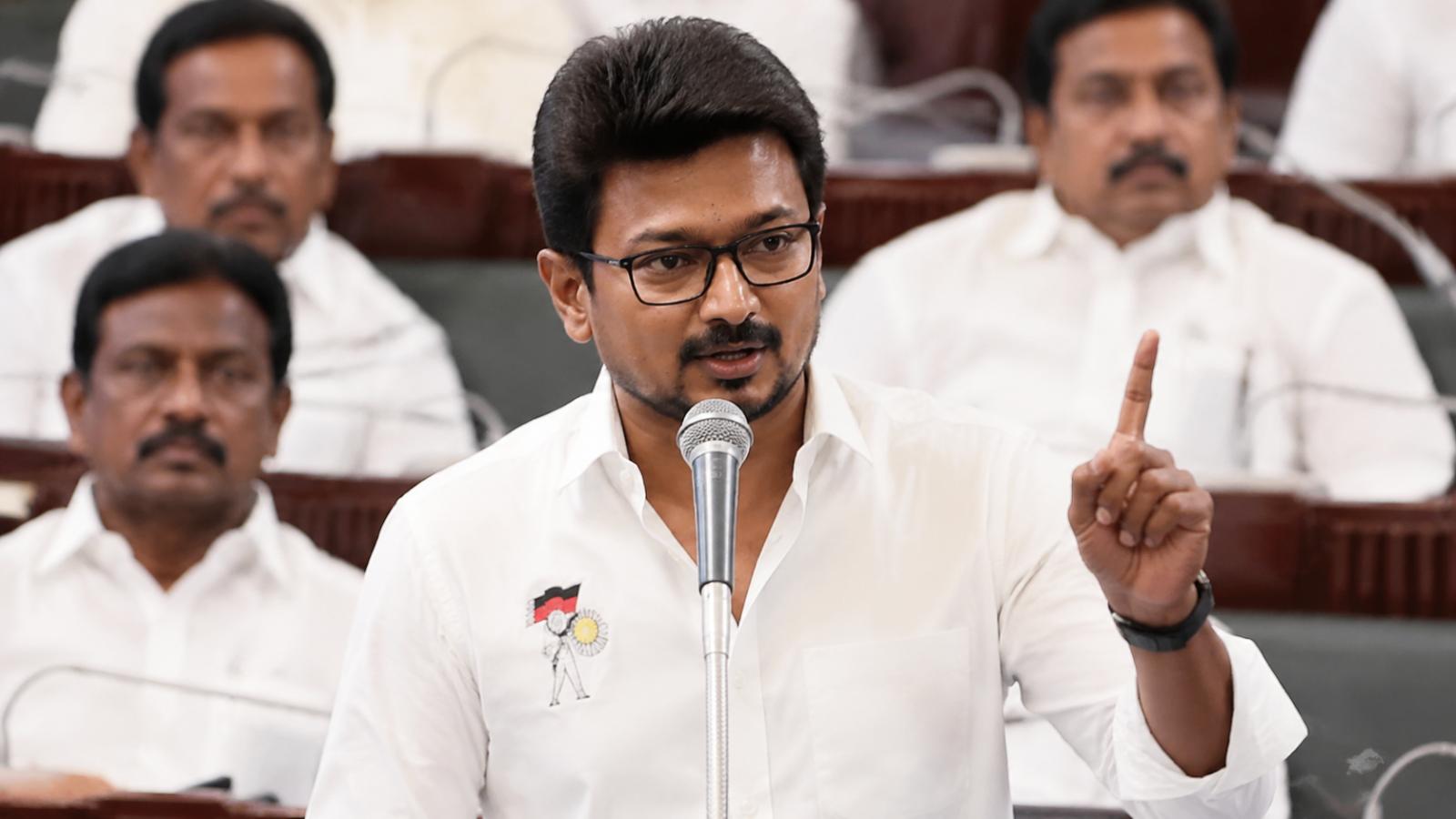
The controversy surrounding Sanatan Dharma was reignited in the Tamil Nadu Assembly, with DMK leader Udhayanidhi Stalin advocating once again for the ‘eradication of Sanatan’ on the floor of the house. His remarks, made on the first day of the assembly session post the 2026 state elections, mirrored his earlier controversial comments, where he likened Sanatan Dharma to diseases like dengue and malaria. These statements sparked widespread outrage, particularly from the BJP, which has conti
Udhayanidhi Stalin Repeats Controversial Sanatan Remarks in Tamil Nadu Assembly
The controversy surrounding Sanatan Dharma was reignited in the Tamil Nadu Assembly, with DMK leader Udhayanidhi Stalin advocating once again for the ‘eradication of Sanatan’ on the floor of the house. His remarks, made on the first day of the assembly session post the 2026 state elections, mirrored his earlier controversial comments, where he likened Sanatan Dharma to diseases like dengue and malaria. These statements sparked widespread outrage, particularly from the BJP, which has conti
Stalin Can Pull Strings in Vijay Govt, But TVK Has a Backup Plan
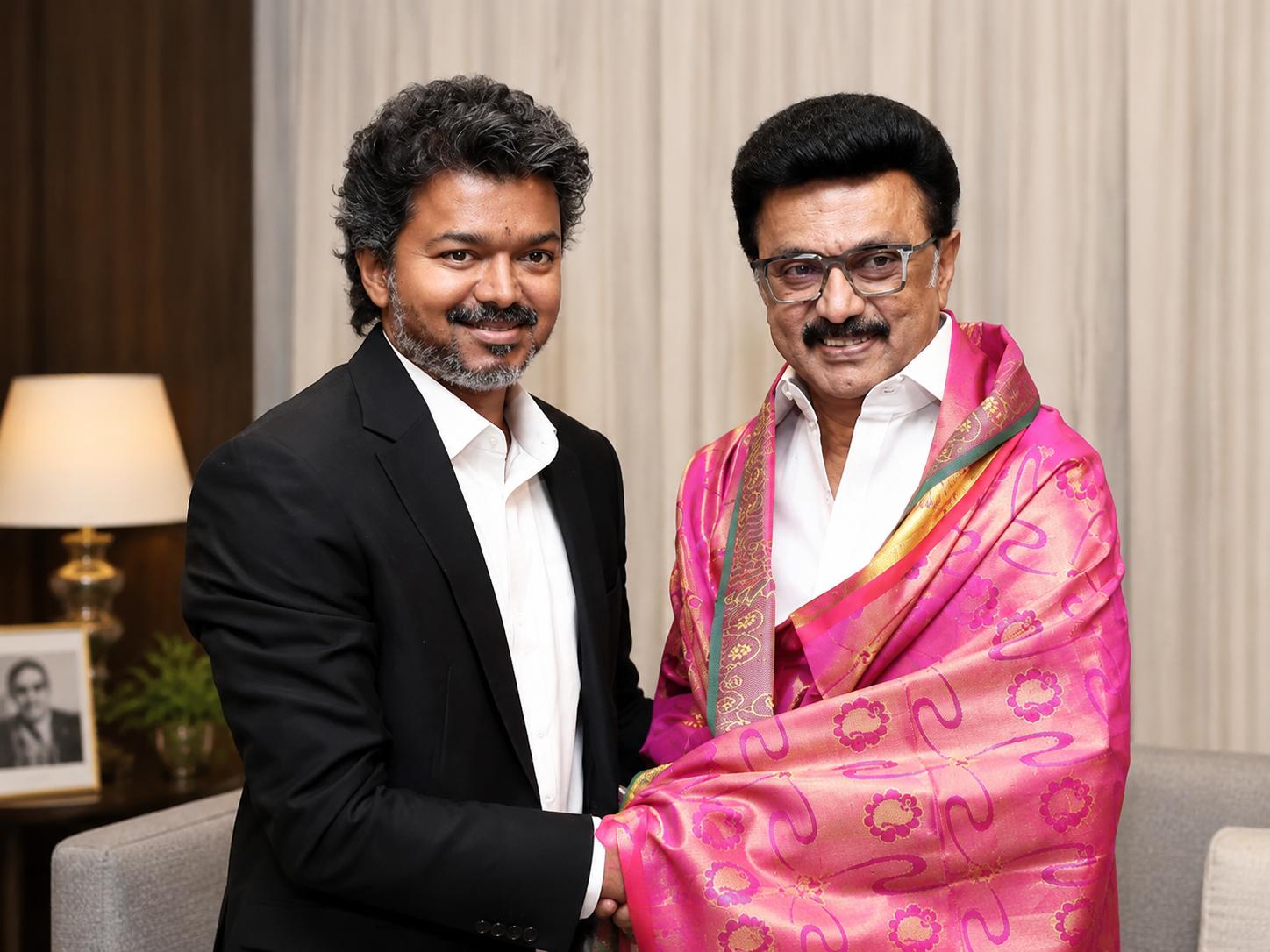
Actor-turned-politician Vijay has secured his place as the Chief Minister of Tamil Nadu for the first time, leading his new party, the Tamil Maanila Congress (TVK), to victory. However, his government’s stability may depend on a delicate balancing act. Despite being sworn in, Vijay's fragile majority in the Tamil Nadu Assembly relies heavily on the support of parties and factions previously aligned with the Dravida Munnetra Kazhagam (DMK), led by MK Stalin. Vijay’s TVK government now holds the support of 120 MLAs, just above the majority mark of 118. However, the coalition is propped up by the Congress, VCK, IUML, and the Left, most of which still have strong ties to Stalin’s DMK. This leaves the door open for Stalin to pull strings in the background, with his allies in the assembly potentially exerting significant influence over the TVK’s decision-making processes. Despite this, Vijay appears to have a backup plan. The AIADMK, Tamil Nadu’s principal opposition party, has seen internal rifts, and one faction led by senior MLAs SP Velumani and Shanmugam has pledged support for Vijay’s TVK. This move gives Vijay a potential lifeline, increasing his backing to 150 MLAs, provided the faction secures the necessary numbers to avoid disqualification under anti-defection laws. Vijay's decision to meet Stalin following his oath-taking was seen as a sign of political maturity, acknowledging Stalin's influence while maintaining a delicate balance with his own supporters. The political dynamics surrounding Vijay’s government reflect the challenges he faces, relying on support from both Stalin’s allies and AIADMK factions to stay in power. While the immediate future of Vijay's government appears secured with these arrangements, the optics of his reliance on former political adversaries could pose long-term challenges. As the political situation in Tamil Nadu continues to evolve, the success of Vijay’s tenure will depend on his ability to navigate these complex alliances and avoid potential pitfalls in the coming years.
Stalin Can Pull Strings in Vijay Govt, But TVK Has a Backup Plan
Actor-turned-politician Vijay has secured his place as the Chief Minister of Tamil Nadu for the first time, leading his new party, the Tamil Maanila Congress (TVK), to victory. However, his government’s stability may depend on a delicate balancing act. Despite being sworn in, Vijay's fragile majority in the Tamil Nadu Assembly relies heavily on the support of parties and factions previously aligned with the Dravida Munnetra Kazhagam (DMK), led by MK Stalin. Vijay’s TVK government now holds the support of 120 MLAs, just above the majority mark of 118. However, the coalition is propped up by the Congress, VCK, IUML, and the Left, most of which still have strong ties to Stalin’s DMK. This leaves the door open for Stalin to pull strings in the background, with his allies in the assembly potentially exerting significant influence over the TVK’s decision-making processes. Despite this, Vijay appears to have a backup plan. The AIADMK, Tamil Nadu’s principal opposition party, has seen internal rifts, and one faction led by senior MLAs SP Velumani and Shanmugam has pledged support for Vijay’s TVK. This move gives Vijay a potential lifeline, increasing his backing to 150 MLAs, provided the faction secures the necessary numbers to avoid disqualification under anti-defection laws. Vijay's decision to meet Stalin following his oath-taking was seen as a sign of political maturity, acknowledging Stalin's influence while maintaining a delicate balance with his own supporters. The political dynamics surrounding Vijay’s government reflect the challenges he faces, relying on support from both Stalin’s allies and AIADMK factions to stay in power. While the immediate future of Vijay's government appears secured with these arrangements, the optics of his reliance on former political adversaries could pose long-term challenges. As the political situation in Tamil Nadu continues to evolve, the success of Vijay’s tenure will depend on his ability to navigate these complex alliances and avoid potential pitfalls in the coming years.
NEET UG 2026 Cancelled After Paper Leak, Protests Erupt in Delhi
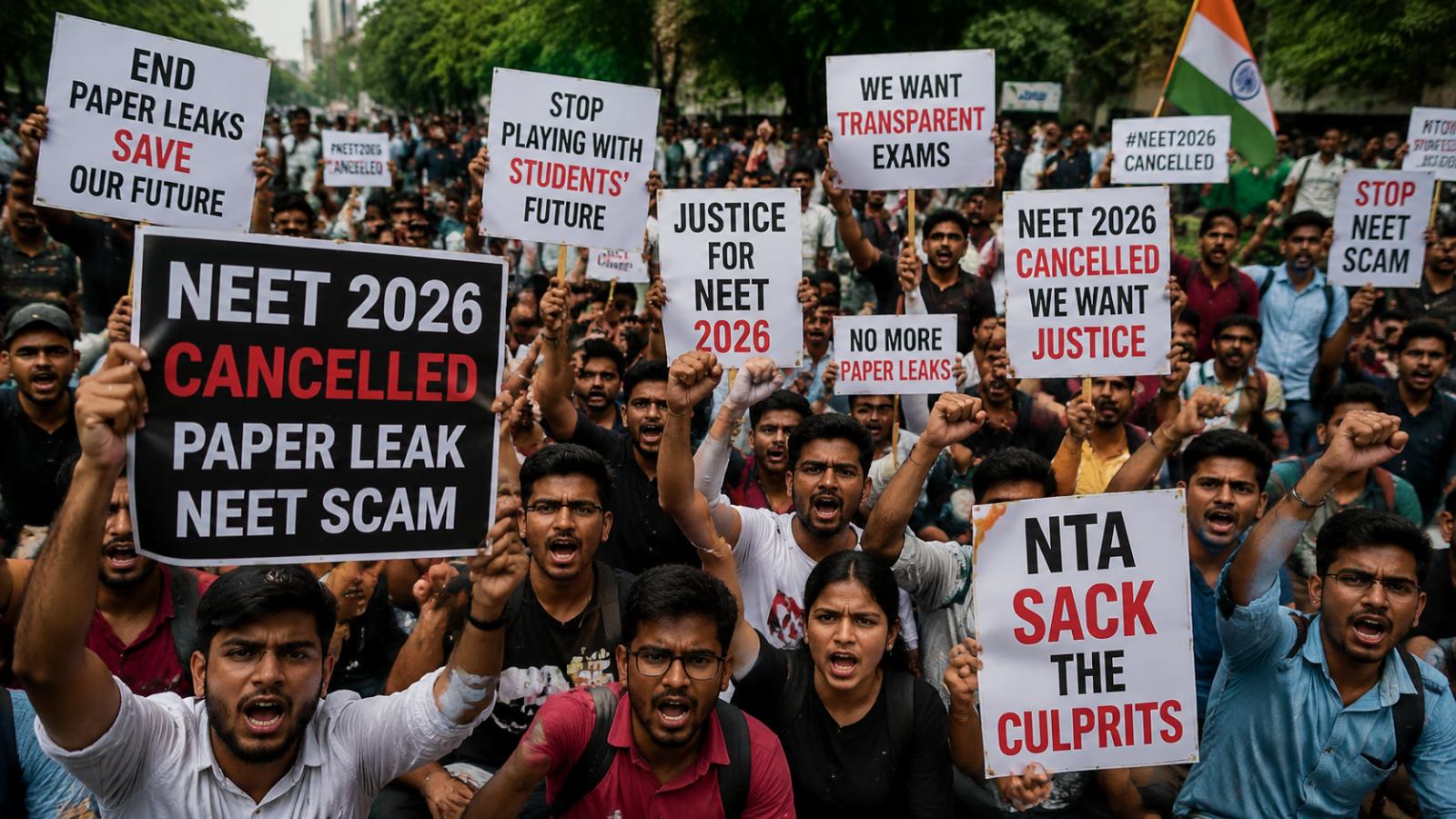
In a major development, the National Testing Agency (NTA) has announced the cancellation of the NEET (UG) 2026 exam following allegations of a paper leak the night before the May 3 examination. The NTA, with approval from the Government of India, confirmed that the exam, which serves as the qualifying test for undergraduate medical courses across India, would now be re-conducted on fresh dates, which will be announced in the coming days. The decision to cancel the exam came after law enforcement agencies shared investigative findings, confirming that the exam process could not stand. In the wake of the cancellation, the NTA assured that no fresh registration would be required for the re-examination and that the previously paid fees would be refunded. The agency also stated that it would cooperate fully with the Central Bureau of Investigation (CBI), which has been tasked with further investigating the matter. The announcement triggered widespread protests from student organizations across the country, particularly in Delhi. One such protest, organized by the National Students' Union of India (NSUI), took place near Shastri Bhawan, the headquarters of the Union Education Ministry. The protesting students demanded clarity and accountability regarding the leak and the subsequent cancellation. In its statement, the NTA acknowledged the inconvenience caused to the students and their families but emphasized that the decision was made to preserve the integrity of the examination process. It further confirmed that candidates' registration details, examination centers, and other information would remain intact for the re-conducted exam. Candidates were advised to only rely on official communications from NTA for updates regarding the revised exam schedule. The NTA’s move is seen as an effort to restore public trust in the examination system, which has been rocked by the allegations of a paper leak. The re-examination is expected to be conducted using NTA's internal resources, with no additional charges for candidates.
NEET UG 2026 Cancelled After Paper Leak, Protests Erupt in Delhi
In a major development, the National Testing Agency (NTA) has announced the cancellation of the NEET (UG) 2026 exam following allegations of a paper leak the night before the May 3 examination. The NTA, with approval from the Government of India, confirmed that the exam, which serves as the qualifying test for undergraduate medical courses across India, would now be re-conducted on fresh dates, which will be announced in the coming days. The decision to cancel the exam came after law enforcement agencies shared investigative findings, confirming that the exam process could not stand. In the wake of the cancellation, the NTA assured that no fresh registration would be required for the re-examination and that the previously paid fees would be refunded. The agency also stated that it would cooperate fully with the Central Bureau of Investigation (CBI), which has been tasked with further investigating the matter. The announcement triggered widespread protests from student organizations across the country, particularly in Delhi. One such protest, organized by the National Students' Union of India (NSUI), took place near Shastri Bhawan, the headquarters of the Union Education Ministry. The protesting students demanded clarity and accountability regarding the leak and the subsequent cancellation. In its statement, the NTA acknowledged the inconvenience caused to the students and their families but emphasized that the decision was made to preserve the integrity of the examination process. It further confirmed that candidates' registration details, examination centers, and other information would remain intact for the re-conducted exam. Candidates were advised to only rely on official communications from NTA for updates regarding the revised exam schedule. The NTA’s move is seen as an effort to restore public trust in the examination system, which has been rocked by the allegations of a paper leak. The re-examination is expected to be conducted using NTA's internal resources, with no additional charges for candidates.










