
































Bangladesh Freezes Sheikh Hasina Family Assets Worth $6.19 Billion
Bangladesh freezes Sheikh Hasina assets worth $6.19 billion as authorities expand investigations into alleged corruption, money laundering and tax evasion. The Bangladesh Financial Intelligence Unit says asset recovery efforts are underway with support from multiple government agencies. Bangladesh Freezes Sheikh Hasina Assets Worth $6.19 Billion Bangladesh has frozen assets worth Tk 760 billion (about $6.19 billion) linked to former Prime Minister Sheikh Hasina, her family members and ten of the country's largest business groups. The move marks one of the biggest financial enforcement actions since the political transition that followed the 2024 student-led uprising. Sheikh Hasina Investigation Expands Speaking during the release of the Bangladesh Financial Intelligence Unit (BFIU) annual report in Dhaka, BFIU chief Ikhtiar Uddin Mohammad Mamun said court orders enabled authorities to freeze Tk 570 billion in assets within Bangladesh and another Tk 190 billion overseas. He did not disclose how much of the frozen assets belonged to individual family members or each business group. The investigation began after Sheikh Hasina left office on August 5, 2024, following widespread protests. She later traveled to India, where she has remained since. The interim administration led by Professor Muhammad Yunus directed authorities to examine allegations including corruption, bribery, fraud, forgery, money laundering, foreign currency smuggling and tax evasion involving Hasina's family and several leading corporate groups. Bangladesh Financial Intelligence Unit Leads Probe According to the BFIU, authorities are concentrating on tracing and recovering assets that investigators believe were transferred outside Bangladesh. Mamun said officials are working with international partners and expressed hope that progress on recovering overseas assets could be announced before the end of the year. The financial investigation is being coordinated by the BFIU with support from the Criminal Investigation Department (CID), the National Board of Revenue (NBR) and the Anti-Corruption Commission (ACC). The agencies are examining financial records, banking transactions and ownership structures connected to individuals and companies under investigation. Business Groups Investigation Covers Major Companies Authorities confirmed that the investigation includes S Alam Group, Beximco Group, Nabil Group, Summit Group, Orion Group, Premier Group, Nassa Group, Bashundhara Group, Sikder Group and Aramit Group. Officials have not announced individual findings against any of these companies, stating that investigations remain ongoing. The large-scale asset freeze highlights Bangladesh's efforts to strengthen financial oversight while addressing allegations of illicit financial activity. Officials say legal procedures and court approvals continue to guide the investigation. Asset Recovery Efforts Continue Responding to questions about whether the investigations were politically motivated, Mamun said political affiliation plays no role in financial intelligence work. He stated that authorities focus on suspicious financial transactions regardless of an individual's position or identity. Mamun also said banks are required to freeze accounts whenever suspicious activity is identified. He added that if evidence emerges involving members of the current interim government, those cases would also be investigated under the same legal framework. The BFIU said the investigation remains active, with asset recovery now a priority. Authorities have indicated that additional developments could be announced as financial reviews, legal proceedings and international cooperation continue. Source: Statements by the Bangladesh Financial Intelligence Unit (BFIU) during the release of its annual report in Dhaka. Suggested internal links: Global News, Business & Economy, Government Policy, Bangladesh news archive, Money & Finance category.
Bangladesh Freezes Sheikh Hasina Family Assets Worth $6.19 Billion
Bangladesh freezes Sheikh Hasina assets worth $6.19 billion as authorities expand investigations into alleged corruption, money laundering and tax evasion. The Bangladesh Financial Intelligence Unit says asset recovery efforts are underway with support from multiple government agencies. Bangladesh Freezes Sheikh Hasina Assets Worth $6.19 Billion Bangladesh has frozen assets worth Tk 760 billion (about $6.19 billion) linked to former Prime Minister Sheikh Hasina, her family members and ten of the country's largest business groups. The move marks one of the biggest financial enforcement actions since the political transition that followed the 2024 student-led uprising. Sheikh Hasina Investigation Expands Speaking during the release of the Bangladesh Financial Intelligence Unit (BFIU) annual report in Dhaka, BFIU chief Ikhtiar Uddin Mohammad Mamun said court orders enabled authorities to freeze Tk 570 billion in assets within Bangladesh and another Tk 190 billion overseas. He did not disclose how much of the frozen assets belonged to individual family members or each business group. The investigation began after Sheikh Hasina left office on August 5, 2024, following widespread protests. She later traveled to India, where she has remained since. The interim administration led by Professor Muhammad Yunus directed authorities to examine allegations including corruption, bribery, fraud, forgery, money laundering, foreign currency smuggling and tax evasion involving Hasina's family and several leading corporate groups. Bangladesh Financial Intelligence Unit Leads Probe According to the BFIU, authorities are concentrating on tracing and recovering assets that investigators believe were transferred outside Bangladesh. Mamun said officials are working with international partners and expressed hope that progress on recovering overseas assets could be announced before the end of the year. The financial investigation is being coordinated by the BFIU with support from the Criminal Investigation Department (CID), the National Board of Revenue (NBR) and the Anti-Corruption Commission (ACC). The agencies are examining financial records, banking transactions and ownership structures connected to individuals and companies under investigation. Business Groups Investigation Covers Major Companies Authorities confirmed that the investigation includes S Alam Group, Beximco Group, Nabil Group, Summit Group, Orion Group, Premier Group, Nassa Group, Bashundhara Group, Sikder Group and Aramit Group. Officials have not announced individual findings against any of these companies, stating that investigations remain ongoing. The large-scale asset freeze highlights Bangladesh's efforts to strengthen financial oversight while addressing allegations of illicit financial activity. Officials say legal procedures and court approvals continue to guide the investigation. Asset Recovery Efforts Continue Responding to questions about whether the investigations were politically motivated, Mamun said political affiliation plays no role in financial intelligence work. He stated that authorities focus on suspicious financial transactions regardless of an individual's position or identity. Mamun also said banks are required to freeze accounts whenever suspicious activity is identified. He added that if evidence emerges involving members of the current interim government, those cases would also be investigated under the same legal framework. The BFIU said the investigation remains active, with asset recovery now a priority. Authorities have indicated that additional developments could be announced as financial reviews, legal proceedings and international cooperation continue. Source: Statements by the Bangladesh Financial Intelligence Unit (BFIU) during the release of its annual report in Dhaka. Suggested internal links: Global News, Business & Economy, Government Policy, Bangladesh news archive, Money & Finance category.
India Launches Seafarer First Plan After Hormuz Attacks
India Launches Seafarer First Plan After Hormuz Attacks The Indian government has announced a comprehensive "Seafarer First" strategy to protect Indian sailors working in the conflict-affected waters of West Asia after attacks on two merchant vessels in the Strait of Hormuz killed one Indian seafarer and injured several others. The new measures include real-time monitoring of every Indian seafarer in the region, dedicate
India Launches Seafarer First Plan After Hormuz Attacks
India Launches Seafarer First Plan After Hormuz Attacks The Indian government has announced a comprehensive "Seafarer First" strategy to protect Indian sailors working in the conflict-affected waters of West Asia after attacks on two merchant vessels in the Strait of Hormuz killed one Indian seafarer and injured several others. The new measures include real-time monitoring of every Indian seafarer in the region, dedicate
India Condemns Strait of Hormuz Ship Attacks
India has strongly condemned the Strait of Hormuz attacks on two commercial vessels that killed an Indian sailor and injured several crew members. New Delhi lodged a diplomatic protest and demanded an immediate end to attacks threatening shipping safety, maritime trade and stability across West Asia. India condemns Strait of Hormuz attacks The Ministry of External Affairs said on Tuesday, July 14, that violence
India Condemns Strait of Hormuz Ship Attacks
India has strongly condemned the Strait of Hormuz attacks on two commercial vessels that killed an Indian sailor and injured several crew members. New Delhi lodged a diplomatic protest and demanded an immediate end to attacks threatening shipping safety, maritime trade and stability across West Asia. India condemns Strait of Hormuz attacks The Ministry of External Affairs said on Tuesday, July 14, that violence
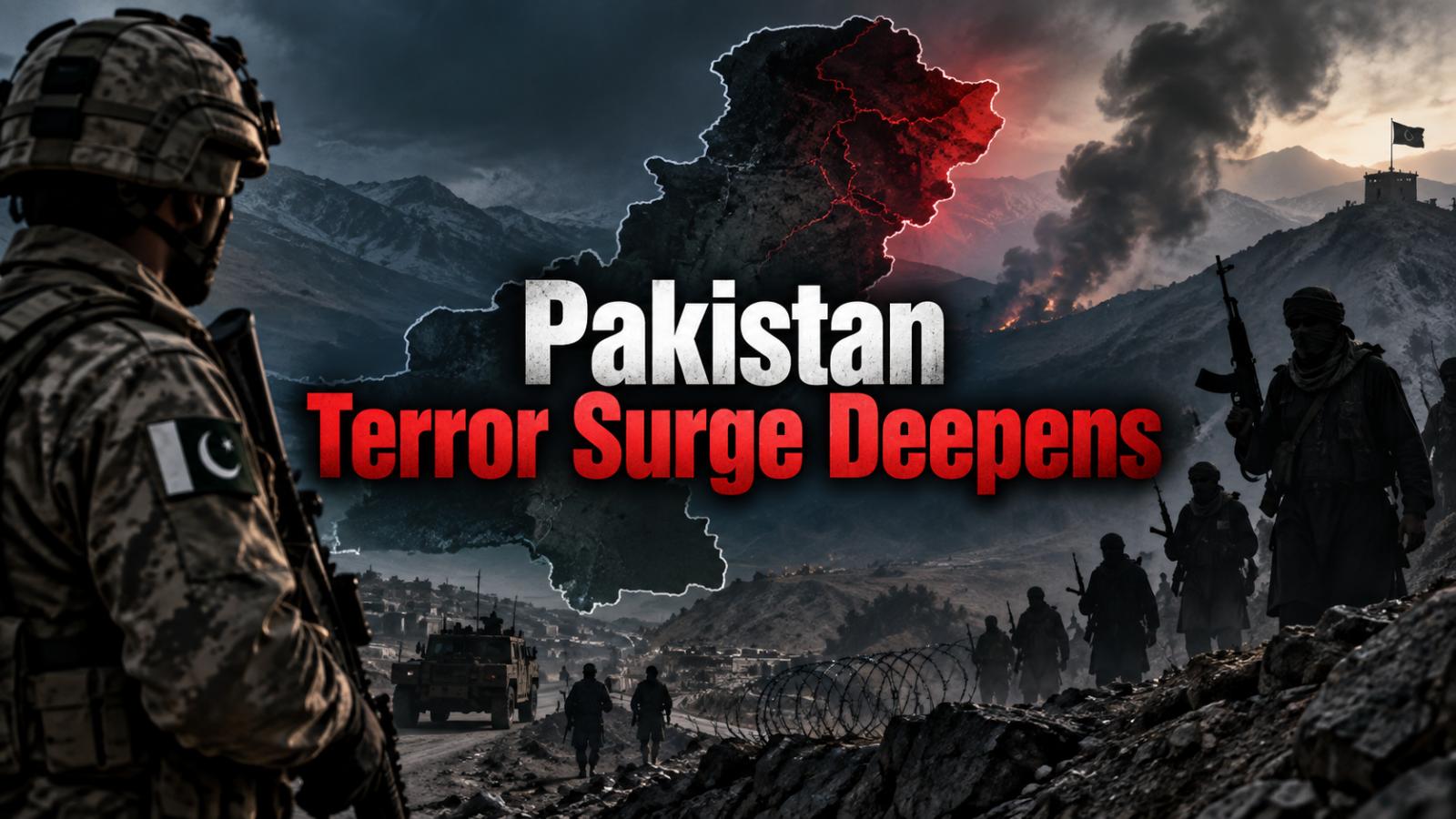
Pakistan crisis deepens as Fazlur Rehman questions army role
Pakistan’s worsening security crisis has triggered unusually sharp criticism of the military from Jamiat Ulema-e-Islam chief Maulana Fazlur Rehman. His remarks came as authorities confronted deadly militant attacks in Balochistan and renewed protests in Pakistan-administered Kashmir. Fazlur Rehman questions Pakistan Army’s political role Speaking at a public gathering in Punjab, Fazlur Rehman claimed that g
Pakistan crisis deepens as Fazlur Rehman questions army role
Pakistan’s worsening security crisis has triggered unusually sharp criticism of the military from Jamiat Ulema-e-Islam chief Maulana Fazlur Rehman. His remarks came as authorities confronted deadly militant attacks in Balochistan and renewed protests in Pakistan-administered Kashmir. Fazlur Rehman questions Pakistan Army’s political role Speaking at a public gathering in Punjab, Fazlur Rehman claimed that g
Lula Slams Trump Over Strait of Hormuz Toll Plan
Brazilian President Luiz Inácio Lula da Silva has strongly criticized President Donald Trump's proposal to charge commercial ships a 20 percent toll for transiting the Strait of Hormuz, describing the idea as an act of piracy rather than international leadership. Lula's comments came after Trump announced that the United States would become the "Guardian of the Hormuz Strait" and begin collecting transit fees from vessels using one of the world's busie
Lula Slams Trump Over Strait of Hormuz Toll Plan
Brazilian President Luiz Inácio Lula da Silva has strongly criticized President Donald Trump's proposal to charge commercial ships a 20 percent toll for transiting the Strait of Hormuz, describing the idea as an act of piracy rather than international leadership. Lula's comments came after Trump announced that the United States would become the "Guardian of the Hormuz Strait" and begin collecting transit fees from vessels using one of the world's busie
Trump-Netanyahu call covers Iran strikes and Turkey
US President Donald Trump and Israeli Prime Minister Benjamin Netanyahu discussed American military activity in the Gulf, tensions involving Turkey and Israel’s border security concerns during a phone call on Thursday, July 9. The leaders agreed to maintain close coordination as instability across West Asia continued. Trump-Netanyahu call covers US Gulf moves
Trump-Netanyahu call covers Iran strikes and Turkey
US President Donald Trump and Israeli Prime Minister Benjamin Netanyahu discussed American military activity in the Gulf, tensions involving Turkey and Israel’s border security concerns during a phone call on Thursday, July 9. The leaders agreed to maintain close coordination as instability across West Asia continued. Trump-Netanyahu call covers US Gulf moves
Modi unveils Prambanan Temple project
India’s support for the Prambanan Temple restoration project in Indonesia has added a strong cultural dimension to growing India Indonesia ties. The initiative, unveiled during Prime Minister Narendra Modi’s visit with Indonesian President Prabowo Subianto in Yogyakarta on Wednesday, July 8, 2026, focuses on conserving one of Southeast Asia’s most important Hindu temple complexes. The project is not just about repairing an old monument; it reflects how shared histo
Modi unveils Prambanan Temple project
India’s support for the Prambanan Temple restoration project in Indonesia has added a strong cultural dimension to growing India Indonesia ties. The initiative, unveiled during Prime Minister Narendra Modi’s visit with Indonesian President Prabowo Subianto in Yogyakarta on Wednesday, July 8, 2026, focuses on conserving one of Southeast Asia’s most important Hindu temple complexes. The project is not just about repairing an old monument; it reflects how shared histo
Ram Mandir theft revives debate over government control of temples
The alleged donation theft controversy surrounding the Ram Temple in Ayodhya has reopened an old and politically sensitive debate over who should manage some of India’s most prominent temples. As questions are raised about accountability and security at the shrine, attention has once again turned to an episode from more than four decades ago, when a major theft at the Kashi Vishwanath Temple in Varanasi eventually led to a complete change in its admin
Ram Mandir theft revives debate over government control of temples
The alleged donation theft controversy surrounding the Ram Temple in Ayodhya has reopened an old and politically sensitive debate over who should manage some of India’s most prominent temples. As questions are raised about accountability and security at the shrine, attention has once again turned to an episode from more than four decades ago, when a major theft at the Kashi Vishwanath Temple in Varanasi eventually led to a complete change in its admin
Saudi oil price cut signals Asia crude demand pressure
Saudi Arabia’s latest oil price cut has turned attention back to Asia, where refiners are getting more room to negotiate as Gulf crude supply improves. Saudi Aramco has reduced the August official selling price of Arab Light crude for Asian buyers by $11 per barrel, placing the grade at a $1.50 discount to the Oman-Dubai benchmark. The sharp move shows how quickly the market has shifted from supply fear to buyer advantage. The cut is imp
Saudi oil price cut signals Asia crude demand pressure
Saudi Arabia’s latest oil price cut has turned attention back to Asia, where refiners are getting more room to negotiate as Gulf crude supply improves. Saudi Aramco has reduced the August official selling price of Arab Light crude for Asian buyers by $11 per barrel, placing the grade at a $1.50 discount to the Oman-Dubai benchmark. The sharp move shows how quickly the market has shifted from supply fear to buyer advantage. The cut is imp
Pakistan army vows action on Indus water share
Pakistan military raises Indus water issue Pakistan’s top military leadership has said it will take “all measures necessary” to secure the country’s water share under the Indus Waters Treaty, months after India placed the decades-old pact in abeyance following the April 22, 2025, Pahalgam terror attack. The statement was issued after the 276th Corps Commanders’ Conference in Rawalpindi, chaired by
Pakistan army vows action on Indus water share
Pakistan military raises Indus water issue Pakistan’s top military leadership has said it will take “all measures necessary” to secure the country’s water share under the Indus Waters Treaty, months after India placed the decades-old pact in abeyance following the April 22, 2025, Pahalgam terror attack. The statement was issued after the 276th Corps Commanders’ Conference in Rawalpindi, chaired by
Egypt opens Octagon strategic command headquarters
Egypt opens new strategic command headquarters Egypt has officially inaugurated its new State Strategic Command Headquarters, widely known as the Octagon, marking a major step in the country’s defence infrastructure modernization. President Abdel Fattah El-Sisi opened the complex on July 4 in the new administrative capital, presenting it as a central hub for military coordination, operational planning and national crisis response at a time of heightened tension across West Asia. During the inauguration, Sisi said the strategic command headquarters would support integrated planning and coordination among all branches of the armed forces. He added that the facility is designed to strengthen combat readiness, improve response efficiency and support Egypt’s broader strategic goals through advanced technology systems. The project reflects Cairo’s continued focus on building modern defence institutions capable of handling security, logistical and emergency challenges from one unified command structure. Why the Octagon matters The Octagon is being compared with the Pentagon mainly because of its strategic function rather than direct scale. Like the US defence headquarters, Egypt’s new command HQ is intended to bring military leadership, intelligence coordination, operational command and crisis management under one administrative framework. This centralized model is expected to help Egyptian authorities improve decision-making during emergencies and maintain closer coordination across defence branches. The headquarters covers about 22,000 acres and includes eight central buildings designed in an octagonal geometric layout. According to Egypt’s official information authorities, the site contains 13 integrated strategic and logistical zones, making it one of the largest defence and administrative complexes in the Middle East. Officials have described the campus as a miniature administrative and defence city because it brings together command, logistics, training and national emergency management functions. Advanced technology and security focus A key feature of the Octagon is its digital infrastructure, which is dedicated to storing, processing and protecting national data. The complex is equipped with advanced command, control, communications, artificial intelligence and cybersecurity systems. These capabilities are intended to support faster information flow, stronger data protection and more efficient military coordination. For Egypt, the opening of the Octagon is not only a symbolic milestone but also a practical shift in how the country manages defence readiness. By placing command operations, logistics, training and emergency response inside one large strategic headquarters, the government aims to strengthen national security planning while adapting to a more complex regional environment.
Egypt opens Octagon strategic command headquarters
Egypt opens new strategic command headquarters Egypt has officially inaugurated its new State Strategic Command Headquarters, widely known as the Octagon, marking a major step in the country’s defence infrastructure modernization. President Abdel Fattah El-Sisi opened the complex on July 4 in the new administrative capital, presenting it as a central hub for military coordination, operational planning and national crisis response at a time of heightened tension across West Asia. During the inauguration, Sisi said the strategic command headquarters would support integrated planning and coordination among all branches of the armed forces. He added that the facility is designed to strengthen combat readiness, improve response efficiency and support Egypt’s broader strategic goals through advanced technology systems. The project reflects Cairo’s continued focus on building modern defence institutions capable of handling security, logistical and emergency challenges from one unified command structure. Why the Octagon matters The Octagon is being compared with the Pentagon mainly because of its strategic function rather than direct scale. Like the US defence headquarters, Egypt’s new command HQ is intended to bring military leadership, intelligence coordination, operational command and crisis management under one administrative framework. This centralized model is expected to help Egyptian authorities improve decision-making during emergencies and maintain closer coordination across defence branches. The headquarters covers about 22,000 acres and includes eight central buildings designed in an octagonal geometric layout. According to Egypt’s official information authorities, the site contains 13 integrated strategic and logistical zones, making it one of the largest defence and administrative complexes in the Middle East. Officials have described the campus as a miniature administrative and defence city because it brings together command, logistics, training and national emergency management functions. Advanced technology and security focus A key feature of the Octagon is its digital infrastructure, which is dedicated to storing, processing and protecting national data. The complex is equipped with advanced command, control, communications, artificial intelligence and cybersecurity systems. These capabilities are intended to support faster information flow, stronger data protection and more efficient military coordination. For Egypt, the opening of the Octagon is not only a symbolic milestone but also a practical shift in how the country manages defence readiness. By placing command operations, logistics, training and emergency response inside one large strategic headquarters, the government aims to strengthen national security planning while adapting to a more complex regional environment.
Delhi govt ends work from home, restores normal office timings
Delhi govt ends work from home, restores normal office timings The Delhi government has withdrawn its work-from-home arrangement and staggered office timings for employees, citing an improvement in the geopolitical situation in West Asia. The decision brings an end to temporary fuel-saving measures introduced earlier this year amid concerns over global energy supplies and rising uncertainty linked to the conflict involving the United States and Iran. Chief
Delhi govt ends work from home, restores normal office timings
Delhi govt ends work from home, restores normal office timings The Delhi government has withdrawn its work-from-home arrangement and staggered office timings for employees, citing an improvement in the geopolitical situation in West Asia. The decision brings an end to temporary fuel-saving measures introduced earlier this year amid concerns over global energy supplies and rising uncertainty linked to the conflict involving the United States and Iran. Chief
France deploys mine assets to support Hormuz security
France adjusts regional maritime deployment France has deployed mine countermeasures assets to West Asia as part of efforts to support safe navigation through the Strait of Hormuz, one of the world’s most important maritime routes. President Emmanuel Macron said the deployment includes two minehunters, supported by two frigates and a maritime patrol aircraft, with t
France deploys mine assets to support Hormuz security
France adjusts regional maritime deployment France has deployed mine countermeasures assets to West Asia as part of efforts to support safe navigation through the Strait of Hormuz, one of the world’s most important maritime routes. President Emmanuel Macron said the deployment includes two minehunters, supported by two frigates and a maritime patrol aircraft, with t
Iran rejects CENTCOM role after Bahrain security summit
Iran challenges US CENTCOM role in West Asia security framework Iran has criticised the role of the United States Central Command in West Asia after a regional security conference in Bahrain brought together senior military officials from 12 countries to discuss air defence cooperation and maritime security. Iranian Foreign Minister Abbas Araghchi said peace in the region
Iran rejects CENTCOM role after Bahrain security summit
Iran challenges US CENTCOM role in West Asia security framework Iran has criticised the role of the United States Central Command in West Asia after a regional security conference in Bahrain brought together senior military officials from 12 countries to discuss air defence cooperation and maritime security. Iranian Foreign Minister Abbas Araghchi said peace in the region
India Japan economic ties shift toward supply chain resilience
India and Japan are steadily moving their partnership beyond routine trade discussions into a broader realignment shaped by global risk and industrial restructuring. What looks like increased investment flows is actually part of a deeper repositioning of how both countries want to secure long-term economic stability in an uncertain global environment. Investment growth driven by risk recalibration Japanese companies are expanding their footprint in India not only for growth but also to reduce exposure to concentrated supply networks in East Asia. Rising geopolitical friction and periodic trade restrictions have forced firms to reconsider how dependent they are on single-country manufacturing systems. India is increasingly viewed as a viable diversification hub due to its scale, labor availability, and expanding industrial base. Supply chain restructuring becomes the core driver The most significant shift is happening in supply chains rather than headline investment figures. Japanese manufacturers are gradually redesigning sourcing and production models to reduce vulnerabilities in electronics, automotive components, and precision engineering. India fits into this transition as an alternative production and assembly base, especially for sectors where demand is growing but diversification is still limited. Technology and industrial cooperation deepen Cooperation is also expanding into advanced sectors such as semiconductors, digital systems, and artificial intelligence. These areas are no longer treated as purely commercial exchanges but as strategic capabilities. Both countries are aligning on technology resilience, where production continuity and security of supply matter as much as cost efficiency. Rare earths and critical materials gain importance Another emerging focus is critical minerals and rare earth supply chains. These materials are essential for electronics, renewable energy systems, and defence manufacturing. Dependence on concentrated suppliers has pushed both India and Japan to explore alternative sourcing strategies and joint development frameworks to reduce long-term risk. Financial flows signal long-term positioning Japanese capital inflows into Indian financial institutions and industrial projects suggest more than short-term investment interest. Financial participation typically indicates long-term confidence in policy stability and market expansion. However, the real test will be whether this capital flow expands into deeper manufacturing integration rather than remaining portfolio-based exposure. Economic security becomes the defining theme At the core of this evolving relationship is economic security. Trade decisions are increasingly shaped by geopolitical uncertainty rather than pure cost advantage. This marks a shift from efficiency-driven globalization to resilience-driven partnerships, where countries prioritize stability over optimization. A cautious but strategic realignment The India–Japan partnership is gradually becoming a case study in how middle and advanced economies adjust to global fragmentation. While the direction is clear—greater cooperation in technology, investment, and supply chains—the pace will depend on regulatory alignment, infrastructure readiness, and how effectively both sides manage external geopolitical pressures.
India Japan economic ties shift toward supply chain resilience
India and Japan are steadily moving their partnership beyond routine trade discussions into a broader realignment shaped by global risk and industrial restructuring. What looks like increased investment flows is actually part of a deeper repositioning of how both countries want to secure long-term economic stability in an uncertain global environment. Investment growth driven by risk recalibration Japanese companies are expanding their footprint in India not only for growth but also to reduce exposure to concentrated supply networks in East Asia. Rising geopolitical friction and periodic trade restrictions have forced firms to reconsider how dependent they are on single-country manufacturing systems. India is increasingly viewed as a viable diversification hub due to its scale, labor availability, and expanding industrial base. Supply chain restructuring becomes the core driver The most significant shift is happening in supply chains rather than headline investment figures. Japanese manufacturers are gradually redesigning sourcing and production models to reduce vulnerabilities in electronics, automotive components, and precision engineering. India fits into this transition as an alternative production and assembly base, especially for sectors where demand is growing but diversification is still limited. Technology and industrial cooperation deepen Cooperation is also expanding into advanced sectors such as semiconductors, digital systems, and artificial intelligence. These areas are no longer treated as purely commercial exchanges but as strategic capabilities. Both countries are aligning on technology resilience, where production continuity and security of supply matter as much as cost efficiency. Rare earths and critical materials gain importance Another emerging focus is critical minerals and rare earth supply chains. These materials are essential for electronics, renewable energy systems, and defence manufacturing. Dependence on concentrated suppliers has pushed both India and Japan to explore alternative sourcing strategies and joint development frameworks to reduce long-term risk. Financial flows signal long-term positioning Japanese capital inflows into Indian financial institutions and industrial projects suggest more than short-term investment interest. Financial participation typically indicates long-term confidence in policy stability and market expansion. However, the real test will be whether this capital flow expands into deeper manufacturing integration rather than remaining portfolio-based exposure. Economic security becomes the defining theme At the core of this evolving relationship is economic security. Trade decisions are increasingly shaped by geopolitical uncertainty rather than pure cost advantage. This marks a shift from efficiency-driven globalization to resilience-driven partnerships, where countries prioritize stability over optimization. A cautious but strategic realignment The India–Japan partnership is gradually becoming a case study in how middle and advanced economies adjust to global fragmentation. While the direction is clear—greater cooperation in technology, investment, and supply chains—the pace will depend on regulatory alignment, infrastructure readiness, and how effectively both sides manage external geopolitical pressures.
Japan India digital pact reshapes Indo Pacific tech routes
The Indo-Pacific strategy is increasingly moving away from traditional security frameworks toward digital infrastructure control. Japan and India are emerging as key drivers in this transition, focusing on secure data movement, resilient communication systems, and long-term technological independence from concentrated global networks. The shift reflects a broader attempt to reduce vulnerabilities in cross-border data flows and critical digital assets.
Japan India digital pact reshapes Indo Pacific tech routes
The Indo-Pacific strategy is increasingly moving away from traditional security frameworks toward digital infrastructure control. Japan and India are emerging as key drivers in this transition, focusing on secure data movement, resilient communication systems, and long-term technological independence from concentrated global networks. The shift reflects a broader attempt to reduce vulnerabilities in cross-border data flows and critical digital assets.
Afghan Air Force conducts strikes inside Pakistan targeting ISIS bases
Cross-border military strikes reported The Afghan Air Force has carried out airstrikes inside Pakistan, targeting what it described as ISIS-linked centres allegedly used to plan and coordinate attacks against civilians in Afghanistan. According to the Taliban-run Defence Ministry and reports cited by Tolo News, the strikes were aimed at dismantling operational hubs connected to cross-border militant activity. T
Afghan Air Force conducts strikes inside Pakistan targeting ISIS bases
Cross-border military strikes reported The Afghan Air Force has carried out airstrikes inside Pakistan, targeting what it described as ISIS-linked centres allegedly used to plan and coordinate attacks against civilians in Afghanistan. According to the Taliban-run Defence Ministry and reports cited by Tolo News, the strikes were aimed at dismantling operational hubs connected to cross-border militant activity. T
Myanmar jade mine collapse kills 5 in Kachin monsoon disaster
A deadly collapse at a jade mining waste site in Myanmar’s northern Kachin state has left at least five people dead, with several others still unaccounted for after days of heavy monsoon rainfall weakened the terrain in Hpakant township. The incident occurred in an abandoned mining zone where informal workers were searching through discarded material for leftover jade fragments. Continuous rain saturated the unstable slag heaps, causing a su
Myanmar jade mine collapse kills 5 in Kachin monsoon disaster
A deadly collapse at a jade mining waste site in Myanmar’s northern Kachin state has left at least five people dead, with several others still unaccounted for after days of heavy monsoon rainfall weakened the terrain in Hpakant township. The incident occurred in an abandoned mining zone where informal workers were searching through discarded material for leftover jade fragments. Continuous rain saturated the unstable slag heaps, causing a su
Why Are Pakistan and Afghanistan in Conflict Despite Shared Islamic Ties?
Pakistan and Afghanistan are both Muslim-majority countries with deep cultural, religious and economic connections. However, their escalating conflict is not primarily about religion. It is driven by border disputes, militant violence, sovereignty and competing national-security interests. The latest tensions intensified after Pakistan carried out military operations and airstrikes targeting what it described as militant positions inside Afghanistan. Afghan authorities disputed that
Why Are Pakistan and Afghanistan in Conflict Despite Shared Islamic Ties?
Pakistan and Afghanistan are both Muslim-majority countries with deep cultural, religious and economic connections. However, their escalating conflict is not primarily about religion. It is driven by border disputes, militant violence, sovereignty and competing national-security interests. The latest tensions intensified after Pakistan carried out military operations and airstrikes targeting what it described as militant positions inside Afghanistan. Afghan authorities disputed that
Kejriwal Announces Mata Sita‑Luv Kush Temple, Teerath Yatra Expansion in Punjab
Arvind Kejriwal has announced a major religious push in Punjab, including a grand Mata Sita‑Luv Kush temple in Amritsar, expansion of pilgrimage schemes, and statewide devotional programmes. Major Religious and Cultural Push in Punjab AAP national convenor Arvind Kejriwal unveiled a series of religious and cultural initiatives aimed at strengthening s
Kejriwal Announces Mata Sita‑Luv Kush Temple, Teerath Yatra Expansion in Punjab
Arvind Kejriwal has announced a major religious push in Punjab, including a grand Mata Sita‑Luv Kush temple in Amritsar, expansion of pilgrimage schemes, and statewide devotional programmes. Major Religious and Cultural Push in Punjab AAP national convenor Arvind Kejriwal unveiled a series of religious and cultural initiatives aimed at strengthening s


