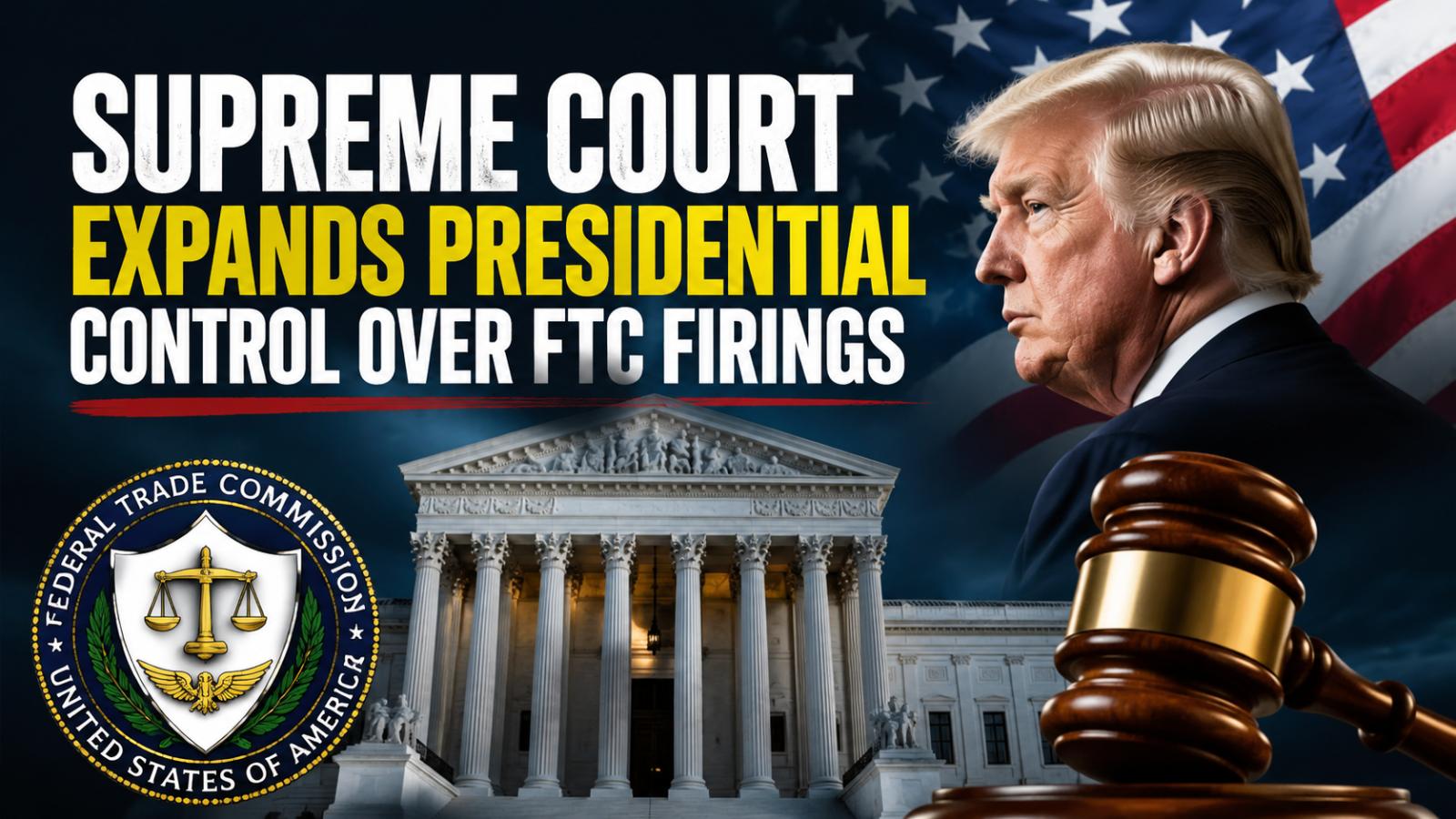
US Supreme Court expands presidential control over FTC firings
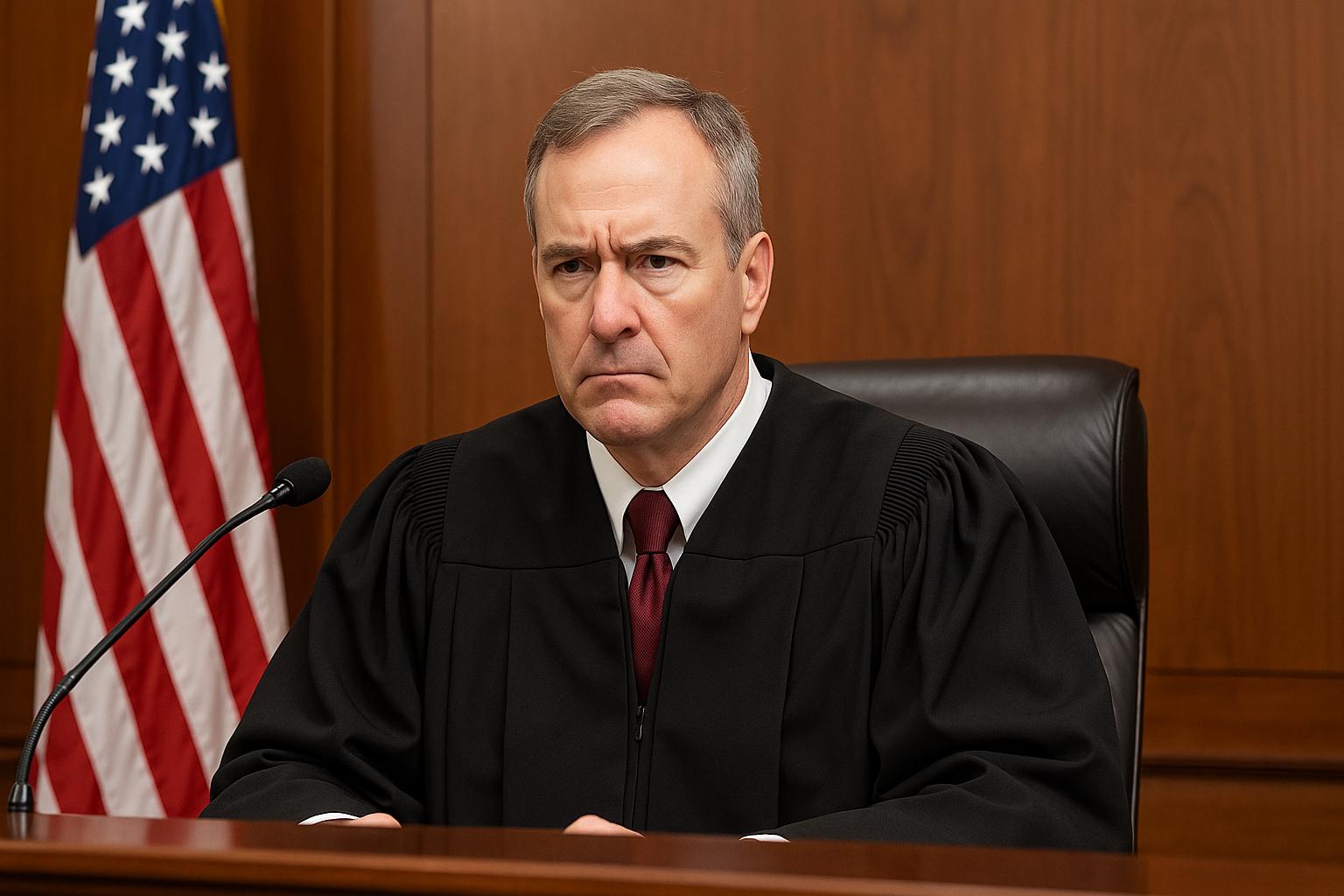
A major ruling from the US Supreme Court has redefined how much authority the president holds over independent federal agencies, including the Federal Trade Commission. In a closely watched 6–3 decision, the court concluded that certain protections preventing removal of agency officials without cause are inconsistent with the constitutional structure of executive power. The judgment effectively strengthens presidential oversight, allowing broader discretion in removing commissioners who exercise executive functions. Background of the FTC dismissal dispute The case arose after FTC commissioner Rebecca Slaughter was removed from her position without being given a formal reason tied to misconduct or inefficiency. She challenged the decision, arguing that the Federal Trade Commission Act of 1914 only permits removal under limited conditions such as neglect of duty or wrongdoing. Her legal team maintained that her dismissal violated statutory safeguards designed to protect agency independence. The dispute quickly escalated into a constitutional question about how far presidential authority extends over regulatory bodies. Court’s interpretation of executive authority Writing for the majority, Chief Justice John Roberts held that officials exercising executive power must remain accountable to the president. The court reasoned that insulating such officials from removal undermines the constitutional principle of a unified executive branch. As a result, the Federal Trade Commission’s structure was found to be partially incompatible with absolute “for cause” removal protection. The ruling split the court 6–3, with dissenting justices warning that the decision weakens institutional safeguards designed to prevent political interference in regulatory enforcement. Legal precedent and structural implications The decision revisits long-standing administrative law principles tied to earlier rulings that had supported limits on presidential removal power for independent agencies. By narrowing those protections, the court has opened the door for broader executive control over a range of federal commissions that previously operated with significant autonomy. Legal analysts expect the ruling to influence disputes involving multiple regulatory bodies beyond the FTC, particularly where commissioners have statutory job protections. Impact on independent agencies and governance The ruling could affect dozens of federal agencies that rely on “for cause” removal standards to maintain operational independence. These institutions, which include regulatory, labor, and enforcement bodies such as the Federal Trade Commission, may now face closer oversight from the White House. Supporters of the ruling argue it strengthens accountability and reduces bureaucratic insulation. Critics, however, warn it concentrates too much power in the executive branch and could weaken regulatory neutrality. Political reactions and dissenting views Former President Donald Trump welcomed the decision, describing it as a significant reinforcement of presidential authority over federal institutions. In contrast, Justice Sonia Sotomayor issued a strong dissent, arguing that the ruling undermines structural protections that prevent excessive executive control over independent agencies. The decision is expected to remain a key reference point in future constitutional debates on the balance of power between the presidency and regulatory institutions.
US Supreme Court expands presidential control over FTC firings
A major ruling from the US Supreme Court has redefined how much authority the president holds over independent federal agencies, including the Federal Trade Commission. In a closely watched 6–3 decision, the court concluded that certain protections preventing removal of agency officials without cause are inconsistent with the constitutional structure of executive power. The judgment effectively strengthens presidential oversight, allowing broader discretion in removing commissioners who exercise executive functions. Background of the FTC dismissal dispute The case arose after FTC commissioner Rebecca Slaughter was removed from her position without being given a formal reason tied to misconduct or inefficiency. She challenged the decision, arguing that the Federal Trade Commission Act of 1914 only permits removal under limited conditions such as neglect of duty or wrongdoing. Her legal team maintained that her dismissal violated statutory safeguards designed to protect agency independence. The dispute quickly escalated into a constitutional question about how far presidential authority extends over regulatory bodies. Court’s interpretation of executive authority Writing for the majority, Chief Justice John Roberts held that officials exercising executive power must remain accountable to the president. The court reasoned that insulating such officials from removal undermines the constitutional principle of a unified executive branch. As a result, the Federal Trade Commission’s structure was found to be partially incompatible with absolute “for cause” removal protection. The ruling split the court 6–3, with dissenting justices warning that the decision weakens institutional safeguards designed to prevent political interference in regulatory enforcement. Legal precedent and structural implications The decision revisits long-standing administrative law principles tied to earlier rulings that had supported limits on presidential removal power for independent agencies. By narrowing those protections, the court has opened the door for broader executive control over a range of federal commissions that previously operated with significant autonomy. Legal analysts expect the ruling to influence disputes involving multiple regulatory bodies beyond the FTC, particularly where commissioners have statutory job protections. Impact on independent agencies and governance The ruling could affect dozens of federal agencies that rely on “for cause” removal standards to maintain operational independence. These institutions, which include regulatory, labor, and enforcement bodies such as the Federal Trade Commission, may now face closer oversight from the White House. Supporters of the ruling argue it strengthens accountability and reduces bureaucratic insulation. Critics, however, warn it concentrates too much power in the executive branch and could weaken regulatory neutrality. Political reactions and dissenting views Former President Donald Trump welcomed the decision, describing it as a significant reinforcement of presidential authority over federal institutions. In contrast, Justice Sonia Sotomayor issued a strong dissent, arguing that the ruling undermines structural protections that prevent excessive executive control over independent agencies. The decision is expected to remain a key reference point in future constitutional debates on the balance of power between the presidency and regulatory institutions.
Supreme Court Declares Right To Walk On Footpaths A Fundamental Right
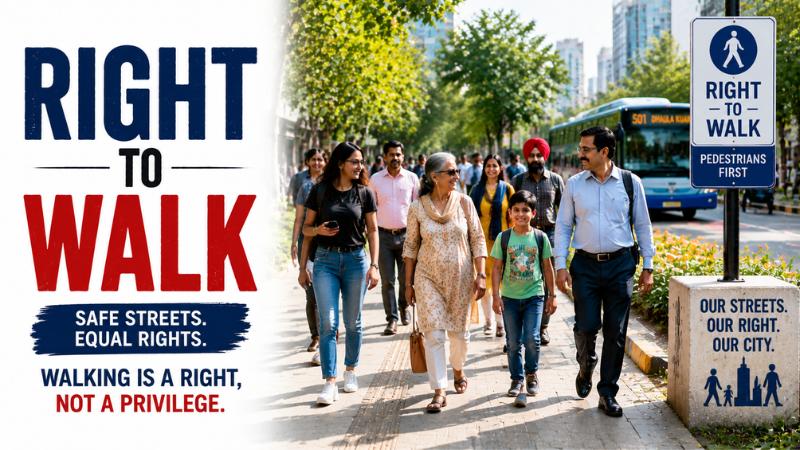
Supreme Court Says Right To Walk On Safe Footpaths Is A Fundamental Right The Supreme Court has declared that walking on safe and clearly marked footpaths is a fundamental right, strengthening the legal protection available to pedestrians across India. In a significant ruling, the court said public authorities have a duty to provide and maintain footpaths wherever roads exist. The judgment pl
Supreme Court Declares Right To Walk On Footpaths A Fundamental Right
Supreme Court Says Right To Walk On Safe Footpaths Is A Fundamental Right The Supreme Court has declared that walking on safe and clearly marked footpaths is a fundamental right, strengthening the legal protection available to pedestrians across India. In a significant ruling, the court said public authorities have a duty to provide and maintain footpaths wherever roads exist. The judgment pl
Supreme Court Highlights Liberty in UAPA Cases, Umar Khalid Case in Focus
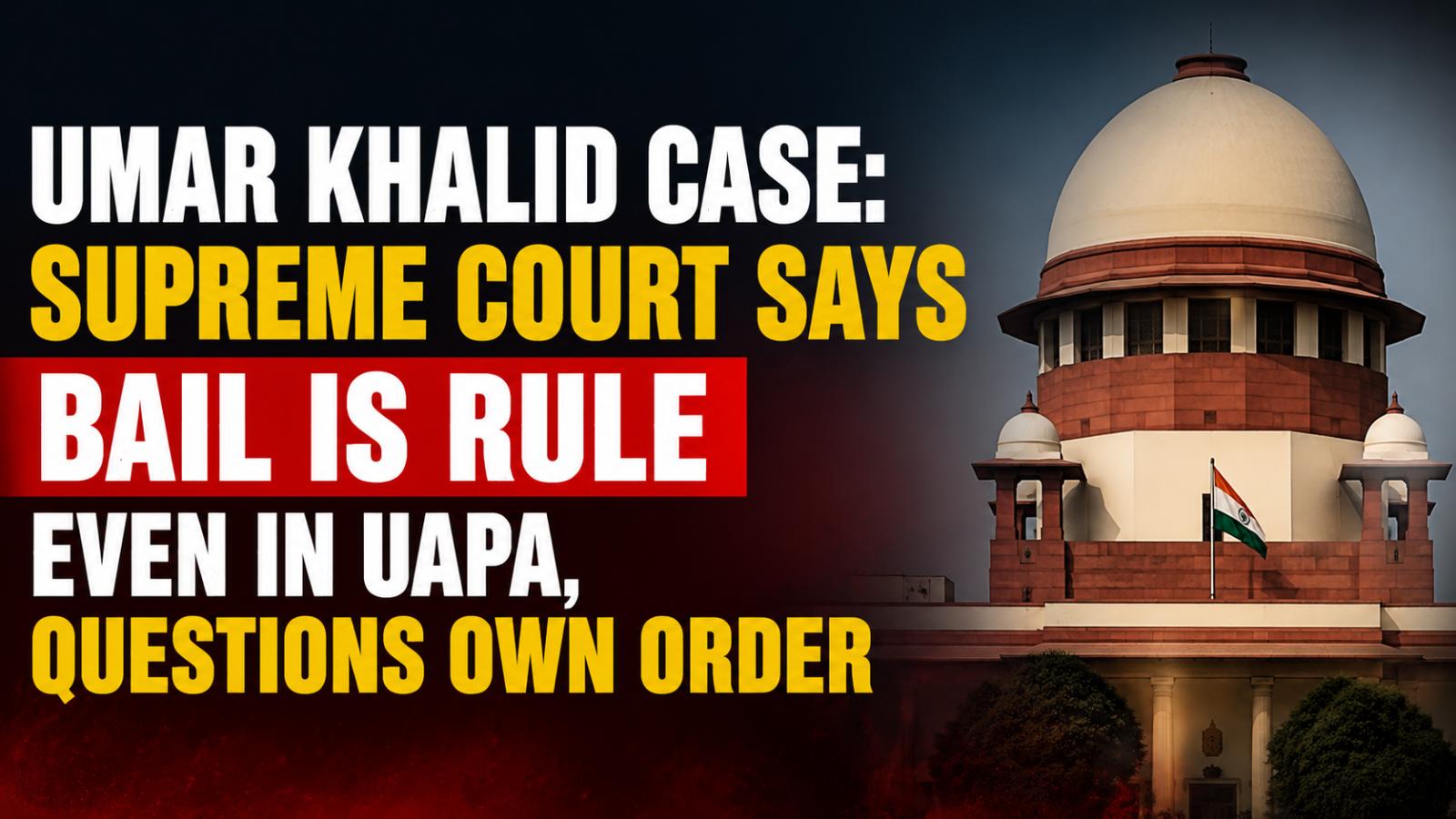
Supreme Court Questions Umar Khalid Bail Order in Major UAPA Observation In a significant legal development with potential nationwide implications, the Supreme Court on Monday observed that the long-established legal principle of “bail is the rule and jail is the exception” remains applicable even in cases registered under the stringent Unlawful Activities (Prevention) Act (UAPA). The court also raised serious concerns
Supreme Court Highlights Liberty in UAPA Cases, Umar Khalid Case in Focus
Supreme Court Questions Umar Khalid Bail Order in Major UAPA Observation In a significant legal development with potential nationwide implications, the Supreme Court on Monday observed that the long-established legal principle of “bail is the rule and jail is the exception” remains applicable even in cases registered under the stringent Unlawful Activities (Prevention) Act (UAPA). The court also raised serious concerns
Mamata Banerjee Refuses to Resign After BJP Victory in Bengal: What Happens Next?
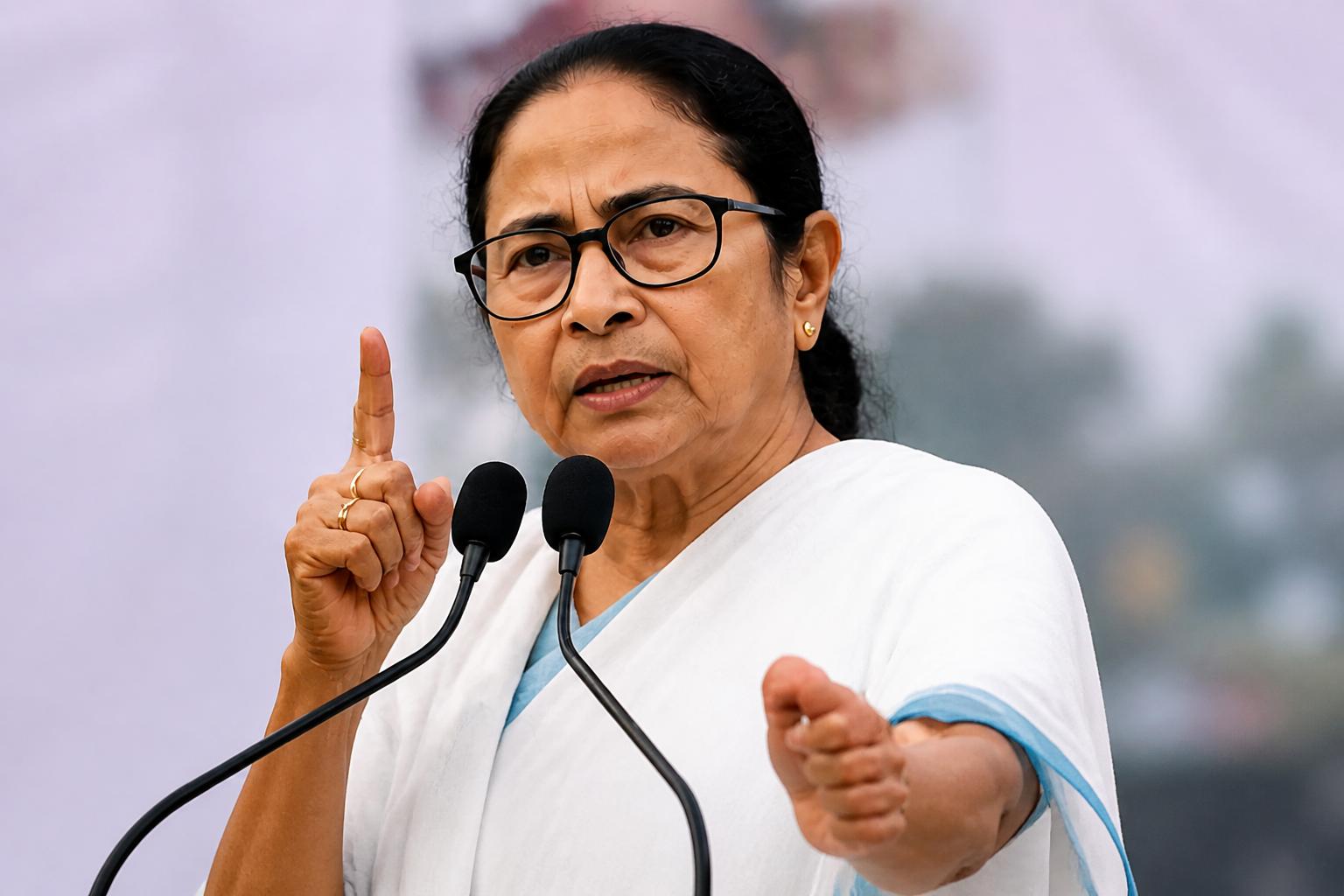
In a defiant stance after the BJP's overwhelming victory in the 2026 Bengal Assembly elections, Mamata Banerjee has refused to resign from her position as Chief Minister, despite losing her Bhabanipur seat. The Trinamool Congress (TMC) leader, who has led Bengal for over a decade, declared, “I won’t resign. I didn’t lose,” in a packed press conference. This statement has raised questions about the constitutional implications of her refusal to step down, as the TMC government’s term
Mamata Banerjee Refuses to Resign After BJP Victory in Bengal: What Happens Next?
In a defiant stance after the BJP's overwhelming victory in the 2026 Bengal Assembly elections, Mamata Banerjee has refused to resign from her position as Chief Minister, despite losing her Bhabanipur seat. The Trinamool Congress (TMC) leader, who has led Bengal for over a decade, declared, “I won’t resign. I didn’t lose,” in a packed press conference. This statement has raised questions about the constitutional implications of her refusal to step down, as the TMC government’s term
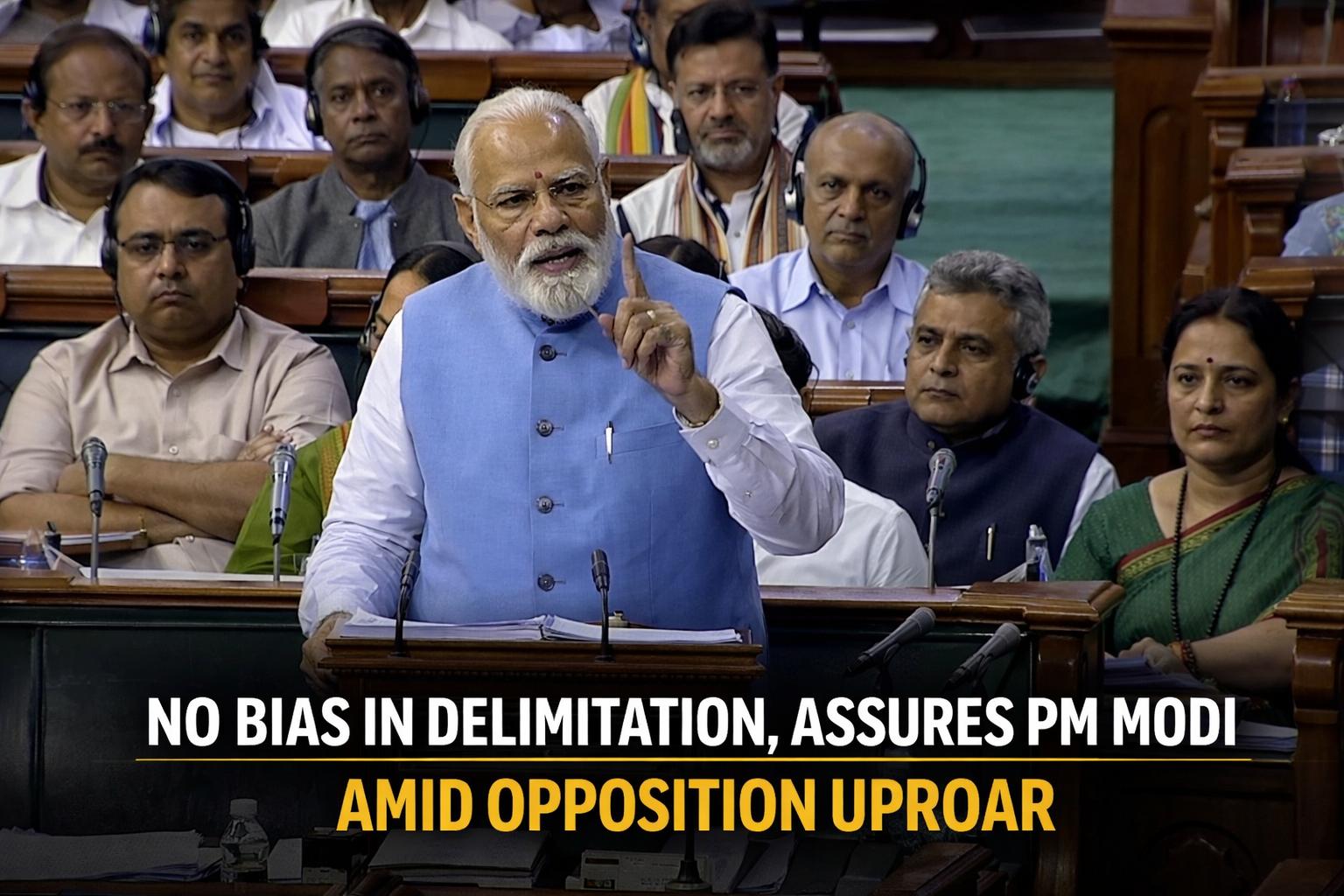
PM Modi Promises Fair Delimitation, Says All States Will Be Treated Equally
Prime Minister Narendra Modi addressed the Lok Sabha during the ongoing special Parliament session, offering a strong assurance that the proposed delimitation process will be conducted without bias toward any region. His statement comes at a time when the issue has triggered a major political confrontation between the ruling NDA and Opposition parties, especially leaders from southern states who fea
PM Modi Promises Fair Delimitation, Says All States Will Be Treated Equally
Prime Minister Narendra Modi addressed the Lok Sabha during the ongoing special Parliament session, offering a strong assurance that the proposed delimitation process will be conducted without bias toward any region. His statement comes at a time when the issue has triggered a major political confrontation between the ruling NDA and Opposition parties, especially leaders from southern states who fea
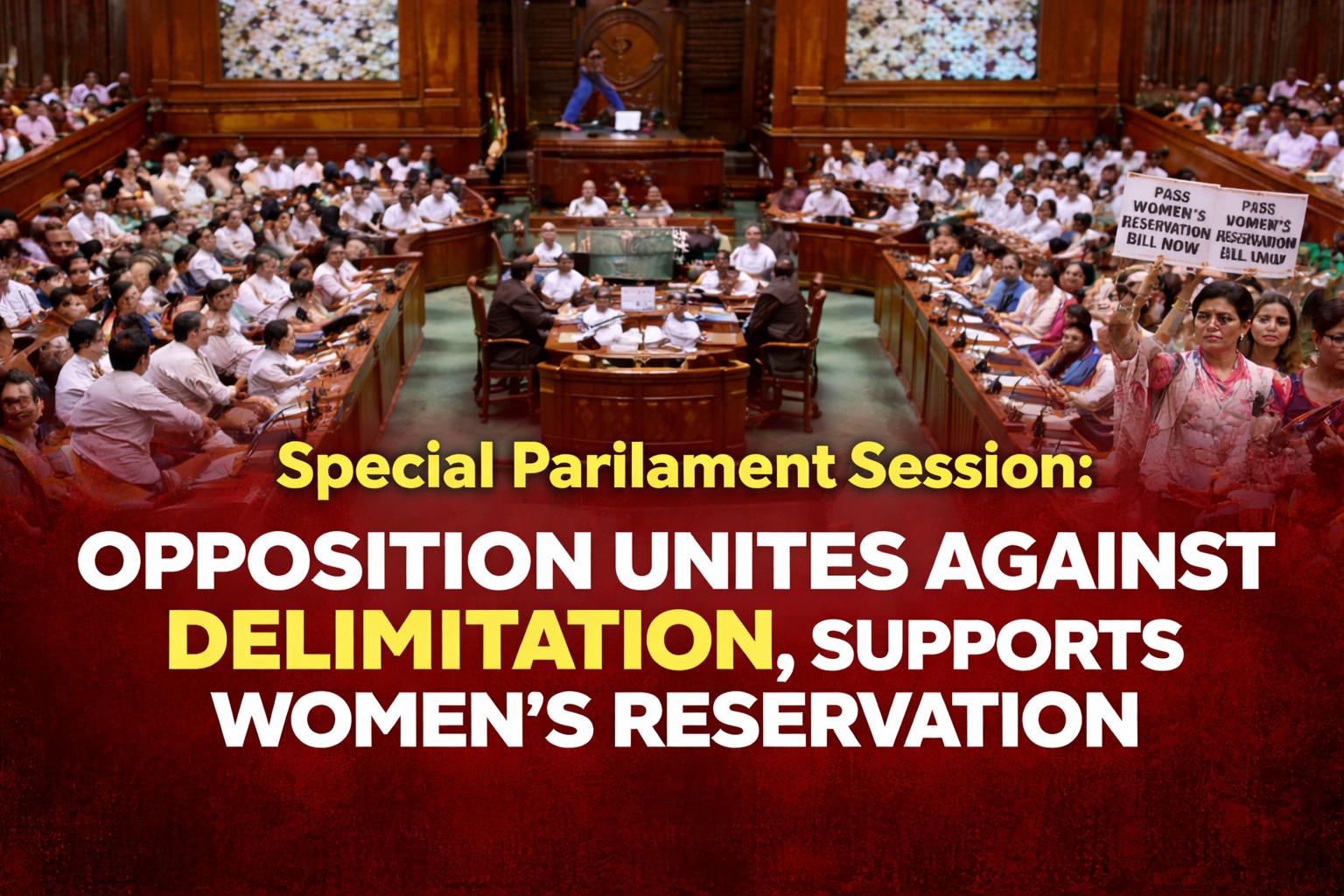
Special Parliament Session Live: Opposition Unites Against Delimitation, Supports Women’s Reservation
The Special Parliament Session, set to run from April 16 to 18, has kicked off with significant debates surrounding the government’s proposed amendments. One of the most anticipated legislative pieces is the operationalization of the Women’s Reservation Act, which aims to ensure 33% representation for women in both the Lok Sabha and state assemblies by 2029. Alongside this, a Constitution amendment bill will be presented on the first day of the session, marking the beginning of what promi
Special Parliament Session Live: Opposition Unites Against Delimitation, Supports Women’s Reservation
The Special Parliament Session, set to run from April 16 to 18, has kicked off with significant debates surrounding the government’s proposed amendments. One of the most anticipated legislative pieces is the operationalization of the Women’s Reservation Act, which aims to ensure 33% representation for women in both the Lok Sabha and state assemblies by 2029. Alongside this, a Constitution amendment bill will be presented on the first day of the session, marking the beginning of what promi
Women's Quota and Delimitation: Decoding Three Bills Set to Trigger Parliament Face-Off
India's Parliament is set to witness a fierce debate over three proposed bills that could significantly alter the country's electoral system, especially the reservation for women. While the government argues these bills are crucial for ensuring a 33% reservation for women, the opposition and legal experts have raised serious concerns about the political and constitutional implications. The first bill, the Constitutional Amendment Bill, proposes an increase in Lok Sabha seats to 850,
Women's Quota and Delimitation: Decoding Three Bills Set to Trigger Parliament Face-Off
India's Parliament is set to witness a fierce debate over three proposed bills that could significantly alter the country's electoral system, especially the reservation for women. While the government argues these bills are crucial for ensuring a 33% reservation for women, the opposition and legal experts have raised serious concerns about the political and constitutional implications. The first bill, the Constitutional Amendment Bill, proposes an increase in Lok Sabha seats to 850,
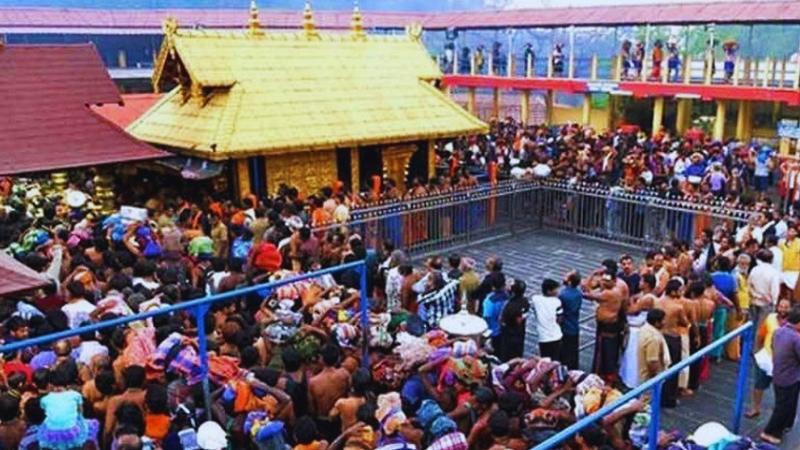
Sabarimala Case: SC Judge BV Nagarathna Slams Gender-Based Entry Restrictions for Women
In a significant development regarding the Sabarimala temple's gender-based entry restrictions, Supreme Court Judge BV Nagarathna expressed her strong opinion, stating that a woman cannot be treated as "untouchable" for three days each month, only to cease being considered untouchable on the fourth day. Her remarks were made during a hearing by a nine-judge bench on petitions related to the exclusion of women from religious places, with a focus on the Sabarimala temple in Kerala. The case has
Sabarimala Case: SC Judge BV Nagarathna Slams Gender-Based Entry Restrictions for Women
In a significant development regarding the Sabarimala temple's gender-based entry restrictions, Supreme Court Judge BV Nagarathna expressed her strong opinion, stating that a woman cannot be treated as "untouchable" for three days each month, only to cease being considered untouchable on the fourth day. Her remarks were made during a hearing by a nine-judge bench on petitions related to the exclusion of women from religious places, with a focus on the Sabarimala temple in Kerala. The case has
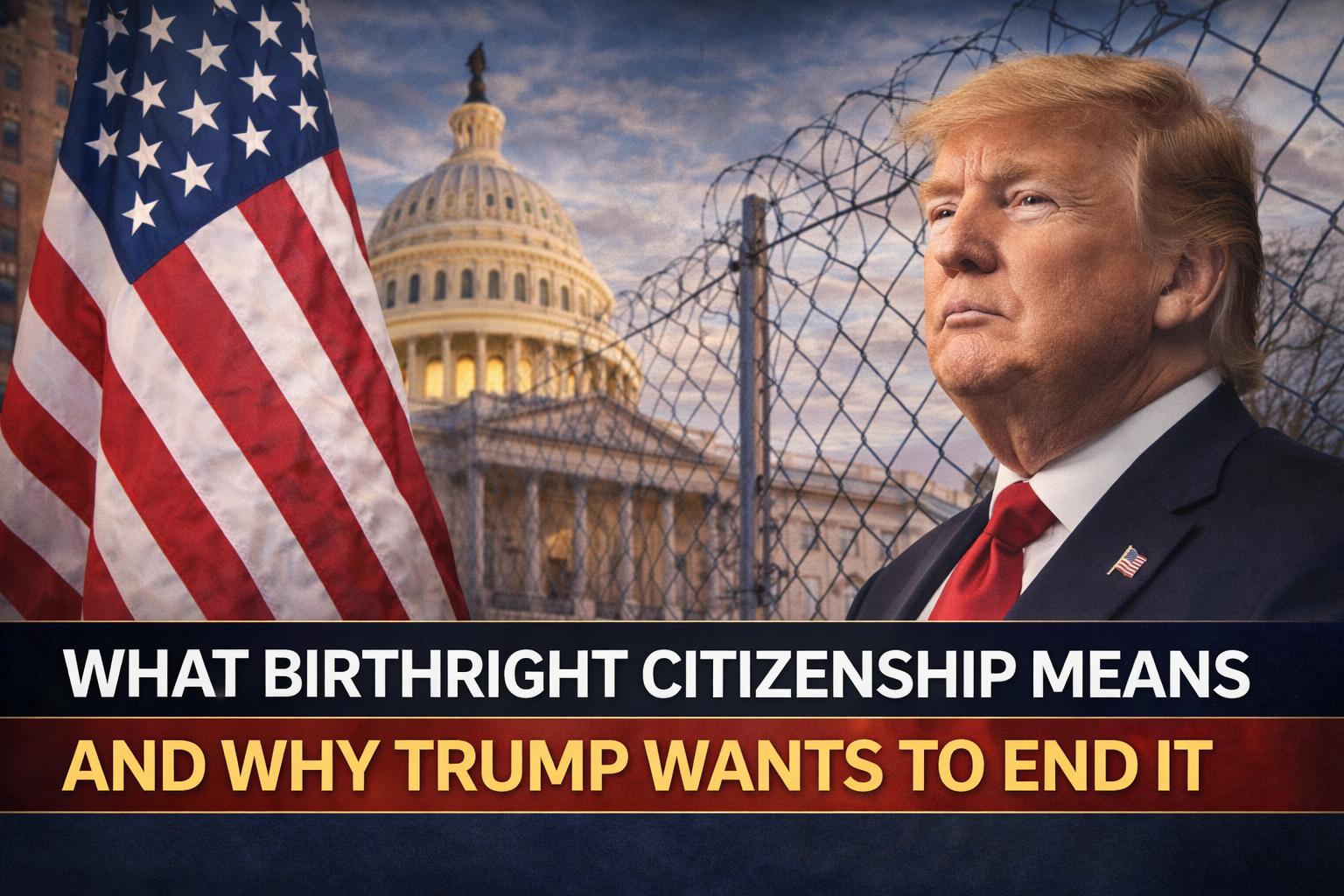
What birthright citizenship means and why Trump wants to end it
The US Supreme Court is reviewing a major legal challenge to President Donald Trump’s January 2025 executive order seeking to end birthright citizenship. During a hearing on Wednesday, April 1, 2026, justices examined whether the policy aligns with the US Constitution and federal law. Birthright citizenship is based on the 14th Amendment, which states that anyone born in the United States is automatically a citizen, regardless of their parents’ immigration status. This principle
What birthright citizenship means and why Trump wants to end it
The US Supreme Court is reviewing a major legal challenge to President Donald Trump’s January 2025 executive order seeking to end birthright citizenship. During a hearing on Wednesday, April 1, 2026, justices examined whether the policy aligns with the US Constitution and federal law. Birthright citizenship is based on the 14th Amendment, which states that anyone born in the United States is automatically a citizen, regardless of their parents’ immigration status. This principle
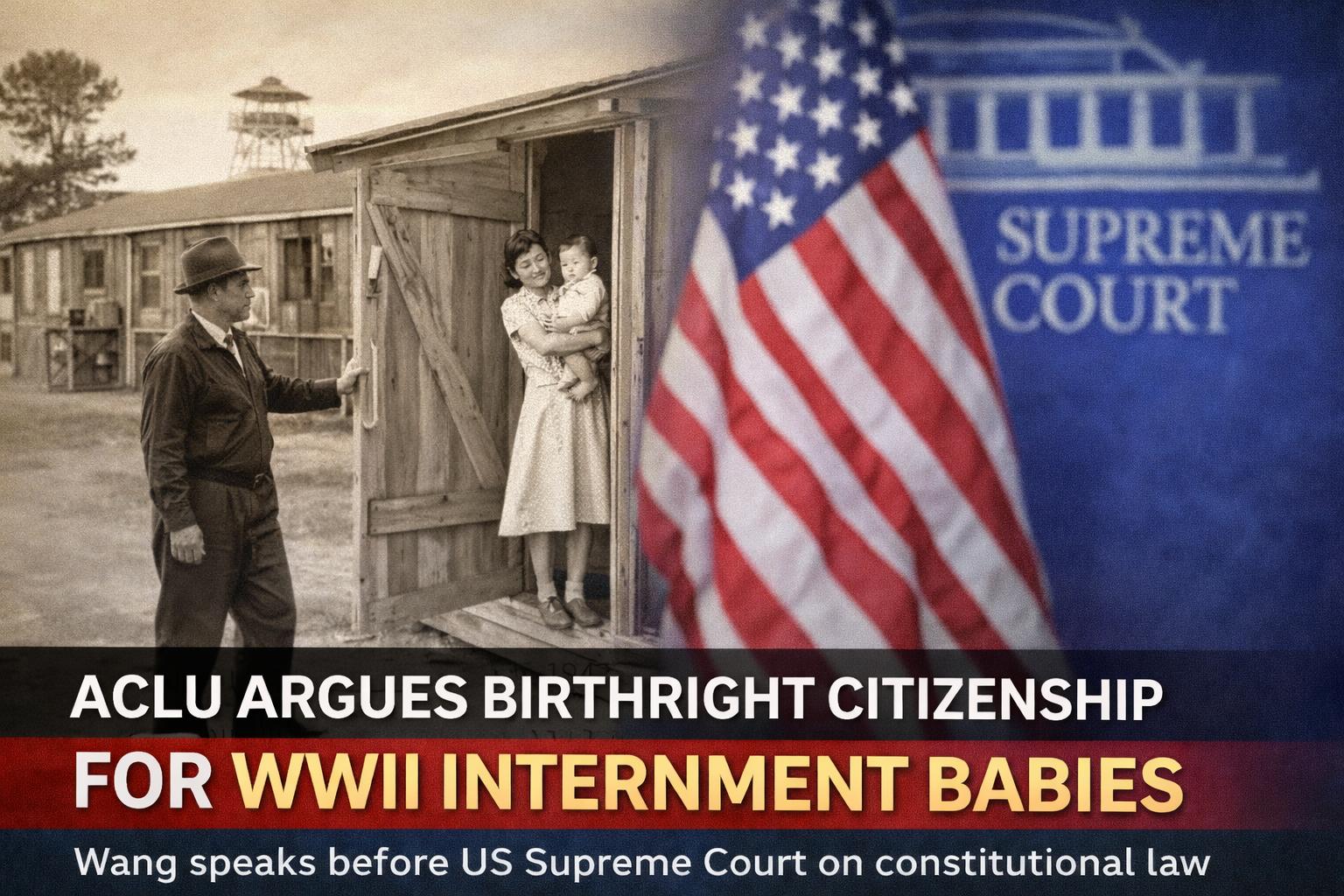
ACLU argues birthright citizenship using WWII internment example
An attorney for the American Civil Liberties Union argued before the U.S. Supreme Court that historical precedent supports granting citizenship to individuals born on American soil, referencing births during World War II-era Japanese internment as a key example. During an exchange with Justice Amy Coney Barrett, ACLU lawyer Wang pointed to the treatment of children born in U.S. detention camps, emphasizing that such individuals were widely recognized as American citizens under existing law.
ACLU argues birthright citizenship using WWII internment example
An attorney for the American Civil Liberties Union argued before the U.S. Supreme Court that historical precedent supports granting citizenship to individuals born on American soil, referencing births during World War II-era Japanese internment as a key example. During an exchange with Justice Amy Coney Barrett, ACLU lawyer Wang pointed to the treatment of children born in U.S. detention camps, emphasizing that such individuals were widely recognized as American citizens under existing law.
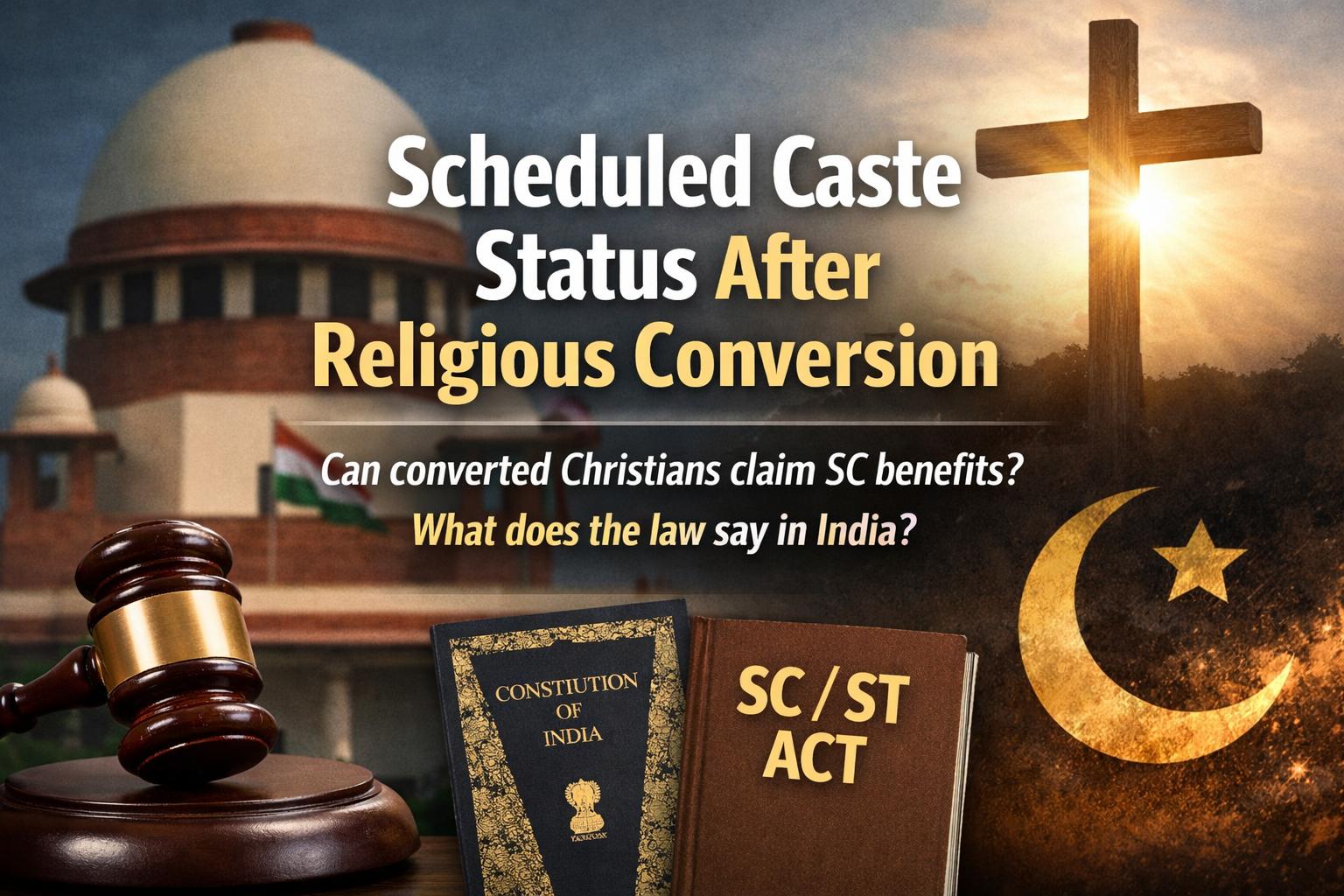
Supreme Court of India rules conversion ends Scheduled Caste status
The Supreme Court of India, in a significant judgment delivered on March 24, 2026, has reaffirmed that individuals who convert to religions other than Hinduism, Sikhism, or Buddhism cannot retain or claim Scheduled Caste status under the law. The ruling reinforces the constitutional framework governing caste-based reservations and legal protections in India. The verdict came in an appeal challenging an earlier decision of the Andhra Pradesh High Court, which had quashed criminal proceedings filed under the Scheduled Castes and Scheduled Tribes (Prevention of Atrocities) Act. The complainant, who was born into a Scheduled Caste but had converted to Christianity and was functioning as a pastor, had alleged caste-based abuse and assault. However, the court held that his conversion disentitled him from invoking protections meant specifically for Scheduled Castes. A bench of the Supreme Court observed that the Constitution (Scheduled Castes) Order, 1950, clearly restricts Scheduled Caste recognition to persons professing Hinduism, Sikhism, or Buddhism. The court described this restriction as categorical, stating that conversion to any other religion results in the immediate and complete loss of Scheduled Caste status, regardless of birth. The court further clarified that a person cannot simultaneously profess a religion outside the specified categories and claim Scheduled Caste identity for statutory benefits. It emphasized that such positions are mutually exclusive within the constitutional scheme, and no statutory protection or reservation can be extended once a person ceases to fall within the legally defined category. In its interpretation, the court also highlighted that the term “profess” implies a public declaration and active practice of a religion. This interpretation played a key role in assessing the individual’s eligibility, particularly in cases where religious identity is visibly demonstrated through roles such as clergy or religious leadership. The judgment is expected to have wide-ranging implications for individuals who convert to religions outside the constitutionally recognised framework while seeking benefits or protections linked to Scheduled Caste status. While the ruling reinforces existing legal provisions, it also brings renewed attention to ongoing debates about caste discrimination and its persistence beyond religious boundaries.
Supreme Court of India rules conversion ends Scheduled Caste status
The Supreme Court of India, in a significant judgment delivered on March 24, 2026, has reaffirmed that individuals who convert to religions other than Hinduism, Sikhism, or Buddhism cannot retain or claim Scheduled Caste status under the law. The ruling reinforces the constitutional framework governing caste-based reservations and legal protections in India. The verdict came in an appeal challenging an earlier decision of the Andhra Pradesh High Court, which had quashed criminal proceedings filed under the Scheduled Castes and Scheduled Tribes (Prevention of Atrocities) Act. The complainant, who was born into a Scheduled Caste but had converted to Christianity and was functioning as a pastor, had alleged caste-based abuse and assault. However, the court held that his conversion disentitled him from invoking protections meant specifically for Scheduled Castes. A bench of the Supreme Court observed that the Constitution (Scheduled Castes) Order, 1950, clearly restricts Scheduled Caste recognition to persons professing Hinduism, Sikhism, or Buddhism. The court described this restriction as categorical, stating that conversion to any other religion results in the immediate and complete loss of Scheduled Caste status, regardless of birth. The court further clarified that a person cannot simultaneously profess a religion outside the specified categories and claim Scheduled Caste identity for statutory benefits. It emphasized that such positions are mutually exclusive within the constitutional scheme, and no statutory protection or reservation can be extended once a person ceases to fall within the legally defined category. In its interpretation, the court also highlighted that the term “profess” implies a public declaration and active practice of a religion. This interpretation played a key role in assessing the individual’s eligibility, particularly in cases where religious identity is visibly demonstrated through roles such as clergy or religious leadership. The judgment is expected to have wide-ranging implications for individuals who convert to religions outside the constitutionally recognised framework while seeking benefits or protections linked to Scheduled Caste status. While the ruling reinforces existing legal provisions, it also brings renewed attention to ongoing debates about caste discrimination and its persistence beyond religious boundaries.
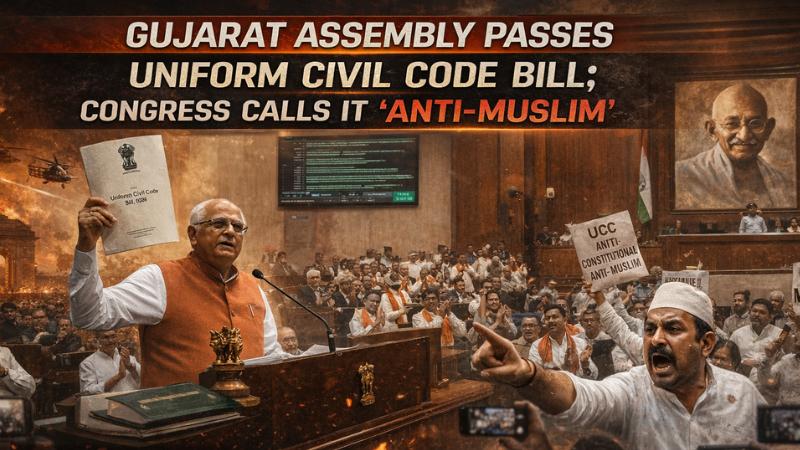
Gujarat Assembly Passes Uniform Civil Code Bill; Congress Calls it Anti-Muslim
In a landmark decision on March 25, 2026, the Gujarat Assembly passed the Uniform Civil Code (UCC) Bill after a heated seven-hour debate. The Bill, which proposes a uniform legal framework to govern marriage, divorce, succession, and live-in relationships, irrespective of religion, was passed with a majority voice vote. The ruling Bharatiya Janata Party (BJP) hailed the Bill as a crucial reform to ensure equality, while the Congress strongly opposed it, alleging that it violated fundamental r
Gujarat Assembly Passes Uniform Civil Code Bill; Congress Calls it Anti-Muslim
In a landmark decision on March 25, 2026, the Gujarat Assembly passed the Uniform Civil Code (UCC) Bill after a heated seven-hour debate. The Bill, which proposes a uniform legal framework to govern marriage, divorce, succession, and live-in relationships, irrespective of religion, was passed with a majority voice vote. The ruling Bharatiya Janata Party (BJP) hailed the Bill as a crucial reform to ensure equality, while the Congress strongly opposed it, alleging that it violated fundamental r
Difference Between Independence Day And Republic Day Explained Simply
Aspect Independence Day Republic Day
Difference Between Independence Day And Republic Day Explained Simply
Aspect Independence Day Republic Day
Texas Election Results 2025: Full List of General and Special Election Outcomes
Texans across the state went to the polls on November 4, 2025, for the general and special elections that determined key constitutional amendments and filled several important local and state positions. The ballot included seventeen proposed amendments to the Texas Constitution, a special election for Texas’s 18th Congressional District, and numerous local races throughout major cities and rural counties. The election was one of the most closely followed statewide events of the year, shaping l

Texas Election Results 2025: Full List of General and Special Election Outcomes
Texans across the state went to the polls on November 4, 2025, for the general and special elections that determined key constitutional amendments and filled several important local and state positions. The ballot included seventeen proposed amendments to the Texas Constitution, a special election for Texas’s 18th Congressional District, and numerous local races throughout major cities and rural counties. The election was one of the most closely followed statewide events of the year, shaping l

Justice Surya Kant Appointed 53rd Chief Justice of India, To Assume Office on Nov 24
Justice Surya Kant, one of the senior-most judges of the Supreme Court, has been officially appointed as the 53rd Chief Justice of India (CJI). The announcement was made by Union Law Minister Arjun Ram Meghwal, who congratulated Justice Kant on his appointment via X (formerly Twitter). He will take charge on November 24, 2025, succeeding Chief Justice DY Chandrachud, and will hold office until February 9, 2027. Justice Surya Kant, who hails from Haryana, has a distinguished judicial
Justice Surya Kant Appointed 53rd Chief Justice of India, To Assume Office on Nov 24
Justice Surya Kant, one of the senior-most judges of the Supreme Court, has been officially appointed as the 53rd Chief Justice of India (CJI). The announcement was made by Union Law Minister Arjun Ram Meghwal, who congratulated Justice Kant on his appointment via X (formerly Twitter). He will take charge on November 24, 2025, succeeding Chief Justice DY Chandrachud, and will hold office until February 9, 2027. Justice Surya Kant, who hails from Haryana, has a distinguished judicial
Federal judges in San Francisco order ICE to release detained immigrants
Federal judges in San Francisco have sharply rebuked U.S. Immigration and Customs Enforcement (ICE) for its handling of immigrant detentions, ordering the temporary release of dozens of detainees over concerns about violations of constitutional due process rights. The rulings come amid a nationwide surge in ICE arrests and a growing wave of legal challenges questioning the agency’s detention practices. The cases stem from a series of habeas corpus petitions filed by immigration at


Federal judges in San Francisco order ICE to release detained immigrants
Federal judges in San Francisco have sharply rebuked U.S. Immigration and Customs Enforcement (ICE) for its handling of immigrant detentions, ordering the temporary release of dozens of detainees over concerns about violations of constitutional due process rights. The rulings come amid a nationwide surge in ICE arrests and a growing wave of legal challenges questioning the agency’s detention practices. The cases stem from a series of habeas corpus petitions filed by immigration at
Inside The Controversial Bill To Remove Jailed Chief Ministers: A Political Storm Unfolds
In a move that has ignited a political storm in India, Union Home Minister Amit Shah introduced the Constitution (130th Amendment) Bill in the Lok Sabha, which has sparked widespread controversy and heated debates. The Bill proposes that any Prime Minister, Chief Minister, or minister who is arrested and remains in custody for more than 30 days due to charges carrying a jail term of five years or more should be removed from office. This legislation has led to
Inside The Controversial Bill To Remove Jailed Chief Ministers: A Political Storm Unfolds
In a move that has ignited a political storm in India, Union Home Minister Amit Shah introduced the Constitution (130th Amendment) Bill in the Lok Sabha, which has sparked widespread controversy and heated debates. The Bill proposes that any Prime Minister, Chief Minister, or minister who is arrested and remains in custody for more than 30 days due to charges carrying a jail term of five years or more should be removed from office. This legislation has led to
Justice Brett Kavanaugh defends supreme court handling of emergency cases criticism
Justice Brett Kavanaugh on Thursday addressed criticism regarding the Supreme Court's handling of emergency cases, often referred to as the shadow docket, during a conference in Kansas City attended by judges and legal professionals. In recent years, the court has faced increasing scrutiny for issuing decisions on urgent matters, particularly those involving policies from the Trump administration, without providing extensive explanations or holding full hearings. Critics have argued that
Justice Brett Kavanaugh defends supreme court handling of emergency cases criticism
Justice Brett Kavanaugh on Thursday addressed criticism regarding the Supreme Court's handling of emergency cases, often referred to as the shadow docket, during a conference in Kansas City attended by judges and legal professionals. In recent years, the court has faced increasing scrutiny for issuing decisions on urgent matters, particularly those involving policies from the Trump administration, without providing extensive explanations or holding full hearings. Critics have argued that
Jagdeep Dhankhar Resigns As Vice President of India Citing Health Reasons
Jagdeep Dhankhar, the 14th Vice President of India, has officially resigned from his post, citing health concerns. This surprising resignation comes as the country’s political landscape faces an unexpected shift on the first day of the Monsoon Parliament session. Dhankhar, who was also serving as the Chairman of the Rajya Sabha, had taken office in August 2022. His resignation letter, addressed to President Droupadi Murmu, was a formal declaration in whi
Jagdeep Dhankhar Resigns As Vice President of India Citing Health Reasons
Jagdeep Dhankhar, the 14th Vice President of India, has officially resigned from his post, citing health concerns. This surprising resignation comes as the country’s political landscape faces an unexpected shift on the first day of the Monsoon Parliament session. Dhankhar, who was also serving as the Chairman of the Rajya Sabha, had taken office in August 2022. His resignation letter, addressed to President Droupadi Murmu, was a formal declaration in whi
Trump Wins Legal Boost on Immigration as Court Limits Federal Judges' Broad Injunctions
Washington, June 27 – The United States Supreme Court handed President Donald Trump a significant legal victory on Friday by narrowing the authority of federal judges to issue sweeping nationwide injunctions, a move that could allow his contested immigration policies—including the attempt to limit birthright citizenship—to advance in parts of the country. However, the court stopped short of ruling on the constitutionality of Trump’s order, leaving the future of the bir
Trump Wins Legal Boost on Immigration as Court Limits Federal Judges' Broad Injunctions
Washington, June 27 – The United States Supreme Court handed President Donald Trump a significant legal victory on Friday by narrowing the authority of federal judges to issue sweeping nationwide injunctions, a move that could allow his contested immigration policies—including the attempt to limit birthright citizenship—to advance in parts of the country. However, the court stopped short of ruling on the constitutionality of Trump’s order, leaving the future of the bir