






Trump Iran Strike Delay Triggers Massive Oil Futures Trading Surge
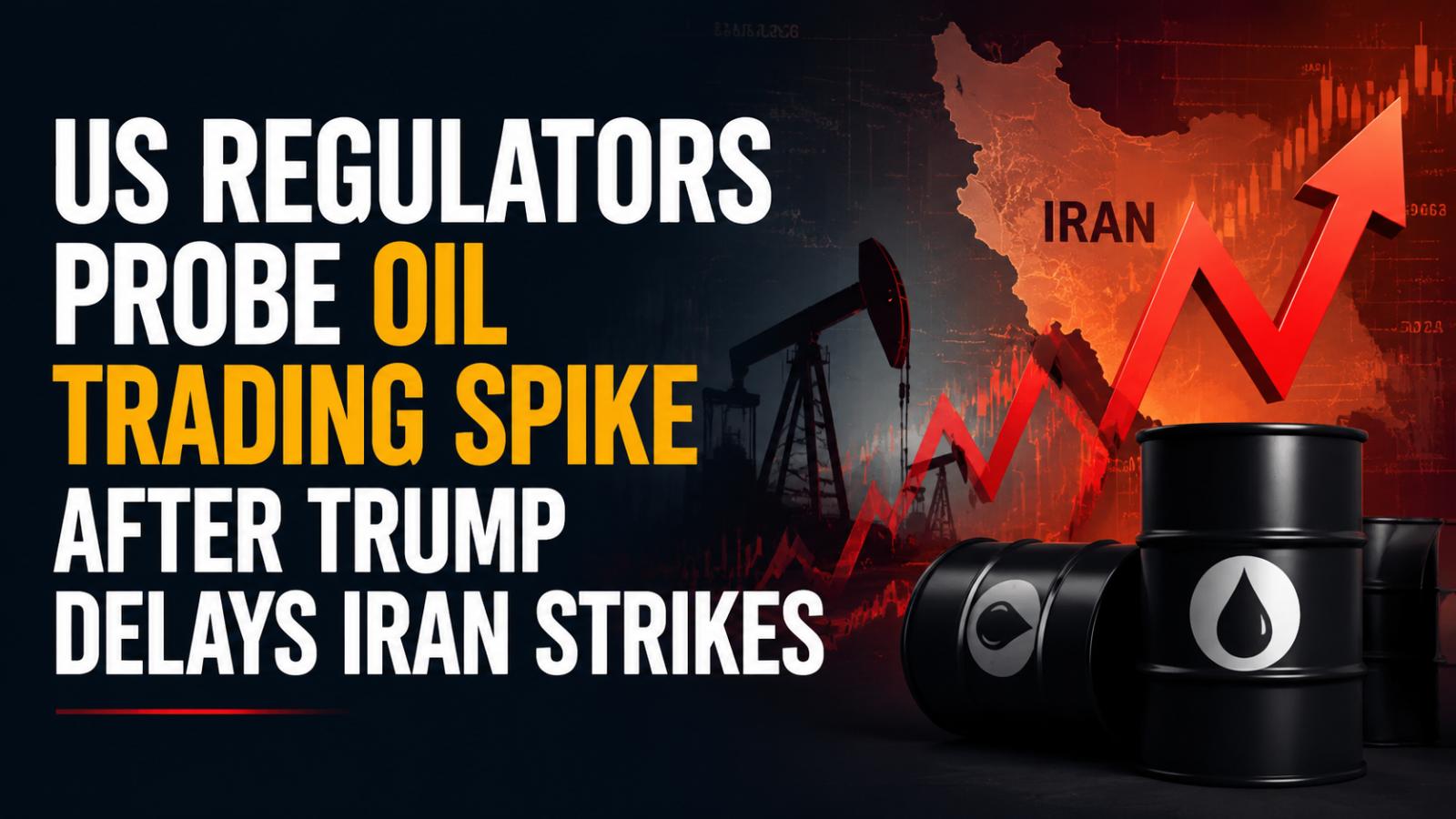
U.S. regulators are examining an unexpected spike in oil futures trading that occurred just before President Donald Trump announced a postponement of planned strikes on Iran’s energy sector. The Commodity Futures Trading Commission (CFTC) is reviewing unusual off-hours trading activity that reportedly generated millions in profits for several trading firms. Trading Activity Details
Trump Iran Strike Delay Triggers Massive Oil Futures Trading Surge
U.S. regulators are examining an unexpected spike in oil futures trading that occurred just before President Donald Trump announced a postponement of planned strikes on Iran’s energy sector. The Commodity Futures Trading Commission (CFTC) is reviewing unusual off-hours trading activity that reportedly generated millions in profits for several trading firms. Trading Activity Details
Trump Warns Tehran As Skywave Crude Oil Tanker Seized By US
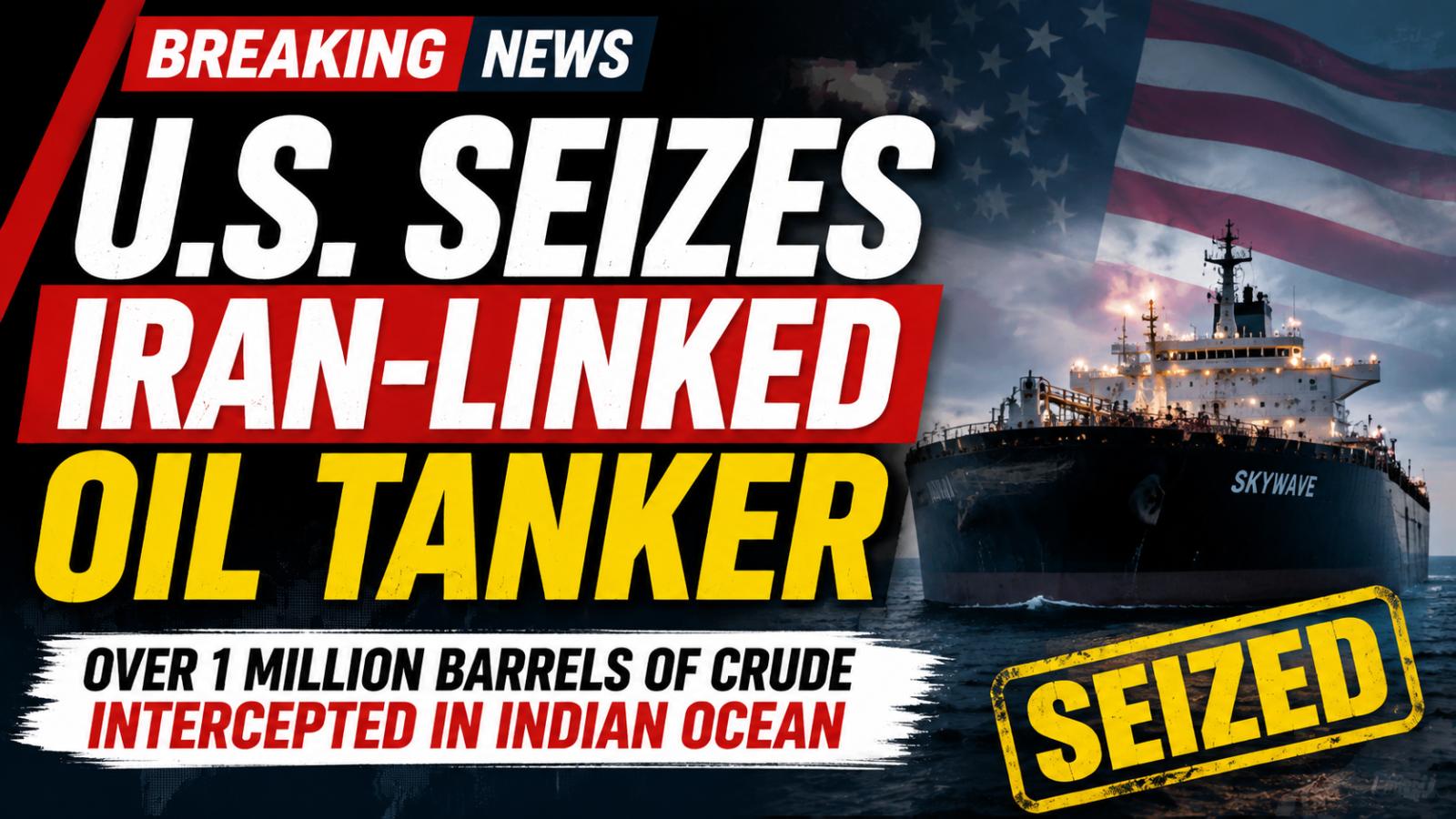
US Seizes Iran-Linked Skywave Tanker In Indian Ocean The United States has seized the Iran-linked oil tanker Skywave in the Indian Ocean, marking another significant enforcement action under US sanctions against Tehran. Officials said the tanker, sanctioned in March for allegedly transporting Iranian crude oil, was intercepted west of Malaysia on May 19 after passing through the Strait of Malacca. Ship-tra
Trump Warns Tehran As Skywave Crude Oil Tanker Seized By US
US Seizes Iran-Linked Skywave Tanker In Indian Ocean The United States has seized the Iran-linked oil tanker Skywave in the Indian Ocean, marking another significant enforcement action under US sanctions against Tehran. Officials said the tanker, sanctioned in March for allegedly transporting Iranian crude oil, was intercepted west of Malaysia on May 19 after passing through the Strait of Malacca. Ship-tra
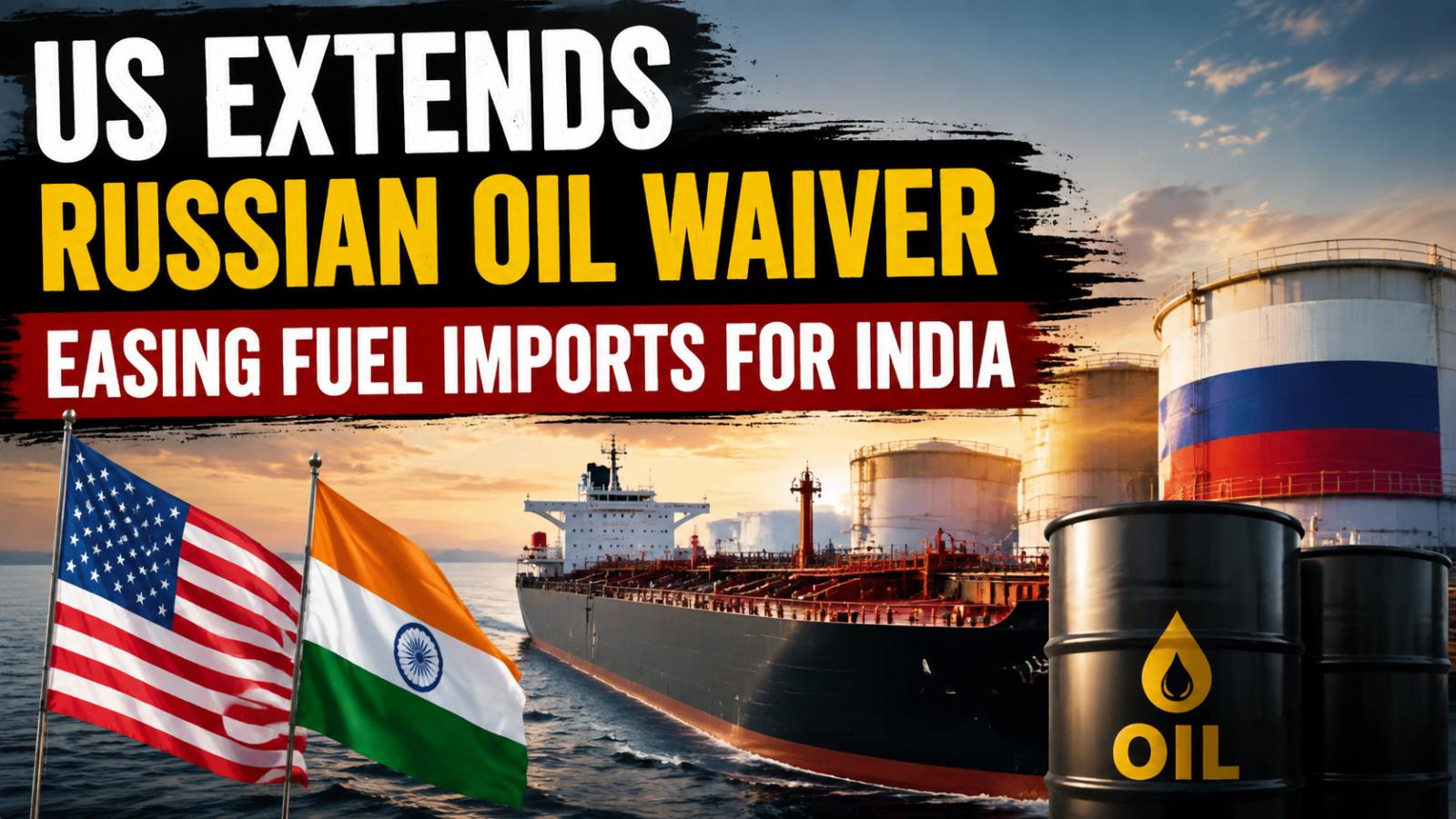
US Extends Russian Oil Sanctions Waiver, Boosts India Fuel Imports
The United States has extended its sanctions waiver on Russian seaborne oil by 30 days, allowing continued imports to key global partners like India. This temporary extension reverses previous plans to let the waiver lapse, aiming to provide flexibility for nations managing critical energy needs. Treasury officials stated the extension ensures that stranded Russian crude and petroleum products can reach markets without violating US sanctions on major Russian oil firms. This marks th
US Extends Russian Oil Sanctions Waiver, Boosts India Fuel Imports
The United States has extended its sanctions waiver on Russian seaborne oil by 30 days, allowing continued imports to key global partners like India. This temporary extension reverses previous plans to let the waiver lapse, aiming to provide flexibility for nations managing critical energy needs. Treasury officials stated the extension ensures that stranded Russian crude and petroleum products can reach markets without violating US sanctions on major Russian oil firms. This marks th
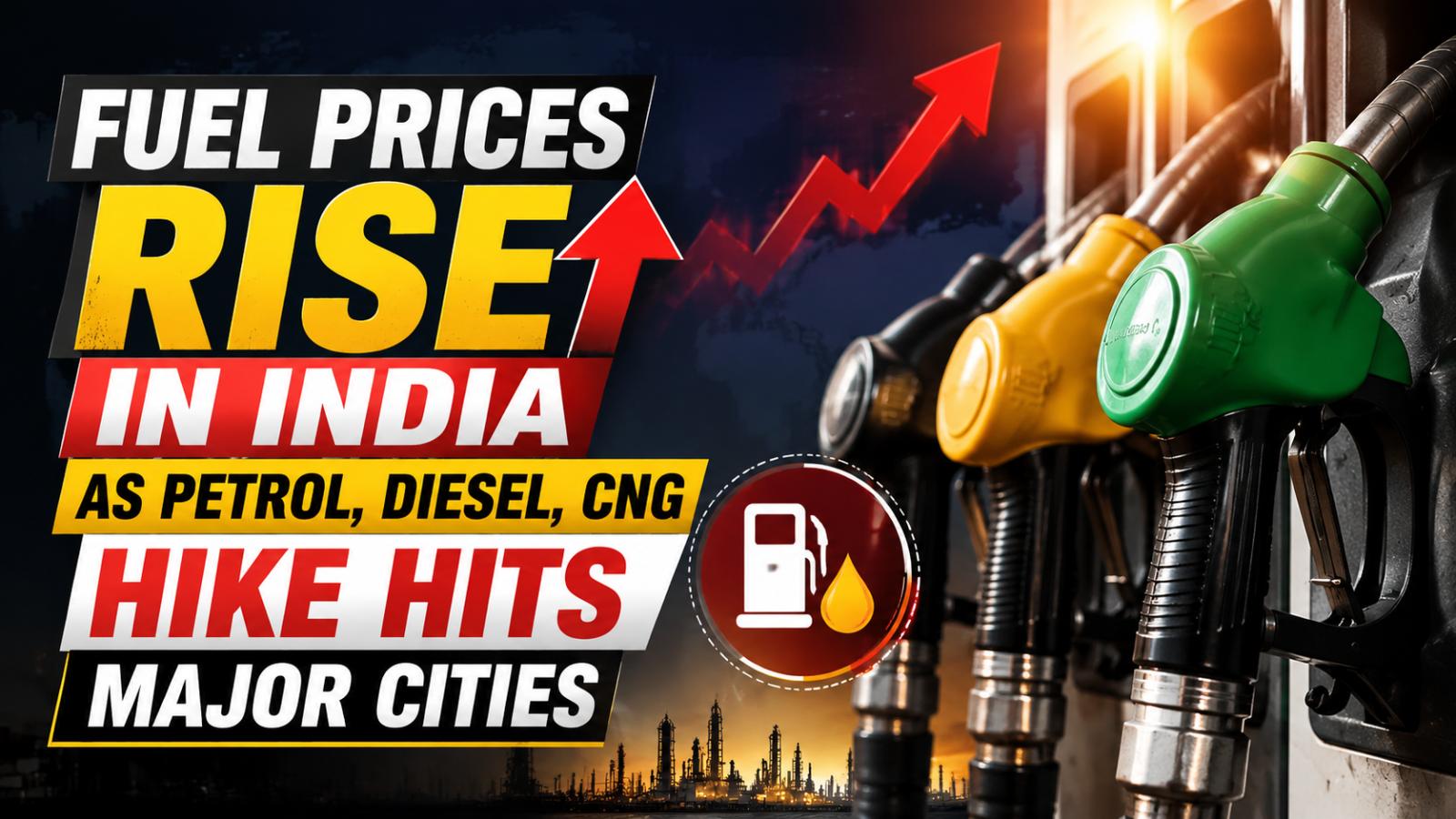
Fuel Prices Rise In India As Petrol Diesel CNG Hike Hits Major Cities
The petrol, diesel, and CNG price hike in India took effect on Friday, May 15, 2026. This was the first retail fuel price increase in four years, following the surge in global crude oil prices due to the Iran war. Fuel Price Hike Overview in Major Cities The government raised petrol, diesel, and CNG prices following a surge in global crude oil prices triggered by the Iran war. This is the first retail fuel price hike in four years. The increase is expected to affect transportation costs, household spending, and overall inflation. City Petrol Price (Rs/Litre) Petrol Hike (Rs) Diesel Price (Rs/Litre) Diesel Hike (Rs) CNG Price (Rs/Kg) CNG Hike (Rs) Delhi 97.77 3.00 90.67 3.00 79.09 2.00 Kolkata 108.74 3.29 95.13 3.11 — — Mumbai 106.68 3.14 93.14 3.11 84.00 2.00 Chennai 103.67 2.83 95.25 2.86 — — Hyderabad 104.50 3.10 94.20 3.05 80.50 2.00 Economic Implications and Expert Insights India’s state-run oil companies, IOCL, BPCL, and HPCL, were absorbing high crude costs for months, incurring daily losses of around Rs 1,600 crore. Imported crude prices jumped from $69 per barrel in February to $113-114 per barrel after the Iran war began on February 28. Economists, including Finance Commission Chair Dr Arvind Panagariya, recommended that retail prices be adjusted to prevent further losses and sustain OMC operations. Prime Minister Modi has appealed to citizens to conserve fuel and encouraged work-from-home practices to reduce foreign outflows. The Delhi government initiated a 90-day campaign promoting fuel-saving habits and limited office days. The fuel price increase is expected to push up transportation and logistics costs, which may drive inflation in essential commodities like milk and vegetables. Household savings could shrink, and discretionary spending may reduce, potentially slowing consumption, production, and GDP growth. While consumers will feel the immediate impact, this step was unavoidable given the international crude price surge.
Fuel Prices Rise In India As Petrol Diesel CNG Hike Hits Major Cities
The petrol, diesel, and CNG price hike in India took effect on Friday, May 15, 2026. This was the first retail fuel price increase in four years, following the surge in global crude oil prices due to the Iran war. Fuel Price Hike Overview in Major Cities The government raised petrol, diesel, and CNG prices following a surge in global crude oil prices triggered by the Iran war. This is the first retail fuel price hike in four years. The increase is expected to affect transportation costs, household spending, and overall inflation. City Petrol Price (Rs/Litre) Petrol Hike (Rs) Diesel Price (Rs/Litre) Diesel Hike (Rs) CNG Price (Rs/Kg) CNG Hike (Rs) Delhi 97.77 3.00 90.67 3.00 79.09 2.00 Kolkata 108.74 3.29 95.13 3.11 — — Mumbai 106.68 3.14 93.14 3.11 84.00 2.00 Chennai 103.67 2.83 95.25 2.86 — — Hyderabad 104.50 3.10 94.20 3.05 80.50 2.00 Economic Implications and Expert Insights India’s state-run oil companies, IOCL, BPCL, and HPCL, were absorbing high crude costs for months, incurring daily losses of around Rs 1,600 crore. Imported crude prices jumped from $69 per barrel in February to $113-114 per barrel after the Iran war began on February 28. Economists, including Finance Commission Chair Dr Arvind Panagariya, recommended that retail prices be adjusted to prevent further losses and sustain OMC operations. Prime Minister Modi has appealed to citizens to conserve fuel and encouraged work-from-home practices to reduce foreign outflows. The Delhi government initiated a 90-day campaign promoting fuel-saving habits and limited office days. The fuel price increase is expected to push up transportation and logistics costs, which may drive inflation in essential commodities like milk and vegetables. Household savings could shrink, and discretionary spending may reduce, potentially slowing consumption, production, and GDP growth. While consumers will feel the immediate impact, this step was unavoidable given the international crude price surge.
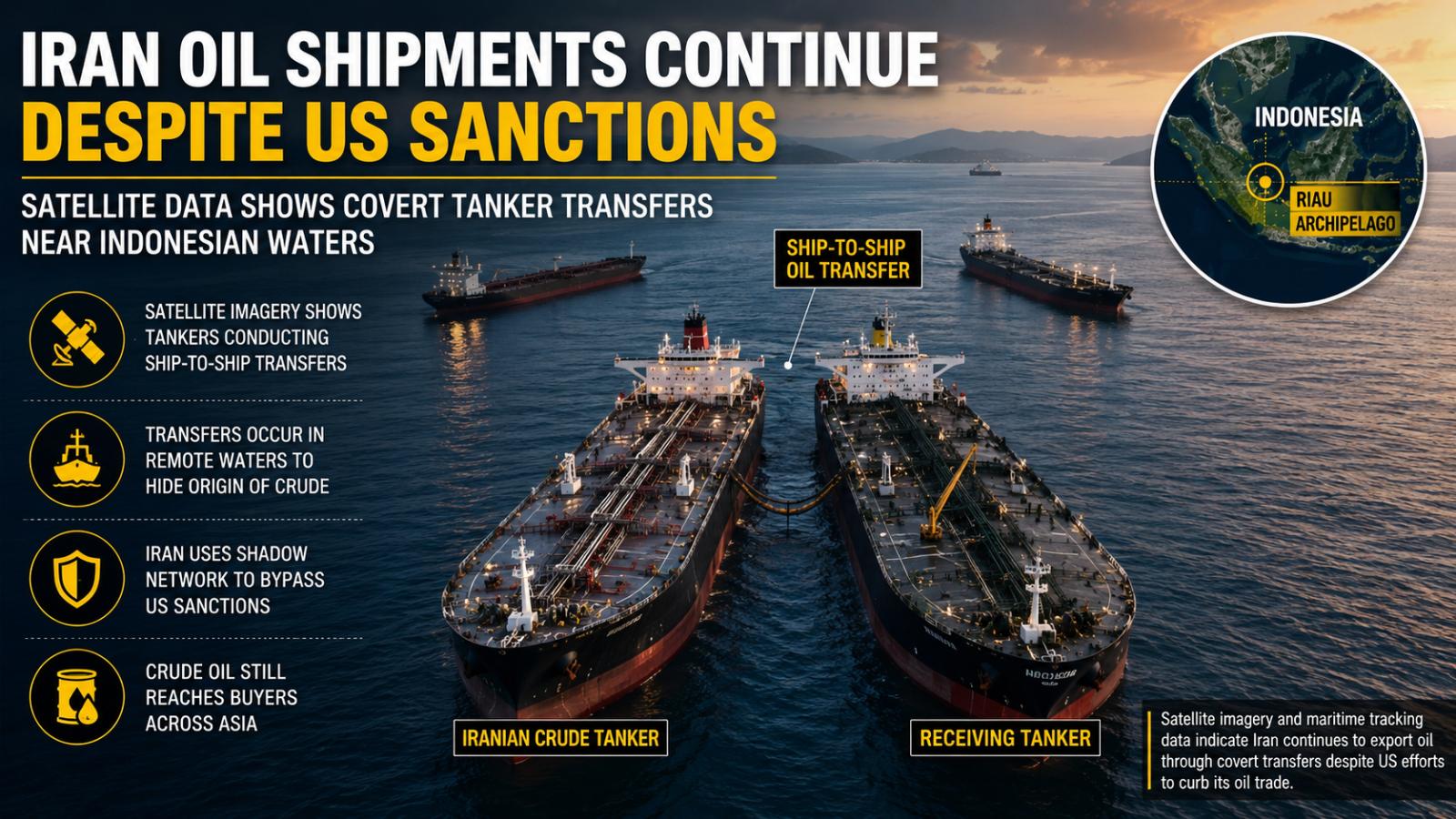
Iran Oil Shipments Keep Moving Despite US Sanctions, Data Shows
Iran oil shipments are continuing despite tighter U.S. sanctions, with satellite imagery and maritime tracking data suggesting Tehran is still moving crude through covert sea transfers. The findings point to an active shadow shipping network that allows Iranian oil to reach buyers in Asia even as Washington works to restrict crude exports from the Persian Gulf. Satellite Data Points To Covert Tanker Transfers Maritime tracking records and satel
Iran Oil Shipments Keep Moving Despite US Sanctions, Data Shows
Iran oil shipments are continuing despite tighter U.S. sanctions, with satellite imagery and maritime tracking data suggesting Tehran is still moving crude through covert sea transfers. The findings point to an active shadow shipping network that allows Iranian oil to reach buyers in Asia even as Washington works to restrict crude exports from the Persian Gulf. Satellite Data Points To Covert Tanker Transfers Maritime tracking records and satel
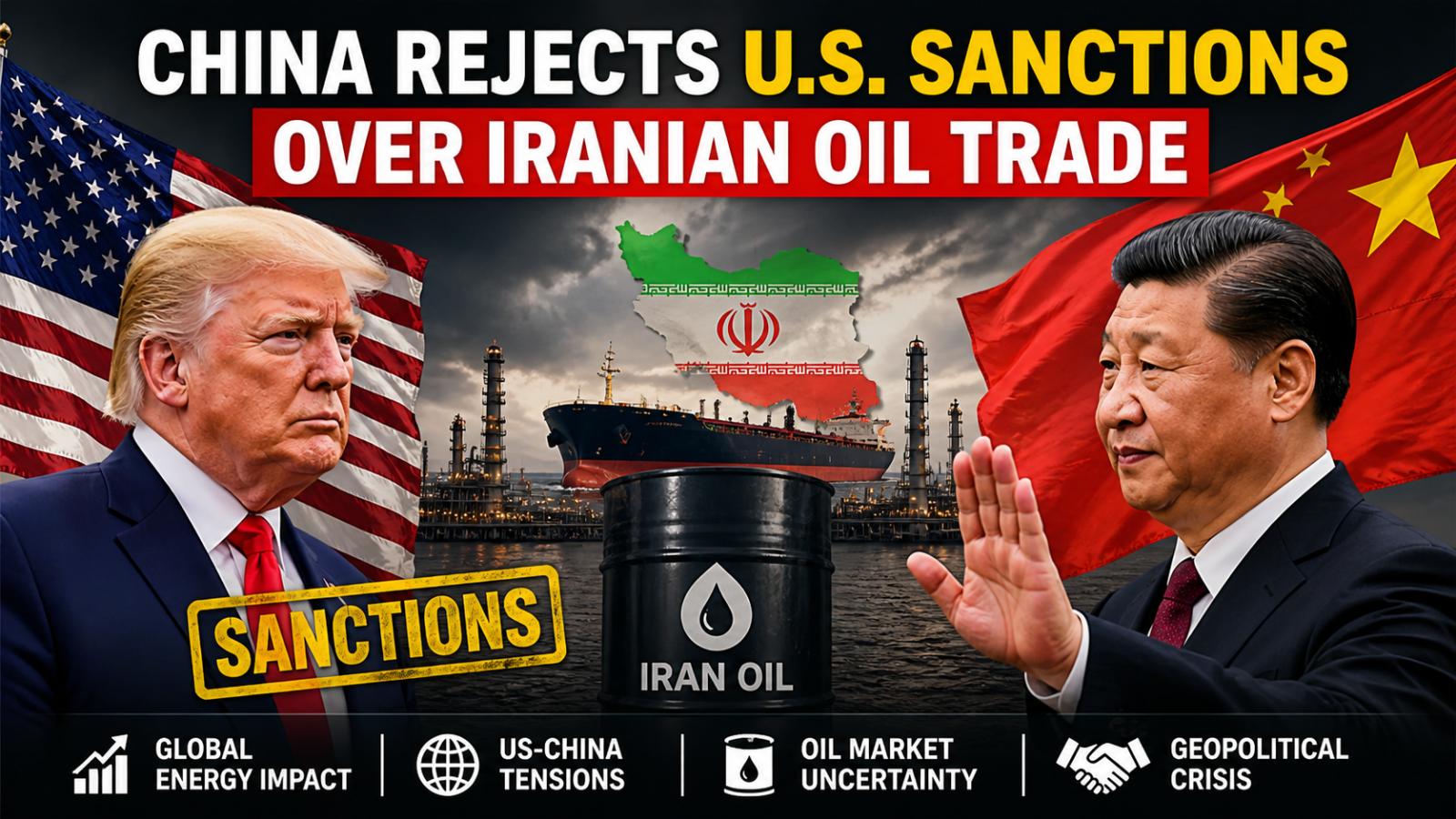
China Rejects US Sanctions on Iranian Oil Trade, Escalating Global Energy Tensions in 2026
China has strongly rejected new sanctions imposed by the United States on Chinese firms accused of purchasing Iranian oil, calling the measures “unlawful” and a violation of international trade norms. The move marks a fresh escalation in tensions between China and Washington, with potential ripple effe
China Rejects US Sanctions on Iranian Oil Trade, Escalating Global Energy Tensions in 2026
China has strongly rejected new sanctions imposed by the United States on Chinese firms accused of purchasing Iranian oil, calling the measures “unlawful” and a violation of international trade norms. The move marks a fresh escalation in tensions between China and Washington, with potential ripple effe
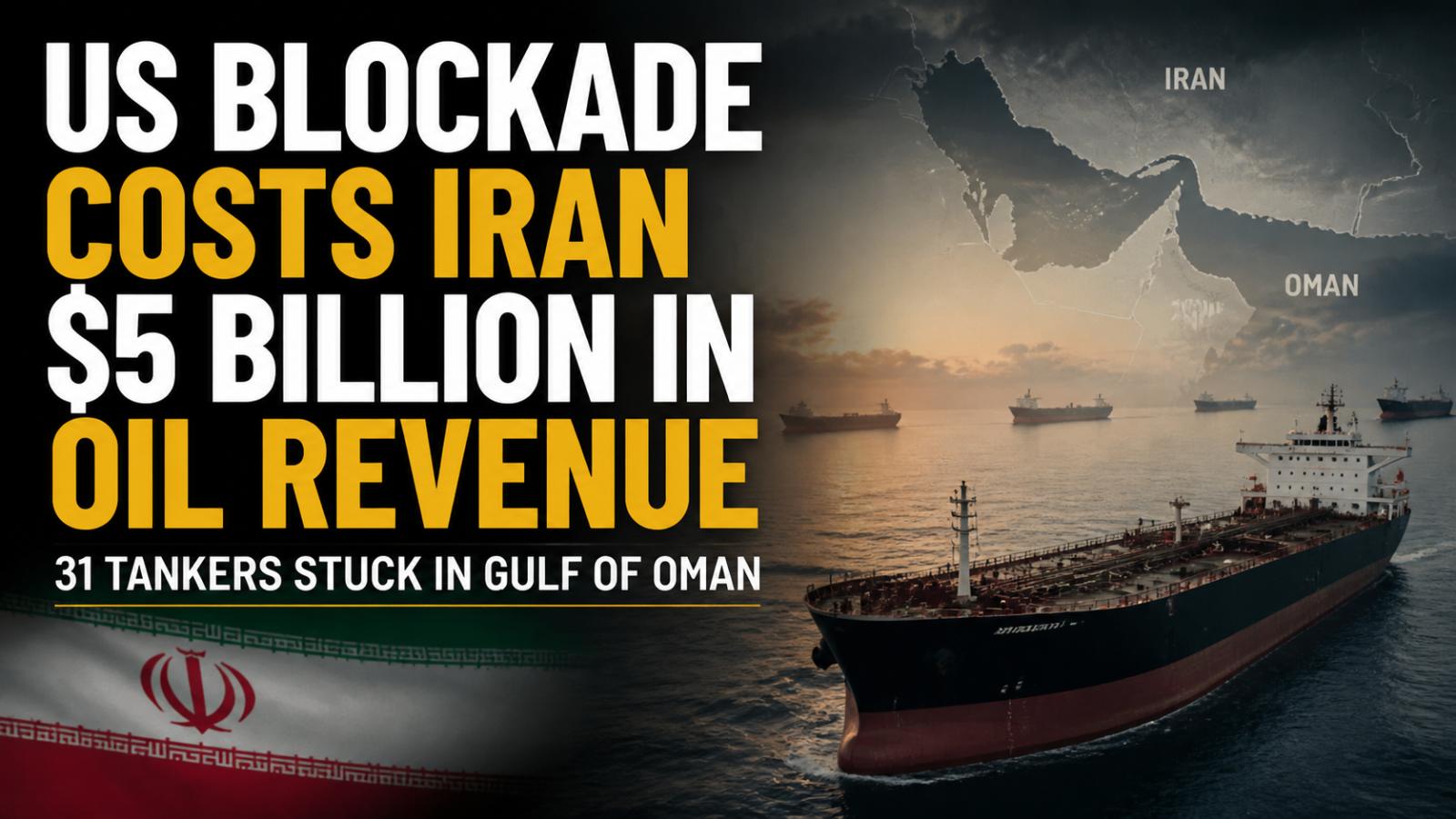
US blockade in Gulf of Oman halts $5 billion in Iranian oil revenue
The ongoing US blockade in the Gulf of Oman has forced Iran to face a massive loss, with the US Defense Department estimating that Tehran has lost nearly $5 billion in oil revenue. This economic setback is the result of a blockade imposed by the US military in an effort to increase pressure on Iran’s economy. The blockade, which began on April 13, 2025, has been described as one of President Donald Trump’s most powerful tools to drive Iran into negotiations that aim to resolve the ongoing conflict. However, diplomatic talks have been repeatedly stalling and restarting, leaving both parties in a stalemate. According to Pentagon officials, more than 40 vessels have been redirected since the operation’s start, as they attempted to smuggle oil and other contraband through the region. In total, 31 tankers carrying approximately 53 million barrels of Iranian crude are now stuck in the Gulf of Oman, and these shipments are valued at around $4.8 billion. Of these, two vessels have already been seized by US forces. With storage capacity on land reaching its limits, Iran has resorted to using older tankers as floating storage units, as reported by analysts. These tankers, which are no longer fit for regular commercial routes, have become temporary storage sites for Iran’s oil. Some shipments are being rerouted along longer and more expensive paths, primarily to avoid interception by US forces. To achieve this, Iranian ships have been following coastlines near Pakistan and India and using safer maritime corridors towards the Strait of Malacca, a key transit point for oil bound for China. Tanker tracking analysts such as Samir Madani, co-founder of TankerTrackers.com, have noted a shift in Iranian shipping patterns. He explained how one Iranian tanker, called “HUGE,” cleverly demonstrated how ships are using stealth routes to evade detection. According to Madani, ships are increasingly relying on hidden paths through regional waters to avoid the US military blockade. Madani also predicted that, in the future, Iran might attempt a large-scale breakout of its tankers. "I think the Iranians will wait for an opportunity to launch an overnight 'Great Escape' once they have built up further storage near the border with Pakistan,” Madani told Axios. This situation is part of a broader economic struggle between Iran and the United States, with both countries resorting to maritime pressure tactics. Iran has previously restricted access to the Strait of Hormuz, a critical shipping route, in retaliation. Meanwhile, the US has been tightening its control over the Gulf of Oman, an entry point to key waterways. According to Gregory Brew, an analyst at Eurasia Group, Iran is just weeks away from running out of storage space for its oil, which could collapse its oil production capacity. "They're probably several weeks, or perhaps as much as a month, away from running out of storage," Brew said. The Pentagon’s spokesperson, Joel Valdez, emphasized the severity of the situation, stating that the blockade is fully active and that the US military is delivering a devastating blow to Iran’s ability to fund terrorism and regional destabilization. “Our armed forces in the region will continue to maintain this unrelenting pressure,” Valdez said. This strategy, although harsh, seems designed to wear down Iran’s ability to sustain itself economically, and possibly force a change in its approach to negotiations.
US blockade in Gulf of Oman halts $5 billion in Iranian oil revenue
The ongoing US blockade in the Gulf of Oman has forced Iran to face a massive loss, with the US Defense Department estimating that Tehran has lost nearly $5 billion in oil revenue. This economic setback is the result of a blockade imposed by the US military in an effort to increase pressure on Iran’s economy. The blockade, which began on April 13, 2025, has been described as one of President Donald Trump’s most powerful tools to drive Iran into negotiations that aim to resolve the ongoing conflict. However, diplomatic talks have been repeatedly stalling and restarting, leaving both parties in a stalemate. According to Pentagon officials, more than 40 vessels have been redirected since the operation’s start, as they attempted to smuggle oil and other contraband through the region. In total, 31 tankers carrying approximately 53 million barrels of Iranian crude are now stuck in the Gulf of Oman, and these shipments are valued at around $4.8 billion. Of these, two vessels have already been seized by US forces. With storage capacity on land reaching its limits, Iran has resorted to using older tankers as floating storage units, as reported by analysts. These tankers, which are no longer fit for regular commercial routes, have become temporary storage sites for Iran’s oil. Some shipments are being rerouted along longer and more expensive paths, primarily to avoid interception by US forces. To achieve this, Iranian ships have been following coastlines near Pakistan and India and using safer maritime corridors towards the Strait of Malacca, a key transit point for oil bound for China. Tanker tracking analysts such as Samir Madani, co-founder of TankerTrackers.com, have noted a shift in Iranian shipping patterns. He explained how one Iranian tanker, called “HUGE,” cleverly demonstrated how ships are using stealth routes to evade detection. According to Madani, ships are increasingly relying on hidden paths through regional waters to avoid the US military blockade. Madani also predicted that, in the future, Iran might attempt a large-scale breakout of its tankers. "I think the Iranians will wait for an opportunity to launch an overnight 'Great Escape' once they have built up further storage near the border with Pakistan,” Madani told Axios. This situation is part of a broader economic struggle between Iran and the United States, with both countries resorting to maritime pressure tactics. Iran has previously restricted access to the Strait of Hormuz, a critical shipping route, in retaliation. Meanwhile, the US has been tightening its control over the Gulf of Oman, an entry point to key waterways. According to Gregory Brew, an analyst at Eurasia Group, Iran is just weeks away from running out of storage space for its oil, which could collapse its oil production capacity. "They're probably several weeks, or perhaps as much as a month, away from running out of storage," Brew said. The Pentagon’s spokesperson, Joel Valdez, emphasized the severity of the situation, stating that the blockade is fully active and that the US military is delivering a devastating blow to Iran’s ability to fund terrorism and regional destabilization. “Our armed forces in the region will continue to maintain this unrelenting pressure,” Valdez said. This strategy, although harsh, seems designed to wear down Iran’s ability to sustain itself economically, and possibly force a change in its approach to negotiations.
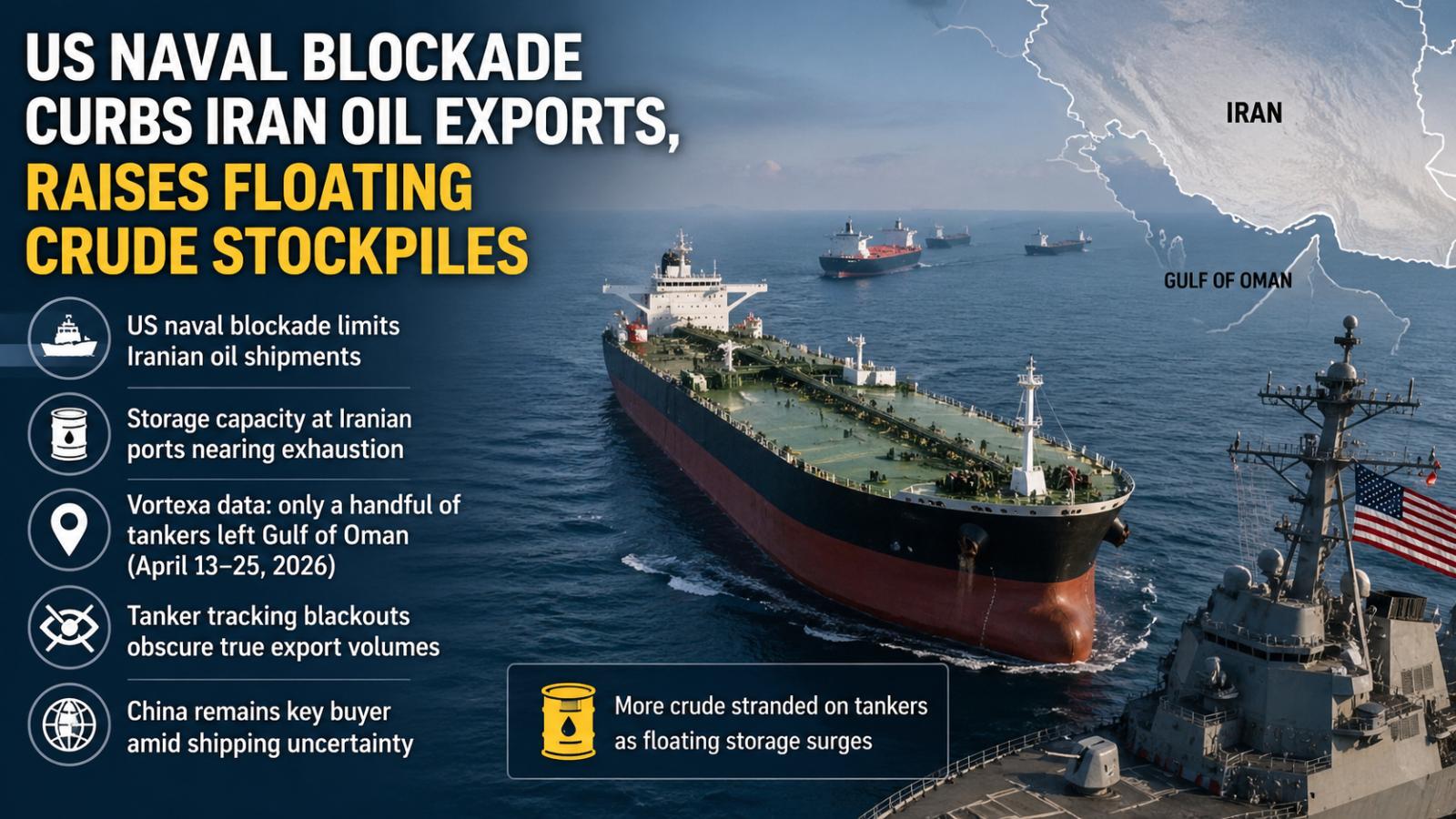
US naval blockade curbs Iran oil exports, raises floating crude stockpiles
The US naval blockade has sharply reduced Iran’s oil exports, forcing crude into floating storage as onshore capacity fills. Limited tanker movement and tracking blackouts obscure shipments, raising concerns over global supply transparency and market stability US naval blockade curbs Iran oil exports, raises floating crude stockpiles has significantly reduced Tehran’s oil shipments, leaving large volumes stranded at sea as storage capacity tightens. Analysts citing shipping data report that Iranian crude exports have dropped sharply due to heightened maritime restrictions and operational risks in key transit routes. According to data from oil analytics firm Vortexa, only a limited number of tankers carrying Iranian crude departed the Gulf of Oman between Sunday, April 13, 2026, and Friday, April 25, 2026. This decline underscores the growing impact of the blockade, which has disrupted traditional export channels and created uncertainty across global energy markets. The situation is further complicated by tanker operators switching off tracking systems to avoid detection, making it difficult to accurately measure export volumes. China remains Iran’s primary buyer, but the opacity surrounding shipments has increased as vessels attempt to evade monitoring systems. Analysts note that this lack of transparency could distort global supply assessments and complicate pricing trends in international oil markets. As Iranian onshore storage facilities reach capacity, more crude is being held on tankers, effectively turning them into floating storage units. The blockade’s ripple effects extend beyond oil logistics. Broader policy measures tied to the maritime restrictions have contributed to operational challenges within U.S. federal systems. Since Friday, February 14, 2026, certain agencies have faced funding interruptions, leading to disruptions including extended wait times at major U.S. airports. While a recent measure supported by President Donald Trump has reopened the Department of Homeland Security, it does not allocate additional funding for Immigration and Customs Enforcement or the U.S. Border Patrol. The evolving situation highlights the intersection of geopolitical strategy and global energy flows, with analysts warning that prolonged disruptions could tighten supply chains and influence oil prices worldwide.
US naval blockade curbs Iran oil exports, raises floating crude stockpiles
The US naval blockade has sharply reduced Iran’s oil exports, forcing crude into floating storage as onshore capacity fills. Limited tanker movement and tracking blackouts obscure shipments, raising concerns over global supply transparency and market stability US naval blockade curbs Iran oil exports, raises floating crude stockpiles has significantly reduced Tehran’s oil shipments, leaving large volumes stranded at sea as storage capacity tightens. Analysts citing shipping data report that Iranian crude exports have dropped sharply due to heightened maritime restrictions and operational risks in key transit routes. According to data from oil analytics firm Vortexa, only a limited number of tankers carrying Iranian crude departed the Gulf of Oman between Sunday, April 13, 2026, and Friday, April 25, 2026. This decline underscores the growing impact of the blockade, which has disrupted traditional export channels and created uncertainty across global energy markets. The situation is further complicated by tanker operators switching off tracking systems to avoid detection, making it difficult to accurately measure export volumes. China remains Iran’s primary buyer, but the opacity surrounding shipments has increased as vessels attempt to evade monitoring systems. Analysts note that this lack of transparency could distort global supply assessments and complicate pricing trends in international oil markets. As Iranian onshore storage facilities reach capacity, more crude is being held on tankers, effectively turning them into floating storage units. The blockade’s ripple effects extend beyond oil logistics. Broader policy measures tied to the maritime restrictions have contributed to operational challenges within U.S. federal systems. Since Friday, February 14, 2026, certain agencies have faced funding interruptions, leading to disruptions including extended wait times at major U.S. airports. While a recent measure supported by President Donald Trump has reopened the Department of Homeland Security, it does not allocate additional funding for Immigration and Customs Enforcement or the U.S. Border Patrol. The evolving situation highlights the intersection of geopolitical strategy and global energy flows, with analysts warning that prolonged disruptions could tighten supply chains and influence oil prices worldwide.
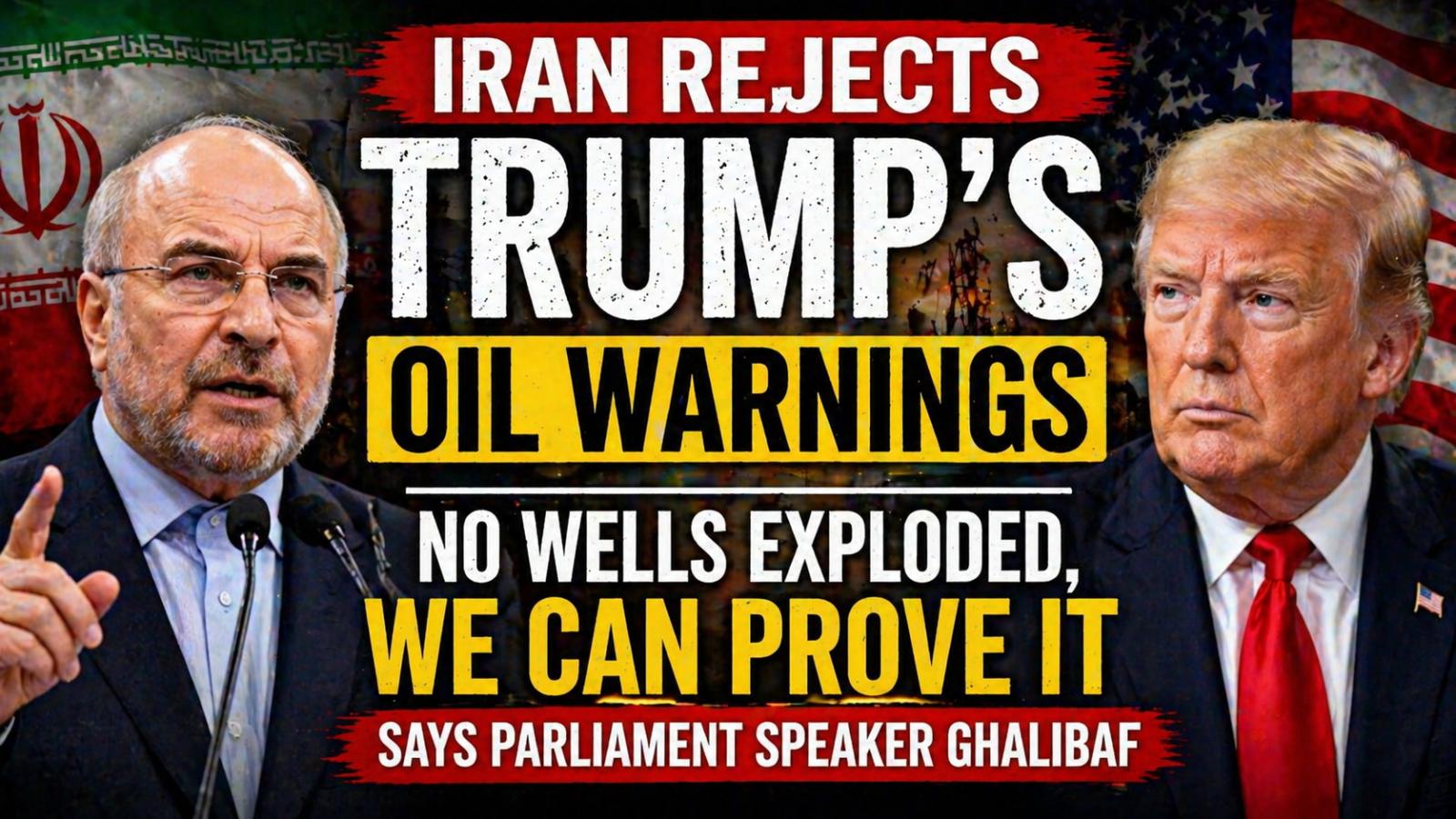
Iran Pushes Back on Trump’s Oil Warnings, Defends Export Capacity
The Speaker of Iran’s Parliament, Mohammad Bagher Ghalibaf, has rejected recent claims made by US President Donald Trump regarding the stability of Iran’s oil infrastructure. Responding to warnings that Iran’s oil facilities were nearing critical failure, Ghalibaf dismissed the remarks as inaccurate and politically motivated, stating that conditions on the ground do not support such assessments. He emphasized that several days have passed without any reported incidents and suggested that extended monitoring could further demonstrate the resilience of Iran’s oil sector. Ghalibaf also criticized the broader economic reasoning behind US policy measures, arguing that sanctions-based strategies have produced unintended consequences. He stated that approaches centered on economic pressure have contributed to rising oil prices rather than stabilizing global markets. According to his remarks, such policies reflect not only flawed strategies but also a deeper issue in decision-making. The exchange follows recent developments in US policy toward Iranian oil exports. Washington moved to temporarily ease restrictions on a significant volume of Iranian crude already stored on tankers, allowing limited transactions involving existing shipments. US officials described the move as a calculated effort to influence oil markets while maintaining restrictions on new production or expanded trade. Earlier, Trump had suggested that storage limitations and sanctions pressure could lead to disruptions in Iran’s oil infrastructure. However, Iranian officials have consistently maintained that both land-based and offshore storage capacities remain sufficient to manage production and exports. They argue that the country’s energy sector continues to operate within manageable limits despite ongoing sanctions. The situation highlights continuing tensions between Tehran and Washington over energy policy and economic measures. As both sides present differing assessments, the broader impact on global oil markets and geopolitical stability remains closely watched.
Iran Pushes Back on Trump’s Oil Warnings, Defends Export Capacity
The Speaker of Iran’s Parliament, Mohammad Bagher Ghalibaf, has rejected recent claims made by US President Donald Trump regarding the stability of Iran’s oil infrastructure. Responding to warnings that Iran’s oil facilities were nearing critical failure, Ghalibaf dismissed the remarks as inaccurate and politically motivated, stating that conditions on the ground do not support such assessments. He emphasized that several days have passed without any reported incidents and suggested that extended monitoring could further demonstrate the resilience of Iran’s oil sector. Ghalibaf also criticized the broader economic reasoning behind US policy measures, arguing that sanctions-based strategies have produced unintended consequences. He stated that approaches centered on economic pressure have contributed to rising oil prices rather than stabilizing global markets. According to his remarks, such policies reflect not only flawed strategies but also a deeper issue in decision-making. The exchange follows recent developments in US policy toward Iranian oil exports. Washington moved to temporarily ease restrictions on a significant volume of Iranian crude already stored on tankers, allowing limited transactions involving existing shipments. US officials described the move as a calculated effort to influence oil markets while maintaining restrictions on new production or expanded trade. Earlier, Trump had suggested that storage limitations and sanctions pressure could lead to disruptions in Iran’s oil infrastructure. However, Iranian officials have consistently maintained that both land-based and offshore storage capacities remain sufficient to manage production and exports. They argue that the country’s energy sector continues to operate within manageable limits despite ongoing sanctions. The situation highlights continuing tensions between Tehran and Washington over energy policy and economic measures. As both sides present differing assessments, the broader impact on global oil markets and geopolitical stability remains closely watched.
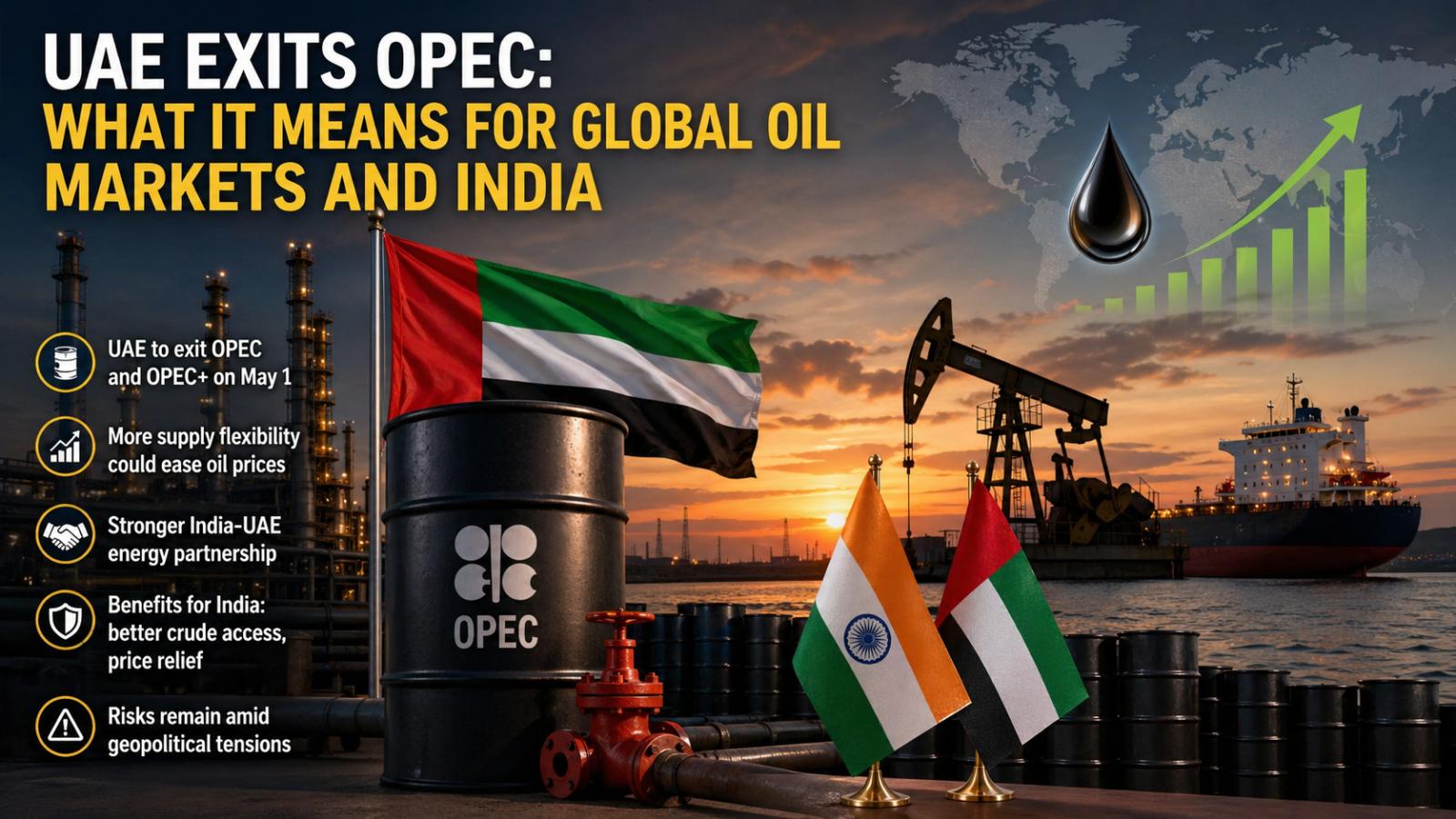
Can India benefit from UAE exiting OPEC? Yes, through better crude access and pricing
UAE’s exit from OPEC may boost oil supply, ease prices, and strengthen India energy ties, while raising volatility risks in global markets amid geopolitical tensions. Will UAE leaving OPEC lower oil prices? Yes, it could ease global supply pressure as the United Arab Emirates prepares to formally exit Organization of the Petroleum Exporting Countries and OPEC+ on May 1,
Can India benefit from UAE exiting OPEC? Yes, through better crude access and pricing
UAE’s exit from OPEC may boost oil supply, ease prices, and strengthen India energy ties, while raising volatility risks in global markets amid geopolitical tensions. Will UAE leaving OPEC lower oil prices? Yes, it could ease global supply pressure as the United Arab Emirates prepares to formally exit Organization of the Petroleum Exporting Countries and OPEC+ on May 1,
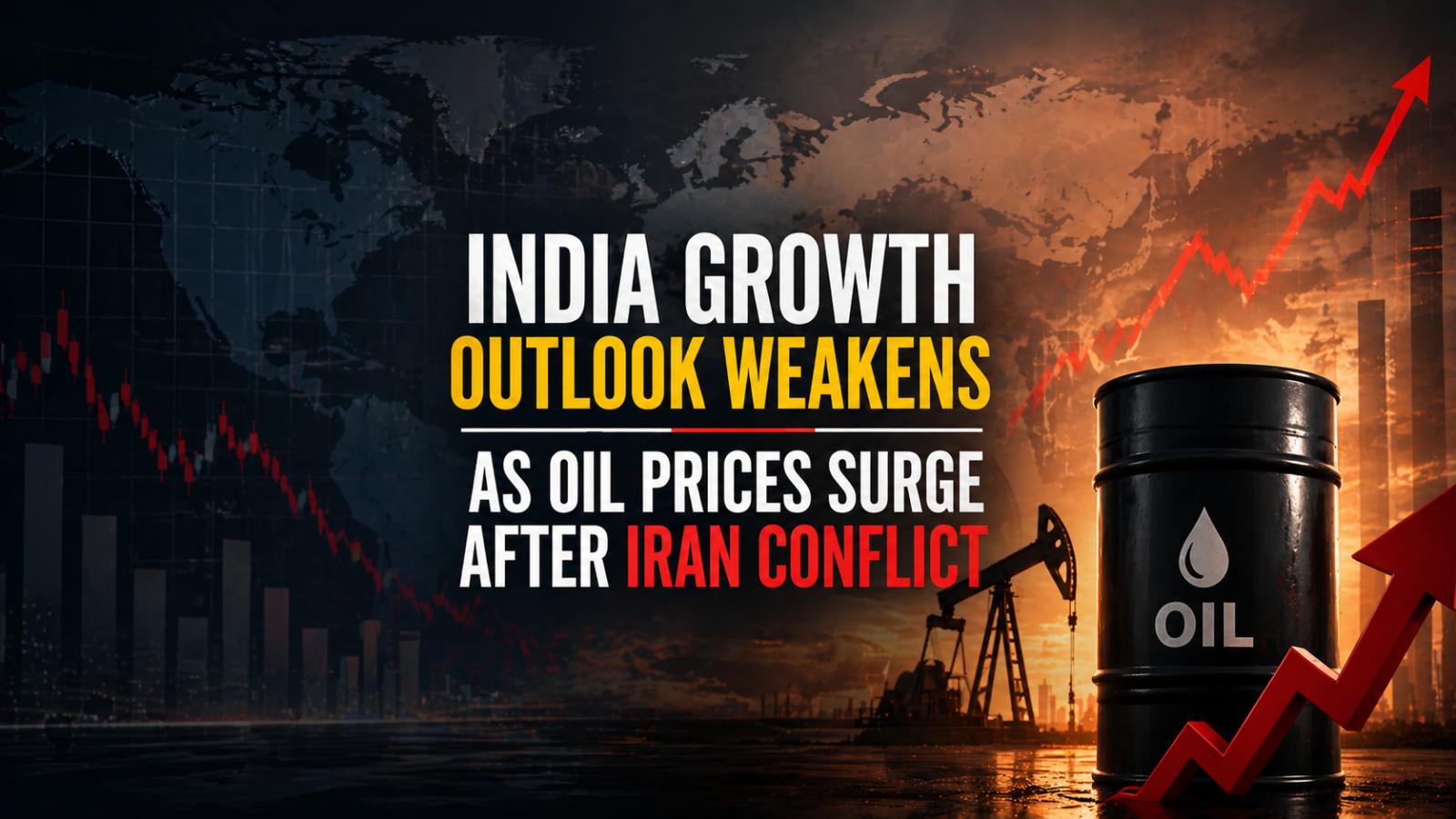
India economy faces slowdown risks amid rising crude oil prices
India growth slowdown: oil price surge impacts economy India growth slowdown has become a major concern after crude oil prices crossed $100 per barrel following tensions linked to the Iran conflict. The sharp increase in energy costs is already affecting corporate earnings and is expected to impact the FY27 outlook, according to analysts tracking the India economy slowdown. The rising oil price surge is not seen as a short-term issue. Higher crude oil prices are likely to continue putting pressure on multiple sectors including consumer, auto, and financial industries. JP Morgan has warned that supply disruptions and elevated energy costs India could persist for months, even after a ceasefire, delaying full normalization. The firm has reduced its FY27 earnings forecast by 2–10 percent across major sectors, highlighting the growing risks to corporate earnings India. Experts point out that the impact will be visible in different ways. Companies may face margin compression, reduced demand, and operational challenges, while consumers may experience the effects through higher prices and inflation India. These combined factors are expected to slow overall economic momentum. Market estimates show that Nifty EPS growth could drop sharply from earlier expectations of around 15 percent to nearly 7–8 percent if crude oil prices remain high. Key industries such as automobiles, oil and gas, and airlines are likely to be the most affected due to their heavy dependence on fuel. Despite these pressures, India Inc revenue growth remains stable, but the growth pattern is shifting from volume-driven to price-led expansion. This means companies are increasing prices to maintain revenues, a strategy that may not be sustainable if inflation continues to rise. West Asia continues to play a crucial role in India’s economy. The region accounts for a significant share of exports and remittances, making India highly sensitive to disruptions in West Asia trade and income flows. Any prolonged instability could further deepen the India growth slowdown. Investor sentiment has also weakened amid global uncertainty. Foreign portfolio investors have turned net sellers, with total FPI outflows reaching nearly ₹1.68 trillion since early 2026, reflecting concerns over geopolitical risks and economic stability.
India economy faces slowdown risks amid rising crude oil prices
India growth slowdown: oil price surge impacts economy India growth slowdown has become a major concern after crude oil prices crossed $100 per barrel following tensions linked to the Iran conflict. The sharp increase in energy costs is already affecting corporate earnings and is expected to impact the FY27 outlook, according to analysts tracking the India economy slowdown. The rising oil price surge is not seen as a short-term issue. Higher crude oil prices are likely to continue putting pressure on multiple sectors including consumer, auto, and financial industries. JP Morgan has warned that supply disruptions and elevated energy costs India could persist for months, even after a ceasefire, delaying full normalization. The firm has reduced its FY27 earnings forecast by 2–10 percent across major sectors, highlighting the growing risks to corporate earnings India. Experts point out that the impact will be visible in different ways. Companies may face margin compression, reduced demand, and operational challenges, while consumers may experience the effects through higher prices and inflation India. These combined factors are expected to slow overall economic momentum. Market estimates show that Nifty EPS growth could drop sharply from earlier expectations of around 15 percent to nearly 7–8 percent if crude oil prices remain high. Key industries such as automobiles, oil and gas, and airlines are likely to be the most affected due to their heavy dependence on fuel. Despite these pressures, India Inc revenue growth remains stable, but the growth pattern is shifting from volume-driven to price-led expansion. This means companies are increasing prices to maintain revenues, a strategy that may not be sustainable if inflation continues to rise. West Asia continues to play a crucial role in India’s economy. The region accounts for a significant share of exports and remittances, making India highly sensitive to disruptions in West Asia trade and income flows. Any prolonged instability could further deepen the India growth slowdown. Investor sentiment has also weakened amid global uncertainty. Foreign portfolio investors have turned net sellers, with total FPI outflows reaching nearly ₹1.68 trillion since early 2026, reflecting concerns over geopolitical risks and economic stability.

NIA Probes 79 Crude Bombs Found in Bengal, Terror Angle Suspected
On April 25, 2026, 79 crude bombs were recovered from an abandoned house in South 24 Parganas, West Bengal, prompting the National Investigation Agency to register a case on April 26, 2026; the exact time of recovery was not disclosed. The
NIA Probes 79 Crude Bombs Found in Bengal, Terror Angle Suspected
On April 25, 2026, 79 crude bombs were recovered from an abandoned house in South 24 Parganas, West Bengal, prompting the National Investigation Agency to register a case on April 26, 2026; the exact time of recovery was not disclosed. The
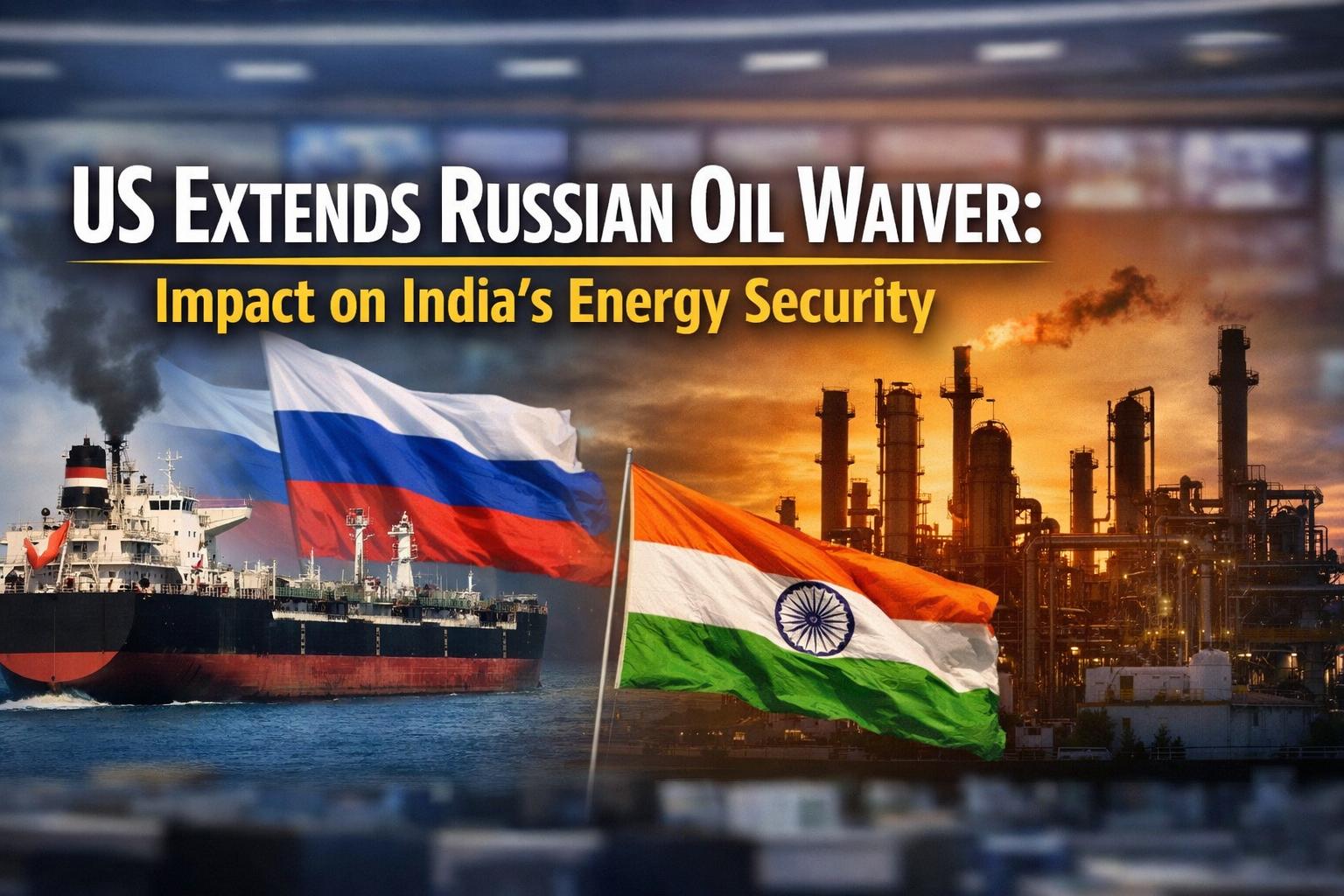
Trump Administration Reverses Russian Oil Sanctions Waiver Decision
The United States has issued a fresh month-long sanctions waiver permitting transactions involving Russian crude oil already in transit, marking a notable policy reversal within days of signaling a stricter stance. The waiver allows purchases of oil loaded onto vessels as of April 17 to continue until May 16, providing limited flexibility to global buyers amid ongoing disruptions in the energy market. The decision comes shortly after earlier statements ruled out any extension, highlighting the pressure created by rising fuel costs and tightening supply conditions. With gasoline prices climbing and geopolitical tensions affecting key supply routes, the move reflects an effort to stabilize markets rather than signal a broader policy shift. Importantly, the waiver applies only to cargo already at sea and does not authorize new purchases, reinforcing its temporary and targeted nature. For India, one of the largest importers of Russian crude, the extension offers short-term operational relief. Russian supplies currently account for nearly 38 to 40 percent of India’s total crude imports, making them a critical component of the country’s energy mix. Given that India relies on imports for more than 88 percent of its energy needs, even minor disruptions can have significant economic implications. Indian refiners had previously indicated their intent to continue sourcing Russian oil regardless of external sanctions frameworks, emphasizing that energy procurement remains a sovereign decision. The waiver, however, reduces immediate logistical and financial uncertainties by ensuring smoother completion of shipments already underway. As geopolitical tensions continue to reshape global energy flows, the temporary waiver underscores the balancing act between policy objectives and market realities. For India, it reinforces the importance of maintaining diversified supply channels while navigating an increasingly complex international energy landscape.
Trump Administration Reverses Russian Oil Sanctions Waiver Decision
The United States has issued a fresh month-long sanctions waiver permitting transactions involving Russian crude oil already in transit, marking a notable policy reversal within days of signaling a stricter stance. The waiver allows purchases of oil loaded onto vessels as of April 17 to continue until May 16, providing limited flexibility to global buyers amid ongoing disruptions in the energy market. The decision comes shortly after earlier statements ruled out any extension, highlighting the pressure created by rising fuel costs and tightening supply conditions. With gasoline prices climbing and geopolitical tensions affecting key supply routes, the move reflects an effort to stabilize markets rather than signal a broader policy shift. Importantly, the waiver applies only to cargo already at sea and does not authorize new purchases, reinforcing its temporary and targeted nature. For India, one of the largest importers of Russian crude, the extension offers short-term operational relief. Russian supplies currently account for nearly 38 to 40 percent of India’s total crude imports, making them a critical component of the country’s energy mix. Given that India relies on imports for more than 88 percent of its energy needs, even minor disruptions can have significant economic implications. Indian refiners had previously indicated their intent to continue sourcing Russian oil regardless of external sanctions frameworks, emphasizing that energy procurement remains a sovereign decision. The waiver, however, reduces immediate logistical and financial uncertainties by ensuring smoother completion of shipments already underway. As geopolitical tensions continue to reshape global energy flows, the temporary waiver underscores the balancing act between policy objectives and market realities. For India, it reinforces the importance of maintaining diversified supply channels while navigating an increasingly complex international energy landscape.
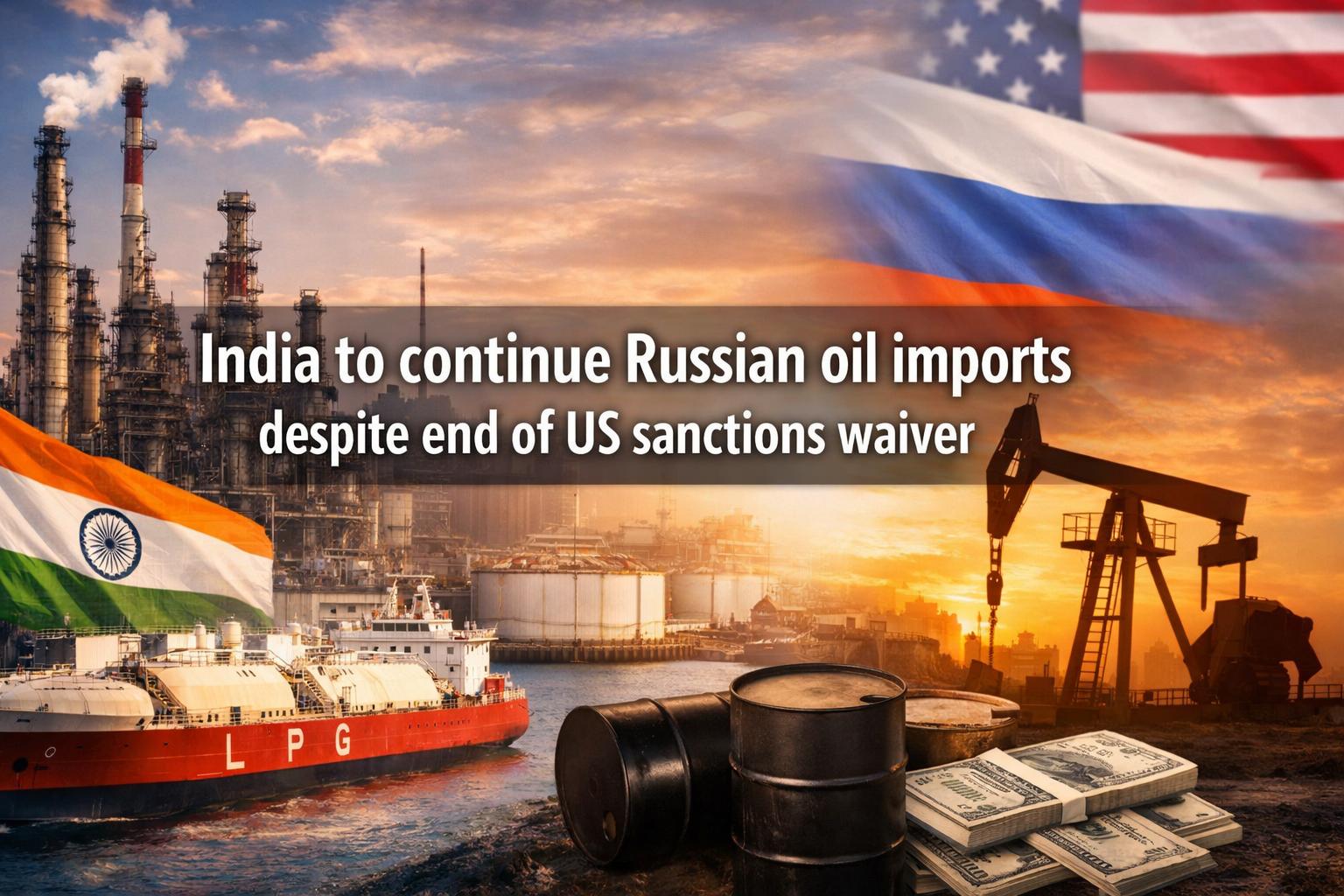
India’s energy strategy remains unchanged after US sanctions waiver ends
India is set to continue importing Russian crude oil and Liquefied Petroleum Gas (LPG) even after the expiration of the 30-day sanctions waiver granted by the United States on April 11, 2026. Officials indicated that the country’s energy import strategy is guided by sovereign priorities and commercial considerations rather than external sanctions frameworks. Indian refineries are expected to maintain their existing procurement approach by sourcing supplies from non-sanctioned entities and c
India’s energy strategy remains unchanged after US sanctions waiver ends
India is set to continue importing Russian crude oil and Liquefied Petroleum Gas (LPG) even after the expiration of the 30-day sanctions waiver granted by the United States on April 11, 2026. Officials indicated that the country’s energy import strategy is guided by sovereign priorities and commercial considerations rather than external sanctions frameworks. Indian refineries are expected to maintain their existing procurement approach by sourcing supplies from non-sanctioned entities and c
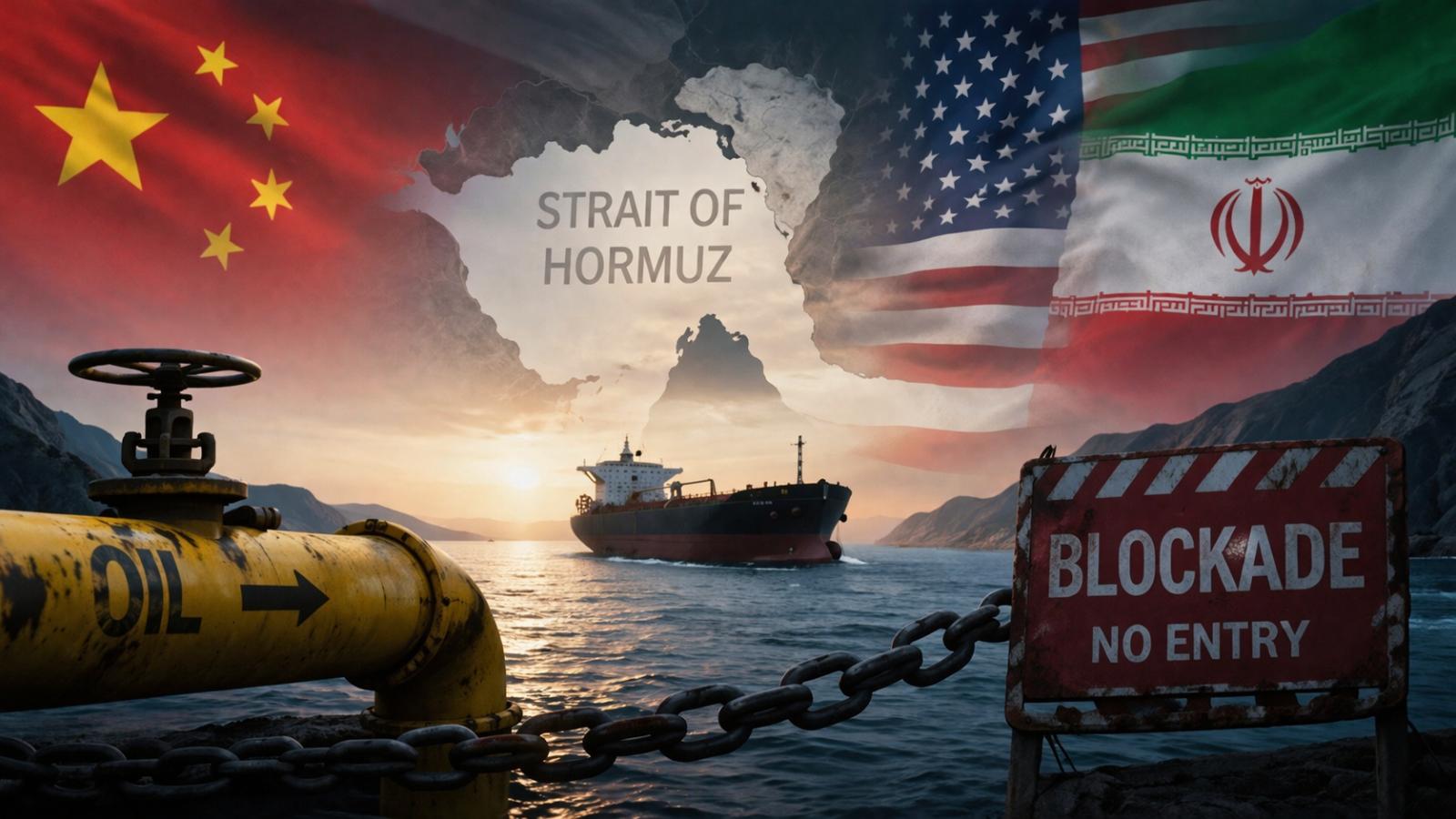
China calls U.S. blockade in Strait of Hormuz 'dangerous and irresponsible'
China has expressed strong disapproval over the United States' blockade of Iranian ports in the Strait of Hormuz, calling it a “dangerous and irresponsible act” that could escalate tensions in an already volatile region. In a statement issued on April 14, 2026, the Chinese Ministry of Foreign Affairs warned that the blockade, which began at 10:00 a.m. ET on Monday, along with increased U.S. military deployment in the area, risks undermining the fragile ceasefire that had
China calls U.S. blockade in Strait of Hormuz 'dangerous and irresponsible'
China has expressed strong disapproval over the United States' blockade of Iranian ports in the Strait of Hormuz, calling it a “dangerous and irresponsible act” that could escalate tensions in an already volatile region. In a statement issued on April 14, 2026, the Chinese Ministry of Foreign Affairs warned that the blockade, which began at 10:00 a.m. ET on Monday, along with increased U.S. military deployment in the area, risks undermining the fragile ceasefire that had

The Impact of Global Tensions and Falling Crude Prices on India’s Sensex Surge
On April 8, 2026, India’s stock markets experienced a remarkable surge, with the BSE Sensex climbing over 2,700 points, marking a 3.66% increase, and the Nifty rising by more than 3.4%. Investor wealth swelled by over Rs 14 lakh crore during the early trade, signaling a sharp recovery after a period of volatility. This rally was fueled by multiple factors, including easing global geopolitical tensions, softer crude prices, and an increase in investor confidence. The biggest trigge
The Impact of Global Tensions and Falling Crude Prices on India’s Sensex Surge
On April 8, 2026, India’s stock markets experienced a remarkable surge, with the BSE Sensex climbing over 2,700 points, marking a 3.66% increase, and the Nifty rising by more than 3.4%. Investor wealth swelled by over Rs 14 lakh crore during the early trade, signaling a sharp recovery after a period of volatility. This rally was fueled by multiple factors, including easing global geopolitical tensions, softer crude prices, and an increase in investor confidence. The biggest trigge
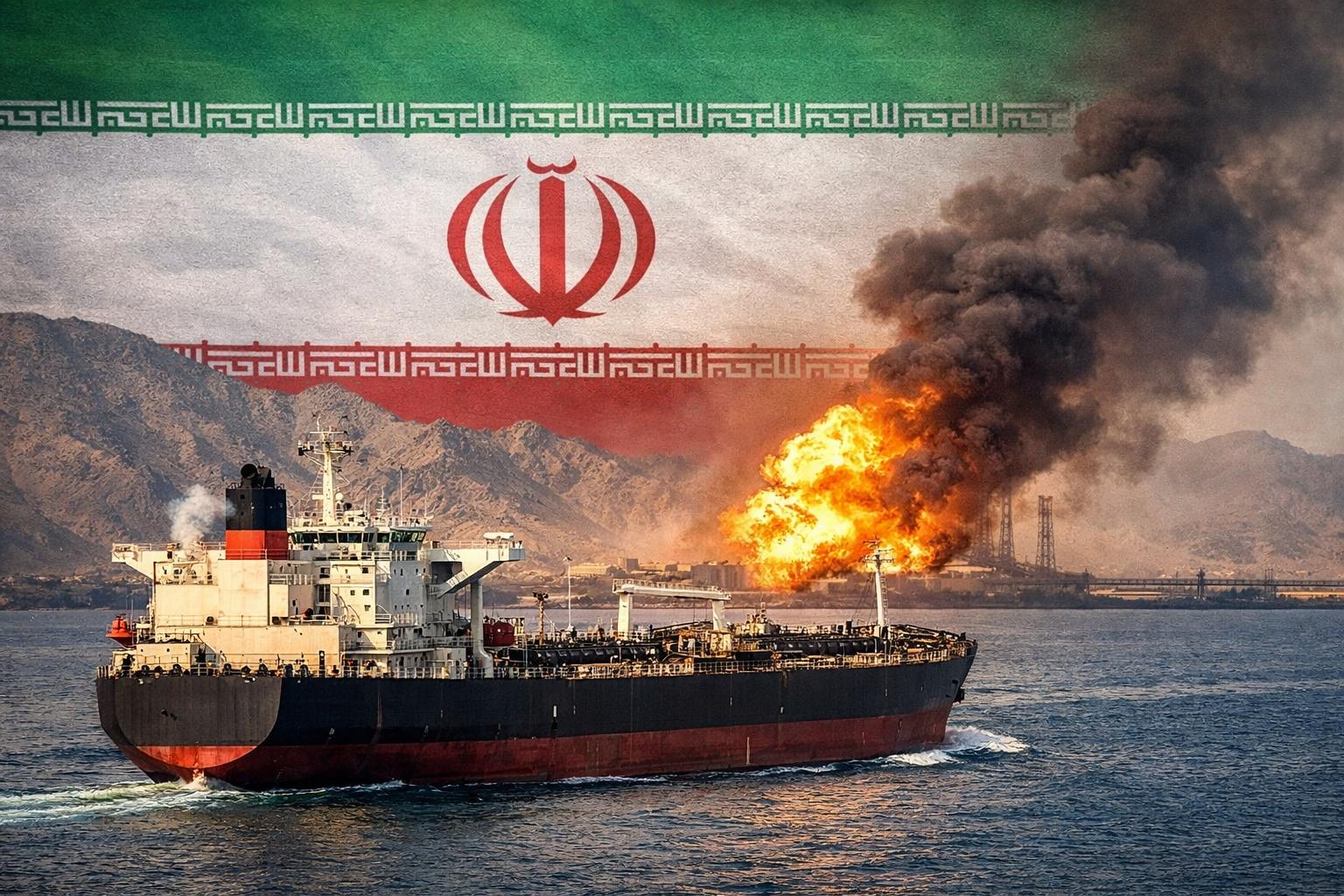
Oil prices rise as Trump warns Iran ahead of Hormuz deadline
Oil prices climbed sharply on Tuesday (date not sp
Oil prices rise as Trump warns Iran ahead of Hormuz deadline
Oil prices climbed sharply on Tuesday (date not sp
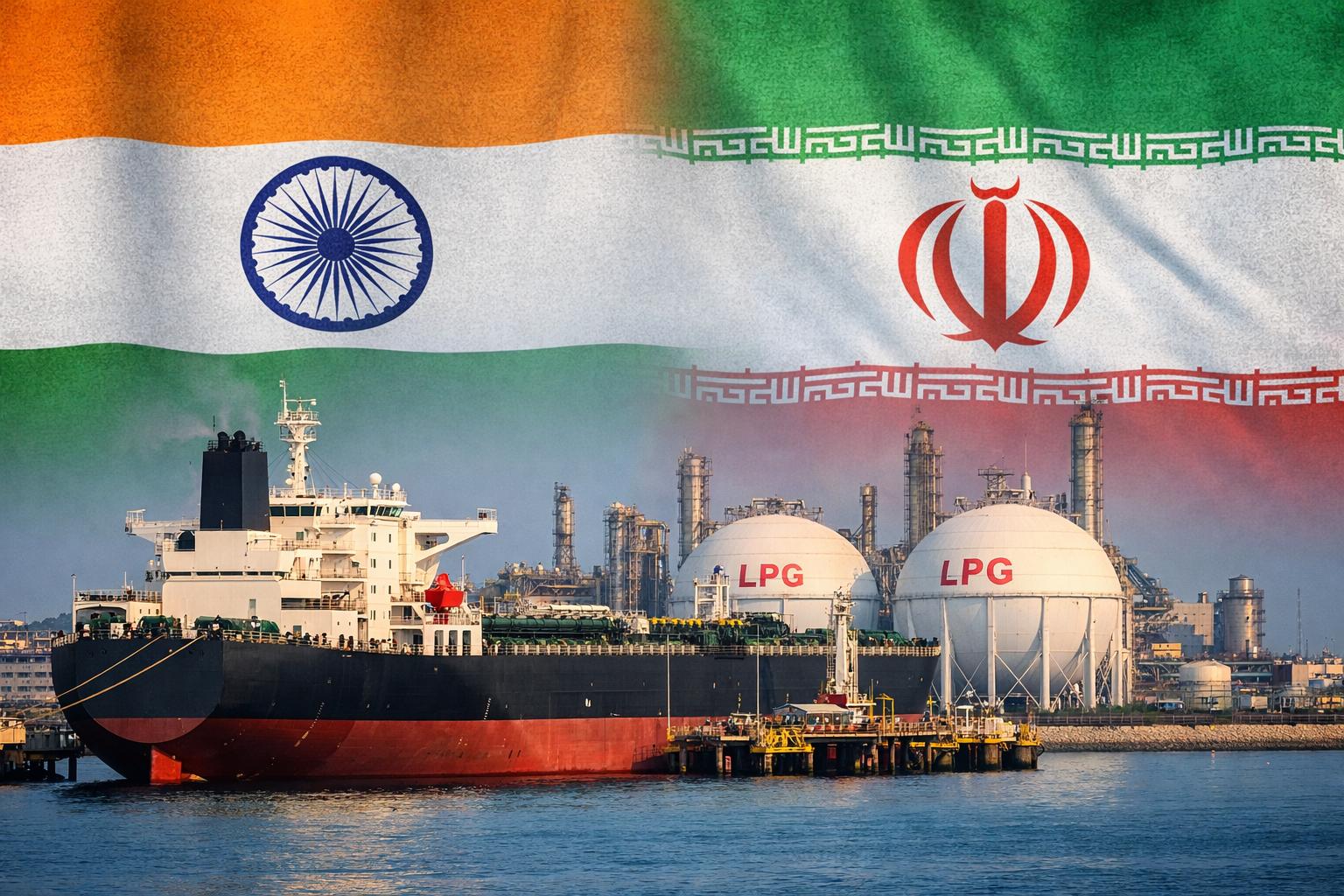
India acknowledges Iranian oil and LPG imports amid energy demand
India has officially confirmed that it is importing crude oil and liquefied petroleum gas (LPG) from Iran, marking a notable development in its energy policy amid evolving global market conditions. The confirmation was issued by India’s Petroleum Ministry on Saturday, April 4, 2026 (IST), providing clarity on ongoing reports about energy trade involving Iranian supplies. The acknowledgment highlights India’s continued reliance on diversified fuel sources to meet rising domestic demand. As one of the world’s largest importers of crude oil, India depends heavily on international suppliers to sustain economic growth, industrial activity, and consumer energy needs. Iranian crude and LPG are considered commercially attractive due to pricing advantages and established supply channels. Officials emphasized that India’s crude supply remains secure and that there are no reported payment-related disruptions affecting imports from Iran. The clarification comes amid heightened global scrutiny over transactions involving Iranian energy exports, which remain sensitive due to international sanctions frameworks and geopolitical considerations. Energy analysts note that India’s confirmation underscores a broader trend among major economies seeking flexibility in sourcing oil and gas. With global oil markets experiencing volatility, countries are increasingly prioritizing energy security and affordability over rigid sourcing constraints. India’s approach reflects a pragmatic balance between domestic economic priorities and external diplomatic pressures. The development may also influence broader market sentiment, particularly if it signals sustained or increased flows of Iranian crude into global supply chains. At the same time, it highlights the complexities of international energy trade, where economic necessity, regulatory environments, and geopolitical dynamics intersect. India’s confirmation on Saturday, April 4, 2026 (IST) reinforces its strategic focus on ensuring uninterrupted fuel access while navigating a rapidly shifting global energy landscape.
India acknowledges Iranian oil and LPG imports amid energy demand
India has officially confirmed that it is importing crude oil and liquefied petroleum gas (LPG) from Iran, marking a notable development in its energy policy amid evolving global market conditions. The confirmation was issued by India’s Petroleum Ministry on Saturday, April 4, 2026 (IST), providing clarity on ongoing reports about energy trade involving Iranian supplies. The acknowledgment highlights India’s continued reliance on diversified fuel sources to meet rising domestic demand. As one of the world’s largest importers of crude oil, India depends heavily on international suppliers to sustain economic growth, industrial activity, and consumer energy needs. Iranian crude and LPG are considered commercially attractive due to pricing advantages and established supply channels. Officials emphasized that India’s crude supply remains secure and that there are no reported payment-related disruptions affecting imports from Iran. The clarification comes amid heightened global scrutiny over transactions involving Iranian energy exports, which remain sensitive due to international sanctions frameworks and geopolitical considerations. Energy analysts note that India’s confirmation underscores a broader trend among major economies seeking flexibility in sourcing oil and gas. With global oil markets experiencing volatility, countries are increasingly prioritizing energy security and affordability over rigid sourcing constraints. India’s approach reflects a pragmatic balance between domestic economic priorities and external diplomatic pressures. The development may also influence broader market sentiment, particularly if it signals sustained or increased flows of Iranian crude into global supply chains. At the same time, it highlights the complexities of international energy trade, where economic necessity, regulatory environments, and geopolitical dynamics intersect. India’s confirmation on Saturday, April 4, 2026 (IST) reinforces its strategic focus on ensuring uninterrupted fuel access while navigating a rapidly shifting global energy landscape.
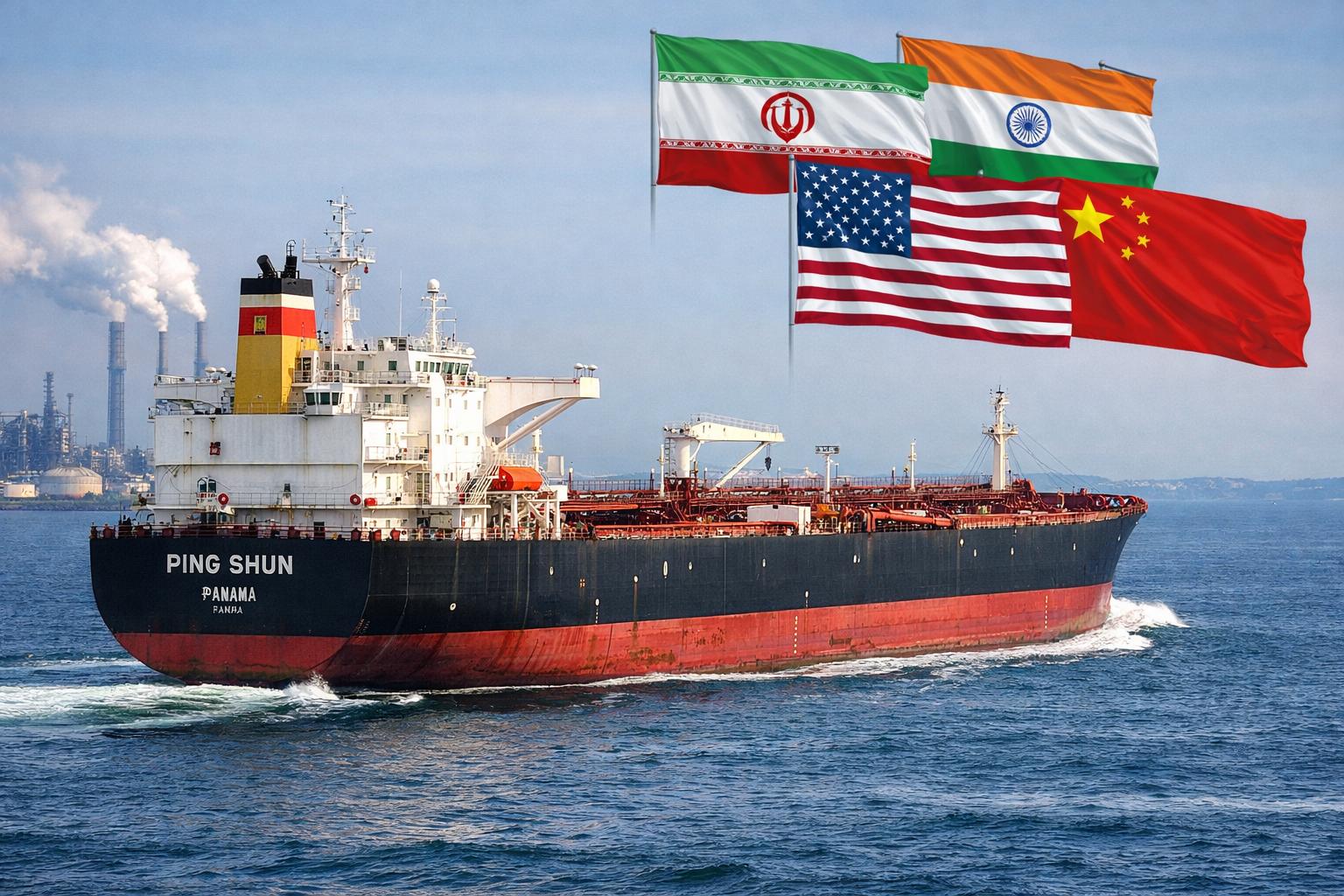
Sanctioned tanker diverts Iranian crude from India to China amid payment concerns
A U.S.-sanctioned oil tanker carrying Iranian crude has changed course from India to China, raising uncertainty over what could have been India’s first Iranian oil import in nearly seven years. The Aframax tanker Ping Shun, built in 2002 and sanctioned by the United States in 2025, is now signaling Dongying, China, as its destination instead of Vadinar in Gujarat, according to data from Kpler.
Sanctioned tanker diverts Iranian crude from India to China amid payment concerns
A U.S.-sanctioned oil tanker carrying Iranian crude has changed course from India to China, raising uncertainty over what could have been India’s first Iranian oil import in nearly seven years. The Aframax tanker Ping Shun, built in 2002 and sanctioned by the United States in 2025, is now signaling Dongying, China, as its destination instead of Vadinar in Gujarat, according to data from Kpler.
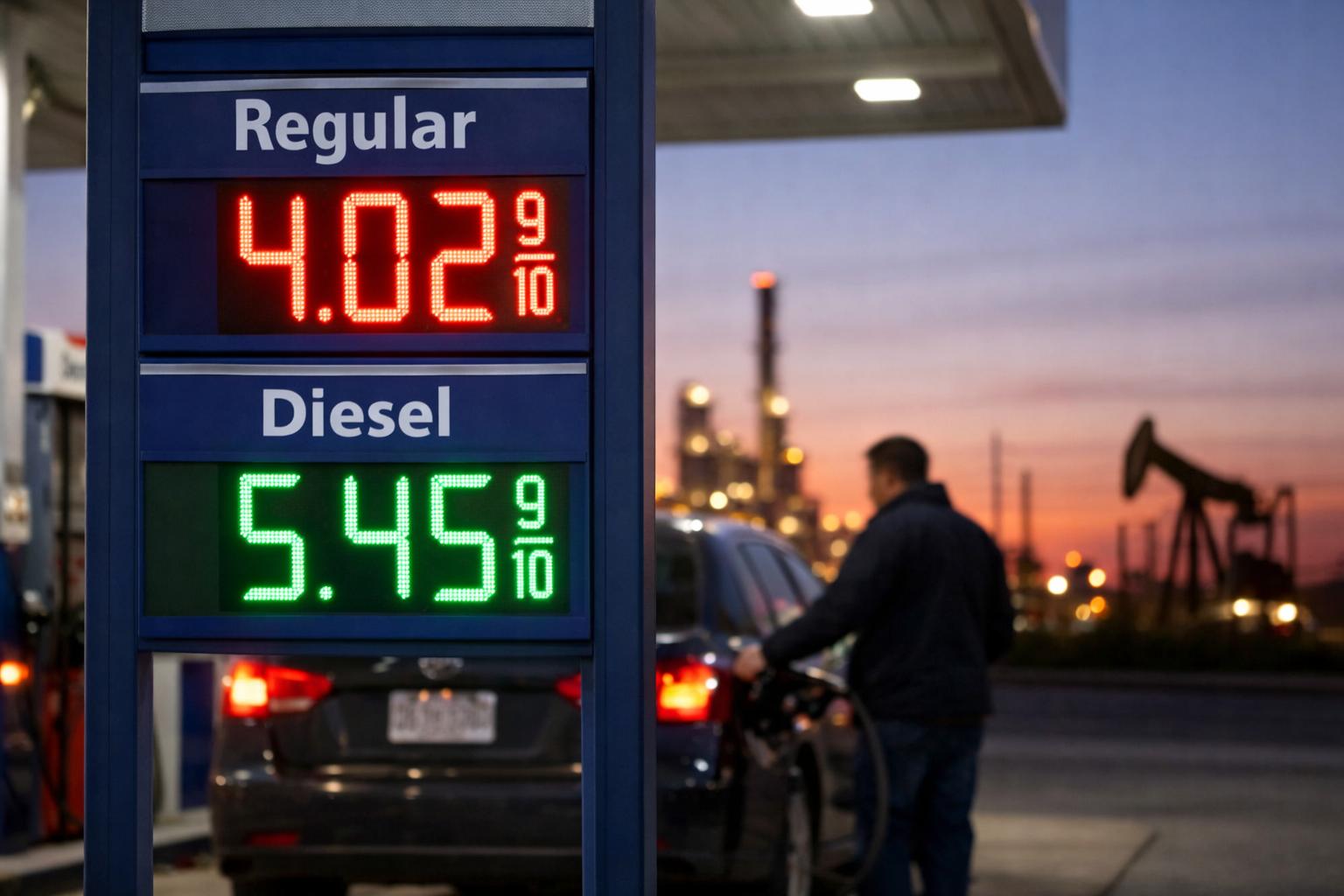
Rising oil costs push US gas above $4 for first time since 2022
Gas prices across the United States climbed above an average of $4 per gallon on Tuesday, March 31, 2026, marking the first time since 2022 that national fuel costs have reached this level, according to data released by AAA. The national average for regular gasoline rose to $4.02 per gallon, reflecting a sharp increase of more than $1 compared to prices before the ongoing Iran conflict began on Friday, February 28, 2026. The surge is largely tied to disruptions in global oil markets followin
Rising oil costs push US gas above $4 for first time since 2022
Gas prices across the United States climbed above an average of $4 per gallon on Tuesday, March 31, 2026, marking the first time since 2022 that national fuel costs have reached this level, according to data released by AAA. The national average for regular gasoline rose to $4.02 per gallon, reflecting a sharp increase of more than $1 compared to prices before the ongoing Iran conflict began on Friday, February 28, 2026. The surge is largely tied to disruptions in global oil markets followin