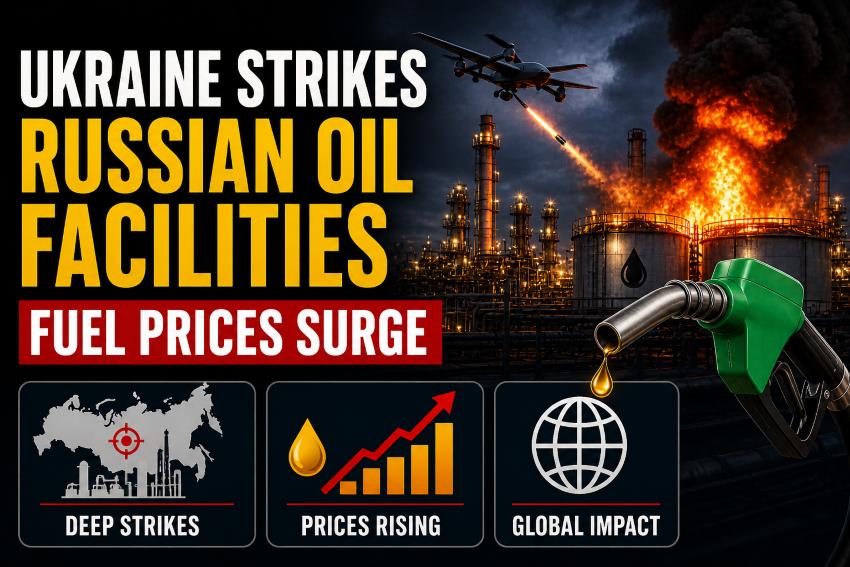
Ukraine has intensified its long-range strikes on energy infrastructure located deep inside Russia, targeting oil refineries, storage depots, and supply routes. These attacks mark a significant escalation in the ongoing
Ukraine has intensified its long-range strikes on energy infrastructure located deep inside Russia, targeting oil refineries, storage depots, and supply routes. These attacks mark a significant escalation in the ongoing
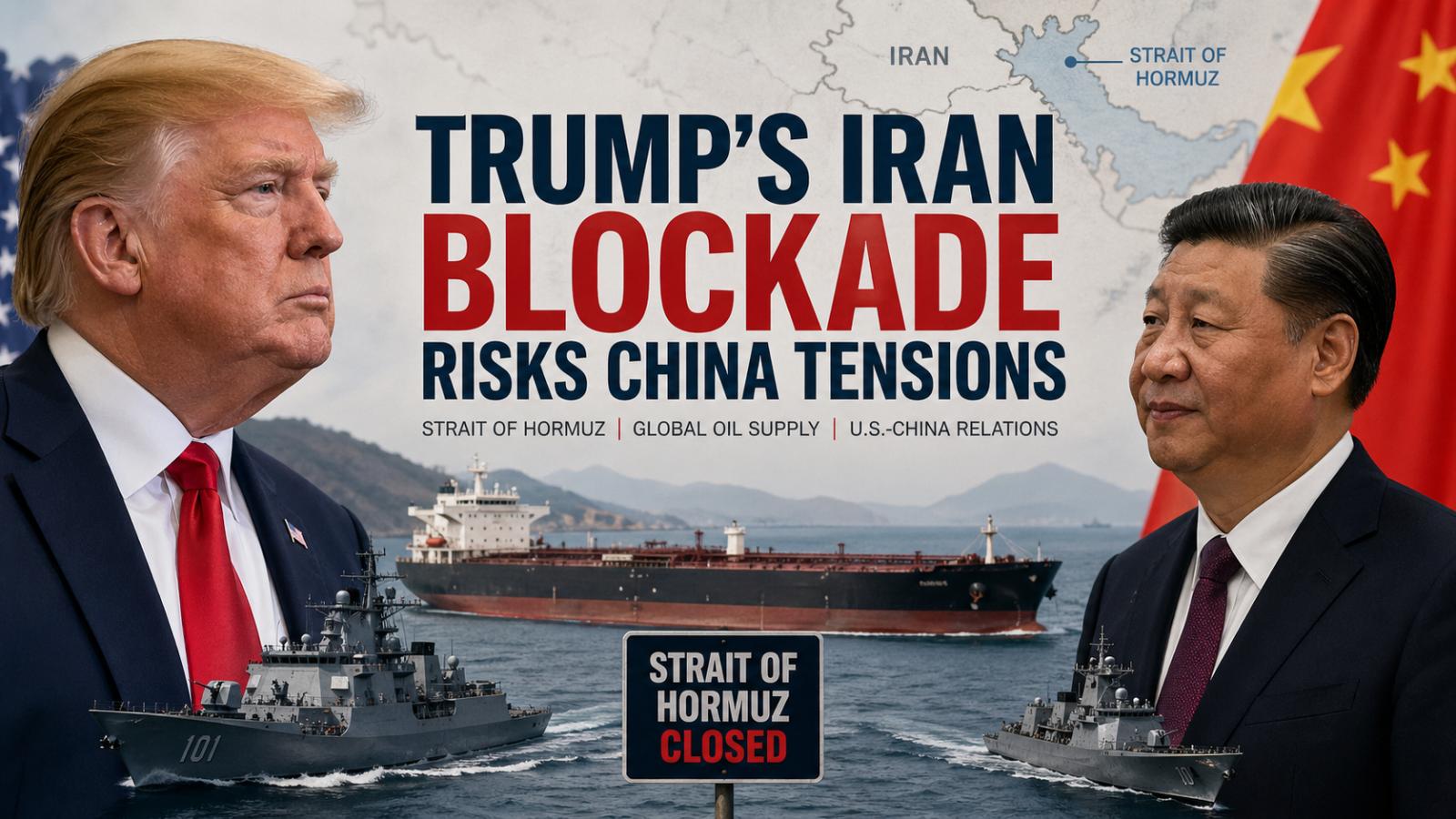
President Donald Trump has signaled his intention to maintain a naval blockade on Iranian shipping until Tehran meets U.S. demands, a move that is expected to keep the Strait of Hormuz effectively closed ahead of his planned visit to China. The decision introduces new complications for upcoming diplomatic
President Donald Trump has signaled his intention to maintain a naval blockade on Iranian shipping until Tehran meets U.S. demands, a move that is expected to keep the Strait of Hormuz effectively closed ahead of his planned visit to China. The decision introduces new complications for upcoming diplomatic
At 3:38 pm on April 25, India recorded its highest-ever electricity demand of 256.1 GW and successfully met it without disruption. According to GRID India, solar energy contributed around 57 GW during peak demand, accounting for nearly 21 percent of the total supply.
Earlier in the day, solar output had peaked even higher, reaching about 81 GW at 12:30 pm, which was nearly one-third of the
At 3:38 pm on April 25, India recorded its highest-ever electricity demand of 256.1 GW and successfully met it without disruption. According to GRID India, solar energy contributed around 57 GW during peak demand, accounting for nearly 21 percent of the total supply.
Earlier in the day, solar output had peaked even higher, reaching about 81 GW at 12:30 pm, which was nearly one-third of the
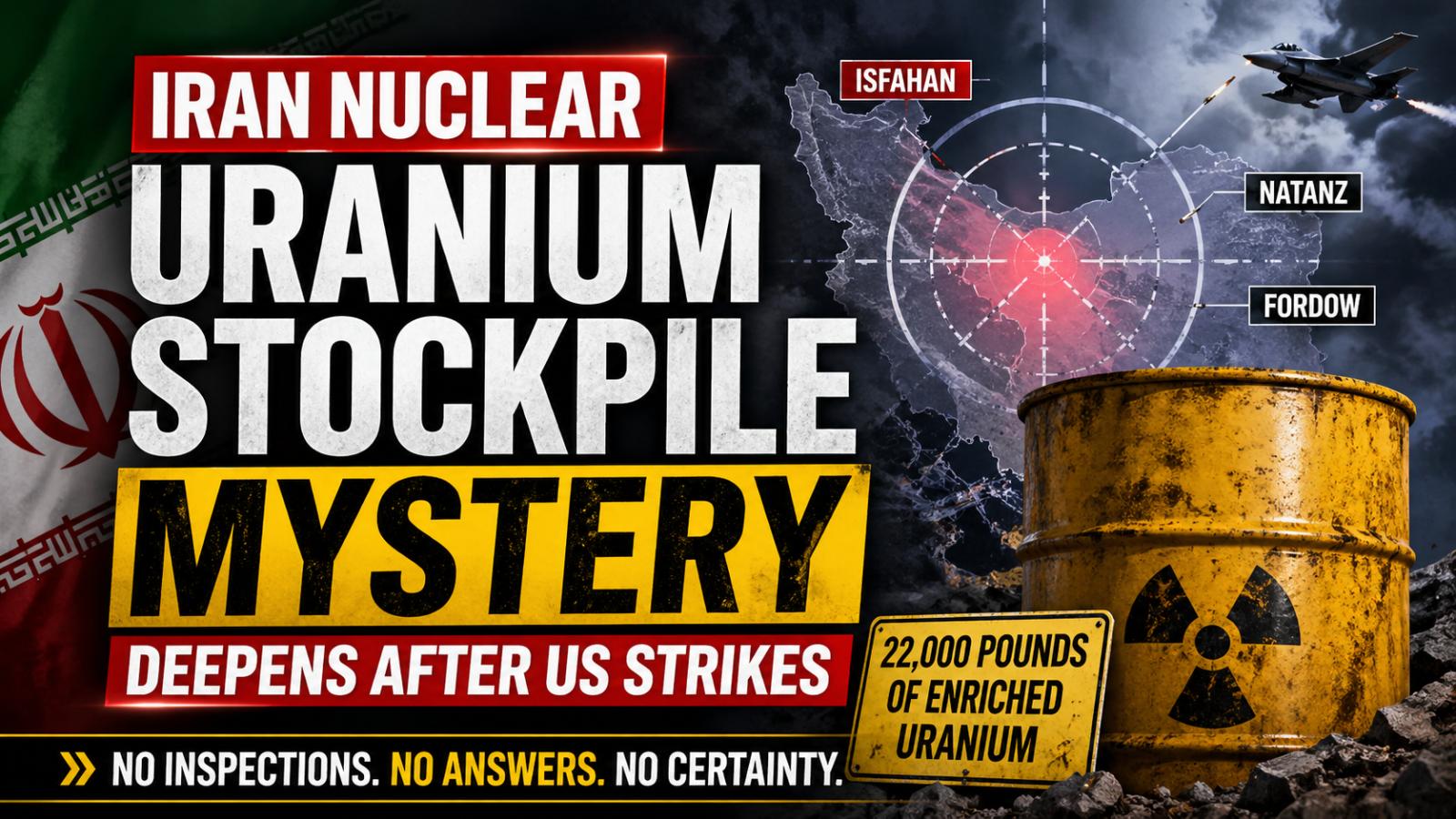
The location of Iran’s enriched uranium stockpile remains uncertain nearly two months after US military strikes targeted key nuclear facilities, raising fresh concerns about transparency and oversight. The material, estimated at roughly 22,000 pounds, had steadily accumulated over years following the US withdrawal from the 2015 nuclear agreement. That deal had previously imposed strict limits on enrichment levels and stockpile size, effectively curbing Iran’s ability to produce weapons-grade material.
Uranium enrichment remains central to the issue, as the process becomes significantly faster once higher purity levels are reached. While low enrichment supports civilian energy needs, higher concentrations can be used for nuclear weapons. Iran’s move to enrich uranium up to 60 percent in recent years placed it closer to that threshold, intensifying international concern.
Efforts to revive diplomatic agreements failed, and subsequent escalation led to direct military action targeting facilities such as Natanz and Fordow, along with storage areas near Isfahan. Shortly after, Iran halted cooperation with international inspectors, effectively ending on-the-ground verification. Without access, monitoring now relies heavily on satellite surveillance, which cannot fully confirm the condition or location of nuclear materials.
Experts suggest that even if Iran retains access to the stockpile, converting it into a functional weapon would require additional time and technical capacity. However, the absence of inspections creates uncertainty. Analysts warn that if portions of the uranium were relocated or secured in undisclosed sites, Iran could potentially resume enrichment activities without detection, complicating global efforts to assess the true state of its nuclear program.
The location of Iran’s enriched uranium stockpile remains uncertain nearly two months after US military strikes targeted key nuclear facilities, raising fresh concerns about transparency and oversight. The material, estimated at roughly 22,000 pounds, had steadily accumulated over years following the US withdrawal from the 2015 nuclear agreement. That deal had previously imposed strict limits on enrichment levels and stockpile size, effectively curbing Iran’s ability to produce weapons-grade material.
Uranium enrichment remains central to the issue, as the process becomes significantly faster once higher purity levels are reached. While low enrichment supports civilian energy needs, higher concentrations can be used for nuclear weapons. Iran’s move to enrich uranium up to 60 percent in recent years placed it closer to that threshold, intensifying international concern.
Efforts to revive diplomatic agreements failed, and subsequent escalation led to direct military action targeting facilities such as Natanz and Fordow, along with storage areas near Isfahan. Shortly after, Iran halted cooperation with international inspectors, effectively ending on-the-ground verification. Without access, monitoring now relies heavily on satellite surveillance, which cannot fully confirm the condition or location of nuclear materials.
Experts suggest that even if Iran retains access to the stockpile, converting it into a functional weapon would require additional time and technical capacity. However, the absence of inspections creates uncertainty. Analysts warn that if portions of the uranium were relocated or secured in undisclosed sites, Iran could potentially resume enrichment activities without detection, complicating global efforts to assess the true state of its nuclear program.
Oil prices jumped over 6% after President Donald Trump confirmed the U.S. will maintain its blockade on Iran, raising concerns over disrupted supply and escalating tensions in the Strait of Hormuz.
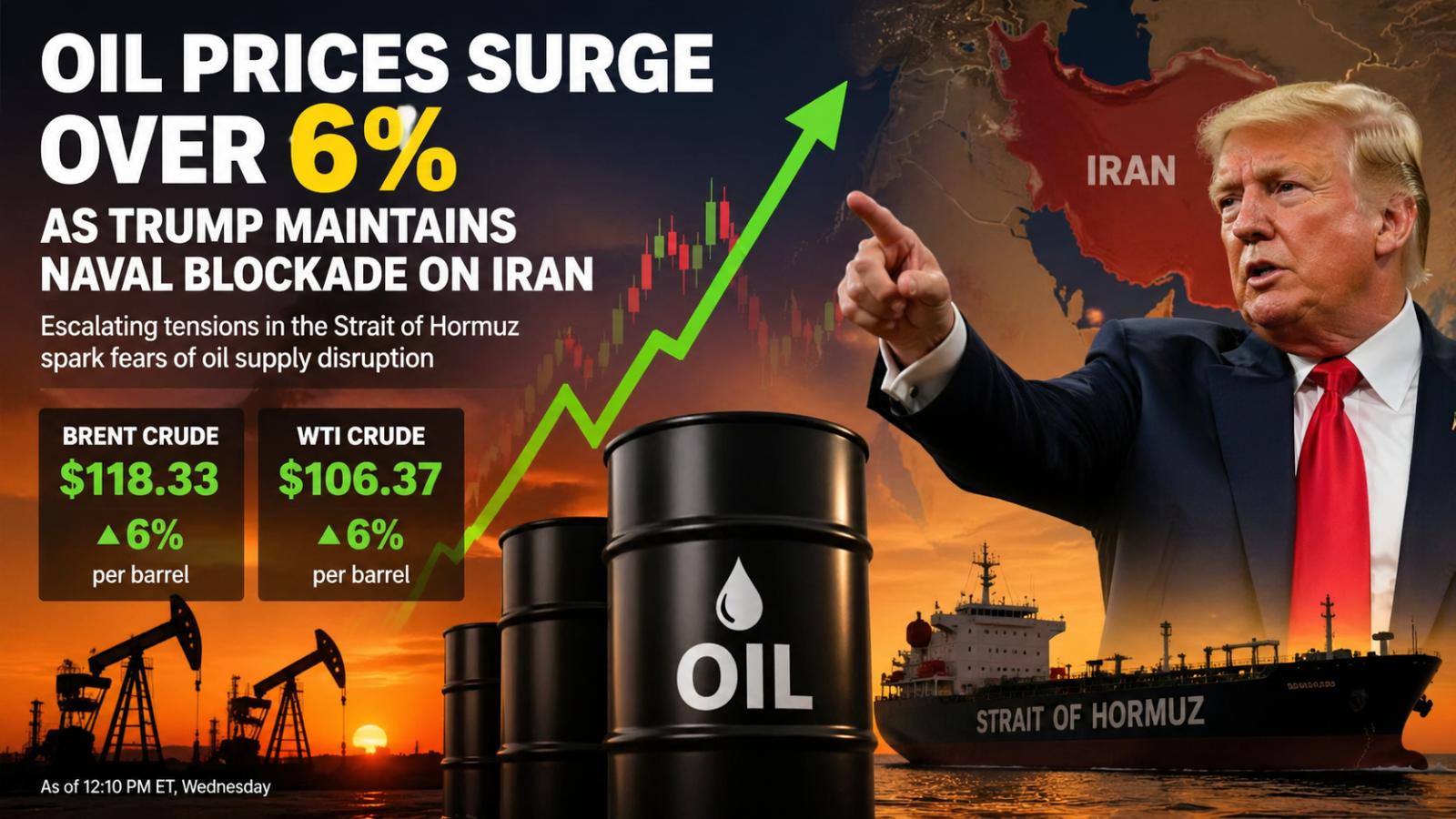
Oil prices surge over 6% as Trump maintains naval blockade on Iran, sending shockwaves through global energy markets and intensifying concerns about supply disruptions in the Middle East. By 12:10 PM Eastern Time on Wednesday April 29, 2026, international benchmark Brent crude futures climbed more than 6% to $118.33 per barrel, while U.S. West Texas Intermediate futures rose over 6% to $106.37 per barrel.
The sharp increase followed comments from Donald Trump, who confirmed that the United States would continue its naval blockade against Iran until a nuclear agreement is reached. Trump described the blockade as highly effective, signaling a firm stance amid stalled diplomatic efforts. Negotiations aimed at easing tensions have made little progress in recent days, further escalating uncertainty in global markets.
Iran has refused to reopen the Strait of Hormuz—a critical passage for global oil shipments—unless the United States lifts its blockade. Tehran’s control over the strait has significantly restricted oil exports from the region, tightening supply and driving prices higher. Market analysts note that developments in the Persian Gulf remain the dominant factor influencing oil price volatility.
Adding to market complexity, the United Arab Emirates recently announced its decision to exit OPEC. While strategists at ING described the move as a substantial setback for the producer alliance, they indicated its immediate impact on prices would likely be limited compared to ongoing geopolitical tensions.
Analysts suggest that while the UAE’s departure could weaken OPEC’s long-term influence, the near-term trajectory of oil markets will depend largely on whether oil flows resume through the Strait of Hormuz. Until then, geopolitical risks and supply constraints are expected to keep prices elevated and markets volatile.
Oil prices jumped over 6% after President Donald Trump confirmed the U.S. will maintain its blockade on Iran, raising concerns over disrupted supply and escalating tensions in the Strait of Hormuz.
Oil prices surge over 6% as Trump maintains naval blockade on Iran, sending shockwaves through global energy markets and intensifying concerns about supply disruptions in the Middle East. By 12:10 PM Eastern Time on Wednesday April 29, 2026, international benchmark Brent crude futures climbed more than 6% to $118.33 per barrel, while U.S. West Texas Intermediate futures rose over 6% to $106.37 per barrel.
The sharp increase followed comments from Donald Trump, who confirmed that the United States would continue its naval blockade against Iran until a nuclear agreement is reached. Trump described the blockade as highly effective, signaling a firm stance amid stalled diplomatic efforts. Negotiations aimed at easing tensions have made little progress in recent days, further escalating uncertainty in global markets.
Iran has refused to reopen the Strait of Hormuz—a critical passage for global oil shipments—unless the United States lifts its blockade. Tehran’s control over the strait has significantly restricted oil exports from the region, tightening supply and driving prices higher. Market analysts note that developments in the Persian Gulf remain the dominant factor influencing oil price volatility.
Adding to market complexity, the United Arab Emirates recently announced its decision to exit OPEC. While strategists at ING described the move as a substantial setback for the producer alliance, they indicated its immediate impact on prices would likely be limited compared to ongoing geopolitical tensions.
Analysts suggest that while the UAE’s departure could weaken OPEC’s long-term influence, the near-term trajectory of oil markets will depend largely on whether oil flows resume through the Strait of Hormuz. Until then, geopolitical risks and supply constraints are expected to keep prices elevated and markets volatile.
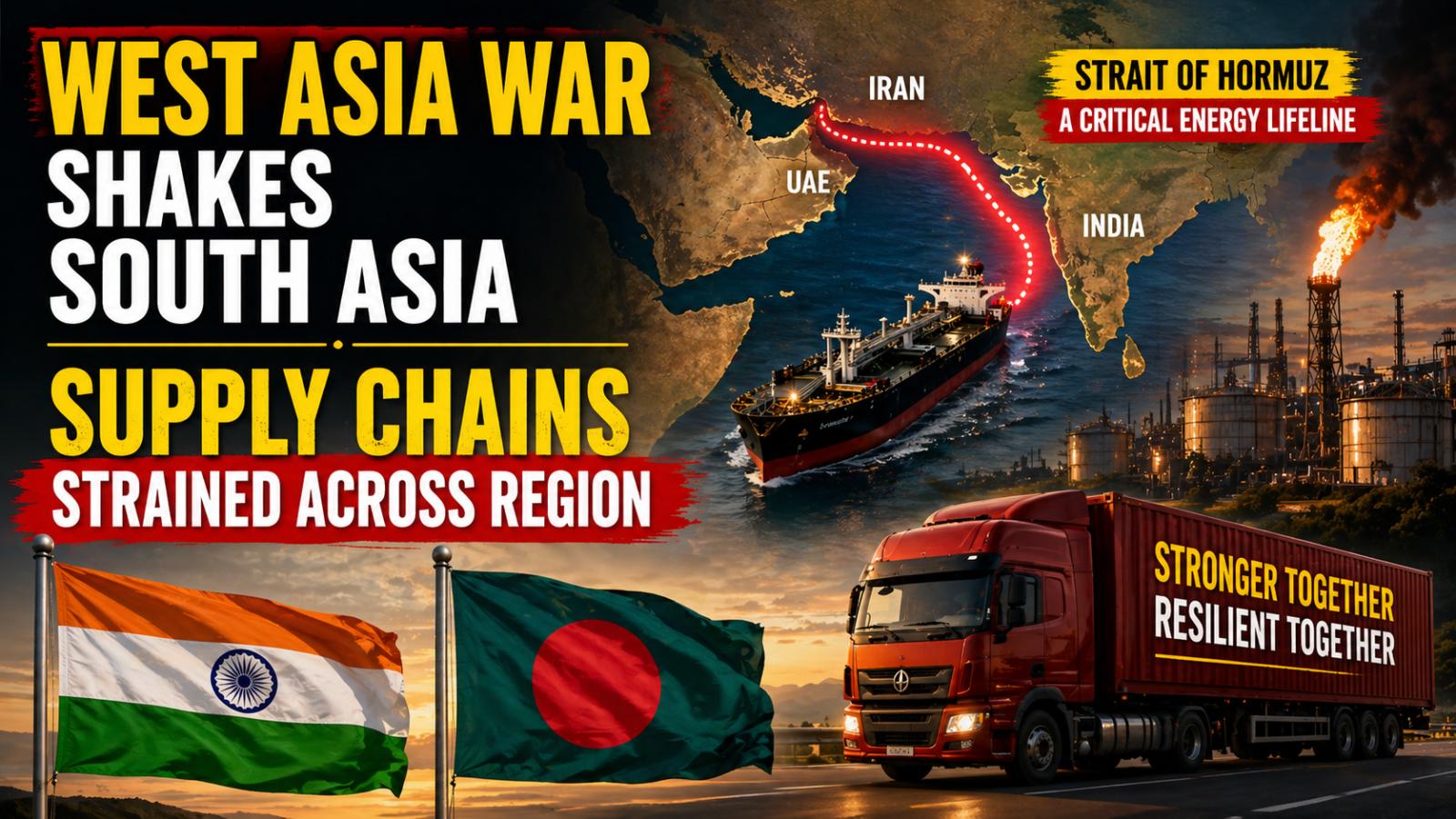
The war in West Asia and disruptions in the Strait of Hormuz have triggered widespread supply chain instability across South Asia, affecting energy security, economic stability, and regional cooperation. Countries across the subcontinent, heavily reliant on hydrocarbon imports from West Asia, are facing rising costs, reduced industrial competitiveness, and increased household expenditures as critical supply routes remain constrained.
Fuel shortages and economic strain acros
The war in West Asia and disruptions in the Strait of Hormuz have triggered widespread supply chain instability across South Asia, affecting energy security, economic stability, and regional cooperation. Countries across the subcontinent, heavily reliant on hydrocarbon imports from West Asia, are facing rising costs, reduced industrial competitiveness, and increased household expenditures as critical supply routes remain constrained.
Fuel shortages and economic strain acros
UAE exits OPEC and reshapes global oil and currency dynamics
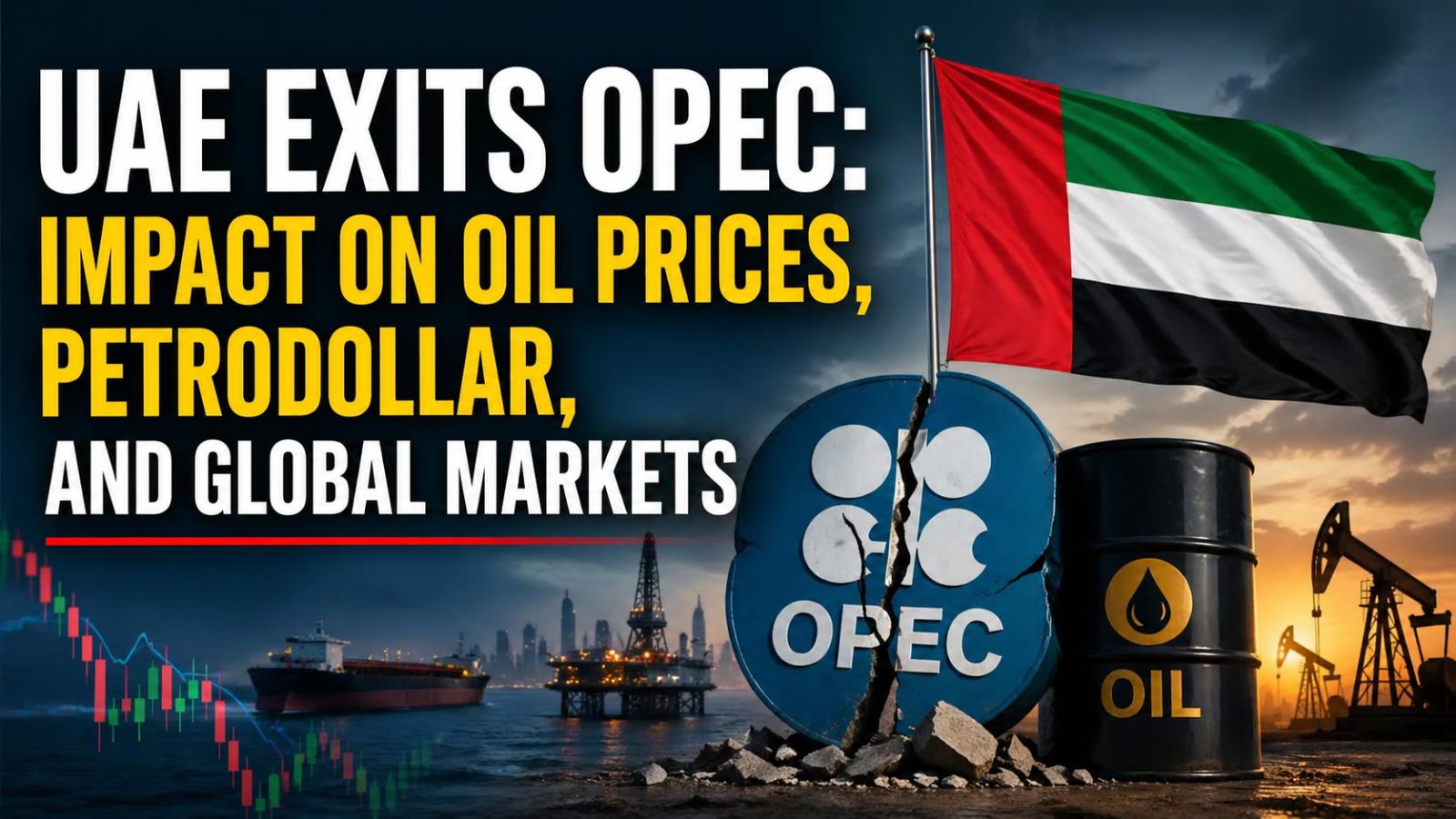
The decision by the United Arab Emirates to exit OPEC and OPEC+ marks a major shift in global energy markets. This move could increase oil price volatility, weaken OPEC’s control, and challenge the dominance of the US dollar in global oil trade. The timing is critical, coming amid rising oil prices, a growing dollar shortage in Gulf countries, and escalating tensions around the Strait of Hormuz.
What does thi
UAE exits OPEC and reshapes global oil and currency dynamics
The decision by the United Arab Emirates to exit OPEC and OPEC+ marks a major shift in global energy markets. This move could increase oil price volatility, weaken OPEC’s control, and challenge the dominance of the US dollar in global oil trade. The timing is critical, coming amid rising oil prices, a growing dollar shortage in Gulf countries, and escalating tensions around the Strait of Hormuz.
What does thi
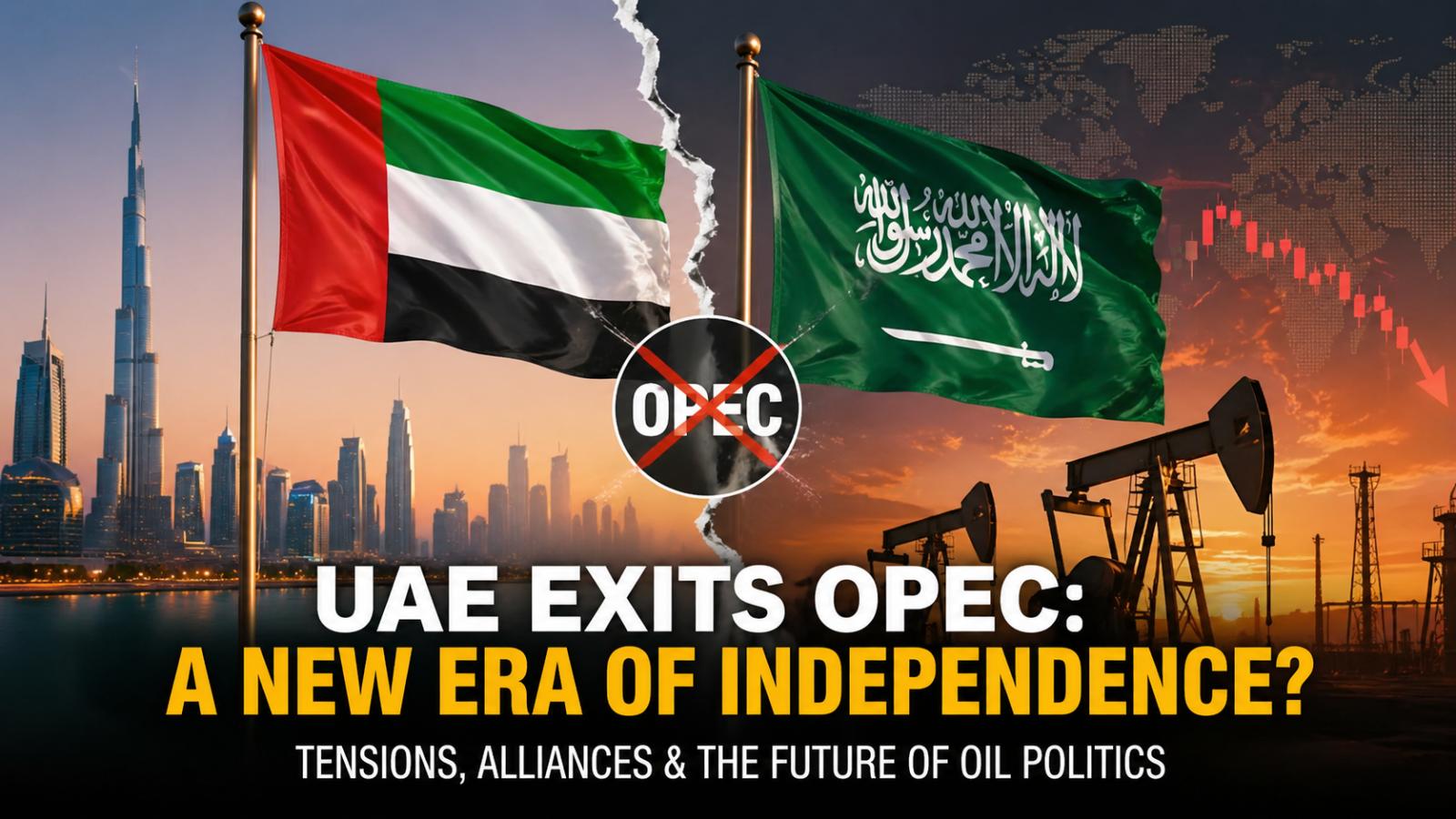
Is UAE leaving OPEC to counter Saudi influence? Yes, it signals strategic independence. The United Arab Emirates’ decision to exit the Organization of the Petroleum Exporting Countries marks a pivotal shift in Gulf geopolitics, reflecting rising tensions with Saudi Arabia and broader regional realignments.
Escalating tensions following Iran strikes on UAE infrastructure
As of Tuesday, April 8, 2026, the UAE reported intercepting 537 ballistic missiles,
Is UAE leaving OPEC to counter Saudi influence? Yes, it signals strategic independence. The United Arab Emirates’ decision to exit the Organization of the Petroleum Exporting Countries marks a pivotal shift in Gulf geopolitics, reflecting rising tensions with Saudi Arabia and broader regional realignments.
Escalating tensions following Iran strikes on UAE infrastructure
As of Tuesday, April 8, 2026, the UAE reported intercepting 537 ballistic missiles,
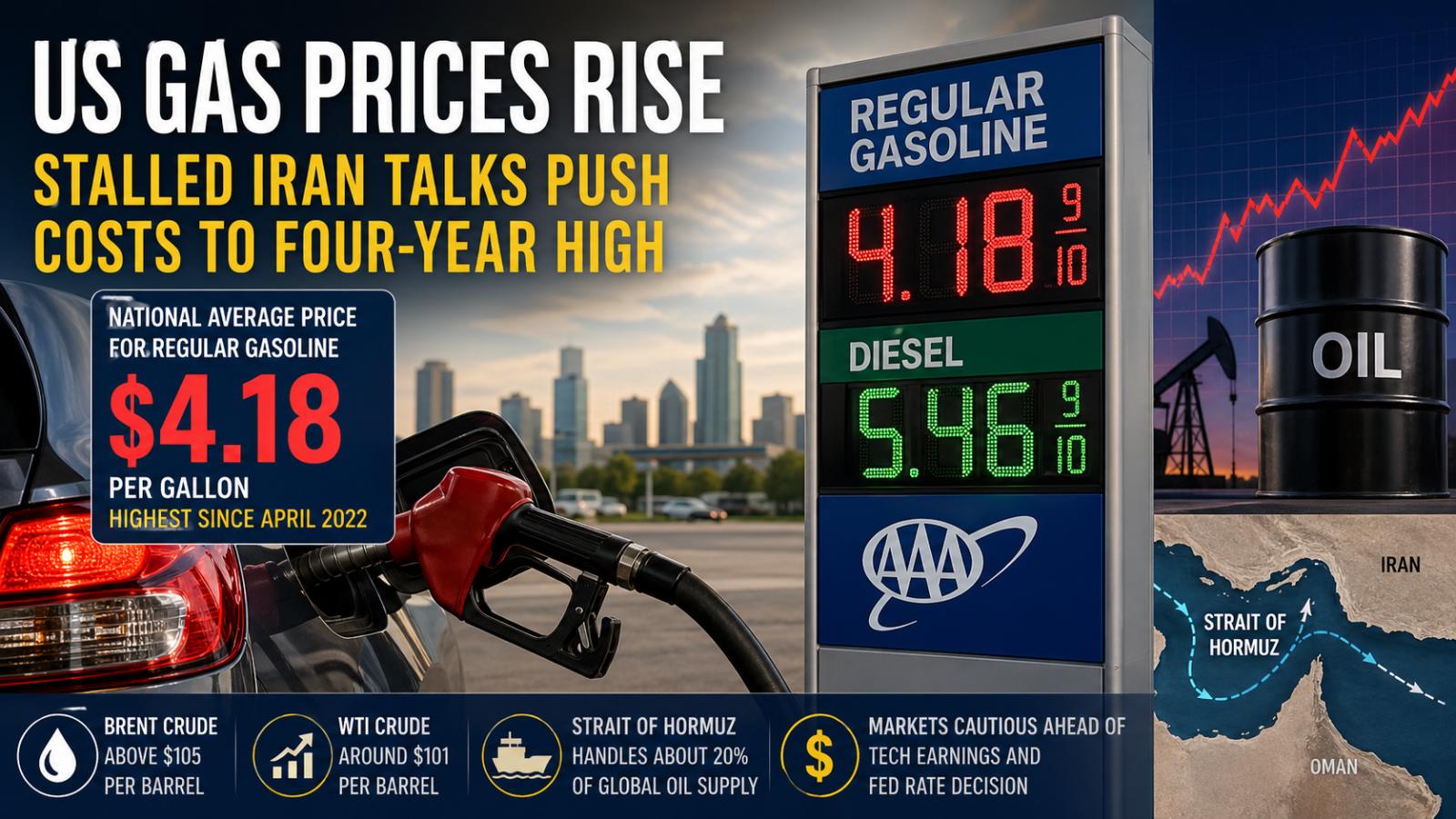
Stalled Iran talks push costs to four-year high
Gasoline prices across the United States climbed sharply on Tuesday, April 28, 2026, reaching their highest level in four years as stalled negotiations between Washington and Tehran fueled a surge in global oil markets. According to AAA, the national average price for a gallon of regular gasoline rose to $4.18, marking the h
Stalled Iran talks push costs to four-year high
Gasoline prices across the United States climbed sharply on Tuesday, April 28, 2026, reaching their highest level in four years as stalled negotiations between Washington and Tehran fueled a surge in global oil markets. According to AAA, the national average price for a gallon of regular gasoline rose to $4.18, marking the h
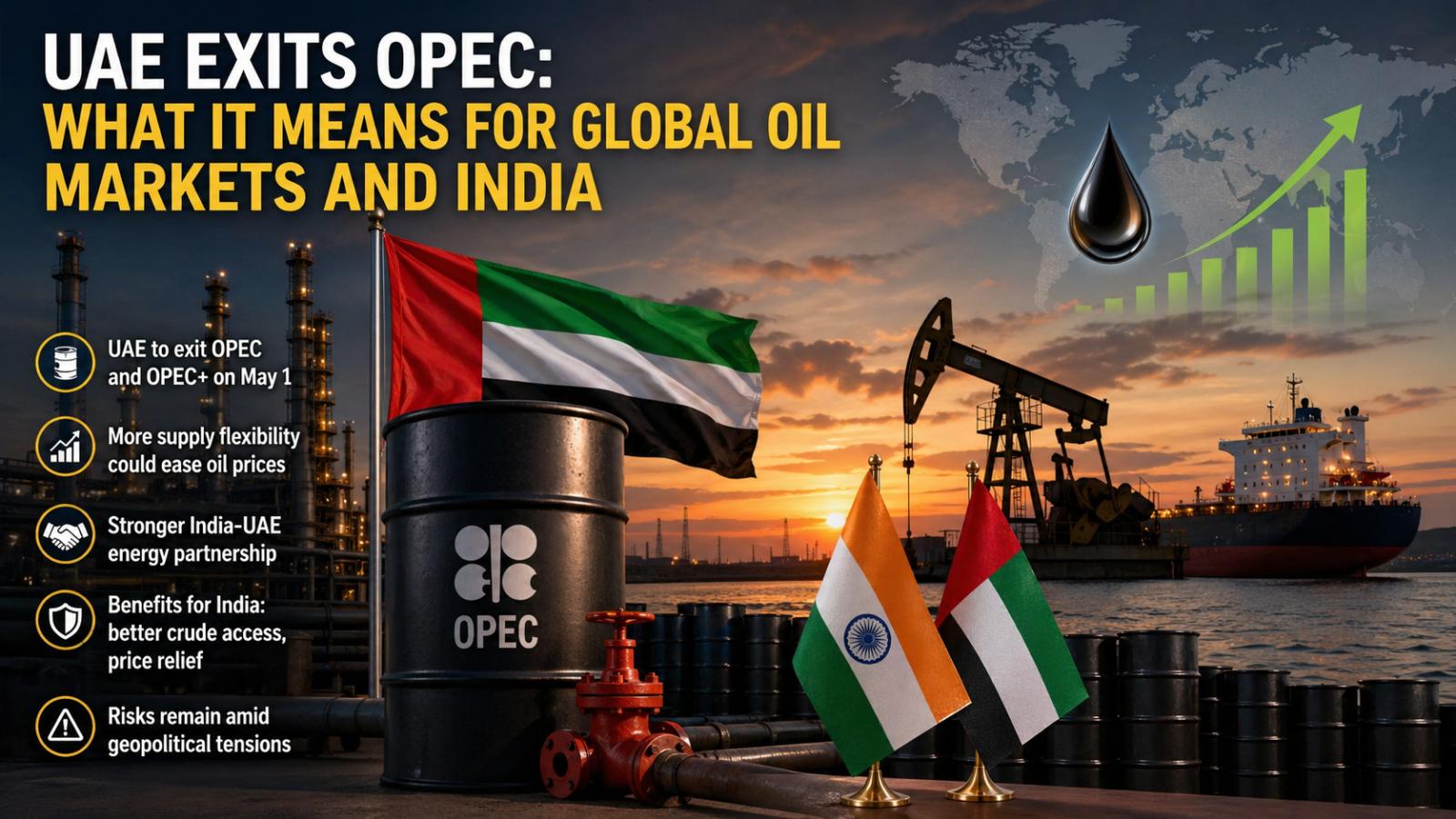
UAE’s exit from OPEC may boost oil supply, ease prices, and strengthen India energy ties, while raising volatility risks in global markets amid geopolitical tensions.
Will UAE leaving OPEC lower oil prices? Yes, it could ease global supply pressure as the United Arab Emirates prepares to formally exit Organization of the Petroleum Exporting Countries and OPEC+ on May 1,
UAE’s exit from OPEC may boost oil supply, ease prices, and strengthen India energy ties, while raising volatility risks in global markets amid geopolitical tensions.
Will UAE leaving OPEC lower oil prices? Yes, it could ease global supply pressure as the United Arab Emirates prepares to formally exit Organization of the Petroleum Exporting Countries and OPEC+ on May 1,
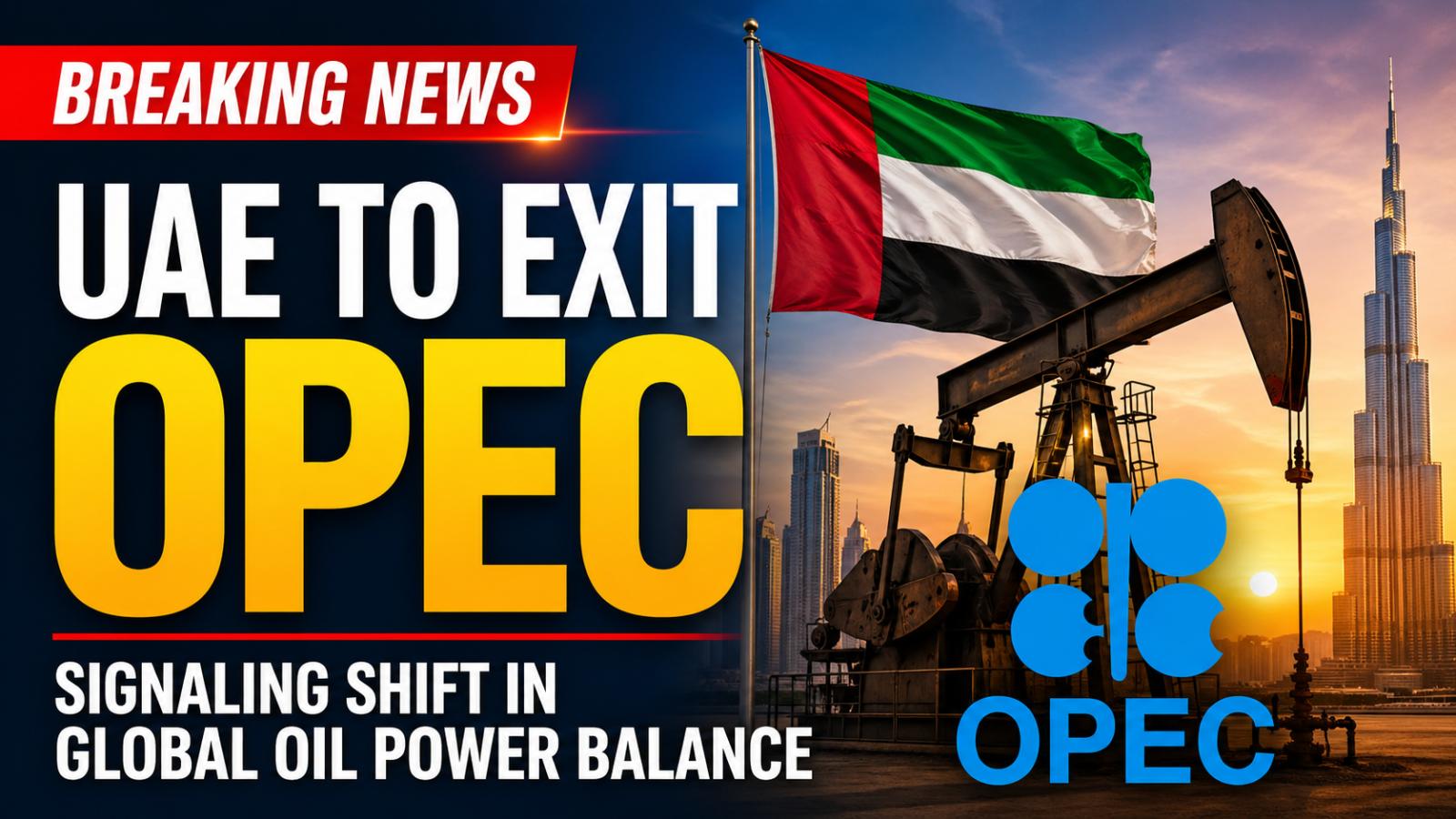
The UAE will exit OPEC on May 1 after nearly six decades, aiming for greater control over oil production and energy strategy. The move may weaken OPEC’s influence, raise concerns about supply coordination, and reshape global oil market dynamics.
UAE to exit OPEC, signaling shift in global oil power balance is set to take effect May 1, marking a major change in the structure of global energy coordination. The decision reflects Abu Dhabi’s broader strategy to gai
The UAE will exit OPEC on May 1 after nearly six decades, aiming for greater control over oil production and energy strategy. The move may weaken OPEC’s influence, raise concerns about supply coordination, and reshape global oil market dynamics.
UAE to exit OPEC, signaling shift in global oil power balance is set to take effect May 1, marking a major change in the structure of global energy coordination. The decision reflects Abu Dhabi’s broader strategy to gai
Iran offered to reopen the Strait of Hormuz if the U.S. lifts its blockade and ends hostilities, but Washington insists any deal must address Tehran’s nuclear program, leaving tensions high and global energy markets under strain.
Iran has proposed reopening the Strait of Hormuz if the United States lifts its blockade and agrees to end hostilities, according to regional officials familiar with negotiations disclosed on Monday, April 28, 2026. The proposal, deliver
Iran offered to reopen the Strait of Hormuz if the U.S. lifts its blockade and ends hostilities, but Washington insists any deal must address Tehran’s nuclear program, leaving tensions high and global energy markets under strain.
Iran has proposed reopening the Strait of Hormuz if the United States lifts its blockade and agrees to end hostilities, according to regional officials familiar with negotiations disclosed on Monday, April 28, 2026. The proposal, deliver
Antonio Guterres, Secretary-General of the United Nations, on Monday, April 27, 2026, appealed to the United Nations Security Council to push for the reopening of the Strait of Hormuz, warning that the ongoing bl
Antonio Guterres, Secretary-General of the United Nations, on Monday, April 27, 2026, appealed to the United Nations Security Council to push for the reopening of the Strait of Hormuz, warning that the ongoing bl
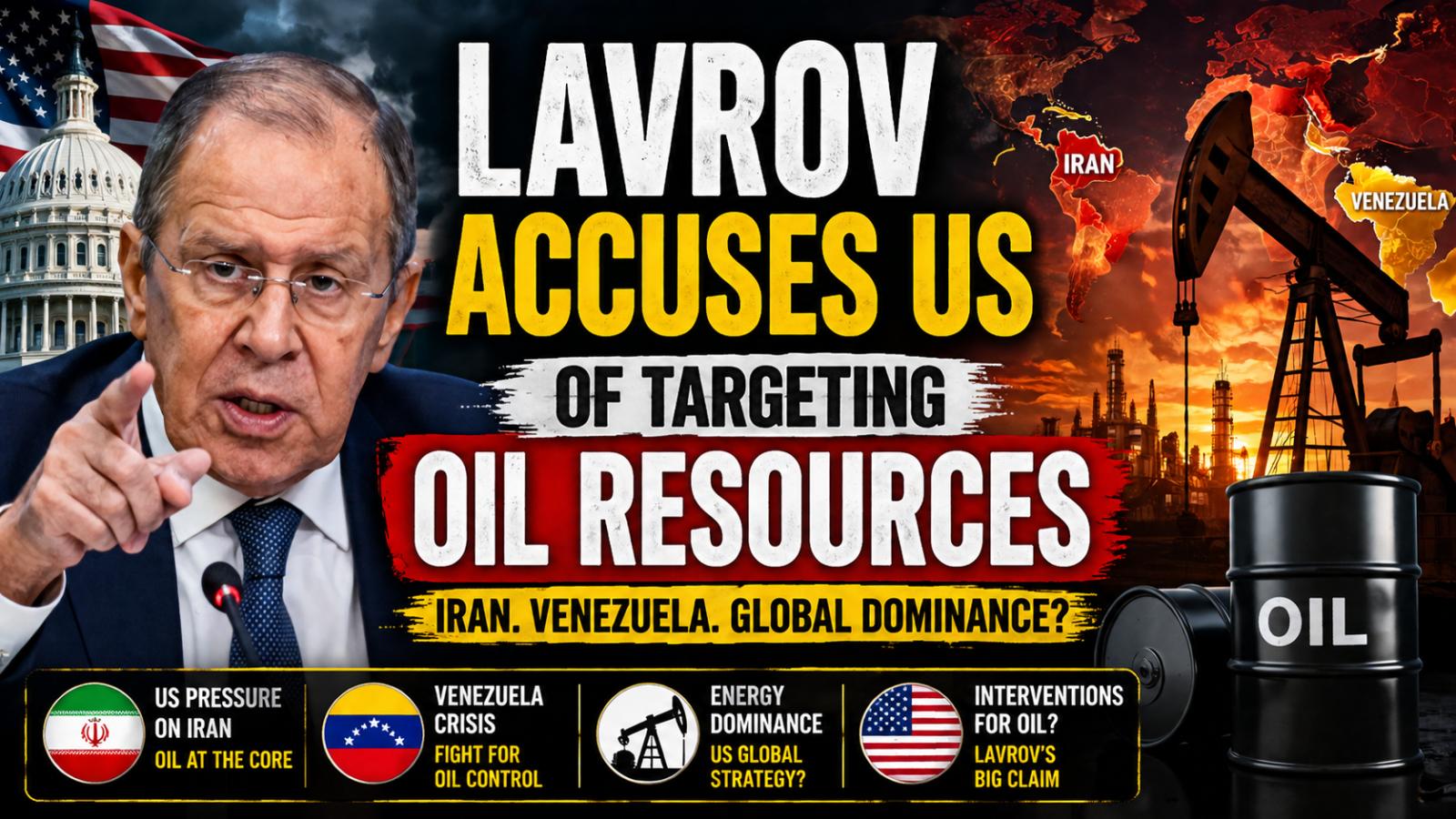
Russia’s foreign minister accuses the US of pursuing oil-driven interventions in Iran and Venezuela, raising concerns over global energy dominance and geopolitical tensions.
Russian Foreign Minister Sergei Lavrov has accused the United States of pursuing foreign interventions to secure control over global oil and energy resources, escalating rhetoric between Moscow and
Russia’s foreign minister accuses the US of pursuing oil-driven interventions in Iran and Venezuela, raising concerns over global energy dominance and geopolitical tensions.
Russian Foreign Minister Sergei Lavrov has accused the United States of pursuing foreign interventions to secure control over global oil and energy resources, escalating rhetoric between Moscow and
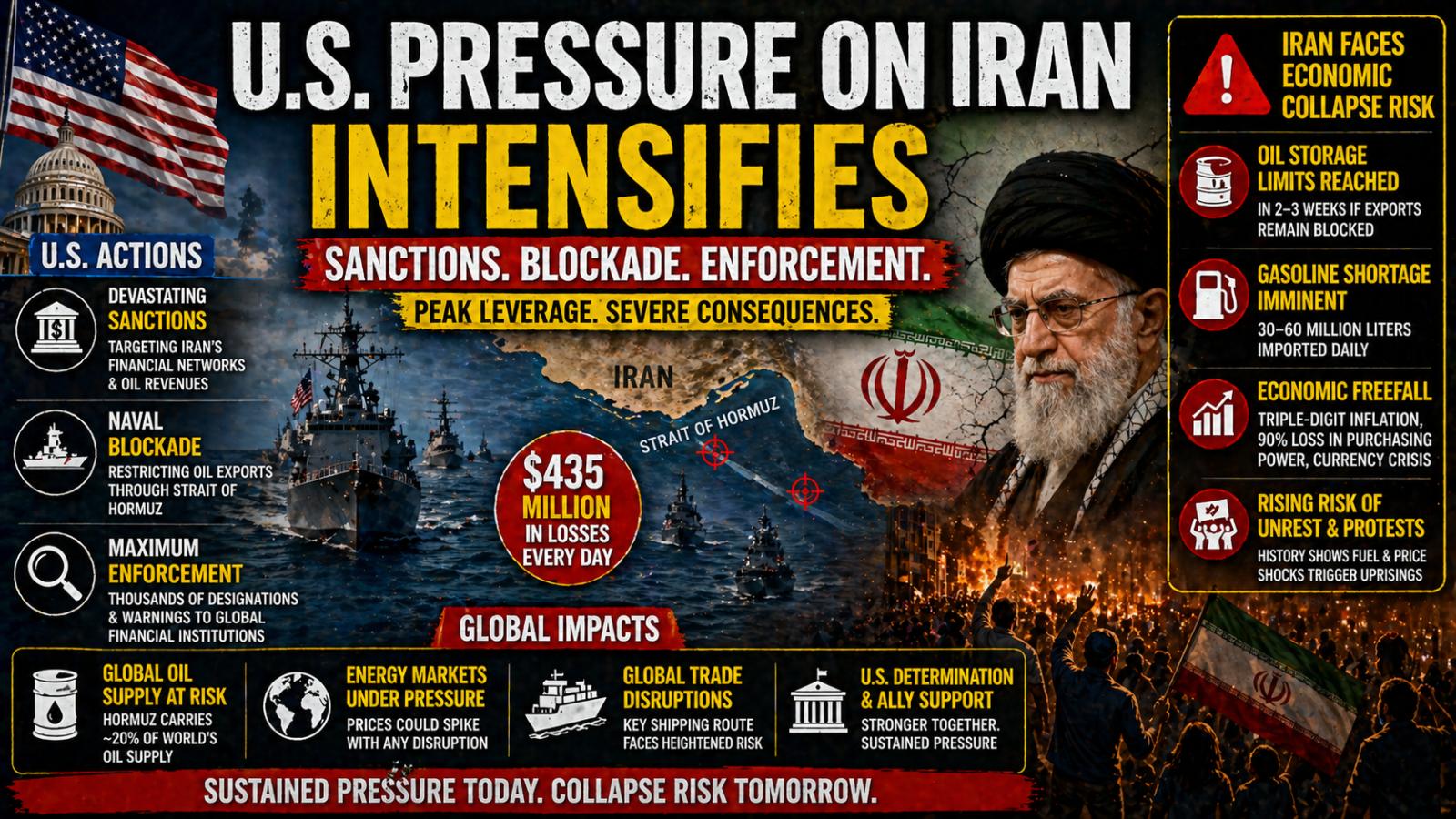
How is U.S. pressure on Iran intensifying? It combines sanctions, blockade, and enforcement as economic and geopolitical forces converge to place unprecedented strain on Tehran, according to a former U.S. Treasury sanctions expert who described the current moment as a rare alignment of leverage.
Converging tools create peak economic pressure
Miad Maleki, a former Treasury Department sanctions specialist, said the United States is applying multiple pressu
How is U.S. pressure on Iran intensifying? It combines sanctions, blockade, and enforcement as economic and geopolitical forces converge to place unprecedented strain on Tehran, according to a former U.S. Treasury sanctions expert who described the current moment as a rare alignment of leverage.
Converging tools create peak economic pressure
Miad Maleki, a former Treasury Department sanctions specialist, said the United States is applying multiple pressu
Israel strikes Hezbollah targets after rocket fire from Lebanon as tensions persist despite a truce extension, while diplomatic efforts and US energy measures reflect widening regional impact.
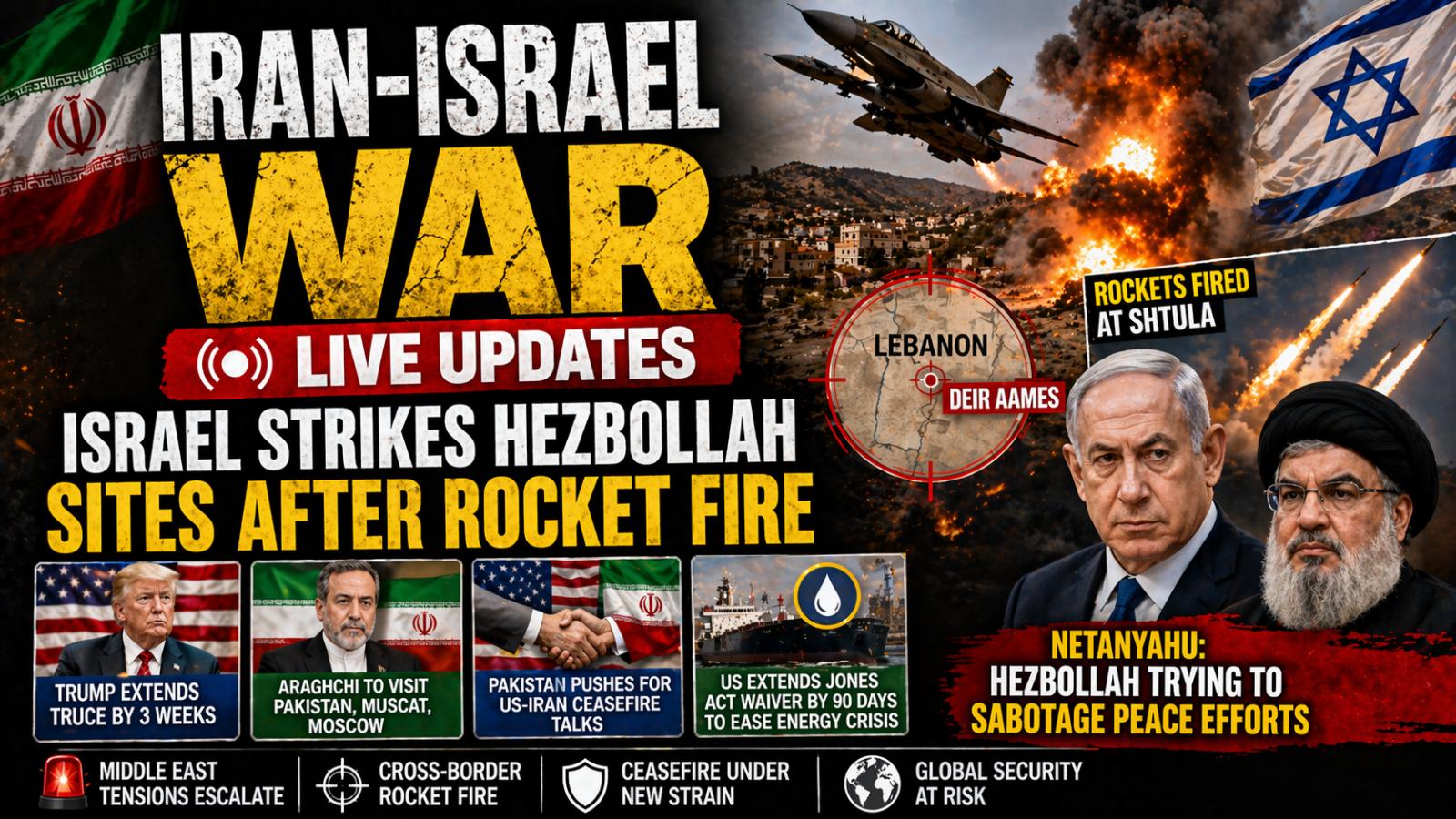
Iran-Israel war live updates: Israel strikes Hezbollah sites after rocket fire as regional tensions escalated on Friday, April 24, 2026, with the Israeli military confirming strikes on Hezbollah-linked locations in southern Lebanon following cross-border rocket launches.
The Israeli military stated that it targeted sites near the town of Deir Aames after rockets were fired toward the Israeli town of Shtula a day earlier. Deir Aames lies outside the designated border buffer zone that Israeli forces have continued to occupy even after a 10-day ceasefire agreement implemented the previous week. Earlier on Friday, April 24, 2026, the military issued evacuation warnings urging residents to leave the area before the strikes.
The renewed hostilities come despite diplomatic efforts to maintain calm. U.S. President Donald Trump announced on Thursday, April 23, 2026, a three-week extension of the Israel-Hezbollah truce. However, both sides have continued intermittent exchanges of fire, raising concerns about the durability of the ceasefire.
Israeli Prime Minister Benjamin Netanyahu accused Hezbollah of undermining peace efforts, stating on Friday, April 24, 2026, that the group was attempting to “sabotage” negotiations aimed at reaching a long-term agreement between Israel and Lebanon. His remarks marked his first public comments following the truce extension.
Meanwhile, diplomatic activity continued across the region. Iranian Foreign Minister Abbas Araghchi said his upcoming visits to Islamabad, Muscat, and Moscow are intended to coordinate with regional partners and discuss evolving developments. While he did not directly address potential talks with the United States, officials in Pakistan have recently intensified efforts to facilitate renewed ceasefire negotiations between Washington and Tehran.
In Washington, the White House announced an extension of a waiver to the Jones Act by 90 days on Friday, April 24, 2026. The measure is designed to ease domestic energy supply pressures amid disruptions linked to the broader West Asia conflict. Officials said the extension would help maintain the flow of oil and natural gas within the United States by allowing greater flexibility in maritime transport.
The combination of military actions, diplomatic outreach, and economic measures underscores the widening impact of the conflict, with regional instability continuing to influence global security and energy markets.
Israel strikes Hezbollah targets after rocket fire from Lebanon as tensions persist despite a truce extension, while diplomatic efforts and US energy measures reflect widening regional impact.
Iran-Israel war live updates: Israel strikes Hezbollah sites after rocket fire as regional tensions escalated on Friday, April 24, 2026, with the Israeli military confirming strikes on Hezbollah-linked locations in southern Lebanon following cross-border rocket launches.
The Israeli military stated that it targeted sites near the town of Deir Aames after rockets were fired toward the Israeli town of Shtula a day earlier. Deir Aames lies outside the designated border buffer zone that Israeli forces have continued to occupy even after a 10-day ceasefire agreement implemented the previous week. Earlier on Friday, April 24, 2026, the military issued evacuation warnings urging residents to leave the area before the strikes.
The renewed hostilities come despite diplomatic efforts to maintain calm. U.S. President Donald Trump announced on Thursday, April 23, 2026, a three-week extension of the Israel-Hezbollah truce. However, both sides have continued intermittent exchanges of fire, raising concerns about the durability of the ceasefire.
Israeli Prime Minister Benjamin Netanyahu accused Hezbollah of undermining peace efforts, stating on Friday, April 24, 2026, that the group was attempting to “sabotage” negotiations aimed at reaching a long-term agreement between Israel and Lebanon. His remarks marked his first public comments following the truce extension.
Meanwhile, diplomatic activity continued across the region. Iranian Foreign Minister Abbas Araghchi said his upcoming visits to Islamabad, Muscat, and Moscow are intended to coordinate with regional partners and discuss evolving developments. While he did not directly address potential talks with the United States, officials in Pakistan have recently intensified efforts to facilitate renewed ceasefire negotiations between Washington and Tehran.
In Washington, the White House announced an extension of a waiver to the Jones Act by 90 days on Friday, April 24, 2026. The measure is designed to ease domestic energy supply pressures amid disruptions linked to the broader West Asia conflict. Officials said the extension would help maintain the flow of oil and natural gas within the United States by allowing greater flexibility in maritime transport.
The combination of military actions, diplomatic outreach, and economic measures underscores the widening impact of the conflict, with regional instability continuing to influence global security and energy markets.
EU approves major Ukraine aid and new Russia sanctions after resolving internal disputes, strengthening Kyiv’s position and increasing pressure on Moscow amid ongoing war.
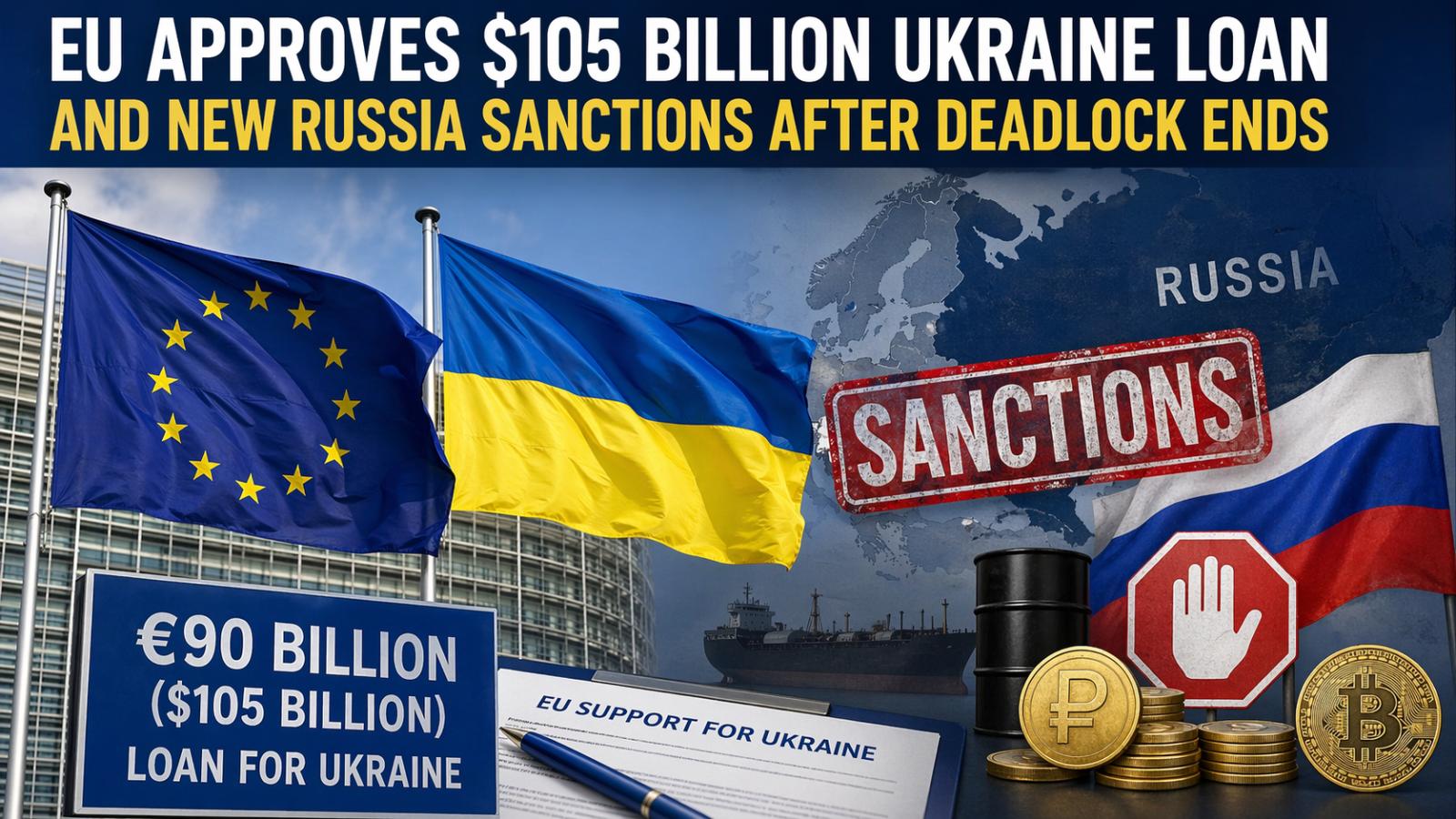
EU approves $105 billion Ukraine loan and new Russia sanctions after deadlock ends. The European Union on Thursday, April 23, 2026, granted final approval to a €90 billion ($105 billion) loan for Ukraine and endorsed a new round of sanctions against Russia, marking a significant shift
EU approves major Ukraine aid and new Russia sanctions after resolving internal disputes, strengthening Kyiv’s position and increasing pressure on Moscow amid ongoing war.
EU approves $105 billion Ukraine loan and new Russia sanctions after deadlock ends. The European Union on Thursday, April 23, 2026, granted final approval to a €90 billion ($105 billion) loan for Ukraine and endorsed a new round of sanctions against Russia, marking a significant shift
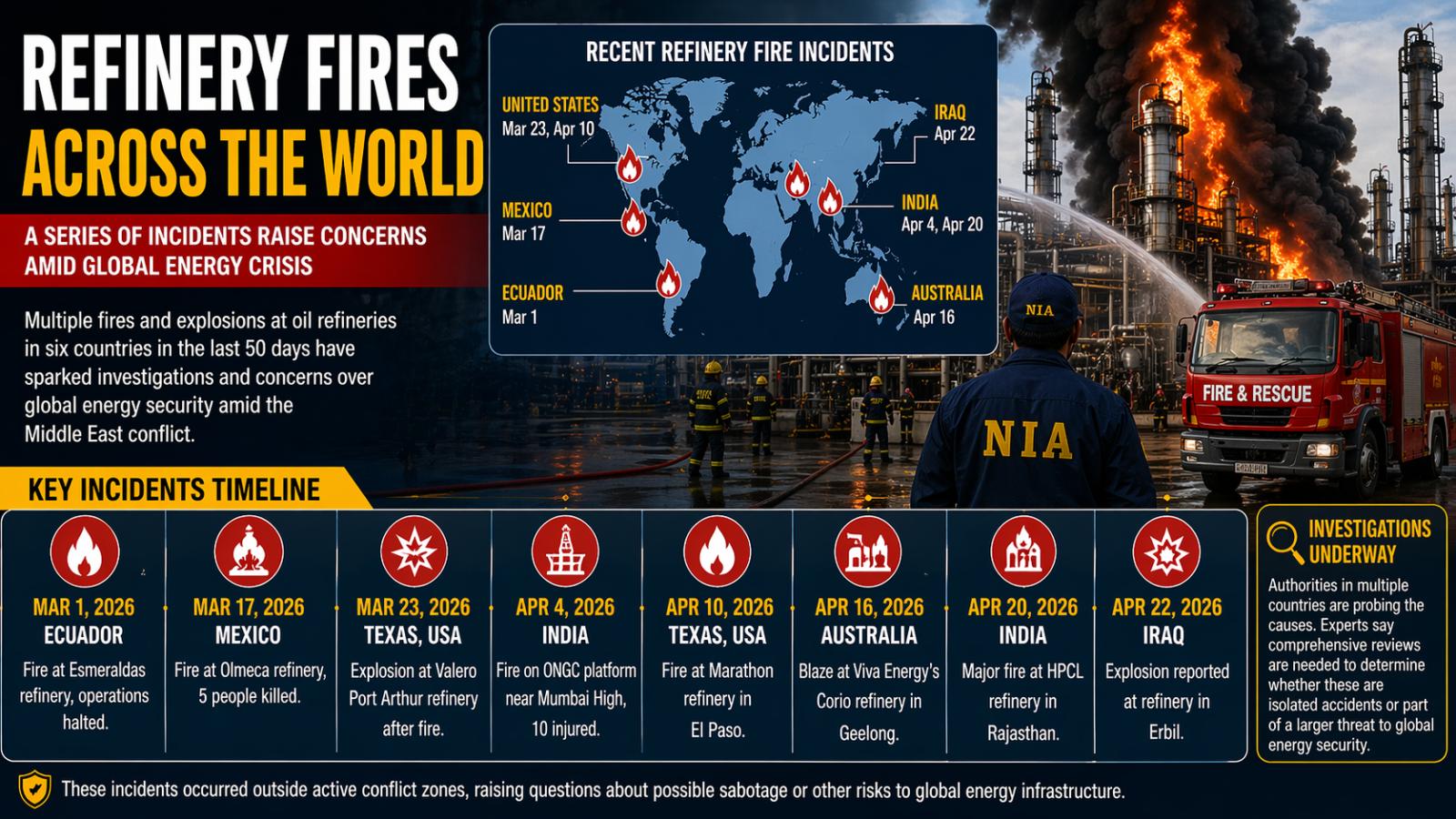
A series of fires and explosions at oil refineries across multiple countries has raised global concerns about energy security as geopolitical tensions escalate following the Middle East conflict that began on Friday, February 28, 2026. Incidents have been reported in India, Iraq, the United States, Mexico, Ecuador, and Australia over a span of approximately 50 days, prompting investigations and speculation about possible underlying causes.
In India, a major fire broke out at the Hindu
A series of fires and explosions at oil refineries across multiple countries has raised global concerns about energy security as geopolitical tensions escalate following the Middle East conflict that began on Friday, February 28, 2026. Incidents have been reported in India, Iraq, the United States, Mexico, Ecuador, and Australia over a span of approximately 50 days, prompting investigations and speculation about possible underlying causes.
In India, a major fire broke out at the Hindu
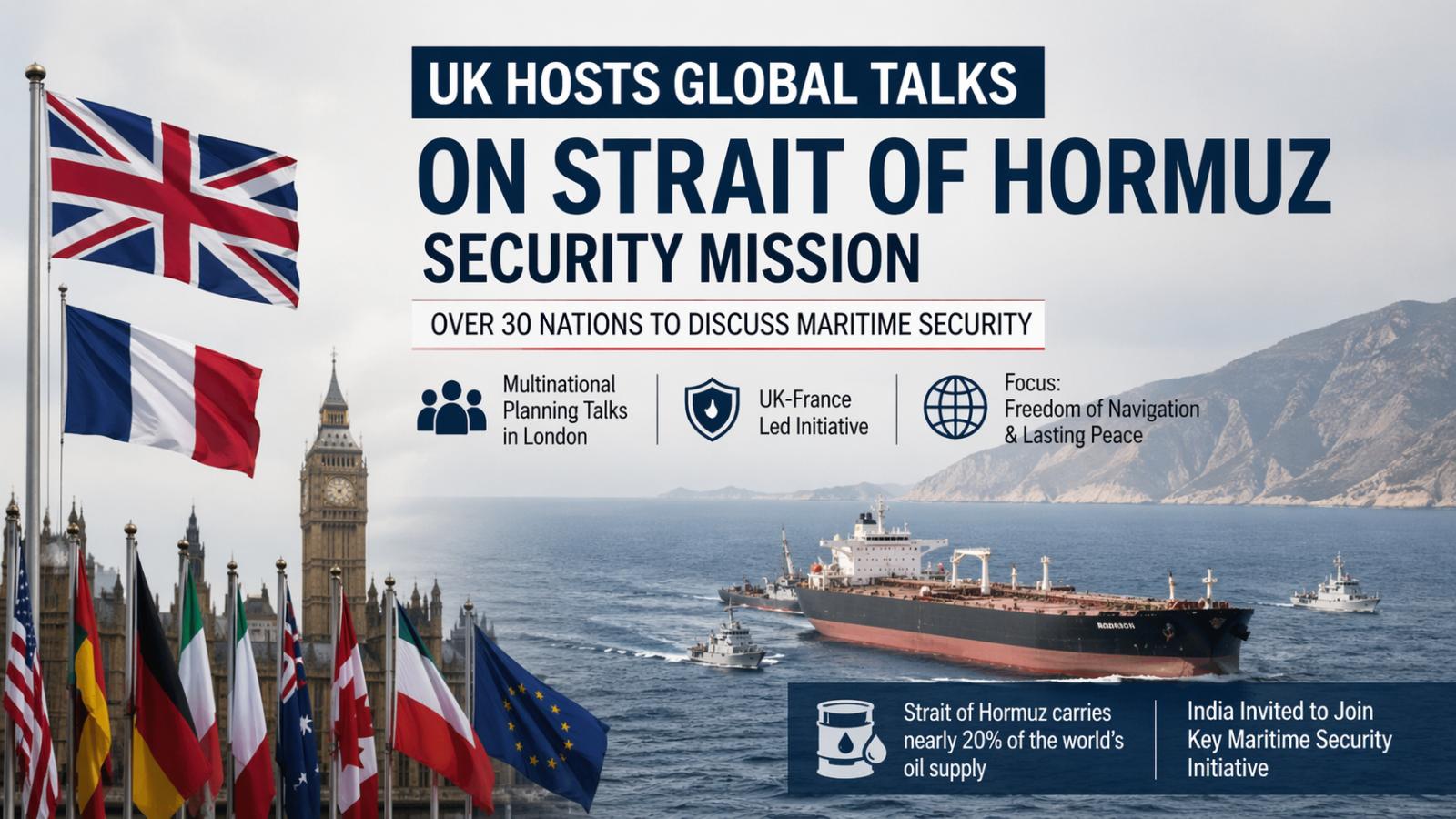
Britain is hosting senior military planners from more than 30 countries at the UK Permanent Joint Headquarters for high-level discussions on securing the Strait of Hormuz, a critical global oil transit route. The two-day meeting in northwest London, being held from April 22 to April 23, 2026, aims to advance a multinational maritime security initiative jointly led by the United Kingdom and France, following earlier consultations involving over 40 nations chaired by Keir Starmer and Emmanuel M
Britain is hosting senior military planners from more than 30 countries at the UK Permanent Joint Headquarters for high-level discussions on securing the Strait of Hormuz, a critical global oil transit route. The two-day meeting in northwest London, being held from April 22 to April 23, 2026, aims to advance a multinational maritime security initiative jointly led by the United Kingdom and France, following earlier consultations involving over 40 nations chaired by Keir Starmer and Emmanuel M
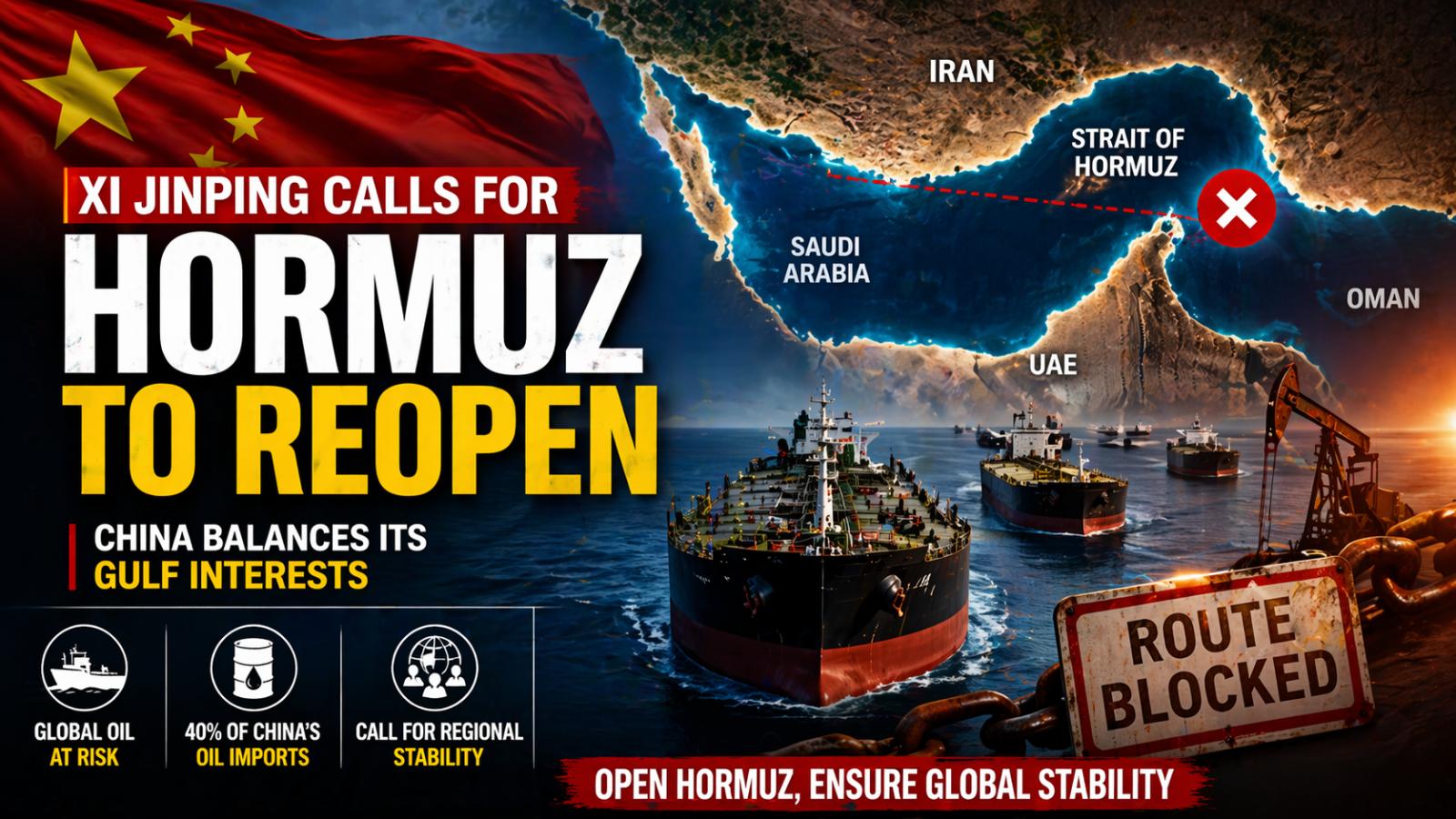
The Xi Jinping Hormuz statement has drawn global attention as China’s leader called for the reopening of the critical Strait of Hormuz. The move comes amid rising tensions in the Middle East and highlights China’s delicate balancing act between strategic alliances and economic interests.
What happened and why it matters
On Monday, April 20, 2026, Chin
The Xi Jinping Hormuz statement has drawn global attention as China’s leader called for the reopening of the critical Strait of Hormuz. The move comes amid rising tensions in the Middle East and highlights China’s delicate balancing act between strategic alliances and economic interests.
What happened and why it matters
On Monday, April 20, 2026, Chin