







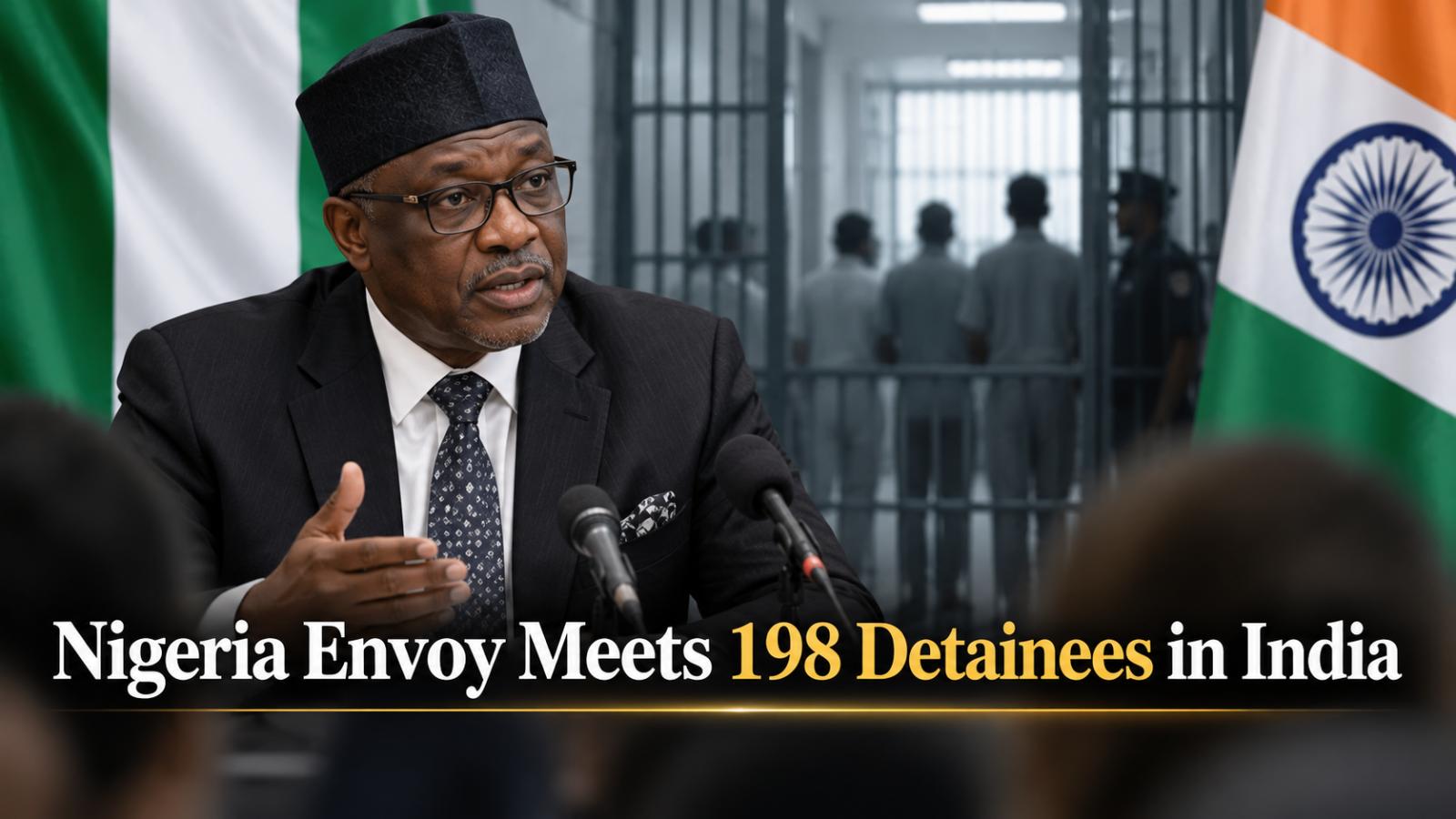
Nigeria Envoy Inmate Visit Reaches 198 Citizens in India
Nigeria’s High Commissioner to India, Ambassador Saidu Dahiru Muhammad, has met 198 Nigerian citizens held in correctional facilities across India, placing prison welfare, legal delays and consular support at the centre of what he described as Nigeria’s citizen-focused diplomatic approach. Muhammad disclosed the initiative during an interaction with diplomatic correspondents in New Delhi. According to the High Commissioner, the three-d
Nigeria Envoy Inmate Visit Reaches 198 Citizens in India
Nigeria’s High Commissioner to India, Ambassador Saidu Dahiru Muhammad, has met 198 Nigerian citizens held in correctional facilities across India, placing prison welfare, legal delays and consular support at the centre of what he described as Nigeria’s citizen-focused diplomatic approach. Muhammad disclosed the initiative during an interaction with diplomatic correspondents in New Delhi. According to the High Commissioner, the three-d
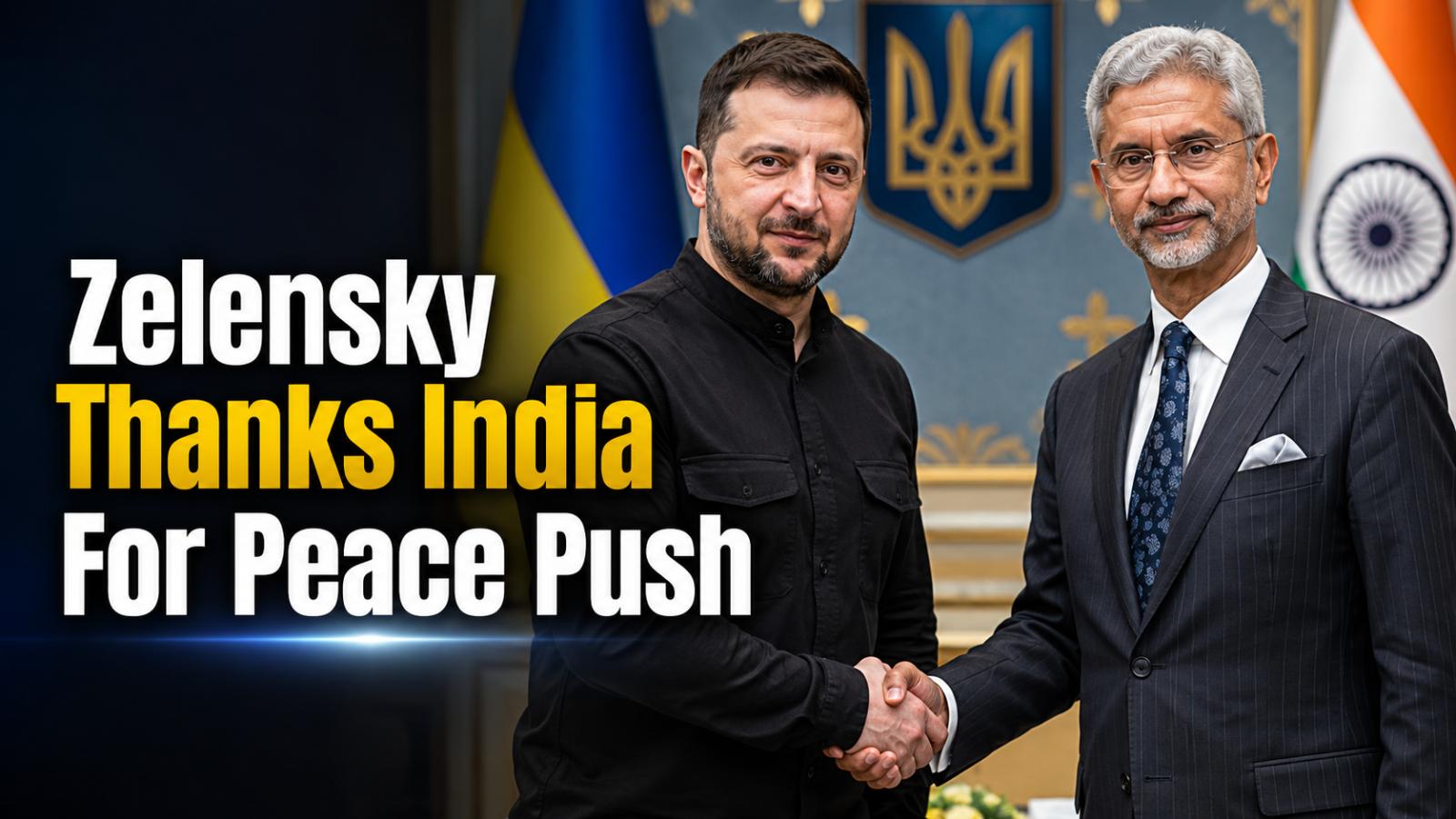
Zelensky thanks India for peace push after Jaishankar meeting
Ukrainian President Volodymyr Zelensky has thanked India for supporting efforts to end the Russia-Ukraine war after meeting External Affairs Minister S Jaishankar in Kyiv. Their talks covered possible paths to peace, Black Sea shipping security and wider India-Ukraine cooperation. Zelensky thanks India for Ukraine peace efforts Zelensky met Jaishankar in Kyiv on September 3 during what the Ukra
Zelensky thanks India for peace push after Jaishankar meeting
Ukrainian President Volodymyr Zelensky has thanked India for supporting efforts to end the Russia-Ukraine war after meeting External Affairs Minister S Jaishankar in Kyiv. Their talks covered possible paths to peace, Black Sea shipping security and wider India-Ukraine cooperation. Zelensky thanks India for Ukraine peace efforts Zelensky met Jaishankar in Kyiv on September 3 during what the Ukra
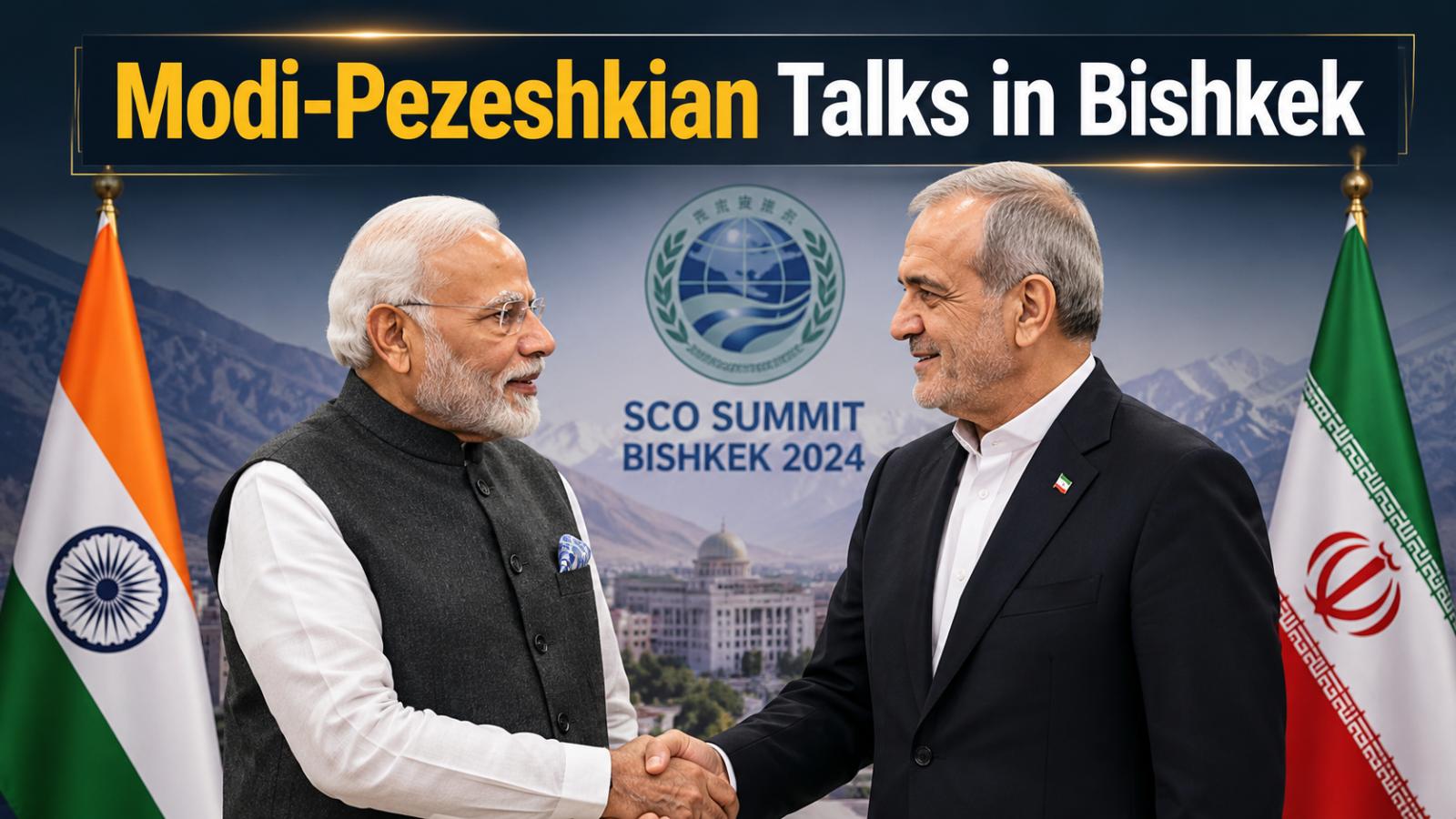
Modi Pezeshkian Meeting Focuses on Iran War and Trade
Prime Minister Narendra Modi met Iranian President Masoud Pezeshkian in Bishkek on August 31 on the sidelines of the Shanghai Cooperation Organisation Summit. The Modi Pezeshkian meeting focused on India-Iran ties, the West Asia conflict, maritime security, trade and the need for lasting regional peace. India Iran Ties The two leaders revi
Modi Pezeshkian Meeting Focuses on Iran War and Trade
Prime Minister Narendra Modi met Iranian President Masoud Pezeshkian in Bishkek on August 31 on the sidelines of the Shanghai Cooperation Organisation Summit. The Modi Pezeshkian meeting focused on India-Iran ties, the West Asia conflict, maritime security, trade and the need for lasting regional peace. India Iran Ties The two leaders revi
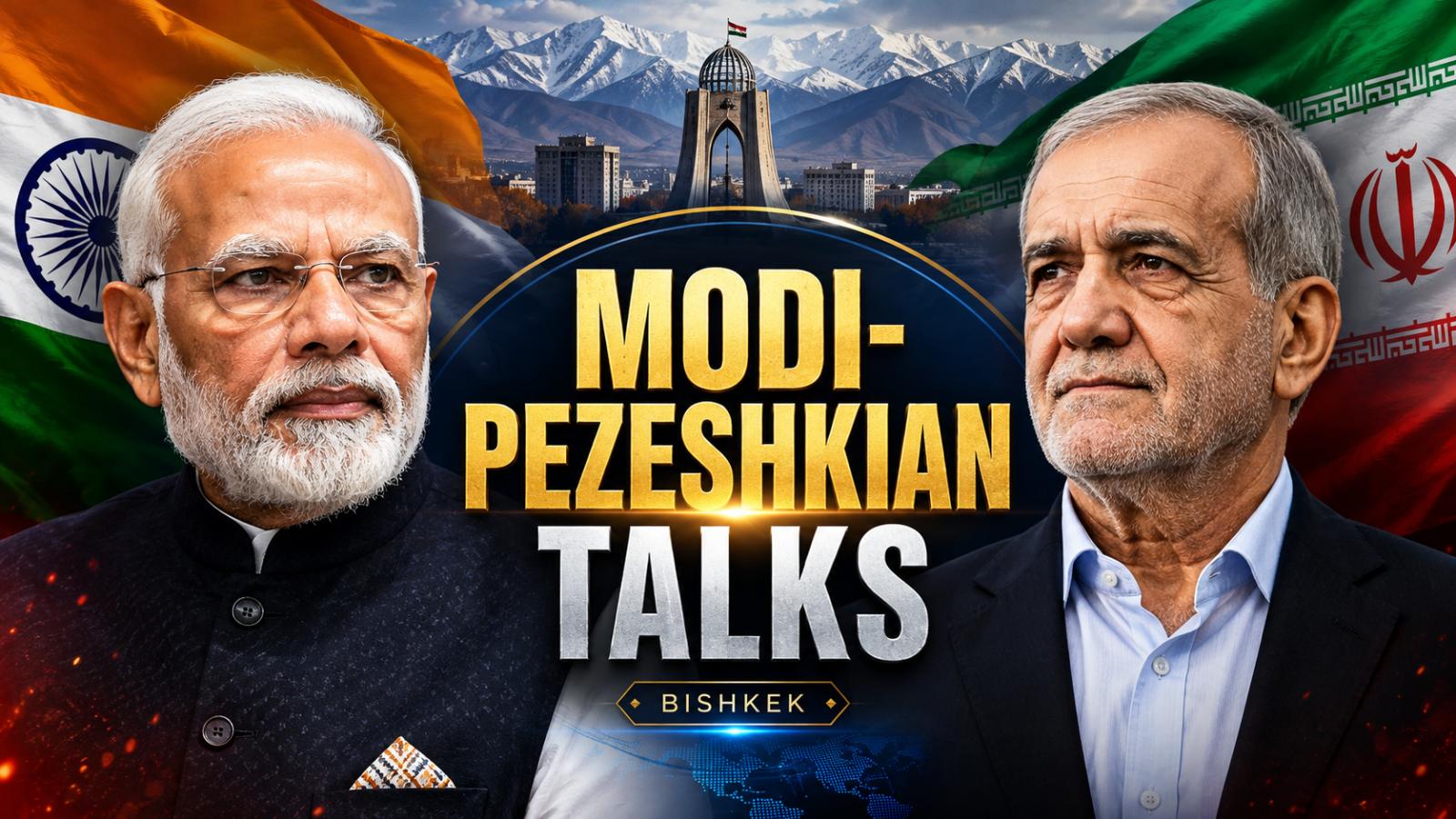
Modi Pezeshkian Meeting Puts Iran War and Energy in Focus
Prime Minister Narendra Modi is expected to meet Iranian President Masoud Pezeshkian in Bishkek on August 31 on the sidelines of the Shanghai Cooperation Organisation summit. The Modi Pezeshkian meeting would be their first face-to-face interaction since the latest West Asia conflict erupted, putting India-Iran ties, energy security and regional stability firmly in focus. India Iran Ties Modi and Pezeshkian last met in person in October 2024 during the BRICS Summit in Kazan, Russia. At that meeting, the leaders reviewed bilateral relations and highlighted the importance of the Chabahar Port project for trade links with Afghanistan and Central Asia. Their relationship has remained active despite the deterioration in regional security. The two leaders have spoken by phone several times during 2026, discussing developments in Iran and the wider region. India has consistently positioned itself as a partner of Iran while maintaining relationships with other major powers in West Asia. Hormuz Talks The Strait of Hormuz is expected to be one of the most important strategic issues surrounding the discussions. India depends heavily on secure maritime routes for energy imports, making any disruption in the Gulf a direct economic concern. During a March conversation with Pezeshkian, Modi stressed the importance of protecting Indian nationals and maintaining unhindered movement of energy and goods. He also reiterated India’s position that disputes should be resolved through dialogue and diplomacy. In another conversation in June, Modi again called for lasting regional stability and freedom of navigation and commerce. SCO Bishkek Summit The bilateral engagement comes as Bishkek hosts the 26th SCO Summit from August 31 to September 1. India’s government has confirmed that Modi will hold meetings with several SCO leaders on the sidelines while highlighting India’s priorities of security, connectivity and opportunity. The 2026 gathering also marks the SCO’s 25th anniversary. Iran, India, Russia, China and Pakistan are among the organisation’s 10 full members, giving the summit added geopolitical weight as several regional conflicts remain unresolved. Chinese President Xi Jinping is also attending the Bishkek gathering, while Russian President Vladimir Putin is among the other major leaders expected to participate. Energy Security Energy cooperation remains central to India-Iran relations. New Delhi has repeatedly stressed that instability in West Asia can affect fuel supplies, shipping costs and the broader Indian economy. Connectivity is another major issue. Chabahar Port gives India a strategic route toward Afghanistan and Central Asia that bypasses Pakistan, making the project important for both commerce and regional connectivity. The two sides are therefore expected to review trade, transport links and wider economic cooperation alongside the security situation. Dialogue and Diplomacy India is likely to continue urging de-escalation rather than taking sides in the conflict. Modi has repeatedly told Pezeshkian that New Delhi supports dialogue and diplomacy while calling for the protection of civilians, infrastructure and international shipping routes. The Bishkek interaction would also carry significance ahead of further BRICS engagement. Pezeshkian has previously supported a larger role for organisations such as BRICS and the SCO in addressing regional challenges. For India, the meeting provides an opportunity to protect practical interests—energy supplies, maritime security, connectivity and the safety of Indian nationals—while maintaining a diplomatic channel with Tehran during one of the most unstable periods in recent West Asian politics.
Modi Pezeshkian Meeting Puts Iran War and Energy in Focus
Prime Minister Narendra Modi is expected to meet Iranian President Masoud Pezeshkian in Bishkek on August 31 on the sidelines of the Shanghai Cooperation Organisation summit. The Modi Pezeshkian meeting would be their first face-to-face interaction since the latest West Asia conflict erupted, putting India-Iran ties, energy security and regional stability firmly in focus. India Iran Ties Modi and Pezeshkian last met in person in October 2024 during the BRICS Summit in Kazan, Russia. At that meeting, the leaders reviewed bilateral relations and highlighted the importance of the Chabahar Port project for trade links with Afghanistan and Central Asia. Their relationship has remained active despite the deterioration in regional security. The two leaders have spoken by phone several times during 2026, discussing developments in Iran and the wider region. India has consistently positioned itself as a partner of Iran while maintaining relationships with other major powers in West Asia. Hormuz Talks The Strait of Hormuz is expected to be one of the most important strategic issues surrounding the discussions. India depends heavily on secure maritime routes for energy imports, making any disruption in the Gulf a direct economic concern. During a March conversation with Pezeshkian, Modi stressed the importance of protecting Indian nationals and maintaining unhindered movement of energy and goods. He also reiterated India’s position that disputes should be resolved through dialogue and diplomacy. In another conversation in June, Modi again called for lasting regional stability and freedom of navigation and commerce. SCO Bishkek Summit The bilateral engagement comes as Bishkek hosts the 26th SCO Summit from August 31 to September 1. India’s government has confirmed that Modi will hold meetings with several SCO leaders on the sidelines while highlighting India’s priorities of security, connectivity and opportunity. The 2026 gathering also marks the SCO’s 25th anniversary. Iran, India, Russia, China and Pakistan are among the organisation’s 10 full members, giving the summit added geopolitical weight as several regional conflicts remain unresolved. Chinese President Xi Jinping is also attending the Bishkek gathering, while Russian President Vladimir Putin is among the other major leaders expected to participate. Energy Security Energy cooperation remains central to India-Iran relations. New Delhi has repeatedly stressed that instability in West Asia can affect fuel supplies, shipping costs and the broader Indian economy. Connectivity is another major issue. Chabahar Port gives India a strategic route toward Afghanistan and Central Asia that bypasses Pakistan, making the project important for both commerce and regional connectivity. The two sides are therefore expected to review trade, transport links and wider economic cooperation alongside the security situation. Dialogue and Diplomacy India is likely to continue urging de-escalation rather than taking sides in the conflict. Modi has repeatedly told Pezeshkian that New Delhi supports dialogue and diplomacy while calling for the protection of civilians, infrastructure and international shipping routes. The Bishkek interaction would also carry significance ahead of further BRICS engagement. Pezeshkian has previously supported a larger role for organisations such as BRICS and the SCO in addressing regional challenges. For India, the meeting provides an opportunity to protect practical interests—energy supplies, maritime security, connectivity and the safety of Indian nationals—while maintaining a diplomatic channel with Tehran during one of the most unstable periods in recent West Asian politics.
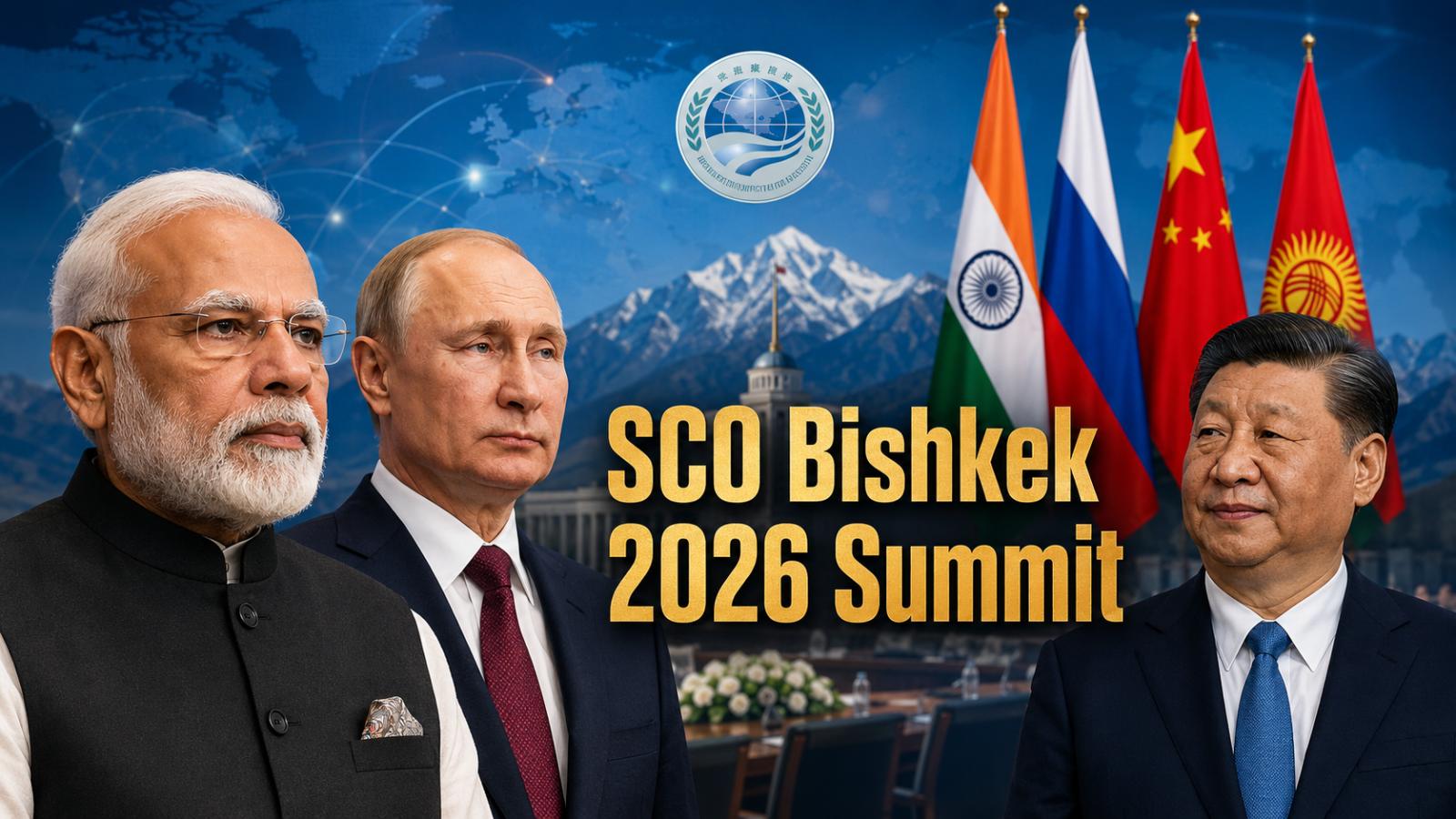
SCO Bishkek 2026: Modi, Putin and Xi Set for Major Summit
The SCO Bishkek 2026 summit will bring Prime Minister Narendra Modi, Russian President Vladimir Putin, Chinese President Xi Jinping and other leaders to Kyrgyzstan as the organisation marks its 25th anniversary. Modi-Putin talks and wider regional security issues are expected to draw particular attention. Bishkek Summit The Shanghai Cooperation Organisation will hold its Council of Heads of Sta
SCO Bishkek 2026: Modi, Putin and Xi Set for Major Summit
The SCO Bishkek 2026 summit will bring Prime Minister Narendra Modi, Russian President Vladimir Putin, Chinese President Xi Jinping and other leaders to Kyrgyzstan as the organisation marks its 25th anniversary. Modi-Putin talks and wider regional security issues are expected to draw particular attention. Bishkek Summit The Shanghai Cooperation Organisation will hold its Council of Heads of Sta
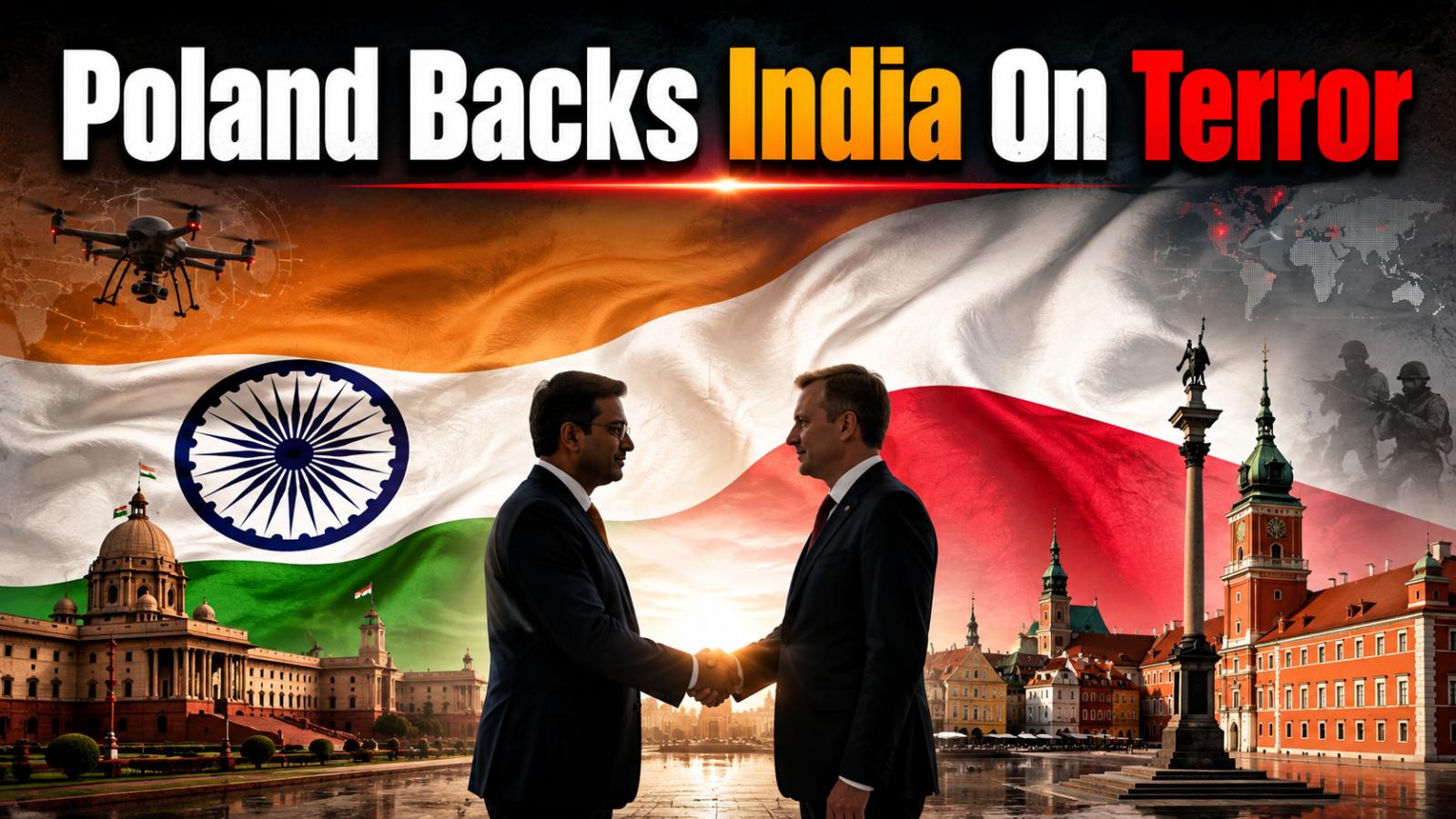
India Poland Ties Deepen as Warsaw Backs Fight Against Terror
India Poland ties are gaining momentum as Warsaw backs New Delhi’s fight against terrorism while acknowledging India’s historic relationship with Russia. Defence cooperation, technology, trade and the India-EU FTA are emerging as key areas in the expanding strategic partnership. Poland terror support strengthens India ties Poland has vo
India Poland Ties Deepen as Warsaw Backs Fight Against Terror
India Poland ties are gaining momentum as Warsaw backs New Delhi’s fight against terrorism while acknowledging India’s historic relationship with Russia. Defence cooperation, technology, trade and the India-EU FTA are emerging as key areas in the expanding strategic partnership. Poland terror support strengthens India ties Poland has vo
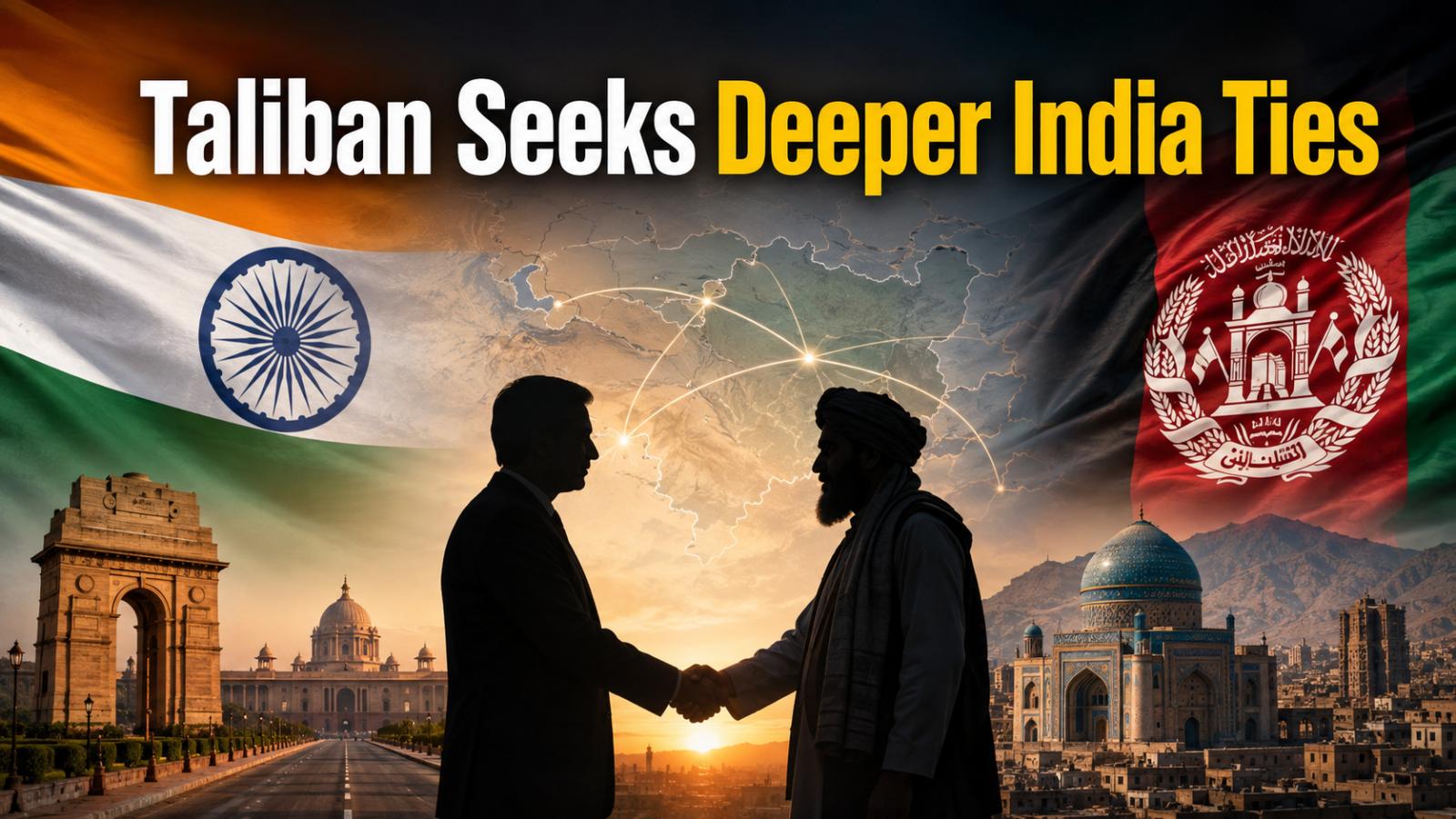
Taliban Seeks Deeper India Ties, Eyes Regional Cooperation
The Taliban seeks deeper India ties as Afghanistan looks to strengthen political trust, trade and regional connectivity with New Delhi. Taliban chargé d’affaires Noor Ahmed Noor highlighted India ties and their shared history while outlining Kabul’s interest in broader diplomatic and economic engagement. India ties gain focus at New Delhi event Noor made the remarks during a New Delhi even
Taliban Seeks Deeper India Ties, Eyes Regional Cooperation
The Taliban seeks deeper India ties as Afghanistan looks to strengthen political trust, trade and regional connectivity with New Delhi. Taliban chargé d’affaires Noor Ahmed Noor highlighted India ties and their shared history while outlining Kabul’s interest in broader diplomatic and economic engagement. India ties gain focus at New Delhi event Noor made the remarks during a New Delhi even
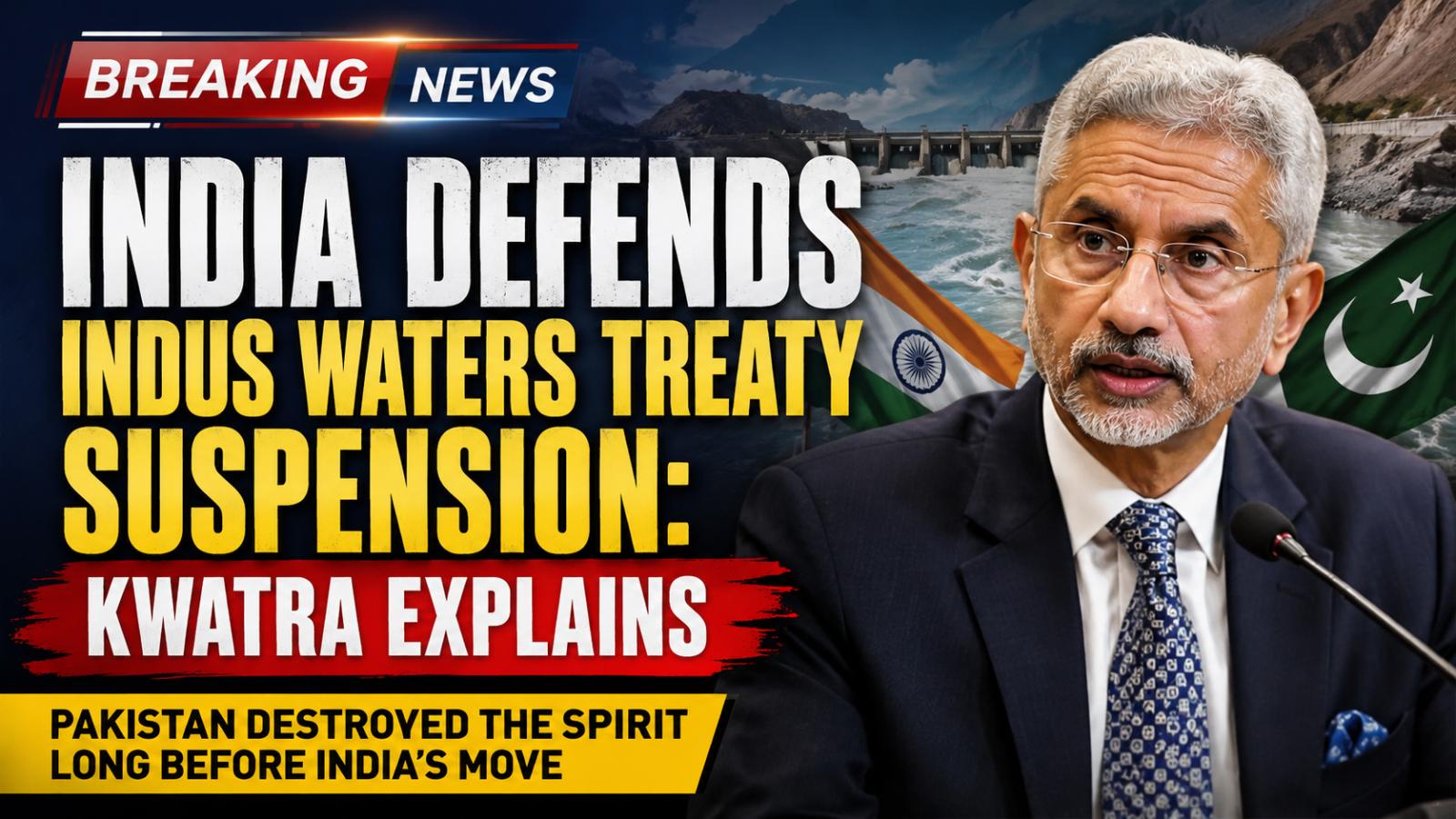
India Defends Indus Waters Treaty Suspension: Kwatra Explains
India defends Indus Waters Treaty suspension as Ambassador Vinay Mohan Kwatra says Pakistan gradually destroyed the agreement's spirit through terrorism, conflict and repeated treaty disputes. The decision follows the 2025 Pahalgam terror attack and reflects New Delhi's security concerns and long-standing objections. India Defends Indus Waters Treaty Suspen
India Defends Indus Waters Treaty Suspension: Kwatra Explains
India defends Indus Waters Treaty suspension as Ambassador Vinay Mohan Kwatra says Pakistan gradually destroyed the agreement's spirit through terrorism, conflict and repeated treaty disputes. The decision follows the 2025 Pahalgam terror attack and reflects New Delhi's security concerns and long-standing objections. India Defends Indus Waters Treaty Suspen
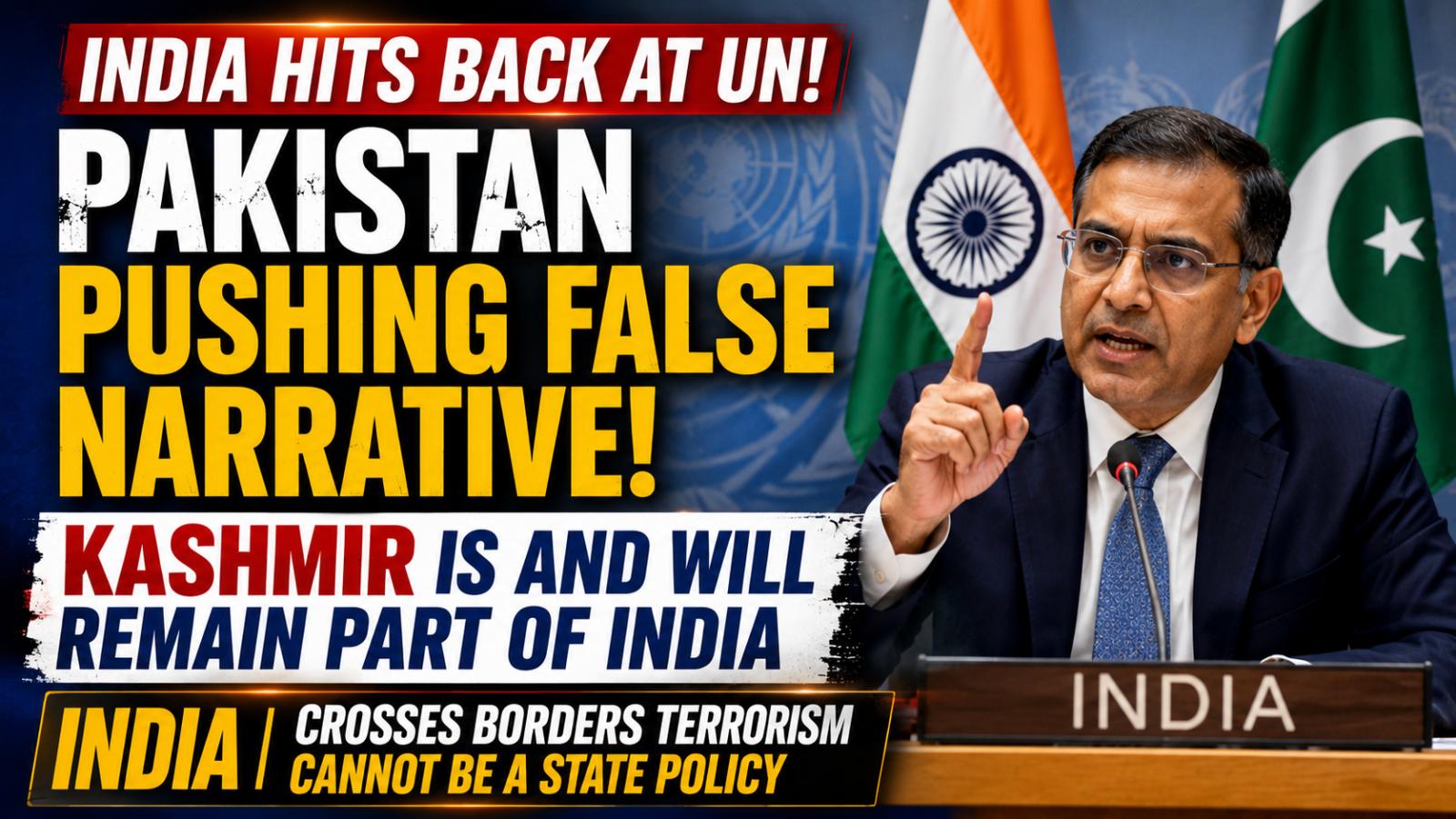
India Rebukes Pakistan at UN Over Cross-Border Terrorism
India rebukes Pakistan at the United Nations over cross-border terrorism, rejects Islamabad's statements on Jammu and Kashmir and reiterates that the Union Territory remains an integral part of India. The remarks also reaffirm New Delhi's position on the Indus Water Treaty and regional security. India UN statement on Kashmir India strongly criticised Pakistan during a high-level debate at the U
India Rebukes Pakistan at UN Over Cross-Border Terrorism
India rebukes Pakistan at the United Nations over cross-border terrorism, rejects Islamabad's statements on Jammu and Kashmir and reiterates that the Union Territory remains an integral part of India. The remarks also reaffirm New Delhi's position on the Indus Water Treaty and regional security. India UN statement on Kashmir India strongly criticised Pakistan during a high-level debate at the U
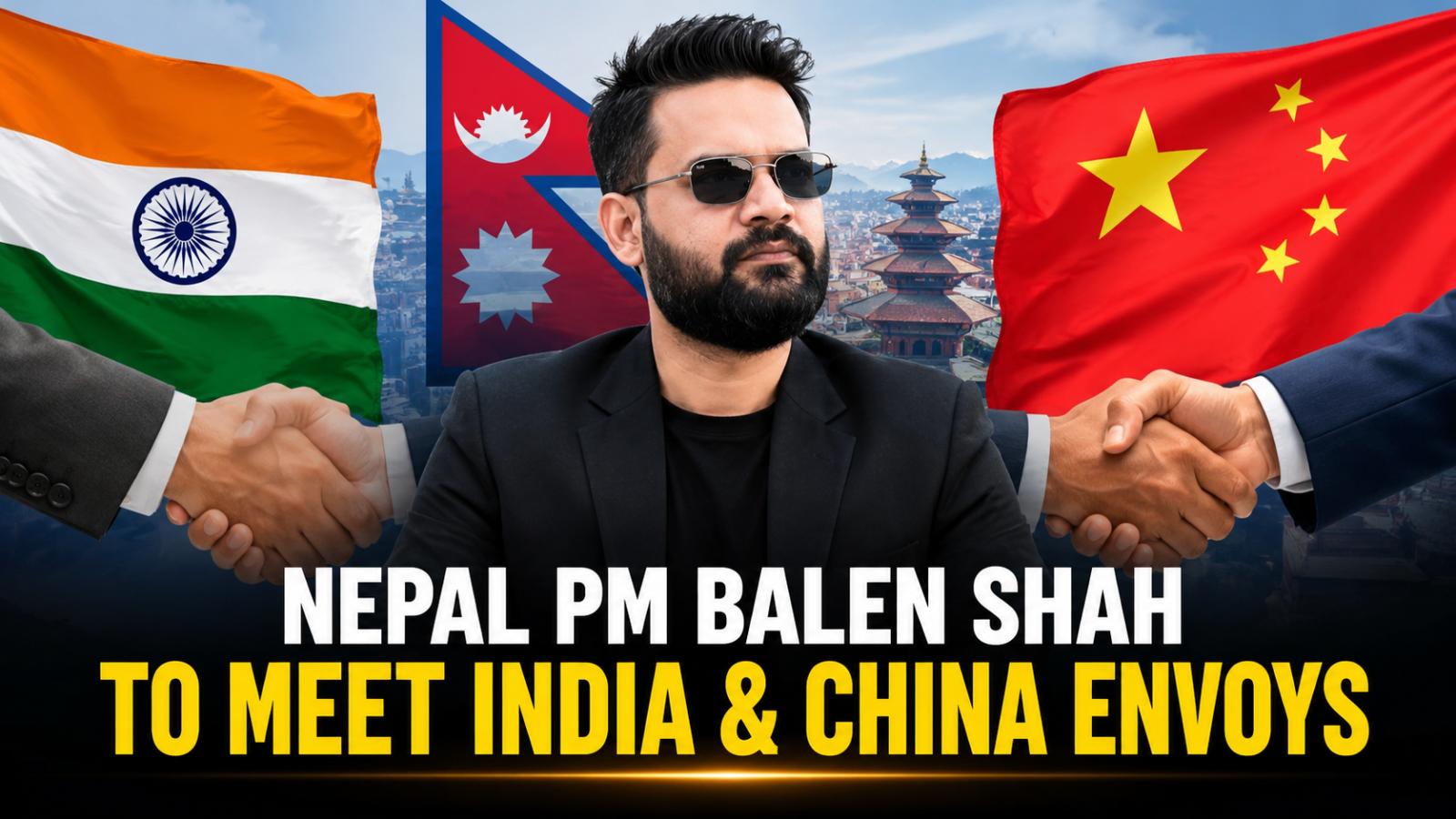
Nepal PM Balen Shah to Meet India and China Envoys
Nepal Prime Minister Balen Shah is preparing to meet the ambassadors of India and China this week, marking a significant shift in his diplomatic approach after completing his first 100 days in office. The move comes after Shah followed a self-imposed rule of avoiding one-on-one meetings with foreign envoys, choosing instead to engage ambassadors only in group interactions. According to official information reported by The Kathmandu Post and dipl
Nepal PM Balen Shah to Meet India and China Envoys
Nepal Prime Minister Balen Shah is preparing to meet the ambassadors of India and China this week, marking a significant shift in his diplomatic approach after completing his first 100 days in office. The move comes after Shah followed a self-imposed rule of avoiding one-on-one meetings with foreign envoys, choosing instead to engage ambassadors only in group interactions. According to official information reported by The Kathmandu Post and dipl
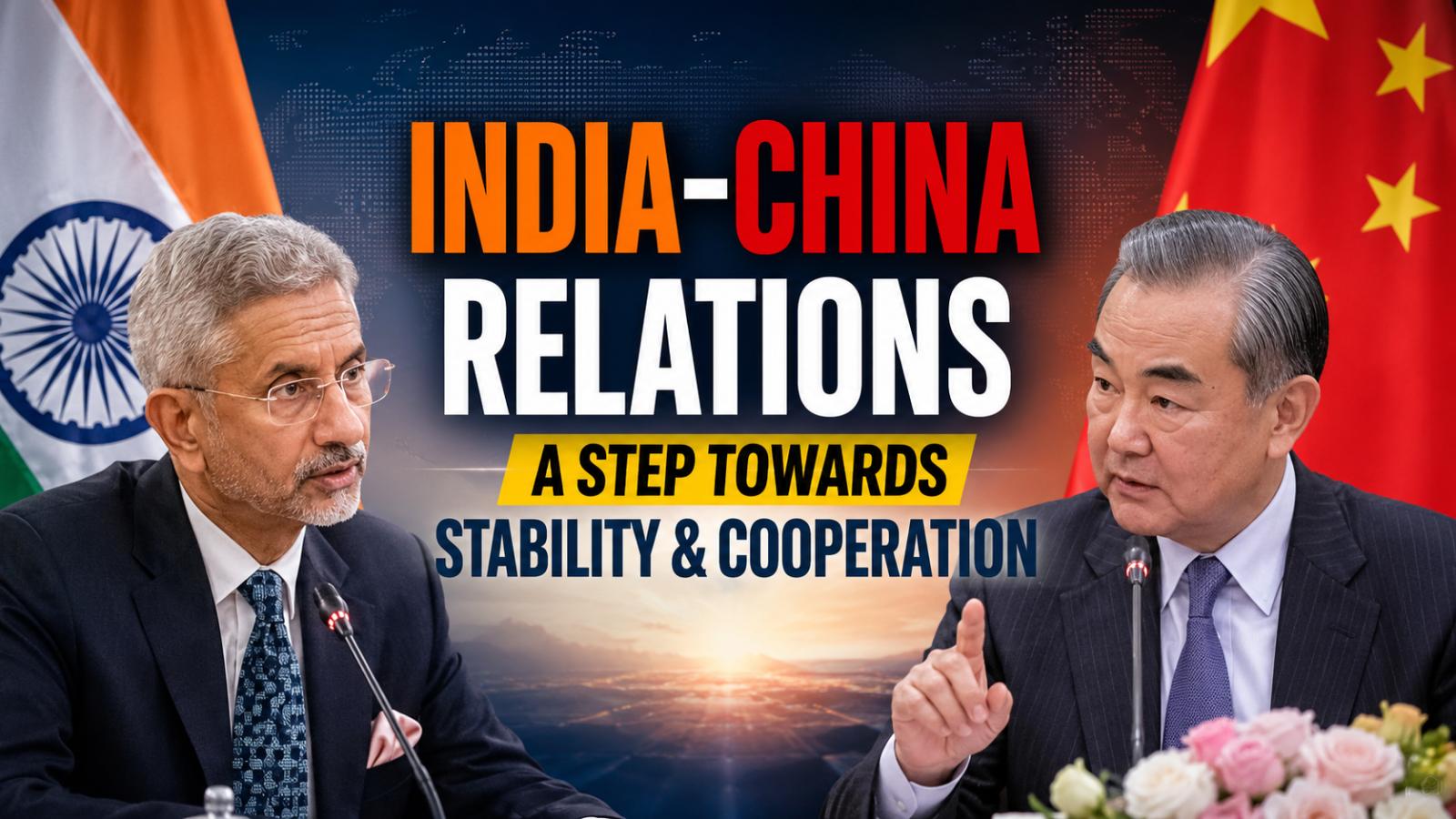
Jaishankar-Wang Yi Meeting Signals India-China Reset
Jaishankar’s meeting with Wang Yi in Manila highlighted an improving India-China relationship while keeping border peace, trade concerns and diplomatic engagement at the centre. Both sides also discussed practical steps such as direct flights, visas and border trade. Jaishankar Wang Yi Meeting in Manila External Affairs Minister Dr S Jaishankar met Chinese Foreign Minister and Communist Party
Jaishankar-Wang Yi Meeting Signals India-China Reset
Jaishankar’s meeting with Wang Yi in Manila highlighted an improving India-China relationship while keeping border peace, trade concerns and diplomatic engagement at the centre. Both sides also discussed practical steps such as direct flights, visas and border trade. Jaishankar Wang Yi Meeting in Manila External Affairs Minister Dr S Jaishankar met Chinese Foreign Minister and Communist Party
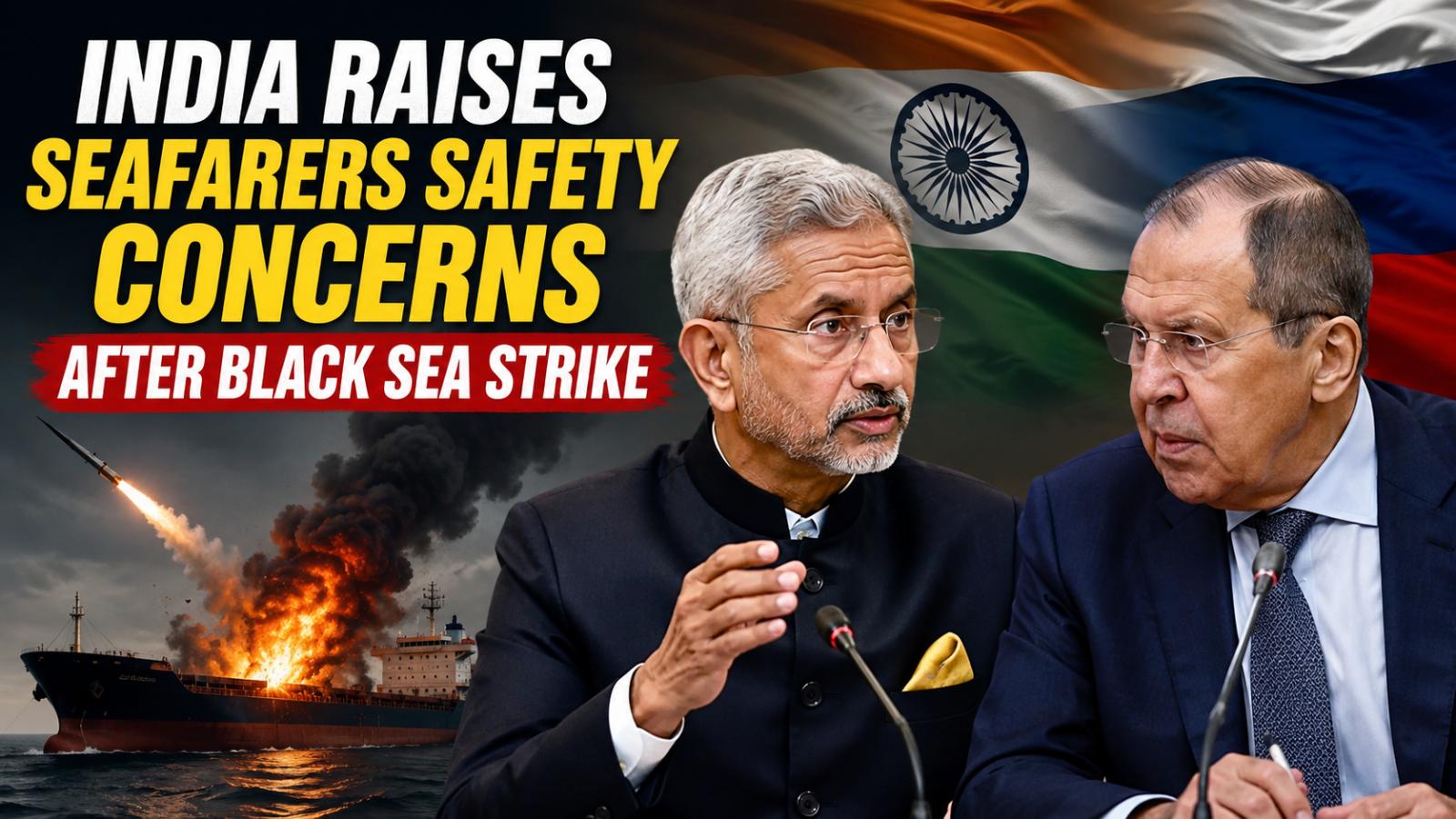
Jaishankar Raises Safety Concerns After Indian Seafarers Killed
India has strongly raised concerns over the safety of its merchant seafarers after four Indian crew members were killed in a Russian missile strike on a cargo vessel in the Black Sea. External Affairs Minister S. Jaishankar discussed the issue with Russian Foreign Minister Sergey Lavrov during their bilateral meeting on the sidelines of the ASEAN Foreign Ministers' Meeting in Manila. The discussion highlighted India's demand for better protection of civilian merchant mar
Jaishankar Raises Safety Concerns After Indian Seafarers Killed
India has strongly raised concerns over the safety of its merchant seafarers after four Indian crew members were killed in a Russian missile strike on a cargo vessel in the Black Sea. External Affairs Minister S. Jaishankar discussed the issue with Russian Foreign Minister Sergey Lavrov during their bilateral meeting on the sidelines of the ASEAN Foreign Ministers' Meeting in Manila. The discussion highlighted India's demand for better protection of civilian merchant mar
India Launches UN Security Council Campaign for 2028-29
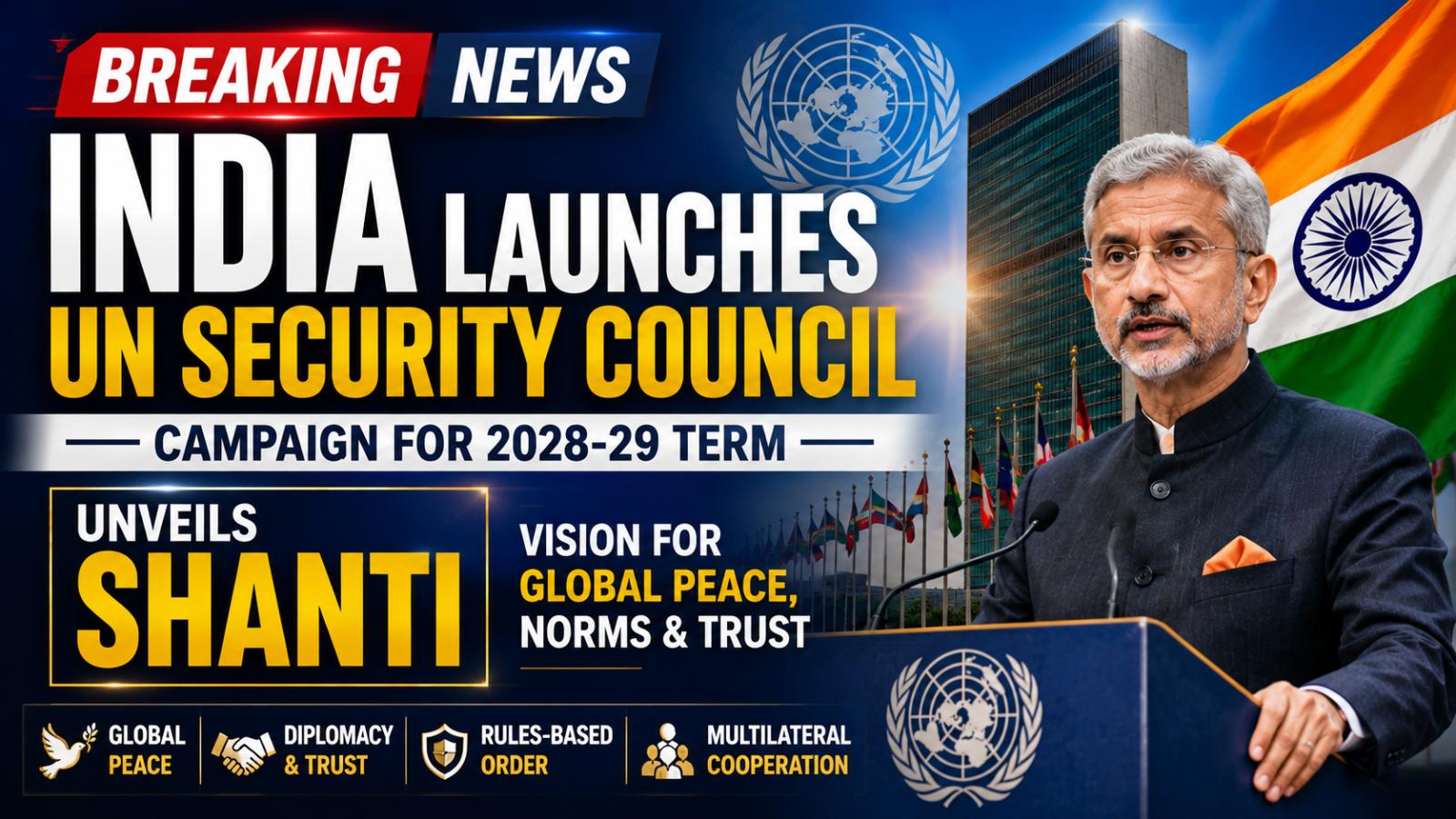
India has officially launched its campaign for a non-permanent seat on the United Nations Security Council (UNSC) for the 2028-29 term, presenting a new diplomatic framework called "SHANTI" as the foundation of its global engagement strategy. The campaign was unveiled by External Affairs Minister S. Jaishankar at the United Nations headquarters in New York, where he highlighted India's experience in peacekeeping, multilateral diplomacy and international
India Launches UN Security Council Campaign for 2028-29
India has officially launched its campaign for a non-permanent seat on the United Nations Security Council (UNSC) for the 2028-29 term, presenting a new diplomatic framework called "SHANTI" as the foundation of its global engagement strategy. The campaign was unveiled by External Affairs Minister S. Jaishankar at the United Nations headquarters in New York, where he highlighted India's experience in peacekeeping, multilateral diplomacy and international
PM Modi receives Bintang Adipurna award
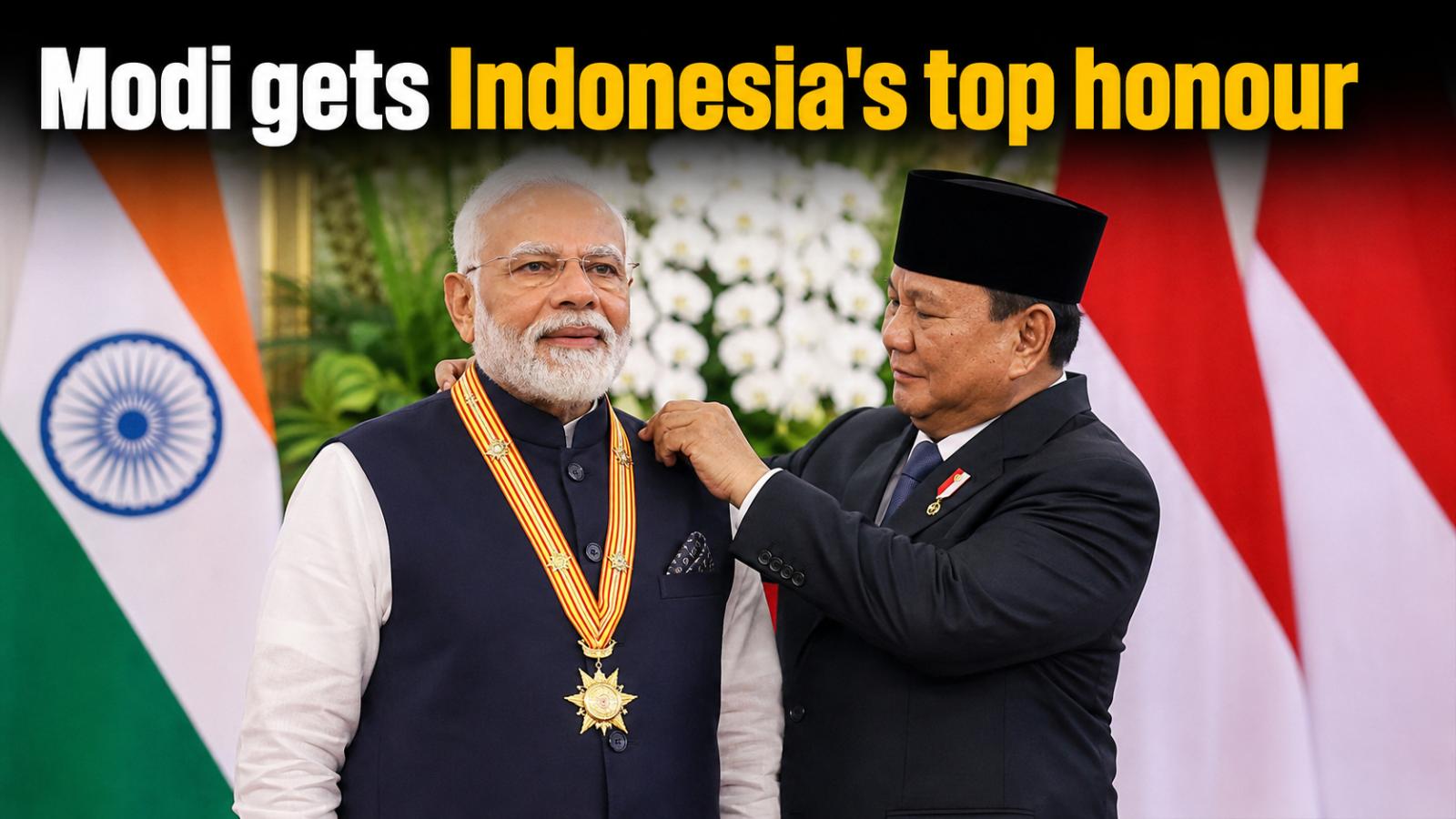
Prime Minister Narendra Modi’s visit to Indonesia marked a major diplomatic moment as Jakarta conferred the Bintang Adipurna, the country’s highest civilian honour, on him during talks with President Prabowo Subianto. The award highlighted the growing importance of India Indonesia ties at a time when both countries are trying to deepen cooperation in defence, trade, maritime security, technology and regional stability. Modi arrived in
PM Modi receives Bintang Adipurna award
Prime Minister Narendra Modi’s visit to Indonesia marked a major diplomatic moment as Jakarta conferred the Bintang Adipurna, the country’s highest civilian honour, on him during talks with President Prabowo Subianto. The award highlighted the growing importance of India Indonesia ties at a time when both countries are trying to deepen cooperation in defence, trade, maritime security, technology and regional stability. Modi arrived in
Modi New Zealand visit puts trade ties in focus
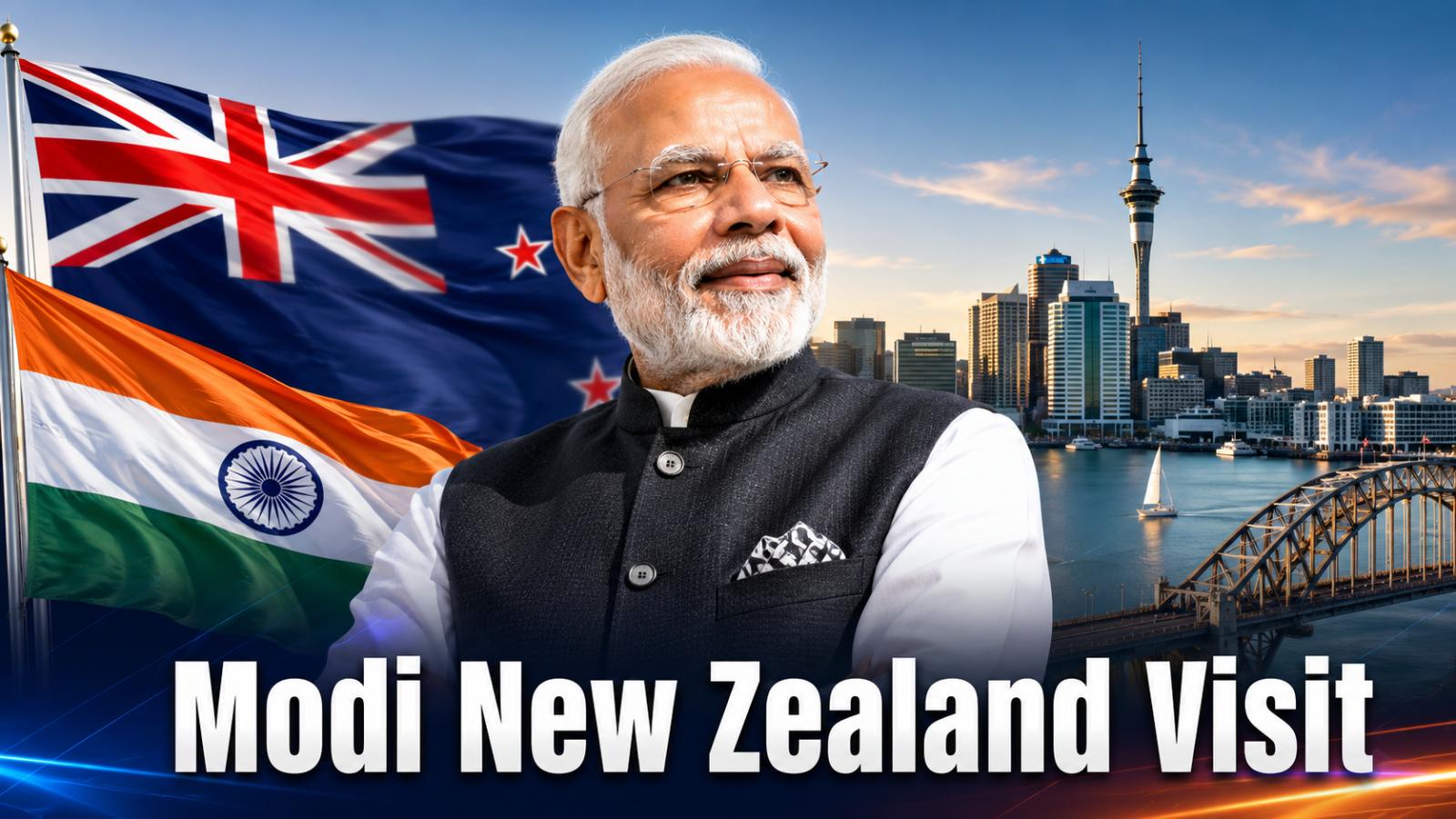
Prime Minister Narendra Modi’s upcoming New Zealand visit is being seen as an important step in strengthening India New Zealand relations after a long gap in high-level outreach. The visit is expected to focus on trade, defence, education, technology, tourism, sports and people-to-people ties. It also comes after New Zealand Prime Minister Christopher Luxon’s India visit, which gave both sides fresh momentum to expand cooperation beyond traditional diplomatic exchang
Modi New Zealand visit puts trade ties in focus
Prime Minister Narendra Modi’s upcoming New Zealand visit is being seen as an important step in strengthening India New Zealand relations after a long gap in high-level outreach. The visit is expected to focus on trade, defence, education, technology, tourism, sports and people-to-people ties. It also comes after New Zealand Prime Minister Christopher Luxon’s India visit, which gave both sides fresh momentum to expand cooperation beyond traditional diplomatic exchang
India Japan economic ties shift toward supply chain resilience
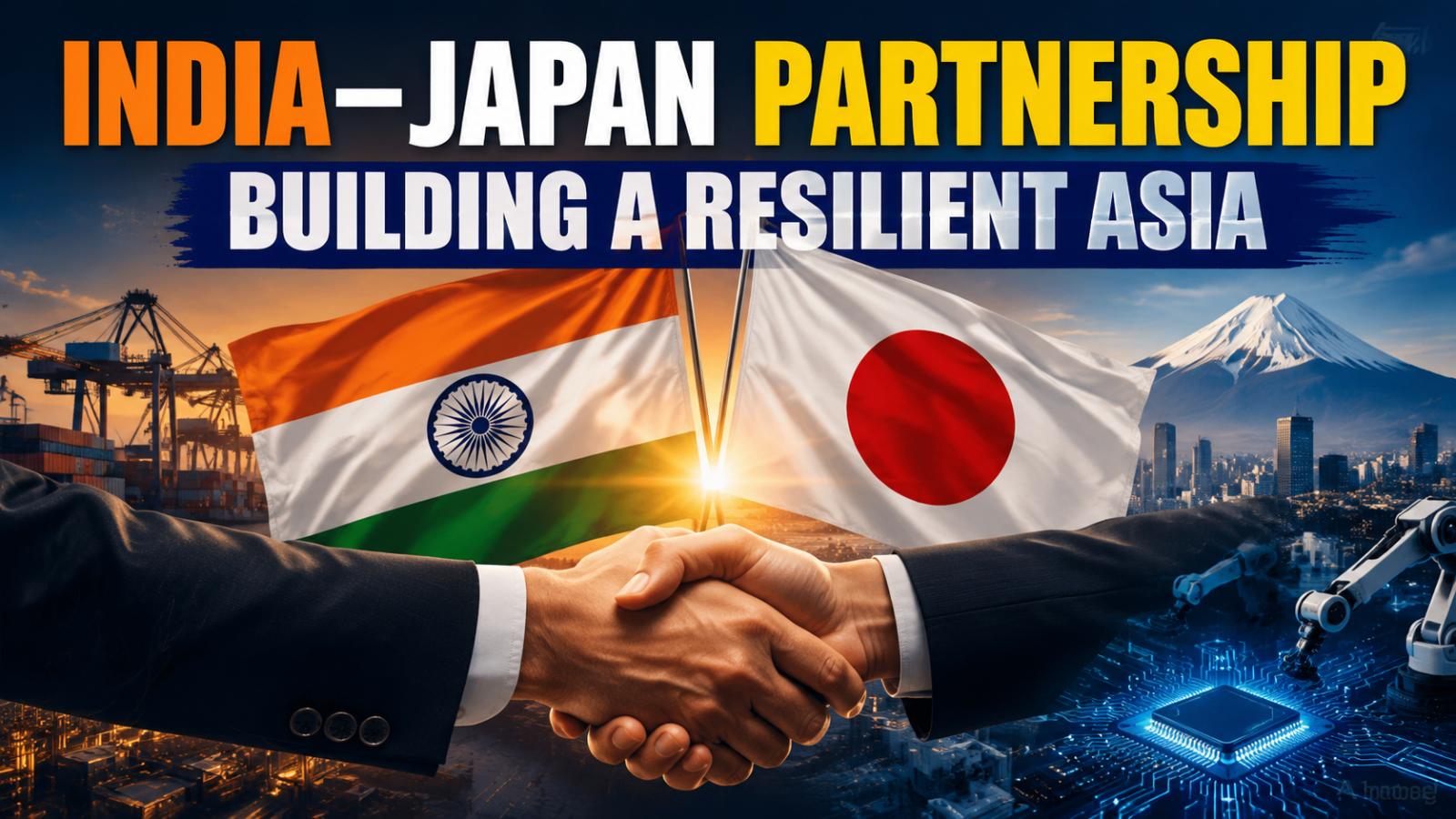
India and Japan are steadily moving their partnership beyond routine trade discussions into a broader realignment shaped by global risk and industrial restructuring. What looks like increased investment flows is actually part of a deeper repositioning of how both countries want to secure long-term economic stability in an uncertain global environment. Investment growth driven by risk recalibration Japanese companies are expanding their footprint in India not only for growth but also to reduce exposure to concentrated supply networks in East Asia. Rising geopolitical friction and periodic trade restrictions have forced firms to reconsider how dependent they are on single-country manufacturing systems. India is increasingly viewed as a viable diversification hub due to its scale, labor availability, and expanding industrial base. Supply chain restructuring becomes the core driver The most significant shift is happening in supply chains rather than headline investment figures. Japanese manufacturers are gradually redesigning sourcing and production models to reduce vulnerabilities in electronics, automotive components, and precision engineering. India fits into this transition as an alternative production and assembly base, especially for sectors where demand is growing but diversification is still limited. Technology and industrial cooperation deepen Cooperation is also expanding into advanced sectors such as semiconductors, digital systems, and artificial intelligence. These areas are no longer treated as purely commercial exchanges but as strategic capabilities. Both countries are aligning on technology resilience, where production continuity and security of supply matter as much as cost efficiency. Rare earths and critical materials gain importance Another emerging focus is critical minerals and rare earth supply chains. These materials are essential for electronics, renewable energy systems, and defence manufacturing. Dependence on concentrated suppliers has pushed both India and Japan to explore alternative sourcing strategies and joint development frameworks to reduce long-term risk. Financial flows signal long-term positioning Japanese capital inflows into Indian financial institutions and industrial projects suggest more than short-term investment interest. Financial participation typically indicates long-term confidence in policy stability and market expansion. However, the real test will be whether this capital flow expands into deeper manufacturing integration rather than remaining portfolio-based exposure. Economic security becomes the defining theme At the core of this evolving relationship is economic security. Trade decisions are increasingly shaped by geopolitical uncertainty rather than pure cost advantage. This marks a shift from efficiency-driven globalization to resilience-driven partnerships, where countries prioritize stability over optimization. A cautious but strategic realignment The India–Japan partnership is gradually becoming a case study in how middle and advanced economies adjust to global fragmentation. While the direction is clear—greater cooperation in technology, investment, and supply chains—the pace will depend on regulatory alignment, infrastructure readiness, and how effectively both sides manage external geopolitical pressures.
India Japan economic ties shift toward supply chain resilience
India and Japan are steadily moving their partnership beyond routine trade discussions into a broader realignment shaped by global risk and industrial restructuring. What looks like increased investment flows is actually part of a deeper repositioning of how both countries want to secure long-term economic stability in an uncertain global environment. Investment growth driven by risk recalibration Japanese companies are expanding their footprint in India not only for growth but also to reduce exposure to concentrated supply networks in East Asia. Rising geopolitical friction and periodic trade restrictions have forced firms to reconsider how dependent they are on single-country manufacturing systems. India is increasingly viewed as a viable diversification hub due to its scale, labor availability, and expanding industrial base. Supply chain restructuring becomes the core driver The most significant shift is happening in supply chains rather than headline investment figures. Japanese manufacturers are gradually redesigning sourcing and production models to reduce vulnerabilities in electronics, automotive components, and precision engineering. India fits into this transition as an alternative production and assembly base, especially for sectors where demand is growing but diversification is still limited. Technology and industrial cooperation deepen Cooperation is also expanding into advanced sectors such as semiconductors, digital systems, and artificial intelligence. These areas are no longer treated as purely commercial exchanges but as strategic capabilities. Both countries are aligning on technology resilience, where production continuity and security of supply matter as much as cost efficiency. Rare earths and critical materials gain importance Another emerging focus is critical minerals and rare earth supply chains. These materials are essential for electronics, renewable energy systems, and defence manufacturing. Dependence on concentrated suppliers has pushed both India and Japan to explore alternative sourcing strategies and joint development frameworks to reduce long-term risk. Financial flows signal long-term positioning Japanese capital inflows into Indian financial institutions and industrial projects suggest more than short-term investment interest. Financial participation typically indicates long-term confidence in policy stability and market expansion. However, the real test will be whether this capital flow expands into deeper manufacturing integration rather than remaining portfolio-based exposure. Economic security becomes the defining theme At the core of this evolving relationship is economic security. Trade decisions are increasingly shaped by geopolitical uncertainty rather than pure cost advantage. This marks a shift from efficiency-driven globalization to resilience-driven partnerships, where countries prioritize stability over optimization. A cautious but strategic realignment The India–Japan partnership is gradually becoming a case study in how middle and advanced economies adjust to global fragmentation. While the direction is clear—greater cooperation in technology, investment, and supply chains—the pace will depend on regulatory alignment, infrastructure readiness, and how effectively both sides manage external geopolitical pressures.
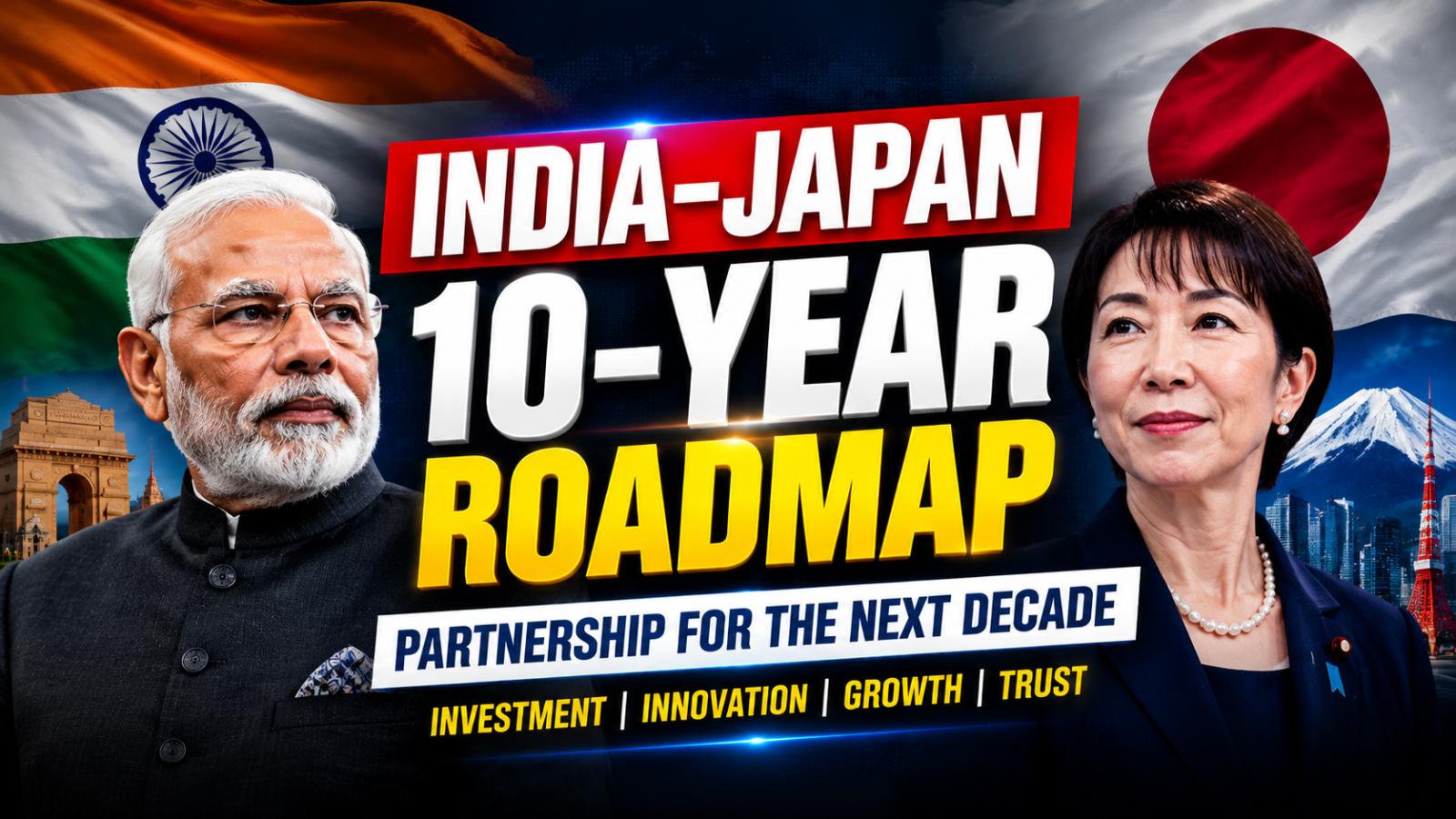
India Japan summit to review 10-year joint vision roadmap cooperation
India-Japan Summit to Review Long-Term Strategic Roadmap India is set to host Japanese Prime Minister Sanae Takaichi from July 1 to 3 for the 16th India-Japan Annual Summit, where both sides are expected to review progress under the Japan-India Joint Vision for the Next Decade. The framework, signed in Tokyo in August 2025, outlines a long-term roadmap aimed at streng
India Japan summit to review 10-year joint vision roadmap cooperation
India-Japan Summit to Review Long-Term Strategic Roadmap India is set to host Japanese Prime Minister Sanae Takaichi from July 1 to 3 for the 16th India-Japan Annual Summit, where both sides are expected to review progress under the Japan-India Joint Vision for the Next Decade. The framework, signed in Tokyo in August 2025, outlines a long-term roadmap aimed at streng
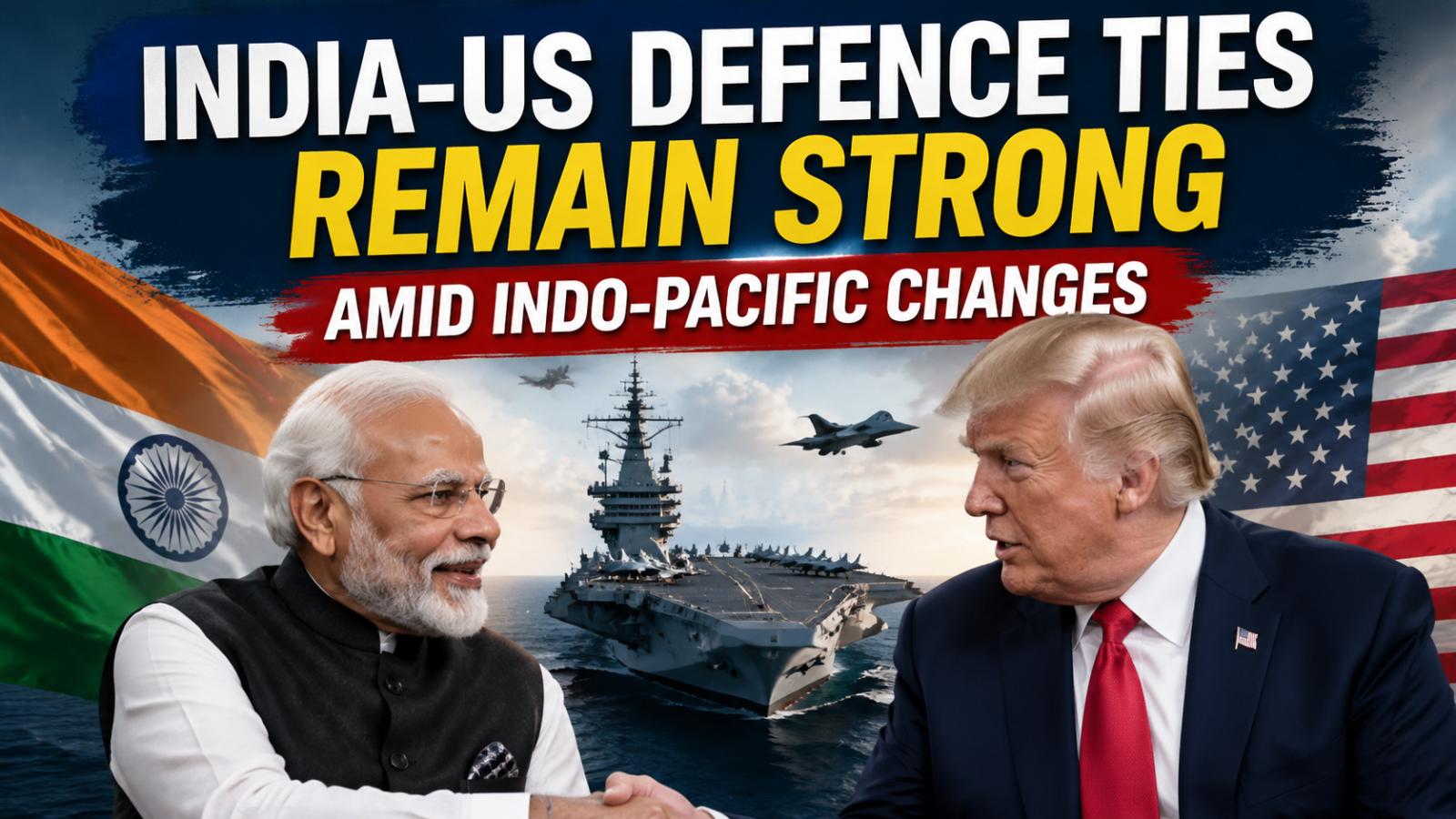
India-US defence ties remain stable amid Indo-Pacific changes
India and the United States continue to maintain stable defence cooperation despite recent adjustments in how Washington refers to its Indo-Pacific military structure. US Ambassador Sergio Gor reiterated that operational collaboration between the two countries is unaffected by the change in terminology, stressing continuity over symbolism. Military engagement remains active According to Gor, defence interaction between both nations is not only ongoing but expanding. Joint exercises, training programs, and coordinated operational planning continue across multiple domains. He noted that India remains one of the most frequently engaged partners in US military exercises globally, reflecting long-term strategic alignment rather than short-term political messaging. Indo-Pacific command terminology shift The discussion gained attention after the US reverted from the “Indo-Pacific Command” branding to its earlier designation. While the naming change sparked speculation about shifting priorities, officials clarified that command responsibilities and regional engagement remain unchanged. The operational scope still spans a vast area covering key maritime and security corridors in Asia-Pacific. Interpretation and political reactions The naming adjustment has been interpreted in different ways across policy circles, with some viewing it as symbolic recalibration. However, US officials have consistently pushed back on that narrative, arguing that defence cooperation with India is driven by shared strategic interests rather than administrative labels. Leadership relations and diplomatic tone Gor also highlighted the working relationship between former US President Donald Trump and Indian Prime Minister Narendra Modi, describing it as direct and pragmatic. He pointed to informal diplomatic interactions as evidence of sustained trust and coordination between leadership levels, which continues to influence broader strategic engagement. Long-term partnership outlook Despite periodic debates over terminology and diplomatic optics, both nations continue to prioritize defence, technology collaboration, and regional security coordination. The emphasis remains on sustained engagement in the Indo-Pacific region, where shared concerns over maritime security and strategic balance continue to drive cooperation rather than divergence.
India-US defence ties remain stable amid Indo-Pacific changes
India and the United States continue to maintain stable defence cooperation despite recent adjustments in how Washington refers to its Indo-Pacific military structure. US Ambassador Sergio Gor reiterated that operational collaboration between the two countries is unaffected by the change in terminology, stressing continuity over symbolism. Military engagement remains active According to Gor, defence interaction between both nations is not only ongoing but expanding. Joint exercises, training programs, and coordinated operational planning continue across multiple domains. He noted that India remains one of the most frequently engaged partners in US military exercises globally, reflecting long-term strategic alignment rather than short-term political messaging. Indo-Pacific command terminology shift The discussion gained attention after the US reverted from the “Indo-Pacific Command” branding to its earlier designation. While the naming change sparked speculation about shifting priorities, officials clarified that command responsibilities and regional engagement remain unchanged. The operational scope still spans a vast area covering key maritime and security corridors in Asia-Pacific. Interpretation and political reactions The naming adjustment has been interpreted in different ways across policy circles, with some viewing it as symbolic recalibration. However, US officials have consistently pushed back on that narrative, arguing that defence cooperation with India is driven by shared strategic interests rather than administrative labels. Leadership relations and diplomatic tone Gor also highlighted the working relationship between former US President Donald Trump and Indian Prime Minister Narendra Modi, describing it as direct and pragmatic. He pointed to informal diplomatic interactions as evidence of sustained trust and coordination between leadership levels, which continues to influence broader strategic engagement. Long-term partnership outlook Despite periodic debates over terminology and diplomatic optics, both nations continue to prioritize defence, technology collaboration, and regional security coordination. The emphasis remains on sustained engagement in the Indo-Pacific region, where shared concerns over maritime security and strategic balance continue to drive cooperation rather than divergence.
Japan PM visit pushes India Japan tech and defence cooperation
India and Japan have taken another step toward strengthening their long-term strategic relationship as high-level discussions were held in New Delhi focused on expanding cooperation across trade, defence, technology, and infrastructure. The engagement reflects a broader effort by both nations to build resilience in supply chains and increase coordination in the Indo-Pacific region amid shifting global economic and security dynamics. Rather than treating the relationship as routine diplomacy, both sides are increasingly positioning it as a structured partnership tied to economic security, innovation, and regional stability. Trade and investment becoming the core growth driver Economic cooperation continues to act as the backbone of the relationship. Japan remains one of India’s key foreign investors, with long-term commitments spread across manufacturing, transport, and urban development sectors. Japanese companies continue to expand their presence in India, particularly in automotive, electronics, and industrial technology. Infrastructure development remains a central pillar, with ongoing support for metro systems, freight corridors, and high-speed rail projects. Financial and institutional backing through Japanese development agencies has played a major role in shaping large-scale connectivity projects across Indian cities. However, both sides still face structural challenges such as slow project execution timelines and regulatory bottlenecks, which limit the speed of capital deployment despite strong political alignment. Defence cooperation expands beyond symbolic engagement Security collaboration between India and Japan has gradually shifted from occasional exercises to more consistent operational coordination. Joint drills such as maritime exercises and regional security training programs have strengthened interoperability between the two defence forces. The focus is increasingly on maritime domain awareness, especially in the Indo-Pacific region where strategic sea lanes remain critical for global trade. Both countries are also exploring ways to improve defence technology exchange, although this area remains sensitive due to regulatory and strategic constraints. Despite progress, defence cooperation is still relatively cautious compared to economic engagement, reflecting differing strategic thresholds and domestic policy considerations. Northeast India emerges as a strategic connectivity zone One of the most notable areas of cooperation is India’s northeastern region, which has gained attention as a key connectivity and development corridor. Japanese-supported infrastructure projects have contributed to road development, bridge construction, and logistics improvement in the region. Beyond physical infrastructure, skill development initiatives are also being introduced to improve employment readiness and cross-border workforce mobility. The region is increasingly being viewed as a bridge between South Asia and Southeast Asia, aligning with broader Indo-Pacific connectivity goals. Still, the region continues to face challenges including terrain constraints, limited industrial base, and slower private sector participation. Technology, AI and future-oriented collaboration Both countries are expanding cooperation in advanced technologies including artificial intelligence, clean energy systems, and digital infrastructure. Joint initiatives are being explored in areas such as smart manufacturing, automation, and next-generation communication systems. There is also growing interest in building more resilient supply chains for critical sectors like semiconductors and green energy technologies. This reflects a shared concern over global supply disruptions and overdependence on concentrated manufacturing hubs. While ambitions are high, actual implementation will depend on regulatory alignment and private sector participation, which remain uneven across sectors. Strategic outlook for the partnership The India–Japan relationship is increasingly being shaped by long-term geopolitical and economic considerations rather than short-term diplomatic exchanges. Both countries appear aligned on maintaining stability in the Indo-Pacific while expanding economic integration. However, the partnership is still evolving and remains uneven across sectors—strong in trade and infrastructure, moderate in defence, and still developing in advanced technology cooperation. The next phase will depend on execution efficiency and the ability to convert policy agreements into large-scale operational outcomes.
Japan PM visit pushes India Japan tech and defence cooperation
India and Japan have taken another step toward strengthening their long-term strategic relationship as high-level discussions were held in New Delhi focused on expanding cooperation across trade, defence, technology, and infrastructure. The engagement reflects a broader effort by both nations to build resilience in supply chains and increase coordination in the Indo-Pacific region amid shifting global economic and security dynamics. Rather than treating the relationship as routine diplomacy, both sides are increasingly positioning it as a structured partnership tied to economic security, innovation, and regional stability. Trade and investment becoming the core growth driver Economic cooperation continues to act as the backbone of the relationship. Japan remains one of India’s key foreign investors, with long-term commitments spread across manufacturing, transport, and urban development sectors. Japanese companies continue to expand their presence in India, particularly in automotive, electronics, and industrial technology. Infrastructure development remains a central pillar, with ongoing support for metro systems, freight corridors, and high-speed rail projects. Financial and institutional backing through Japanese development agencies has played a major role in shaping large-scale connectivity projects across Indian cities. However, both sides still face structural challenges such as slow project execution timelines and regulatory bottlenecks, which limit the speed of capital deployment despite strong political alignment. Defence cooperation expands beyond symbolic engagement Security collaboration between India and Japan has gradually shifted from occasional exercises to more consistent operational coordination. Joint drills such as maritime exercises and regional security training programs have strengthened interoperability between the two defence forces. The focus is increasingly on maritime domain awareness, especially in the Indo-Pacific region where strategic sea lanes remain critical for global trade. Both countries are also exploring ways to improve defence technology exchange, although this area remains sensitive due to regulatory and strategic constraints. Despite progress, defence cooperation is still relatively cautious compared to economic engagement, reflecting differing strategic thresholds and domestic policy considerations. Northeast India emerges as a strategic connectivity zone One of the most notable areas of cooperation is India’s northeastern region, which has gained attention as a key connectivity and development corridor. Japanese-supported infrastructure projects have contributed to road development, bridge construction, and logistics improvement in the region. Beyond physical infrastructure, skill development initiatives are also being introduced to improve employment readiness and cross-border workforce mobility. The region is increasingly being viewed as a bridge between South Asia and Southeast Asia, aligning with broader Indo-Pacific connectivity goals. Still, the region continues to face challenges including terrain constraints, limited industrial base, and slower private sector participation. Technology, AI and future-oriented collaboration Both countries are expanding cooperation in advanced technologies including artificial intelligence, clean energy systems, and digital infrastructure. Joint initiatives are being explored in areas such as smart manufacturing, automation, and next-generation communication systems. There is also growing interest in building more resilient supply chains for critical sectors like semiconductors and green energy technologies. This reflects a shared concern over global supply disruptions and overdependence on concentrated manufacturing hubs. While ambitions are high, actual implementation will depend on regulatory alignment and private sector participation, which remain uneven across sectors. Strategic outlook for the partnership The India–Japan relationship is increasingly being shaped by long-term geopolitical and economic considerations rather than short-term diplomatic exchanges. Both countries appear aligned on maintaining stability in the Indo-Pacific while expanding economic integration. However, the partnership is still evolving and remains uneven across sectors—strong in trade and infrastructure, moderate in defence, and still developing in advanced technology cooperation. The next phase will depend on execution efficiency and the ability to convert policy agreements into large-scale operational outcomes.

EU India trade talks near final approval stage
The proposed free trade agreement between the European Union and India has moved into its last procedural stage after years of negotiation. Both sides have already agreed on the core framework, and the current focus is on legal refinement and institutional clearance before formal approval. Officials describe this phase as technical but decisive, as even small wording changes can affect implementation across sectors. The agreement is being revi
EU India trade talks near final approval stage
The proposed free trade agreement between the European Union and India has moved into its last procedural stage after years of negotiation. Both sides have already agreed on the core framework, and the current focus is on legal refinement and institutional clearance before formal approval. Officials describe this phase as technical but decisive, as even small wording changes can affect implementation across sectors. The agreement is being revi










