Chinese social media mocks US blockade of Iran as “second toll booth”
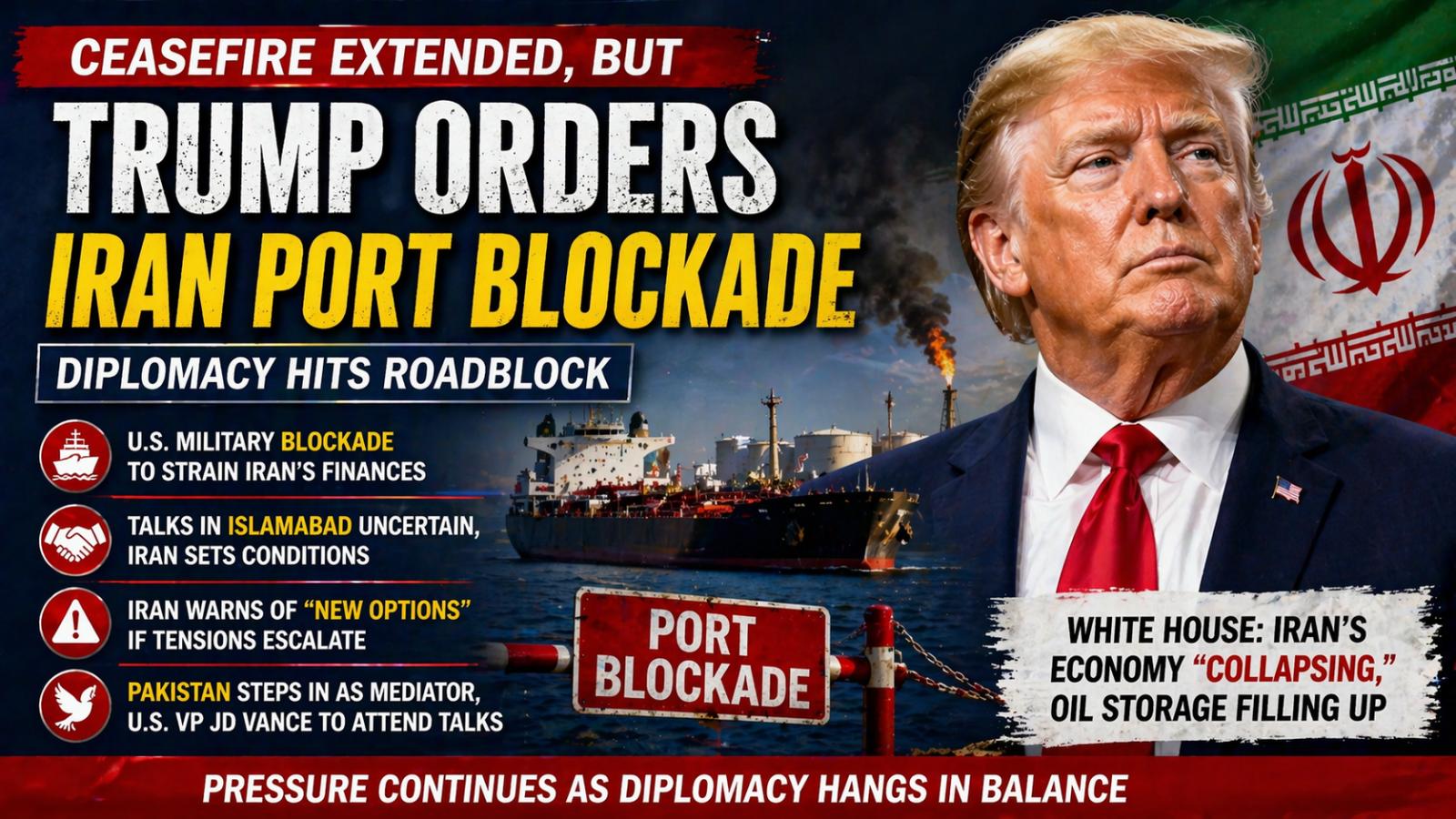
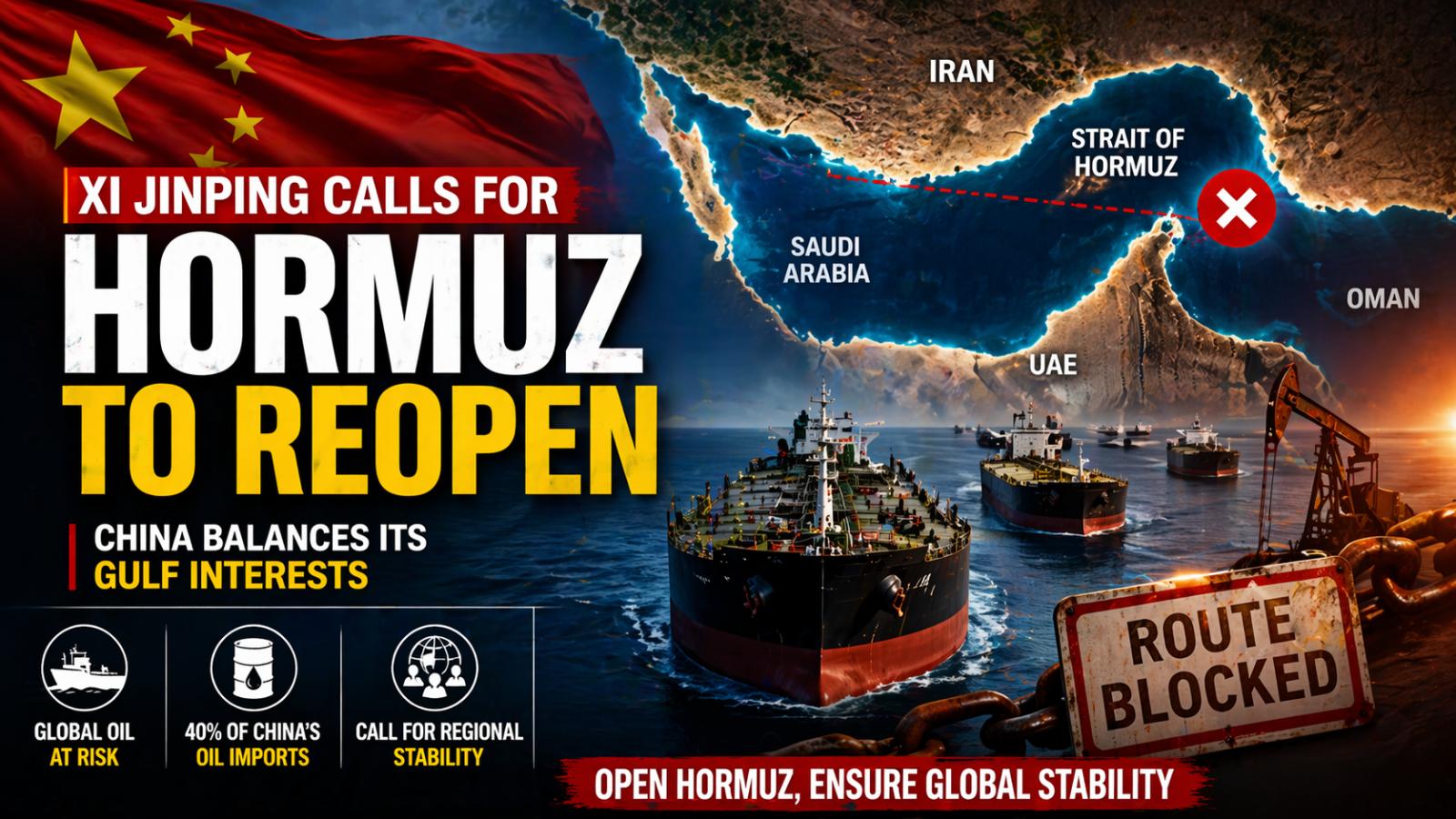
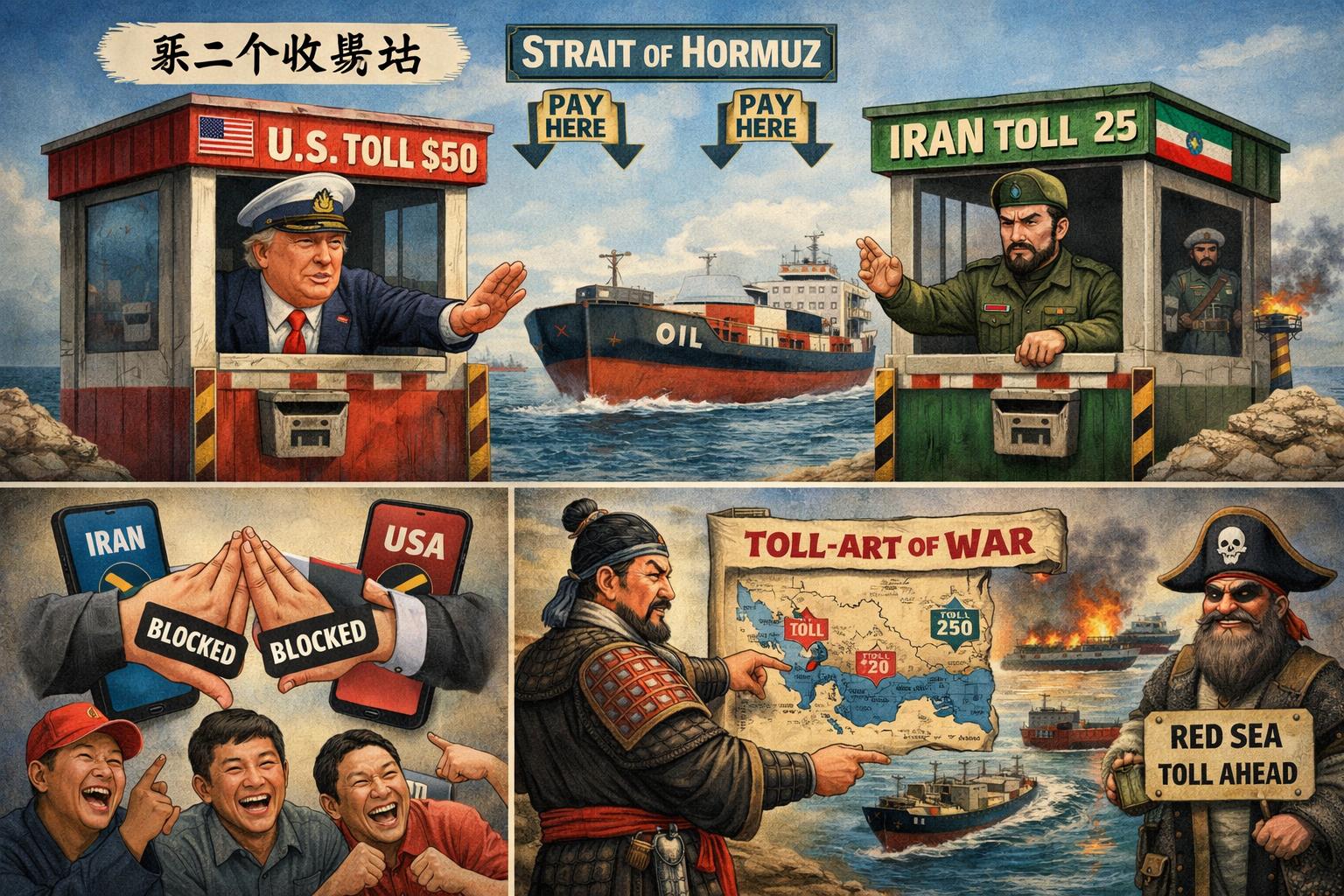
Chinese social media platforms have erupted with criticism and satire following the United States’ decision to impose a blockade on Iran, with many users describing the move as a “second toll booth” controlled by Washington. The reactions come amid escalating geopolitical tensions after the United States and Israel launched strikes on Iran on Friday, February 28, 2026, prompting Tehran to leverage its geographic position to restrict access through the strategically vital Strait of Hormuz.
Chinese social media mocks US blockade of Iran as “second toll booth”
Chinese social media platforms have erupted with criticism and satire following the United States’ decision to impose a blockade on Iran, with many users describing the move as a “second toll booth” controlled by Washington. The reactions come amid escalating geopolitical tensions after the United States and Israel launched strikes on Iran on Friday, February 28, 2026, prompting Tehran to leverage its geographic position to restrict access through the strategically vital Strait of Hormuz.
UK finance chief criticizes US over Iran war economic fallout
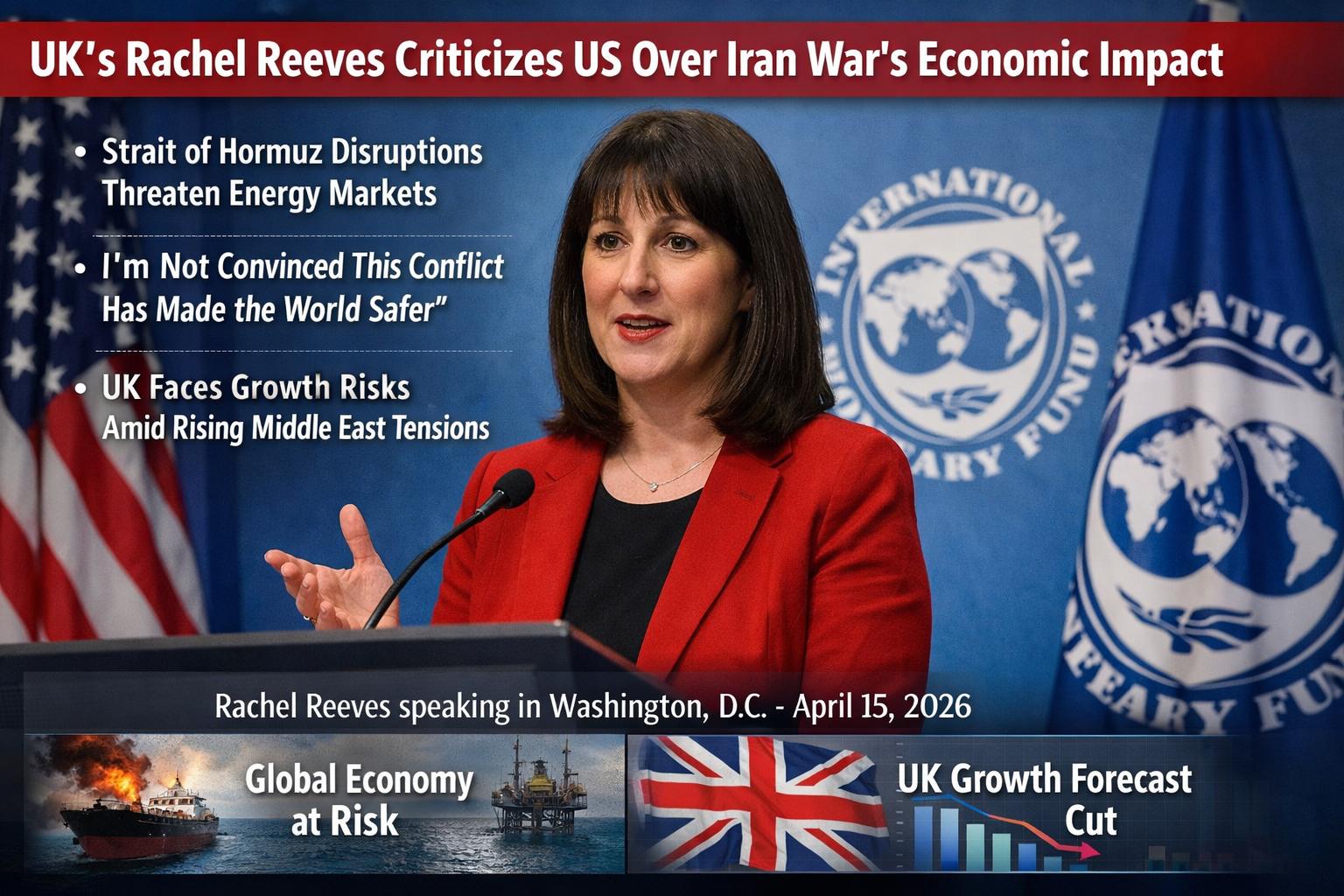
U.K. Finance Minister Rachel Reeves on Wednesday, April 15, 2026, called for immediate de-escalation of the Iran war, warning that the conflict is posing significant risks to global economic stability and expressing concern over the approach taken by the United States. Speaking at a forum in Washington, D.C., Reeves highlighted the economic consequences of disruptions in the Strait of Hormuz, a key global energy shipping route. She warned that ongoing instability in the region is incr


UK finance chief criticizes US over Iran war economic fallout
U.K. Finance Minister Rachel Reeves on Wednesday, April 15, 2026, called for immediate de-escalation of the Iran war, warning that the conflict is posing significant risks to global economic stability and expressing concern over the approach taken by the United States. Speaking at a forum in Washington, D.C., Reeves highlighted the economic consequences of disruptions in the Strait of Hormuz, a key global energy shipping route. She warned that ongoing instability in the region is incr
Modi-Trump call highlights rising tensions in Iran conflict
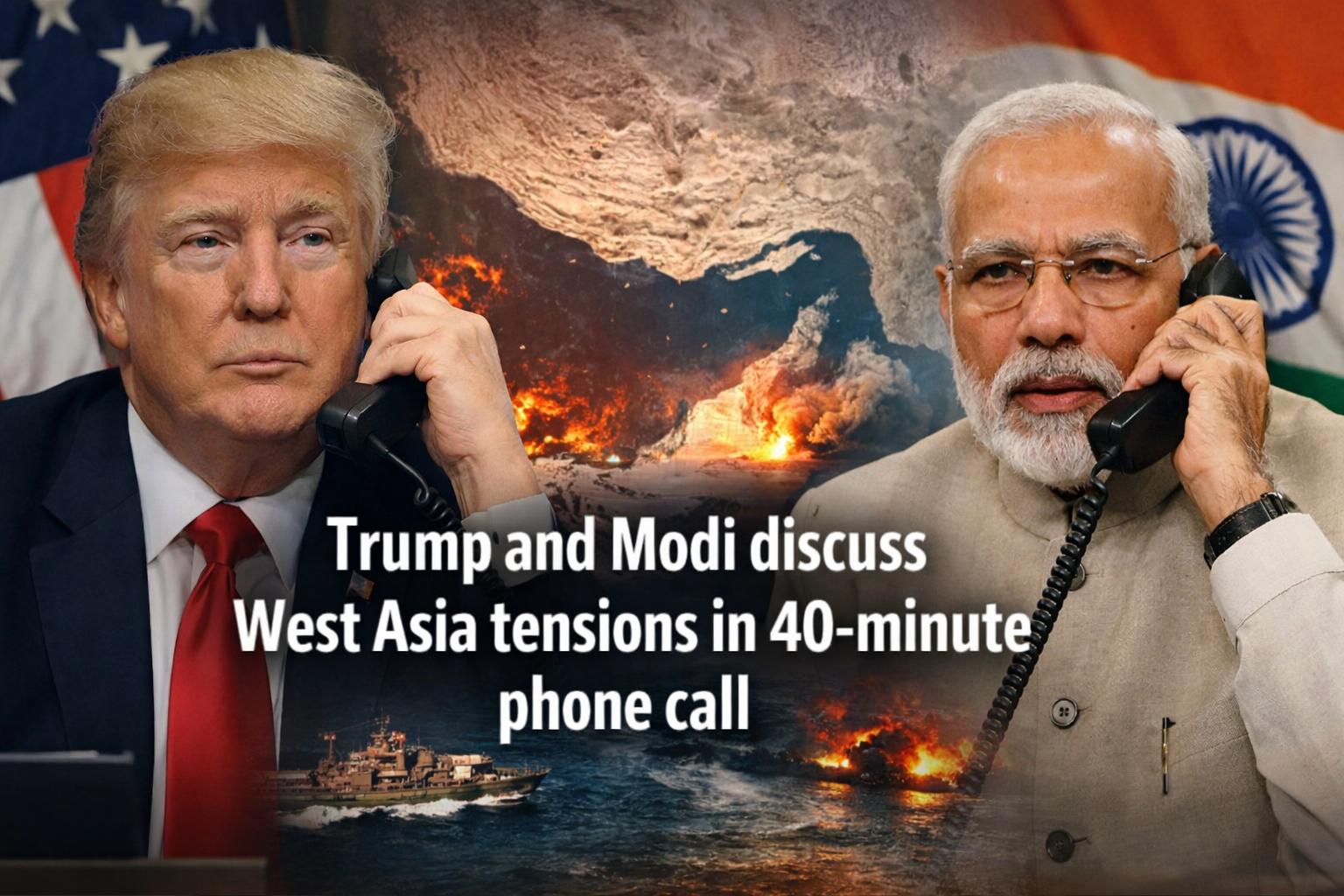
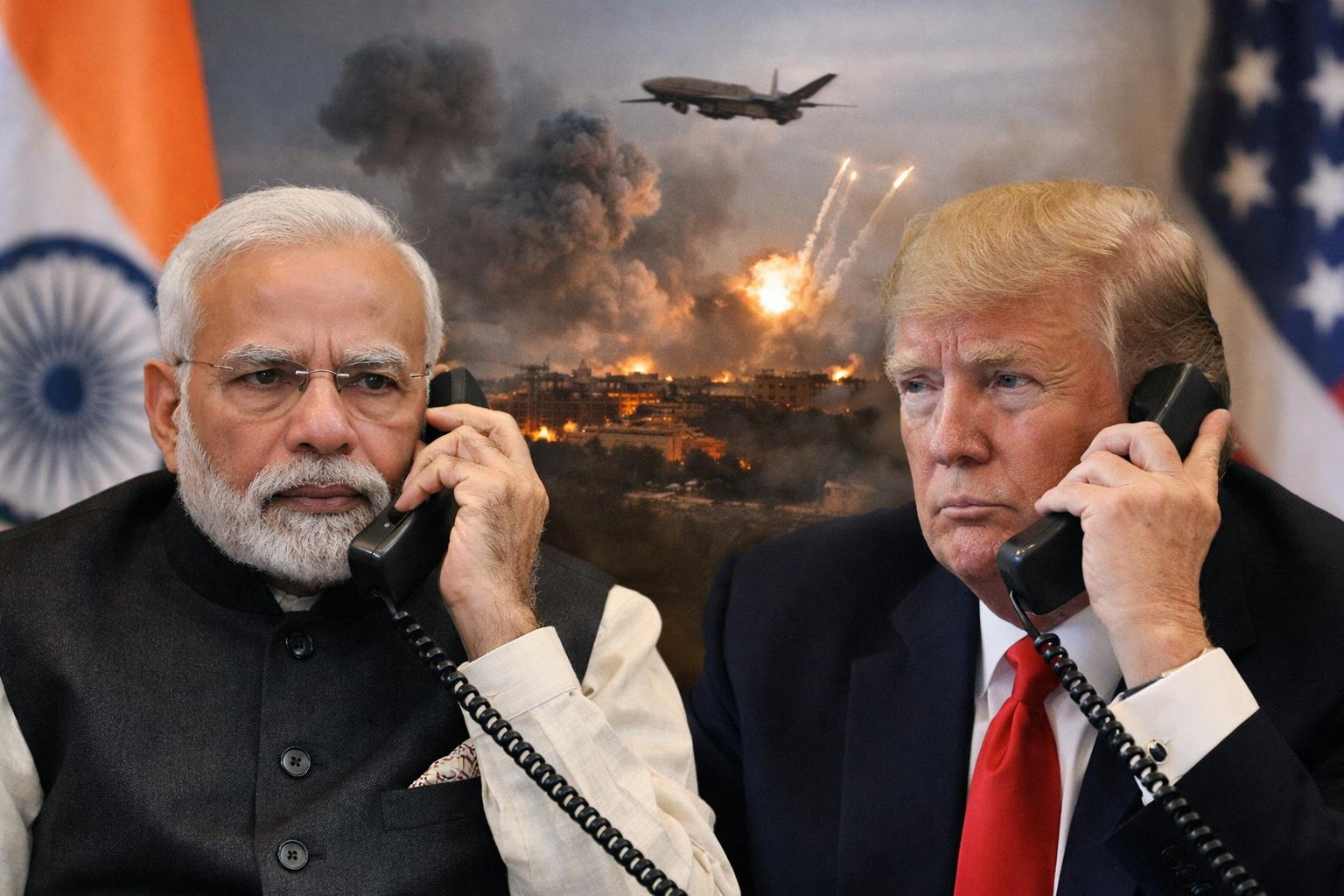
Indian Prime Minister Narendra Modi and U.S. President Donald Trump held a nearly 40-minute phone conversation on Tuesday, April 14, 2026, according to official reports. The call took place as tensions continue to rise amid the ongoing Iran conflict. The discussion comes shortly after peace talks betwee
Modi-Trump call highlights rising tensions in Iran conflict
Indian Prime Minister Narendra Modi and U.S. President Donald Trump held a nearly 40-minute phone conversation on Tuesday, April 14, 2026, according to official reports. The call took place as tensions continue to rise amid the ongoing Iran conflict. The discussion comes shortly after peace talks betwee
Nizar Amidi wins Iraq presidency after delayed parliamentary vote
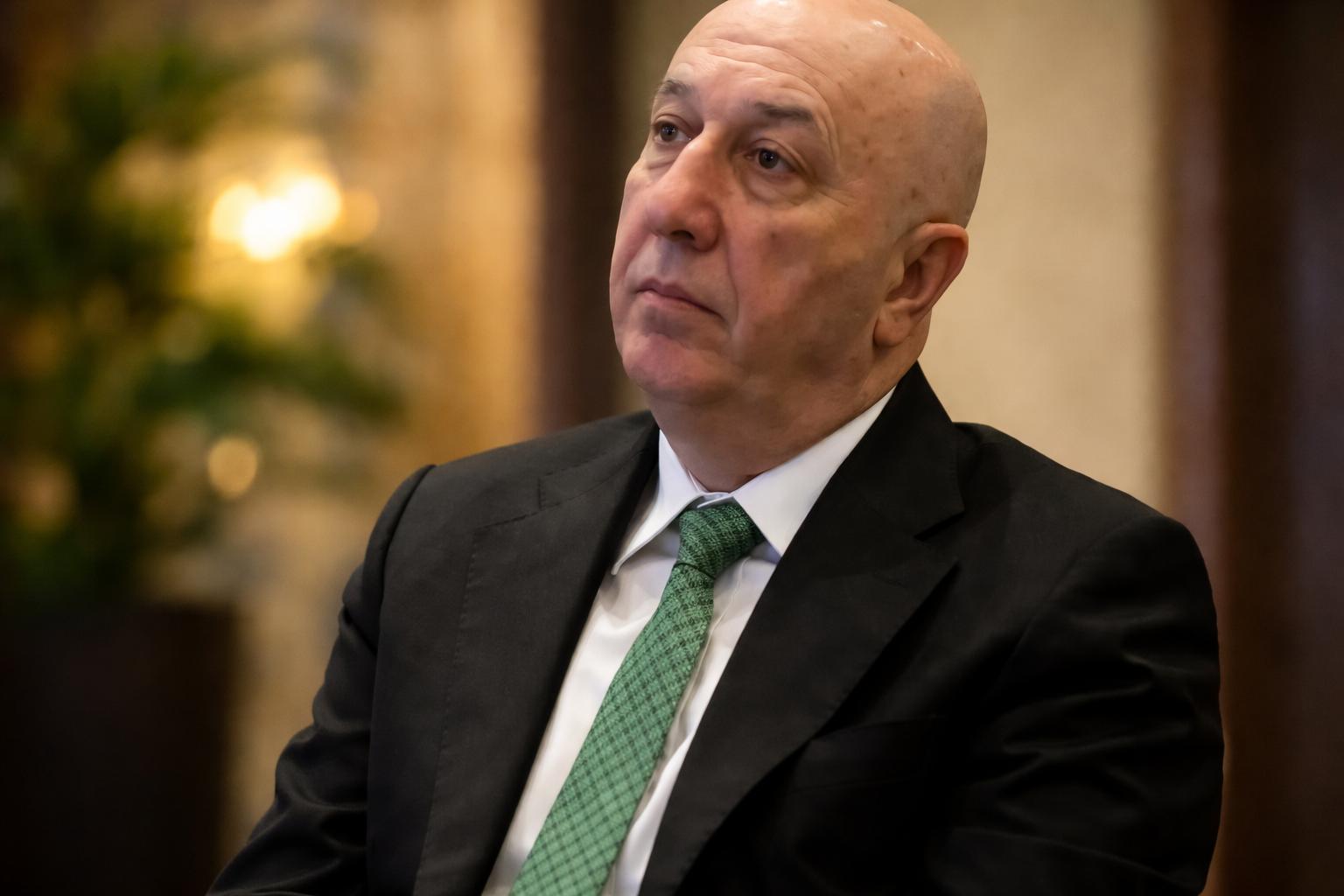
Lawmakers in Iraq elected Nizar Mohammed Saeed Amidi as the country’s new president during a parliamentary session held on Saturday, April 11, 2026, according to official results announced by the Iraqi Parliament. The vote marked the conclusion of a delayed presidential election process that had extended be
Nizar Amidi wins Iraq presidency after delayed parliamentary vote
Lawmakers in Iraq elected Nizar Mohammed Saeed Amidi as the country’s new president during a parliamentary session held on Saturday, April 11, 2026, according to official results announced by the Iraqi Parliament. The vote marked the conclusion of a delayed presidential election process that had extended be
Pentagon and Vatican clash over disputed meeting amid Iran war tensions
A meeting between officials from the U.S. Department of Defense and the Vatican has drawn scrutiny after sharply conflicting accounts emerged, raising questions about diplomatic tensions between Washington and the Holy See during an escalating global crisis. According to a source close to Pope Leo XIV, the meeting involving Cardinal Christophe Pierre was described as confrontational. Separate reports characterized the exchange as a stern warning emphasizing U.S. military strength and urging alignment with American policy. However, Pentagon officials strongly disputed that portrayal, stating the discussion was respectful and constructive, underscoring a commitment to continued dialogue with the Vatican. Adding to the conflicting narratives, Vatican ambassador Brian Burch stated on Thursday that Cardinal Pierre rejected media reports describing the meeting as hostile, calling them fabricated. He said the meeting, which occurred two months earlier, was “frank and cordial,” suggesting that accounts of tension may have been overstated. The dispute comes amid increasingly pointed remarks from Pope Leo XIV, the first U.S.-born pontiff from Chicago, who has taken an unusually direct stance on the ongoing conflict involving Iran. On Tuesday, the pope criticized U.S. President Donald Trump’s warning of severe consequences for Iran, calling such rhetoric “truly unacceptable” and warning that attacks on civilian infrastructure violate international law. In recent appeals, Leo has urged global leaders and citizens to pursue peace and avoid further escalation, particularly in a conflict he described as unjust and destabilizing. He also encouraged individuals to contact political leaders and advocate against actions targeting civilians, emphasizing the moral and legal implications of such strategies. The Vatican’s concerns extend beyond Iran, particularly to Lebanon, where renewed fighting involving Israeli forces and Hezbollah has intensified instability. Church officials have expressed alarm over the impact on Christian communities in southern Lebanon, which hold significant importance for the region’s religious presence. The broader geopolitical situation remains fragile. A ceasefire related to the Iran conflict appeared uncertain after Iran moved to close the Strait of Hormuz following Israeli strikes in Lebanon, prompting renewed calls from the White House to maintain open waterways and continue peace negotiations. While both the Pentagon and Vatican have emphasized the importance of ongoing dialogue, the divergence in accounts surrounding their recent meeting highlights the complexity of diplomatic relations during a period of heightened global tension.
Pentagon and Vatican clash over disputed meeting amid Iran war tensions
A meeting between officials from the U.S. Department of Defense and the Vatican has drawn scrutiny after sharply conflicting accounts emerged, raising questions about diplomatic tensions between Washington and the Holy See during an escalating global crisis. According to a source close to Pope Leo XIV, the meeting involving Cardinal Christophe Pierre was described as confrontational. Separate reports characterized the exchange as a stern warning emphasizing U.S. military strength and urging alignment with American policy. However, Pentagon officials strongly disputed that portrayal, stating the discussion was respectful and constructive, underscoring a commitment to continued dialogue with the Vatican. Adding to the conflicting narratives, Vatican ambassador Brian Burch stated on Thursday that Cardinal Pierre rejected media reports describing the meeting as hostile, calling them fabricated. He said the meeting, which occurred two months earlier, was “frank and cordial,” suggesting that accounts of tension may have been overstated. The dispute comes amid increasingly pointed remarks from Pope Leo XIV, the first U.S.-born pontiff from Chicago, who has taken an unusually direct stance on the ongoing conflict involving Iran. On Tuesday, the pope criticized U.S. President Donald Trump’s warning of severe consequences for Iran, calling such rhetoric “truly unacceptable” and warning that attacks on civilian infrastructure violate international law. In recent appeals, Leo has urged global leaders and citizens to pursue peace and avoid further escalation, particularly in a conflict he described as unjust and destabilizing. He also encouraged individuals to contact political leaders and advocate against actions targeting civilians, emphasizing the moral and legal implications of such strategies. The Vatican’s concerns extend beyond Iran, particularly to Lebanon, where renewed fighting involving Israeli forces and Hezbollah has intensified instability. Church officials have expressed alarm over the impact on Christian communities in southern Lebanon, which hold significant importance for the region’s religious presence. The broader geopolitical situation remains fragile. A ceasefire related to the Iran conflict appeared uncertain after Iran moved to close the Strait of Hormuz following Israeli strikes in Lebanon, prompting renewed calls from the White House to maintain open waterways and continue peace negotiations. While both the Pentagon and Vatican have emphasized the importance of ongoing dialogue, the divergence in accounts surrounding their recent meeting highlights the complexity of diplomatic relations during a period of heightened global tension.
Hegseth claims major US victory as Iran’s military capabilities weakened
U.S. Secretary of Defense Pete Hegseth stated on Wednesday, April 8, 2026, that Iran had sought a ceasefire following what he described as a decisive U.S. military campaign known as Operation Epic Fury. Speaking during a Pentagon briefing, Hegseth characterized the operation as a “historic and overwhelming victory,” attributing its outcome to leadership under President Donald Trump. Hegseth said Iran’s leadership had “begged for a ceasefire,” asserting that the scale of the military impact left Tehran with limited options. He emphasized that the operation significantly degraded Iran’s conventional military capabilities, particularly across its naval, air, and missile forces. According to the defense secretary, Iran’s navy suffered extensive losses, claiming it had effectively been neutralized. He further stated that Iran’s air force had been rendered inoperable and that its broader air defense infrastructure no longer functioned as a cohesive system. Hegseth also asserted that Iran’s missile program had been “functionally destroyed,” suggesting a substantial setback to the country’s strategic deterrence capabilities. The remarks were delivered as part of an official Pentagon briefing outlining the outcomes of recent military actions. While Hegseth presented the operation as a clear U.S. victory, his statements reflect the administration’s assessment of the situation and have not been independently verified within the briefing. The comments signal a significant escalation in rhetoric surrounding U.S.-Iran tensions and underscore the broader geopolitical implications of Operation Epic Fury. Further developments are expected as international observers and regional stakeholders assess the long-term consequences of the reported military actions.
Hegseth claims major US victory as Iran’s military capabilities weakened
U.S. Secretary of Defense Pete Hegseth stated on Wednesday, April 8, 2026, that Iran had sought a ceasefire following what he described as a decisive U.S. military campaign known as Operation Epic Fury. Speaking during a Pentagon briefing, Hegseth characterized the operation as a “historic and overwhelming victory,” attributing its outcome to leadership under President Donald Trump. Hegseth said Iran’s leadership had “begged for a ceasefire,” asserting that the scale of the military impact left Tehran with limited options. He emphasized that the operation significantly degraded Iran’s conventional military capabilities, particularly across its naval, air, and missile forces. According to the defense secretary, Iran’s navy suffered extensive losses, claiming it had effectively been neutralized. He further stated that Iran’s air force had been rendered inoperable and that its broader air defense infrastructure no longer functioned as a cohesive system. Hegseth also asserted that Iran’s missile program had been “functionally destroyed,” suggesting a substantial setback to the country’s strategic deterrence capabilities. The remarks were delivered as part of an official Pentagon briefing outlining the outcomes of recent military actions. While Hegseth presented the operation as a clear U.S. victory, his statements reflect the administration’s assessment of the situation and have not been independently verified within the briefing. The comments signal a significant escalation in rhetoric surrounding U.S.-Iran tensions and underscore the broader geopolitical implications of Operation Epic Fury. Further developments are expected as international observers and regional stakeholders assess the long-term consequences of the reported military actions.
Indian embassy issues 48-hour advisory in Iran as Trump deadline nears
The Indian embassy in Iran issued a security advisory on Tuesday, April 7, 2026, urging Indian nationals across the country to remain indoors for the next 48 hours as geopolitical tensions intensify between the United States and Iran. The advisory comes amid heightened uncertainty surrounding a deadline set by US President Donald Trump related to reopening the Strait of Hormuz, a critical global shipping route. In its official statement released from Tehran, the embassy instructed
Indian embassy issues 48-hour advisory in Iran as Trump deadline nears
The Indian embassy in Iran issued a security advisory on Tuesday, April 7, 2026, urging Indian nationals across the country to remain indoors for the next 48 hours as geopolitical tensions intensify between the United States and Iran. The advisory comes amid heightened uncertainty surrounding a deadline set by US President Donald Trump related to reopening the Strait of Hormuz, a critical global shipping route. In its official statement released from Tehran, the embassy instructed
Strait of Hormuz explained: why this narrow route affects the whole world
The Strait of Hormuz, a narrow waterway connecting the Persian Gulf to the open ocean, remains one of the most strategically important routes in the global economy. Located between Iran and Oman, this passage serves as a critical channel for transporting oil from major producing countries to markets around the world. A significant portion of the world’s oil supply moves through this route each day, making it essential for maintaining stable energy markets. Because many countries r
Strait of Hormuz explained: why this narrow route affects the whole world
The Strait of Hormuz, a narrow waterway connecting the Persian Gulf to the open ocean, remains one of the most strategically important routes in the global economy. Located between Iran and Oman, this passage serves as a critical channel for transporting oil from major producing countries to markets around the world. A significant portion of the world’s oil supply moves through this route each day, making it essential for maintaining stable energy markets. Because many countries r
India Imports Iranian Oil After U.S. Temporarily Lifts Sanctions
On Saturday, April 4, 2026, India marked a significant milestone in its energy dealings by making its first purchase of Iranian oil in over seven years. This comes after a period of strained relations due to U.S. sanctions that pressured India to halt its imports of Iranian crude back in May 2019. However, the ongoing conflict in the Middle East, particularly the U.S.-Israel war, has severely disrupted global oil supplies, pushing India to seek alternative sources of crude oil. The supply cha
India Imports Iranian Oil After U.S. Temporarily Lifts Sanctions
On Saturday, April 4, 2026, India marked a significant milestone in its energy dealings by making its first purchase of Iranian oil in over seven years. This comes after a period of strained relations due to U.S. sanctions that pressured India to halt its imports of Iranian crude back in May 2019. However, the ongoing conflict in the Middle East, particularly the U.S.-Israel war, has severely disrupted global oil supplies, pushing India to seek alternative sources of crude oil. The supply cha
Trump defends Iran war strategy but offers few new details on next steps
WASHINGTON — President Donald Trump on Wednesday, April 2, 2026, delivered a primetime address from the White House seeking to justify the ongoing U.S. military campaign against Iran, but he provided few new details about the conflict’s trajectory or conclusion. The speech came at a pivotal moment both domestically and internationally, as the administration continues to expand executive authority in directing the war effort. In his remarks, Trump emphasized that preventing Iran fr
Trump defends Iran war strategy but offers few new details on next steps
WASHINGTON — President Donald Trump on Wednesday, April 2, 2026, delivered a primetime address from the White House seeking to justify the ongoing U.S. military campaign against Iran, but he provided few new details about the conflict’s trajectory or conclusion. The speech came at a pivotal moment both domestically and internationally, as the administration continues to expand executive authority in directing the war effort. In his remarks, Trump emphasized that preventing Iran fr
Israeli parliament approves capital punishment law amid global criticism
Israel’s parliament approved a controversial law introducing the death penalty for certain Palestinians convicted of killing Israelis during a session held in Jerusalem on Monday, March 30, 2026. The legislation marks a significant shift in Israel’s legal framework for handling security-related offenses and reflects a long-standing push by far-right leaders to impose stricter punishments for attacks described as terrorism. Prime Minister Benjamin Netanyahu attended the vote in person and
Israeli parliament approves capital punishment law amid global criticism
Israel’s parliament approved a controversial law introducing the death penalty for certain Palestinians convicted of killing Israelis during a session held in Jerusalem on Monday, March 30, 2026. The legislation marks a significant shift in Israel’s legal framework for handling security-related offenses and reflects a long-standing push by far-right leaders to impose stricter punishments for attacks described as terrorism. Prime Minister Benjamin Netanyahu attended the vote in person and
US engages Iran through Pakistan mediation with new 15-point peace proposal
The United States has initiated indirect diplomatic engagement with Iran through Pakistan, according to Steve Witkoff, a special envoy serving under President Donald Trump. Speaking during a Cabinet meeting at the White House, Witkoff confirmed that a structured 15-point peace proposal has been conveyed to Iranian authorities via Pakistan’s government, marking a renewed attempt to address ongoing tensions through diplomatic channels. Witkoff described the framework as a comprehensive ef
US engages Iran through Pakistan mediation with new 15-point peace proposal
The United States has initiated indirect diplomatic engagement with Iran through Pakistan, according to Steve Witkoff, a special envoy serving under President Donald Trump. Speaking during a Cabinet meeting at the White House, Witkoff confirmed that a structured 15-point peace proposal has been conveyed to Iranian authorities via Pakistan’s government, marking a renewed attempt to address ongoing tensions through diplomatic channels. Witkoff described the framework as a comprehensive ef
Tarique Rahman’s Genocide Day Message: A Shift in Bangladesh’s Foreign Policy
On March 25, 2026, Bangladesh Prime Minister Tarique Rahman marked Genocide Day with a powerful message that signaled a clear shift from the softer approach to Pakistan observed during the previous interim government under Muhammad Yunus. Rahman’s remarks were made on social media, describing March 25, 1971, as "one of the most disgraceful and brutal days" in the country's history, highlighting the atrocities carried out by Pakistani forces during Operation Searchlight. Rahman recounted how
Tarique Rahman’s Genocide Day Message: A Shift in Bangladesh’s Foreign Policy
On March 25, 2026, Bangladesh Prime Minister Tarique Rahman marked Genocide Day with a powerful message that signaled a clear shift from the softer approach to Pakistan observed during the previous interim government under Muhammad Yunus. Rahman’s remarks were made on social media, describing March 25, 1971, as "one of the most disgraceful and brutal days" in the country's history, highlighting the atrocities carried out by Pakistani forces during Operation Searchlight. Rahman recounted how
India Supports De-Escalation and Strait of Hormuz Access After Call with Trump
Amid rising tensions in the Middle East, U.S. President Donald Trump and Indian Prime Minister Narendra Modi held a significant conversation. The two leaders highlighted the necessity of keeping the Strait of Hormuz open and accessible for global trade. In a post on social media, Modi mentioned having a "useful exchange" with Trump. He emphasized India’s firm stance on de-escalation and peace, recognizing that the Strait of Hormuz is crucial for global stability due to its role in oil shipm
India Supports De-Escalation and Strait of Hormuz Access After Call with Trump
Amid rising tensions in the Middle East, U.S. President Donald Trump and Indian Prime Minister Narendra Modi held a significant conversation. The two leaders highlighted the necessity of keeping the Strait of Hormuz open and accessible for global trade. In a post on social media, Modi mentioned having a "useful exchange" with Trump. He emphasized India’s firm stance on de-escalation and peace, recognizing that the Strait of Hormuz is crucial for global stability due to its role in oil shipm
US-Israel strike on Iran followed urgent call between Netanyahu and Trump
Less than 48 hours before a joint US-Israeli military operation targeting Iran, Israeli Prime Minister Benjamin Netanyahu made a final appeal to US President Donald Trump, urging swift action as intelligence indicated a narrowing operational window. According to officials, briefings suggested that Iran’s Supreme Leader Ayatollah Ali Khamenei and senior leadership were expected to gather in Tehran, presenting what was described as a rare strategic opportunity. Updated intelligence reportedly showed the meeting had been moved earlier, intensifying the urgency of the decision. Although Trump had already approved military action in principle, the exact timing and scale remained under review. Netanyahu’s call was seen as a decisive moment, reinforcing arguments that delays could result in a missed opportunity. The operation followed months of escalating tensions and unsuccessful diplomatic efforts aimed at addressing Iran’s nuclear programme, which had reached a stalemate. Earlier military actions in June, involving strikes on Iranian nuclear and missile infrastructure, had already heightened hostilities. While US forces later joined Israeli operations in a 12-day campaign, Israeli officials continued to push for a more comprehensive response. Strategic discussions, including high-level meetings, focused on Iran’s advancing missile capabilities and perceived regional threat. Additional geopolitical developments influenced Washington’s approach, including a successful US-backed operation in Venezuela and widespread unrest within Iran, which was met with force by security agencies. US officials had anticipated escalation, warning that any Israeli action could provoke retaliation against American assets and allies in the region. The coordinated strikes began on February 28 after Trump gave final approval. The White House stated that the objective was to weaken Iran’s military infrastructure, curb its missile capabilities, and prevent nuclear weapon development. Trump later announced that Khamenei had been killed during the operation. The aftermath saw immediate retaliation from Iran, disruptions in key shipping routes, and a surge in global oil prices. Reports indicated significant casualties, including Iranian civilians and US personnel. Despite expectations of political change, intelligence assessments had warned that leadership shifts might not moderate Iran’s stance. Khamenei’s son, Mojtaba Khamenei, has since assumed leadership, while security forces continue to maintain control. Both leaders have defended their roles in the decision, with Trump asserting sole responsibility and Netanyahu denying claims of influencing US involvement. However, accounts suggest that the combination of intelligence updates and diplomatic pressure played a critical role in shaping a decision that has significantly altered regional dynamics.
US-Israel strike on Iran followed urgent call between Netanyahu and Trump
Less than 48 hours before a joint US-Israeli military operation targeting Iran, Israeli Prime Minister Benjamin Netanyahu made a final appeal to US President Donald Trump, urging swift action as intelligence indicated a narrowing operational window. According to officials, briefings suggested that Iran’s Supreme Leader Ayatollah Ali Khamenei and senior leadership were expected to gather in Tehran, presenting what was described as a rare strategic opportunity. Updated intelligence reportedly showed the meeting had been moved earlier, intensifying the urgency of the decision. Although Trump had already approved military action in principle, the exact timing and scale remained under review. Netanyahu’s call was seen as a decisive moment, reinforcing arguments that delays could result in a missed opportunity. The operation followed months of escalating tensions and unsuccessful diplomatic efforts aimed at addressing Iran’s nuclear programme, which had reached a stalemate. Earlier military actions in June, involving strikes on Iranian nuclear and missile infrastructure, had already heightened hostilities. While US forces later joined Israeli operations in a 12-day campaign, Israeli officials continued to push for a more comprehensive response. Strategic discussions, including high-level meetings, focused on Iran’s advancing missile capabilities and perceived regional threat. Additional geopolitical developments influenced Washington’s approach, including a successful US-backed operation in Venezuela and widespread unrest within Iran, which was met with force by security agencies. US officials had anticipated escalation, warning that any Israeli action could provoke retaliation against American assets and allies in the region. The coordinated strikes began on February 28 after Trump gave final approval. The White House stated that the objective was to weaken Iran’s military infrastructure, curb its missile capabilities, and prevent nuclear weapon development. Trump later announced that Khamenei had been killed during the operation. The aftermath saw immediate retaliation from Iran, disruptions in key shipping routes, and a surge in global oil prices. Reports indicated significant casualties, including Iranian civilians and US personnel. Despite expectations of political change, intelligence assessments had warned that leadership shifts might not moderate Iran’s stance. Khamenei’s son, Mojtaba Khamenei, has since assumed leadership, while security forces continue to maintain control. Both leaders have defended their roles in the decision, with Trump asserting sole responsibility and Netanyahu denying claims of influencing US involvement. However, accounts suggest that the combination of intelligence updates and diplomatic pressure played a critical role in shaping a decision that has significantly altered regional dynamics.
Trump claims major US military success against Iran at White House event
US President Donald Trump on Friday said the United States was “doing extremely well in Iran,” making a series of sweeping claims about the country’s military capabilities during a ceremony at the White House. Speaking while presenting the Commander-in-Chief’s Trophy, Trump asserted that Iran’s naval forces had effectively been neutralised, stating that the country now has “no navy anymo
Trump claims major US military success against Iran at White House event
US President Donald Trump on Friday said the United States was “doing extremely well in Iran,” making a series of sweeping claims about the country’s military capabilities during a ceremony at the White House. Speaking while presenting the Commander-in-Chief’s Trophy, Trump asserted that Iran’s naval forces had effectively been neutralised, stating that the country now has “no navy anymo
Trump criticizes NATO allies over Iran conflict support and oil concerns
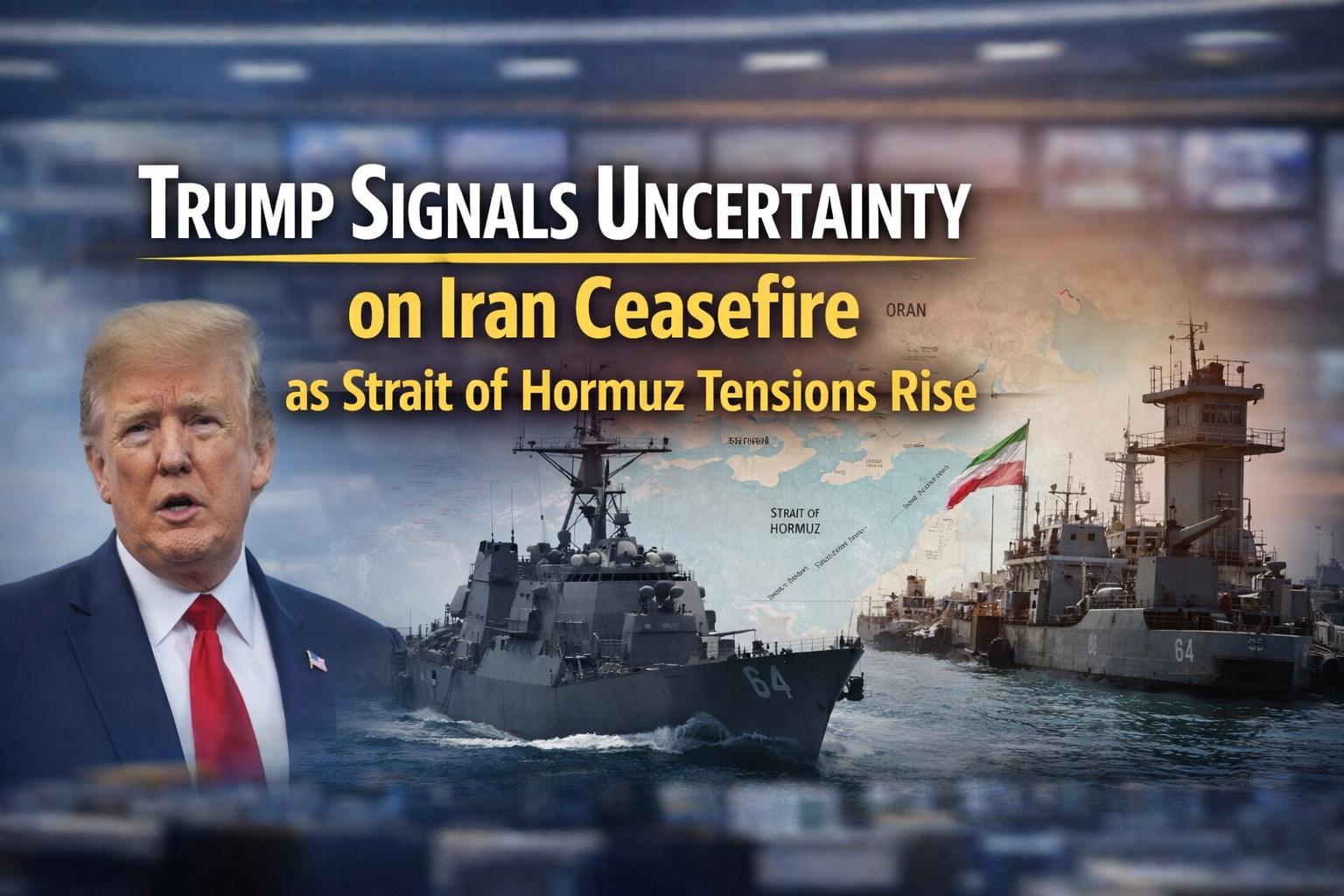
US President Donald Trump on Friday sharply criticized NATO allies, accusing them of failing to support Washington and Israel during the ongoing conflict with Iran, while also expressing frustration over their stance on rising oil prices. His remarks highlight growing tensions between the United States and its traditional partners amid escalating instability in the Middle East. In a social media post, Trump described NATO as ineffective without US leadership, calling the alliance a “paper
Trump criticizes NATO allies over Iran conflict support and oil concerns
US President Donald Trump on Friday sharply criticized NATO allies, accusing them of failing to support Washington and Israel during the ongoing conflict with Iran, while also expressing frustration over their stance on rising oil prices. His remarks highlight growing tensions between the United States and its traditional partners amid escalating instability in the Middle East. In a social media post, Trump described NATO as ineffective without US leadership, calling the alliance a “paper
Modi, UAE president discuss West Asia tensions and Strait of Hormuz security
Indian Prime Minister Narendra Modi held a telephone conversation on Tuesday with Sheikh Mohamed bin Zayed Al Nahyan, President of the United Arab Emirates, as tensions continue to escalate across the West Asian region. The discussion focused on regional stability, recent developments in the Middle East crisis, and the importance of safeguarding critical global energy routes. During the call, both leaders underscored the need to ensure safe and uninterrupted navigation through the Strait of
Modi, UAE president discuss West Asia tensions and Strait of Hormuz security
Indian Prime Minister Narendra Modi held a telephone conversation on Tuesday with Sheikh Mohamed bin Zayed Al Nahyan, President of the United Arab Emirates, as tensions continue to escalate across the West Asian region. The discussion focused on regional stability, recent developments in the Middle East crisis, and the importance of safeguarding critical global energy routes. During the call, both leaders underscored the need to ensure safe and uninterrupted navigation through the Strait of
China announces humanitarian aid to Iran, Lebanon amid escalating West Asia conflict
China on Tuesday announced that it will extend humanitarian assistance to several West Asia countries, including Iran and Lebanon, as the ongoing conflict involving the United States and Israel enters its third week and continues to escalate. The move reflects Beijing’s growing concern over the worsening humanitarian situation across the region, where sustained military operations have disrupted civilian life and critical infrastructure. Speaking at a regular press briefing, Chinese Foreig
China announces humanitarian aid to Iran, Lebanon amid escalating West Asia conflict
China on Tuesday announced that it will extend humanitarian assistance to several West Asia countries, including Iran and Lebanon, as the ongoing conflict involving the United States and Israel enters its third week and continues to escalate. The move reflects Beijing’s growing concern over the worsening humanitarian situation across the region, where sustained military operations have disrupted civilian life and critical infrastructure. Speaking at a regular press briefing, Chinese Foreig