Iran media reporting restrictions have been imposed following renewed US airstrikes, with authorities directing news organisations to limit coverage of civilian infrastructure damage. The directive comes as Washington considers expanding its military campaign, raising fresh concerns over regional stability.
Iran Media Reporting Restrictions Ordered After US Strikes
Iran media reporting restrictions have been imposed following renewed US airstrikes, with authorities directing news organisations to limit coverage of civilian infrastructure damage. The directive comes as Washington considers expanding its military campaign, raising fresh concerns over regional stability.
Iran Media Reporting Restrictions Ordered After US Strikes
Iran claims US used ceasefire to strengthen its military capabilities while continuing diplomatic talks, according to senior adviser Mohsen Rezaei. The allegations include rebuilding forces, revising the Islamabad MoU and imposing conditions on the release of frozen Iranian assets.
Iran Claims US Used Ceasefire to Rebuild Military Strength
&nbs
Iran claims US used ceasefire to strengthen its military capabilities while continuing diplomatic talks, according to senior adviser Mohsen Rezaei. The allegations include rebuilding forces, revising the Islamabad MoU and imposing conditions on the release of frozen Iranian assets.
Iran Claims US Used Ceasefire to Rebuild Military Strength
&nbs
US airstrikes on Iran continue into a seventh consecutive night as CENTCOM expands its military campaign against Iranian targets. The latest strikes, ordered by the US commander-in-chief, targeted military infrastructure while escalating tensions between Washington and Tehran amid warnings of wider regional instability.
US Airstrikes on Iran Continue for Seven
US airstrikes on Iran continue into a seventh consecutive night as CENTCOM expands its military campaign against Iranian targets. The latest strikes, ordered by the US commander-in-chief, targeted military infrastructure while escalating tensions between Washington and Tehran amid warnings of wider regional instability.
US Airstrikes on Iran Continue for Seven
Iran’s Islamic Revolutionary Guard Corps claimed on Friday, July 17, that it had launched ballistic missiles and drones at US military aircraft stationed in Jordan, marking another dangerous expansion of the US-Iran conflict across the Middle East.
The IRGC said several American fighter jets and aerial refuelling aircraft were destroyed, while other planes suffered serious damage. However, neither the United States nor Jordan had indepen
Iran’s Islamic Revolutionary Guard Corps claimed on Friday, July 17, that it had launched ballistic missiles and drones at US military aircraft stationed in Jordan, marking another dangerous expansion of the US-Iran conflict across the Middle East.
The IRGC said several American fighter jets and aerial refuelling aircraft were destroyed, while other planes suffered serious damage. However, neither the United States nor Jordan had indepen
Iran launched strikes on military targets in Kuwait and Syria following recent US attacks. Missiles and drones were also intercepted over Jordan and Iraq, while explosions were reported in Qatar and Bahrain, raising fears of a wider regional conflict.
Iran attacks Kuwait
Iranian state television reported that the country launched drone attacks against US military deployment sites and logistical support facilities in
Iran launched strikes on military targets in Kuwait and Syria following recent US attacks. Missiles and drones were also intercepted over Jordan and Iraq, while explosions were reported in Qatar and Bahrain, raising fears of a wider regional conflict.
Iran attacks Kuwait
Iranian state television reported that the country launched drone attacks against US military deployment sites and logistical support facilities in
US airstrikes hit Iran bridge airport according to Iranian state-linked reports describing strikes on transport infrastructure in southern Iran. Officials also reported explosions near Qeshm as military tensions between Washington and Tehran continued to escalate across the region.
US Airstrikes Hit Iran Bridge Airport
Fresh reports from Ir
US airstrikes hit Iran bridge airport according to Iranian state-linked reports describing strikes on transport infrastructure in southern Iran. Officials also reported explosions near Qeshm as military tensions between Washington and Tehran continued to escalate across the region.
US Airstrikes Hit Iran Bridge Airport
Fresh reports from Ir
An Iraqi armed group has reportedly announced a $10 million bounty targeting US President Donald Trump, according to reports carried by Iran's IRNA and Russia's RT. The claim has not been independently verified, and US officials had not publicly responded at the time of publication.
Iraqi Group Claims Trump Bounty
An armed group identifying itself as the Islamic Resistance in
An Iraqi armed group has reportedly announced a $10 million bounty targeting US President Donald Trump, according to reports carried by Iran's IRNA and Russia's RT. The claim has not been independently verified, and US officials had not publicly responded at the time of publication.
Iraqi Group Claims Trump Bounty
An armed group identifying itself as the Islamic Resistance in
Trump weighs strike on Iran Pickaxe Mountain as reports say the White House is reviewing military options against Tehran's underground nuclear facility near Natanz. The site is believed to play a future role in Iran's nuclear programme, while international inspectors continue seeking access.
Trump Weighs Strike on Iran Pickaxe Mountain
Trump weighs strike on Iran Pickaxe Mountain as reports say the White House is reviewing military options against Tehran's underground nuclear facility near Natanz. The site is believed to play a future role in Iran's nuclear programme, while international inspectors continue seeking access.
Trump Weighs Strike on Iran Pickaxe Mountain
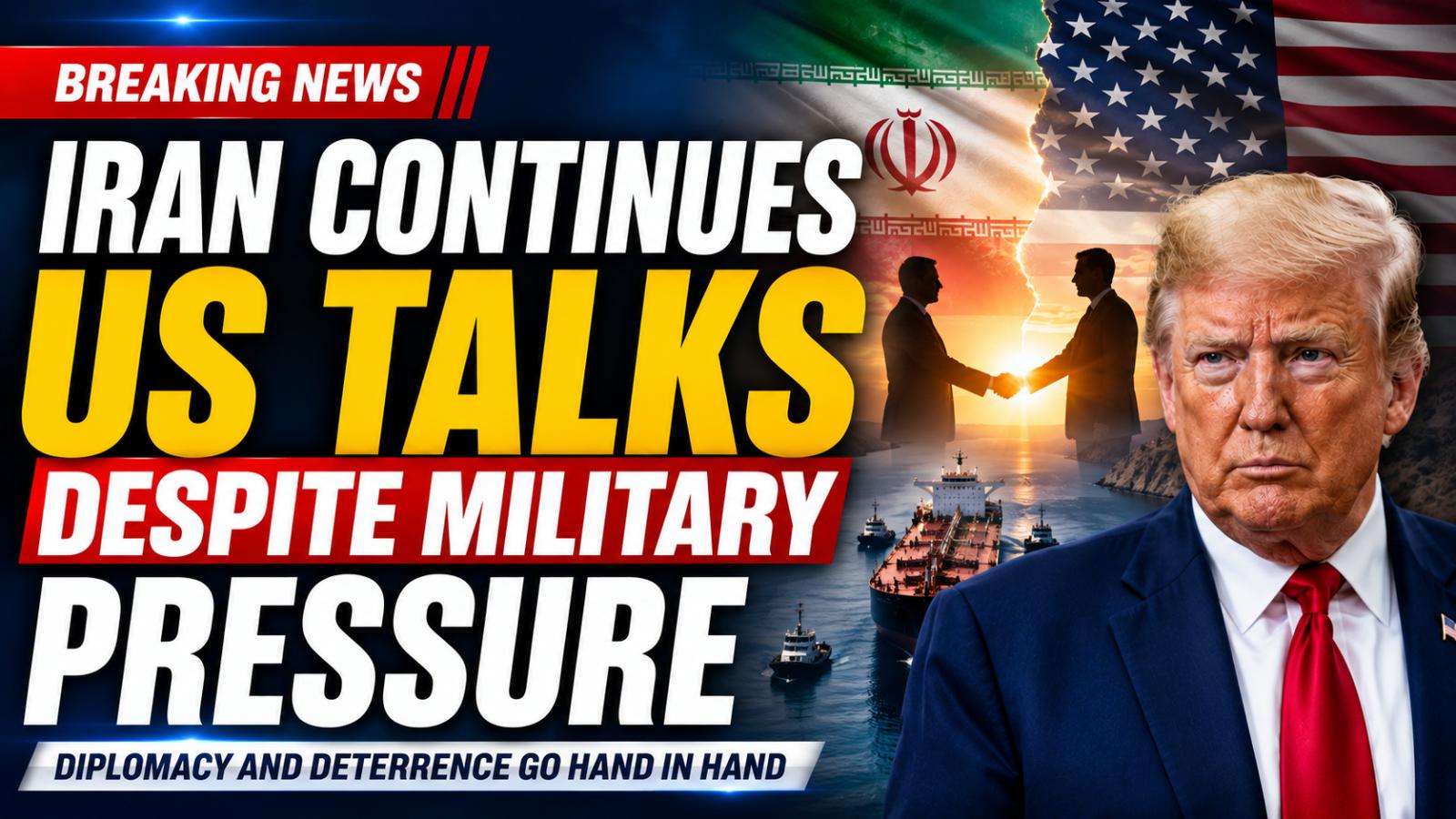
Iran continues US talks despite military pressure, according to the White House, which says Tehran remains interested in reaching an agreement with Washington. Officials also stressed that the Trump administration will continue protecting international shipping while pursuing diplomacy alongside military deterrence.
Iran Continues US Talks Despite Military Pre
Iran continues US talks despite military pressure, according to the White House, which says Tehran remains interested in reaching an agreement with Washington. Officials also stressed that the Trump administration will continue protecting international shipping while pursuing diplomacy alongside military deterrence.
Iran Continues US Talks Despite Military Pre
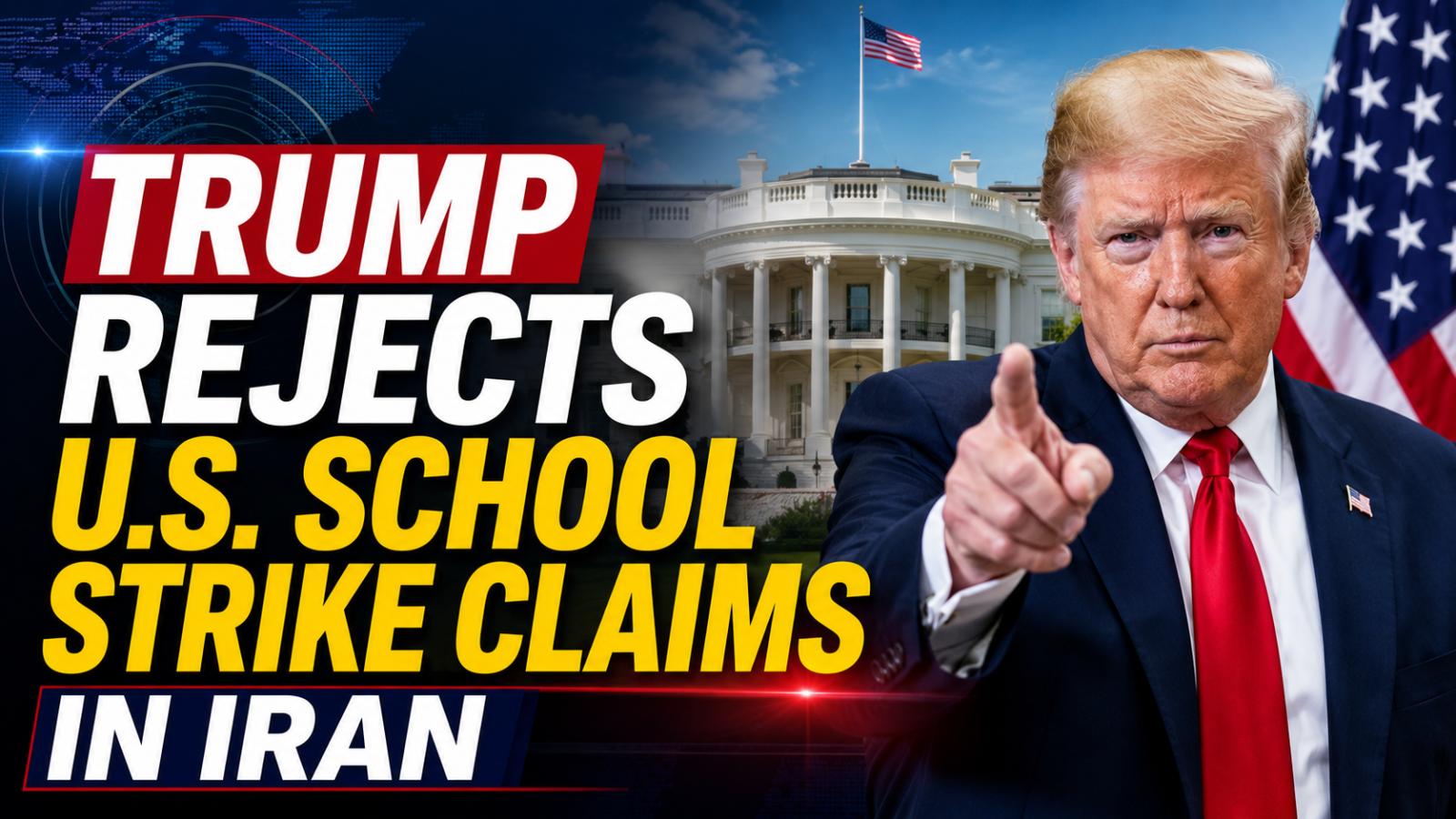
Trump rejects US school strike claims Iran as the White House defends military actions and says American forces do not intentionally target civilians. Officials also discussed Iran-US negotiations, regional tensions, and security in the Strait of Hormuz following recent military exchanges.
Trump Rejects Allegations Over Iran School Strike
Trump rejects US school strike claims Iran as the White House defends military actions and says American forces do not intentionally target civilians. Officials also discussed Iran-US negotiations, regional tensions, and security in the Strait of Hormuz following recent military exchanges.
Trump Rejects Allegations Over Iran School Strike
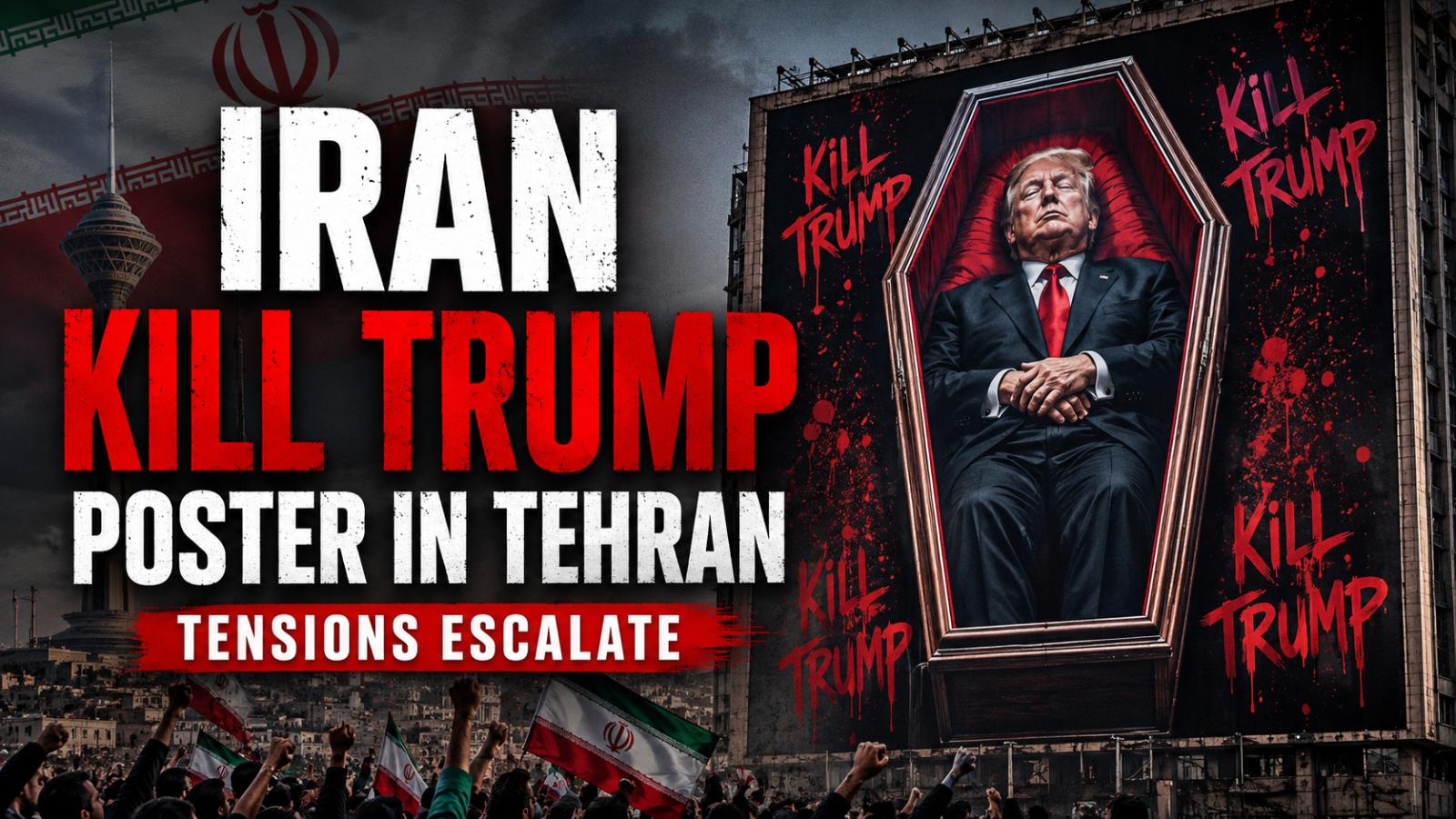
A massive Iran kill trump poster Tehran displayed in the capital has intensified concerns over US-Iran relations. The development follows renewed revenge threats, a public funeral procession, and Donald Trump's warning that he has prepared military instructions if harmed.
Iran Displays 'Kill Trump' Poster in Tehran Amid Renewed Threats
Relations between Ira
A massive Iran kill trump poster Tehran displayed in the capital has intensified concerns over US-Iran relations. The development follows renewed revenge threats, a public funeral procession, and Donald Trump's warning that he has prepared military instructions if harmed.
Iran Displays 'Kill Trump' Poster in Tehran Amid Renewed Threats
Relations between Ira
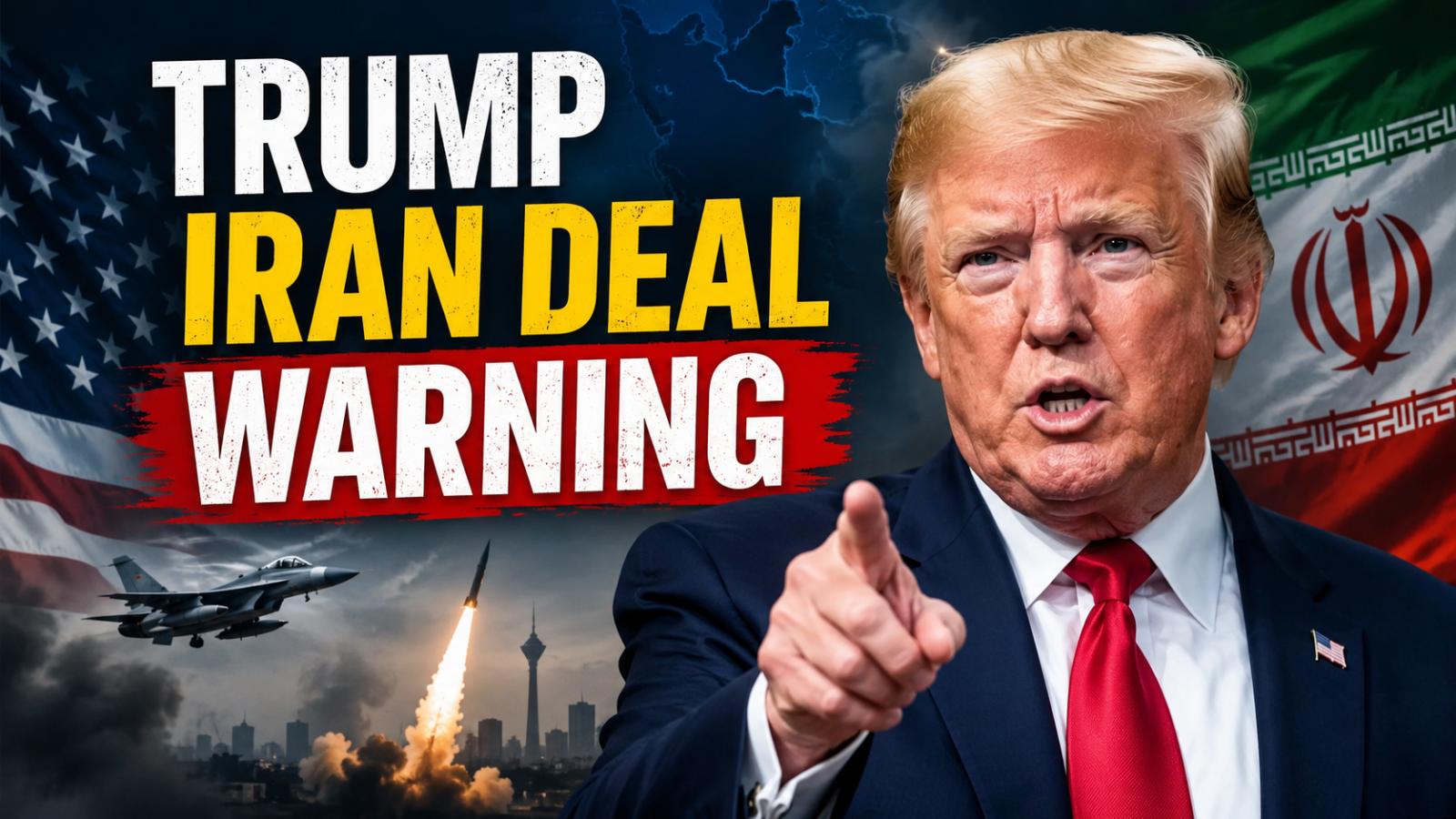
US President Donald Trump has increased pressure on Tehran by predicting that Iran would be defeated “very soon” while claiming its leaders urgently wanted an agreement with Washington. His comments combined the possibility of Iran talks with a warning that the United States would decide whether diplomacy moved forward.
Trump Iran warning increases pressure on Tehran
Trump made the remarks on July 15 after
US President Donald Trump has increased pressure on Tehran by predicting that Iran would be defeated “very soon” while claiming its leaders urgently wanted an agreement with Washington. His comments combined the possibility of Iran talks with a warning that the United States would decide whether diplomacy moved forward.
Trump Iran warning increases pressure on Tehran
Trump made the remarks on July 15 after
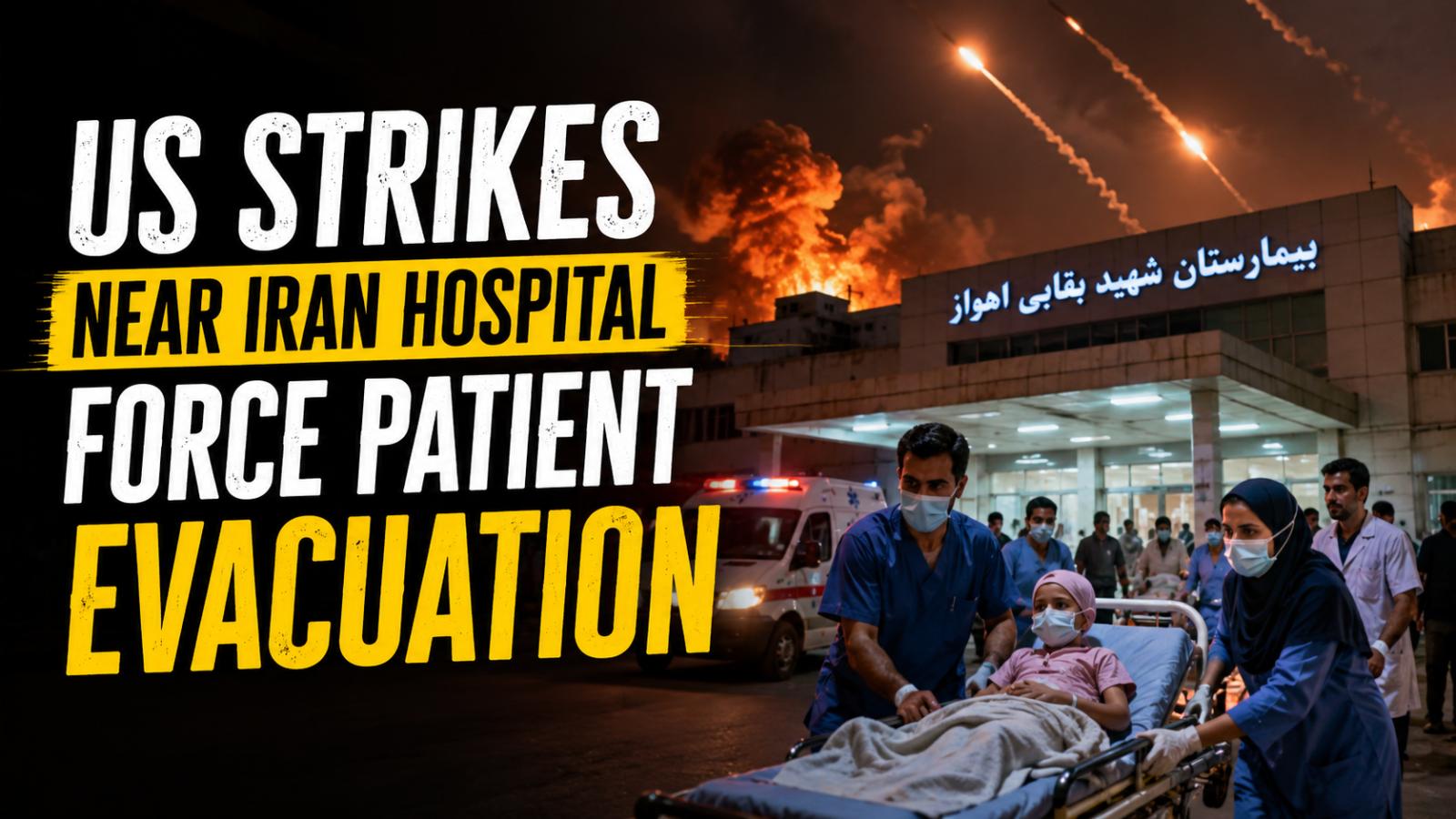
Patients, including children receiving cancer treatment, were evacuated from a hospital in southwestern Iran on Thursday after missiles reportedly struck nearby. Iranian state media said the explosions near Shahid Baghaei Hospital in Ahvaz forced staff to move vulnerable patients as fresh US strikes intensified the conflict.
Ahvaz Hospital Evacuation
Iran’s Mehr news agency reported that missiles hit the area
Patients, including children receiving cancer treatment, were evacuated from a hospital in southwestern Iran on Thursday after missiles reportedly struck nearby. Iranian state media said the explosions near Shahid Baghaei Hospital in Ahvaz forced staff to move vulnerable patients as fresh US strikes intensified the conflict.
Ahvaz Hospital Evacuation
Iran’s Mehr news agency reported that missiles hit the area
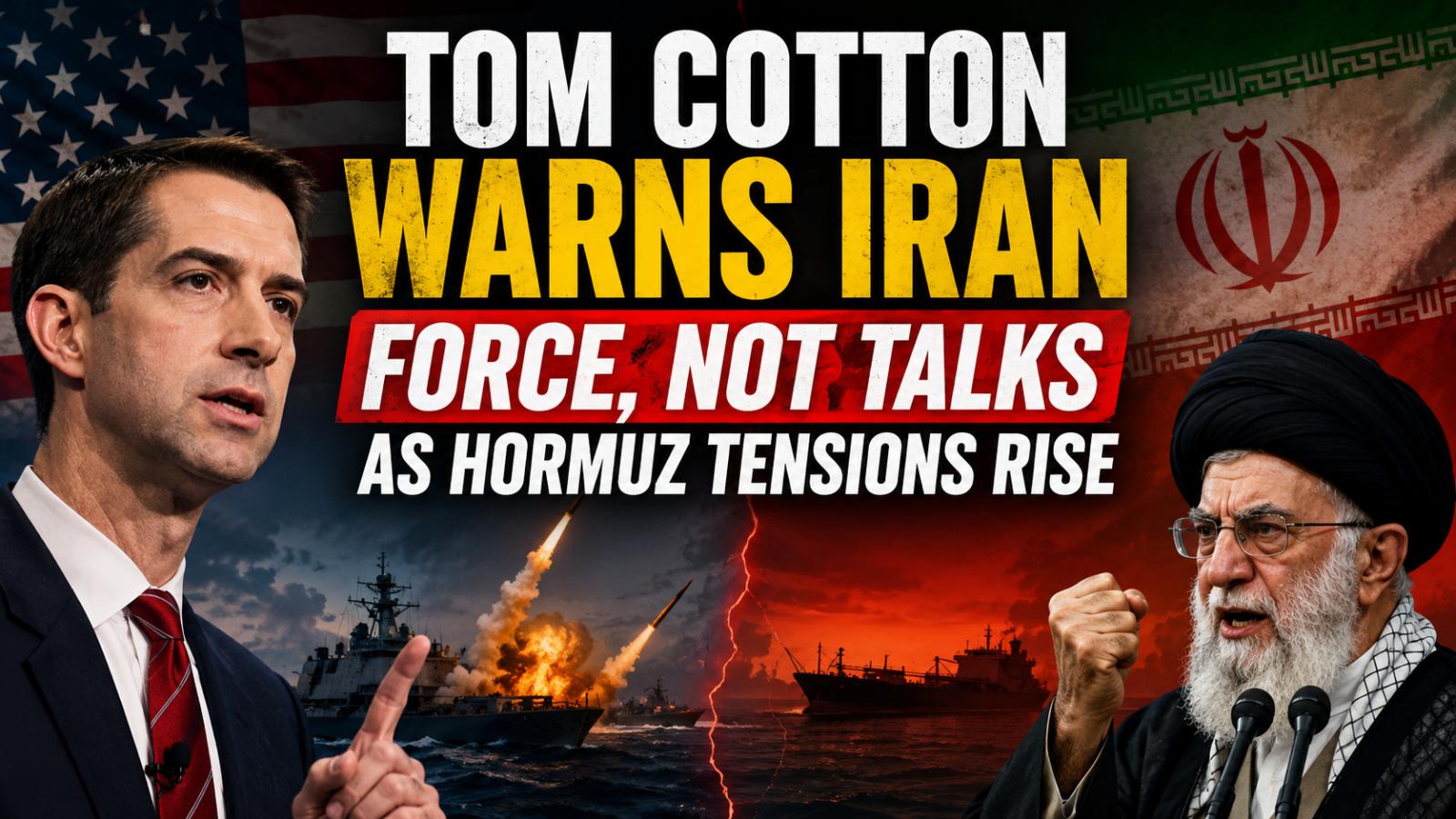
US Senator Tom Cotton has backed President Donald Trump’s military strategy against Iran, arguing that Tehran and its regional allies cannot be trusted to honour agreements. His remarks came as new US strikes and Iranian threats over the Strait of Hormuz pushed the conflict into a more dangerous phase.
Cotton Iran Remarks Target Tehran and Its Allies
Cotton issued the warning in a July 15 post on X. The Arkan
US Senator Tom Cotton has backed President Donald Trump’s military strategy against Iran, arguing that Tehran and its regional allies cannot be trusted to honour agreements. His remarks came as new US strikes and Iranian threats over the Strait of Hormuz pushed the conflict into a more dangerous phase.
Cotton Iran Remarks Target Tehran and Its Allies
Cotton issued the warning in a July 15 post on X. The Arkan
The United States carried out a new round of military strikes against Iranian targets on July 15, saying the operation was intended to protect commercial shipping passing through the Strait of Hormuz. The latest action adds to growing tensions between Washington and Tehran as one of the world's most important energy corridors remains under close international watch. According to US Central Command, the operation focused on military assets that it said posed a threat to vessels using the strategic waterway.
CENTCOM Iran operation targets maritime threats
US Central Command said the strikes began at 1900 GMT and were directed at Iranian military capabilities allegedly being used to threaten ships transiting through the Strait of Hormuz. In a statement posted on its official X account, CENTCOM said the objective was to safeguard freedom of navigation in the region. The Strait of Hormuz carries nearly 20 percent of global oil supplies, making security in the area a major concern for governments, shipping companies and energy markets worldwide.
The operation comes after weeks of heightened military activity across the Gulf region. Washington has repeatedly stated that maintaining open sea lanes remains a priority as regional tensions continue to increase.
Strait of Hormuz remains global energy focus
The Strait of Hormuz connects the Persian Gulf with the Arabian Sea and serves as one of the world's busiest maritime routes. Any disruption can quickly affect international oil prices, shipping costs and supply chains. Energy analysts continue to monitor developments closely as uncertainty grows over future military actions in the region.
Global governments have also urged restraint, warning that prolonged conflict could have significant economic consequences beyond the Middle East.
Iran blasts reported in Ahvaz and Chabahar
As the US operation unfolded, Iran's semi-official Mehr News Agency reported explosions in several locations. Blasts were heard in Ahvaz in southwestern Iran, although the exact source was not immediately confirmed. Mehr also reported three explosions in the southeastern port city of Chabahar.
Iranian authorities had not officially confirmed the cause of the explosions or released information regarding casualties at the time of reporting. Independent verification of the incidents also remained unavailable.
Iran Parliament says diplomacy will continue
Iranian Parliament Speaker Mohammad Bagher Ghalibaf said the country would continue diplomatic efforts while maintaining military preparedness. In an official statement, he said Iran had never sought war but must remain ready to defend its national security and strategic interests.
Ghalibaf accused the United States of attempting to weaken the Islamic Republic and described the current situation as an existential challenge. He argued that relying only on diplomacy or only on military action would be a strategic mistake, saying both approaches should remain available as the situation develops.
The latest developments highlight the fragile security environment surrounding the Strait of Hormuz. With military operations continuing and diplomatic channels still open, governments and energy markets are expected to monitor events closely. Information in this report is based on official statements from US Central Command, comments released by Iranian parliamentary leadership and reports published by Iran's Mehr News Agency.
Relevant internal links may include your Global News category, US News, Middle East coverage, Oil & Energy news, Geopolitics section, and previous articles covering the Strait of Hormuz, Iran-US relations, and CENTCOM operations.
The United States carried out a new round of military strikes against Iranian targets on July 15, saying the operation was intended to protect commercial shipping passing through the Strait of Hormuz. The latest action adds to growing tensions between Washington and Tehran as one of the world's most important energy corridors remains under close international watch. According to US Central Command, the operation focused on military assets that it said posed a threat to vessels using the strategic waterway.
CENTCOM Iran operation targets maritime threats
US Central Command said the strikes began at 1900 GMT and were directed at Iranian military capabilities allegedly being used to threaten ships transiting through the Strait of Hormuz. In a statement posted on its official X account, CENTCOM said the objective was to safeguard freedom of navigation in the region. The Strait of Hormuz carries nearly 20 percent of global oil supplies, making security in the area a major concern for governments, shipping companies and energy markets worldwide.
The operation comes after weeks of heightened military activity across the Gulf region. Washington has repeatedly stated that maintaining open sea lanes remains a priority as regional tensions continue to increase.
Strait of Hormuz remains global energy focus
The Strait of Hormuz connects the Persian Gulf with the Arabian Sea and serves as one of the world's busiest maritime routes. Any disruption can quickly affect international oil prices, shipping costs and supply chains. Energy analysts continue to monitor developments closely as uncertainty grows over future military actions in the region.
Global governments have also urged restraint, warning that prolonged conflict could have significant economic consequences beyond the Middle East.
Iran blasts reported in Ahvaz and Chabahar
As the US operation unfolded, Iran's semi-official Mehr News Agency reported explosions in several locations. Blasts were heard in Ahvaz in southwestern Iran, although the exact source was not immediately confirmed. Mehr also reported three explosions in the southeastern port city of Chabahar.
Iranian authorities had not officially confirmed the cause of the explosions or released information regarding casualties at the time of reporting. Independent verification of the incidents also remained unavailable.
Iran Parliament says diplomacy will continue
Iranian Parliament Speaker Mohammad Bagher Ghalibaf said the country would continue diplomatic efforts while maintaining military preparedness. In an official statement, he said Iran had never sought war but must remain ready to defend its national security and strategic interests.
Ghalibaf accused the United States of attempting to weaken the Islamic Republic and described the current situation as an existential challenge. He argued that relying only on diplomacy or only on military action would be a strategic mistake, saying both approaches should remain available as the situation develops.
The latest developments highlight the fragile security environment surrounding the Strait of Hormuz. With military operations continuing and diplomatic channels still open, governments and energy markets are expected to monitor events closely. Information in this report is based on official statements from US Central Command, comments released by Iranian parliamentary leadership and reports published by Iran's Mehr News Agency.
Relevant internal links may include your Global News category, US News, Middle East coverage, Oil & Energy news, Geopolitics section, and previous articles covering the Strait of Hormuz, Iran-US relations, and CENTCOM operations.
The United States has carried out another round of attacks on Iranian military infrastructure as fighting around the Strait of Hormuz threatens commercial shipping and regional stability. CENTCOM said its latest verified operation targeted coastal defence systems, missile facilities, drones and maritime capabilities across several Iranian locations.
US strikes Iran military targets across coastal regions
US Cen
The United States has carried out another round of attacks on Iranian military infrastructure as fighting around the Strait of Hormuz threatens commercial shipping and regional stability. CENTCOM said its latest verified operation targeted coastal defence systems, missile facilities, drones and maritime capabilities across several Iranian locations.
US strikes Iran military targets across coastal regions
US Cen
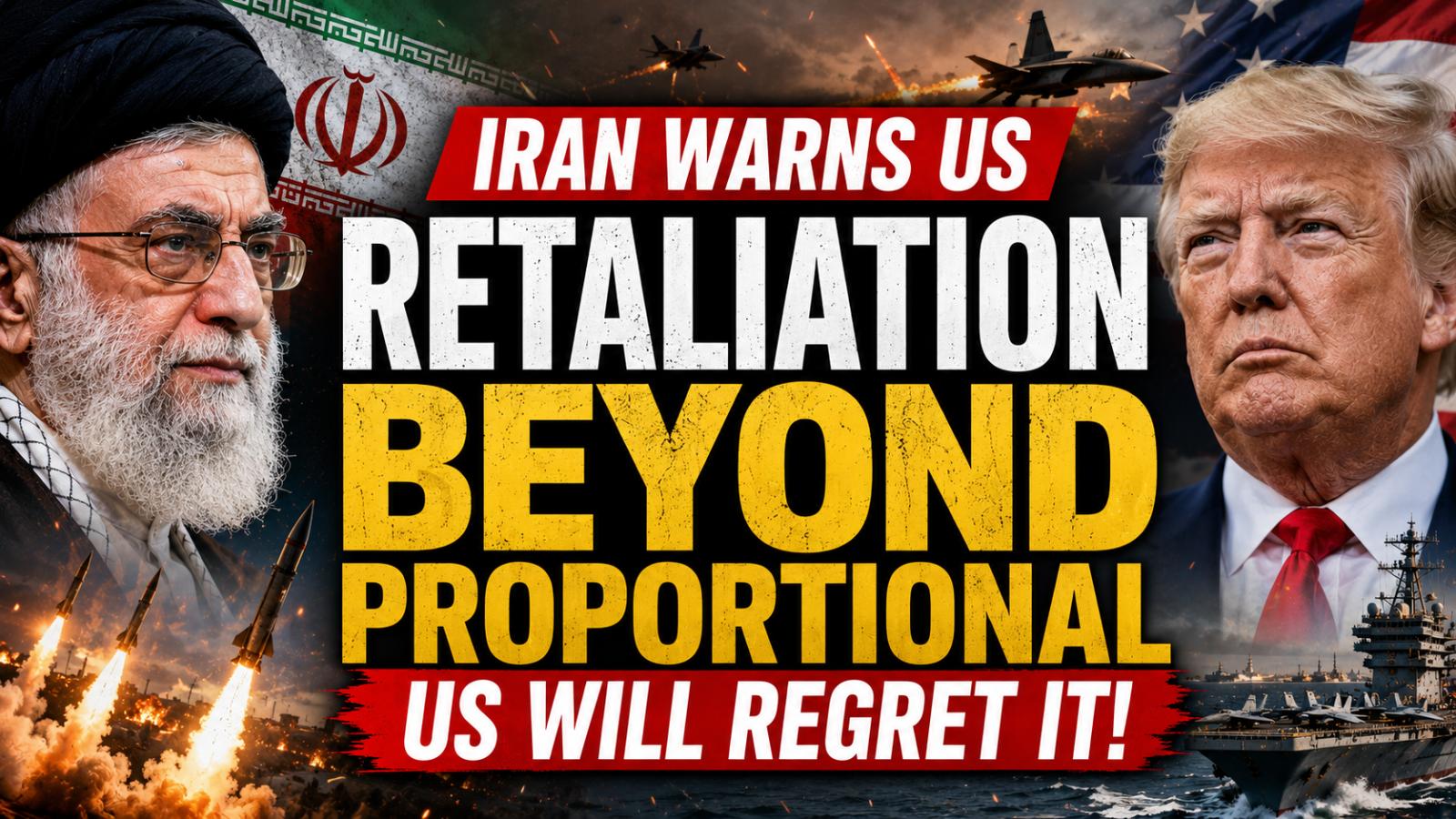
Iran Warns US of Retaliation Beyond Proportional Response
Iran has warned that its response to the latest US military strikes will not be limited to matching the scale of Washington’s attacks. Deputy Foreign Minister Kazem Gharibabadi said Tehran intends to impose consequences that will make the United States regret its actions, adding to fears of a wider confrontation across the Middle East.
Iran re
Iran Warns US of Retaliation Beyond Proportional Response
Iran has warned that its response to the latest US military strikes will not be limited to matching the scale of Washington’s attacks. Deputy Foreign Minister Kazem Gharibabadi said Tehran intends to impose consequences that will make the United States regret its actions, adding to fears of a wider confrontation across the Middle East.
Iran re
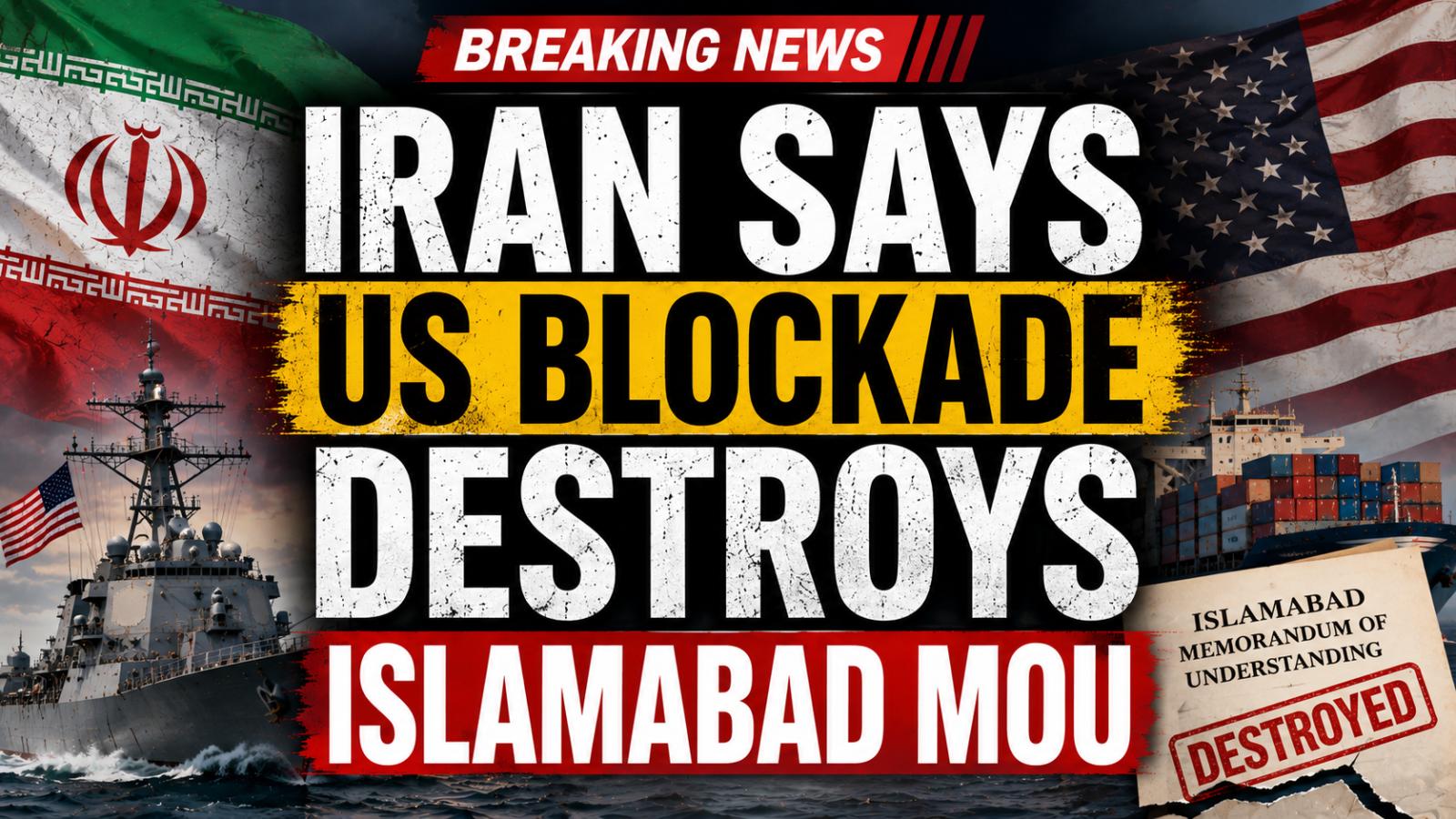
Iran Says US Naval Blockade Has Destroyed Islamabad MoU
Iran has declared that it no longer considers itself bound by the Islamabad Memorandum of Understanding after the United States resumed its naval blockade of Iranian ports. Deputy Foreign Minister Kazem Gharibabadi said Washington’s action had dismantled the fragile agreement designed to halt hostilities and support further peace negotiations.
I
Iran Says US Naval Blockade Has Destroyed Islamabad MoU
Iran has declared that it no longer considers itself bound by the Islamabad Memorandum of Understanding after the United States resumed its naval blockade of Iranian ports. Deputy Foreign Minister Kazem Gharibabadi said Washington’s action had dismantled the fragile agreement designed to halt hostilities and support further peace negotiations.
I
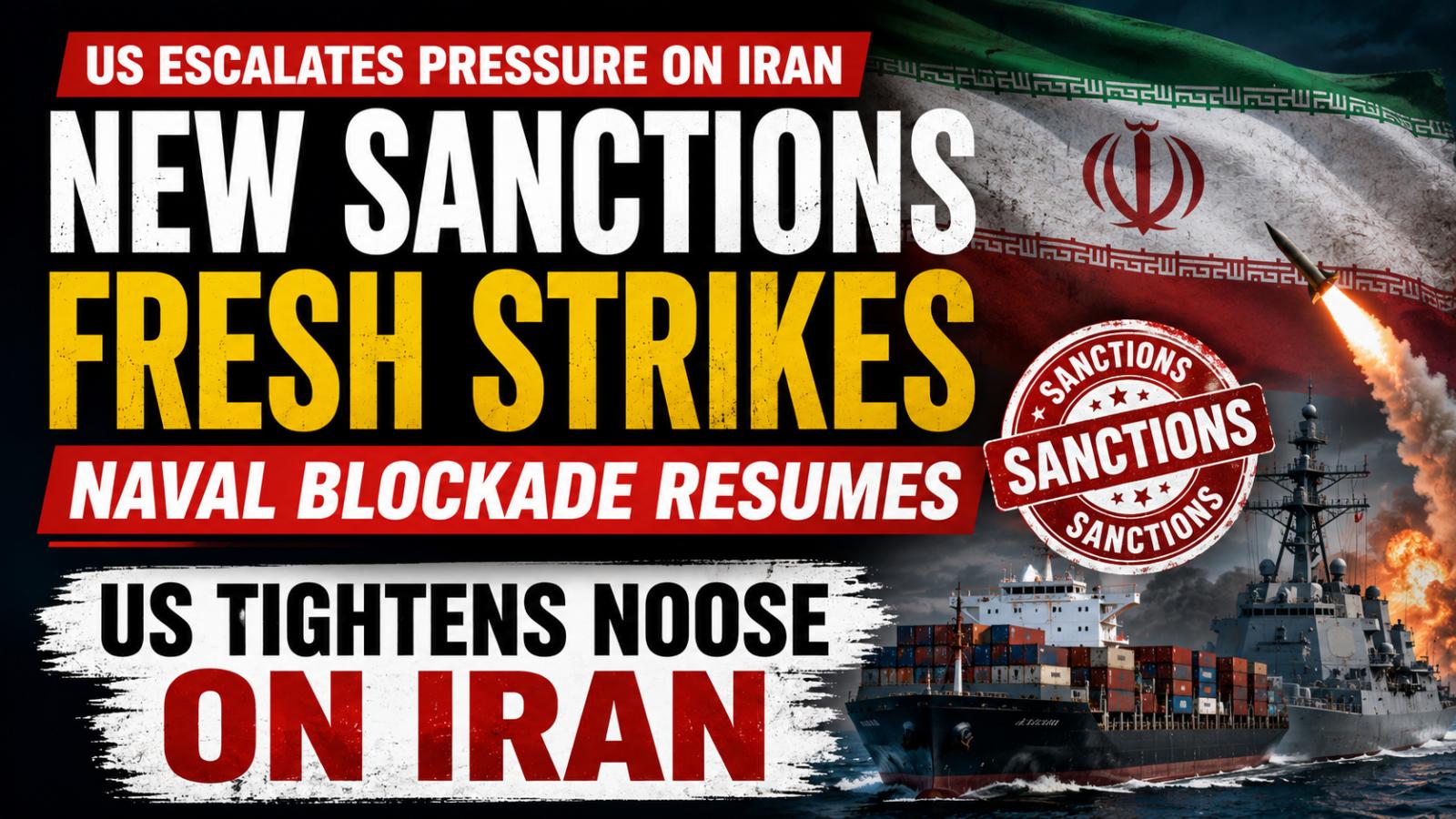
US Iran Sanctions Expand as Military Strikes Intensify
The United States imposed fresh Iran sanctions on Tuesday, July 14, targeting a major shipping and oil-trading network as American forces launched additional military strikes and moved to resume a naval blockade. The measures combine financial pressure with expanded military action amid a widening conflict involving commercial shipping and the Strait of Hormuz.
US Iran Sanctions Expand as Military Strikes Intensify
The United States imposed fresh Iran sanctions on Tuesday, July 14, targeting a major shipping and oil-trading network as American forces launched additional military strikes and moved to resume a naval blockade. The measures combine financial pressure with expanded military action amid a widening conflict involving commercial shipping and the Strait of Hormuz.
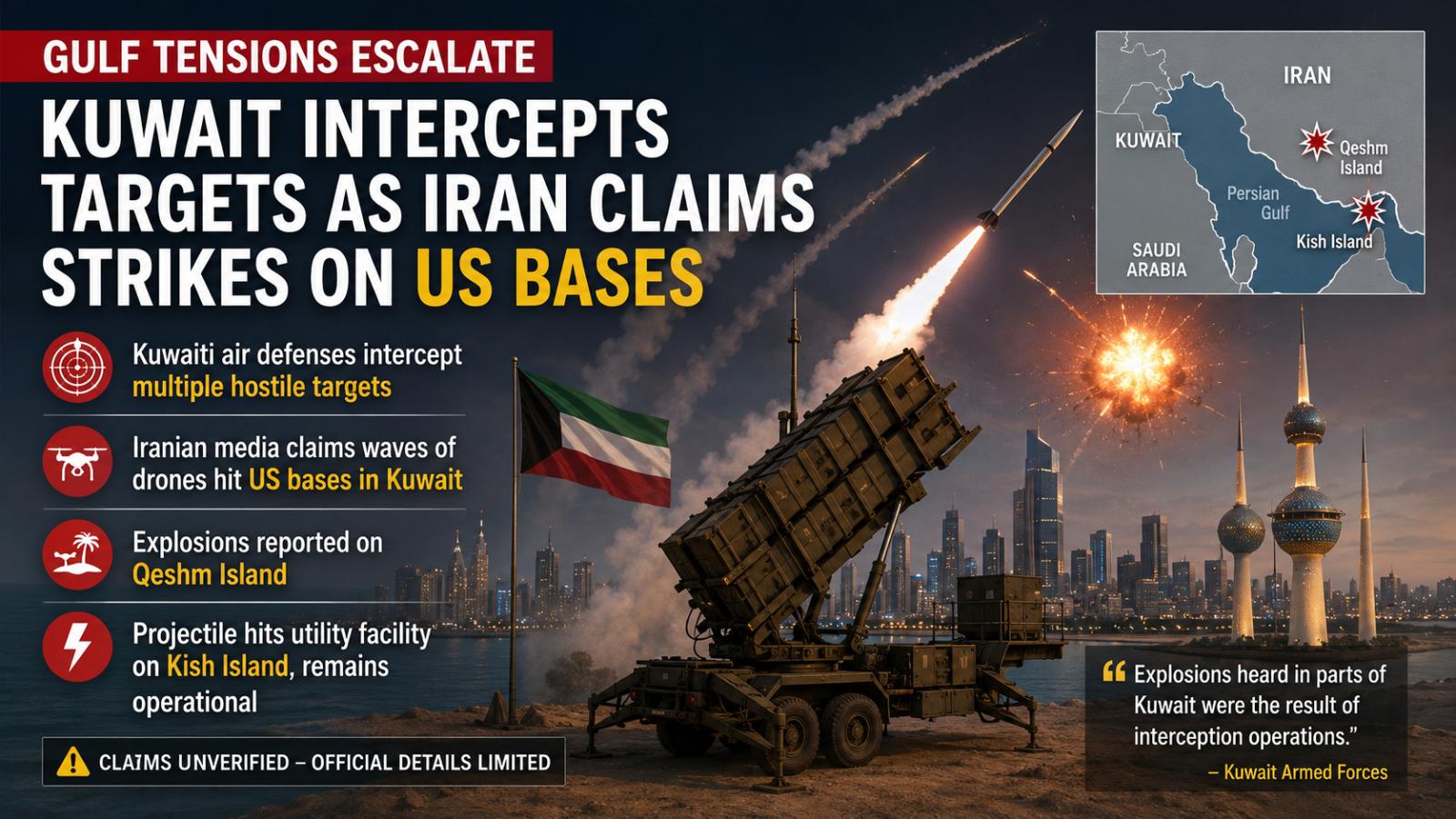
Iran claims strikes on US bases in Kuwait as Kuwaiti air defenses intercept several hostile targets. Iranian media also reported explosions on Qeshm and Kish islands, while the origins, damage and wider impact of the operations remained unverified.
Kuwait Intercepts Targets as Iran Claims Strikes on US Bases
Iran claims strikes on US bases in Kuwait as the Gulf state’s military reported intercepting multiple hostile targets
Iran claims strikes on US bases in Kuwait as Kuwaiti air defenses intercept several hostile targets. Iranian media also reported explosions on Qeshm and Kish islands, while the origins, damage and wider impact of the operations remained unverified.
Kuwait Intercepts Targets as Iran Claims Strikes on US Bases
Iran claims strikes on US bases in Kuwait as the Gulf state’s military reported intercepting multiple hostile targets