

















Rising Tensions: Kuwait, Bahrain, Saudi Arabia, UAE Targeted by Drones and Missiles
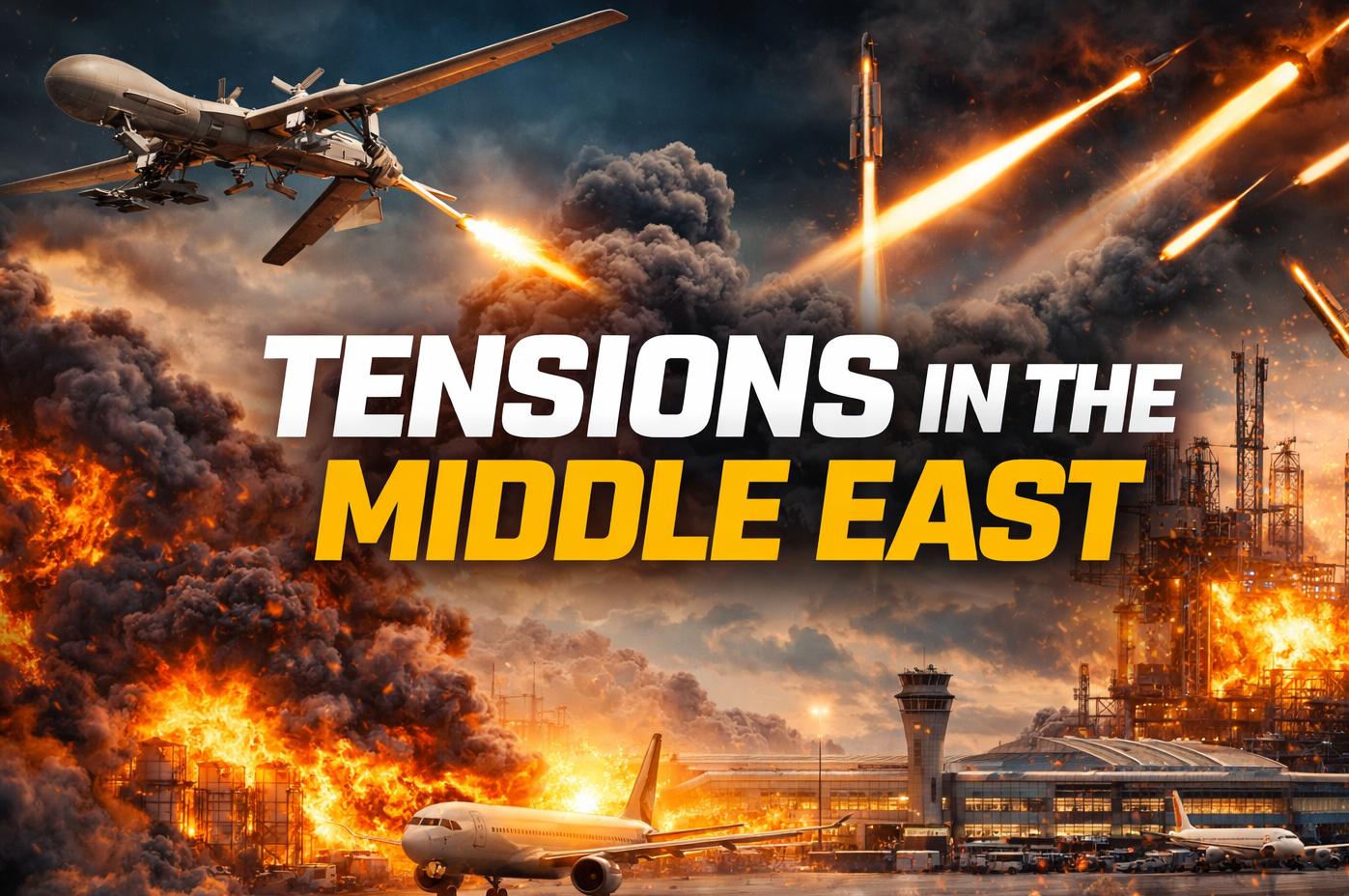
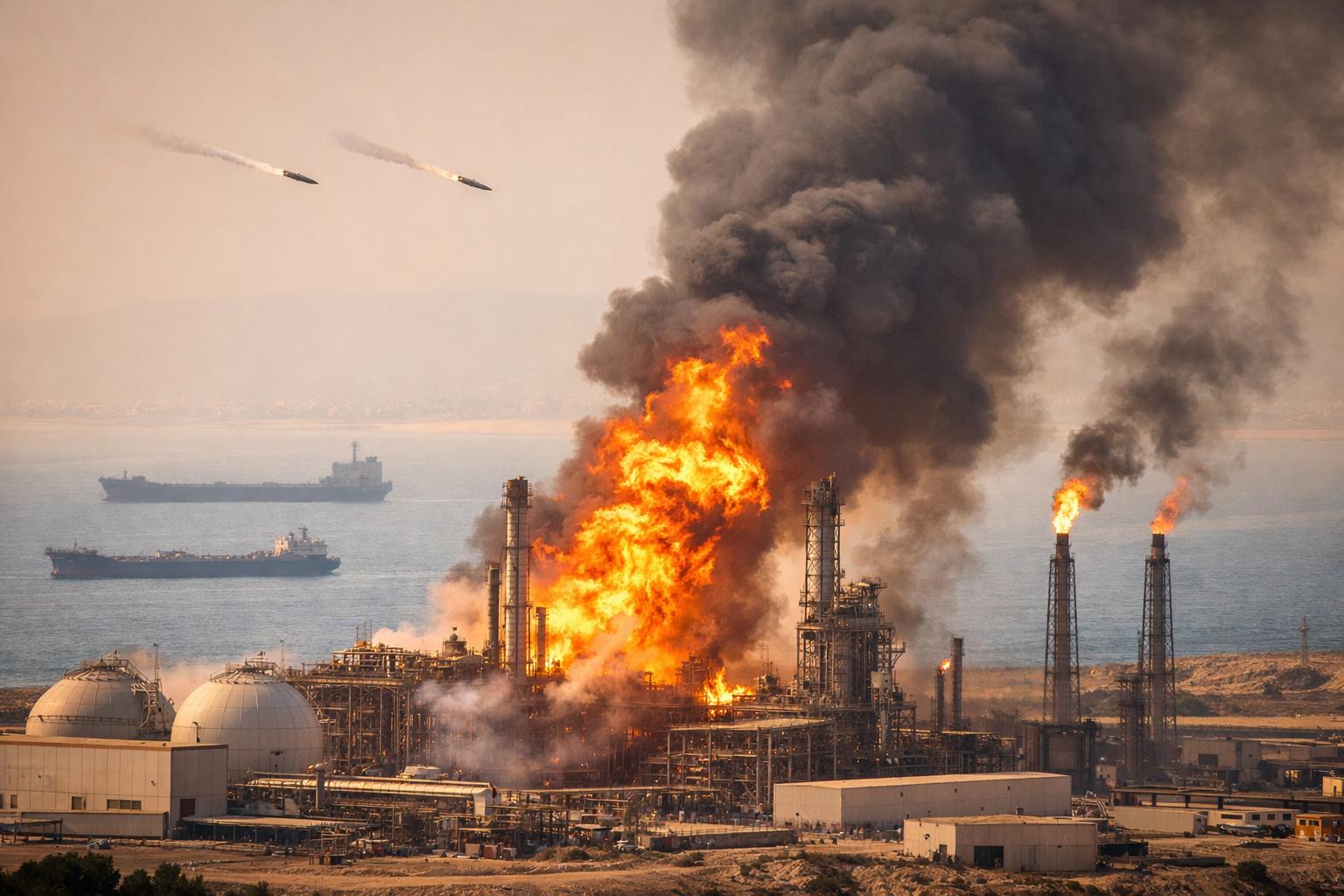
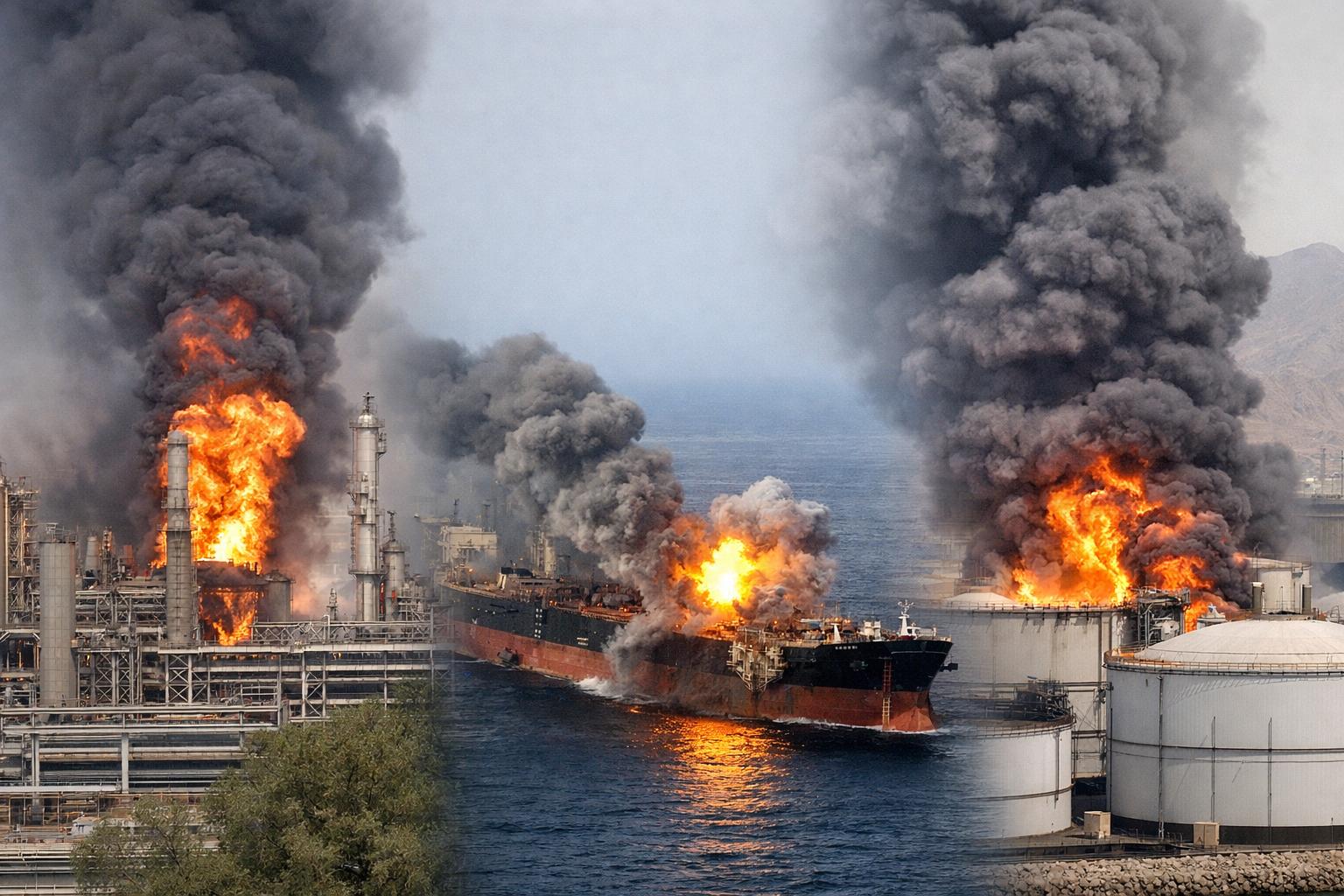
Tensions in the Middle East are escalating as multiple nations, including Kuwait, Bahrain, Saudi Arabia, and the UAE, face a series of drone and missile attacks. At Kuwait International Airport, a fuel tank was targeted, sparking a fire, but no casualties were reported. Bahrain also suffered a fire at a company facility due to missile strikes, allegedly launched by Iran. Kuwait’s military and other regional air defense systems have been actively intercepting these threats, with explosion so
Rising Tensions: Kuwait, Bahrain, Saudi Arabia, UAE Targeted by Drones and Missiles
Tensions in the Middle East are escalating as multiple nations, including Kuwait, Bahrain, Saudi Arabia, and the UAE, face a series of drone and missile attacks. At Kuwait International Airport, a fuel tank was targeted, sparking a fire, but no casualties were reported. Bahrain also suffered a fire at a company facility due to missile strikes, allegedly launched by Iran. Kuwait’s military and other regional air defense systems have been actively intercepting these threats, with explosion so
US–Israel–Iran War | Iran denies talks with US as Gulf tensions escalate and Strait deadline expires
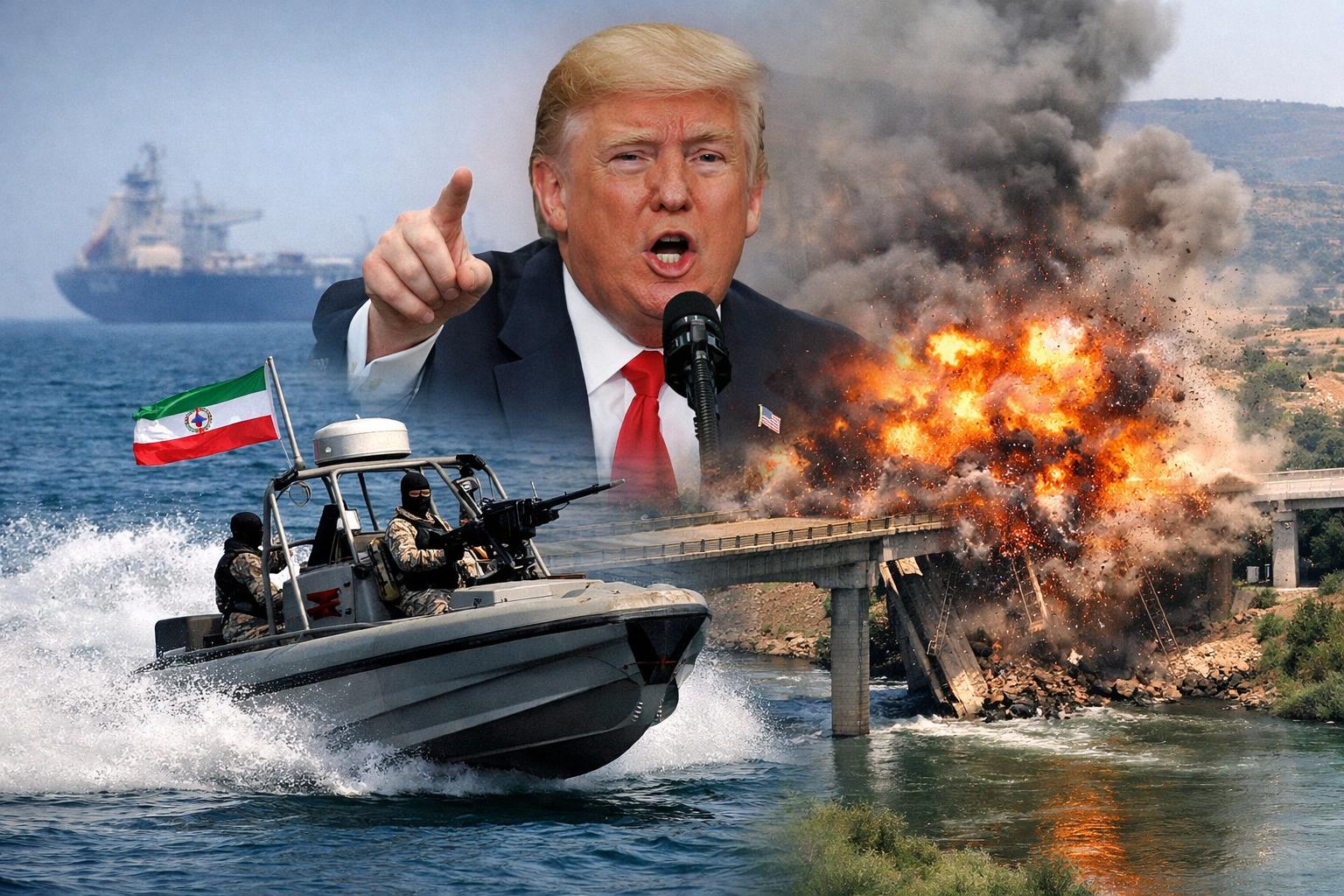
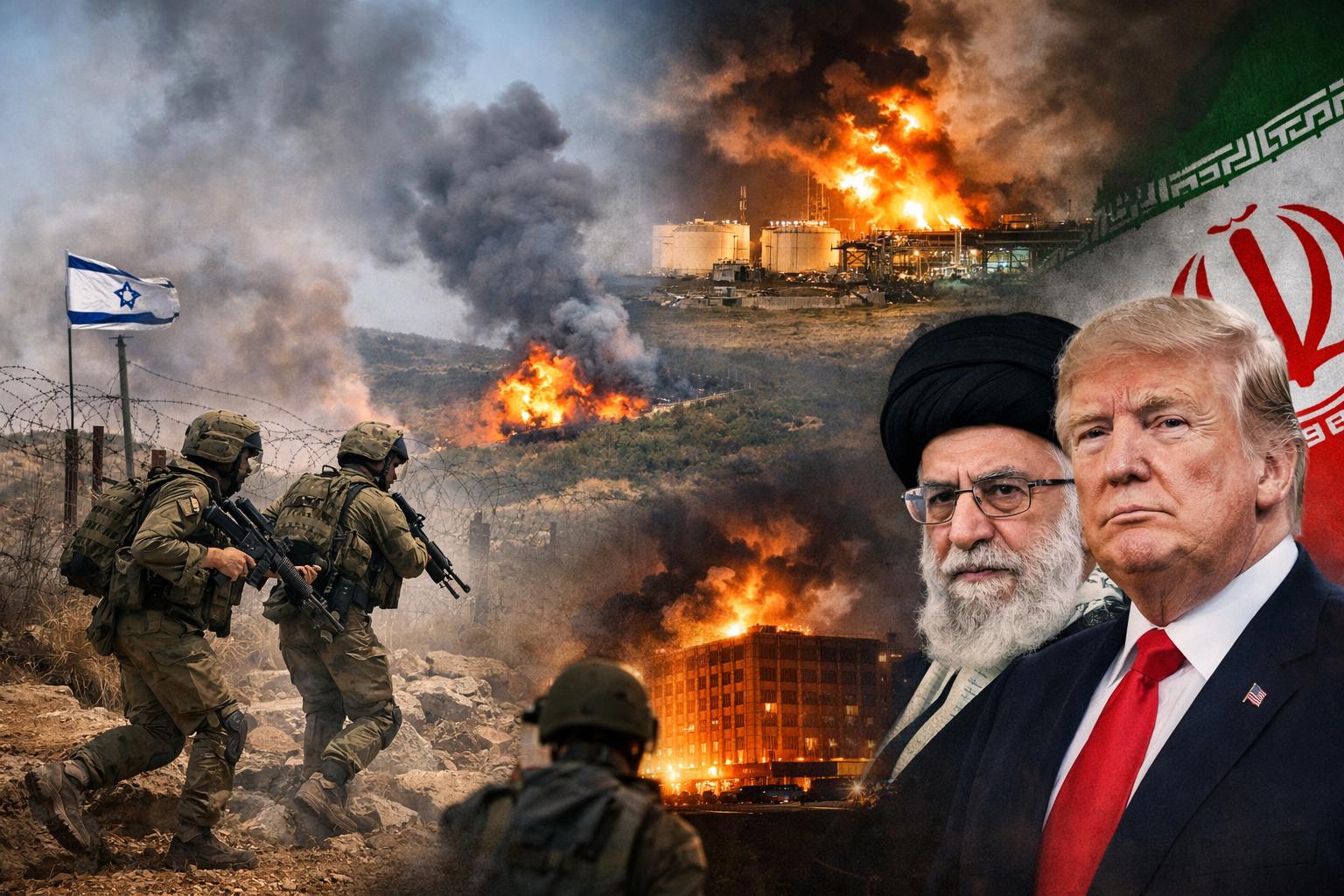
As the conflict in the Middle East enters its fourth week, Iran has firmly denied engaging in any negotiations or discussions with the United States since the hostilities began, contradicting recent remarks by US President Donald Trump. The Iranian government’s statement comes after Trump publicly claimed that Washington and Tehran had held “very good and productive conversations” aimed at achieving a comprehensive resolution to the ongoing crisis. Iranian officials dismissed the assertion
US–Israel–Iran War | Iran denies talks with US as Gulf tensions escalate and Strait deadline expires
As the conflict in the Middle East enters its fourth week, Iran has firmly denied engaging in any negotiations or discussions with the United States since the hostilities began, contradicting recent remarks by US President Donald Trump. The Iranian government’s statement comes after Trump publicly claimed that Washington and Tehran had held “very good and productive conversations” aimed at achieving a comprehensive resolution to the ongoing crisis. Iranian officials dismissed the assertion
US–Israel–Iran War | Iran alleges strike near Bushehr nuclear plant amid rising tensions
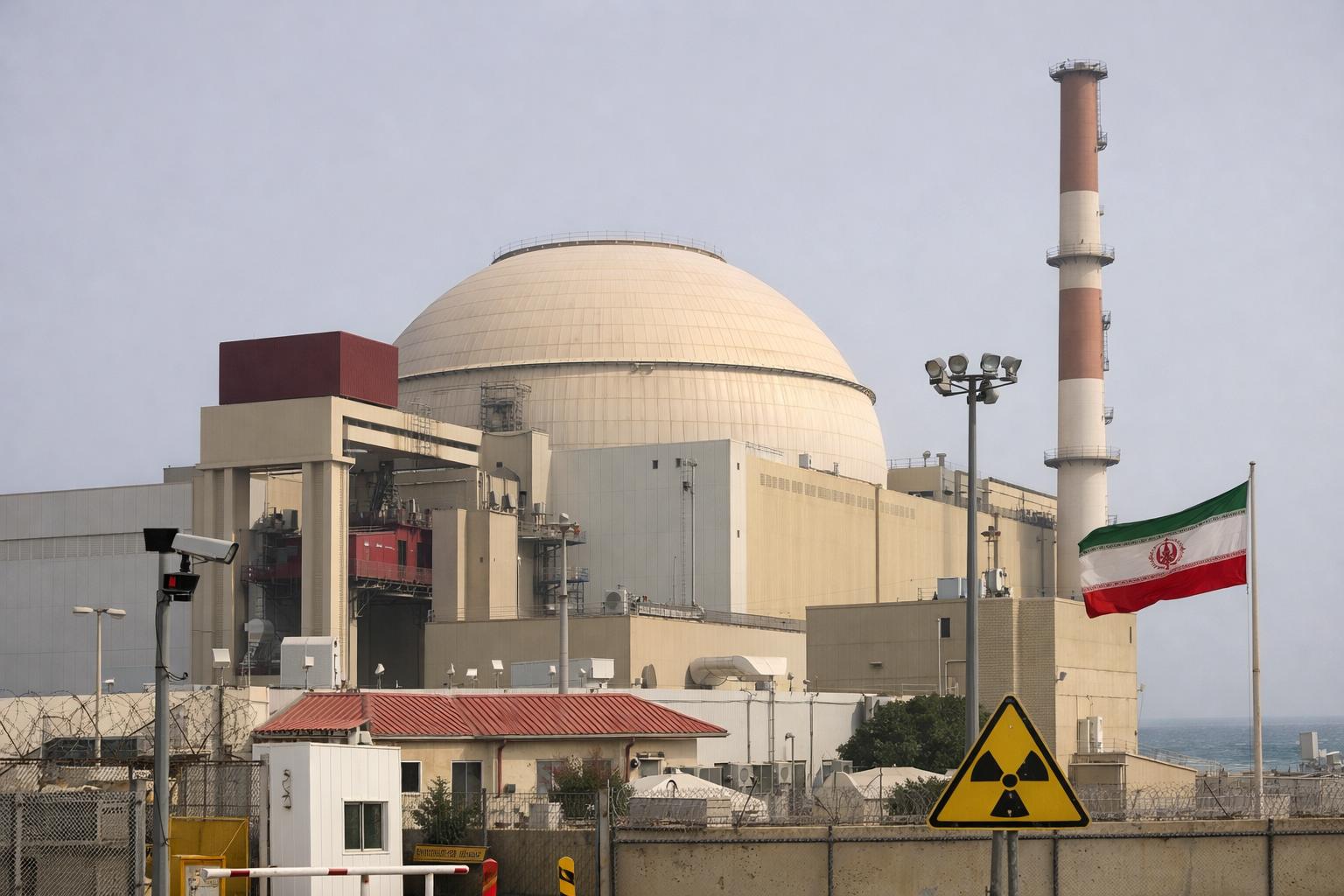
Iran’s Atomic Energy Organization on Tuesday reported that a projectile struck within the perimeter of the Bushehr nuclear power plant, alleging that the attack was carried out by the United States and Israel. In an official statement, the agency described the incident as part of continued aggression by what it termed the “American-Zionist enemy.” Authorities said the projectile landed inside the facility’s enclosure but confirmed that initial assessments found no financial losses, techn
US–Israel–Iran War | Iran alleges strike near Bushehr nuclear plant amid rising tensions
Iran’s Atomic Energy Organization on Tuesday reported that a projectile struck within the perimeter of the Bushehr nuclear power plant, alleging that the attack was carried out by the United States and Israel. In an official statement, the agency described the incident as part of continued aggression by what it termed the “American-Zionist enemy.” Authorities said the projectile landed inside the facility’s enclosure but confirmed that initial assessments found no financial losses, techn
Pentagon plans 82nd Airborne deployment amid rising Iran tensions
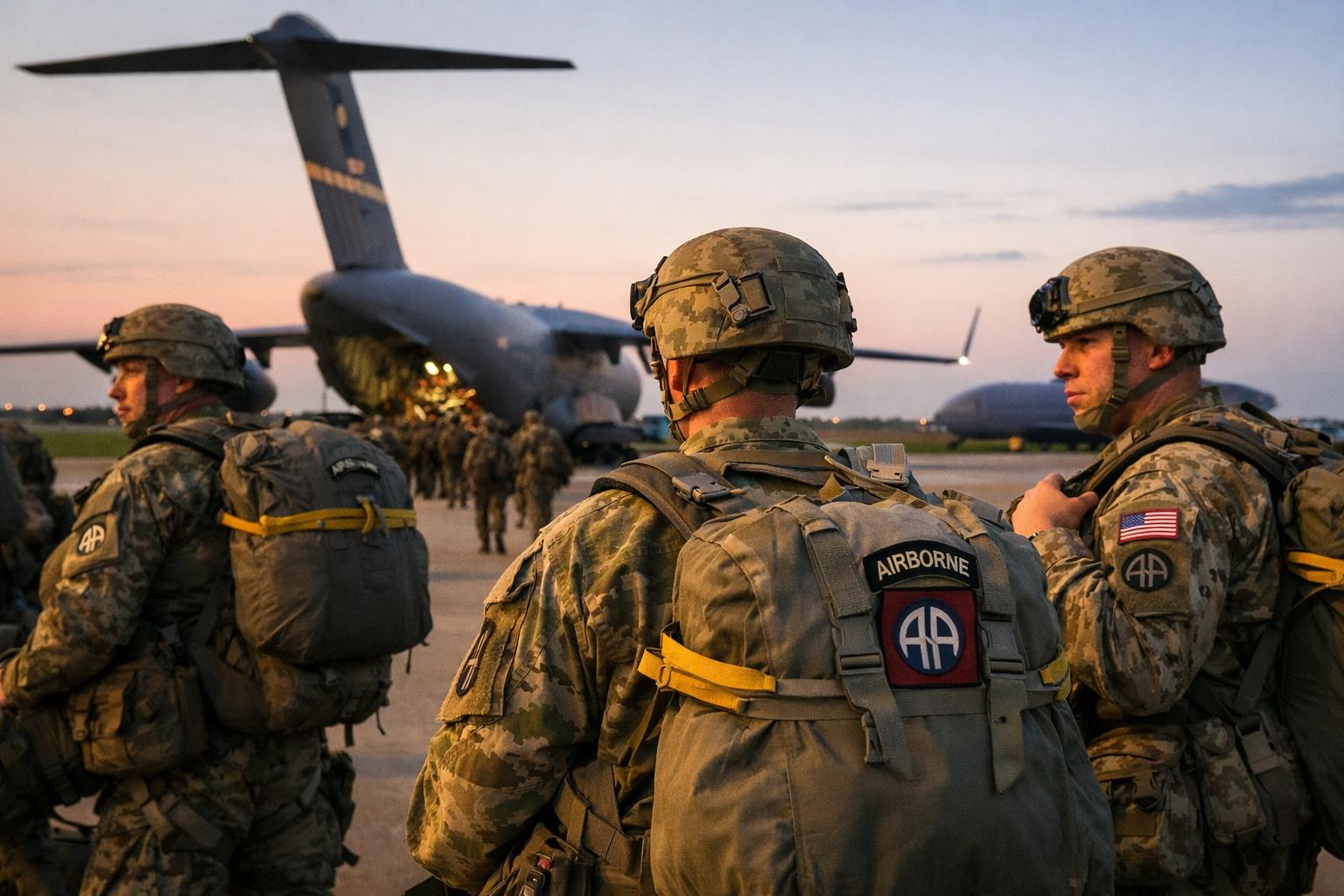
The Pentagon is preparing to deploy approximately 3,000 troops from the 82nd Airborne Division as part of Operation Epic Fury, according to officials familiar with the matter. A formal deployment order is expected to be issued shortly, outlining potential military options without confirming any immediate decision to send ground forces into Iran. The move reflects heightened vigilance within the United States military as tensions in the Middle East continue to evolve. Officials indicated that the planned deployment would include a combat brigade along with its headquarters unit, both of which are integral to rapid-response operations. The 82nd Airborne Division, based at Fort Bragg, is recognized for its ability to mobilize forces quickly, with a capability to deploy thousands of troops globally within 18 hours. The division has previously demonstrated even faster mobilization timelines, underscoring its strategic importance in crisis situations. The development follows the recent cancellation of a major training exercise involving the unit, a decision that had already sparked speculation about a possible redeployment to the Middle East. While authorities have emphasized that diplomatic channels with Tehran remain open, the preparation of troops signals growing concern in Washington over the trajectory of regional tensions. If executed, the deployment would mark a notable shift in US military posture, strengthening both deterrence and operational readiness in the region. The 82nd Airborne Division is trained to handle a wide range of missions, including securing critical infrastructure such as airfields, reinforcing US diplomatic facilities, and supporting emergency evacuations when necessary. Its headquarters unit plays a central role in planning and coordinating these complex operations. The potential move highlights the balance the administration is attempting to maintain between diplomatic engagement and military preparedness. While no final decision on ground operations has been announced, the readiness of rapid response forces suggests that the United States is positioning itself to respond swiftly to any escalation.
Pentagon plans 82nd Airborne deployment amid rising Iran tensions
The Pentagon is preparing to deploy approximately 3,000 troops from the 82nd Airborne Division as part of Operation Epic Fury, according to officials familiar with the matter. A formal deployment order is expected to be issued shortly, outlining potential military options without confirming any immediate decision to send ground forces into Iran. The move reflects heightened vigilance within the United States military as tensions in the Middle East continue to evolve. Officials indicated that the planned deployment would include a combat brigade along with its headquarters unit, both of which are integral to rapid-response operations. The 82nd Airborne Division, based at Fort Bragg, is recognized for its ability to mobilize forces quickly, with a capability to deploy thousands of troops globally within 18 hours. The division has previously demonstrated even faster mobilization timelines, underscoring its strategic importance in crisis situations. The development follows the recent cancellation of a major training exercise involving the unit, a decision that had already sparked speculation about a possible redeployment to the Middle East. While authorities have emphasized that diplomatic channels with Tehran remain open, the preparation of troops signals growing concern in Washington over the trajectory of regional tensions. If executed, the deployment would mark a notable shift in US military posture, strengthening both deterrence and operational readiness in the region. The 82nd Airborne Division is trained to handle a wide range of missions, including securing critical infrastructure such as airfields, reinforcing US diplomatic facilities, and supporting emergency evacuations when necessary. Its headquarters unit plays a central role in planning and coordinating these complex operations. The potential move highlights the balance the administration is attempting to maintain between diplomatic engagement and military preparedness. While no final decision on ground operations has been announced, the readiness of rapid response forces suggests that the United States is positioning itself to respond swiftly to any escalation.
Russian drone and missile strikes kill four in Ukraine amid renewed offensive
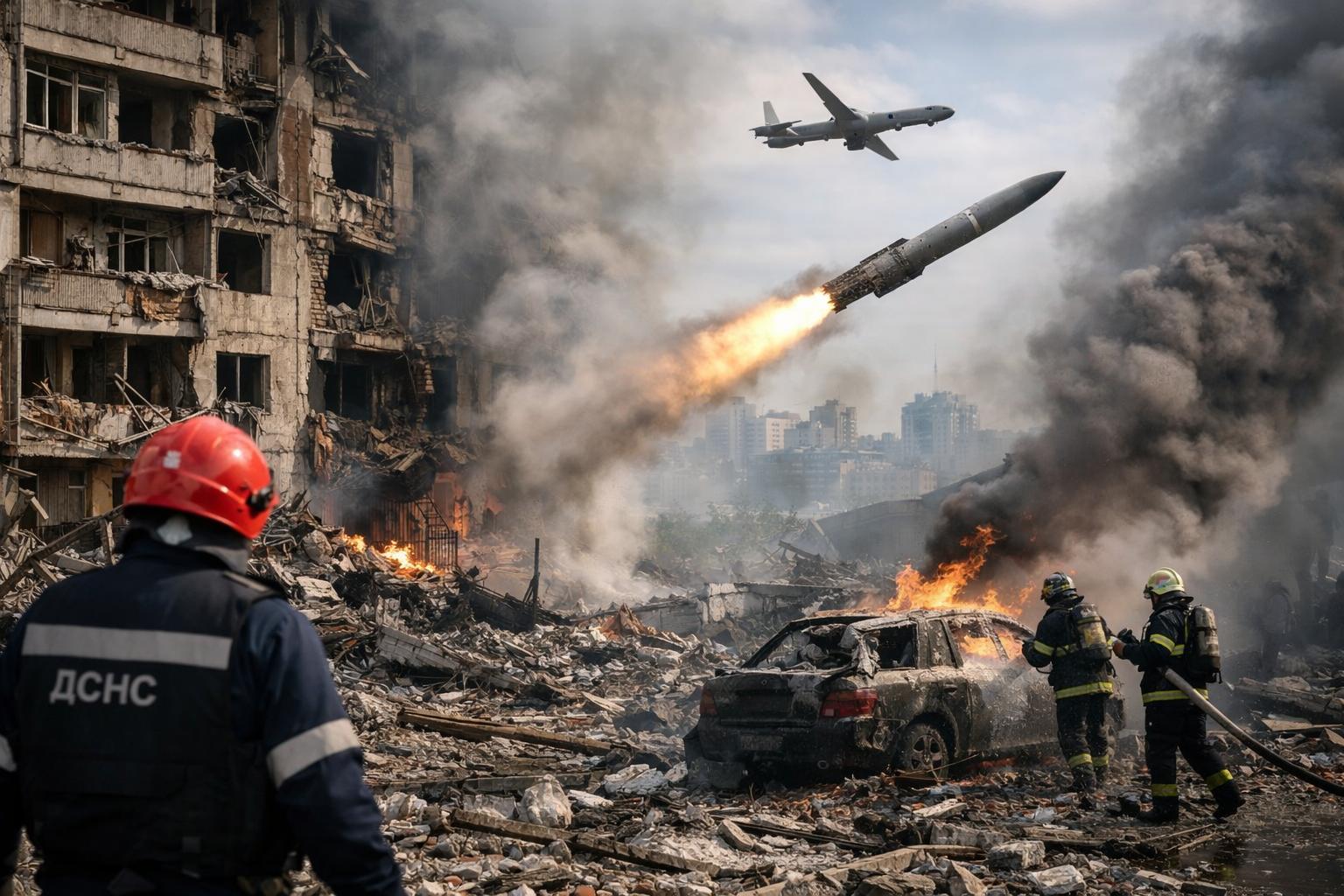
On March 24, 2026, Russia launched a large-scale drone and missile assault targeting civilian areas across Ukraine, killing at least four people and injuring more than 35, according to Ukrainian officials. The attack marked one of the most intense aerial offensives in recent weeks and coincided with increased Russian efforts along front-line positions, raising concerns about the start of a broader spring offensive. Ukraine’s air force reported that nearly 400 long-range drones were d
Russian drone and missile strikes kill four in Ukraine amid renewed offensive
On March 24, 2026, Russia launched a large-scale drone and missile assault targeting civilian areas across Ukraine, killing at least four people and injuring more than 35, according to Ukrainian officials. The attack marked one of the most intense aerial offensives in recent weeks and coincided with increased Russian efforts along front-line positions, raising concerns about the start of a broader spring offensive. Ukraine’s air force reported that nearly 400 long-range drones were d
North Korea declares nuclear status irreversible, Kim Jong Un warns of expansion
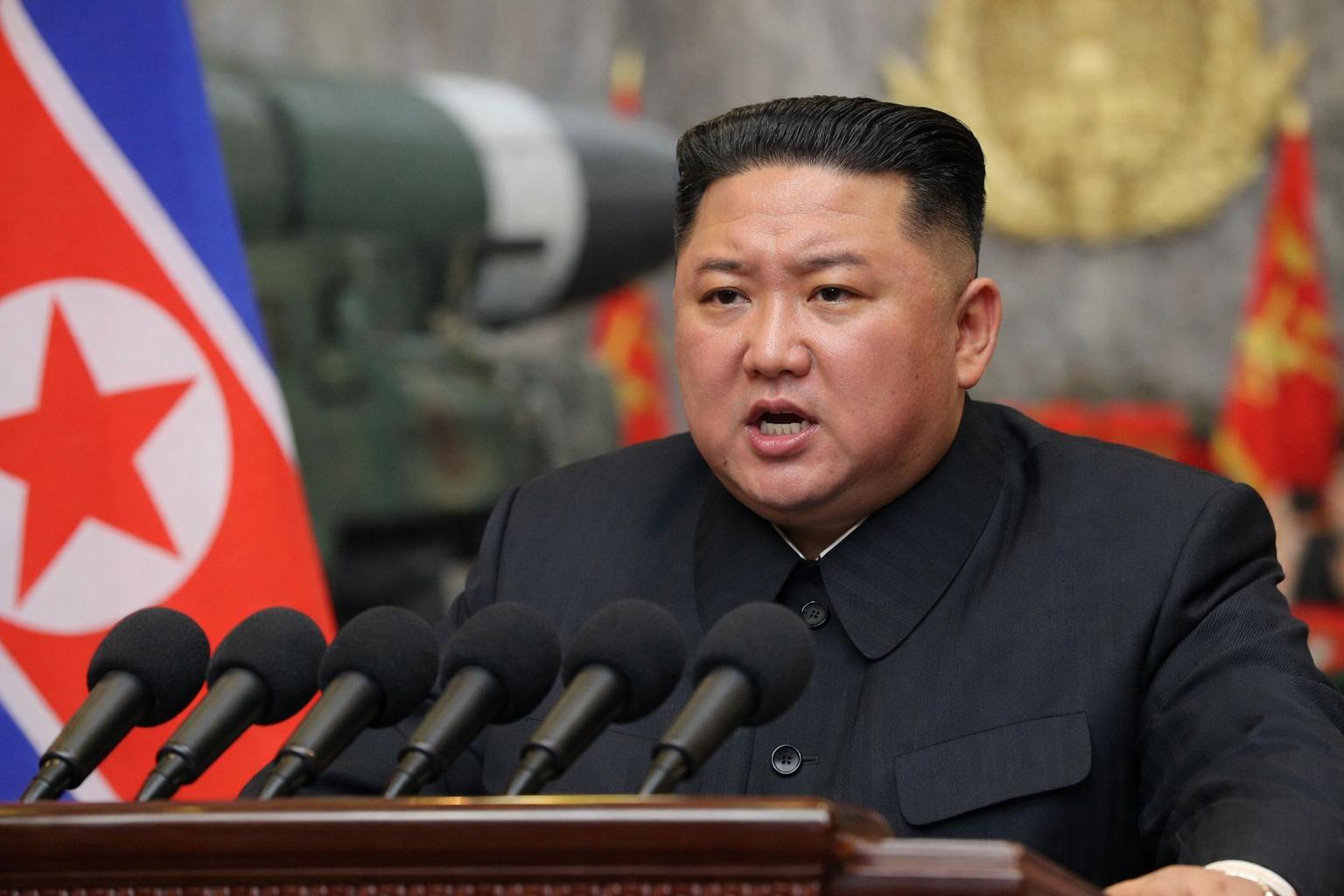
North Korean leader Kim Jong Un has reaffirmed that his country will not abandon its nuclear weapons programme, declaring its status as a nuclear-armed state “irreversible” in a strongly worded address delivered to the nation’s legislature. The remarks came shortly after his reappointment as chairman of the State Affairs Commission, consolidating his leadership over the country’s highest decision-making body. According to official reports released on March 24, Kim outlined an intensified strategy to expand North Korea’s nuclear arsenal, framing the move as essential for national security and constitutional responsibility. He stated that Pyongyang would continue to strengthen its nuclear deterrent and advance its capabilities in response to what he described as ongoing threats from hostile forces. The leader emphasized that maintaining and enhancing nuclear readiness was a key priority, ensuring that the country remains prepared to counter strategic challenges. Kim portrayed the development of nuclear weapons as a justified and defensive measure, asserting that the programme aligns with the country’s long-term security goals. He indicated that North Korea would pursue both quantitative and qualitative improvements in its nuclear forces, underscoring a commitment to sustained military advancement amid rising geopolitical tensions in the region. The speech also included sharp criticism of South Korea, which Kim labelled as the “most hostile state.” He warned that any perceived provocation or infringement on North Korea’s sovereignty would be met with a decisive and uncompromising response. The language used signalled a continuation of strained inter-Korean relations, with little indication of near-term diplomatic engagement. Kim’s address covered broader policy areas, including defence, economic priorities, and relations with the United States, though nuclear policy remained the central focus. His remarks highlight an ongoing shift toward a more assertive security posture, raising concerns among regional and global observers about the future trajectory of East Asia’s security environment.
North Korea declares nuclear status irreversible, Kim Jong Un warns of expansion
North Korean leader Kim Jong Un has reaffirmed that his country will not abandon its nuclear weapons programme, declaring its status as a nuclear-armed state “irreversible” in a strongly worded address delivered to the nation’s legislature. The remarks came shortly after his reappointment as chairman of the State Affairs Commission, consolidating his leadership over the country’s highest decision-making body. According to official reports released on March 24, Kim outlined an intensified strategy to expand North Korea’s nuclear arsenal, framing the move as essential for national security and constitutional responsibility. He stated that Pyongyang would continue to strengthen its nuclear deterrent and advance its capabilities in response to what he described as ongoing threats from hostile forces. The leader emphasized that maintaining and enhancing nuclear readiness was a key priority, ensuring that the country remains prepared to counter strategic challenges. Kim portrayed the development of nuclear weapons as a justified and defensive measure, asserting that the programme aligns with the country’s long-term security goals. He indicated that North Korea would pursue both quantitative and qualitative improvements in its nuclear forces, underscoring a commitment to sustained military advancement amid rising geopolitical tensions in the region. The speech also included sharp criticism of South Korea, which Kim labelled as the “most hostile state.” He warned that any perceived provocation or infringement on North Korea’s sovereignty would be met with a decisive and uncompromising response. The language used signalled a continuation of strained inter-Korean relations, with little indication of near-term diplomatic engagement. Kim’s address covered broader policy areas, including defence, economic priorities, and relations with the United States, though nuclear policy remained the central focus. His remarks highlight an ongoing shift toward a more assertive security posture, raising concerns among regional and global observers about the future trajectory of East Asia’s security environment.
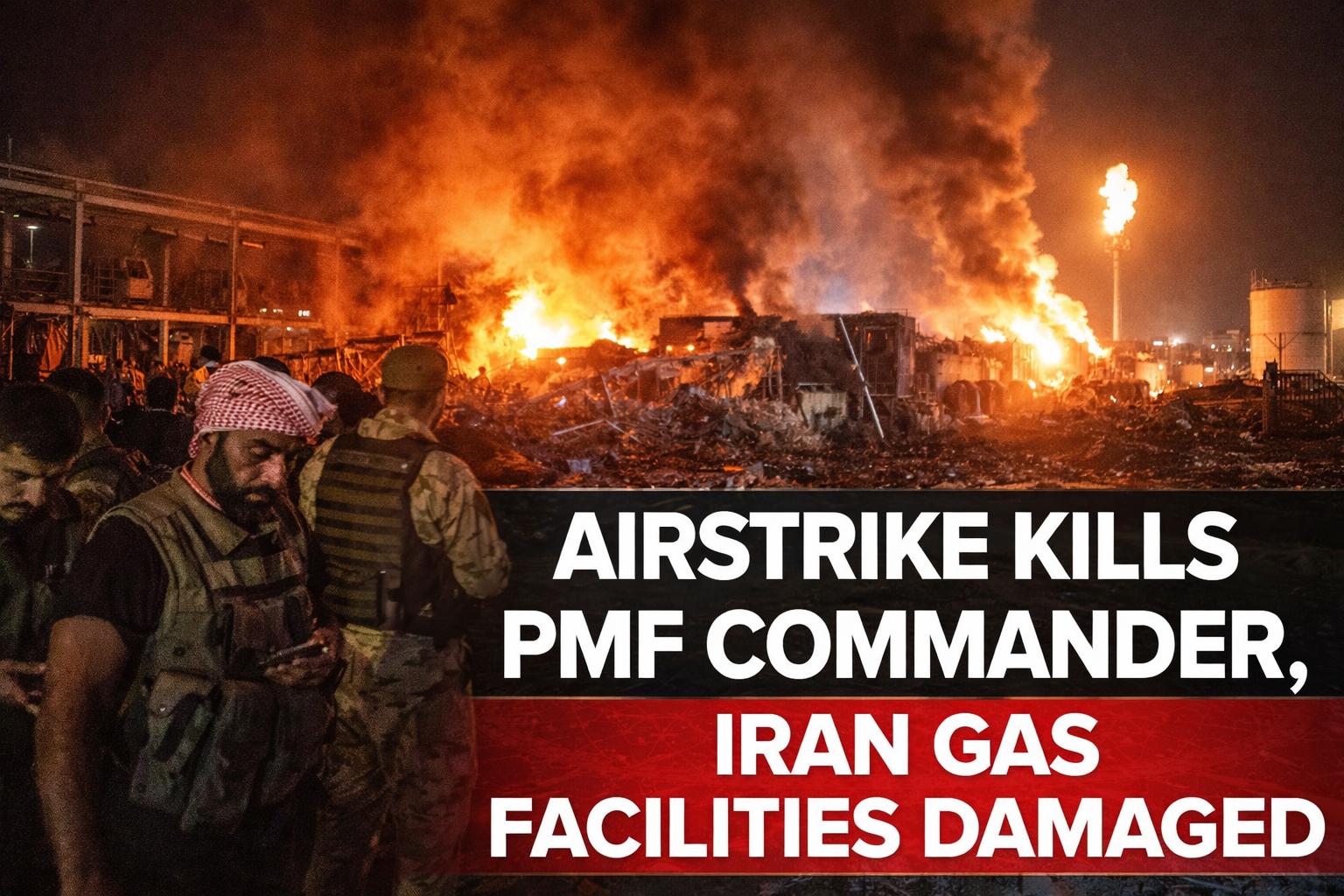
US–Israel–Iran War | Airstrike kills PMF commander in Iraq as Iran gas facilities suffer damage
An airstrike targeting a military installation used by the Popular Mobilisation Forces (PMF) in Iraq’s Anbar province has resulted in multiple fatalities, including a senior commander, amid rising regional tensions. The Iran-aligned group confirmed that Saad Duwai al-Baiji, its Anbar commander, was among those killed in the strike. Initial reports indicated that at least seven PMF fighters were killed and 13 others injured when the strike hit the base during what sources described
US–Israel–Iran War | Airstrike kills PMF commander in Iraq as Iran gas facilities suffer damage
An airstrike targeting a military installation used by the Popular Mobilisation Forces (PMF) in Iraq’s Anbar province has resulted in multiple fatalities, including a senior commander, amid rising regional tensions. The Iran-aligned group confirmed that Saad Duwai al-Baiji, its Anbar commander, was among those killed in the strike. Initial reports indicated that at least seven PMF fighters were killed and 13 others injured when the strike hit the base during what sources described
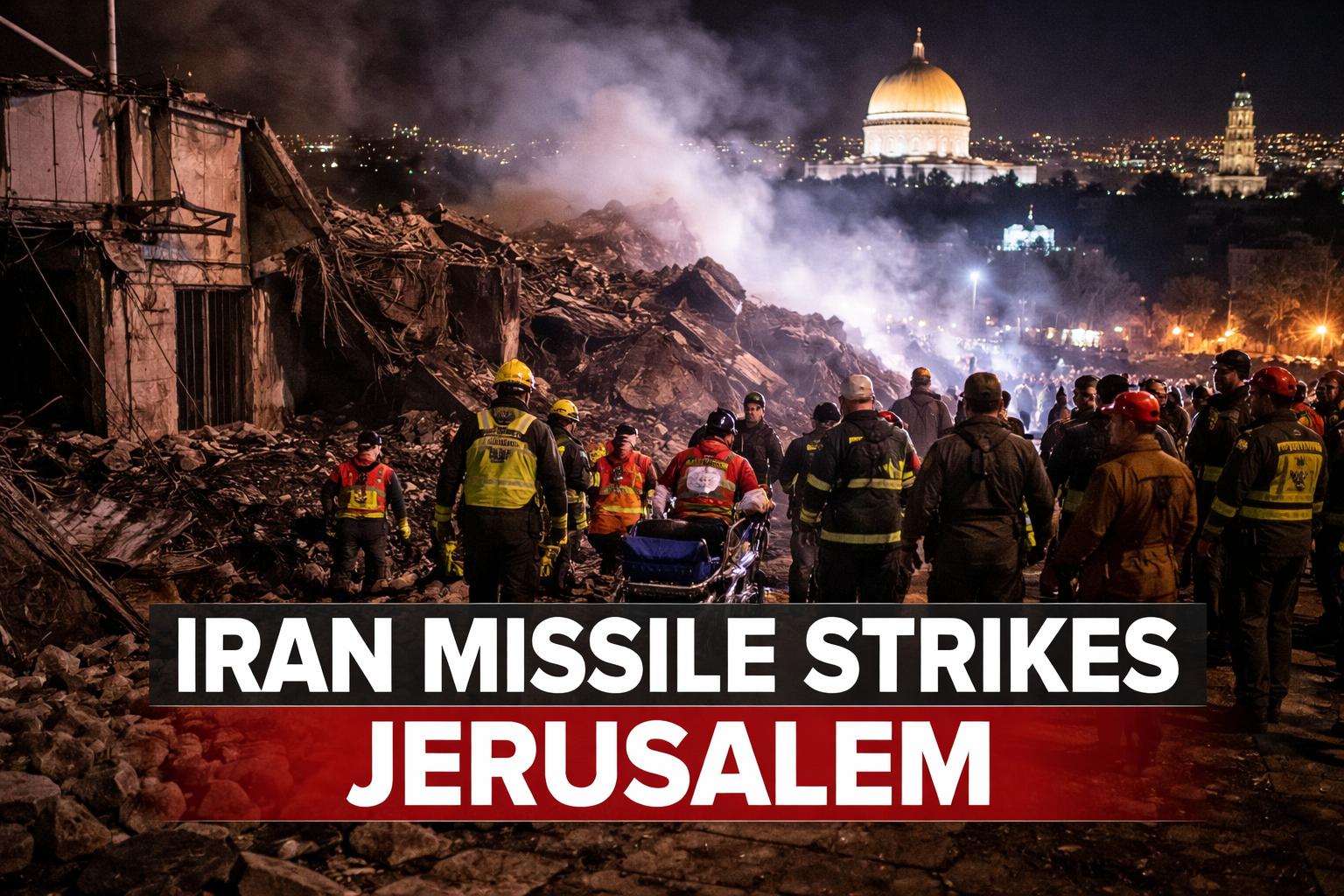
US–Israel–Iran War | Iran missile strikes trigger blast in Jerusalem as Israel deploys rescue teams
A loud explosion was reported over Jerusalem early Tuesday following two rounds of missile launches from Iran, heightening tensions in the already volatile Middle East region. Israeli authorities confirmed that air raid alerts were triggered across several areas, prompting residents to take shelter as defense systems responded to the incoming threats. According to the Israeli military, the missile launches occurred within a short interval, with the second wave followed by an audible
US–Israel–Iran War | Iran missile strikes trigger blast in Jerusalem as Israel deploys rescue teams
A loud explosion was reported over Jerusalem early Tuesday following two rounds of missile launches from Iran, heightening tensions in the already volatile Middle East region. Israeli authorities confirmed that air raid alerts were triggered across several areas, prompting residents to take shelter as defense systems responded to the incoming threats. According to the Israeli military, the missile launches occurred within a short interval, with the second wave followed by an audible
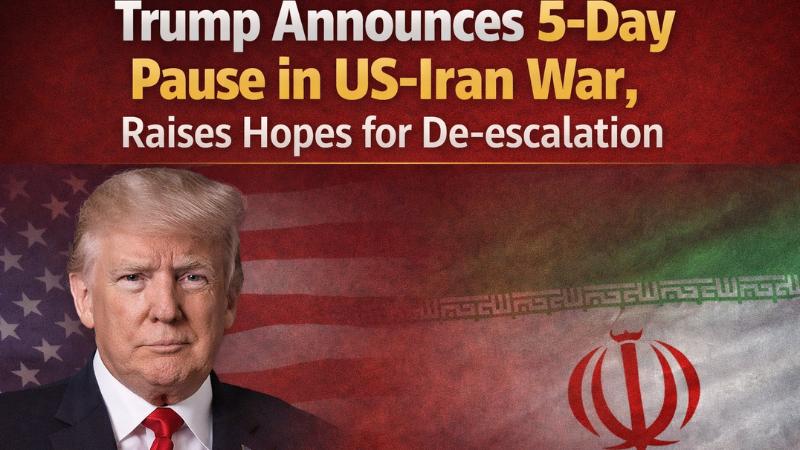
Trump Announces 5-Day Pause in US-Iran War, Raises Hopes for De-escalation
In a significant development that has captured the world's attention, President Donald J. Trump has announced a five-day pause in military actions between the United States and Iran. This decision follows a series of "productive discussions" between both nations, which Trump described as "detailed and constructive." These talks are being viewed as a potential opening for de-escalating tensions in the Middle East, a region that has been marked by ongoing conflict and instability. Tru
Trump Announces 5-Day Pause in US-Iran War, Raises Hopes for De-escalation
In a significant development that has captured the world's attention, President Donald J. Trump has announced a five-day pause in military actions between the United States and Iran. This decision follows a series of "productive discussions" between both nations, which Trump described as "detailed and constructive." These talks are being viewed as a potential opening for de-escalating tensions in the Middle East, a region that has been marked by ongoing conflict and instability. Tru
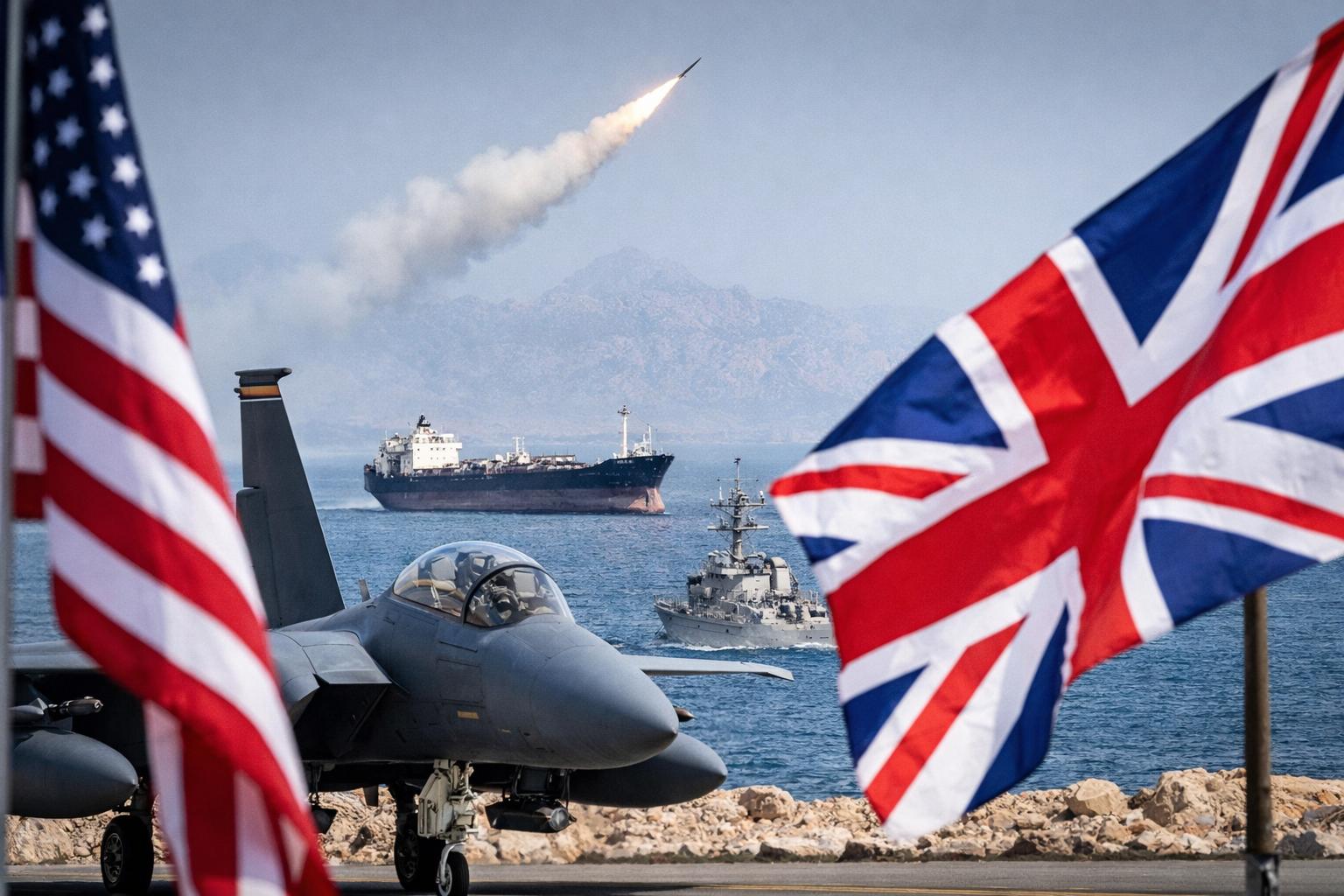
UK allows US to use bases for defensive strikes near Strait of Hormuz
The United Kingdom has approved an expanded role for United States forces to use British bases for defensive operations targeting Iranian-linked threats in the Strait of Hormuz, according to official statements following a ministerial meeting on Friday. The decision comes amid rising tensions in the Gulf region, where attacks on commercial shipping and critical infrastructure have raised concerns about global maritime security and economic stability. Previously, London had permitted US force
UK allows US to use bases for defensive strikes near Strait of Hormuz
The United Kingdom has approved an expanded role for United States forces to use British bases for defensive operations targeting Iranian-linked threats in the Strait of Hormuz, according to official statements following a ministerial meeting on Friday. The decision comes amid rising tensions in the Gulf region, where attacks on commercial shipping and critical infrastructure have raised concerns about global maritime security and economic stability. Previously, London had permitted US force
US–Israel–Iran War | Iran Claims Strategic Victory as Conflict with Israel and US Intensifies
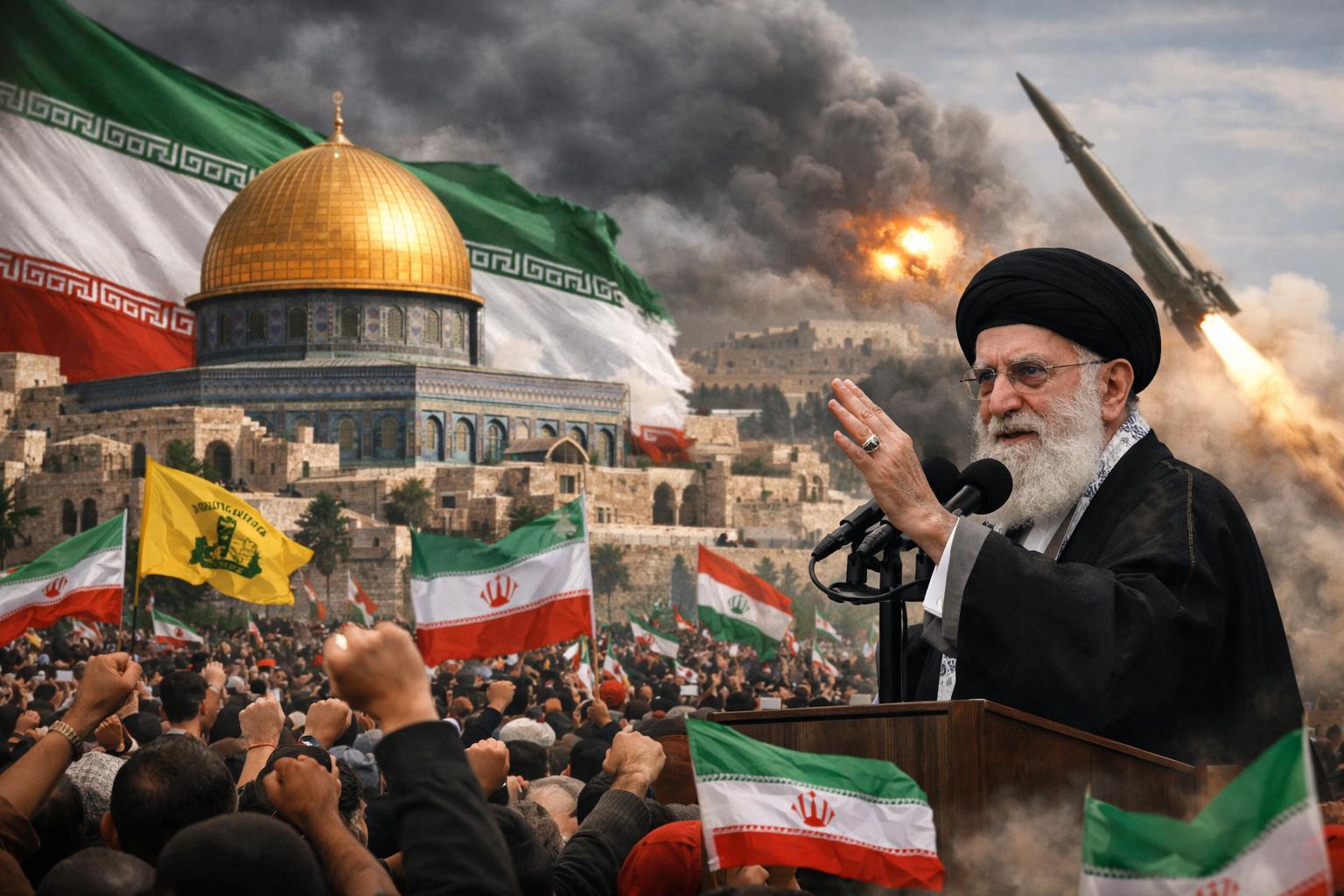
Iran’s Supreme Leader Mojtaba Khamenei has asserted that the country has delivered a significant strategic setback to its adversaries amid the ongoing conflict involving Israel and the United States. In a written message released on Friday to mark the Persian New Year, Khamenei emphasized that national unity and resilience among Iranians had played a decisive role in shifting the balance in the confrontation. The statement comes at a time when the conflict has entered its fourth week, casting a shadow over Nowruz celebrations across the country. Despite the subdued atmosphere, Khamenei highlighted what he described as unprecedented solidarity among citizens from diverse religious, cultural, and political backgrounds. He stated that this unity had left Iran’s opponents disoriented, leading them to issue what he characterized as inconsistent and contradictory statements. Tensions escalated further following a blast in Jerusalem’s Old City, which created a crater near several significant religious landmarks, including the Al-Aqsa Mosque, the Western Wall, and the Church of the Holy Sepulchre. Israeli authorities accused Tehran of being linked to what they described as an attack on sacred sites, intensifying already strained relations in the region. Khamenei rejected these allegations, firmly denying any involvement by Iran or its regional allies in reported incidents in Oman and Turkey during the conflict. He attributed such claims to what he called deliberate misinformation by Israel, referring to it as a “Zionist enemy” engaged in deceptive tactics. The current situation marks a period of heightened geopolitical tension, with both rhetoric and military developments continuing to evolve. Adding to the symbolic shift within Iran, large banners marking Nowruz have replaced images of former leader Ali Khamenei, who was reportedly killed at the outset of the conflict on February 28. As the crisis unfolds, Iran’s leadership continues to project confidence and defiance, framing the ongoing developments as a demonstration of national strength and unity in the face of external pressure.
US–Israel–Iran War | Iran Claims Strategic Victory as Conflict with Israel and US Intensifies
Iran’s Supreme Leader Mojtaba Khamenei has asserted that the country has delivered a significant strategic setback to its adversaries amid the ongoing conflict involving Israel and the United States. In a written message released on Friday to mark the Persian New Year, Khamenei emphasized that national unity and resilience among Iranians had played a decisive role in shifting the balance in the confrontation. The statement comes at a time when the conflict has entered its fourth week, casting a shadow over Nowruz celebrations across the country. Despite the subdued atmosphere, Khamenei highlighted what he described as unprecedented solidarity among citizens from diverse religious, cultural, and political backgrounds. He stated that this unity had left Iran’s opponents disoriented, leading them to issue what he characterized as inconsistent and contradictory statements. Tensions escalated further following a blast in Jerusalem’s Old City, which created a crater near several significant religious landmarks, including the Al-Aqsa Mosque, the Western Wall, and the Church of the Holy Sepulchre. Israeli authorities accused Tehran of being linked to what they described as an attack on sacred sites, intensifying already strained relations in the region. Khamenei rejected these allegations, firmly denying any involvement by Iran or its regional allies in reported incidents in Oman and Turkey during the conflict. He attributed such claims to what he called deliberate misinformation by Israel, referring to it as a “Zionist enemy” engaged in deceptive tactics. The current situation marks a period of heightened geopolitical tension, with both rhetoric and military developments continuing to evolve. Adding to the symbolic shift within Iran, large banners marking Nowruz have replaced images of former leader Ali Khamenei, who was reportedly killed at the outset of the conflict on February 28. As the crisis unfolds, Iran’s leadership continues to project confidence and defiance, framing the ongoing developments as a demonstration of national strength and unity in the face of external pressure.
US–Israel–Iran War | Strike on Iran gas infrastructure sparks oil surge and regional threats
A major escalation in regional tensions unfolded on Wednesday after Iran’s South Pars gas field was struck, marking the first reported attack on the country’s Gulf energy infrastructure amid the ongoing U.S.-Israel conflict. The incident prompted Tehran to issue a strong warning, stating it would retaliate by targeting oil and gas installations across the Gulf region, raising fears of a broader confrontation affecting global energy security. The strike had an immediate impact on internat
US–Israel–Iran War | Strike on Iran gas infrastructure sparks oil surge and regional threats
A major escalation in regional tensions unfolded on Wednesday after Iran’s South Pars gas field was struck, marking the first reported attack on the country’s Gulf energy infrastructure amid the ongoing U.S.-Israel conflict. The incident prompted Tehran to issue a strong warning, stating it would retaliate by targeting oil and gas installations across the Gulf region, raising fears of a broader confrontation affecting global energy security. The strike had an immediate impact on internat
US–Israel–Iran War | Iran confirms intelligence chief killed in Israeli airstrike amid rising tensions
Iranian President Masoud Pezeshkian has confirmed the death of Intelligence Minister Esmail Khatib following an Israeli airstrike in Tehran, describing the incident as a “cowardly assassination” that has intensified tensions in an already volatile Middle East conflict. The confirmation came on Wednesday,
US–Israel–Iran War | Iran confirms intelligence chief killed in Israeli airstrike amid rising tensions
Iranian President Masoud Pezeshkian has confirmed the death of Intelligence Minister Esmail Khatib following an Israeli airstrike in Tehran, describing the incident as a “cowardly assassination” that has intensified tensions in an already volatile Middle East conflict. The confirmation came on Wednesday,
90 Ships Cross Hormuz as Iran Continues Oil Exports Amid War, Despite Challenges
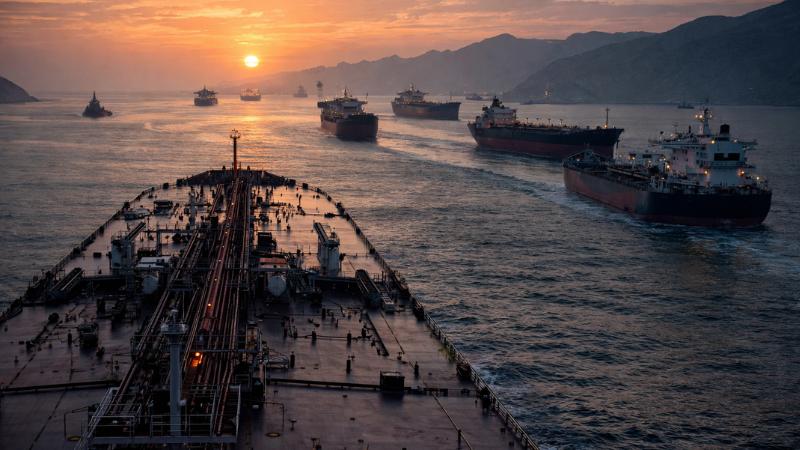
In the midst of the ongoing war, Iran has continued to export millions of barrels of oil, with about 90 ships, including oil tankers, crossing the critical Strait of Hormuz between March 1 and 15, 2026. Despite the waterway being effectively "closed" to most traffic due to the conflict, Iran has managed to keep its oil exports flowing, benefitting from its control over this vital chokepoint. According to maritime traffic data from Lloyd's List Intelligence, Iran has relied on a mix
90 Ships Cross Hormuz as Iran Continues Oil Exports Amid War, Despite Challenges
In the midst of the ongoing war, Iran has continued to export millions of barrels of oil, with about 90 ships, including oil tankers, crossing the critical Strait of Hormuz between March 1 and 15, 2026. Despite the waterway being effectively "closed" to most traffic due to the conflict, Iran has managed to keep its oil exports flowing, benefitting from its control over this vital chokepoint. According to maritime traffic data from Lloyd's List Intelligence, Iran has relied on a mix
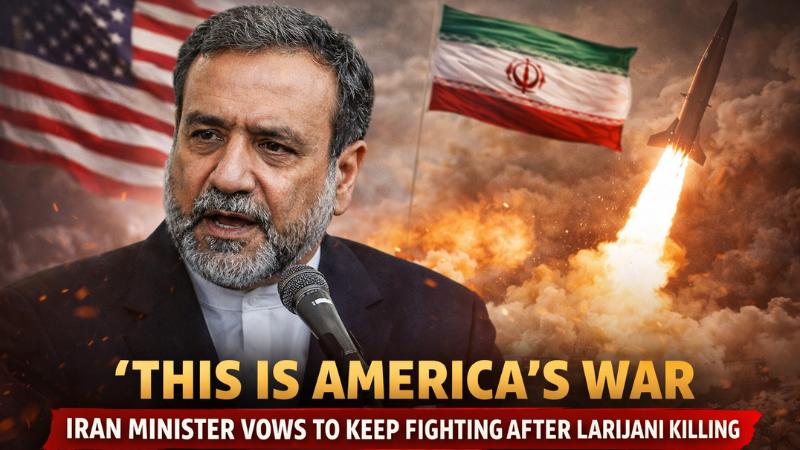
Iran Vows to Keep Fighting After Larijani Killing, Holds US and Israel Responsible
Iran has vowed to continue its fight against the United States and Israel following the killing of Ali Larijani, one of Iran's most influential political figures, in an Israeli airstrike. Iranian foreign minister Syed Abbas Araghchi made a bold statement, declaring that Iran’s political and economic structure would remain intact despite the loss of Larijani, the head of the Supreme National Security Council, who was killed alongside his family members and bodyguards near Tehran. I
Iran Vows to Keep Fighting After Larijani Killing, Holds US and Israel Responsible
Iran has vowed to continue its fight against the United States and Israel following the killing of Ali Larijani, one of Iran's most influential political figures, in an Israeli airstrike. Iranian foreign minister Syed Abbas Araghchi made a bold statement, declaring that Iran’s political and economic structure would remain intact despite the loss of Larijani, the head of the Supreme National Security Council, who was killed alongside his family members and bodyguards near Tehran. I
US–Israel–Iran War | West Asia conflict intensifies as Israel expands operations and tensions spread
The conflict in West Asia has entered its third week, with hostilities intensifying across multiple fronts and raising concerns about a broader regional escalation. Israeli President Isaac Herzog called on European nations to support Israel’s ongoing campaign against Hezbollah, as Israeli forces continued ground operations in southern Lebanon. The situation in Lebanon deteriorated further after Hezbollah launched attacks on Israel earlier this month, following the reported killing of Iran’s
US–Israel–Iran War | West Asia conflict intensifies as Israel expands operations and tensions spread
The conflict in West Asia has entered its third week, with hostilities intensifying across multiple fronts and raising concerns about a broader regional escalation. Israeli President Isaac Herzog called on European nations to support Israel’s ongoing campaign against Hezbollah, as Israeli forces continued ground operations in southern Lebanon. The situation in Lebanon deteriorated further after Hezbollah launched attacks on Israel earlier this month, following the reported killing of Iran’s
US–Israel–Iran War | Iran claims missile strike near Netanyahu office amid rising Israel tensions
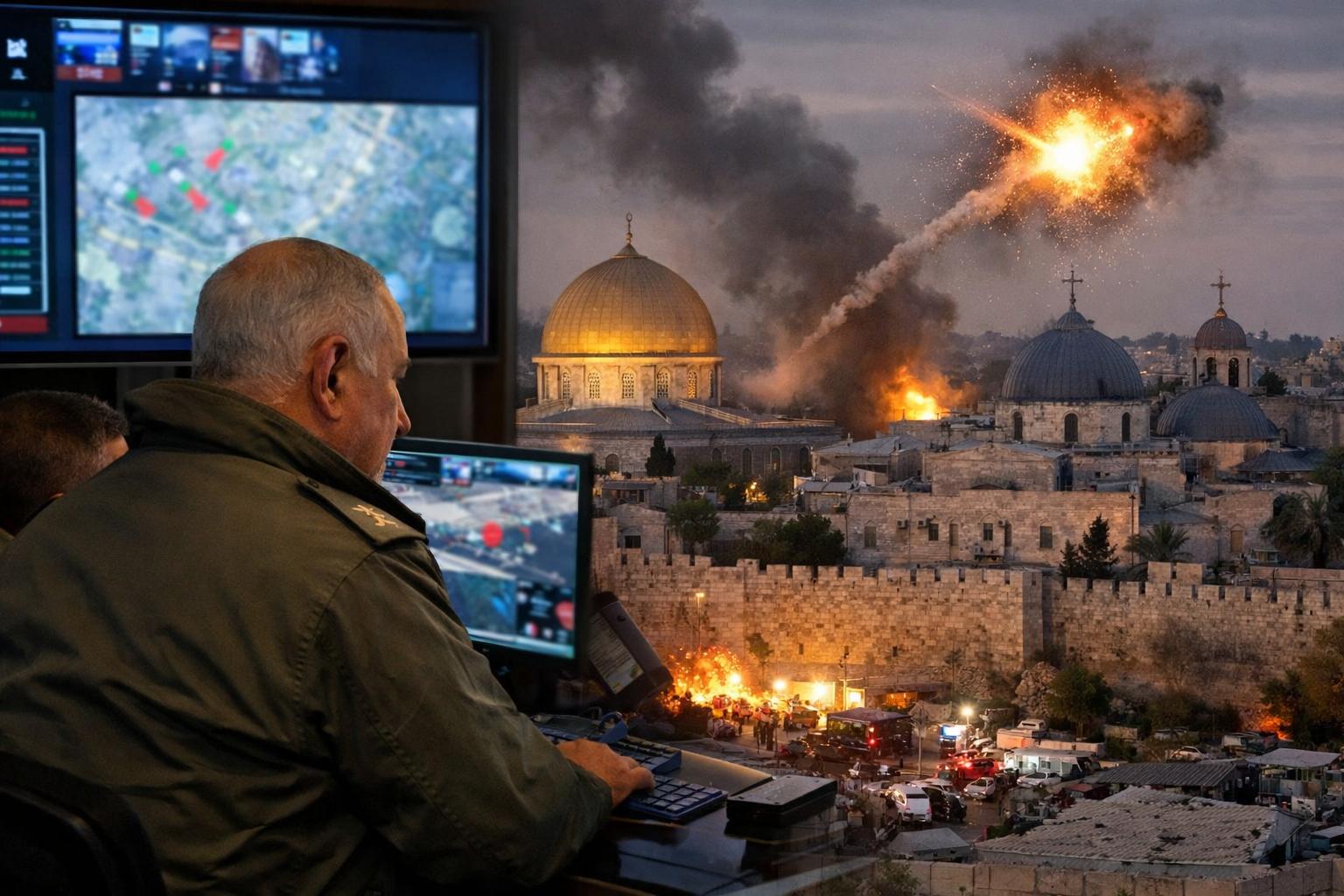
Iran on Tuesday claimed responsibility for a missile strike that it said landed near the office of Israeli Prime Minister Benjamin Netanyahu in Jerusalem, marking a sharp escalation in tensions between the two regional rivals. The claim, reported by state-affiliated media, comes amid heightened hostilities and conflicting narratives surrounding recent military developments between Israel and Iran. Israeli authorities reported that missile fragments fell across parts of Jerusalem, including areas within the Old City, prompting air raid sirens in the capital and several central regions. While debris was said to have landed near prominent religious landmarks, officials confirmed that the Prime Minister’s office did not sustain any damage. Emergency response teams were deployed to assess the impact and ensure public safety in affected zones. According to multiple reports, shrapnel from the strike caused minor damage near significant religious sites, including the Church of the Holy Sepulchre and areas close to the Temple Mount. These locations, revered by multiple faiths, heightened concerns over the broader implications of the incident and the risk of further escalation in a sensitive region. The developments follow Israeli claims that Ali Larijani, described as Iran’s national security chief, was killed in a targeted operation. Tehran has not confirmed his death, adding uncertainty to the situation. In a televised statement, Netanyahu asserted that the operation was part of a broader effort to weaken Iran’s leadership structure and encourage internal change. He stated that sustained pressure could create conditions for citizens to determine their own political future. Earlier in the day, the Israeli Prime Minister’s Office released images showing Netanyahu inside a military command centre, appearing to oversee ongoing operations. The move was seen as a response to widespread speculation circulating on social media regarding his status, as authorities sought to reinforce confidence and counter misinformation during a period of heightened tension. The exchange of claims and counterclaims underscores the fragile security environment in the region, with both sides maintaining assertive positions as the situation continues to evolve.
US–Israel–Iran War | Iran claims missile strike near Netanyahu office amid rising Israel tensions
Iran on Tuesday claimed responsibility for a missile strike that it said landed near the office of Israeli Prime Minister Benjamin Netanyahu in Jerusalem, marking a sharp escalation in tensions between the two regional rivals. The claim, reported by state-affiliated media, comes amid heightened hostilities and conflicting narratives surrounding recent military developments between Israel and Iran. Israeli authorities reported that missile fragments fell across parts of Jerusalem, including areas within the Old City, prompting air raid sirens in the capital and several central regions. While debris was said to have landed near prominent religious landmarks, officials confirmed that the Prime Minister’s office did not sustain any damage. Emergency response teams were deployed to assess the impact and ensure public safety in affected zones. According to multiple reports, shrapnel from the strike caused minor damage near significant religious sites, including the Church of the Holy Sepulchre and areas close to the Temple Mount. These locations, revered by multiple faiths, heightened concerns over the broader implications of the incident and the risk of further escalation in a sensitive region. The developments follow Israeli claims that Ali Larijani, described as Iran’s national security chief, was killed in a targeted operation. Tehran has not confirmed his death, adding uncertainty to the situation. In a televised statement, Netanyahu asserted that the operation was part of a broader effort to weaken Iran’s leadership structure and encourage internal change. He stated that sustained pressure could create conditions for citizens to determine their own political future. Earlier in the day, the Israeli Prime Minister’s Office released images showing Netanyahu inside a military command centre, appearing to oversee ongoing operations. The move was seen as a response to widespread speculation circulating on social media regarding his status, as authorities sought to reinforce confidence and counter misinformation during a period of heightened tension. The exchange of claims and counterclaims underscores the fragile security environment in the region, with both sides maintaining assertive positions as the situation continues to evolve.
UAE energy infrastructure hit by drone attacks amid rising Iran war tensions
A series of drone attacks targeting the United Arab Emirates’ critical energy infrastructure has intensified concerns over prolonged supply disruptions as regional tensions linked to the Iran conflict continue to escalate. The incidents have struck key oil and gas facilities, disrupted shipping routes, and heightened volatility in global energy markets. Operations at the Shah gas field, one of the world’s largest ultra-sour gas developments, remained suspended after a drone stri
UAE energy infrastructure hit by drone attacks amid rising Iran war tensions
A series of drone attacks targeting the United Arab Emirates’ critical energy infrastructure has intensified concerns over prolonged supply disruptions as regional tensions linked to the Iran conflict continue to escalate. The incidents have struck key oil and gas facilities, disrupted shipping routes, and heightened volatility in global energy markets. Operations at the Shah gas field, one of the world’s largest ultra-sour gas developments, remained suspended after a drone stri
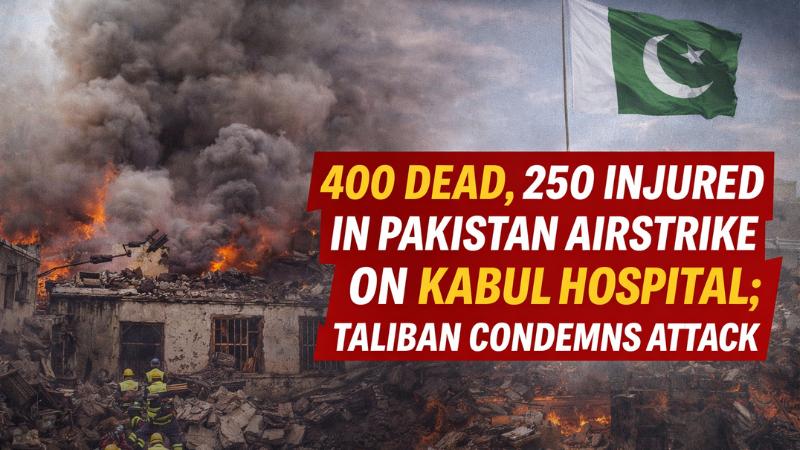
400 Dead, 250 Injured in Pakistan Airstrike on Kabul Hospital, Taliban Condemns Attack
On March 16, 2026, a devastating Pakistani airstrike hit a drug treatment
400 Dead, 250 Injured in Pakistan Airstrike on Kabul Hospital, Taliban Condemns Attack
On March 16, 2026, a devastating Pakistani airstrike hit a drug treatment
Explosions rock Kabul amid rising tensions between Afghanistan and Pakistan
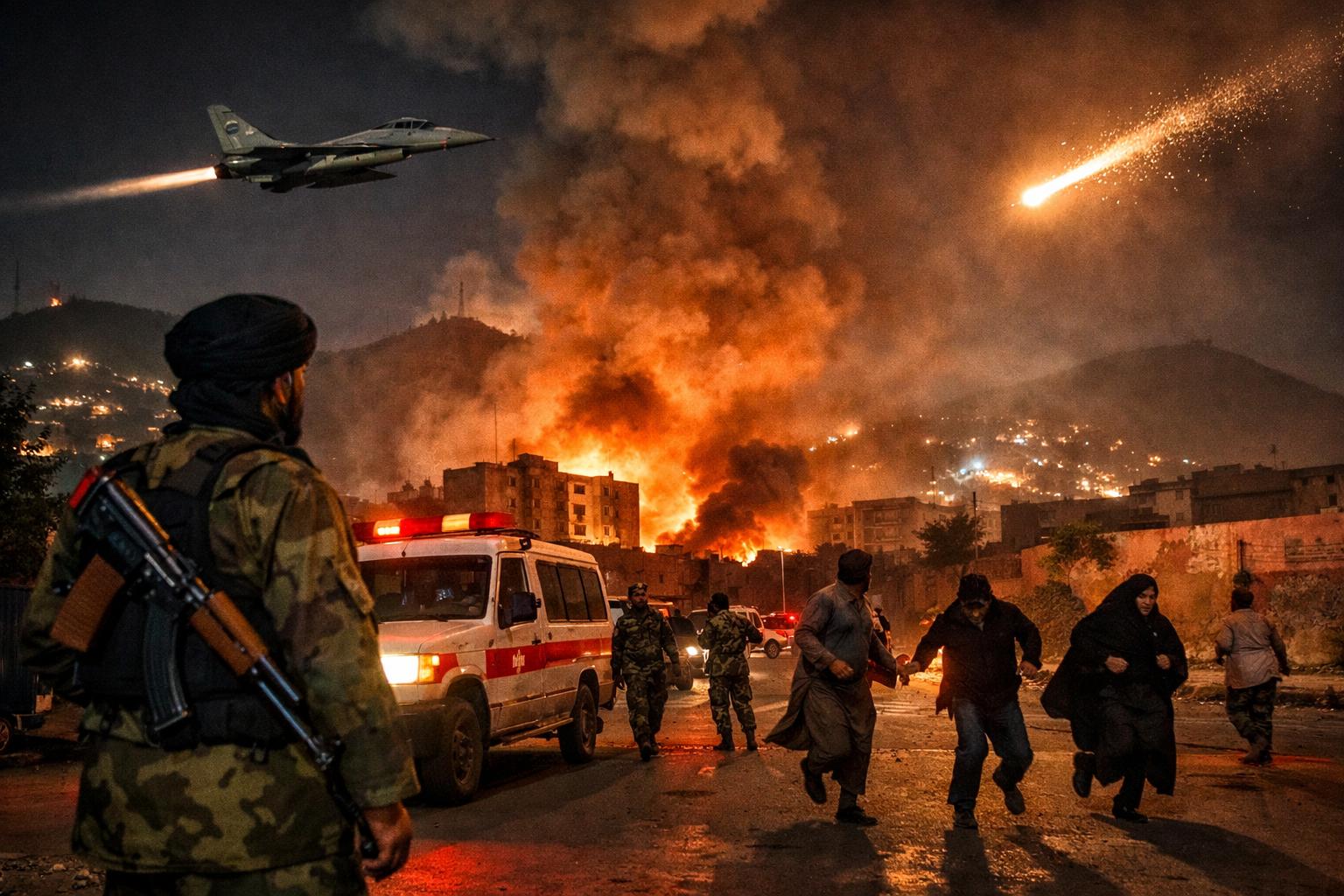
Multiple explosions were reported across parts of Kabul late Monday night, heightening concerns over escalating tensions between Afghanistan and Pakistan. Residents in several neighborhoods, particularly in the western parts of the Afghan capital, said powerful blasts were followed by the sound of aircraft flying at low altitude over the city. Witnesses described a tense atmosphere as security forces and emergency responders rushed to the affected areas to assess the situation. Sources indic
Explosions rock Kabul amid rising tensions between Afghanistan and Pakistan
Multiple explosions were reported across parts of Kabul late Monday night, heightening concerns over escalating tensions between Afghanistan and Pakistan. Residents in several neighborhoods, particularly in the western parts of the Afghan capital, said powerful blasts were followed by the sound of aircraft flying at low altitude over the city. Witnesses described a tense atmosphere as security forces and emergency responders rushed to the affected areas to assess the situation. Sources indic


