








Tesla Roadster flying car demo uses SpaceX thrusters
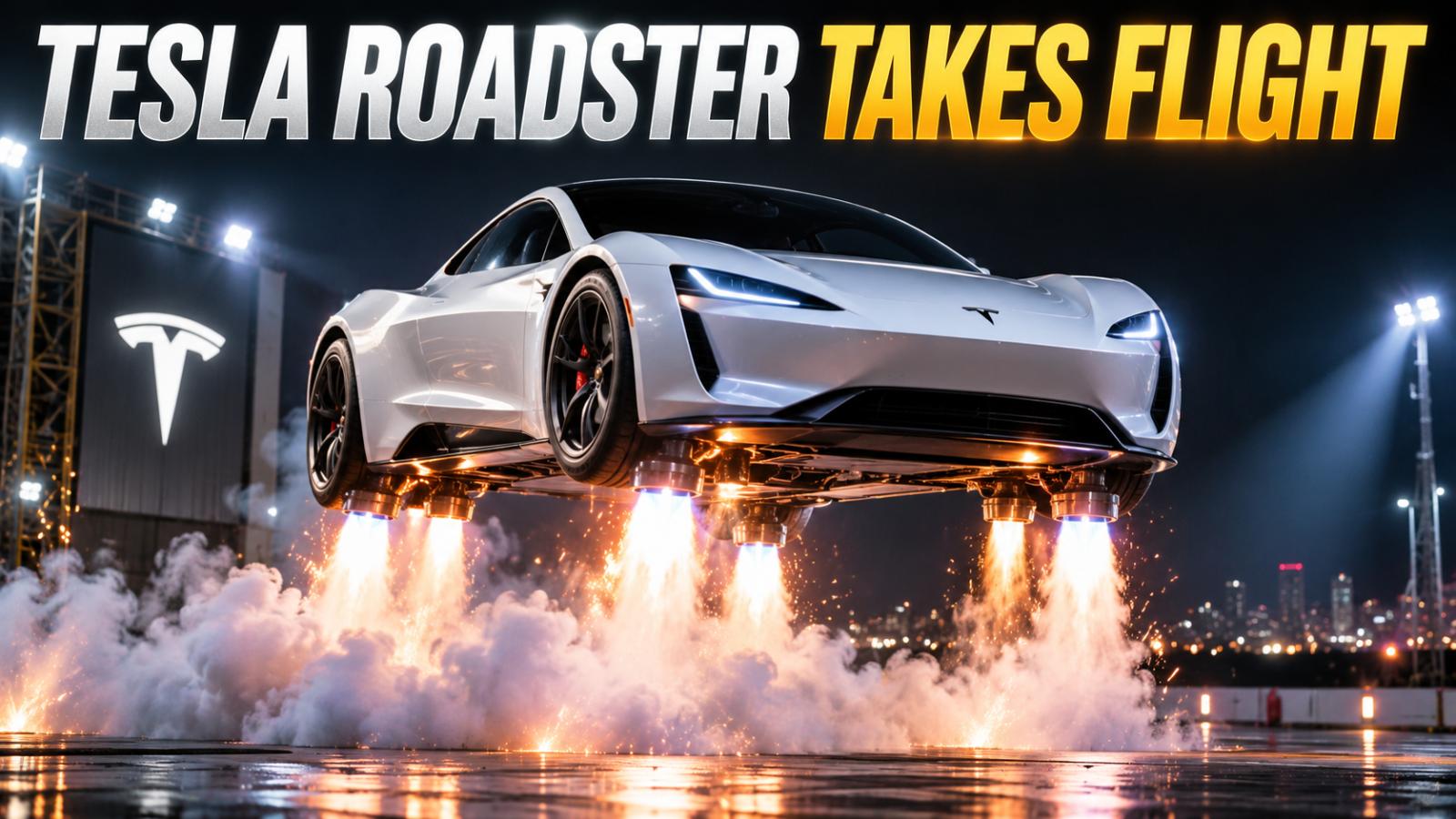
Tesla Roadster flying car demo uses SpaceX thrusters in a dramatic Texas demonstration that showed the electric sports car lifting off, hovering and performing controlled aerial manoeuvres. Elon Musk says the Roadster combines Tesla engineering with SpaceX technology, but the airborne version is not yet intended for everyday road use. SpaceX thrusters power Roadster Tesla has reignited interest in its long-delayed Roadster after demonstr
Tesla Roadster flying car demo uses SpaceX thrusters
Tesla Roadster flying car demo uses SpaceX thrusters in a dramatic Texas demonstration that showed the electric sports car lifting off, hovering and performing controlled aerial manoeuvres. Elon Musk says the Roadster combines Tesla engineering with SpaceX technology, but the airborne version is not yet intended for everyday road use. SpaceX thrusters power Roadster Tesla has reignited interest in its long-delayed Roadster after demonstr
Jeff Bezos Says AI Could Make Three-Day Workweeks Possible
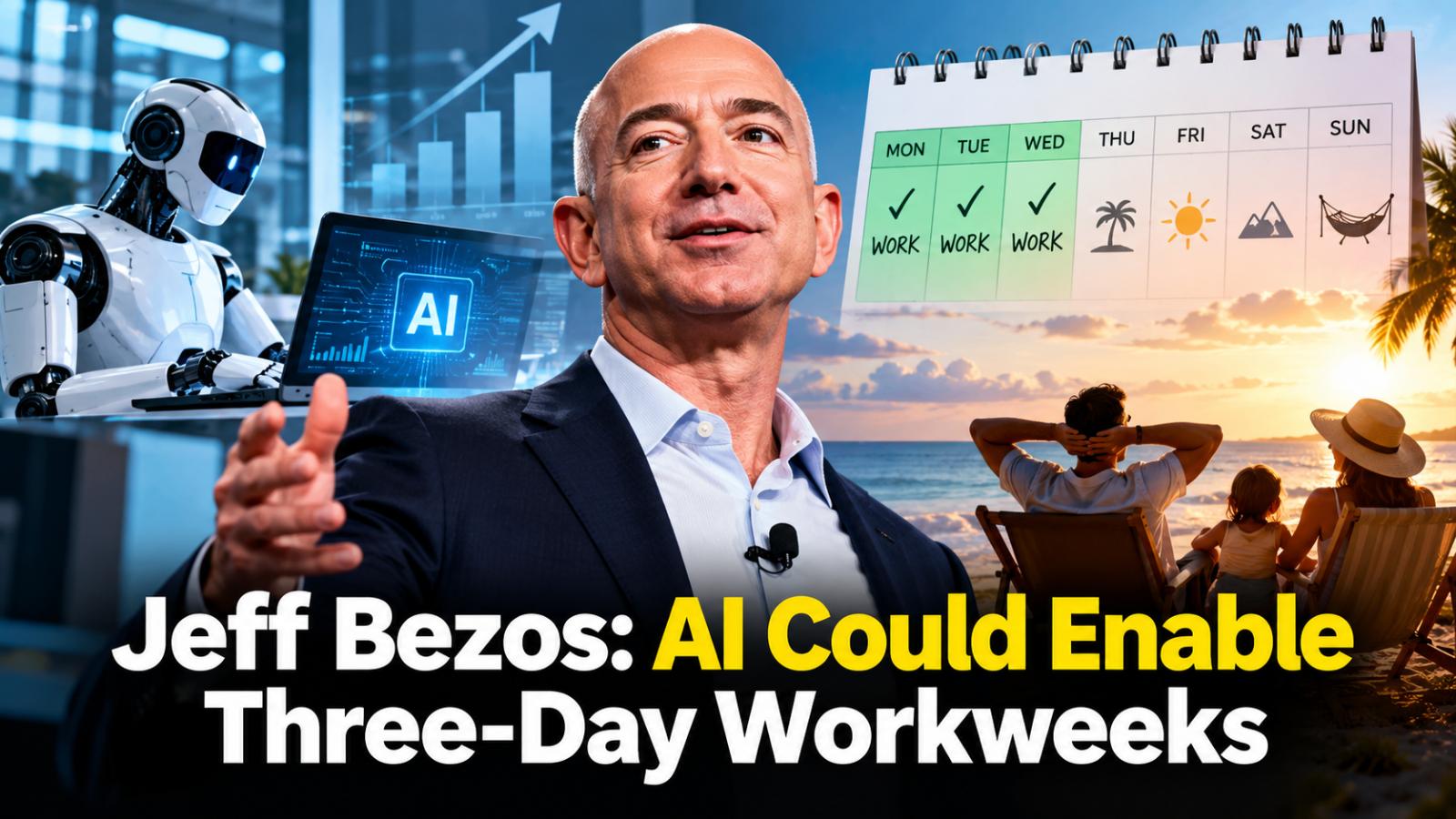
Amazon founder Jeff Bezos believes artificial intelligence could transform employment by improving productivity and allowing people to work fewer days while earning enough to support their families. He also discussed AI-driven job changes, Amazon layoffs, engineering innovation and America's competition with China in space exploration. Jeff Bezos Predicts Three-Day Workweeks With AI Amazon founder Jeff Bezos has suggested that advances in artificial inte
Jeff Bezos Says AI Could Make Three-Day Workweeks Possible
Amazon founder Jeff Bezos believes artificial intelligence could transform employment by improving productivity and allowing people to work fewer days while earning enough to support their families. He also discussed AI-driven job changes, Amazon layoffs, engineering innovation and America's competition with China in space exploration. Jeff Bezos Predicts Three-Day Workweeks With AI Amazon founder Jeff Bezos has suggested that advances in artificial inte
RAK Flying Car Trial to Test Future UAE Air Mobility
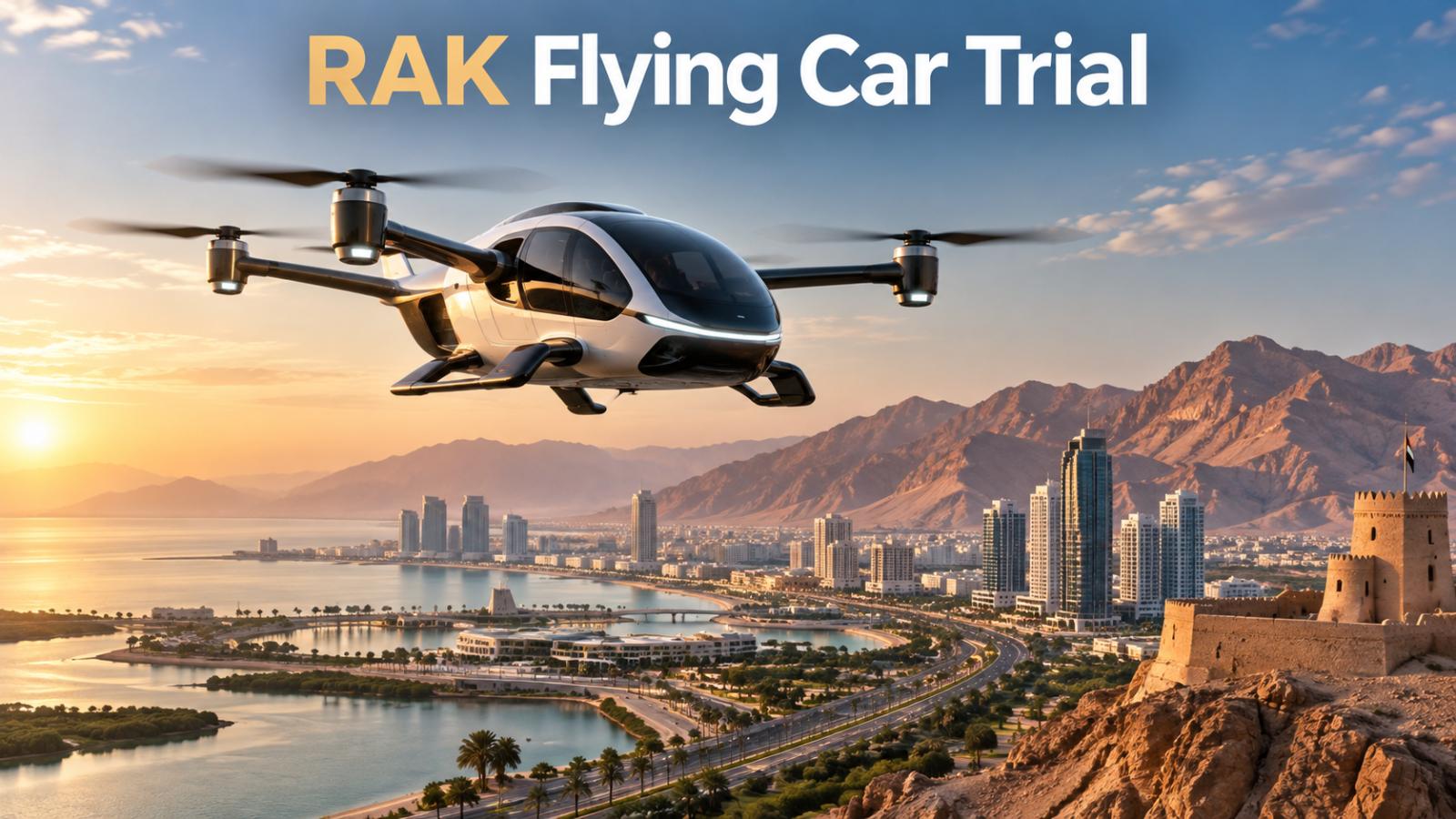
Ras Al Khaimah is accelerating plans for next-generation transport through a RAK flying car test partnership with Chinese advanced air mobility company Aridge. The initiative brings together RAKTA, aviation authorities and emerging eVTOL technology as the emirate explores safer, regulated low-altitude transport. Aridge test moves flying cars toward operational trials The Ras Al Khaimah Transpor
RAK Flying Car Trial to Test Future UAE Air Mobility
Ras Al Khaimah is accelerating plans for next-generation transport through a RAK flying car test partnership with Chinese advanced air mobility company Aridge. The initiative brings together RAKTA, aviation authorities and emerging eVTOL technology as the emirate explores safer, regulated low-altitude transport. Aridge test moves flying cars toward operational trials The Ras Al Khaimah Transpor
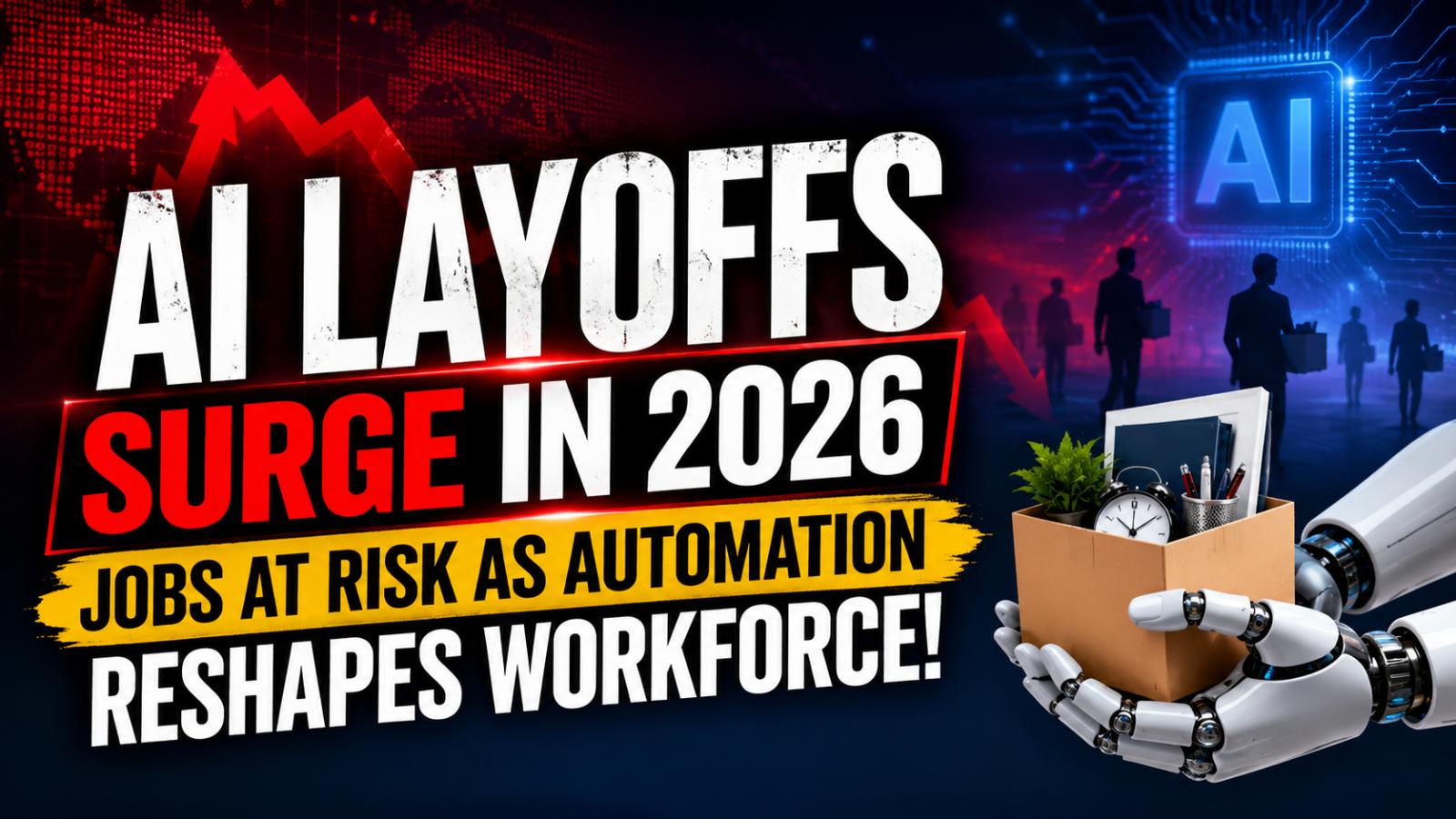
AI Layoffs in 2026 Rise as Automation Reshapes US Jobs
AI layoffs in 2026 are no longer just a prediction about the future of work. Companies are increasingly linking workforce reductions to automation and artificial intelligence, while technology firms remain at the center of the cuts. Yet the data also show that AI is reshaping jobs in more complex ways than simply replacing workers. US AI job cuts rise sharply
AI Layoffs in 2026 Rise as Automation Reshapes US Jobs
AI layoffs in 2026 are no longer just a prediction about the future of work. Companies are increasingly linking workforce reductions to automation and artificial intelligence, while technology firms remain at the center of the cuts. Yet the data also show that AI is reshaping jobs in more complex ways than simply replacing workers. US AI job cuts rise sharply
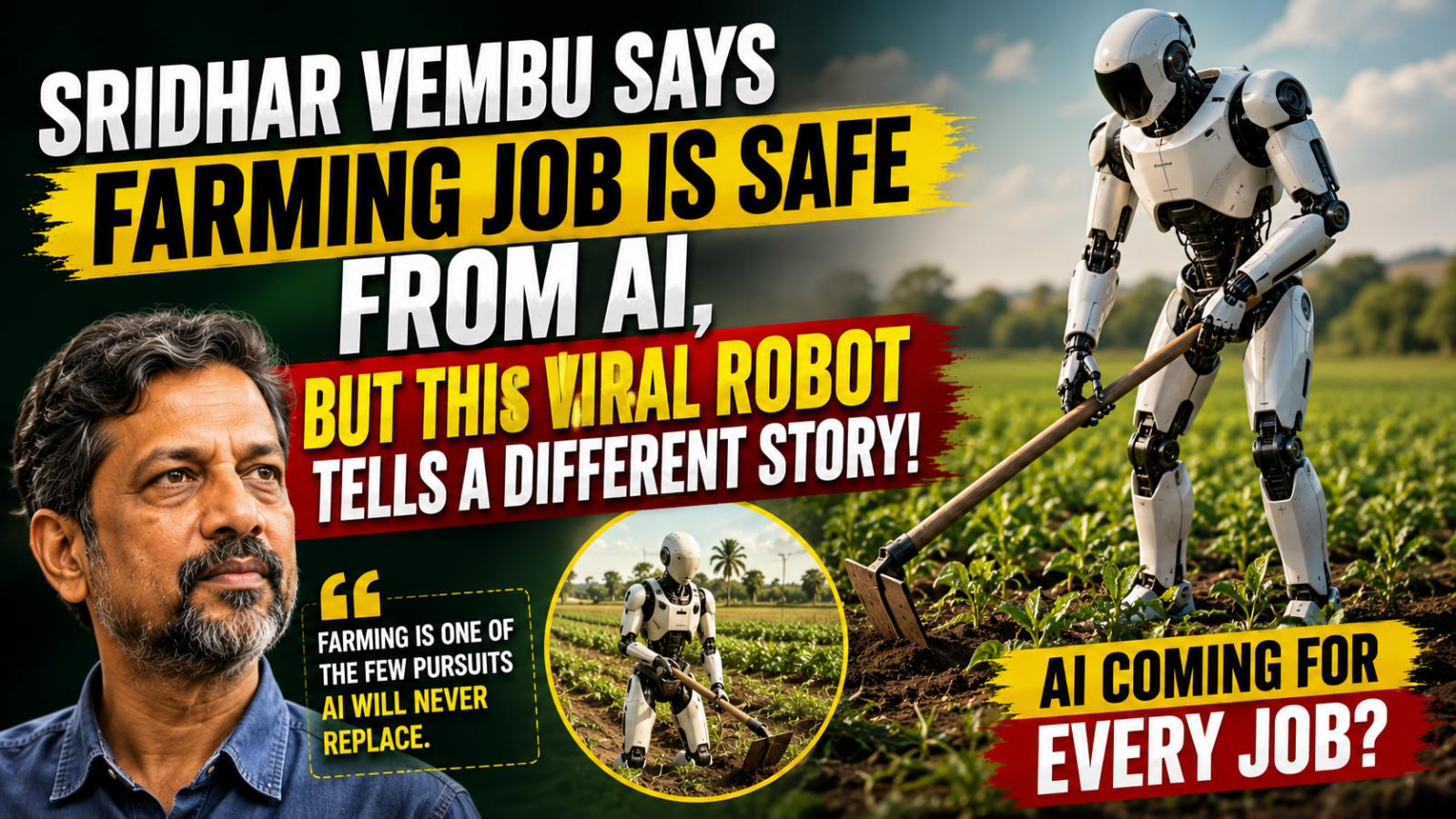
Viral Farm Robot Video Challenges Sridhar Vembu’s AI View
A viral video appearing to show a humanoid robot working on a farm has reopened the debate over whether farming and other physical jobs are safe from AI. Viral Farm Robot Video Revives AI Job Debate A widely shared social media video appearing to show a humanoid robot working in a field has reignited concerns about artificial intelligence moving beyond software and office jobs into physical labour. The clip shows a human-shaped m
Viral Farm Robot Video Challenges Sridhar Vembu’s AI View
A viral video appearing to show a humanoid robot working on a farm has reopened the debate over whether farming and other physical jobs are safe from AI. Viral Farm Robot Video Revives AI Job Debate A widely shared social media video appearing to show a humanoid robot working in a field has reignited concerns about artificial intelligence moving beyond software and office jobs into physical labour. The clip shows a human-shaped m
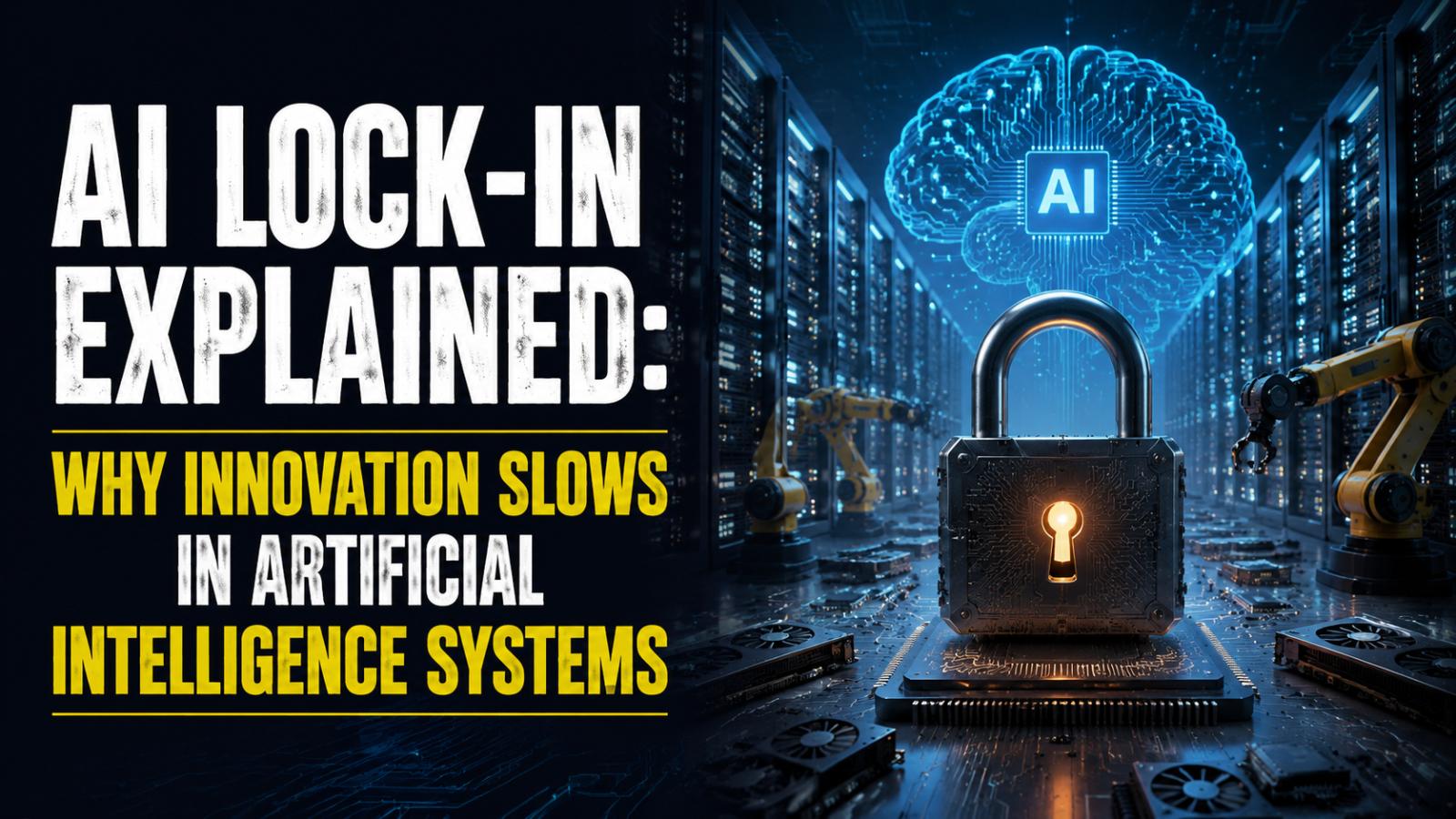
AI Lock-In Explained: Why Innovation Slows in Artificial Intelligence Systems
Innovation often slows not because better ideas are unavailable, but because existing systems become too expensive and complex to replace. Once infrastructure, capital, regulation, and industry habits align around a dominant technology, switching to alternatives becomes increasingly difficult—even when better options begin to emerge. This pattern is already visible in artificial intelligence today and has repeated across multiple technological revolutions. AI Infrastructu
AI Lock-In Explained: Why Innovation Slows in Artificial Intelligence Systems
Innovation often slows not because better ideas are unavailable, but because existing systems become too expensive and complex to replace. Once infrastructure, capital, regulation, and industry habits align around a dominant technology, switching to alternatives becomes increasingly difficult—even when better options begin to emerge. This pattern is already visible in artificial intelligence today and has repeated across multiple technological revolutions. AI Infrastructu

Oil prices fall after US-Iran deal eases Hormuz tensions
Oil Markets Fall After US-Iran Interim Agreement Global oil prices slipped in early trading on Thursday,June 18,2026 following the announcement of an interim agreement between the United States and Iran aimed at ending the conflict in the Middle East. The development has eased immediate concerns over supply disruptions through one of the world’s most critical energy corridors, the Strait of Hormuz.
Oil prices fall after US-Iran deal eases Hormuz tensions
Oil Markets Fall After US-Iran Interim Agreement Global oil prices slipped in early trading on Thursday,June 18,2026 following the announcement of an interim agreement between the United States and Iran aimed at ending the conflict in the Middle East. The development has eased immediate concerns over supply disruptions through one of the world’s most critical energy corridors, the Strait of Hormuz.
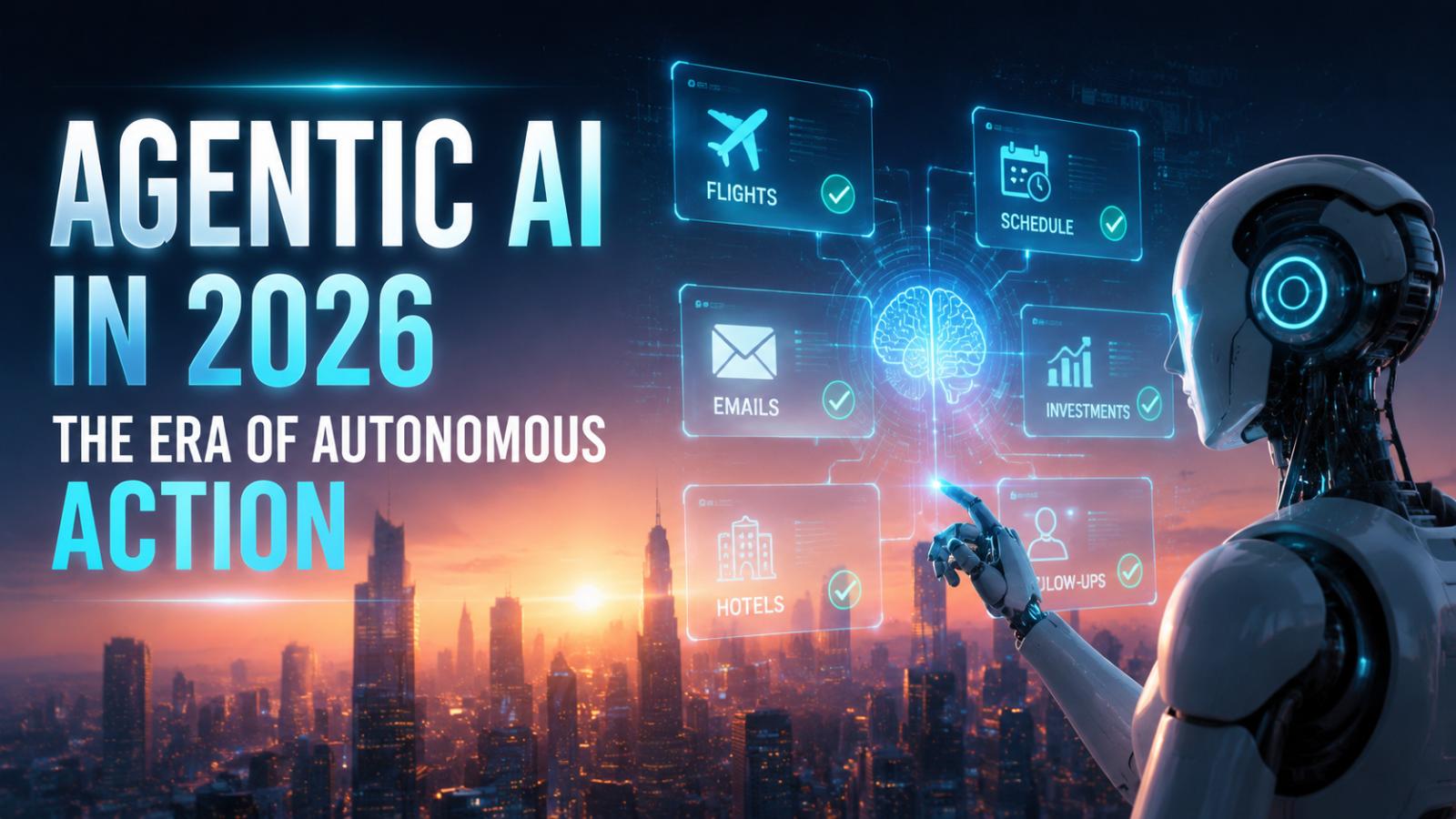
Agentic ai in 2026 reshapes automation and digital work
In 2026, agentic ai is changing how people use technology in daily life. It is a system where AI does not only answer questions but also completes full tasks. This means users can give one simple goal, and the AI handles everything needed to finish it. From booking flights to managing emails and schedules, agentic ai works like a digital worker instead of a simple chatbot. How Agentic AI works Un
Agentic ai in 2026 reshapes automation and digital work
In 2026, agentic ai is changing how people use technology in daily life. It is a system where AI does not only answer questions but also completes full tasks. This means users can give one simple goal, and the AI handles everything needed to finish it. From booking flights to managing emails and schedules, agentic ai works like a digital worker instead of a simple chatbot. How Agentic AI works Un
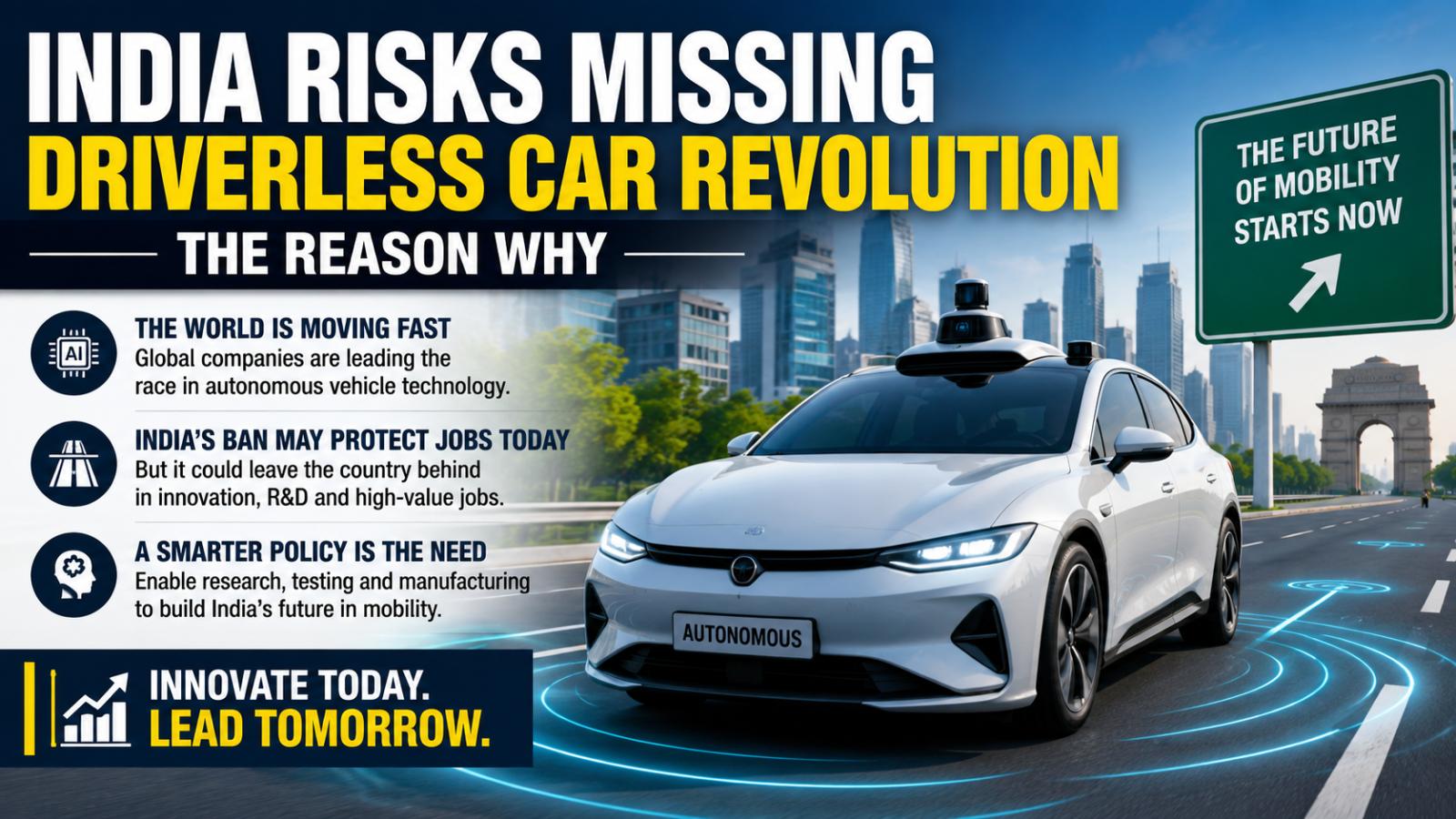
India Risks Missing Driverless Car Revolution Without Policy Support
Driverless cars are moving from concept to reality in many parts of the world. Autonomous cab services are already operating in select cities, and companies across the globe are investing heavily in self-driving technology. India, however, risks missing out on this fast-growing revolution if it continues to take a rigid stand against driverless vehicles. The concern is understandable. India has millions of people whose livelihoods depend on driving. A sudden entry of fully
India Risks Missing Driverless Car Revolution Without Policy Support
Driverless cars are moving from concept to reality in many parts of the world. Autonomous cab services are already operating in select cities, and companies across the globe are investing heavily in self-driving technology. India, however, risks missing out on this fast-growing revolution if it continues to take a rigid stand against driverless vehicles. The concern is understandable. India has millions of people whose livelihoods depend on driving. A sudden entry of fully
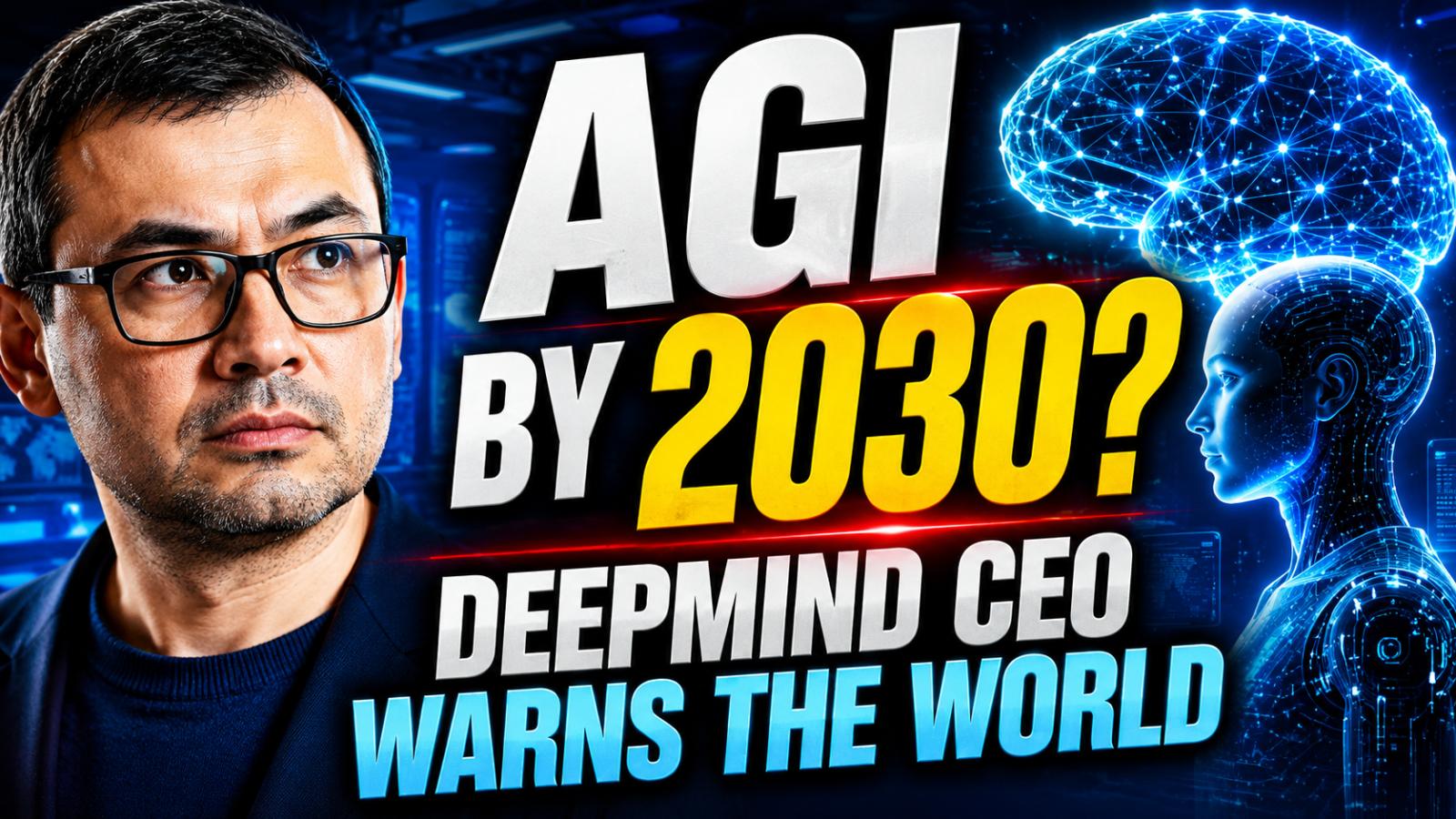
AGI by 2030: Demis Hassabis Warns the World Must Prepare for AI’s Next Big Shift
Artificial general intelligence, or AGI, is no longer just a futuristic idea discussed by scientists and technology experts. Google DeepMind CEO Demis Hassabis has warned that AGI could arrive around 2030, which means the world may have only a few years to prepare for one of the biggest technological changes in modern history. AGI refers to an advanced form of artificial intelligence that can understand, learn and solve many different types of problems at a human level or beyond. Un
AGI by 2030: Demis Hassabis Warns the World Must Prepare for AI’s Next Big Shift
Artificial general intelligence, or AGI, is no longer just a futuristic idea discussed by scientists and technology experts. Google DeepMind CEO Demis Hassabis has warned that AGI could arrive around 2030, which means the world may have only a few years to prepare for one of the biggest technological changes in modern history. AGI refers to an advanced form of artificial intelligence that can understand, learn and solve many different types of problems at a human level or beyond. Un

KTR Calls Congress Telangana’s First Enemy, Criticizes Revanth Reddy
Bharat Rashtra Samithi working president KT Rama Rao addressed the Press Club Hyderabad on Wednesday, launching a comprehensive critique of Telangana’s ruling Congress government led by Chief Minister Revanth Reddy. KTR described Congress as the “first enemy of Telangana,” alleging that the state has regressed under its administration after a decade of development under former Chief Minister K Chandrashekar Rao. He highlighted that Telangana had achieved notable progress in agriculture,
KTR Calls Congress Telangana’s First Enemy, Criticizes Revanth Reddy
Bharat Rashtra Samithi working president KT Rama Rao addressed the Press Club Hyderabad on Wednesday, launching a comprehensive critique of Telangana’s ruling Congress government led by Chief Minister Revanth Reddy. KTR described Congress as the “first enemy of Telangana,” alleging that the state has regressed under its administration after a decade of development under former Chief Minister K Chandrashekar Rao. He highlighted that Telangana had achieved notable progress in agriculture,

World NO Tobacco day 2026: protect health, quit today
World No Tobacco Day, observed annually on May 31, raises awareness about the dangers of tobacco and nicotine use. Launched by the World Health Organization in 1987, it aims to educate the public about the health, social, and environmental impacts of tobacco. Globally, over 8 million people die each year from tobacco-related illnesses, making prevention and quitting crucial. Health Risks of Tobacco Use
World NO Tobacco day 2026: protect health, quit today
World No Tobacco Day, observed annually on May 31, raises awareness about the dangers of tobacco and nicotine use. Launched by the World Health Organization in 1987, it aims to educate the public about the health, social, and environmental impacts of tobacco. Globally, over 8 million people die each year from tobacco-related illnesses, making prevention and quitting crucial. Health Risks of Tobacco Use
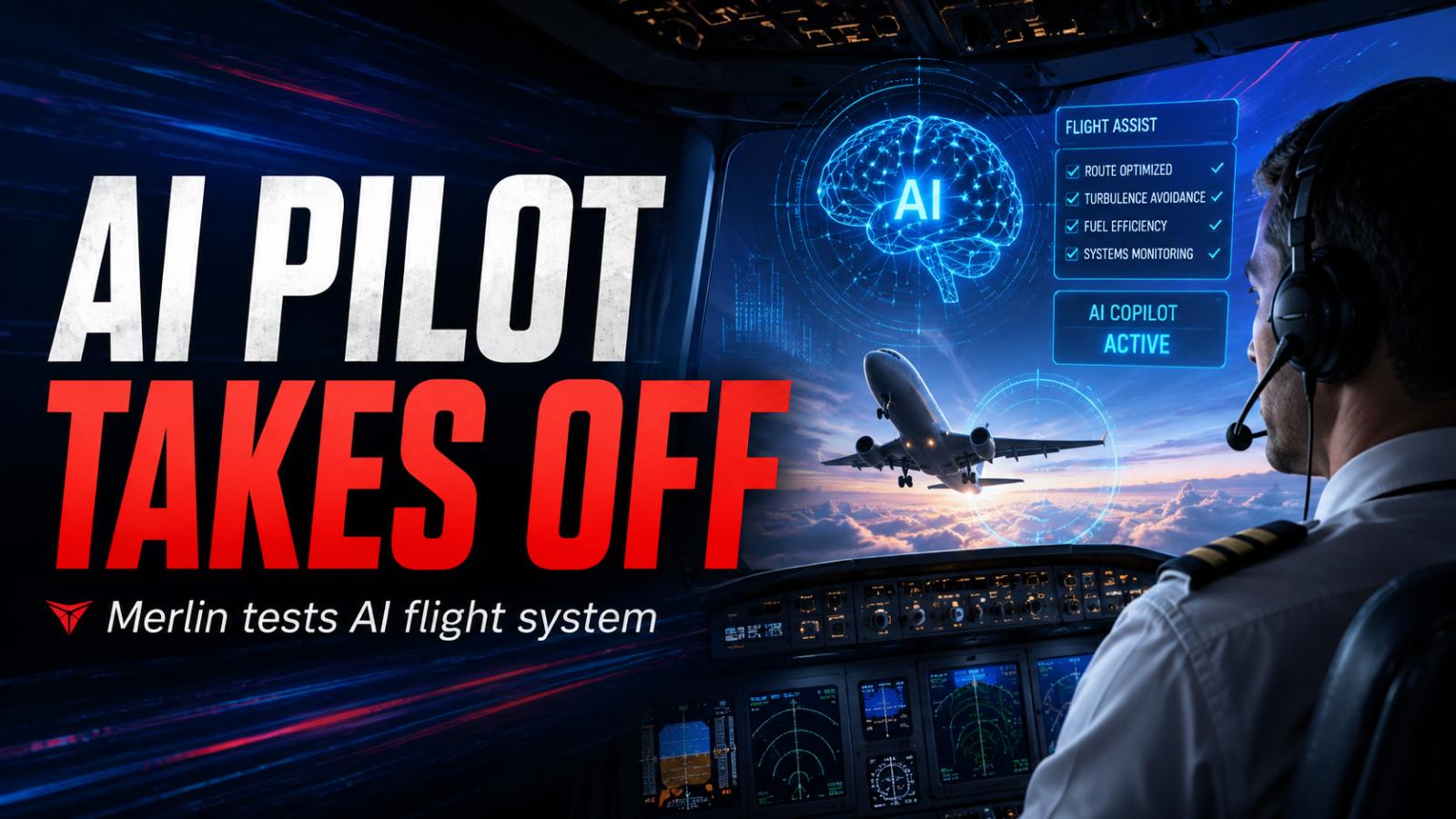
Merlin Labs Tests AI Flight System to Assist Pilots and Reduce Cockpit Workload
Artificial intelligence is slowly moving from phones, offices and cars into one of the most sensitive areas of modern transport: aviation. Merlin Labs, a US-based aviation technology company, has tested an AI flight system known as Merlin Pilot during an experimental aircraft demonstration. The system is not designed to remove pilots from aircraft. Instead, it is being developed to assist trained pilots by handling selected flight-related tasks after proper approval. This makes the test important because aviation is already dealing with growing pilot workload, pressure on air traffic control systems and a rising need for smarter safety tools. What happened during the Merlin Pilot test During the demonstration, a trained test pilot remained inside the aircraft and continued to supervise the flight. The AI system handled certain approved tasks, including responding to instructions and helping adjust the aircraft’s course. The aircraft used for the test was marked as experimental. This means it was used for research and testing, not for regular passenger service. That point matters because AI-assisted aviation is still in a careful development stage. Commercial passenger flights without pilots are not expected anytime soon. The test showed how AI could become a useful cockpit assistant, especially in situations where pilots need to process several instructions quickly and accurately. How Merlin Pilot helps pilots Merlin Pilot uses natural language flight control. In simple terms, it can listen to spoken instructions, understand the meaning and help the aircraft respond based on approved commands. This kind of system could reduce repetitive workload for pilots. For example, during busy flight operations, pilots must listen to air traffic control, confirm instructions, monitor instruments, adjust the aircraft and stay alert for unexpected situations. An AI pilot assistant could help manage routine actions while the human pilot focuses on judgment, safety and decision-making. This is where AI has real value. The strongest use case is not replacing humans, but reducing pressure on them. Why this matters for aviation The aviation industry is facing serious challenges. Pilot shortages, increasing air traffic and pressure on air traffic controllers are creating demand for better support systems. AI flight automation could help improve efficiency if it is introduced carefully and safely. A system like Merlin Pilot may help pilots handle communication, navigation-related tasks and routine cockpit actions. It may also help reduce errors caused by fatigue or workload overload. But aviation cannot afford blind trust in technology. Any AI system used in aircraft must be tested deeply, monitored closely and approved by regulators before it becomes part of normal flight operations. Can AI replace pilots? No, not in the near future. Passenger aviation still depends on trained pilots for safety, responsibility and emergency decision-making. AI can process information quickly, but it does not replace human experience, accountability and real-world judgment. Aviation safety depends on people who can respond to unexpected problems. Weather changes, technical failures, passenger emergencies and unusual flight conditions still require human decision-making. That is why AI systems like Merlin Pilot are currently better understood as pilot support tools, not pilot replacements. The most practical future is a cockpit where humans and AI work together. AI and air traffic control AI is also being discussed in air traffic control modernization. Busy airports and crowded airspace require faster communication and better coordination. Artificial intelligence could help organize information, detect possible conflicts and support controllers in managing traffic more efficiently. However, just like in the cockpit, AI should assist human controllers rather than replace them. Air traffic control involves real-time decisions, safety responsibility and human coordination. AI can help with speed and accuracy, but final responsibility must remain with trained professionals. What this means for passengers For passengers, AI-assisted aviation could eventually mean smoother flights, better route management and improved safety support. If AI can reduce pilot workload and help avoid communication errors, it may become a valuable part of future aircraft systems. But passengers should not assume pilotless commercial planes are coming soon. The safer and more realistic direction is AI-supported flying, where pilots remain in command and technology works in the background to assist them. The future of AI-assisted aviation The Merlin Pilot test shows where aviation technology may be heading. AI could become part of the cockpit, helping pilots manage routine tasks, understand commands and respond faster during busy operations. Still, the future of AI in aviation will depend on trust, testing, regulation and safety performance. Aircraft systems must prove they can work reliably in real-world conditions before they are used widely. For now, Merlin Pilot represents an important step toward AI-assisted aviation. It shows that artificial intelligence may help reduce pilot workload and support safer flight operations, but the human pilot remains the most important decision-maker in the cockpit.
Merlin Labs Tests AI Flight System to Assist Pilots and Reduce Cockpit Workload
Artificial intelligence is slowly moving from phones, offices and cars into one of the most sensitive areas of modern transport: aviation. Merlin Labs, a US-based aviation technology company, has tested an AI flight system known as Merlin Pilot during an experimental aircraft demonstration. The system is not designed to remove pilots from aircraft. Instead, it is being developed to assist trained pilots by handling selected flight-related tasks after proper approval. This makes the test important because aviation is already dealing with growing pilot workload, pressure on air traffic control systems and a rising need for smarter safety tools. What happened during the Merlin Pilot test During the demonstration, a trained test pilot remained inside the aircraft and continued to supervise the flight. The AI system handled certain approved tasks, including responding to instructions and helping adjust the aircraft’s course. The aircraft used for the test was marked as experimental. This means it was used for research and testing, not for regular passenger service. That point matters because AI-assisted aviation is still in a careful development stage. Commercial passenger flights without pilots are not expected anytime soon. The test showed how AI could become a useful cockpit assistant, especially in situations where pilots need to process several instructions quickly and accurately. How Merlin Pilot helps pilots Merlin Pilot uses natural language flight control. In simple terms, it can listen to spoken instructions, understand the meaning and help the aircraft respond based on approved commands. This kind of system could reduce repetitive workload for pilots. For example, during busy flight operations, pilots must listen to air traffic control, confirm instructions, monitor instruments, adjust the aircraft and stay alert for unexpected situations. An AI pilot assistant could help manage routine actions while the human pilot focuses on judgment, safety and decision-making. This is where AI has real value. The strongest use case is not replacing humans, but reducing pressure on them. Why this matters for aviation The aviation industry is facing serious challenges. Pilot shortages, increasing air traffic and pressure on air traffic controllers are creating demand for better support systems. AI flight automation could help improve efficiency if it is introduced carefully and safely. A system like Merlin Pilot may help pilots handle communication, navigation-related tasks and routine cockpit actions. It may also help reduce errors caused by fatigue or workload overload. But aviation cannot afford blind trust in technology. Any AI system used in aircraft must be tested deeply, monitored closely and approved by regulators before it becomes part of normal flight operations. Can AI replace pilots? No, not in the near future. Passenger aviation still depends on trained pilots for safety, responsibility and emergency decision-making. AI can process information quickly, but it does not replace human experience, accountability and real-world judgment. Aviation safety depends on people who can respond to unexpected problems. Weather changes, technical failures, passenger emergencies and unusual flight conditions still require human decision-making. That is why AI systems like Merlin Pilot are currently better understood as pilot support tools, not pilot replacements. The most practical future is a cockpit where humans and AI work together. AI and air traffic control AI is also being discussed in air traffic control modernization. Busy airports and crowded airspace require faster communication and better coordination. Artificial intelligence could help organize information, detect possible conflicts and support controllers in managing traffic more efficiently. However, just like in the cockpit, AI should assist human controllers rather than replace them. Air traffic control involves real-time decisions, safety responsibility and human coordination. AI can help with speed and accuracy, but final responsibility must remain with trained professionals. What this means for passengers For passengers, AI-assisted aviation could eventually mean smoother flights, better route management and improved safety support. If AI can reduce pilot workload and help avoid communication errors, it may become a valuable part of future aircraft systems. But passengers should not assume pilotless commercial planes are coming soon. The safer and more realistic direction is AI-supported flying, where pilots remain in command and technology works in the background to assist them. The future of AI-assisted aviation The Merlin Pilot test shows where aviation technology may be heading. AI could become part of the cockpit, helping pilots manage routine tasks, understand commands and respond faster during busy operations. Still, the future of AI in aviation will depend on trust, testing, regulation and safety performance. Aircraft systems must prove they can work reliably in real-world conditions before they are used widely. For now, Merlin Pilot represents an important step toward AI-assisted aviation. It shows that artificial intelligence may help reduce pilot workload and support safer flight operations, but the human pilot remains the most important decision-maker in the cockpit.
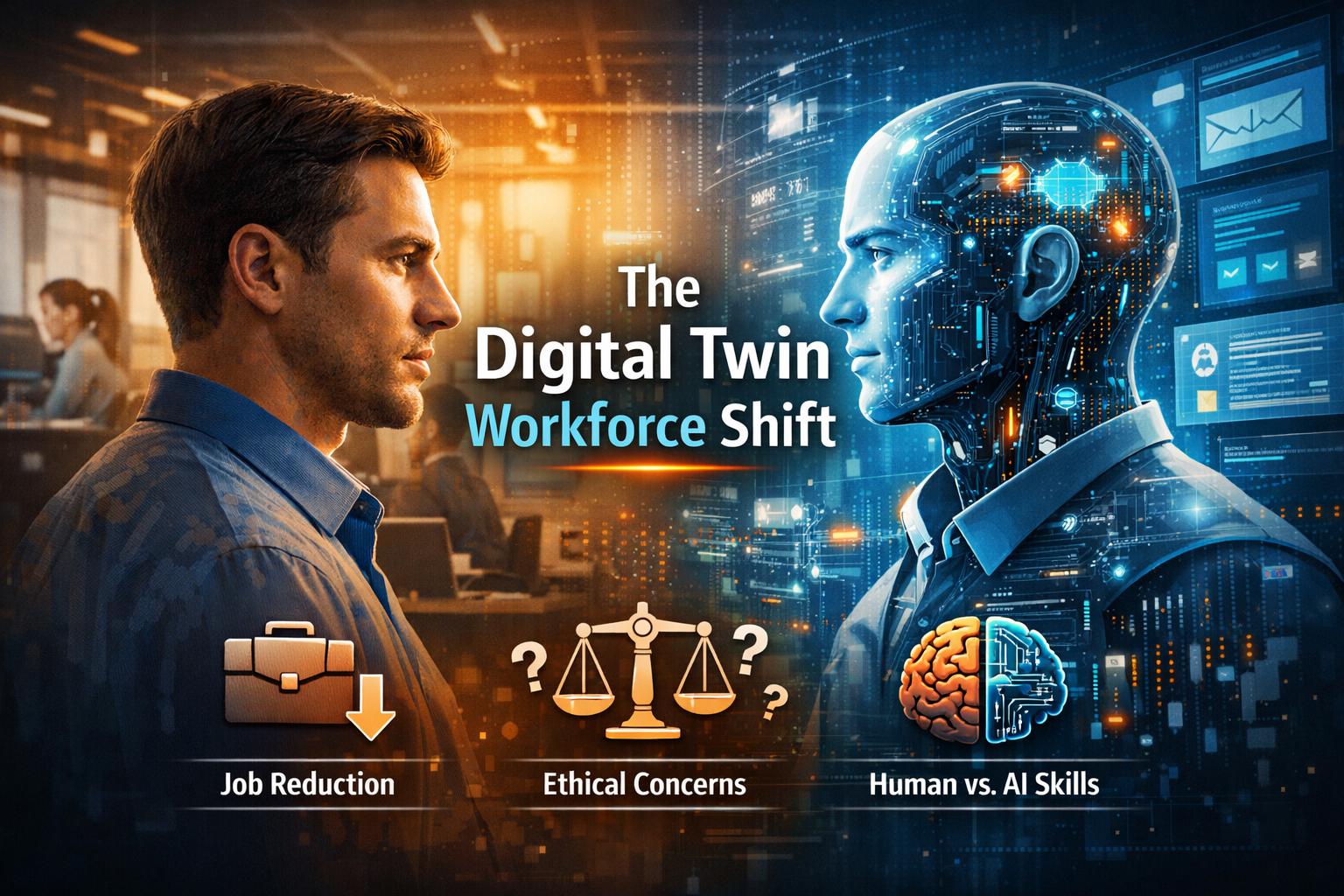
Digital Twin Job Loss Crisis: How AI “Superworkers” Are Reshaping the Future of Work
The rise of AI-powered digital twins is no longer just a tech trend—it’s quickly turning into a digital twin job loss crisis that could reshape how millions of people work. Companies are building AI versions of employees that can think, respond, and make decisions like humans. While this promises efficiency, it also raises a serious concern: are workers unknowingly training their own replacements? How Digital Twins Are Replacing Human Roles
Digital Twin Job Loss Crisis: How AI “Superworkers” Are Reshaping the Future of Work
The rise of AI-powered digital twins is no longer just a tech trend—it’s quickly turning into a digital twin job loss crisis that could reshape how millions of people work. Companies are building AI versions of employees that can think, respond, and make decisions like humans. While this promises efficiency, it also raises a serious concern: are workers unknowingly training their own replacements? How Digital Twins Are Replacing Human Roles

What is a digital twin in the workplace?
What is a digital twin? A digital twin is an AI-powered system that replicates a person’s knowledge, behavior, and decision-making using their data. It can assist with tasks, answer questions, and act as a virtual version of an employee. Digital twin in workplace: the rise of AI ‘superwo
What is a digital twin in the workplace?
What is a digital twin? A digital twin is an AI-powered system that replicates a person’s knowledge, behavior, and decision-making using their data. It can assist with tasks, answer questions, and act as a virtual version of an employee. Digital twin in workplace: the rise of AI ‘superwo

CBSE Expands Curriculum With Early AI Education From Class 3
The Central Board of Secondary Education (CBSE) has taken a significant step towards modernizing India’s education system by introducing artificial intelligence learning for students starting from Class 3. This move reflects the growing importance of digital literacy and emerging technologies in shaping the future workforce. By incorporating AI concepts at an early stage, CBSE aims to ensure that students are not just consumers of technology but also understand its fundamentals and applications. The initiative is part of a broader effort to align school education with global technological trends and prepare students for a rapidly evolving digital world. Under this new curriculum, young learners will be introduced to basic concepts of artificial intelligence through interactive and activity-based learning methods. Instead of complex coding, the focus will be on developing logical thinking, problem-solving skills, and an understanding of how AI impacts everyday life. Students will engage in simple exercises, games, and real-life examples to grasp how machines can learn and make decisions. This foundational approach ensures that children build curiosity and confidence in technology without feeling overwhelmed. Curriculum Focus and Implementation The AI curriculum for primary classes is designed to be age-appropriate and engaging. CBSE has collaborated with education experts and technology partners to create content that is both informative and easy to understand. Teachers will also receive specialized training to effectively deliver AI-related lessons in classrooms. The board plans to integrate AI topics with existing subjects, making learning more interdisciplinary and practical. This approach will help students connect theoretical knowledge with real-world applications, enhancing their overall learning experience. Impact on Students and Future Education Introducing AI learning at an early stage is expected to have a long-term impact on students’ academic and career paths. As industries increasingly rely on automation and data-driven technologies, early exposure to AI will give students a competitive edge. It will also encourage innovation and creativity among young minds, enabling them to think beyond traditional career options. Parents and educators have largely welcomed this move, seeing it as a progressive step toward building a tech-savvy generation. With this initiative, CBSE reinforces its commitment to evolving education standards and preparing students for the challenges of the future. The inclusion of artificial intelligence in the curriculum marks a shift from rote learning to skill-based education, ensuring that students are better equipped to navigate and contribute to a technology-driven world.
CBSE Expands Curriculum With Early AI Education From Class 3
The Central Board of Secondary Education (CBSE) has taken a significant step towards modernizing India’s education system by introducing artificial intelligence learning for students starting from Class 3. This move reflects the growing importance of digital literacy and emerging technologies in shaping the future workforce. By incorporating AI concepts at an early stage, CBSE aims to ensure that students are not just consumers of technology but also understand its fundamentals and applications. The initiative is part of a broader effort to align school education with global technological trends and prepare students for a rapidly evolving digital world. Under this new curriculum, young learners will be introduced to basic concepts of artificial intelligence through interactive and activity-based learning methods. Instead of complex coding, the focus will be on developing logical thinking, problem-solving skills, and an understanding of how AI impacts everyday life. Students will engage in simple exercises, games, and real-life examples to grasp how machines can learn and make decisions. This foundational approach ensures that children build curiosity and confidence in technology without feeling overwhelmed. Curriculum Focus and Implementation The AI curriculum for primary classes is designed to be age-appropriate and engaging. CBSE has collaborated with education experts and technology partners to create content that is both informative and easy to understand. Teachers will also receive specialized training to effectively deliver AI-related lessons in classrooms. The board plans to integrate AI topics with existing subjects, making learning more interdisciplinary and practical. This approach will help students connect theoretical knowledge with real-world applications, enhancing their overall learning experience. Impact on Students and Future Education Introducing AI learning at an early stage is expected to have a long-term impact on students’ academic and career paths. As industries increasingly rely on automation and data-driven technologies, early exposure to AI will give students a competitive edge. It will also encourage innovation and creativity among young minds, enabling them to think beyond traditional career options. Parents and educators have largely welcomed this move, seeing it as a progressive step toward building a tech-savvy generation. With this initiative, CBSE reinforces its commitment to evolving education standards and preparing students for the challenges of the future. The inclusion of artificial intelligence in the curriculum marks a shift from rote learning to skill-based education, ensuring that students are better equipped to navigate and contribute to a technology-driven world.
Mass robotaxi failure disrupts traffic in China’s Wuhan city
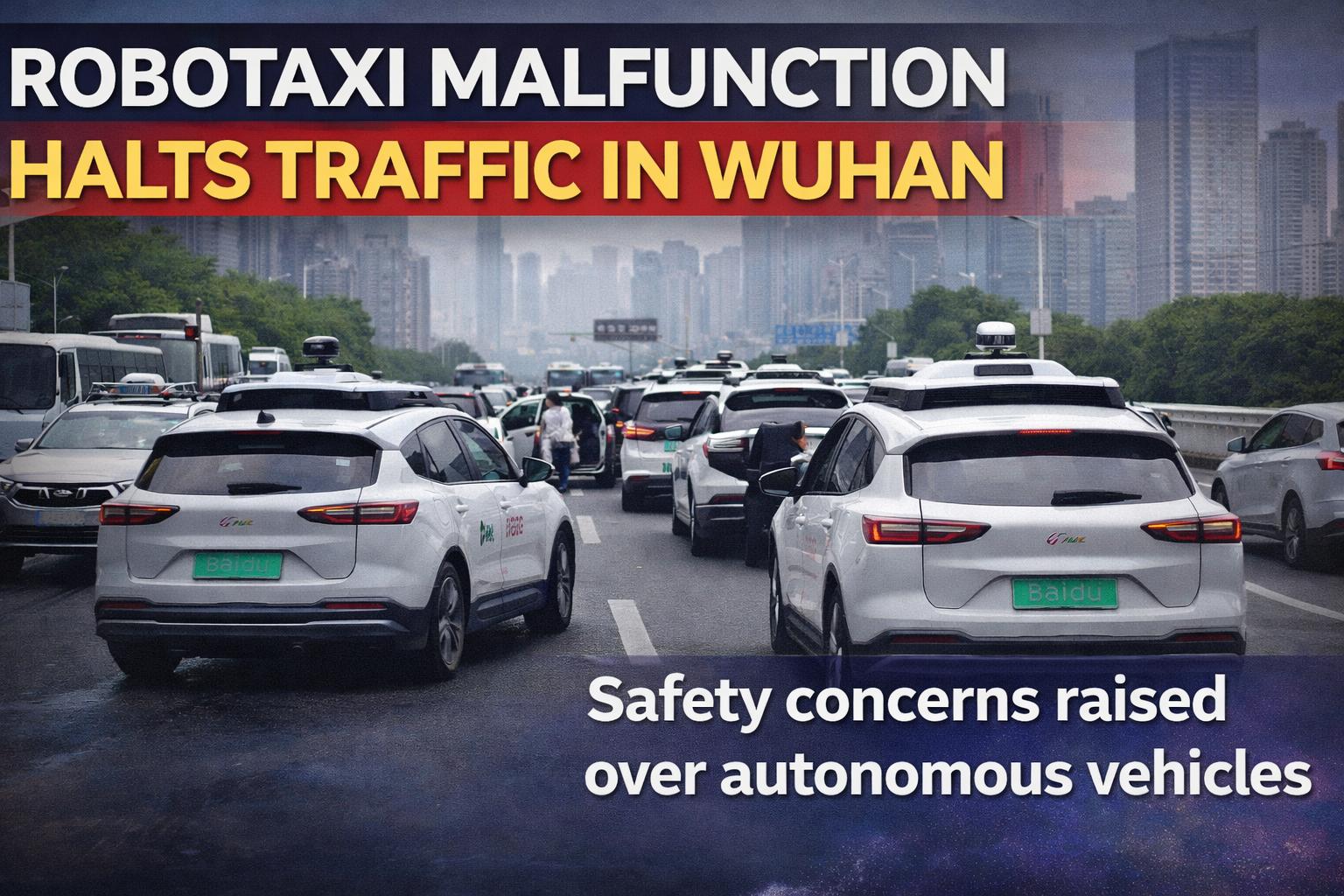
A large-scale robotaxi outage in Wuhan, China, disrupted traffic after multiple self-driving cars stopped mid-road due to a suspected system failure on Tuesday (March 31, 2026). Local police said the issue is under investigation and confirmed no injuries were reported. Videos circulating online showed halted vehicles causing congestion, with passengers exiting safely. One such video capturing the incident can be viewed here: https://x.com/ZeyiYang/status/2039153730533405102. The incident has raised concerns about the reliability of autonomous vehicles and the risks associated with system-wide failures. Similar disruptions occurred in San Francisco and Chongqing in 2025, highlighting ongoing challenges in driverless technology.
Mass robotaxi failure disrupts traffic in China’s Wuhan city
A large-scale robotaxi outage in Wuhan, China, disrupted traffic after multiple self-driving cars stopped mid-road due to a suspected system failure on Tuesday (March 31, 2026). Local police said the issue is under investigation and confirmed no injuries were reported. Videos circulating online showed halted vehicles causing congestion, with passengers exiting safely. One such video capturing the incident can be viewed here: https://x.com/ZeyiYang/status/2039153730533405102. The incident has raised concerns about the reliability of autonomous vehicles and the risks associated with system-wide failures. Similar disruptions occurred in San Francisco and Chongqing in 2025, highlighting ongoing challenges in driverless technology.

Are domes and spheres the future of immersive entertainment
Entertainment in the United States is rapidly evolving as audiences seek more immersive and engaging experiences beyond traditional movie theaters. A growing trend in this shift is the rise of domes and spherical venues, designed to surround viewers with 360-degree visuals and advanced sound systems. These spaces transform passive viewing into an interactive environment where audiences feel part of the content. One of the most recognized examples is the Sphere in Las Vegas, a large-
Are domes and spheres the future of immersive entertainment
Entertainment in the United States is rapidly evolving as audiences seek more immersive and engaging experiences beyond traditional movie theaters. A growing trend in this shift is the rise of domes and spherical venues, designed to surround viewers with 360-degree visuals and advanced sound systems. These spaces transform passive viewing into an interactive environment where audiences feel part of the content. One of the most recognized examples is the Sphere in Las Vegas, a large-
Amazon acquires fauna robotics to expand humanoid robot ambitions
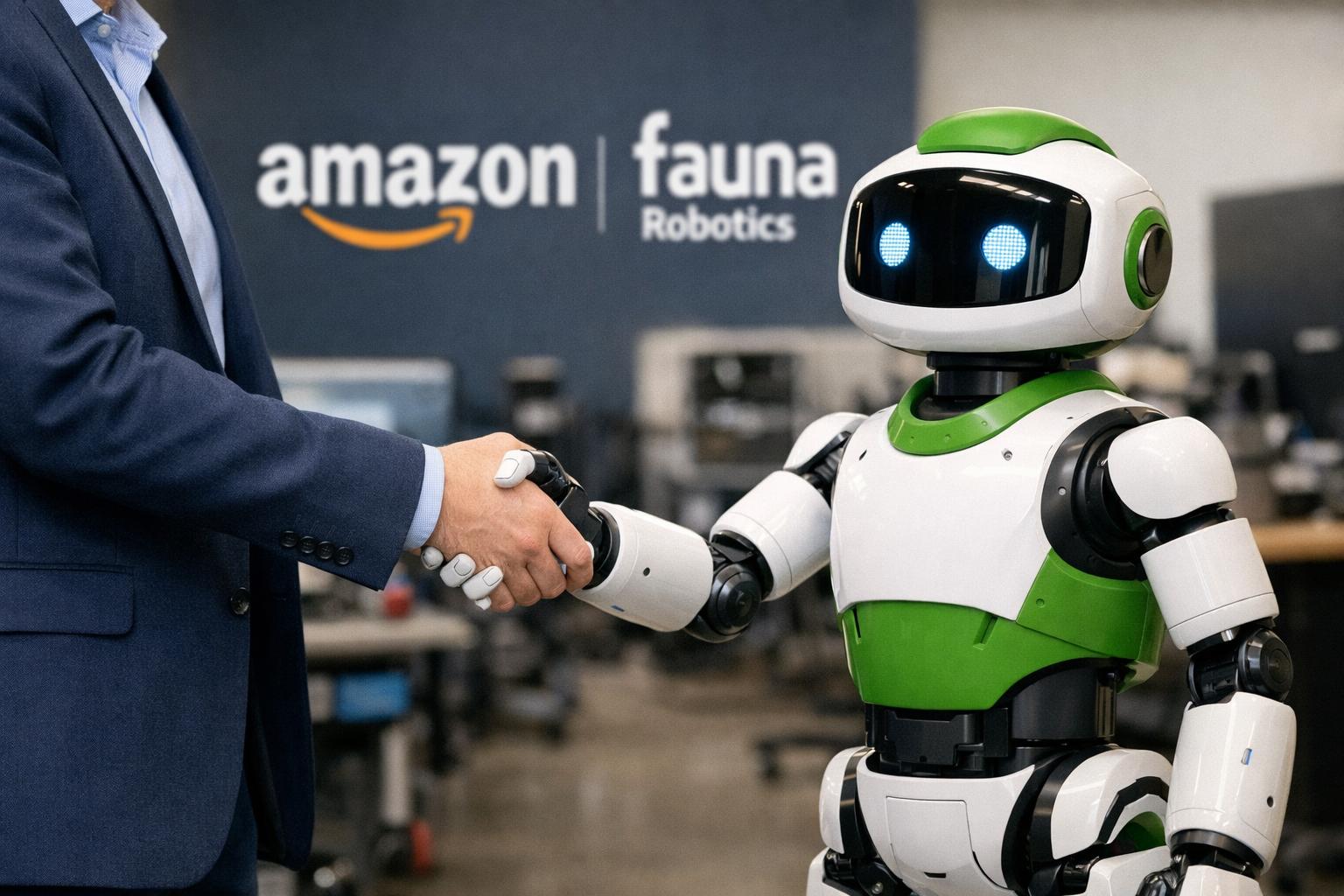
Amazon has confirmed its acquisition of Fauna Robotics, a New York-based startup focused on developing approachable humanoid robots for both consumers and businesses, marking a significant expansion of the company’s ambitions in the robotics industry. While financial details of the deal were not disclosed, the move underscores Amazon’s continued investment in automation technology and AI-driven innovation. In a statement, Amazon said it was encouraged by Fauna Robotics’ vision of creating safe, capable, and user-friendly robots. The company highlighted its own expertise in robotics, along with years of experience in consumer trust through retail and smart devices, as a foundation for developing new solutions aimed at improving everyday life. The acquisition aligns with Amazon’s broader strategy to integrate advanced robotics into both personal and commercial environments. Founded in 2024 by former engineers from major technology firms, Fauna Robotics quickly gained attention with the launch of its flagship humanoid robot, Sprout. Priced at $50,000, the compact, bipedal robot was designed to be accessible to developers while maintaining a human-friendly form factor. The company had already secured early interest from major industry players, signaling strong demand for next-generation robotics platforms. As part of the deal, Fauna’s workforce of approximately 50 employees will join Amazon in New York City. Company leadership expressed optimism about the transition, stating that operating under Amazon would accelerate innovation and expand opportunities in the rapidly evolving robotics market. Amazon has spent more than a decade building its robotics capabilities, particularly in warehouse automation. Its earlier acquisition of Kiva Systems laid the groundwork for Amazon Robotics, which has since become central to its logistics operations. More recently, the company has pursued additional acquisitions to enhance its expertise, including firms focused on last-mile delivery solutions. The acquisition of Fauna Robotics also signals Amazon’s renewed interest in consumer-facing robotics, an area it previously explored with its Astro home robot. By entering the increasingly competitive humanoid robot space, Amazon joins a growing list of technology companies developing advanced AI robots aimed at both industrial and personal use.
Amazon acquires fauna robotics to expand humanoid robot ambitions
Amazon has confirmed its acquisition of Fauna Robotics, a New York-based startup focused on developing approachable humanoid robots for both consumers and businesses, marking a significant expansion of the company’s ambitions in the robotics industry. While financial details of the deal were not disclosed, the move underscores Amazon’s continued investment in automation technology and AI-driven innovation. In a statement, Amazon said it was encouraged by Fauna Robotics’ vision of creating safe, capable, and user-friendly robots. The company highlighted its own expertise in robotics, along with years of experience in consumer trust through retail and smart devices, as a foundation for developing new solutions aimed at improving everyday life. The acquisition aligns with Amazon’s broader strategy to integrate advanced robotics into both personal and commercial environments. Founded in 2024 by former engineers from major technology firms, Fauna Robotics quickly gained attention with the launch of its flagship humanoid robot, Sprout. Priced at $50,000, the compact, bipedal robot was designed to be accessible to developers while maintaining a human-friendly form factor. The company had already secured early interest from major industry players, signaling strong demand for next-generation robotics platforms. As part of the deal, Fauna’s workforce of approximately 50 employees will join Amazon in New York City. Company leadership expressed optimism about the transition, stating that operating under Amazon would accelerate innovation and expand opportunities in the rapidly evolving robotics market. Amazon has spent more than a decade building its robotics capabilities, particularly in warehouse automation. Its earlier acquisition of Kiva Systems laid the groundwork for Amazon Robotics, which has since become central to its logistics operations. More recently, the company has pursued additional acquisitions to enhance its expertise, including firms focused on last-mile delivery solutions. The acquisition of Fauna Robotics also signals Amazon’s renewed interest in consumer-facing robotics, an area it previously explored with its Astro home robot. By entering the increasingly competitive humanoid robot space, Amazon joins a growing list of technology companies developing advanced AI robots aimed at both industrial and personal use.
After Firing 16,000 Employees, Amazon Bets on AI to Achieve Rs 55 Lakh Crore Revenue
Amazon is currently navigating two contrasting stories: massive layoffs and grand future ambitions tied to artificial intelligence. Recently, Amazon CEO Andy Jassy revealed his revised vision for Amazon Web Services (AWS), which he now believes could reach a staggering $600 billion in annual revenue, roughly Rs 55,00,000 crore. This projection has been significantly boosted by the rapid growth of AI, which Jassy sees as a game changer for AWS's future. Initially, he had anticipated AWS becomi
After Firing 16,000 Employees, Amazon Bets on AI to Achieve Rs 55 Lakh Crore Revenue
Amazon is currently navigating two contrasting stories: massive layoffs and grand future ambitions tied to artificial intelligence. Recently, Amazon CEO Andy Jassy revealed his revised vision for Amazon Web Services (AWS), which he now believes could reach a staggering $600 billion in annual revenue, roughly Rs 55,00,000 crore. This projection has been significantly boosted by the rapid growth of AI, which Jassy sees as a game changer for AWS's future. Initially, he had anticipated AWS becomi