US Iran war talks in Pakistan: Ceasefire deadline nears as tensions rise
The US Iran war talks in Pakistan are drawing global attention as uncertainty continues over Tehran’s participation in upcoming peace negotiations. With the ceasefire deadline just days away, rising tensions are keeping the world on edge. What happened and why it matters On Monday, April 20, 2026, reports suggested that both the United States and Iran h
US Iran war talks in Pakistan: Ceasefire deadline nears as tensions rise
The US Iran war talks in Pakistan are drawing global attention as uncertainty continues over Tehran’s participation in upcoming peace negotiations. With the ceasefire deadline just days away, rising tensions are keeping the world on edge. What happened and why it matters On Monday, April 20, 2026, reports suggested that both the United States and Iran h
Gaza faces rising disease risk as rat infestation spreads in displacement camps
Rising temperatures are intensifying public health concerns in the Gaza Strip, where a widespread infestation of rodents and parasites is compounding already dire living conditions for displaced civilians. Health officials warn that the rapid spread of rats, fleas, and lice could trigger a major disease outbreak in overcrowded camps lacking basic sanitation. In areas such as Khan Yunis and the Al-Mawasi coastal strip, displaced families are living in makeshift shelters that offer little protection against pests. Residents report that large rodents, identified by some as Norway rats, are burrowing into tents at night. Muhammad al-Raqab, a displaced father, described repeated attacks on his family, saying rodents chewed through his shelter and bit his children while they slept. He now stays awake overnight to guard them. The infestation is closely linked to the collapse of Gaza’s sanitation infrastructure. With municipal services largely nonfunctional and access to landfill sites near the eastern border restricted, millions of tons of waste have accumulated near populated areas. The buildup has created ideal conditions for vermin to thrive. According to the United Nations Office for the Coordination of Humanitarian Affairs, approximately 1.7 million of Gaza’s 2.2 million residents remain displaced and unable to return to their homes despite a ceasefire that began in October 2025. Field assessments conducted in March described camp conditions as heavily affected by vermin and parasite infestations. Medical professionals are already seeing the consequences. Hani al-Flait, head of pediatrics at Al-Aqsa Hospital in central Gaza, reported a steady rise in skin infections such as scabies. Residents also describe worsening conditions as fleas spread allergies among both children and adults, further straining limited healthcare resources in the enclave.
Gaza faces rising disease risk as rat infestation spreads in displacement camps
Rising temperatures are intensifying public health concerns in the Gaza Strip, where a widespread infestation of rodents and parasites is compounding already dire living conditions for displaced civilians. Health officials warn that the rapid spread of rats, fleas, and lice could trigger a major disease outbreak in overcrowded camps lacking basic sanitation. In areas such as Khan Yunis and the Al-Mawasi coastal strip, displaced families are living in makeshift shelters that offer little protection against pests. Residents report that large rodents, identified by some as Norway rats, are burrowing into tents at night. Muhammad al-Raqab, a displaced father, described repeated attacks on his family, saying rodents chewed through his shelter and bit his children while they slept. He now stays awake overnight to guard them. The infestation is closely linked to the collapse of Gaza’s sanitation infrastructure. With municipal services largely nonfunctional and access to landfill sites near the eastern border restricted, millions of tons of waste have accumulated near populated areas. The buildup has created ideal conditions for vermin to thrive. According to the United Nations Office for the Coordination of Humanitarian Affairs, approximately 1.7 million of Gaza’s 2.2 million residents remain displaced and unable to return to their homes despite a ceasefire that began in October 2025. Field assessments conducted in March described camp conditions as heavily affected by vermin and parasite infestations. Medical professionals are already seeing the consequences. Hani al-Flait, head of pediatrics at Al-Aqsa Hospital in central Gaza, reported a steady rise in skin infections such as scabies. Residents also describe worsening conditions as fleas spread allergies among both children and adults, further straining limited healthcare resources in the enclave.
US-Iran tensions rise as Trump makes unverified oil shipment claims
US President Donald Trump has claimed that Iran is sending ships to the United States to access its oil reserves, a statement that has drawn swift rejection from Tehran amid already heightened tensions in the Strait of Hormuz. Posting on Truth Social, Trump alleged that Iranian leadership was directing vessels toward states such as Texas, Louisiana, and Alaska to secure oil, though he did not provid
US-Iran tensions rise as Trump makes unverified oil shipment claims
US President Donald Trump has claimed that Iran is sending ships to the United States to access its oil reserves, a statement that has drawn swift rejection from Tehran amid already heightened tensions in the Strait of Hormuz. Posting on Truth Social, Trump alleged that Iranian leadership was directing vessels toward states such as Texas, Louisiana, and Alaska to secure oil, though he did not provid
Trump proposes meeting Iran amid stalled peace talks and ceasefire deadline
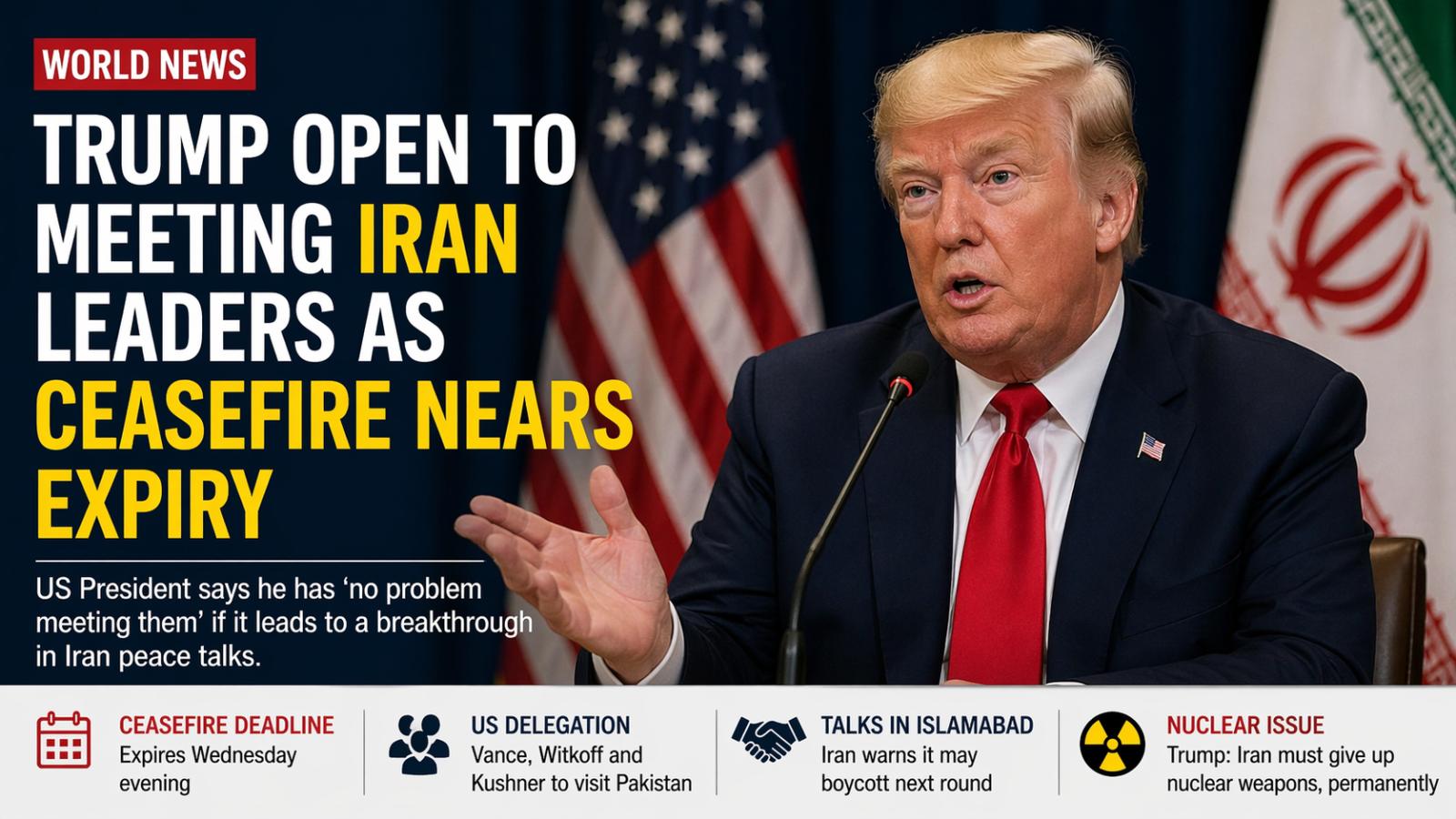
United States President Donald Trump on Monday indicated his willingness to meet Iranian leaders directly, as diplomatic efforts to sustain a fragile ceasefire between Washington and Iran approach a critical deadline. The two-week ceasefire is set to expire on Wednesday evening, raising concerns that hosti
Trump proposes meeting Iran amid stalled peace talks and ceasefire deadline
United States President Donald Trump on Monday indicated his willingness to meet Iranian leaders directly, as diplomatic efforts to sustain a fragile ceasefire between Washington and Iran approach a critical deadline. The two-week ceasefire is set to expire on Wednesday evening, raising concerns that hosti
US Iran peace talks Pakistan: What it means as ceasefire nears breaking point
The US Iran peace talks Pakistan update is drawing global attention as Washington and Tehran prepare for a new round of negotiations. With the ceasefire nearing its deadline, the outcome of these talks could significantly impact global stability and energy markets. What happened and why it matters On Monday, April 20, 2026, both the United States and Iran signaled that they are preparing to send delegations to
US Iran peace talks Pakistan: What it means as ceasefire nears breaking point
The US Iran peace talks Pakistan update is drawing global attention as Washington and Tehran prepare for a new round of negotiations. With the ceasefire nearing its deadline, the outcome of these talks could significantly impact global stability and energy markets. What happened and why it matters On Monday, April 20, 2026, both the United States and Iran signaled that they are preparing to send delegations to
India moves over 1.1 million people from Gulf region during ceasefire window
India has evacuated more than 1.1 million people from West Asia as regional tensions and airspace restrictions continue to disrupt commercial travel, officials said during a government briefing in New Delhi. The large-scale movement has been carried out through sustained flight operations from multiple countries, with authorities relying on alternate routes where airspace remains accessible. Officials said that since February 28, approximately 1,130,000 passengers have traveled fro
India moves over 1.1 million people from Gulf region during ceasefire window
India has evacuated more than 1.1 million people from West Asia as regional tensions and airspace restrictions continue to disrupt commercial travel, officials said during a government briefing in New Delhi. The large-scale movement has been carried out through sustained flight operations from multiple countries, with authorities relying on alternate routes where airspace remains accessible. Officials said that since February 28, approximately 1,130,000 passengers have traveled fro
Trump warns bombs will fall if US-Iran ceasefire collapses as tensions explode
US Iran war ceasefire warning Trump signals rising tensions The US Iran war ceasefire warning Trump has intensified global concerns as the fragile truce between Washington and Tehran nears its expiration. With tensions already high, US President Donald Trump has warned that military action could resume if a deal is not reached in time. The situation is being closely watched worldwide, as the outcome could significantly imp
Trump warns bombs will fall if US-Iran ceasefire collapses as tensions explode
US Iran war ceasefire warning Trump signals rising tensions The US Iran war ceasefire warning Trump has intensified global concerns as the fragile truce between Washington and Tehran nears its expiration. With tensions already high, US President Donald Trump has warned that military action could resume if a deal is not reached in time. The situation is being closely watched worldwide, as the outcome could significantly imp
US-Iran talks in doubt as ceasefire deadline nears, tensions escalate
US-Iran talks uncertainty deepens as second round in Pakistan remains undecided Uncertainty has grown over the much-anticipated second round of US-Iran peace talks in Pakistan, as both sides continue strategic posturing ahead of a critical deadline. The discussions, expected to take place in Islamabad, come at a time when tensions remain high and diplomatic clarity is still lacking. The situation is particularly sensitive
US-Iran talks in doubt as ceasefire deadline nears, tensions escalate
US-Iran talks uncertainty deepens as second round in Pakistan remains undecided Uncertainty has grown over the much-anticipated second round of US-Iran peace talks in Pakistan, as both sides continue strategic posturing ahead of a critical deadline. The discussions, expected to take place in Islamabad, come at a time when tensions remain high and diplomatic clarity is still lacking. The situation is particularly sensitive
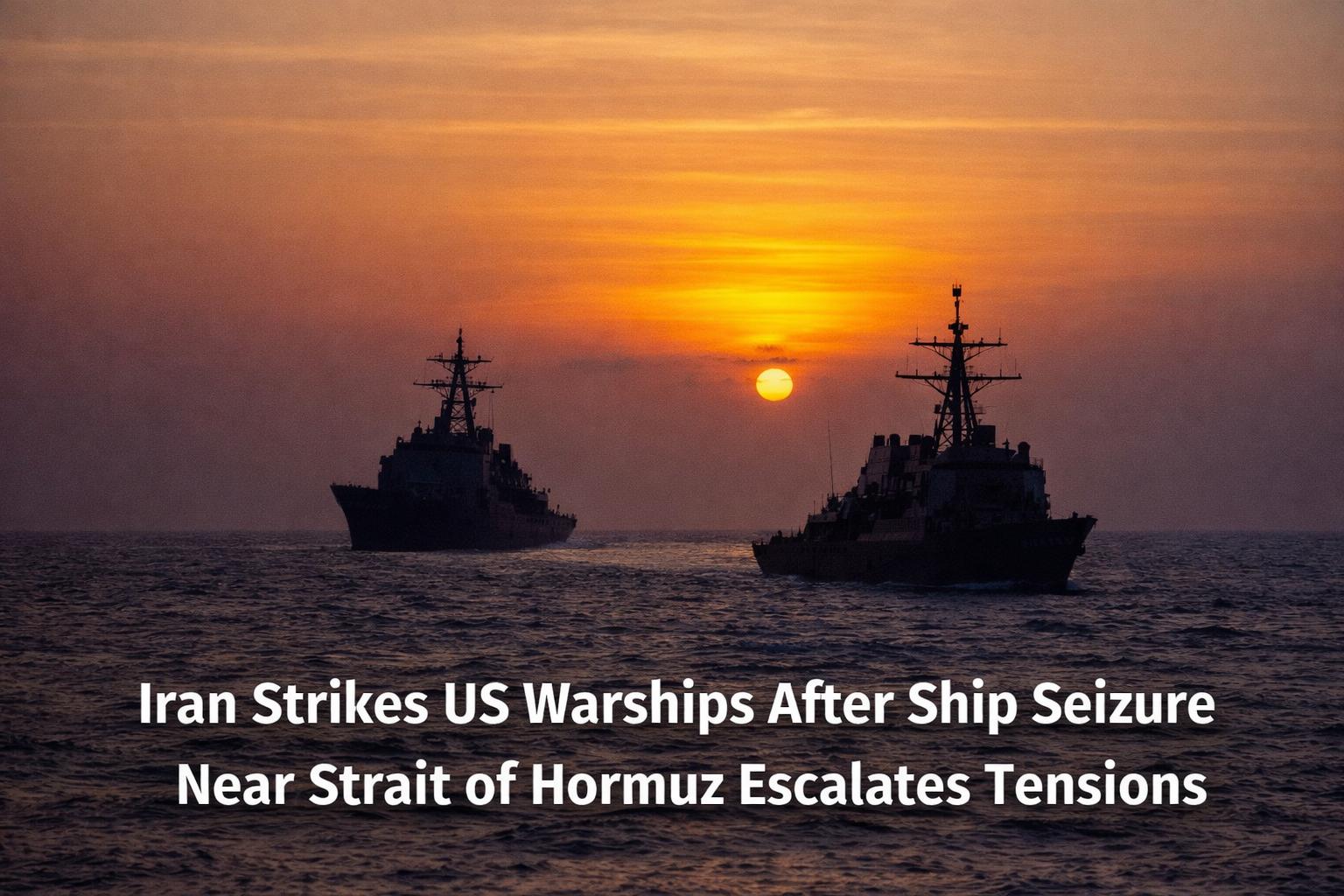
Iran Strikes US Warships After Ship Seizure Near Strait of Hormuz Escalates Tensions
Tensions between Iran and the United States have escalated sharply after Tehran claimed it launched drone strikes targeting American military vessels in the Sea of Oman. The reported strikes came in response to a US operation in which forces intercepted and seized an Iranian cargo ship near the
Iran Strikes US Warships After Ship Seizure Near Strait of Hormuz Escalates Tensions
Tensions between Iran and the United States have escalated sharply after Tehran claimed it launched drone strikes targeting American military vessels in the Sea of Oman. The reported strikes came in response to a US operation in which forces intercepted and seized an Iranian cargo ship near the
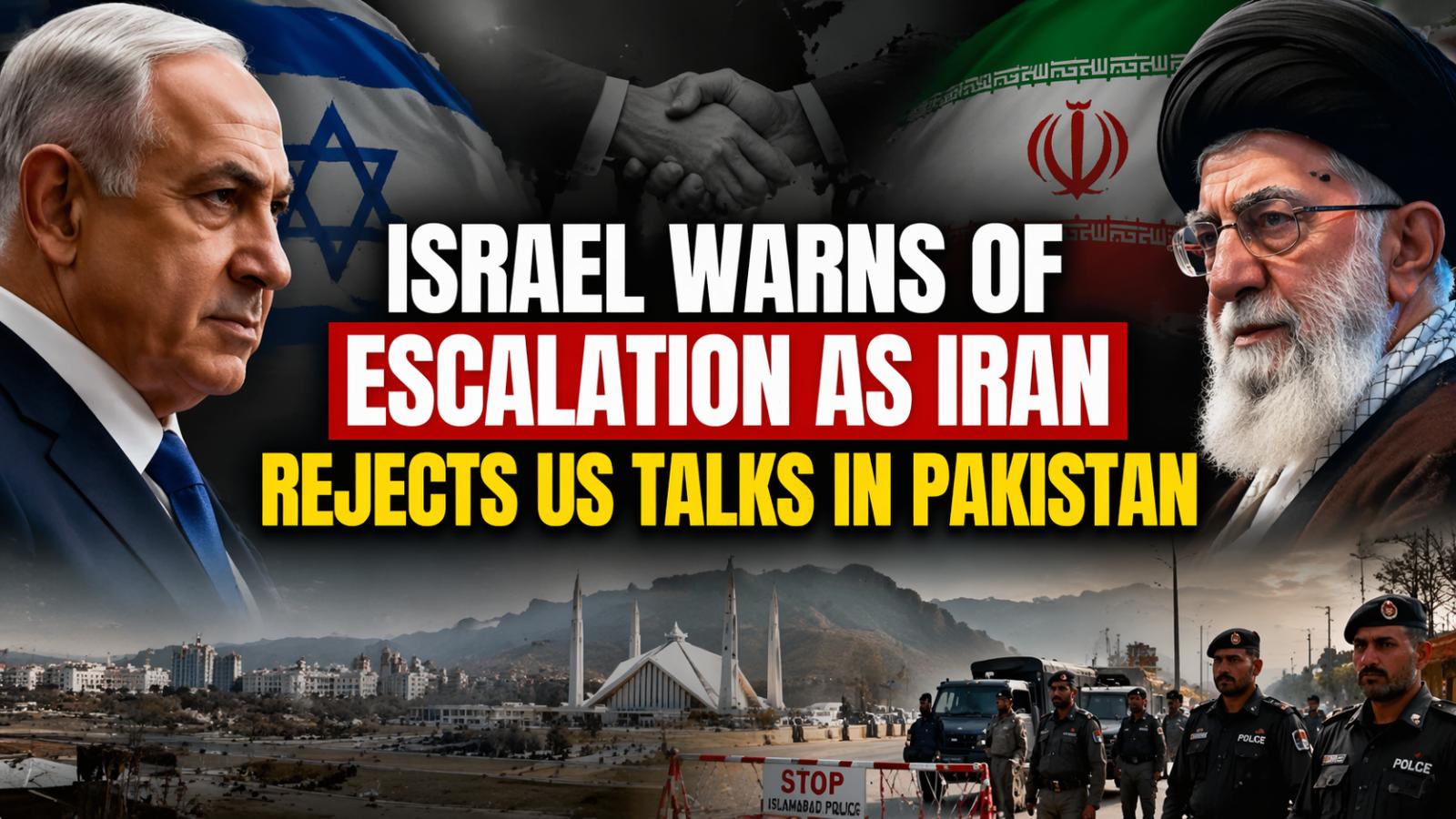
Israel warns of escalation as Iran rejects US talks in Pakistan
Israeli Prime Minister Benjamin Netanyahu has warned that tensions with Iran could escalate rapidly, underscoring the fragile state of the ongoing geopolitical situation. Speaking alongside Javier Milei, Netanyahu said the conflict remains unpredictable and developments could unfold at any moment. He empha
Israel warns of escalation as Iran rejects US talks in Pakistan
Israeli Prime Minister Benjamin Netanyahu has warned that tensions with Iran could escalate rapidly, underscoring the fragile state of the ongoing geopolitical situation. Speaking alongside Javier Milei, Netanyahu said the conflict remains unpredictable and developments could unfold at any moment. He empha
Israel military investigates soldier over vandalism of religious symbol in Lebanon
The Israel Defense Forces has confirmed the authenticity of widely circulated images showing one of its soldiers damaging a statue of Jesus in Southern Lebanon, triggering criticism and prompting an internal investigation. The incident, which quickly gained traction online, has drawn attention amid ongoing
Israel military investigates soldier over vandalism of religious symbol in Lebanon
The Israel Defense Forces has confirmed the authenticity of widely circulated images showing one of its soldiers damaging a statue of Jesus in Southern Lebanon, triggering criticism and prompting an internal investigation. The incident, which quickly gained traction online, has drawn attention amid ongoing
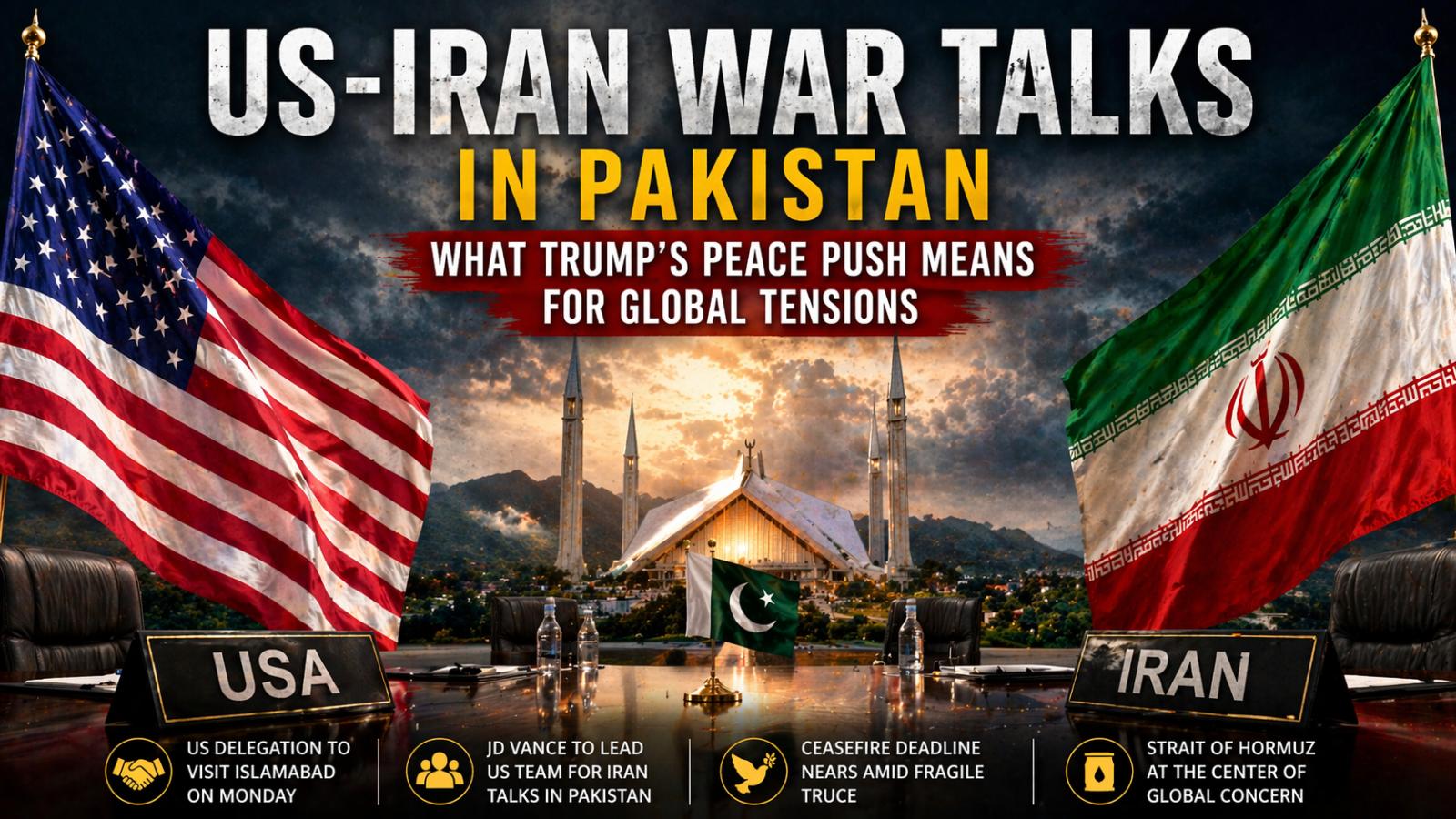
US-Iran war talks in Pakistan: What Trump’s peace push means for global tensions
US-Iran war talks in Pakistan signal crucial diplomatic moment The US-Iran war talks in Pakistan are emerging as a critical step toward easing tensions as the fragile ceasefire deadline approaches. With the conflict entering its eighth week, both sides are showing cautious optimism, even as major differences remain unresolved. The latest US-Iran peace talks come at a time when global markets are closely wa
US-Iran war talks in Pakistan: What Trump’s peace push means for global tensions
US-Iran war talks in Pakistan signal crucial diplomatic moment The US-Iran war talks in Pakistan are emerging as a critical step toward easing tensions as the fragile ceasefire deadline approaches. With the conflict entering its eighth week, both sides are showing cautious optimism, even as major differences remain unresolved. The latest US-Iran peace talks come at a time when global markets are closely wa
How did conflict affect Sri Lanka tourism? March arrivals fall sharply
Colombo — Tourist arrivals to Sri Lanka fell sig
How did conflict affect Sri Lanka tourism? March arrivals fall sharply
Colombo — Tourist arrivals to Sri Lanka fell sig
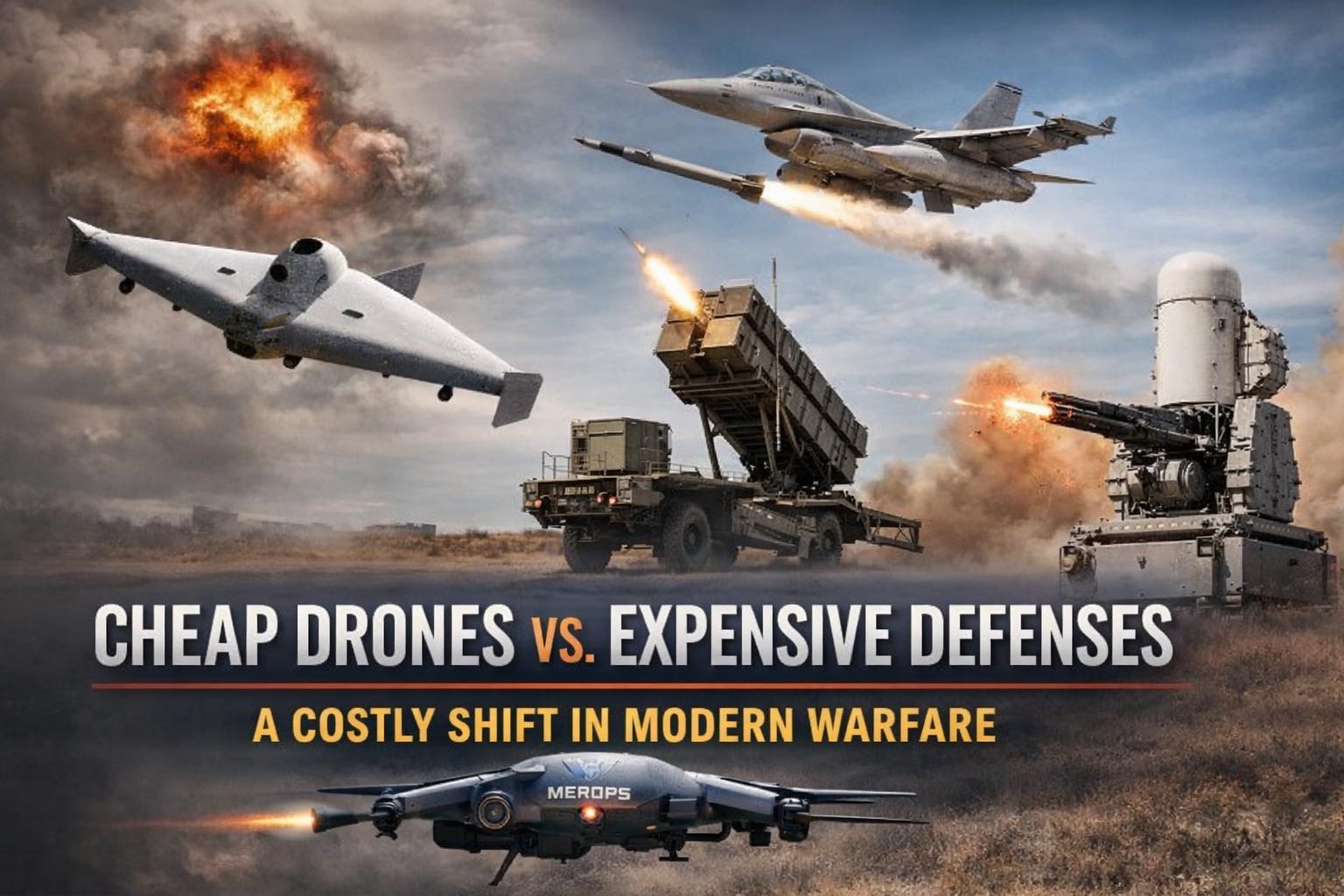
How Iran’s affordable drones are challenging America’s expensive interceptors
One of the most striking lessons from the war with Iran is how a relatively low-cost adversary has exposed vulnerabilities in U.S. defense strategy. Iran has demonstrated both a willingness to go on the offensive and an ability to leverage inexpensive drone technology at scale. These drones, often built with commercial-grade components, cost roughly $35,000 each—far less than the high-end interceptors used to destroy them. This imbalance has forced the United States and its allies to confront a new reality: modern warfare is no longer dominated solely by precision and sophistication, but also by affordability and volume. Cheap drones had already reshaped the battlefield in Ukraine, and Iran has now applied similar tactics in the Middle East, exploiting a long-standing gap in U.S. defense investments that favored fewer, more expensive systems over scalable solutions. Why are U.S. defenses struggling with cost efficiency? Because interceptors far exceed drone prices The financial mismatch is stark. In just the first six days of the conflict, the U.S. spent $11.3 billion, with estimates later rising to between $25 billion and $35 billion. A significant portion of that cost comes from interceptor missiles used to shoot down relatively inexpensive drones. Despite years of Pentagon focus on counter-drone capabilities, experts like Michael C. Horowitz note that there has been little urgency to scale affordable solutions. The result is a defense strategy where each engagement can cost far more than the threat itself—an unsustainable model in prolonged conflicts. How do air-based defenses work against drones? By using early detection and precision strikes—when available In an ideal scenario, airborne early warning systems detect drones hundreds of miles away. Fighter jets such as the F-16 Fighting Falcon are then deployed to intercept them using relatively cheaper rocket systems like APKWS II. This method is among the most cost-efficient, but it depends heavily on maintaining constant air patrols and intact detection systems. Iran has targeted these early warning assets, limiting their effectiveness and reducing the availability of this optimal defense approach. What role do ground and naval systems play? They offer range and reliability but at a steep price When air defenses are unavailable, the U.S. relies on ground- and sea-based systems. These include: Short-range systems like the Coyote, designed specifically for drones and relatively cost-effective—but in short supply. Naval destroyers using radar and SM-2 interceptors, which are powerful but expensive and designed for larger threats. The Patriot missile system, capable of intercepting drones from long distances using costly PAC-3 missiles. These systems were originally built to counter high-end threats like ballistic missiles, not swarms of cheap drones. As a result, they are often overkill—both technologically and financially—for the task at hand. Still, their use can be justified when defending high-value assets, such as billion-dollar radar installations or critical military infrastructure. What are the emerging solutions to counter drones? AI interceptors and lasers show promise but remain unproven New approaches aim to fix the cost imbalance. AI-powered interceptor drones, such as the Merops system developed by a company founded by Eric Schmidt, represent a potential shift toward cheaper, scalable defenses. These systems have been tested in collaboration with Ukrainian forces experienced in countering Iranian drones. The U.S. has already sent thousands of these units to the Middle East and begun training troops, though it remains unclear whether they have been deployed in combat. Meanwhile, the Pentagon has invested heavily in directed energy weapons—lasers that could cost as little as $3 per shot and reach targets up to 12 miles away. However, these systems have yet to be fielded in real-world combat. Why is ammunition depletion a growing concern? Because stockpiles may run out faster than they can be replaced Beyond cost, a more immediate concern is supply. Experts warn that interceptor stockpiles are being depleted at an alarming rate. As Tom Karako explains, the issue is not just affordability but availability: the U.S. risks running out of munitions before it can replenish them. This highlights a deeper strategic challenge. Modern conflicts—defined by mass-produced, low-cost threats—require not just advanced technology, but also sustainable production and scalable defense systems.
How Iran’s affordable drones are challenging America’s expensive interceptors
One of the most striking lessons from the war with Iran is how a relatively low-cost adversary has exposed vulnerabilities in U.S. defense strategy. Iran has demonstrated both a willingness to go on the offensive and an ability to leverage inexpensive drone technology at scale. These drones, often built with commercial-grade components, cost roughly $35,000 each—far less than the high-end interceptors used to destroy them. This imbalance has forced the United States and its allies to confront a new reality: modern warfare is no longer dominated solely by precision and sophistication, but also by affordability and volume. Cheap drones had already reshaped the battlefield in Ukraine, and Iran has now applied similar tactics in the Middle East, exploiting a long-standing gap in U.S. defense investments that favored fewer, more expensive systems over scalable solutions. Why are U.S. defenses struggling with cost efficiency? Because interceptors far exceed drone prices The financial mismatch is stark. In just the first six days of the conflict, the U.S. spent $11.3 billion, with estimates later rising to between $25 billion and $35 billion. A significant portion of that cost comes from interceptor missiles used to shoot down relatively inexpensive drones. Despite years of Pentagon focus on counter-drone capabilities, experts like Michael C. Horowitz note that there has been little urgency to scale affordable solutions. The result is a defense strategy where each engagement can cost far more than the threat itself—an unsustainable model in prolonged conflicts. How do air-based defenses work against drones? By using early detection and precision strikes—when available In an ideal scenario, airborne early warning systems detect drones hundreds of miles away. Fighter jets such as the F-16 Fighting Falcon are then deployed to intercept them using relatively cheaper rocket systems like APKWS II. This method is among the most cost-efficient, but it depends heavily on maintaining constant air patrols and intact detection systems. Iran has targeted these early warning assets, limiting their effectiveness and reducing the availability of this optimal defense approach. What role do ground and naval systems play? They offer range and reliability but at a steep price When air defenses are unavailable, the U.S. relies on ground- and sea-based systems. These include: Short-range systems like the Coyote, designed specifically for drones and relatively cost-effective—but in short supply. Naval destroyers using radar and SM-2 interceptors, which are powerful but expensive and designed for larger threats. The Patriot missile system, capable of intercepting drones from long distances using costly PAC-3 missiles. These systems were originally built to counter high-end threats like ballistic missiles, not swarms of cheap drones. As a result, they are often overkill—both technologically and financially—for the task at hand. Still, their use can be justified when defending high-value assets, such as billion-dollar radar installations or critical military infrastructure. What are the emerging solutions to counter drones? AI interceptors and lasers show promise but remain unproven New approaches aim to fix the cost imbalance. AI-powered interceptor drones, such as the Merops system developed by a company founded by Eric Schmidt, represent a potential shift toward cheaper, scalable defenses. These systems have been tested in collaboration with Ukrainian forces experienced in countering Iranian drones. The U.S. has already sent thousands of these units to the Middle East and begun training troops, though it remains unclear whether they have been deployed in combat. Meanwhile, the Pentagon has invested heavily in directed energy weapons—lasers that could cost as little as $3 per shot and reach targets up to 12 miles away. However, these systems have yet to be fielded in real-world combat. Why is ammunition depletion a growing concern? Because stockpiles may run out faster than they can be replaced Beyond cost, a more immediate concern is supply. Experts warn that interceptor stockpiles are being depleted at an alarming rate. As Tom Karako explains, the issue is not just affordability but availability: the U.S. risks running out of munitions before it can replenish them. This highlights a deeper strategic challenge. Modern conflicts—defined by mass-produced, low-cost threats—require not just advanced technology, but also sustainable production and scalable defense systems.
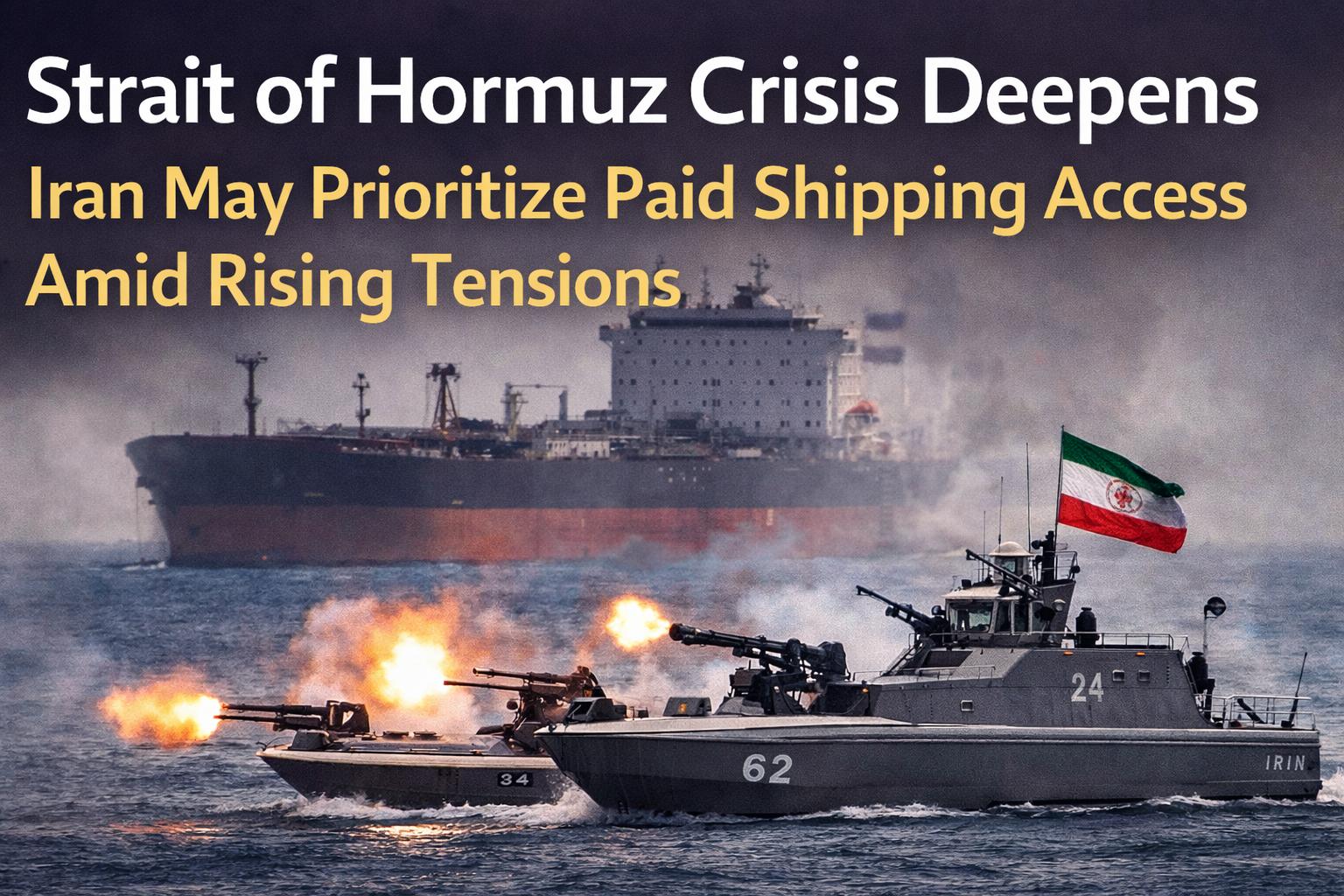
Strait of Hormuz crisis deepens: Iran may prioritize paid shipping access amid rising tensions
Strait of Hormuz crisis intensifies amid shipping threats and stalled diplomacy The Strait of Hormuz crisis has escalated sharply as Iran appears to tighten its control over the strategic waterway, raising concerns about global oil supply and maritime security. Reports suggest Tehran may prioritize passage for select vessels, while tensions with the United States continue to grow.The
Strait of Hormuz crisis deepens: Iran may prioritize paid shipping access amid rising tensions
Strait of Hormuz crisis intensifies amid shipping threats and stalled diplomacy The Strait of Hormuz crisis has escalated sharply as Iran appears to tighten its control over the strategic waterway, raising concerns about global oil supply and maritime security. Reports suggest Tehran may prioritize passage for select vessels, while tensions with the United States continue to grow.The
Iran rift exposed after firing on Indian ships in Strait of Hormuz
Tensions within Iran’s leadership structure came
Iran rift exposed after firing on Indian ships in Strait of Hormuz
Tensions within Iran’s leadership structure came
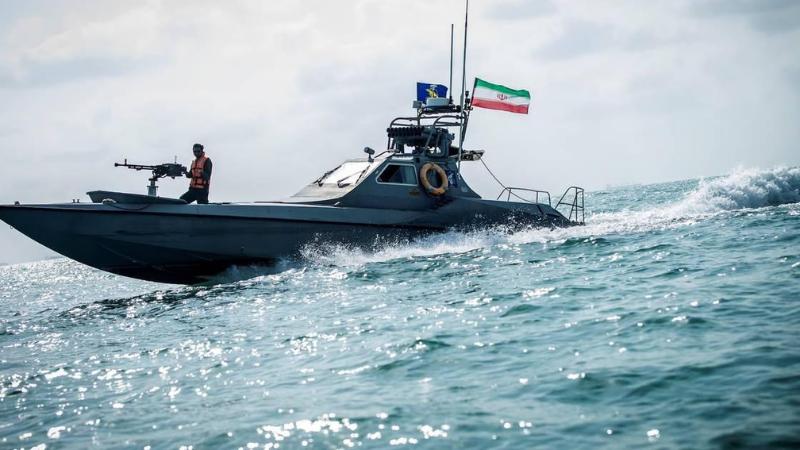
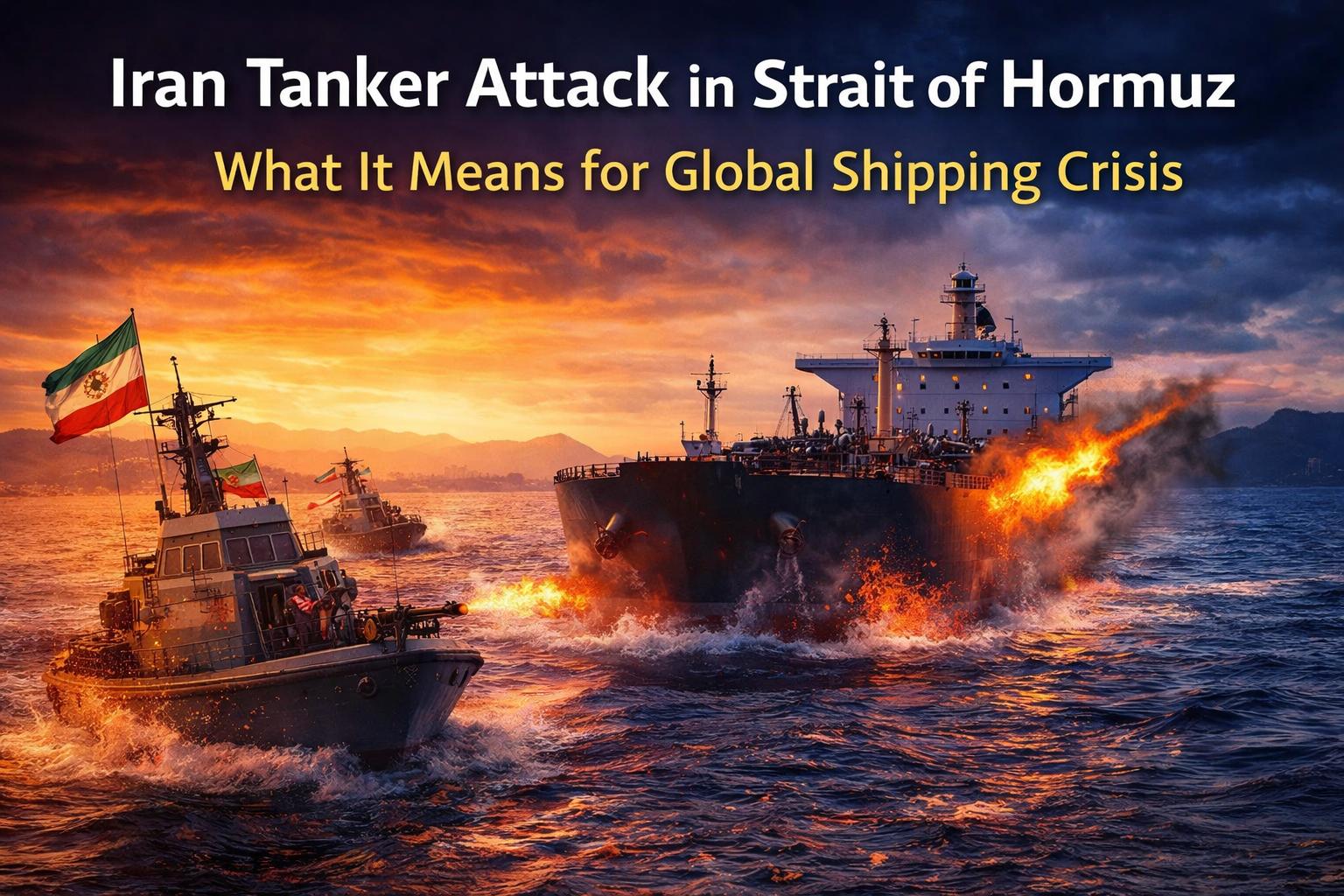
Iran fires on tanker in Strait of Hormuz: What the renewed shipping crisis means for global oil
Iran tanker attack Strait of Hormuz signals renewed crisis in global shipping Tensions in the Middle East escalated sharply after an Iran tanker attack in the Strait of Hormuz, raising fresh concerns about global oil supply and maritime safety. The incident comes as Iran reimposed restrictions on one of the world’s most critical shipping routes, just a day after signals of reope
Iran fires on tanker in Strait of Hormuz: What the renewed shipping crisis means for global oil
Iran tanker attack Strait of Hormuz signals renewed crisis in global shipping Tensions in the Middle East escalated sharply after an Iran tanker attack in the Strait of Hormuz, raising fresh concerns about global oil supply and maritime safety. The incident comes as Iran reimposed restrictions on one of the world’s most critical shipping routes, just a day after signals of reope
Iran Responds to Donald Trump With Turn Off Phone, Block Bibi Remark
Iran has dismissed recent claims made by former US President Donald Trump, responding with sarcasm to his remarks on ongoing geopolitical developments. In an unusually sharp diplomatic exchange, Iran’s embassy in Zimbabwe mocke

Iran Responds to Donald Trump With Turn Off Phone, Block Bibi Remark
Iran has dismissed recent claims made by former US President Donald Trump, responding with sarcasm to his remarks on ongoing geopolitical developments. In an unusually sharp diplomatic exchange, Iran’s embassy in Zimbabwe mocke

Iran Rejects Trump’s Claim on Enriched Uranium Transfer, Confirms No Such Plan
Iran has denied reports suggesting any plans to transfer its enriched uranium, rejecting recent claims attributed to former US President Donald Trump regarding a possible agreement on the issue. Foreign Ministry spokesperson Ismael B
Iran Rejects Trump’s Claim on Enriched Uranium Transfer, Confirms No Such Plan
Iran has denied reports suggesting any plans to transfer its enriched uranium, rejecting recent claims attributed to former US President Donald Trump regarding a possible agreement on the issue. Foreign Ministry spokesperson Ismael B
US-Iran Standoff Deepens with Blockade and Hormuz Threats
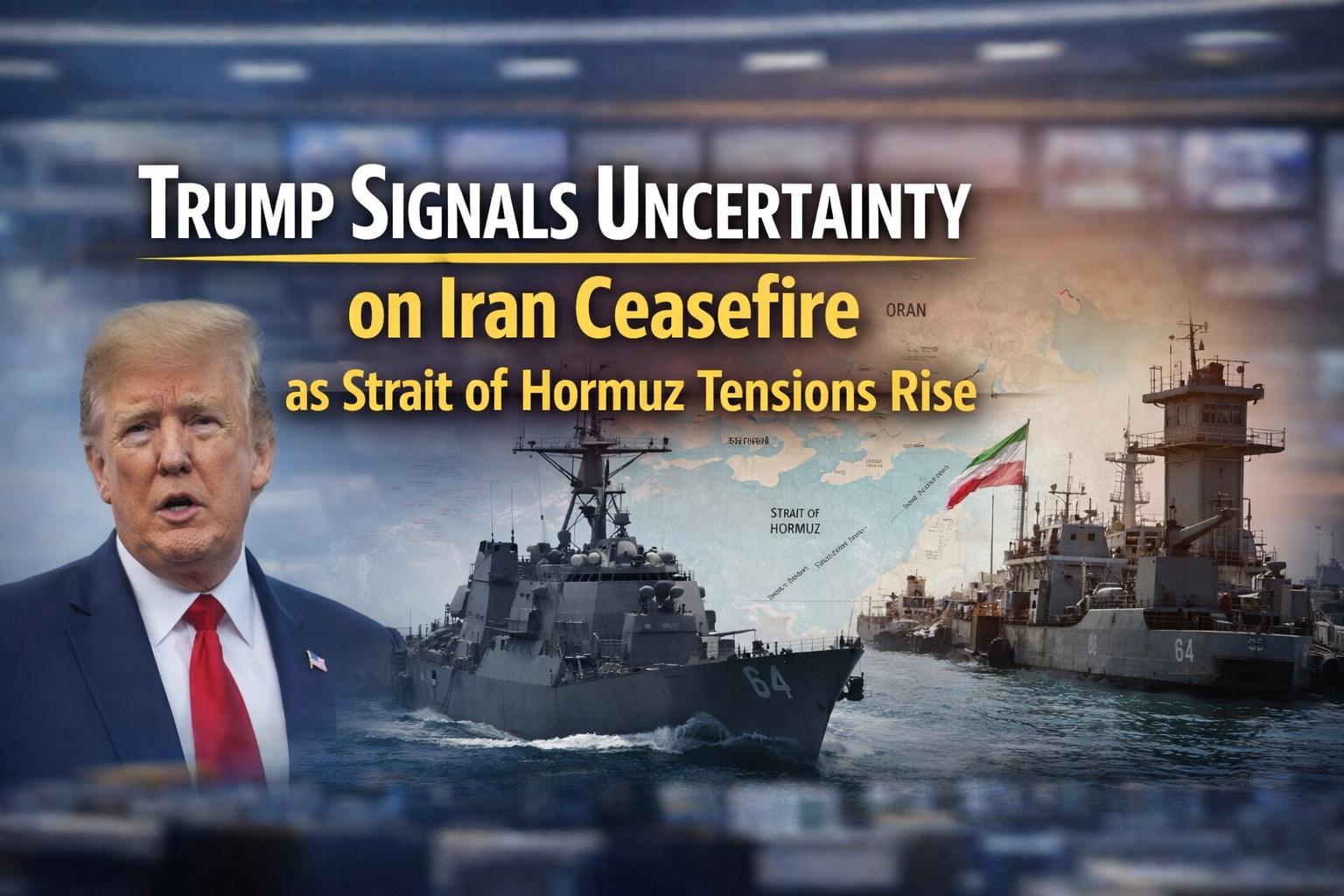
Donald Trump indicated that the United States may not extend its ceasefire with Iran, as tensions continue to rise over maritime security and regional control. Speaking to reporters, he said the naval blockade of Iranian ports would remain in place regardless of whether the ceasefire expires, signaling a f
US-Iran Standoff Deepens with Blockade and Hormuz Threats
Donald Trump indicated that the United States may not extend its ceasefire with Iran, as tensions continue to rise over maritime security and regional control. Speaking to reporters, he said the naval blockade of Iranian ports would remain in place regardless of whether the ceasefire expires, signaling a f