































#nri-tax
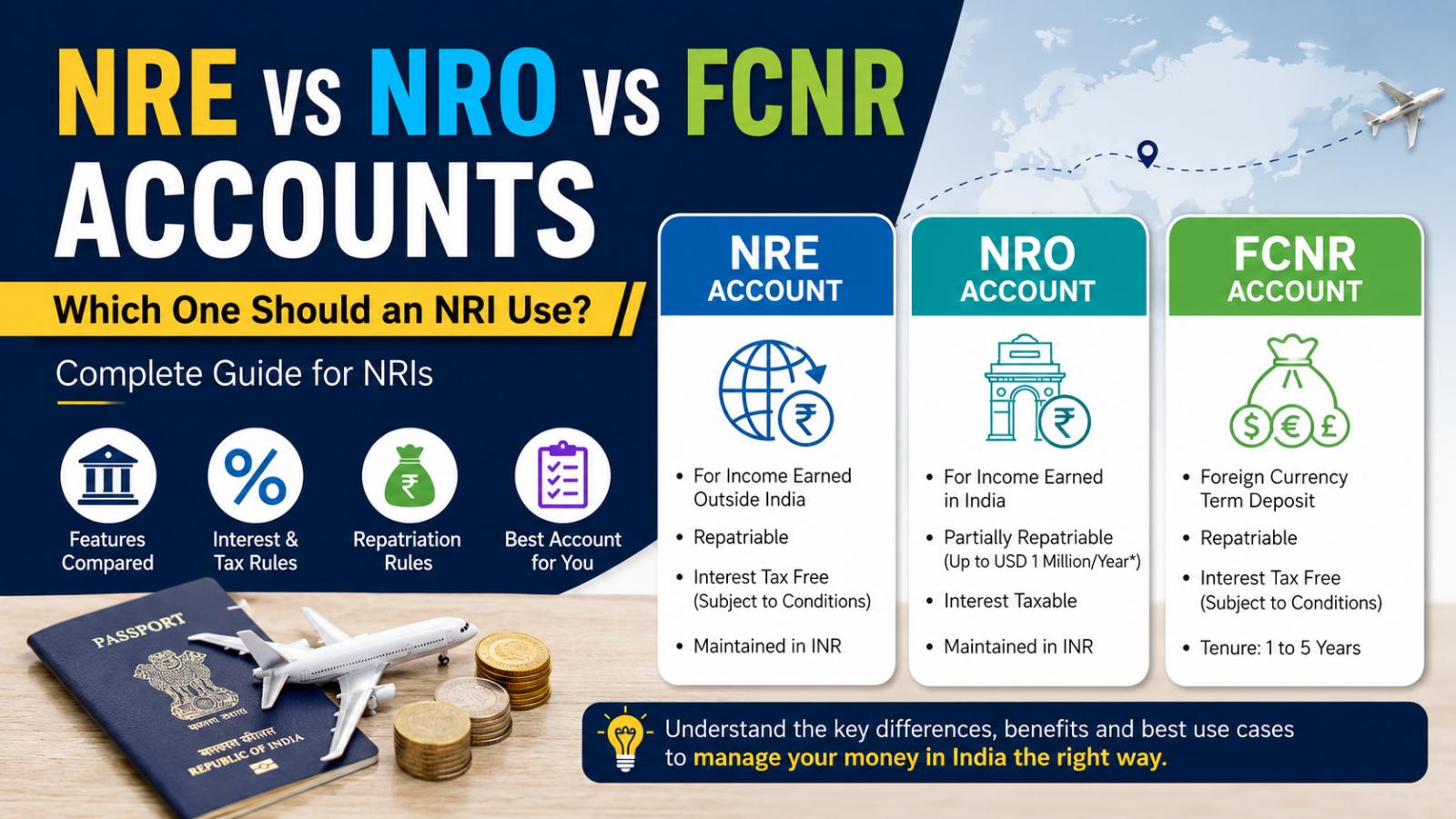
NRE vs NRO vs FCNR Accounts: Which One Should an NRI Use?
This guide explains NRE, NRO and FCNR accounts in plain English, compares tax and repatriation rules, shows where overseas and Indian income should go, and gives realistic account combinations for salaried NRIs, landlords, investors and families. Last reviewed: July 18, 2026 The first banking question most new NRIs ask sounds simple: “Which Indian account should I use now?”
NRE vs NRO vs FCNR Accounts: Which One Should an NRI Use?
This guide explains NRE, NRO and FCNR accounts in plain English, compares tax and repatriation rules, shows where overseas and Indian income should go, and gives realistic account combinations for salaried NRIs, landlords, investors and families. Last reviewed: July 18, 2026 The first banking question most new NRIs ask sounds simple: “Which Indian account should I use now?”
UK Tax Changes Cut FCNR Returns for High-Net-Worth NRIs
The UK tax rule on FCNR deposits is weakening their appeal among some wealthy NRIs because overseas interest may be taxed in Britain. Higher Indian returns and the RBI-backed incentive remain attractive, but investors must now compare headline rates with their final post-tax income. UK tax rules are weakening the appeal of Foreign Currency Non-Resident, or FCNR, deposits for some wealthy NRIs, particularly long-term UK residents who may owe British tax on interest
UK Tax Changes Cut FCNR Returns for High-Net-Worth NRIs
The UK tax rule on FCNR deposits is weakening their appeal among some wealthy NRIs because overseas interest may be taxed in Britain. Higher Indian returns and the RBI-backed incentive remain attractive, but investors must now compare headline rates with their final post-tax income. UK tax rules are weakening the appeal of Foreign Currency Non-Resident, or FCNR, deposits for some wealthy NRIs, particularly long-term UK residents who may owe British tax on interest
PPF account guidelines for NRIs: Key rules, tax benefits, and maturity terms
Many Indians who migrate abroad continue to maintain strong financial ties with their home country through various savings and investment instruments, including the Public Provident Fund (PPF). However, once an individual’s residential status changes under the Foreign Exchange Management Act (FEMA), different rules come into play. The guidelines determine whether Non-Resident Indians (NRIs) can hold or operate PPF accounts and how the proceeds are managed upon maturity. Under exis
PPF account guidelines for NRIs: Key rules, tax benefits, and maturity terms
Many Indians who migrate abroad continue to maintain strong financial ties with their home country through various savings and investment instruments, including the Public Provident Fund (PPF). However, once an individual’s residential status changes under the Foreign Exchange Management Act (FEMA), different rules come into play. The guidelines determine whether Non-Resident Indians (NRIs) can hold or operate PPF accounts and how the proceeds are managed upon maturity. Under exis
How AI Helps NRIs File Taxes in Both India and the USA
For Non-Resident Indians (NRIs) juggling financial commitments in both India and the United States, tax filing often becomes a yearly stress point. Each country has distinct regulations, reporting formats, and deadlines. The slightest oversight can lead to penalties or double taxation. That’s where Artificial Intelligence (AI) is proving to be a game-changer. Today, AI-powered tax tools are helping NRIs simplify,
How AI Helps NRIs File Taxes in Both India and the USA
For Non-Resident Indians (NRIs) juggling financial commitments in both India and the United States, tax filing often becomes a yearly stress point. Each country has distinct regulations, reporting formats, and deadlines. The slightest oversight can lead to penalties or double taxation. That’s where Artificial Intelligence (AI) is proving to be a game-changer. Today, AI-powered tax tools are helping NRIs simplify,
Why Are Indians Flocking to Dubai for Property? Exploring the Real Estate Boom
The property market in Dubai has seen an increasing influx of Indian investors in recent years. Despite perceptions of cheaper real estate, the reasons behind this boom go beyond just affordability. With rising property prices in India and increasing dissatisfaction with local real estate conditions, many Indians are turning their eyes to Dubai for more promising returns and opportunities. Although the average price
Why Are Indians Flocking to Dubai for Property? Exploring the Real Estate Boom
The property market in Dubai has seen an increasing influx of Indian investors in recent years. Despite perceptions of cheaper real estate, the reasons behind this boom go beyond just affordability. With rising property prices in India and increasing dissatisfaction with local real estate conditions, many Indians are turning their eyes to Dubai for more promising returns and opportunities. Although the average price
Avoid ITR filing in 2025 if you're an NRI under this concessional tax regime
As the Income Tax Return (ITR) filing window opens for the Assessment Year 2025–26, non-resident Indians (NRIs) are being presented with a valuable opportunity to simplify their tax obligations and, in some cases, avoid filing a return entirely. Under Chapter XII-A of the Income Tax Act, 1961, NRIs who earn income from specific foreign exchange (FOREX) assets in India may opt for a special concessional tax regime that offers multiple benefits—including exemption from filing if certai
Avoid ITR filing in 2025 if you're an NRI under this concessional tax regime
As the Income Tax Return (ITR) filing window opens for the Assessment Year 2025–26, non-resident Indians (NRIs) are being presented with a valuable opportunity to simplify their tax obligations and, in some cases, avoid filing a return entirely. Under Chapter XII-A of the Income Tax Act, 1961, NRIs who earn income from specific foreign exchange (FOREX) assets in India may opt for a special concessional tax regime that offers multiple benefits—including exemption from filing if certai
US Cuts Remittance Tax to 3.5%: Big Relief for Indian Migrants
The rollback of the proposed 5% remittance tax to 3.5% by the United States government has brought major relief to Indian migrants who regularly send money home. On a $10,000 transfer, senders now save $150 (₹12,000), which is a significant benefit for families depending on overseas income for essential needs such as healthcare, education, and daily expenses. The move is especially helpful for workers in service and labor-intensive industries. India continues to be the top recipie
US Cuts Remittance Tax to 3.5%: Big Relief for Indian Migrants
The rollback of the proposed 5% remittance tax to 3.5% by the United States government has brought major relief to Indian migrants who regularly send money home. On a $10,000 transfer, senders now save $150 (₹12,000), which is a significant benefit for families depending on overseas income for essential needs such as healthcare, education, and daily expenses. The move is especially helpful for workers in service and labor-intensive industries. India continues to be the top recipie
NRIs Not Liable for Capital Gains Tax on Mutual Fund Sales in India, Rules ITAT
In a ruling that could significantly influence the tax liabilities of Non-Resident Indians (NRIs) investing in Indian mutual funds, the Income Tax Appellate Tribunal (ITAT), Mumbai bench, has determined that capital gains earned by NRIs on the redemption of mutual fund units are not taxable in India. This decision was delivered in a case involving a Singapore-based NRI who had declared short-term capital gains from mutual fund investments but claimed exemption under the Double Taxation Avoidance
NRIs Not Liable for Capital Gains Tax on Mutual Fund Sales in India, Rules ITAT
In a ruling that could significantly influence the tax liabilities of Non-Resident Indians (NRIs) investing in Indian mutual funds, the Income Tax Appellate Tribunal (ITAT), Mumbai bench, has determined that capital gains earned by NRIs on the redemption of mutual fund units are not taxable in India. This decision was delivered in a case involving a Singapore-based NRI who had declared short-term capital gains from mutual fund investments but claimed exemption under the Double Taxation Avoidance
Why NRIs Should Buy Health & Term Insurance in India: GST Refund, Tax Benefits & Secure Coverage
For Non-Resident Indians (NRIs), securing health and term insurance for themselves and their families back in India is more than just a financial obligation—it is a critical step toward safeguarding their loved ones and managing long-term security. As global citizens, NRIs often weigh the pros and cons of buying insurance in their country of residence versus opting for policies in India. What tips the scale in favor of Indian insurance are three strong reasons: affordability, extensive
Why NRIs Should Buy Health & Term Insurance in India: GST Refund, Tax Benefits & Secure Coverage
For Non-Resident Indians (NRIs), securing health and term insurance for themselves and their families back in India is more than just a financial obligation—it is a critical step toward safeguarding their loved ones and managing long-term security. As global citizens, NRIs often weigh the pros and cons of buying insurance in their country of residence versus opting for policies in India. What tips the scale in favor of Indian insurance are three strong reasons: affordability, extensive
New Income Tax Bill May Affect NRIs with Income Over 15 Lakhs
Union Finance Minister Nirmala Sitharaman is expected to introduce a new Income Tax Bill in Parliament today that will replace the existing Income Tax Act of 1961. The purpose of this new bill is to simplify the language and provisions of the current tax law, making it easier to understand and more accessible for taxpayers. The bill is part of the government’s ongoing efforts to reform and modernize the Indian tax system. The new bill will streamline various processes, eliminate complex
New Income Tax Bill May Affect NRIs with Income Over 15 Lakhs
Union Finance Minister Nirmala Sitharaman is expected to introduce a new Income Tax Bill in Parliament today that will replace the existing Income Tax Act of 1961. The purpose of this new bill is to simplify the language and provisions of the current tax law, making it easier to understand and more accessible for taxpayers. The bill is part of the government’s ongoing efforts to reform and modernize the Indian tax system. The new bill will streamline various processes, eliminate complex


