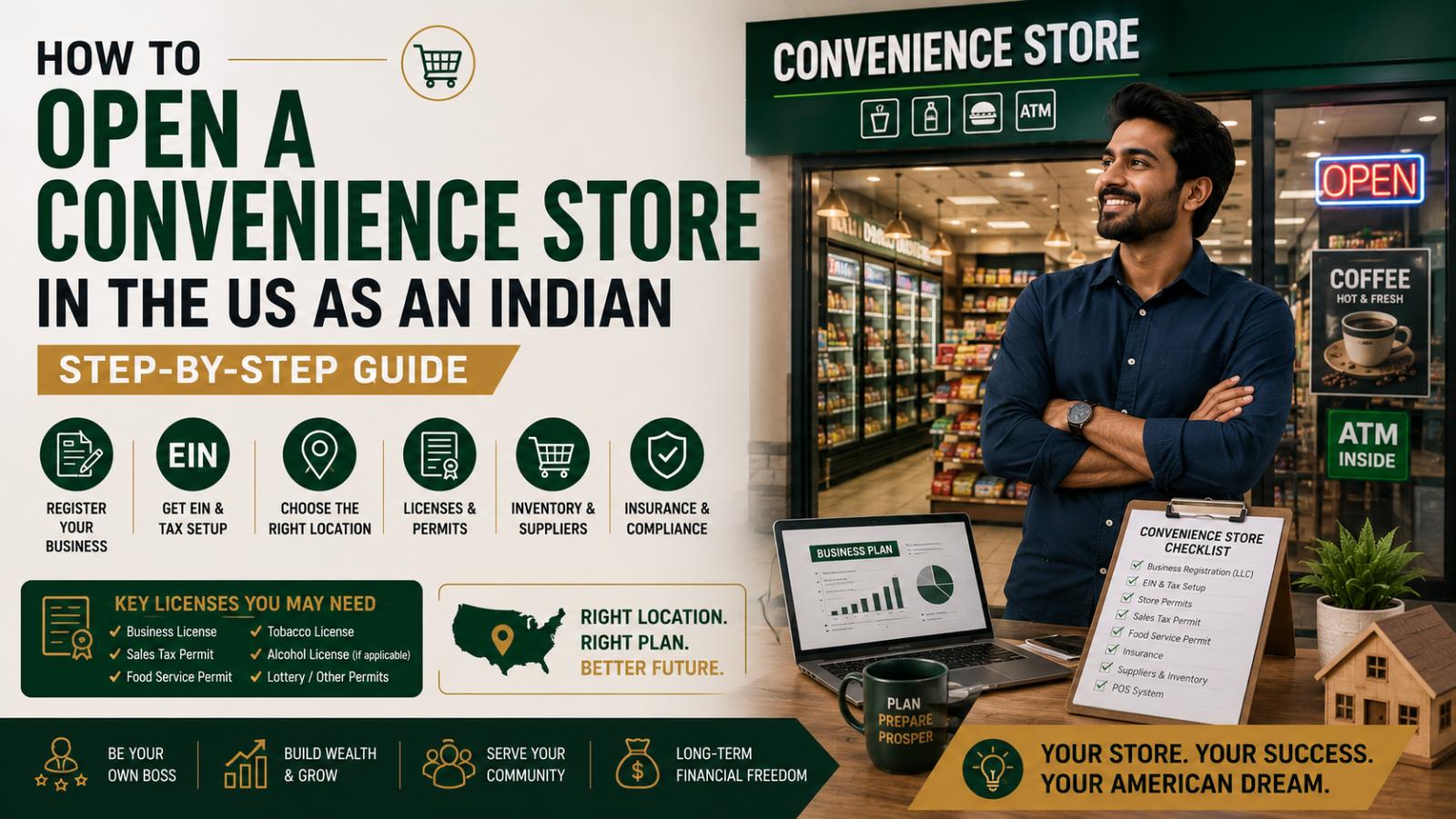
Want to open a convenience store in the US as an Indian? This guide explains business formation, EIN registration, choosing a location, retail and food permits, insurance, inventory, employees and the immigration rules Indian entrepreneurs must consider.
Indian citizens can generally own convenience stores in the United States, but opening one involves more than registering a company. Location, licenses, taxes, food regulations, insurance and immigration status all need to be considered before the store begins operating.
Choose the right location for your convenience store
Location can determine rent, customer traffic, competition, taxes, zoning and licensing requirements.
The U.S. Small Business Administration says a business location determines the taxes, zoning laws and regulations that apply to the company. Entrepreneurs should evaluate rent, utilities, local wages, insurance costs and permit fees before signing a lease.
For convenience stores, visibility, parking, nearby residential areas, traffic flow and operating hours can also affect the business model.
Register the business and obtain an EIN
The owner must choose a business structure such as an LLC or corporation and register it according to state requirements.
After formation, many businesses need an Employer Identification Number. Indian entrepreneurs whose principal place of business is outside the United States can apply for an EIN through the IRS international application process using Form SS-4.
An EIN may be needed for tax filings, employees and other business activities.
Get convenience store licenses and permits
There is no single nationwide convenience-store license covering every business.
State and local governments may require business licenses, zoning approval, sales-tax registration and permits related to the products being sold.
Convenience stores selling food are generally treated as retail food establishments, with state and local authorities having primary responsibility for retail food regulation and inspections.
If the store sells tobacco, retailers must also follow federal FDA requirements as well as applicable state and local laws. Federal rules include selling tobacco only to customers who are at least 21 and checking photo identification for buyers under 30.
Alcohol and lottery sales require additional approvals where permitted and should be checked separately before signing a lease or purchasing an existing store.
Set up inventory, POS and store operations
Before opening, owners need suppliers, refrigeration where required, shelving, inventory controls, payment processing and a point-of-sale system.
The POS system should make it easy to track sales, taxes and inventory. Stores operating long hours should also plan cameras, lighting, cash controls and other security measures.
Arrange business insurance and employees
Retail businesses should consider coverage such as general liability, commercial property and product liability insurance.
The SBA notes that some insurance requirements depend on whether the business has employees and on state law.
Employers must also follow payroll, employment-tax and worker eligibility requirements when hiring staff.
Can an Indian owner personally work in the store?
Owning the convenience store does not automatically provide authorization to work in the United States.
USCIS states that noncitizens must have appropriate employment authorization to work legally in the country, either through their immigration status or separate authorization.
An Indian entrepreneur planning to work behind the counter, manage employees or actively operate the store while physically in the U.S. should therefore review immigration restrictions separately from business ownership.
Opening a convenience store can be a viable path for Indian entrepreneurs, but the safest approach is to confirm the business structure, location-specific permits, taxes and immigration position before committing substantial capital.