



























How to Enable Earthquake Alerts on Android in India
How to enable earthquake alerts on Android in India is a timely question after powerful earthquakes struck Venezuela on Wednesday, June 24, 2026. Android’s warning system can provide some users with seconds of notice after an earthquake begins, although alerts are not guaranteed. Magnitude 7.2 and 7.5 earthquakes struck western Venezuela at about 6:04 PM and 6:05 PM Venezuela time on Wednesday, June 24, 2026. Reuters reported that the confir
How to Enable Earthquake Alerts on Android in India
How to enable earthquake alerts on Android in India is a timely question after powerful earthquakes struck Venezuela on Wednesday, June 24, 2026. Android’s warning system can provide some users with seconds of notice after an earthquake begins, although alerts are not guaranteed. Magnitude 7.2 and 7.5 earthquakes struck western Venezuela at about 6:04 PM and 6:05 PM Venezuela time on Wednesday, June 24, 2026. Reuters reported that the confir
MIT Cambridge: How Many Indian Students Study There in 2025–26?
The Massachusetts Institute of Technology recorded 286 students from India during the 2025–26 academic year, according to statistics published by MIT’s International Students Office. MIT, which holds the No. 1 position in the QS World University Rankings 2027, remains one of the most sought-after US universities among students interested in engineering, science, technology and research. MIT’s appeal to international students is also supported by its
MIT Cambridge: How Many Indian Students Study There in 2025–26?
The Massachusetts Institute of Technology recorded 286 students from India during the 2025–26 academic year, according to statistics published by MIT’s International Students Office. MIT, which holds the No. 1 position in the QS World University Rankings 2027, remains one of the most sought-after US universities among students interested in engineering, science, technology and research. MIT’s appeal to international students is also supported by its
RBI FCNR Swap: What US-Based NRIs Should Know
The RBI introduced the US dollar-rupee swap facility on Monday, June 8, 2026. It applies to eligible fresh FCNR(B) deposits, including deposits renewed at maturity, with an original tenure of at least three years and no more than five years. Deposits must be mobilized between Monday, June 8, 2026, and Wednesday, September 30, 2026. Banks may use the RBI swap window through Friday, October 16, 2026. The swap
RBI FCNR Swap: What US-Based NRIs Should Know
The RBI introduced the US dollar-rupee swap facility on Monday, June 8, 2026. It applies to eligible fresh FCNR(B) deposits, including deposits renewed at maturity, with an original tenure of at least three years and no more than five years. Deposits must be mobilized between Monday, June 8, 2026, and Wednesday, September 30, 2026. Banks may use the RBI swap window through Friday, October 16, 2026. The swap
R Madhavan Titan Watch Links Two Padma Shri Stories at ₹40.5 Lakh
The R Madhavan Titan watch worn during his Padma Shri ceremony was more than an expensive accessory. Priced at ₹40.5 lakh, or 4.05 million rupees, the rare timepiece brought Indian miniature art, Jaipur’s architectural heritage and advanced mechanical watchmaking together on one dial. President Droupadi Murmu presented Madhavan with the Padma Shri at Rashtrapati Bhavan in New Delhi on Tuesday, June 23, 2026. The Padma Shri is one of India’s highest civilian ho
R Madhavan Titan Watch Links Two Padma Shri Stories at ₹40.5 Lakh
The R Madhavan Titan watch worn during his Padma Shri ceremony was more than an expensive accessory. Priced at ₹40.5 lakh, or 4.05 million rupees, the rare timepiece brought Indian miniature art, Jaipur’s architectural heritage and advanced mechanical watchmaking together on one dial. President Droupadi Murmu presented Madhavan with the Padma Shri at Rashtrapati Bhavan in New Delhi on Tuesday, June 23, 2026. The Padma Shri is one of India’s highest civilian ho
Yogi Adityanath Vows Zero Tolerance After Ram Temple Donation Theft Arrests
Uttar Pradesh Chief Minister Yogi Adityanath has declared that his government will adopt a zero-tolerance approach against anyone found guilty of exploiting Sanatan values or misusing the faith of devotees. His remarks came a day after Uttar Pradesh Police arrested eight individuals in connection with the alleged embezzlement of donations collected at the Ram Temple in Ayodhya. The arrests followed the registration of an FIR based on the preliminary findings of a Special Investigation Team (S
Yogi Adityanath Vows Zero Tolerance After Ram Temple Donation Theft Arrests
Uttar Pradesh Chief Minister Yogi Adityanath has declared that his government will adopt a zero-tolerance approach against anyone found guilty of exploiting Sanatan values or misusing the faith of devotees. His remarks came a day after Uttar Pradesh Police arrested eight individuals in connection with the alleged embezzlement of donations collected at the Ram Temple in Ayodhya. The arrests followed the registration of an FIR based on the preliminary findings of a Special Investigation Team (S
8 arrested in Ram Temple donation embezzlement case in Ayodhya
The alleged Ram Temple donation theft case has taken a major turn with the Uttar Pradesh Police arresting all eight accused shortly after registering the first FIR based on the preliminary findings of a Special Investigation Team (SIT). The arrests mark the first major enforcement action in a case involving the alleged misappropriation of donations offered by lakhs of devotees at the Ram Temple in Ayodhya. According to police sources, the
8 arrested in Ram Temple donation embezzlement case in Ayodhya
The alleged Ram Temple donation theft case has taken a major turn with the Uttar Pradesh Police arresting all eight accused shortly after registering the first FIR based on the preliminary findings of a Special Investigation Team (SIT). The arrests mark the first major enforcement action in a case involving the alleged misappropriation of donations offered by lakhs of devotees at the Ram Temple in Ayodhya. According to police sources, the
Early petrol retail system in colonial India explained
India’s early petrol retail system began in the early 1920s during the British colonial period when automobiles were still a rare luxury. The petrol retail system in colonial India first appeared in major cities like Bombay (Mumbai) and Calcutta (Kolkata). At that time, there were no modern fuel stations, and petrol was supplied through depots, barrels, and basic manual systems. This early structure marked the foundation of the petrol retail system in colonial India and served only a limited group of users. Dependence on imported fuel sources During this period, India had very limited oil production. Most petrol was imported through the British imperial trade network. The imported oil came mainly from Burma, Persia, and other oil-producing regions under British control. This imported oil system made India heavily dependent on external sources for fuel supply. The oil import system played a key role in shaping how early petrol retail operations functioned across cities. Role of burmah shell in fuel distribution One of the major companies involved was Burmah Shell, which managed fuel storage and distribution across urban centers. Burmah Shell India operated depots and controlled the supply chain in key regions. These early fuel depots were not modern petrol pumps but organized colonial-era storage and distribution points. The company played a central role in shaping early fuel retail operations and expanding access in cities. Manual petrol pumps and basic technology Early petrol stations used manual petrol pump systems instead of modern electric dispensers. Fuel was moved using hand-operated pumps or gravity-fed systems from barrels into containers or vehicles. Workers had to physically operate the system, making the process slow and labor-intensive. This manual petrol pump system represented the early stage of fuel retail evolution in India. Limited access and elite vehicle ownership Vehicle ownership during the colonial period was extremely limited. Cars were mainly owned by British officials, princely rulers, and wealthy Indian elites. Because of this, petrol usage was also restricted to a small section of society. While there were no legal restrictions on petrol access, high costs and limited infrastructure made it inaccessible for the general population. Evolution towards modern petrol stations By the 1930s and 1940s, with increasing automobile usage, the petrol retail system began to evolve. Basic depots gradually transformed into structured petrol stations with better storage systems and improved dispensing technology. This transition marked the beginning of modern fuel retail development in India, leading to today’s automated petrol pump network.
Early petrol retail system in colonial India explained
India’s early petrol retail system began in the early 1920s during the British colonial period when automobiles were still a rare luxury. The petrol retail system in colonial India first appeared in major cities like Bombay (Mumbai) and Calcutta (Kolkata). At that time, there were no modern fuel stations, and petrol was supplied through depots, barrels, and basic manual systems. This early structure marked the foundation of the petrol retail system in colonial India and served only a limited group of users. Dependence on imported fuel sources During this period, India had very limited oil production. Most petrol was imported through the British imperial trade network. The imported oil came mainly from Burma, Persia, and other oil-producing regions under British control. This imported oil system made India heavily dependent on external sources for fuel supply. The oil import system played a key role in shaping how early petrol retail operations functioned across cities. Role of burmah shell in fuel distribution One of the major companies involved was Burmah Shell, which managed fuel storage and distribution across urban centers. Burmah Shell India operated depots and controlled the supply chain in key regions. These early fuel depots were not modern petrol pumps but organized colonial-era storage and distribution points. The company played a central role in shaping early fuel retail operations and expanding access in cities. Manual petrol pumps and basic technology Early petrol stations used manual petrol pump systems instead of modern electric dispensers. Fuel was moved using hand-operated pumps or gravity-fed systems from barrels into containers or vehicles. Workers had to physically operate the system, making the process slow and labor-intensive. This manual petrol pump system represented the early stage of fuel retail evolution in India. Limited access and elite vehicle ownership Vehicle ownership during the colonial period was extremely limited. Cars were mainly owned by British officials, princely rulers, and wealthy Indian elites. Because of this, petrol usage was also restricted to a small section of society. While there were no legal restrictions on petrol access, high costs and limited infrastructure made it inaccessible for the general population. Evolution towards modern petrol stations By the 1930s and 1940s, with increasing automobile usage, the petrol retail system began to evolve. Basic depots gradually transformed into structured petrol stations with better storage systems and improved dispensing technology. This transition marked the beginning of modern fuel retail development in India, leading to today’s automated petrol pump network.
India Expands QR Code Rule for Vaccines and Critical Medicines to Fight Fake Drugs
The Indian government has taken another major step to improve medicine safety by making QR codes mandatory on several categories of critical drugs, including vaccines, anti-cancer medicines, antimicrobials, and narcotic medications. The move is aimed at helping consumers and healthcare providers easily verify the authenticity of medicines and reducing the spread of counterfeit and substandard drugs in the country. The Union Health Ministry
India Expands QR Code Rule for Vaccines and Critical Medicines to Fight Fake Drugs
The Indian government has taken another major step to improve medicine safety by making QR codes mandatory on several categories of critical drugs, including vaccines, anti-cancer medicines, antimicrobials, and narcotic medications. The move is aimed at helping consumers and healthcare providers easily verify the authenticity of medicines and reducing the spread of counterfeit and substandard drugs in the country. The Union Health Ministry
Siya Goyal Case: Parents Demand Strict Action If Murder Charges Proven
The shocking death of Ketan Agarwal at Pune's Lohagad Fort has taken an emotional turn after the parents of accused Siya Goyal publicly stated that they would support the harshest punishment if their daughter is found guilty. The case has become one of the most talked-about crime stories in Maharashtra, with investigators alleging that Siya Goyal and her alleged boyfriend, Chetan Chaudhary, conspired to kill Ketan by pushing him into a gor
Siya Goyal Case: Parents Demand Strict Action If Murder Charges Proven
The shocking death of Ketan Agarwal at Pune's Lohagad Fort has taken an emotional turn after the parents of accused Siya Goyal publicly stated that they would support the harshest punishment if their daughter is found guilty. The case has become one of the most talked-about crime stories in Maharashtra, with investigators alleging that Siya Goyal and her alleged boyfriend, Chetan Chaudhary, conspired to kill Ketan by pushing him into a gor
Passport Fees Hiked From July 1: Check New Charges
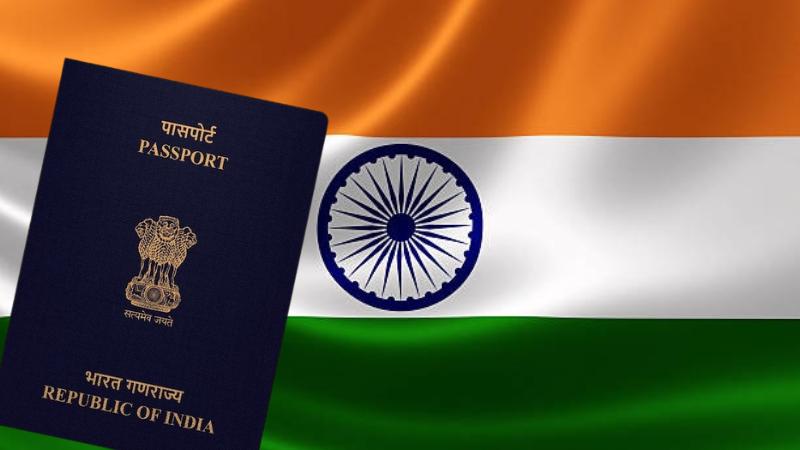
New Delhi, June 26: Passport applicants in India will have to pay higher fees from July 1, 2026, as the government has revised charges for fresh passports, reissues and replacement of lost or damaged passports. Under the revised rules, a fresh or reissued ordinary 36-page passport will cost Rs 2,500, while the Tatkal fee for the same category has been increased to Rs 5,000.  
Passport Fees Hiked From July 1: Check New Charges
New Delhi, June 26: Passport applicants in India will have to pay higher fees from July 1, 2026, as the government has revised charges for fresh passports, reissues and replacement of lost or damaged passports. Under the revised rules, a fresh or reissued ordinary 36-page passport will cost Rs 2,500, while the Tatkal fee for the same category has been increased to Rs 5,000.  
AR Rahman Receives Golden Plate Award From Peter Jackson
A.R. Rahman has received the Golden Plate Award from the American Academy of Achievement in Washington, with filmmaker Peter Jackson presenting the honour. The recognition marks another proud global moment for the Oscar-winning Indian composer and for Indian music. AR Rahman Receives Golden Plate Award Music maestro A.R. Rahman has been honoured with the Golden Plate Award at an American Academy of Achievement
AR Rahman Receives Golden Plate Award From Peter Jackson
A.R. Rahman has received the Golden Plate Award from the American Academy of Achievement in Washington, with filmmaker Peter Jackson presenting the honour. The recognition marks another proud global moment for the Oscar-winning Indian composer and for Indian music. AR Rahman Receives Golden Plate Award Music maestro A.R. Rahman has been honoured with the Golden Plate Award at an American Academy of Achievement
Bihar Orders Judicial Probe Into Bharat Tiwari Police Encounter
Bihar has ordered a judicial inquiry into the Bharat Tiwari police encounter after the 28-year-old died following a disputed operation in Bilauti village in Bhojpur district. The case has prompted protests, political criticism and a murder FIR naming police personnel. What Happened in the Bharat Tiwari Police Encounter Police said officers and Special Task Force personnel went to Bilauti village on Wednesday, June 17, 2026, after receiving reports that T
Bihar Orders Judicial Probe Into Bharat Tiwari Police Encounter
Bihar has ordered a judicial inquiry into the Bharat Tiwari police encounter after the 28-year-old died following a disputed operation in Bilauti village in Bhojpur district. The case has prompted protests, political criticism and a murder FIR naming police personnel. What Happened in the Bharat Tiwari Police Encounter Police said officers and Special Task Force personnel went to Bilauti village on Wednesday, June 17, 2026, after receiving reports that T
India Tourist Visas for Bangladeshi Citizens Resume June 28
India tourist visas for Bangladeshi citizens will resume on Sunday, June 28, 2026, reopening a major travel channel after a suspension of nearly two years. India’s new High Commissioner to Bangladesh, Dinesh Trivedi, announced the change after formally assuming office in Dhaka. India Tourist Visas for Bangladeshi Citizens Reopen June 28 Trivedi presented his credentials to Bangladeshi President Mohammed Shahabuddin at Bangabhaban on Th
India Tourist Visas for Bangladeshi Citizens Resume June 28
India tourist visas for Bangladeshi citizens will resume on Sunday, June 28, 2026, reopening a major travel channel after a suspension of nearly two years. India’s new High Commissioner to Bangladesh, Dinesh Trivedi, announced the change after formally assuming office in Dhaka. India Tourist Visas for Bangladeshi Citizens Reopen June 28 Trivedi presented his credentials to Bangladeshi President Mohammed Shahabuddin at Bangabhaban on Th
India’s 180-Day Registration Rule: What Foreign Visitors Should Know
India has moved the registration deadline forward for certain foreign nationals who plan to remain in the country beyond 180 days. Under amendments to the Immigration and Foreigners Rules, 2025, published in the Official Gazette on Monday, June 1, 2026, affected visitors must register before the 180-day period expires. Who must register before the 180-day deadline The amended rule applies to foreign nationals entering India on visas valid for 180 days or
India’s 180-Day Registration Rule: What Foreign Visitors Should Know
India has moved the registration deadline forward for certain foreign nationals who plan to remain in the country beyond 180 days. Under amendments to the Immigration and Foreigners Rules, 2025, published in the Official Gazette on Monday, June 1, 2026, affected visitors must register before the 180-day period expires. Who must register before the 180-day deadline The amended rule applies to foreign nationals entering India on visas valid for 180 days or
UK Opens 1,800 Visa Spots for Indian Chefs, Musicians and Yoga Teachers
The UK will open a combined 1,800 annual visa places for Indian traditional chefs, classical musicians and yoga instructors when the UK–India trade agreement takes effect on Wednesday, July 15, 2026. The allocation falls under the Global Business Mobility–Service Supplier route. It is one shared cap covering all three occupations, not 1,800 places for each profession. The annual allocation is measured from January 1 through December 31.
UK Opens 1,800 Visa Spots for Indian Chefs, Musicians and Yoga Teachers
The UK will open a combined 1,800 annual visa places for Indian traditional chefs, classical musicians and yoga instructors when the UK–India trade agreement takes effect on Wednesday, July 15, 2026. The allocation falls under the Global Business Mobility–Service Supplier route. It is one shared cap covering all three occupations, not 1,800 places for each profession. The annual allocation is measured from January 1 through December 31.
Israel Hezbollah clashes raise oil and trade risk for India
The renewed exchange of fire between Israeli forces and Hezbollah-linked positions in southern Lebanon has again drawn attention to an already fragile regional security environment. While both sides continue to frame their actions as targeted and defensive, the situation is increasingly being viewed through a wider geopolitical lens, especially by energy markets and trade-dependent economies. Even limited escalation in this corridor tends to trigger immediate risk recalibration in global markets, not because of direct supply disruption, but due to fear of spillover into wider West Asian conflict zones. Oil markets react to uncertainty, not only disruption Crude oil prices have remained sensitive to developments in the region, with traders closely tracking any sign of expansion beyond localized strikes. Brent crude has shown intermittent swings, reflecting how quickly sentiment shifts when geopolitical risks rise. For import-heavy economies like India, the concern is not only about supply cuts but also price volatility. Even short-lived spikes increase import bills, widen trade deficits, and add pressure on domestic inflation through fuel and transport costs. India remains heavily dependent on imported crude, leaving it exposed to external shocks that originate far from its own borders but quickly reach its economy through global pricing mechanisms. Maritime chokepoints add another layer of risk Beyond oil production zones, shipping routes remain a critical pressure point. The Strait of Hormuz continues to be one of the most strategically sensitive maritime corridors in the world, handling a large share of global crude movement. Any perception of instability in nearby conflict zones tends to increase insurance premiums for tankers and freight operators. This raises shipping costs even when physical disruption does not occur. For trade-dependent economies, the indirect cost of conflict often arrives faster than any actual supply shortage. India’s broader exposure goes beyond energy India’s stake in West Asian stability is not limited to crude imports. A large Indian workforce in Gulf countries supports billions in annual remittances, which play a steady role in foreign exchange stability. At the same time, India maintains layered relationships across the region—energy partnerships with Gulf producers, strategic cooperation with Israel, and connectivity interests linked to Iran and regional ports. This creates a complex policy environment where instability in one corridor can influence multiple economic and diplomatic channels simultaneously. Long-term infrastructure plans face sensitivity risks Large-scale trade and infrastructure initiatives involving West Asia, including proposed trans-regional connectivity corridors, depend heavily on stable political conditions. Projects linked to ports, energy routes, and logistics networks become vulnerable when security risks rise. Even without direct damage, prolonged uncertainty tends to slow investment decisions, delay contracts, and increase financing costs for regional development projects. Conclusion The current Israel–Hezbollah exchange remains geographically contained, but its economic impact is far wider. Oil markets, shipping costs, remittance flows, and long-term trade planning all react quickly to signals of escalation. For India and other import-dependent economies, the primary challenge is not direct involvement in the conflict but exposure to its ripple effects through energy pricing, logistics costs, and regional stability risks.
Israel Hezbollah clashes raise oil and trade risk for India
The renewed exchange of fire between Israeli forces and Hezbollah-linked positions in southern Lebanon has again drawn attention to an already fragile regional security environment. While both sides continue to frame their actions as targeted and defensive, the situation is increasingly being viewed through a wider geopolitical lens, especially by energy markets and trade-dependent economies. Even limited escalation in this corridor tends to trigger immediate risk recalibration in global markets, not because of direct supply disruption, but due to fear of spillover into wider West Asian conflict zones. Oil markets react to uncertainty, not only disruption Crude oil prices have remained sensitive to developments in the region, with traders closely tracking any sign of expansion beyond localized strikes. Brent crude has shown intermittent swings, reflecting how quickly sentiment shifts when geopolitical risks rise. For import-heavy economies like India, the concern is not only about supply cuts but also price volatility. Even short-lived spikes increase import bills, widen trade deficits, and add pressure on domestic inflation through fuel and transport costs. India remains heavily dependent on imported crude, leaving it exposed to external shocks that originate far from its own borders but quickly reach its economy through global pricing mechanisms. Maritime chokepoints add another layer of risk Beyond oil production zones, shipping routes remain a critical pressure point. The Strait of Hormuz continues to be one of the most strategically sensitive maritime corridors in the world, handling a large share of global crude movement. Any perception of instability in nearby conflict zones tends to increase insurance premiums for tankers and freight operators. This raises shipping costs even when physical disruption does not occur. For trade-dependent economies, the indirect cost of conflict often arrives faster than any actual supply shortage. India’s broader exposure goes beyond energy India’s stake in West Asian stability is not limited to crude imports. A large Indian workforce in Gulf countries supports billions in annual remittances, which play a steady role in foreign exchange stability. At the same time, India maintains layered relationships across the region—energy partnerships with Gulf producers, strategic cooperation with Israel, and connectivity interests linked to Iran and regional ports. This creates a complex policy environment where instability in one corridor can influence multiple economic and diplomatic channels simultaneously. Long-term infrastructure plans face sensitivity risks Large-scale trade and infrastructure initiatives involving West Asia, including proposed trans-regional connectivity corridors, depend heavily on stable political conditions. Projects linked to ports, energy routes, and logistics networks become vulnerable when security risks rise. Even without direct damage, prolonged uncertainty tends to slow investment decisions, delay contracts, and increase financing costs for regional development projects. Conclusion The current Israel–Hezbollah exchange remains geographically contained, but its economic impact is far wider. Oil markets, shipping costs, remittance flows, and long-term trade planning all react quickly to signals of escalation. For India and other import-dependent economies, the primary challenge is not direct involvement in the conflict but exposure to its ripple effects through energy pricing, logistics costs, and regional stability risks.
Tungabhadra gates inaugurated in Hosapete by three CMs
According to reports from June 25, 2026, leaders from Andhra Pradesh, Telangana, and Karnataka gathered in Hosapete (Hospet), Karnataka, ahead of the inauguration of the newly installed gates at the Tungabhadra Dam. The event was attended by Union Jal Shakti Minister C. R.
Tungabhadra gates inaugurated in Hosapete by three CMs
According to reports from June 25, 2026, leaders from Andhra Pradesh, Telangana, and Karnataka gathered in Hosapete (Hospet), Karnataka, ahead of the inauguration of the newly installed gates at the Tungabhadra Dam. The event was attended by Union Jal Shakti Minister C. R.
Khaan Quest 2026 brings 18 nations to Mongolia drill
Khaan Quest 2026 has officially begun at the Five Hills Training Area near Ulaanbaatar, marking one of the largest annual UN peacekeeping training exercises in the region. The drill brings together troops from 18 nations, with a focus on improving coordination in complex peace support environments. More than 1,000 personnel are taking part in structured field training designed to replicate real-world mission conditions under United Nations mandates. India strengthens peacekeeping engagement through participation The Indian Army has deployed a 40-member contingent for the exercise, including personnel from a battalion of the JAT Regiment along with supporting arms. Their participation reflects India’s continued operational commitment to global peacekeeping frameworks. Indian troops are actively engaged in tactical drills such as area domination, checkpoint operations, search procedures, and controlled movement scenarios that simulate volatile environments. Training designed for real-world mission readiness The exercise is structured around practical peacekeeping scenarios where multinational forces must operate under unified command conditions. Activities include convoy protection, casualty evacuation drills, and humanitarian response simulations. A strong emphasis is placed on interoperability, ensuring that forces from different countries can communicate and operate seamlessly during international deployments. Women, Peace and Security module gains importance A dedicated training segment on Women, Peace and Security is a key feature of this year’s exercise. It focuses on improving gender awareness in operational settings, strengthening civilian protection measures, and encouraging greater participation of women in peacekeeping roles. The module is designed to reflect evolving global expectations in modern conflict management. Exercise highlights growing global coordination Khaan Quest began as a bilateral initiative between Mongolia and the United States in the early 2000s and has since expanded into a multinational platform co-sponsored by US Indo-Pacific Command. Over the years, it has evolved into a key training ground for preparing forces for UN peace operations. The 2026 edition reinforces international cooperation, operational readiness, and shared security practices among participating nations. Strategic relevance of Khaan Quest 2026 The exercise serves as more than just a training event—it acts as a platform for military diplomacy and operational alignment among partner countries. By working together in simulated peace missions, participating forces strengthen trust, improve tactical compatibility, and enhance readiness for future UN deployments in conflict and post-conflict zones.
Khaan Quest 2026 brings 18 nations to Mongolia drill
Khaan Quest 2026 has officially begun at the Five Hills Training Area near Ulaanbaatar, marking one of the largest annual UN peacekeeping training exercises in the region. The drill brings together troops from 18 nations, with a focus on improving coordination in complex peace support environments. More than 1,000 personnel are taking part in structured field training designed to replicate real-world mission conditions under United Nations mandates. India strengthens peacekeeping engagement through participation The Indian Army has deployed a 40-member contingent for the exercise, including personnel from a battalion of the JAT Regiment along with supporting arms. Their participation reflects India’s continued operational commitment to global peacekeeping frameworks. Indian troops are actively engaged in tactical drills such as area domination, checkpoint operations, search procedures, and controlled movement scenarios that simulate volatile environments. Training designed for real-world mission readiness The exercise is structured around practical peacekeeping scenarios where multinational forces must operate under unified command conditions. Activities include convoy protection, casualty evacuation drills, and humanitarian response simulations. A strong emphasis is placed on interoperability, ensuring that forces from different countries can communicate and operate seamlessly during international deployments. Women, Peace and Security module gains importance A dedicated training segment on Women, Peace and Security is a key feature of this year’s exercise. It focuses on improving gender awareness in operational settings, strengthening civilian protection measures, and encouraging greater participation of women in peacekeeping roles. The module is designed to reflect evolving global expectations in modern conflict management. Exercise highlights growing global coordination Khaan Quest began as a bilateral initiative between Mongolia and the United States in the early 2000s and has since expanded into a multinational platform co-sponsored by US Indo-Pacific Command. Over the years, it has evolved into a key training ground for preparing forces for UN peace operations. The 2026 edition reinforces international cooperation, operational readiness, and shared security practices among participating nations. Strategic relevance of Khaan Quest 2026 The exercise serves as more than just a training event—it acts as a platform for military diplomacy and operational alignment among partner countries. By working together in simulated peace missions, participating forces strengthen trust, improve tactical compatibility, and enhance readiness for future UN deployments in conflict and post-conflict zones.
Passport, Aadhaar And Voter ID May Not Be Final Proof Of Indian Citizenship
The recent clarification that an Indian passport is not legally considered conclusive proof of citizenship has sparked widespread discussion and confusion among citizens. For decades, passports, Aadhaar cards and voter ID cards have been widely accepted as the primary documents that establish a person's identity and nationality. However, under India's legal framework, these documents may not always serve as final proof of citizenship in certain legal or administrative si
Passport, Aadhaar And Voter ID May Not Be Final Proof Of Indian Citizenship
The recent clarification that an Indian passport is not legally considered conclusive proof of citizenship has sparked widespread discussion and confusion among citizens. For decades, passports, Aadhaar cards and voter ID cards have been widely accepted as the primary documents that establish a person's identity and nationality. However, under India's legal framework, these documents may not always serve as final proof of citizenship in certain legal or administrative si
Kerala Worker Killed In Qatar Blast: Vijayan Urges CM Action
Thiruvananthapuram, June 24: Leader of the Opposition in the Kerala Assembly, Pinarayi Vijayan, on Wednesday wrote to Chief Minister V D Satheesan, urging immediate steps to bring back the mortal remains of Arjun, a Keralite worker who died in an explosion at an industrial facility in Qatar. Arjun, a native of Kozhikode district, was working at the Barzan gas facility in Ras Laffan Industrial City when the incident occurre
Kerala Worker Killed In Qatar Blast: Vijayan Urges CM Action
Thiruvananthapuram, June 24: Leader of the Opposition in the Kerala Assembly, Pinarayi Vijayan, on Wednesday wrote to Chief Minister V D Satheesan, urging immediate steps to bring back the mortal remains of Arjun, a Keralite worker who died in an explosion at an industrial facility in Qatar. Arjun, a native of Kozhikode district, was working at the Barzan gas facility in Ras Laffan Industrial City when the incident occurre


