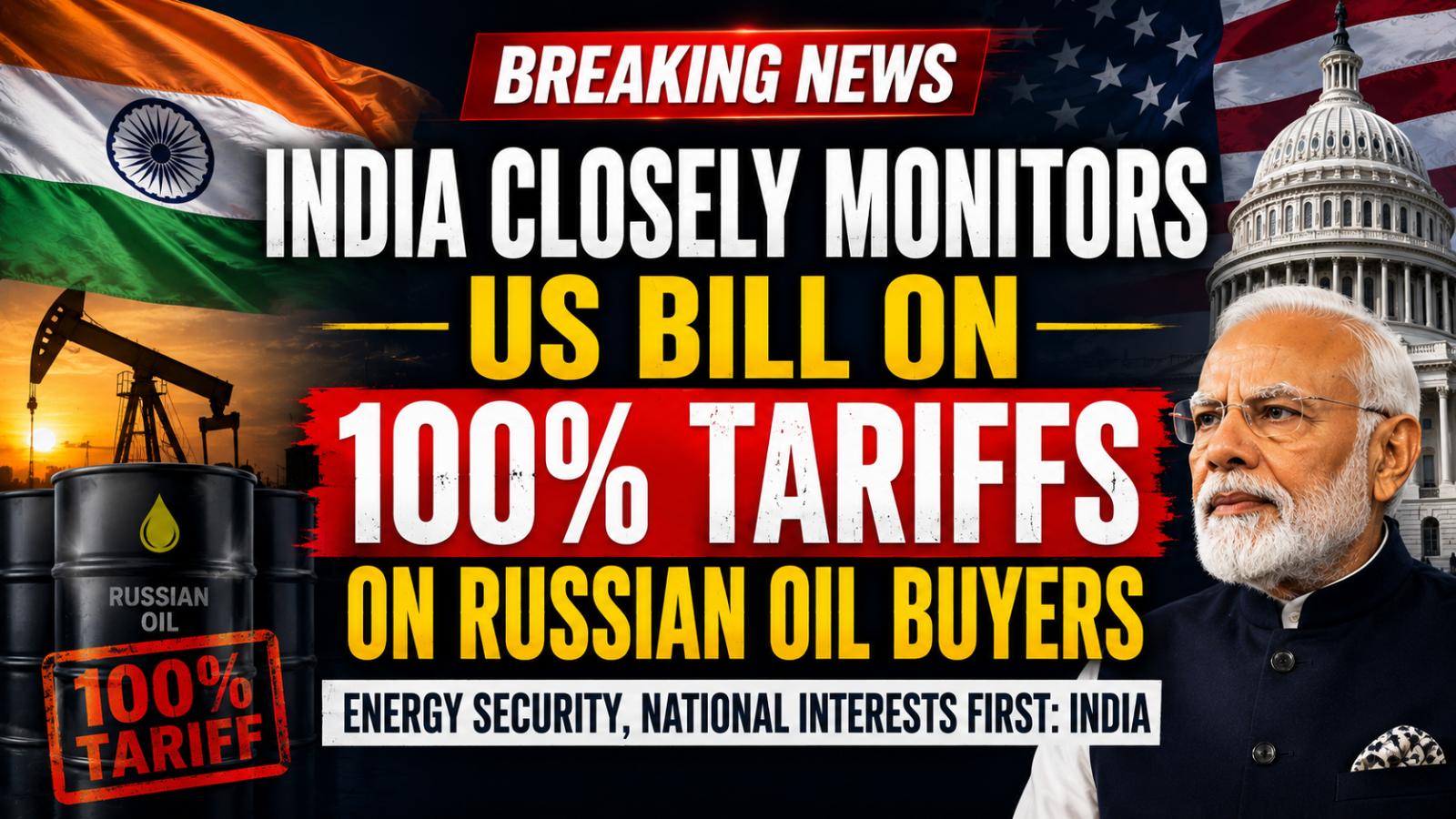
India is closely monitoring a proposed US law that could impose tariffs of up to 100 per cent on countries purchasing significant quantities of Russian oil and gas. The legislation, which has cleared the US Senate, is part of Washington’s broader effort to increase economic pressure on Moscow while discouraging continued purchases of Russian energy.
India Energy Security Remains the Government’s Priority
Speaking during the Ministry of External Affairs’ weekly media briefing on July 31, MEA spokesperson Randhir Jaiswal said New Delhi was carefully following developments in Washington while remaining engaged with US officials on the proposed legislation.
Jaiswal reiterated that India’s energy policy is guided by national interests rather than geopolitical considerations. He said the government’s priority is to ensure affordable and reliable energy supplies for more than 1.4 billion people through a diversified import strategy that includes crude oil from several countries, including the United States.
The remarks reinforce India’s long-standing position that energy procurement decisions are based on domestic requirements and market conditions. India has repeatedly argued that securing stable fuel supplies is essential for economic growth, inflation management and long-term energy security.
US Sanctions Bill Targets Russian Oil Buyers
The proposed legislation, titled the Sanctioning Russia and Iran Act of 2026, passed the US Senate with broad bipartisan support and will now move to the House of Representatives for consideration.
If approved and signed into law, the bill would authorise President Donald Trump to impose both primary and secondary sanctions on Russia and entities supporting its economy. It also allows tariffs of up to 100 per cent on imports from countries that continue purchasing significant volumes of Russian oil and natural gas or help Moscow bypass existing sanctions.
Under Section 113 of the bill, the proposed tariffs could apply to the five largest buyers of Russian energy. Current import patterns indicate that India, China, Slovakia, Hungary and Azerbaijan could fall within the scope of the measure if the legislation becomes law.
The bill also calls for a review of the world’s largest buyers of Russian hydrocarbons every 180 days, allowing the United States to modify tariff measures based on changing trade data and import volumes.
India US Trade Talks Continue Alongside Tariff Debate
Despite the proposed sanctions legislation, Indian officials emphasised that discussions with Washington remain active. Jaiswal confirmed that New Delhi continues engaging with relevant US stakeholders at multiple levels regarding the proposed law and its possible impact on bilateral trade.
The timing is significant because India and the United States are also working toward a broader trade agreement covering tariffs, market access and investment. Both governments have described those negotiations as constructive, although several sensitive issues remain under discussion.
Trade experts believe the proposed Russia-related tariffs could complicate negotiations if enacted. However, they also note that the bill still faces additional legislative steps before becoming law, leaving room for amendments or policy adjustments.
Global Energy Trade Faces Fresh Uncertainty
The proposed legislation reflects Washington’s strategy of increasing economic pressure on Moscow by discouraging global purchases of Russian hydrocarbons. Since Western sanctions expanded following the Ukraine conflict, Russia has redirected much of its oil exports toward Asian markets, particularly India and China.
India has consistently maintained that purchasing discounted crude from multiple suppliers helps stabilise domestic fuel prices while protecting energy security. Officials argue that a diversified sourcing strategy reduces dependence on any single supplier and strengthens resilience against disruptions in global energy markets.
If the proposed US legislation ultimately becomes law, governments and energy companies will need to assess its impact on supply chains, trade costs and long-term purchasing strategies. Until then, India’s official position remains unchanged: energy security will continue to guide its import decisions while diplomatic engagement with Washington remains ongoing.