


















Birthright Citizenship Ruling: What H-1B and F-1 Families Should Know
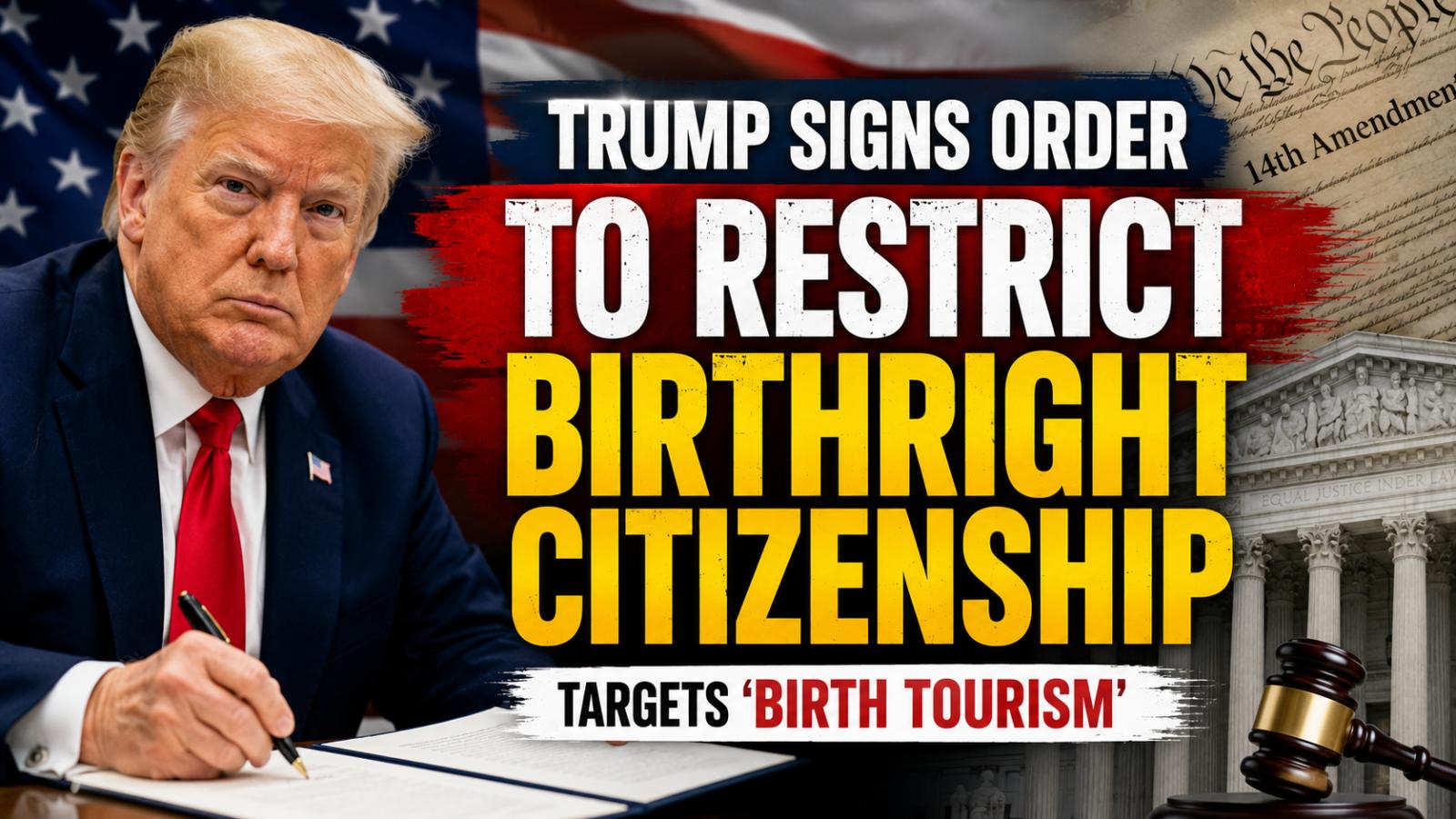
The birthright citizenship ruling issued by the U.S. Supreme Court on Tuesday, June 30, 2026, provides important clarity for families living in the United States on temporary visas. Children born in the country to parents who are lawfully but temporarily present remain U.S. citizens at birth under the 14th Amendment. For the court’s vote and constitutional reasoning, read NRIPage’s full report on the
Birthright Citizenship Ruling: What H-1B and F-1 Families Should Know
The birthright citizenship ruling issued by the U.S. Supreme Court on Tuesday, June 30, 2026, provides important clarity for families living in the United States on temporary visas. Children born in the country to parents who are lawfully but temporarily present remain U.S. citizens at birth under the 14th Amendment. For the court’s vote and constitutional reasoning, read NRIPage’s full report on the
Trump v. Barbara Ruling: Supreme Court Protects Birthright Citizenship
The Trump v. Barbara ruling preserved automatic U.S. citizenship for nearly all children born on American soil. In a 6-3 decision issued Tuesday, June 30, 2026, the Supreme Court affirmed a lower-court judgment blocking President Donald Trump’s executive order. What the Trump v. Barbara ruling decided Chief Justice John Roberts wrote the court’s principal opinion, joined by Justices Sonia S
Trump v. Barbara Ruling: Supreme Court Protects Birthright Citizenship
The Trump v. Barbara ruling preserved automatic U.S. citizenship for nearly all children born on American soil. In a 6-3 decision issued Tuesday, June 30, 2026, the Supreme Court affirmed a lower-court judgment blocking President Donald Trump’s executive order. What the Trump v. Barbara ruling decided Chief Justice John Roberts wrote the court’s principal opinion, joined by Justices Sonia S
Trump unveils special 250th anniversary US passport design with new rendering
US unveils commemorative passport design for 250th anniversary US President Donald Trump has unveiled a new rendering of a special edition American passport created to mark the 250th anniversary of the United States. The design, presented on his social media platform, features a commemorative layout that incorporates historical imagery alongside a presidential portrait
Trump unveils special 250th anniversary US passport design with new rendering
US unveils commemorative passport design for 250th anniversary US President Donald Trump has unveiled a new rendering of a special edition American passport created to mark the 250th anniversary of the United States. The design, presented on his social media platform, features a commemorative layout that incorporates historical imagery alongside a presidential portrait
US Senate reverses stance on Iran war powers resolution
A closely watched Senate vote on a resolution linked to presidential war authority over Iran took an unexpected turn after several Republican lawmakers altered their positions. The measure, which focused on limiting executive flexibility in military action, ended up reflecting a divided but shifting political landscape rather than a clear consensus. Political negotiations behind the scenes The change in voting pattern followed internal discussions among Republican senators and briefings from senior administration figures. Lawmakers who initially leaned toward restricting presidential authority later adjusted their stance after being updated on diplomatic and security considerations related to Iran. The shift underscored how quickly positions can move when strategic briefings and party pressure converge. Key senators adjust positions Among those influencing the outcome were Senator Bill Cassidy and Senator Rand Paul. Cassidy moved away from his earlier support for tighter restrictions after consultations with White House representatives. Rand Paul maintained his broader skepticism toward expansive executive war powers but opted for a procedural position that reflected his long-standing policy concerns without directly blocking the measure. Trump frames outcome as political leverage President Donald Trump responded to the Senate outcome by framing it as a strengthening of US negotiating leverage in relation to Iran. His public remarks highlighted the vote as evidence of alignment within the Republican Party on foreign policy strategy. While the resolution itself remains largely symbolic, it has become a focal point in the wider debate over presidential authority and congressional oversight. Broader implications for US foreign policy The vote shift reflects ongoing tension in Washington over how much autonomy the executive branch should hold in matters of military engagement. Supporters of stronger presidential powers argue for flexibility in fast-moving geopolitical situations, while critics warn against reducing congressional oversight. The Iran-related vote has now become another reference point in that broader constitutional debate.
US Senate reverses stance on Iran war powers resolution
A closely watched Senate vote on a resolution linked to presidential war authority over Iran took an unexpected turn after several Republican lawmakers altered their positions. The measure, which focused on limiting executive flexibility in military action, ended up reflecting a divided but shifting political landscape rather than a clear consensus. Political negotiations behind the scenes The change in voting pattern followed internal discussions among Republican senators and briefings from senior administration figures. Lawmakers who initially leaned toward restricting presidential authority later adjusted their stance after being updated on diplomatic and security considerations related to Iran. The shift underscored how quickly positions can move when strategic briefings and party pressure converge. Key senators adjust positions Among those influencing the outcome were Senator Bill Cassidy and Senator Rand Paul. Cassidy moved away from his earlier support for tighter restrictions after consultations with White House representatives. Rand Paul maintained his broader skepticism toward expansive executive war powers but opted for a procedural position that reflected his long-standing policy concerns without directly blocking the measure. Trump frames outcome as political leverage President Donald Trump responded to the Senate outcome by framing it as a strengthening of US negotiating leverage in relation to Iran. His public remarks highlighted the vote as evidence of alignment within the Republican Party on foreign policy strategy. While the resolution itself remains largely symbolic, it has become a focal point in the wider debate over presidential authority and congressional oversight. Broader implications for US foreign policy The vote shift reflects ongoing tension in Washington over how much autonomy the executive branch should hold in matters of military engagement. Supporters of stronger presidential powers argue for flexibility in fast-moving geopolitical situations, while critics warn against reducing congressional oversight. The Iran-related vote has now become another reference point in that broader constitutional debate.
Trump signals softer tone on Zelensky amid Ukraine war shift
US President Donald Trump has recently shown a more measured tone when speaking about Ukrainian President Volodymyr Zelensky. During a public engagement alongside NATO leadership, Trump acknowledged Ukraine’s continued resistance in the war, describing its position as steady despite ongoing conflict. The comments mark a shift in tone compared to his earlier criticism and reflect a more cautious diplomatic posture from Washington. G7 coordination shapes US approach Recent discussions among G7 member nations have contributed to renewed alignment on Russia-related sanctions and energy strategy. Allied countries have been pushing for tighter coordination on restricting oil revenues linked to Moscow. This collective pressure has influenced US policy thinking, encouraging a more structured approach rather than isolated action. The focus remains on balancing economic pressure with long-term stability in global energy markets. Battlefield situation influences political messaging Developments on the ground in Ukraine continue to play a key role in shaping international responses. Reports of Ukraine expanding its operational reach and sustaining defensive positions have strengthened its bargaining position in diplomatic discussions. These battlefield realities are increasingly reflected in political messaging, as Western leaders reassess how the conflict may evolve over time. Energy markets and global risks remain central Global energy stability remains a key factor in foreign policy decisions. Earlier concerns linked to Middle East tensions and potential disruptions in key shipping routes had raised oil market uncertainty. As conditions show signs of stabilisation, policymakers are gaining more room to consider stricter measures on Russian energy exports without immediate economic disruption. Diplomatic outlook remains uncertain Despite continued international engagement, progress toward direct peace negotiations between Russia and Ukraine remains limited. Positions on territorial control and security guarantees continue to block meaningful breakthroughs. While diplomatic channels remain open, there is no clear indication of a near-term resolution. The current US approach reflects a balance between maintaining pressure and keeping space for future negotiations.
Trump signals softer tone on Zelensky amid Ukraine war shift
US President Donald Trump has recently shown a more measured tone when speaking about Ukrainian President Volodymyr Zelensky. During a public engagement alongside NATO leadership, Trump acknowledged Ukraine’s continued resistance in the war, describing its position as steady despite ongoing conflict. The comments mark a shift in tone compared to his earlier criticism and reflect a more cautious diplomatic posture from Washington. G7 coordination shapes US approach Recent discussions among G7 member nations have contributed to renewed alignment on Russia-related sanctions and energy strategy. Allied countries have been pushing for tighter coordination on restricting oil revenues linked to Moscow. This collective pressure has influenced US policy thinking, encouraging a more structured approach rather than isolated action. The focus remains on balancing economic pressure with long-term stability in global energy markets. Battlefield situation influences political messaging Developments on the ground in Ukraine continue to play a key role in shaping international responses. Reports of Ukraine expanding its operational reach and sustaining defensive positions have strengthened its bargaining position in diplomatic discussions. These battlefield realities are increasingly reflected in political messaging, as Western leaders reassess how the conflict may evolve over time. Energy markets and global risks remain central Global energy stability remains a key factor in foreign policy decisions. Earlier concerns linked to Middle East tensions and potential disruptions in key shipping routes had raised oil market uncertainty. As conditions show signs of stabilisation, policymakers are gaining more room to consider stricter measures on Russian energy exports without immediate economic disruption. Diplomatic outlook remains uncertain Despite continued international engagement, progress toward direct peace negotiations between Russia and Ukraine remains limited. Positions on territorial control and security guarantees continue to block meaningful breakthroughs. While diplomatic channels remain open, there is no clear indication of a near-term resolution. The current US approach reflects a balance between maintaining pressure and keeping space for future negotiations.
US NATO Tensions Rise as Trump Demands Loyalty From Allies
Trump Raises Concerns Over NATO Support During Iran Conflict US President Donald Trump has expressed strong criticism of several NATO allies, stating that they failed to adequately support the United States during its recent military confrontation involving Iran. Speaking during a meeting with NATO Secretary General Mark Rutte at the White House, Trump said he was dis
US NATO Tensions Rise as Trump Demands Loyalty From Allies
Trump Raises Concerns Over NATO Support During Iran Conflict US President Donald Trump has expressed strong criticism of several NATO allies, stating that they failed to adequately support the United States during its recent military confrontation involving Iran. Speaking during a meeting with NATO Secretary General Mark Rutte at the White House, Trump said he was dis
Israel shifts defence strategy amid US political strain
Tensions between Israel and the United States over regional security priorities have added pressure on Prime Minister Benjamin Netanyahu’s government to accelerate its push for greater military independence. The discussion has gained momentum as Israel continues operations linked to Iran-backed groups while simultaneously responding to diplomatic developments involving Washington and Tehran. Netanyahu recently emphasized that Israel cannot depend entirely on external military supply chains for long-term security needs. His remarks were delivered during a meeting with reserve officers in the West Bank, where he highlighted the importance of strengthening domestic defence production and reducing strategic vulnerabilities linked to foreign policy shifts. Domestic defence capacity becomes a strategic priority Israeli leadership is increasingly focused on expanding its local defence manufacturing ecosystem. The plan includes scaling up production of advanced weapon systems, improving technological innovation within the military sector, and reducing delays caused by international procurement dependencies. Officials argue that while US military support remains critical, future conflict scenarios require Israel to maintain uninterrupted access to essential defence capabilities without external constraints. This shift reflects broader concerns about regional instability and the speed at which security threats evolve. Diplomatic friction over regional agreements Recent US-led diplomatic efforts involving Iran have added another layer of complexity to the relationship. Israeli policymakers have expressed concern that regional understandings may not fully address threats posed by groups such as Hezbollah, which continue to operate along Israel’s northern border. From Israel’s perspective, security decisions tied to immediate threats cannot be constrained by broader international agreements. This difference in approach has created periodic friction between Washington and Jerusalem, even as both sides publicly reaffirm their strategic partnership. Political messaging highlights diverging priorities Netanyahu’s statements also reflect internal political messaging aimed at reinforcing a doctrine of strategic independence. While maintaining that the US remains Israel’s most important ally, he has repeatedly stressed that national security decisions must ultimately remain under Israeli control. The debate has also been reflected in wider political discourse, including commentary associated with US political figures and shifting positions on Middle East engagement. Although both governments continue coordination on defence matters, differences in threat assessment and timing of responses remain evident. Strategic autonomy framed as long-term necessity Israeli officials describe the current shift not as a break from alliances but as a recalibration of priorities. The focus is on ensuring that Israel can respond rapidly to evolving threats in a region marked by proxy conflicts, cross-border tensions, and shifting diplomatic alignments. The emerging strategy positions defence self-reliance as a structural requirement rather than a temporary policy adjustment, signaling a longer-term transformation in how Israel plans its security framework.
Israel shifts defence strategy amid US political strain
Tensions between Israel and the United States over regional security priorities have added pressure on Prime Minister Benjamin Netanyahu’s government to accelerate its push for greater military independence. The discussion has gained momentum as Israel continues operations linked to Iran-backed groups while simultaneously responding to diplomatic developments involving Washington and Tehran. Netanyahu recently emphasized that Israel cannot depend entirely on external military supply chains for long-term security needs. His remarks were delivered during a meeting with reserve officers in the West Bank, where he highlighted the importance of strengthening domestic defence production and reducing strategic vulnerabilities linked to foreign policy shifts. Domestic defence capacity becomes a strategic priority Israeli leadership is increasingly focused on expanding its local defence manufacturing ecosystem. The plan includes scaling up production of advanced weapon systems, improving technological innovation within the military sector, and reducing delays caused by international procurement dependencies. Officials argue that while US military support remains critical, future conflict scenarios require Israel to maintain uninterrupted access to essential defence capabilities without external constraints. This shift reflects broader concerns about regional instability and the speed at which security threats evolve. Diplomatic friction over regional agreements Recent US-led diplomatic efforts involving Iran have added another layer of complexity to the relationship. Israeli policymakers have expressed concern that regional understandings may not fully address threats posed by groups such as Hezbollah, which continue to operate along Israel’s northern border. From Israel’s perspective, security decisions tied to immediate threats cannot be constrained by broader international agreements. This difference in approach has created periodic friction between Washington and Jerusalem, even as both sides publicly reaffirm their strategic partnership. Political messaging highlights diverging priorities Netanyahu’s statements also reflect internal political messaging aimed at reinforcing a doctrine of strategic independence. While maintaining that the US remains Israel’s most important ally, he has repeatedly stressed that national security decisions must ultimately remain under Israeli control. The debate has also been reflected in wider political discourse, including commentary associated with US political figures and shifting positions on Middle East engagement. Although both governments continue coordination on defence matters, differences in threat assessment and timing of responses remain evident. Strategic autonomy framed as long-term necessity Israeli officials describe the current shift not as a break from alliances but as a recalibration of priorities. The focus is on ensuring that Israel can respond rapidly to evolving threats in a region marked by proxy conflicts, cross-border tensions, and shifting diplomatic alignments. The emerging strategy positions defence self-reliance as a structural requirement rather than a temporary policy adjustment, signaling a longer-term transformation in how Israel plans its security framework.
Trump orders DOJ review into US gasoline pricing gap
Global crude benchmarks have softened in recent sessions, driven by easing supply concerns and improved shipping conditions across key routes. Despite this decline, retail gasoline prices in the United States have not adjusted downward at the same pace, creating a widening gap between wholesale and consumer fuel costs. Market data indicates Brent crude has eased compared to earlier highs, yet pump prices remain relatively sticky. This lag has triggered renewed scrutiny of how quickl
Trump orders DOJ review into US gasoline pricing gap
Global crude benchmarks have softened in recent sessions, driven by easing supply concerns and improved shipping conditions across key routes. Despite this decline, retail gasoline prices in the United States have not adjusted downward at the same pace, creating a widening gap between wholesale and consumer fuel costs. Market data indicates Brent crude has eased compared to earlier highs, yet pump prices remain relatively sticky. This lag has triggered renewed scrutiny of how quickl
Trump escalates ABC dispute over DC reflecting pool coverage
A fresh dispute has emerged after Donald Trump signaled possible legal action against ABC News over its coverage of the Lincoln Memorial Reflecting Pool in Washington DC. The disagreement centers on how recent reporting framed repair work, vandalism incidents, and historical maintenance spending tied to the landmark. The issue has added another layer of friction between the former president and major media organizations, with Trump accusing the network of presenting an incomplete narrative.
Trump escalates ABC dispute over DC reflecting pool coverage
A fresh dispute has emerged after Donald Trump signaled possible legal action against ABC News over its coverage of the Lincoln Memorial Reflecting Pool in Washington DC. The disagreement centers on how recent reporting framed repair work, vandalism incidents, and historical maintenance spending tied to the landmark. The issue has added another layer of friction between the former president and major media organizations, with Trump accusing the network of presenting an incomplete narrative.
Trump threatens legal action over Iran report
US President Donald Trump has strongly criticized a report on the Iran conflict, accusing the publication of presenting a misleading picture of the war’s outcome. In a series of posts on Truth Social, Trump said the article ignored what he described as major military, economic and regional changes after months of fighting. Trump also warned that the coverage could become part of a multibillion-dollar lawsuit. He claimed the report unders
Trump threatens legal action over Iran report
US President Donald Trump has strongly criticized a report on the Iran conflict, accusing the publication of presenting a misleading picture of the war’s outcome. In a series of posts on Truth Social, Trump said the article ignored what he described as major military, economic and regional changes after months of fighting. Trump also warned that the coverage could become part of a multibillion-dollar lawsuit. He claimed the report unders
Netanyahu rejects claims Trump controls Israel decisions
Netanyahu rejects influence claims Israeli Prime Minister Benjamin Netanyahu has rejected claims that US President Donald Trump controls his decisions or that he directs Trump’s actions, saying both leaders act independently in the interests of their own countries. Speaking at the JNS Summit in Jerusalem on Sunday, June 21, Netanyahu addressed speculation over whether the two leaders influence each other’s positions on the Iran war and br
Netanyahu rejects claims Trump controls Israel decisions
Netanyahu rejects influence claims Israeli Prime Minister Benjamin Netanyahu has rejected claims that US President Donald Trump controls his decisions or that he directs Trump’s actions, saying both leaders act independently in the interests of their own countries. Speaking at the JNS Summit in Jerusalem on Sunday, June 21, Netanyahu addressed speculation over whether the two leaders influence each other’s positions on the Iran war and br
Trump’s great daughter caption fuels social media buzz
Trump post draws online attention US President Donald Trump sparked widespread discussion online after sharing a photograph of an unidentified woman with the caption, “Great daughter. My Honour!!! President DJT.” The post drew quick attention because Trump did not explain who the woman was, why he shared the image or what he meant by the phrase. The lack of context turned the post into a social media talking point, with users trying to un
Trump’s great daughter caption fuels social media buzz
Trump post draws online attention US President Donald Trump sparked widespread discussion online after sharing a photograph of an unidentified woman with the caption, “Great daughter. My Honour!!! President DJT.” The post drew quick attention because Trump did not explain who the woman was, why he shared the image or what he meant by the phrase. The lack of context turned the post into a social media talking point, with users trying to un
Trump calls Modi and Xi strong global leaders in interview
Trump’s remarks draw attention on global stage US President Donald Trump recently made notable comments about global leadership while speaking in an Axios interview. During the conversation, he referred to Indian Prime Minister Narendra Modi and Chinese President Xi Jinping as influential figures shaping international politics and economic direction. The remarks come at a time when global allianc
Trump calls Modi and Xi strong global leaders in interview
Trump’s remarks draw attention on global stage US President Donald Trump recently made notable comments about global leadership while speaking in an Axios interview. During the conversation, he referred to Indian Prime Minister Narendra Modi and Chinese President Xi Jinping as influential figures shaping international politics and economic direction. The remarks come at a time when global allianc
US VP Vance tells Israel to “wake up” amid Iran agreement disputes
US VP Vance Confronts Israeli Critics on Iran Deal US Vice President JD Vance delivered a sharp warning to Israeli cabinet ministers on Thursday, June 18,2026 regarding their public criticisms of the US-Iran agreement. Speaking at a White House briefing, Vance underscored that the United States remains Israel’s primary ally and cautioned that attacking Washington could undermine national interests. Alleged Misreading of US Support Vance em
US VP Vance tells Israel to “wake up” amid Iran agreement disputes
US VP Vance Confronts Israeli Critics on Iran Deal US Vice President JD Vance delivered a sharp warning to Israeli cabinet ministers on Thursday, June 18,2026 regarding their public criticisms of the US-Iran agreement. Speaking at a White House briefing, Vance underscored that the United States remains Israel’s primary ally and cautioned that attacking Washington could undermine national interests. Alleged Misreading of US Support Vance em
Former US Presidents attend Obama Centre inauguration in Chicago
Historic Opening of Obama Presidential Centre Barack Obama marked the official opening of his presidential centre in Chicago on Thursday, drawing a star-studded audience that included former US presidents George W. Bush, Bill Clinton, and Joe Biden. The $850 million facility hosted political leaders, celebrities, and musicians, offering a platform to celebrate Obama’s legacy of “hope.” Notably absent
Former US Presidents attend Obama Centre inauguration in Chicago
Historic Opening of Obama Presidential Centre Barack Obama marked the official opening of his presidential centre in Chicago on Thursday, drawing a star-studded audience that included former US presidents George W. Bush, Bill Clinton, and Joe Biden. The $850 million facility hosted political leaders, celebrities, and musicians, offering a platform to celebrate Obama’s legacy of “hope.” Notably absent
US Iran MoU deal raises doubts over ceasefire framework
The recent US Iran MoU agreement, discussed during a diplomatic gathering in France, is being viewed as an early-stage framework aimed at reducing long-standing tensions between Washington and Tehran. The document outlines intentions for reduced hostilities and future negotiations, but many of its provisions remain open-ended, leaving room for differing interpretations from both sides. While the agreement signals a willingness to engage, it stops short of offering a fully defined roadmap for
US Iran MoU deal raises doubts over ceasefire framework
The recent US Iran MoU agreement, discussed during a diplomatic gathering in France, is being viewed as an early-stage framework aimed at reducing long-standing tensions between Washington and Tehran. The document outlines intentions for reduced hostilities and future negotiations, but many of its provisions remain open-ended, leaving room for differing interpretations from both sides. While the agreement signals a willingness to engage, it stops short of offering a fully defined roadmap for
Macron’s hot mic remark about Trump sparks G7 diplomatic tension
Hot Mic Moment Exposes G7 Diplomatic Underpressure A brief hot mic incident at the G7 summit has exposed underlying diplomatic tensions between US President Donald Trump and French President Emmanuel Macron, offering an unfiltered glimpse into private discussions among world leaders. The moment occurred as Macron greeted Ukrainian President Volodymyr Zelensky on the sidelines of the summit, where microphones captured fragments of their exchange. Macron References “Difficult” Talks With Trump In the recorded conversation, Macron reportedly told Zelensky that he had engaged in a “difficult discussion” with President Trump the previous day. The remark comes amid ongoing disagreements between Washington and Paris on several major international issues, including trade tariffs, Middle East tensions, and differing approaches to the Russia-Ukraine conflict. The incident has drawn attention because such candid remarks are rarely captured in formal diplomatic settings, highlighting the informal pressures and disagreements that often shape high-level negotiations behind closed doors. France Positioned as Diplomatic Intermediary During the interaction, Macron also asked whether Zelensky had secured a direct meeting with Trump. After Zelensky indicated that no one-on-one meeting had been arranged, Macron responded that he would attempt to facilitate one. This exchange has fueled discussion over France’s potential role as a diplomatic intermediary between Washington and Kyiv at a sensitive stage in the ongoing war. The moment underscores Europe’s effort to maintain US engagement in Ukraine-related negotiations, particularly as divisions persist over strategy and endgame conditions. Trump-Zelensky Relations Remain Complex Relations between Trump and Zelensky have been marked by friction since their widely reported Oval Office confrontation in early 2025. That meeting saw sharp disagreements over Ukraine’s negotiating position, leading to a temporary breakdown in diplomatic momentum and a suspension of certain US support mechanisms. Although subsequent meetings have taken place, differences remain over how to end the war. Trump has maintained that Russia may be open to a settlement, while European leaders and Kyiv continue to argue that Moscow has not demonstrated genuine willingness to end the conflict. Signs of Limited Progress at G7 Despite tensions, the latest G7 summit also showed signs of cautious diplomatic movement. Trump described his recent meeting with Zelensky as “very good” and indicated that further discussions would follow. He reiterated that Russia should move toward a negotiated settlement. Zelensky, meanwhile, has continued to emphasize the importance of US leadership in the peace process, stating that Trump may be uniquely positioned to influence Russian decision-making. The hot mic moment, while brief, reflects the complex and often fragile nature of ongoing diplomatic efforts surrounding the war in Ukraine.
Macron’s hot mic remark about Trump sparks G7 diplomatic tension
Hot Mic Moment Exposes G7 Diplomatic Underpressure A brief hot mic incident at the G7 summit has exposed underlying diplomatic tensions between US President Donald Trump and French President Emmanuel Macron, offering an unfiltered glimpse into private discussions among world leaders. The moment occurred as Macron greeted Ukrainian President Volodymyr Zelensky on the sidelines of the summit, where microphones captured fragments of their exchange. Macron References “Difficult” Talks With Trump In the recorded conversation, Macron reportedly told Zelensky that he had engaged in a “difficult discussion” with President Trump the previous day. The remark comes amid ongoing disagreements between Washington and Paris on several major international issues, including trade tariffs, Middle East tensions, and differing approaches to the Russia-Ukraine conflict. The incident has drawn attention because such candid remarks are rarely captured in formal diplomatic settings, highlighting the informal pressures and disagreements that often shape high-level negotiations behind closed doors. France Positioned as Diplomatic Intermediary During the interaction, Macron also asked whether Zelensky had secured a direct meeting with Trump. After Zelensky indicated that no one-on-one meeting had been arranged, Macron responded that he would attempt to facilitate one. This exchange has fueled discussion over France’s potential role as a diplomatic intermediary between Washington and Kyiv at a sensitive stage in the ongoing war. The moment underscores Europe’s effort to maintain US engagement in Ukraine-related negotiations, particularly as divisions persist over strategy and endgame conditions. Trump-Zelensky Relations Remain Complex Relations between Trump and Zelensky have been marked by friction since their widely reported Oval Office confrontation in early 2025. That meeting saw sharp disagreements over Ukraine’s negotiating position, leading to a temporary breakdown in diplomatic momentum and a suspension of certain US support mechanisms. Although subsequent meetings have taken place, differences remain over how to end the war. Trump has maintained that Russia may be open to a settlement, while European leaders and Kyiv continue to argue that Moscow has not demonstrated genuine willingness to end the conflict. Signs of Limited Progress at G7 Despite tensions, the latest G7 summit also showed signs of cautious diplomatic movement. Trump described his recent meeting with Zelensky as “very good” and indicated that further discussions would follow. He reiterated that Russia should move toward a negotiated settlement. Zelensky, meanwhile, has continued to emphasize the importance of US leadership in the peace process, stating that Trump may be uniquely positioned to influence Russian decision-making. The hot mic moment, while brief, reflects the complex and often fragile nature of ongoing diplomatic efforts surrounding the war in Ukraine.
Gavin Newsom Accuses Trump of Weaponising Justice System in US Clash
Political Clash Between Newsom and Trump Intensifies California Governor Gavin Newsom has escalated his ongoing confrontation with US President Donald Trump, accusing the administration of using federal institutions for political purposes. The dispute centres on claims that the Justice Department is conducting a politically motivated investigation aimed at undermining Newsom’s potential 2028 presidential c
Gavin Newsom Accuses Trump of Weaponising Justice System in US Clash
Political Clash Between Newsom and Trump Intensifies California Governor Gavin Newsom has escalated his ongoing confrontation with US President Donald Trump, accusing the administration of using federal institutions for political purposes. The dispute centres on claims that the Justice Department is conducting a politically motivated investigation aimed at undermining Newsom’s potential 2028 presidential c
CIA raises concerns over Iran nuclear deal enforcement risks
US intelligence officials have reportedly raised fresh concerns over the durability of a recently discussed nuclear understanding with Iran, warning that the framework may not be strong enough to ensure long-term compliance. The assessment, attributed to CIA Director John Ratcliffe, suggests that while the agreement is designed to reduce immediate tensions, its enforcement structure could leave significant gaps in verification and oversight.
CIA raises concerns over Iran nuclear deal enforcement risks
US intelligence officials have reportedly raised fresh concerns over the durability of a recently discussed nuclear understanding with Iran, warning that the framework may not be strong enough to ensure long-term compliance. The assessment, attributed to CIA Director John Ratcliffe, suggests that while the agreement is designed to reduce immediate tensions, its enforcement structure could leave significant gaps in verification and oversight.
Kennedy Center Renaming Fight Faces New Appeal
Court Rejects Delay Request A US federal judge on Friday rejected an attempt by the Kennedy Center’s board and the Justice Department to delay an order requiring President Donald Trump’s name to be removed from the Washington performing arts venue. District Judge Christopher Cooper said the administration had not shown sufficient grounds to pause the removal requirement, which followed his earlier rulin
Kennedy Center Renaming Fight Faces New Appeal
Court Rejects Delay Request A US federal judge on Friday rejected an attempt by the Kennedy Center’s board and the Justice Department to delay an order requiring President Donald Trump’s name to be removed from the Washington performing arts venue. District Judge Christopher Cooper said the administration had not shown sufficient grounds to pause the removal requirement, which followed his earlier rulin


