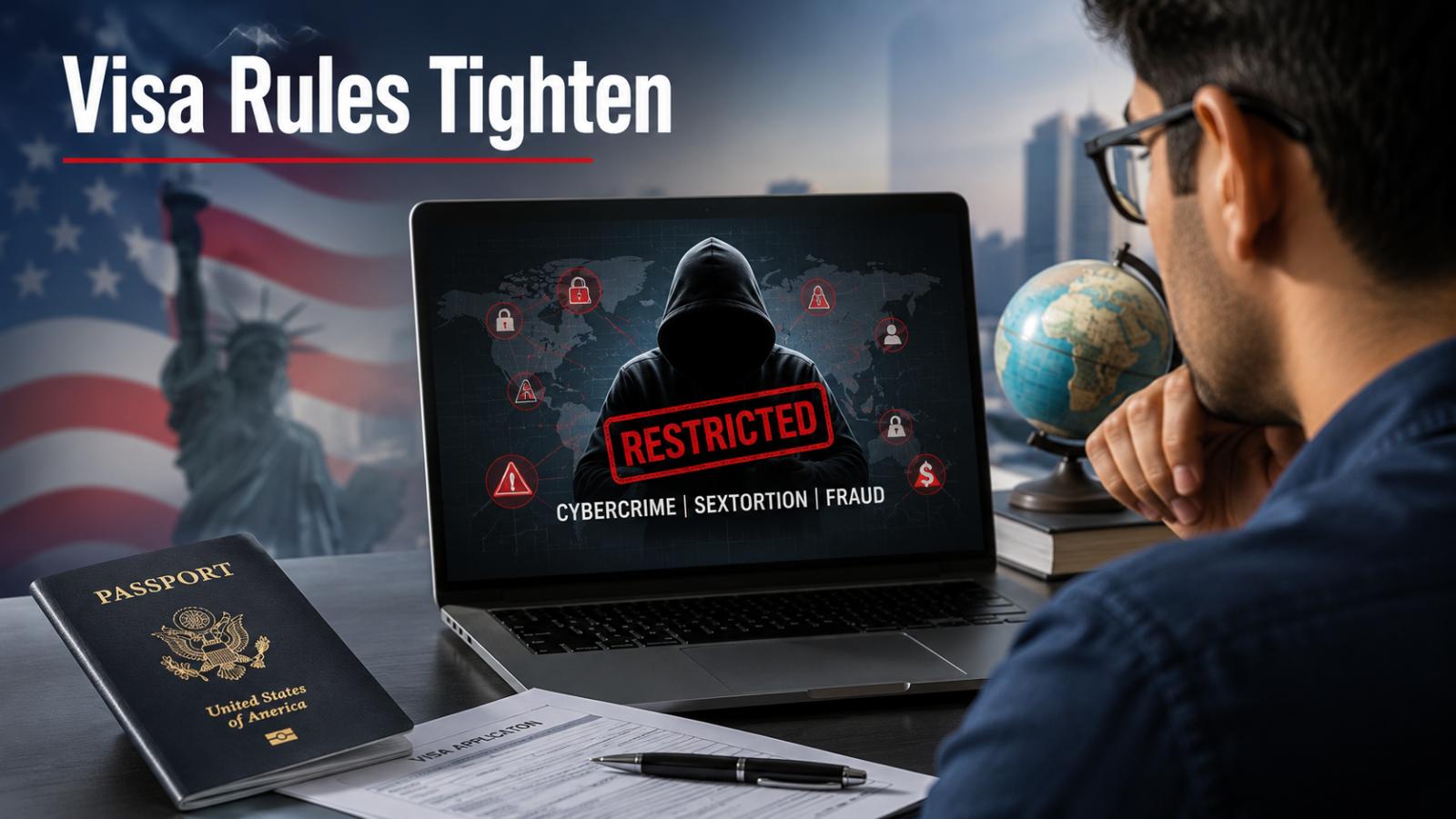
US visa restrictions for NRIs do not automatically affect ordinary Indian professionals, students or families. The new policy targets people linked to cyberscams, sextortion and enabling networks, while immediate family members of designated individuals may also face restrictions.
The United States’ new global visa restriction policy targeting cyberscams, sextortion and related cyber-enabled crime may concern non-resident Indians, or NRIs, but it is not a blanket restriction on Indian citizens or people of Indian origin.
Announced by Secretary of State Marco Rubio on Thursday, July 23, 2026, the policy applies to foreign nationals responsible for or complicit in covered cybercrime. Immediate family members may also face restrictions.
Are ordinary NRIs affected?
The policy was announced as part of a broader U.S. effort to target foreign nationals linked to cyberscams, sextortion and other cyber-enabled crimes. Read the full report on US global visa restrictions over cyberscams and sextortion .
Based on the policy’s wording, ordinary NRIs, H-1B workers, students, tourists and family-based applicants are not automatically affected because of their nationality or visa category. The risk arises when authorities determine that a person participated in, enabled or supported covered cybercrime.
The announcement does not identify India or any other country as a specific target, and it does not establish a blanket rule for routine NRI visa renewals. That conclusion is based on the policy’s focus on individual responsibility or complicity rather than nationality.
Who could face visa consequences?
Indian nationals could potentially be covered if they are linked to online investment fraud, scam centers, sextortion operations or activities that knowingly help such schemes function.
The government has not published designated names, a detailed list of covered conduct or guidance on existing visa holders. Individual decisions are therefore likely to depend on the facts and evidence considered by U.S. authorities.
Why family members matter
The immediate-family provision matters for NRI households because consequences may extend beyond the principal accused person. The State Department has not explained which relatives will qualify or whether separate findings will be required.
Anyone receiving a refusal, revocation notice or request for information should rely on the written government communication and seek qualified U.S. immigration advice rather than assuming every relative is barred.
What NRIs should watch next
The policy follows Executive Order 14390, signed on Friday, March 6, 2026. It directs U.S. agencies to use prosecutions, diplomacy, sanctions, visa restrictions and international cooperation against foreign cybercrime networks.
For most NRIs, the immediate effect appears limited because the policy targets alleged involvement in cyber-enabled crime rather than Indian nationality or routine immigration status. The broader impact will become clearer when the State Department identifies targets or issues guidance on family members and existing visa holders.